Research Article | | Peer-Reviewed

Mechanical Screw-press Extraction of Jatropha curcas Seed Oil in Senegal: Process Description and Feasibility Assessment

Received: 15 April 2026     Accepted: 8 May 2026     Published: 18 May 2026
Views:       Downloads:
Abstract

Faced with the increasing effects of climate change, the development of resilient plants adapted to arid environments, such as Jatropha curcas, is a strategic priority to meet the energy needs of drylands. This plant is used for its valuable oil content and its ability to offer an alternative to fossil fuels in the context of global warming. In Africa, traditional vegetable oil extraction often involves the use of plants in the manufacturing process. This study is devoted to a mechanical pressing of Jatropha curcas seeds, harvested in the Fatick region of central Senegal, in order to optimize its oil, using a screw press at 50°C. After hulling, washing and drying, the seeds were carefully selected and introduced into a twin-screw extruder. After 24 hours of settling, the Jatropha oil was filtered and then stored in clean, dry containers. The extraction rate obtained, estimated at 10.86%, reveals that this technique is significantly less productive than chemical extraction by Soxhlet, which achieves a yield of approximately 25%. However, its main advantage lies in the superior quality of the oil produced: it is completely free of chemical residues, making it particularly suitable for sensitive applications. Indeed, this oil can be used directly, without a refining step, as biofuel in diesel engines, and it is also a prime raw material for soap manufacturing.

Published in Advances in Biochemistry (Volume 14, Issue 2)
DOI 10.11648/j.ab.20261402.14
Page(s) 43-49
Creative Commons

This is an Open Access article, distributed under the terms of the Creative Commons Attribution 4.0 International License (http://creativecommons.org/licenses/by/4.0/), which permits unrestricted use, distribution and reproduction in any medium or format, provided the original work is properly cited.

Copyright

Copyright © The Author(s), 2026. Published by Science Publishing Group

Keywords

Jatropha, Extraction, Mechanics, Oil

1. Introduction
Since 2007, Senegal has focused on promoting Jatropha curcas, known locally as “Pourghère” in French and ‘Tabanani” in Wolof (the local language of Senegal). This wild, non-food plant has several uses, including biofuel production . Jatropha hedgerows are used to demarcate fields, preventing stray animals from accessing them and combating wind erosion. Its leaves can be used as an herbal tea to treat certain infections, and its sap is used to treat wounds. Extensive research on Jatropha curcas highlights its potential beyond biofuels, encompassing its medicinal properties , pest control, and various industrial applications. The seeds of these Jatropha species contain an oil that can be used in biodiesel production, which has generated considerable interest for energy purposes . The press cake from pressed Jatropha seeds is a high-value organic fertilizer comparable to chicken manure. The applications of vegetable oils depend on the type of oilseed from which they are extracted and the extraction method used. This study reports a mechanical extraction method for Jatropha oil using screw presses. Mechanical extraction by pressing represents a promising approach for obtaining vegetable oils, particularly those from oilseeds such as Jatropha curcas, due to its efficiency and reduced environmental footprint compared to conventional methods. To make use Jatropha seeds, the extracted crude oil is filtered and used directly as fuel in diesel engines without any further processing , unlike other biodiesels derived from oilseed crops such as castor and cotton, which are blended with conventional diesel. This allows for the diversification of energy sources and opens up new economic opportunities, particularly for the cosmetics industry.
2. Materials and Methods
Traditionally used for its medicinal properties, this inedible oilseed plant is attracting increasing interest due to its ability to grow on marginal soils and its substantial oil yield, making it a promising alternative to fossil fuels. The choice of Jatropha as a priority species is justified by the fact that its seeds contain a high-energy oil with properties comparable to those of diesel . Furthermore, this plant is undemanding and provides a range of products and benefits that promote integrated rural development.
2.1. Plant Material
2.1.1. Origin of Samples
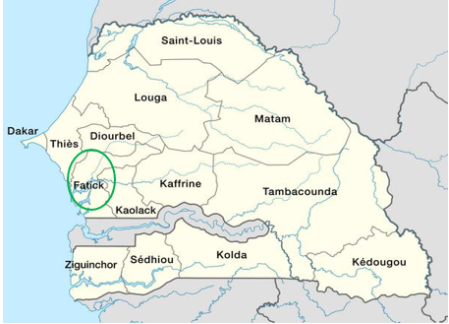
Figure 1. Geographical location of the region from Fatick (Foundiougne).
The genus Jatropha belongs to the Euphorbiaceae family and the Crotonoideae subfamily. It is a branching shrub that can reach 2 to 10 m in height with smooth bark and thin green leaves. It grows naturally, mainly in the central regions (Diourbel, Kaolack, Fatick) (Figure 1) and the southeastern regions (Tambacounda, Kolda, and Casamance).
This study was conducted with Jatropha oil producers in the Fatick Region (14° 20′ 28″ N, 16° 24′ 51″ W), specifically in Foundiougne, an area located in the peanut basin of Senegal. The population numbers 908,858 inhabitants out of a total Senegalese population of 18,032,473 inhabitants . Jatropha vegetable oil is used in biodiesel production, particularly for its combustible properties. It is a commonly used oil in the formulation of biofuels such as biodiesel . The climate is of the Sudano-Sahelian type with rainfall varying between 600 and 900 mm in normal years.
A social enterprise called SOPREEF, an energy and water production company in the Foundiougne Department, has been operating in the heart of the town of Sokone since 2008. This Senegalese initiative is part of a broader effort to promote local resources through the production of natural vegetable oils. Jatropha oil, which is not edible, has been used in a sustainable cosmetics sector in close collaboration with rural communities for over 15 years. It can also be used as a biological pesticide due to its insecticidal properties . The presence of this company in the study area is an advantage for this research.
2.1.2. Harvesting and Pulping the Fruit
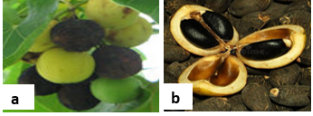
Harvesting is one of the key factors in the economic feasibility of Jatropha oil production, as the price of the seeds depends on the harvest time . The duration of ripening and the harvest period vary according to site conditions. They are longer in areas with an extended rainy season. Harvesting lasts approximately two to three months in semi-arid regions, and in areas with a long rainy season, the tree bears fruit year-round. In Foundiougne, Jatropha fruit ripens between September and November. Harvesting takes place when the fruit changes from green to yellow and then to brown (Figure 2).
Figure 2. a) evolution of the fruit, from green to brown; b) Jatropha seeds.
Harvesting is done by picking the fruit directly from the tree, or, when the tree is too large to reach its upper parts, by knocking the fruit down with a stick. The fruit consists of capsules that, once ripe, open to release seeds. Depulping can be done manually or mechanically and involves extracting the seeds from the pulp. The manual method consists of hitting the dried fruit with a stick, or some producers cover the fresh fruit with plastic wrap to cause the pericarp to rot, then crush the pulp by trampling and spread it out in the sun. The mechanical method, which is not widely used, involves using a manual cone depulper and a sieve for separation.
Dehulling is the process of separating the seed coat, rich in membrane components (cellulose, tannins), from the kernel, which contains most of the useful nutrients (proteins, lipids). Here, hulling the seeds is not mandatory as it can be too time-consuming and doesn't significantly impact the extraction. Dried under optimal conditions, the black seeds can retain their viability for at least a year.
2.1.3. Seed Sorting
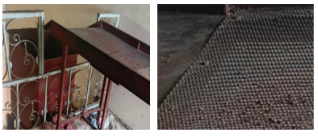
Separation then continues by winnowing and sieving. After threshing, winnowing uses a blast of air to separate the lighter parts from the heavier seeds (Figure 3).. Sorting is also often necessary to remove residual hulls or sand, as shown in the Figure below.
Figure 3. Seed sorting device before pressing.
2.2. Extraction: Pressing of Seeds
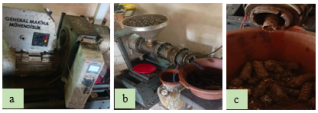
There are two methods for extracting oils: mechanical extraction by pressing and chemical extraction using an organic solvent. Mechanical extraction is carried out using presses. The most common presses are screw presses, which consist of a perforated cylindrical body in which a conical worm screw rotates and compresses the seeds placed between the body and the screw. The pressing system is powered by a controlled-current electric motor, in this case 17 amps (Figure 4a). At the end of this system, there is also a heating element to slightly warm the seeds before pressing.
Figure 4. Worm screw press machine (a, b) and Jatropha cakes (c).
Pressure increases along the screw due to the progressive reduction in volume, forcing the oil to flow out of the body through the designated spaces (Figure 4b). The press cake is collected at the end of the screw (Figure 4c). This process yields a pure oil, free of any foreign substances, after decantation and filtration. Yields depend on the type of oilseed used and the performance of the press. The yield of mechanical extraction is lower than that of chemical extraction. However, the oil obtained is free of solvent traces and has a longer shelf life.
The oil extraction yield is determined using the following formula:
η=moms×100
η being the yield in%; mo the oil mass in gram and mS the seed mass in gram.
2.3. Oil Purification Process
The oil is first decanted for a few days to a month in opaque, chemically neutral tanks. This process allows for the cost-effective removal of certain impurities, which settle to the bottom of the tank. Decantation should not be carried out in metal tanks, for example, because phospholipids bind to metals and catalyze acidification reactions in the oil.
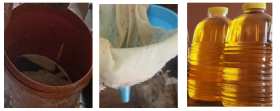
After decantation, the oil is either filtered through a funnel fitted with a very low-porosity fabric or by a mechanical process (pump + filtration system). It is preferable to filter at a low temperature (14°C) because waxes crystallize and are easily trapped (waxes are impurities that cause problems in cold engines). However, the viscosity of the oil can make filtration difficult when the temperature is too low. Filtration removes solid or excessively viscous particles carried over during pressing. In Foundiougne, simple filtration is used for medium quantities of oil, and mechanical filtration for large quantities, with filter pores on the order of micrometers (Figure 5). Regardless of the technique used, contact with air and light must be as brief as possible. These two factors accelerate the oxidation and acidification of the oil.
Figure 5. Oil filtration process after decantation.

2.4. Soap Manufacturing Process Using Pure Vegetable Oil (PVO) by the Company SOPREEF
The procedure for producing soap from Jatropha oil is described below in the order of the protocol. Three (3) liters of oil are used.
To do this, add 2 kg of caustic soda to a bucket initially containing 5 liters of drinking water, stir to homogenize and wait for the mixture to cool to about 30°C. Next, melt 3.5 kg of shea butter in a saucepan for at least 40 minutes, then add 3 liters of jatropha oil. Finally, add a little lemon juice to reduce the shea butter scent. Gradually add the caustic soda solution to the oils, stirring continuously with the wooden spatula, until the solid trace appears. The soap thus formulated is packaged in molds and left to dry for approximately two weeks.
3. Results and Discussion
3.1. Crude Oil Percentage
Mechanical extraction of oil from Jatropha seeds yielded 10.86%. Three (3) liters of this oil produced 3.5 kg of soap. Jatropha curcas seeds, although rich in crude protein, also contain toxic substances. Among these, phorbolesters, thermostable and fat-soluble compounds , have been identified as the main agents responsible for toxicity. The jatropha oil is non edible and cannot compete with food. These molecules, derived from bioactive diterpenes, exert various deleterious effects at the cellular level . Other antinutritional factors are also present, including trypsin inhibitors, lectins (curcin), tannins, saponins, and phytates. These compounds must be eliminated or reduced to non-toxic concentrations to allow for the safe use of the oilseed cake, particularly in animal feed . The principles governing mechanical pressing are its efficiency and its environmental implications compared to solvent extraction methods . The characteristics observed in the oil obtained from Jatropha seeds harvested in Senegal are similar to those reported in other studies. Jatropha oil is yellow. Its color turns reddish upon heating or prolonged exposure to air . Its odor depends on the extraction process and its age; its flavor is sweetish and its taste is similar to that of castor oil. These characteristics are linked to the oil's composition of triglycerides and fatty acids. Its viscosity is much higher than that of diesel fuel, which makes the use of Jatropha oil more difficult in direct injection engines .
Its use as a fuel in hot climates should not pose a problem, unlike palm or coconut oil, which must be heated. The flash point of Jatropha oil is 236°C. This is the temperature at which the vapors ignite in the presence of a flame. Well above diesel fuel or rapeseed methyl ester, Jatropha's flash point is among the lowest of all vegetable oils. The somewhat low yield of 10.86% indicates that some of the oil (approximately 3%) remains in the press cake, but this method remains optimal as it offers better oil quality and is therefore well-suited for biodiesel and soap production. This paradigm shift is primarily driven by increasing regulatory control over solvent residues in food products and by a growing consumer preference for "green" extraction technologies that minimize environmental impact and improve product purity .
However, recent innovations have increasingly focused on integrating sustainable and intensified techniques, such as twin-screw extrusion, to improve efficiency and reduce the environmental footprint of oil extraction processes . Recent research has highlighted the high oil content of Jatropha seeds, ranging from 20 to 60% for the whole seed and 40 to 60% for the kernel, positioning it as a promising renewable resource for biofuel production . Biodiesel has been produced from Jatropha (Jatropha curcas) seed oil available in Bangladesh. The mechanical pressing yield was 24.87% . The high free fatty acid content of crude Jatropha oil led to acid esterification and basic transesterification for biodiesel production.
The growing demand for fossil fuels, the scarcity of oil, the depletion of energy resources , and environmental protection are unavoidable challenges that must be rigorously addressed in the coming decades to ensure the sustainability of humanity and other living beings. The use of alternative, renewable, biodegradable, economical, and environmentally friendly fuels would reduce fuel demand and contribute to mitigating climate change . Biofuel production currently plays a leading role. The term "biofuels" generally refers to fuels derived from living matter, whether animal or plant. Among high-performing biofuels, biodiesel represents a promising alternative to diesel engines. Renewable, environmentally friendly, safe to use, biodegradable, and with multiple applications, biodiesel has become a major focus of global research and development in the field of alternative energies. Biodiesel from Jatropha curcas represents a sustainable alternative to fossil fuels due to its inedible nature and its adaptation to marginal lands .
3.2. Advantages of the Pressing Method
Mechanical extraction is a method better suited to rural communities because it is simple and accessible. It offers advantages such as the direct use of Jatropha oil in diesel engines , even without refining, while preserving its properties. The mechanical method offers local economic opportunities by manufacturing soap from the oil, as well as producing useful by-products such as fertilizer from the oilcake. The challenge is to have a production chain whose investment is sustainable for oil mill projects and which produces pure vegetable oil of satisfactory quality.
From an environmental and social perspective, this method is more advantageous than the chemical Soxhlet method . Indeed, the latter has high energy consumption, pollutes by emitting toxic volatile compounds, and also requires staff training in the use of hazardous products.
3.3. Drawbacks of the Pressing Method
Mechanical extraction using a screw press, with a yield of 10.86%, is less productive than solvent extraction (using a Soxhlet press), which offers a yield that can reach approximately 20% . The latter is more thorough and is carried out at a moderate temperature, whereas mechanical pressing releases heat that can alter the quality of the oil. Jatropha oil contains around 80% unsaturated fatty acids (oleic and linoleic acids in similar quantities) and the remainder saturated fatty acids (palmitic and stearic acids) . This high proportion of unsaturated acids tends to make it unstable and facilitates oxidation and acidification.
4. Conclusion
A mechanical extraction method of Jatropha C. seed oil was carried out in this study. Three major fractions were obtained: seed oil, shells and cakes. Overall, it show that mechanical extraction using a screw press has a relatively low oil yield, compared to solvent extraction. The organic solvent extraction technique (Soxhlet) provides a better yield, but has drawbacks related to environmental pollution and also to oil quality due to solvent residues. In addition, this cold extraction process made it possible to obtain a virgin oil that retains all the bioactive substances sought in fuels, soaps and other lubricants. Dried shells are often used as an excellent source of energy. Jatropha press cake is a valuable residue due to its high protein and mineral content. It can be used as organic fertilizer or compost to enrich the soil. This cold pressing method is very accessible to rural populations because it requires only a modest investment in equipment and simple vocational training. It promises circular economy, thanks to the valorization of all by-products, and could be better implemented with the aim of improving oil and oilseed meal yields.
Abbreviations

NASD

National Agency of Statistics and Demography of Senegal

PVO

Pur Vegetal Oil

SOPREEF

Society for the Promotion of Access to Energy and Water in the Department of Foundiougne

Author Contributions
Djibril Diouf: Conceptualization, Data curation, Formal Analysis, Funding acquisition, Investigation, Methodology, Project administration, Resources, Software, Supervision, Validation, Visualization, Writing – review &editing
Edmond Antoine Badock: Conceptualization, Investigation, Project administration, Writing – original draft, Writing – review & editing
Samba Fama Ndoye: Conceptualization, Formal Analysis, Supervision, Validation, Visualization
Omar Thiam: Data curation, Investigation, Visualization, Writing – original draft
Anna Ndiaye: Data curation, Formal Analysis, Visualization, Writing – original draft
Abdoulaye Dramé: Data curation, Formal Analysis, Investigation, Visualization, Writing – original draft
Conflicts of Interest
The authors declare no conflicts of interest.
References
[1] Singh, P., et al, Green extraction techniques for Jatropha oil: A review of recent advances, Renewable and Sustainable Energy Reviews, 2023,
[2] Moussa, M. T. B., Cherif, A., Lekhal, S., Hadef, Y., 2022. Dosage of phenolic compounds and determination of the antioxidant activity of methanolic extracts of Brocchia cinerea VIS from Algeria (South-East) 04.
[3] Nair, R., et al, Ultrasound-assisted extraction of Jatropha curcas seed oil: Optimization and characterization, Journal of Food Science and Technology, 2022,
[4] Kurniawati, R., et al, Optimization of supercritical CO2 extraction of Jatropha curcas seed oil for biodiesel production, Fuel, 2021,
[5] Mahfoud, Assaf, Elias, Debs Louka,). Defatting and Defatted Peanuts: A Critical Review on Methods of Oil Extraction and Consideration of Solid Matrix as a By-Product or Intended Target, 2023,
[6] Dhruv Raj Karana, Rashmi Rekha Sahoo, Thermal, environmental and economic analysis of a new thermoelectric cogeneration system coupled with a diesel electricity generator 2020
[7] Manish Awana, Piyush Shori, Saurav Suman, Akash Maheshwari, Devender Sharma, Biodiesel Production from Jatropha curcas Linnaeus, international journal of engineering research & technology, 2020.
[8] Agrawal, A., Jain, S. D., Gupta, A. K., 2023. Effectiveness of Jatropha curcas as Biodiesel and Antiviral: A Review. Int. J. Newgen Res. Pharm. Healthc. 2023, 32–41.
[9] National Agency for Statistics and Demography: General Population and Housing Census; Senegal; 2023 (NASD/RGPH5-2023).
[10] Ikbal Bahar Laskar, Bishwajit Changmai, Rajat Gupta, Da Shi, Kellie J. Jenkinson, Andrew E. H. Wheatley, Samuel Lalthazuala Rokhum. A mesoporous polysulfonic acid-formaldehyde polymeric catalyst for biodiesel production from Jatropha curcas oil. Renewable Energy 2021, 173, 415-421.
[11] Vega-Quirós, N.; Arnáez-Serrano, E.; Moreira-González, I. M.; Muñoz-Arrieta, R.; Borbon, L.; Orozco-Ortiz, C.; Vargas-Hernández, G.; Herrera, F.; Araya-Valverde, E. Single nucleotide polymorphism (SNP) of Jatropha curcas associated with the content of phorbol ester. J. Plant Biochem. Biotechnol. 2021, 31, 446–452.
[12] Aigba PI, Anyadiegwu FC and Ogoke JC, Characterization of Jatropha Oil and its Biodiesel, Advances in Environmental Studies, 2021,
[13] P. N. Onwuachi-Iheagwara, J. I. Kperegbeyi, U. Ekanem, R. Nwadiolu, G. I. Okolotu, T. A. Balogun, T. F. Adepoju, J. S. Oboreh. Bio-adsorbent of Jatropha curcus oil in sugar cane bagasse ash for the synthesis of biodiesel catalyzed by calcined Sartaj maize stalk powder (CSMSP). Case Studies in Chemical and Environmental Engineering 2024, 10, 100879.
[14] Maruni, M., Lamangantjo, C. J., Abdul, A., 2022. Toxicity test of jatropha leaf filtrate (Jatropha curcas L.) on mortality of golden snail (Pomacea canaliculata). Inornatus Biol. Educ. J. 2, 69–77.
[15] Bello, K. M., Abubakar, M., Kalla, D. J. U., Sir, S. M., Muhammad, A. S., 2022. Performance and digestibility of Red Sokotofed biochemically treated JKC paper Bauchi 22. Animal science association of nigeria and nigerian institute of animal science.
[16] Valerie M. Lavenburg, Kurt A. Rosentrater, ORCID and Stephanie Jung, Extraction Methods of Oils and Phytochemicals from Seeds and Their Environmental and Economic Impacts By, Processes 2021, 9(10), 1839;
[17] Asarudheen Abdudeen, Mohamed Y. E. Selim, Manigandan Sekar and Mahmoud Elgendi, Jatropha’s Rapid Developments and Future Opportunities as a Renewable Source of Biofuel, 2023, 16, 828.
[18] Abobatta, W. F. Jatropha curcas, a Novel Crop for Developing the Marginal Lands. In Biofuels and Biodiesel; Springer: Berlin/Heidelberg, Germany, 2021; 79–100.
[19] Moussa Abdoul-Aziz, Sidibe Sadio Sayon, Ouedraogo Abdoulaye, Ouedraogo Emmanuel, Ousmane Moctar, Optimization of a High Capacity Industrial Bar Press for Jatropha Curcas Oil Extraction, American Journal of Energy Engineering, 2023, 11, 15.
[20] Trang Thi Cam Truong, Phuc Tuong Ngo Hoang, Ha Manh Bui, Sustainable biodiesel production from jatropha: Optimization, characterization and life cycle assessment, American Institute of Chemical Engineers, ISSN: 1944-7450, 2025,
[21] Farid Chemat et al, A review of sustainable and intensified techniques for extraction of food and natural products, 2020, green chemistry,
[22] Keneni, Y. G., Bahiru, L. A. & Marchetti, J. M. Effects of Different Extraction Solvents on Oil Extracted from Jatropha Seeds and the Potential of Seed Residues as a Heat Provider. Bioenerg. Res. 14, 1207–1222 (2020).
[23] Prodhan A, Hasan MI, Sujan SMA, et al (2020) Production and characterization of biodiesel from Jatropha (Jatropha curcas) seed oil available in Bangladesh. Energy Sources, Part A Recover Util Environ Eff 1–16.
[24] ArmaninAmani Babadi, Shahrooz Rahmati, Rafieh Fakhlaei, Bahram Barati, Shuang Wang, William Doherty, Kostya (Ken) Ostrikov, Emerging technologies for biodiesel production: processes, challenges and opportunities. Biomass Bioenergy. 2022; 163: 106521.
[25] W., Anggono and M. M., Noor and S., Liao and K., Sanka and G. J., Gotama and Sutrisno, F. D., Suprianto Effects of extraction methods on the fuel characteristics and diesel engine performances of jatropha curcas biodiesel. Science and Engineering Ethics, 2022, 84(4), 29-39. ISSN 1471-5546
[26] Senphan, T.; Benjakul, S.; Sukketsiri, W.; Chotphruethipong, L.; Sriket, C. Comparative studies on characterizations and cytotoxicity of oil extracted from Lingzhi (Ganoderma lucidum) G2 spore using Soxhlet extraction and microwave-assisted extraction. Appl. Food Res. 2024, 4, 100483.
[27] Najafi, F.; Sedaghat, A.; Mostafaeipour, A.; Issakhov, A. Location assessment for producing biodiesel fuel from Jatropha Curcas in Iran. Energy 2021, 236, 121446.
[28] Gomes, A., et al, Comparative study of mechanical and solvent extraction methods for Jatropha curcas seed oil, Industrial Crops and Products, 2020,
[29] Hamid Bakhshabadi, Mohammad Ganje Mohammad Ganje, Mehdi Gharekhani, Toktam Mohammadi-Moghaddam, Cristina Aulestia and Afsaneh Morshedi, A Review of New Methods for Extracting Oil from Plants to Enhance the Efficiency and Physicochemical Properties of the Extracted Oils, 2025, 13(4), 1124;
[30] Kankana Saikia, Arpita Das, Atoholi H. Sema, Sanjay Basumatary, N. Shaemningwar Moyon, Thangavel Mathimani, Samuel Lalthazuala Rokhum. Response surface optimization, kinetics, thermodynamics, and life cycle cost analysis of biodiesel production from Jatropha curcas oil using biomass-based functional activated carbon catalyst. Renewable Energy 2024, 229, 120743.
Cite This Article
  • APA Style

    Diouf, D., Badock, E. A., Ndoye, S. F., Thiam, O., Ndiaye, A., et al. (2026). Mechanical Screw-press Extraction of Jatropha curcas Seed Oil in Senegal: Process Description and Feasibility Assessment. Advances in Biochemistry, 14(2), 43-49. https://doi.org/10.11648/j.ab.20261402.14

    Copy | Download

    ACS Style

    Diouf, D.; Badock, E. A.; Ndoye, S. F.; Thiam, O.; Ndiaye, A., et al. Mechanical Screw-press Extraction of Jatropha curcas Seed Oil in Senegal: Process Description and Feasibility Assessment. Adv. Biochem. 2026, 14(2), 43-49. doi: 10.11648/j.ab.20261402.14

    Copy | Download

    AMA Style

    Diouf D, Badock EA, Ndoye SF, Thiam O, Ndiaye A, et al. Mechanical Screw-press Extraction of Jatropha curcas Seed Oil in Senegal: Process Description and Feasibility Assessment. Adv Biochem. 2026;14(2):43-49. doi: 10.11648/j.ab.20261402.14

    Copy | Download

  • @article{10.11648/j.ab.20261402.14,
      author = {Djibril Diouf and Edmond Antoine Badock and Samba Fama Ndoye and Omar Thiam and Anna Ndiaye and Abdoulaye Dramé},
      title = {Mechanical Screw-press Extraction of Jatropha curcas Seed Oil in Senegal: Process Description and Feasibility Assessment},
      journal = {Advances in Biochemistry},
      volume = {14},
      number = {2},
      pages = {43-49},
      doi = {10.11648/j.ab.20261402.14},
      url = {https://doi.org/10.11648/j.ab.20261402.14},
      eprint = {https://article.sciencepublishinggroup.com/pdf/10.11648.j.ab.20261402.14},
      abstract = {Faced with the increasing effects of climate change, the development of resilient plants adapted to arid environments, such as Jatropha curcas, is a strategic priority to meet the energy needs of drylands. This plant is used for its valuable oil content and its ability to offer an alternative to fossil fuels in the context of global warming. In Africa, traditional vegetable oil extraction often involves the use of plants in the manufacturing process. This study is devoted to a mechanical pressing of Jatropha curcas seeds, harvested in the Fatick region of central Senegal, in order to optimize its oil, using a screw press at 50°C. After hulling, washing and drying, the seeds were carefully selected and introduced into a twin-screw extruder. After 24 hours of settling, the Jatropha oil was filtered and then stored in clean, dry containers. The extraction rate obtained, estimated at 10.86%, reveals that this technique is significantly less productive than chemical extraction by Soxhlet, which achieves a yield of approximately 25%. However, its main advantage lies in the superior quality of the oil produced: it is completely free of chemical residues, making it particularly suitable for sensitive applications. Indeed, this oil can be used directly, without a refining step, as biofuel in diesel engines, and it is also a prime raw material for soap manufacturing.},
     year = {2026}
    }
    

    Copy | Download

  • TY  - JOUR
    T1  - Mechanical Screw-press Extraction of Jatropha curcas Seed Oil in Senegal: Process Description and Feasibility Assessment
    AU  - Djibril Diouf
    AU  - Edmond Antoine Badock
    AU  - Samba Fama Ndoye
    AU  - Omar Thiam
    AU  - Anna Ndiaye
    AU  - Abdoulaye Dramé
    Y1  - 2026/05/18
    PY  - 2026
    N1  - https://doi.org/10.11648/j.ab.20261402.14
    DO  - 10.11648/j.ab.20261402.14
    T2  - Advances in Biochemistry
    JF  - Advances in Biochemistry
    JO  - Advances in Biochemistry
    SP  - 43
    EP  - 49
    PB  - Science Publishing Group
    SN  - 2329-0862
    UR  - https://doi.org/10.11648/j.ab.20261402.14
    AB  - Faced with the increasing effects of climate change, the development of resilient plants adapted to arid environments, such as Jatropha curcas, is a strategic priority to meet the energy needs of drylands. This plant is used for its valuable oil content and its ability to offer an alternative to fossil fuels in the context of global warming. In Africa, traditional vegetable oil extraction often involves the use of plants in the manufacturing process. This study is devoted to a mechanical pressing of Jatropha curcas seeds, harvested in the Fatick region of central Senegal, in order to optimize its oil, using a screw press at 50°C. After hulling, washing and drying, the seeds were carefully selected and introduced into a twin-screw extruder. After 24 hours of settling, the Jatropha oil was filtered and then stored in clean, dry containers. The extraction rate obtained, estimated at 10.86%, reveals that this technique is significantly less productive than chemical extraction by Soxhlet, which achieves a yield of approximately 25%. However, its main advantage lies in the superior quality of the oil produced: it is completely free of chemical residues, making it particularly suitable for sensitive applications. Indeed, this oil can be used directly, without a refining step, as biofuel in diesel engines, and it is also a prime raw material for soap manufacturing.
    VL  - 14
    IS  - 2
    ER  - 

    Copy | Download

Author Information
  • Abstract
  • Keywords
  • Document Sections

    1. 1. Introduction
    2. 2. Materials and Methods
    3. 3. Results and Discussion
    4. 4. Conclusion
    Show Full Outline
  • Abbreviations
  • Author Contributions
  • Conflicts of Interest
  • References
  • Cite This Article
  • Author Information