Research Article | | Peer-Reviewed

Compartmental Modelling of Antenatal-care Interventions for Malaria in Pregnancy, Makurdi, Benue State, Nigeria

Received: 24 June 2026     Accepted: 7 July 2026     Published: 24 July 2026
Views:       Downloads:
Abstract

Malaria remains a serious public health concern contributing significantly to maternal and neonatal morbidity and mortality. Impact of malaria infection seems high in pregnant women due to their immunological changes that increases susceptibility to plasmodium falciparum infections and can be controlled with preventive interventions. This study evaluates antenatal-care (ANC) impact in mitigating malaria in pregnancy using SIRS-SI deterministic compartmental model that accounts for malaria interventions at different uptake of intermittent preventive treatment in pregnancy (IPTp). The equilibrium states and effective reproduction number were obtained using next-generation matrix while numerical simulations were done via RStudio in R using Makurdi data extracted from District Health Information Systems (DHIS-2) covering 2021 to 2023. The various interventions mitigated malaria in pregnancy with insecticide treated net (ITN) effective usage having the highest impact at early stage of IPTp uptake. Pregnant women were more proactive in taking IPTp first dose (IPTp-1) during ANC (average of 67.7%) than subsequent doses (50.8% and 30.9% respectively). Artemisinin-based combination therapy (ACT) aids recovery of those infected while IPTp significantly reduced susceptibility of pregnant women. Infected cases were reduced from 43.1% to 38.3%, 38.7% and 31.5% in proportion to the susceptible that took IPTp-1, IPTp-2 and IPTp-3 respectively. Mixed intervention generated better outcome for malaria control in pregnancy relative to the impact of each intervention done singly. Consequently, early preventive interventions during ANC, especially ITN effective usage and IPTp uptake should be strongly encouraged to minimize malaria infection risk and ACT support given to those infected whenever necessary.

Published in American Journal of Applied Mathematics (Volume 14, Issue 4)
DOI 10.11648/j.ajam.20261404.16
Page(s) 227-243
Creative Commons

This is an Open Access article, distributed under the terms of the Creative Commons Attribution 4.0 International License (http://creativecommons.org/licenses/by/4.0/), which permits unrestricted use, distribution and reproduction in any medium or format, provided the original work is properly cited.

Copyright

Copyright © The Author(s), 2026. Published by Science Publishing Group

Keywords

Malaria in Pregnancy, Infectious Disease, Intervention, Antenatal-care, Mathematical Model

1. Introduction
Malaria infection is an infectious disease transmitted by Plasmodium parasites to humans through the bites of infected female Anopheles mosquitoes. It is a protozoan vector-borne disease that is preventable and curable though it is responsible for several death cases in Africa and other parts of the world . Malaria infection is known to be a growing global concern because of its ability to emerge and lead to serious consequences in the lives of its host. According to research, about 12.7 million pregnancies across the globe suffered from malaria infection as at 2022 with the African region bearing most of the burden which account for the large number of cases and death recorded within the region .
Malaria is enlisted as the most common and potentially most serious infection occurring in pregnancy in many sub-Saharan African countries . Nigeria accounts for about 27% of malaria infection and 31% of malaria-related deaths globally . Malaria is caused by Plasmodium species, predominantly Plasmodium falciparum. In Nigeria it is transmitted mainly by the mosquito vectors of the Anopheles gambiae complex and the Anopheles funestus group. The complexity of malaria infection transmission pattern in Nigeria varies according to the diversity of the ecological system which account for the heterogeneity of the transmission of malaria across the various States of Nigeria and the required intervention strategies relevant to each context .
Benue State is situated in the North-Central region of Nigeria with Makurdi as the Capital. The State operates an agrarian economy with about 80% of her population engaging in agricultural activities as farmers. The tropical climate conditions indicate an annual rainfall of 1,314.3 millimeters approximately with an average temperature between 23 - 37°C . Malaria infection in Makurdi peaks during the rainy season, between April and October and is influence by the region tropical climate, the confluence of the River Benue, agricultural practices and rapid urbanization thus creating favourable ecological conditions that enhances mosquito breeding sites and habitats . The World Health Organization reports malaria prevalence of 34% (RDT records) and 17% (microscopy records) in Benue State with an incidence rate of 257.2 per 1000 population.
Alom et al. and Adaji et al. classified Makurdi Local Government Area (LGA) as region with high to moderate malaria transmission intensity with substantial heterogeneity between the urban and the peri-urban areas. Some studies revealed that the most dominant species within the region is the Plasmodium falciparum, the leading cause of complications during pregnancy . Complications from Plasmodium falciparum infection in pregnancy include maternal anaemia, miscarriages, premature delivery and infant low birth weight with high risk of maternal and infant mortality . Therefore, malaria infection during pregnancy poses substantial risks not only to the mother, but also to her developing fetus and the newborn .
Pregnant women experience higher risk compared to other adults and are more vulnerable to malaria simply because of the immunological changes they experience and the presence of the placenta which provides favourable environment for Plasmodium falciparum and Plasmodium vivax . In low transmission settings or cases with no immunity, the Plasmodium falciparum malaria can progress rapidly from uncomplicated to severe malaria infection with risk 2-3 times higher than a non-pregnant woman . The importance of antenatal-care (ANC) services cannot be overlooked. The most effective control strategic of malaria in pregnancy is the comprehensive intervention package recommended by World Health Organization which integrate interventions into the strong platform of ANC services .
The malaria intervention strategies mostly employed in Nigeria include: the usage of insecticide treated nets (ITNs) distributed across the States through mass distribution techniques, indoor residual spraying (IRS), and the artemisinin-based combination therapy (ACT). The current preventive strategies recommended by World Health Organization (WHO) include intermittent preventive treatment in pregnancy (IPTp) with sulfadoxine-pyrimethamine (SP) and use of insecticide-treated nets (ITNs). Despite all the numerous efforts put in place to curtail the high infection rate of malaria transmission, it has persisted overtime at endemic level in major areas of the country . Research by scholars and WHO report indicated that malaria prevalence among pregnant women has persisted in Makurdi with inconsistent attendance at ANC and many pregnant women do not complete the recommended 3+ IPTp doses. Consequently, the uptake of malaria interventions such as IPTp and ITNs during ANC remain suboptimal .
Health education intervention promotes IPTp adherence and uptake of the recommended complete dose during pregnancy. Furthermore, the health personnel (nurses, midwives, doctors and community health workers) play crucial role in controlling malaria infections in pregnancy during ANC. They provide counselling in ITN effective usage, administer IPTp at the required time interval, test for malaria infection, prescribe and disperse antimalarials along with managing of complicated malaria cases. In addition, they provide adequate service documentation during each ANC visit as reference for future consultations and guide . Major challenge of the system is the supply chain management, that is inadequate stock of SP, ITNs, diagnostic tests and treatment drugs and lack of adequate human resources leading to longer waiting time and discouraged attendance at the subsequent ANC visits . Studies have shown alarmingly high prevalence rates among pregnant women, reporting 68.3% infection rate among antenatal clinic attendees .
Despite high malaria burden and suboptimal ANC uptake in Makurdi, there seems to be no existing publications on mathematical compartmental models that studied malaria infection in pregnancy with localized Makurdi data at the various stages of IPTp dosage as recommended by WHO. Most of the available modelling research works on malaria in Nigeria aggregate at the State and National level with only few considering Makurdi LGA. Aside the limited number of existing literatures on mathematical models designed with Makurdi-specific calibrated data, to our knowledge there is no prior study that evaluated the influence of ANC interventions among pregnant women in Makurdi using SIRS-SI compartmental model framework that incorporated the three stages of IPTp dose (the WHO recommended minimum) with calibrated District Health Information Systems (DHIS-2) malaria incidence data of pregnant women in Makurdi. This study, therefore, filled this gap by evaluating Compartmental Modelling of Antenatal-care Interventions for Malaria in Pregnancy with a case Study of Makurdi, Benue State, Nigeria.
Mathematical modelling has contributed enormously to research on malaria infection and has become an essential tool in understanding malaria transmission dynamics and evaluating intervention strategies . Mathematical modelling is a process in which problems in real world scenario are translated into some precise mathematical concepts or form known as model. Models are tools necessary for integrating and translating scientific data into policy-relevant outcomes. They are represented by algebraic equations, differential equations, statistical distributions, or computational algorithms . Mathematical modelling provides a quantitative framework in malaria epidemiology for the transmission simulation and the evaluation of potential impact of various malaria control intervention strategies. The Ross basic mathematical model (SIR) formed the foundation for malaria modelling in pregnancy which provides the hierarchical structure of deterministic mathematical model with varying complexity levels and employs ordinary differential equations as representation of the epidemiological compartments describing the malaria incidence patterns and transmission dynamics . Various modelling approaches have been used to assess different intervention impacts, optimize resource allocation, and inform target product profiles for new malaria interventions .
Compartmental models are the most common types comprising of different compartments divided based on the infection status of both the human and mosquito population. The flow from one compartment to the other is described by the differential equation . This research paper aim at developing a mathematical compartmental model with the SIRS-SI framework to assess the influence of ANC interventions, ITN usage, IPTp uptake at different doses and ACT aiding recovery of infected pregnant women during ANC, in mitigating malaria infection among pregnant women in Makurdi.
2. Material and Methods
This study employed a retrospective secondary data analysis combined with deterministic mathematical modelling to evaluate the impact of antenatal-care-based malaria interventions. The model used the bi-directional transmission mechanism: human-to-mosquito and mosquito-to-human transmission. The transmission rates were modelled using the mass action terms with appropriate contact rates.
2.1. Study Area
Benue State has 23 Local Government Areas (LGAs) with Makurdi being the capital territory. The selection of Makurdi LGA as the study area was done using severity of cases as an anchor criterion.
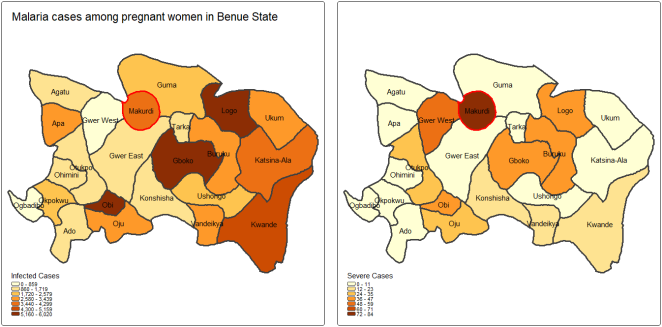
Figure 1. The Map of Benue State showing the total number of incidence and severe cases of malaria in pregnant women respectively within the 23 Local Government Areas.
Makurdi recorded the highest total number of reported severe cases of malaria in pregnant women within the study period (2021 to 2023) though it had less total number of incidence cases in comparison to Logo, Gboko and Obi Local Government Areas as captured by the geospatial maps in Figure 1 obtained using the malaria data for Benue State extracted from DHIS-2.
2.2. Population Size Estimate
Since the malaria monthly data for confirmed uncomplicated and severe cases of pregnant women in Makurdi used in the research work as extracted from DHIS-2 platform covers reported cases from 2021 to 2023, the population figure considered for the analysis was extracted from the 2021 population record of Makurdi. As captured in the Nigeria 2006 census by the National Bureau of Statistics , the total population of Benue State and Makurdi LGA were 4,219,244 and 297,398 in 2006 respectively. The Nigeria population projections and demographic indicators projected the total population for Benue State in 2021 as 6,023,643 which by proportion gives a projection of 424,582 as the total population of Makurdi LGA in 2021.
2.3. Data Sources and Variables
The data extracted from DHIS-2 covers the malaria monthly data for confirmed uncomplicated and severe cases of pregnant women, the antenatal-care records for uptake of IPTp doses (IPTp-1, IPTp-2, IPTp-3) and the number of pregnant women clinically diagnosed with malaria treated with ACT during ANC visit within the period of three years, 2021 to 2023 and was processed on Microsoft Excel sheets to conform with R programming format for analysis. The model parameters were obtained from secondary sources while the values for the unavailable parameters were estimated by fitting the model equation using regression method via the application of RStudio in R programming software. The data obtained were also used for the analysis, evaluating the impact of the various malaria preventive interventions and ACT treatment, and compared outcomes across scenarios.
2.4. Model Structure
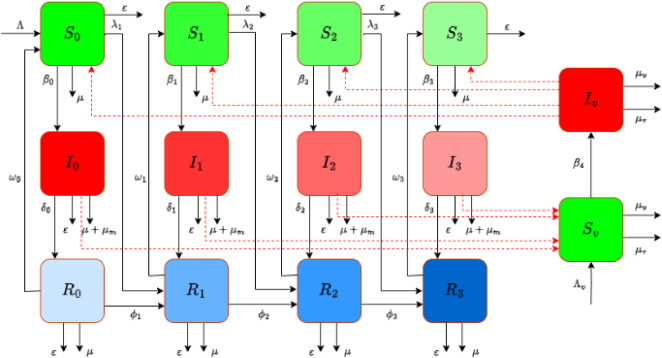
The study developed SIRS-SI deterministic compartmental model using ordinary differential equations to represent malaria transmission dynamics among pregnant women. An advanced epidemiological framework extended from the basic SIR model. The model includes compartments for susceptible, infected, and removed (recovered and those that transited as a result of IPTp uptake providing prophylactic protection) pregnant women, with the vector incorporated through structured compartments of susceptible and infected mosquito as captured by Figure 2.
The compartment S denotes the susceptible, I the infected and R the removed population respectively. The subscripts, “0” represents the category of women with no uptake of IPTp at the various compartments, that is, pregnant women not protected via IPTp doses. While the subscripts “1”, “2”, “3” connote scenarios representing pregnant women with prophylactic protection through the uptake of first, second and third dose of IPTp respectively. Lastly, the subscript “v” denotes the segment representing the vector population. The total human population is denoted by N.
Figure 2. The schematic flow diagram of the model.
The model parameters include the recruitment rates (Λ, Λv), malaria transmission rates (βi, i = 0, 1, 2, 3, 4), removal rates due to natural death, malaria infection and effectiveness of ITN in killing mosquito (μ, μm, μτ), the rate of ITN effective usage (τ), the effective rates of IPTp intervention (ai, i = 1, 2, 3), rates of IPTp uptake among susceptible pregnant women (λi, i = 1, 2, 3), recovery rates aided by ACT treatment (δi, i = 0, 1, 2, 3), the immunity waning rates of pregnant women (ωi, i = 0, 1, 2, 3), the rates at which those recovering received educational insight that encouraged their participation in the subsequent doses of IPTp uptake (ϕi, i = 1, 2, 3), and the removal rate as a result of healthy baby delivery (ε).
The model assumes that the total pregnant human population is susceptible to malaria infection, the recovered population loses their immunity after a period and becomes susceptible again to the infection, the population of pregnant women who took part in the uptake of IPTp obtained some level of protection against malaria infection for some certain period of time hence, transit to the removed compartment until they become vulnerable again. The study considered 42 days as the lifespan of mosquitoes which gave a death rate of 0.7143 per month, the mosquito to human population ratio is assumed as 3 per person. The infectivity rate of the mosquito population is put at 4.8% as extracted from Manyi et al. and the recovery of infected human is assumed to be 3 days while the rate of human death due to malaria infection as 1.2 per 1000 population.
The model equation is derived using the flow diagram in Figure 2 and after simplification obtained the system of equations as defined in equation (1),
dS0dt=Λ+ω0R0-β0S0IvN-x0S0,dI0dt=β0S0IvN-y0I0,dR0dt=δ0I0-z0R0,dS1dt=ω1R1-β1S1IvN-x1S1,dI1dt=β1S1IvN-y1I1,dR1dt=λ1S0+ϕ1R0+δ1I1-z1R1,dS2dt=ω2R2-β2S2IvN-x2S2,dI2dt=β2S2IvN-y2I2,dR2dt=λ2S1+ϕ2R1+δ2I2-z2R2,dS3dt=ω3R3-β3S3IvN-x3S2,dI3dt=β3S3IvN-y3I3,dR3dt=λ3S2+ϕ3R2+δ3I3-z3R3,dSvdt=Λv-β4SvI0+I1+I2+I3N-y4Sv,dIvdt=β4SvI0+I1+I2+I3N-y4Iv(1)
whereβ0=β1-τ,β1=β1-τ1-a1,β2=β1-τ1-a2,β3=β1-τ1-a3,β4=βv1-τ,x0=ε+μ+λ1,x1=ε+μ+λ2,x2=ε+μ+λ3,x3=ε+μ,y0=δ0+ε+μ+μm,y1=δ1+ε+μ+μm,y2=δ2+ε+μ+μm,y3=δ3+ε+μ+μm,y4=μv+μτ,z0=ω0+ε+μ+ϕ1,z1=ω1+ε+μ+ϕ2,z2=ω2+ε+μ+ϕ3,z3=ω3+ε+μ,
satisfying the initial conditions defined in equation (2).
S00>0,  I000, R000,S100, I100,R100,S200, I200, R200,S300, I300,R300,Sv0>0, Iv00.(2)
2.5. Model Analysis and Equilibrium States
Evaluating the model equation at the equilibrium state gave two steady states: the disease-free steady state.
k0=S00*., I00*,R00*,S10*, I10*,R10*, S20*,I20*, R20*,S30*,,I30*,R30*,Sv0*,Iv0*
and the endemic steady state
k*=S0*., I0*, R0*,S1*, I1*,R1*, S2*,I2*, R2*,S3*,,I3*,R3*,Sv*,Iv*
The details of the disease-free steady state obtained are as follows:
S00*=Λx0.,S10*=Λλ1ω1x0.x1z1,S20*=Λλ1ω2λ2ω1+ϕ2x1x0.x1x2z1z2.,S30*=Λλ1ω3λ2ω1+ϕ2x1λ3ω2+ϕ3x2x0.x1x2x3z1z2z3,Sv0*=Λvy4.,I00.*=0,I10.*=0,I20.*=0,I30..*=0,Iv0..*=0,R00.*=0,R10*=Λλ1x0.z1,R20*=Λλ1λ2ω1+ϕ2x1x0.x1z1z2,R30*=Λλ1λ2ω1+ϕ2x1λ3ω2+ϕ3x2x0.x1x2z1z2z3(3)
Furthermore, knowing that malaria transmission follows the seasonal pattern, the seasonality of the malaria data was accounted for in the model analysis by considering a seasonality factor defined by the conventional wave equation use in determining the amplitude of oscillation,
βit=βi1+Ωcosηt+θ,i=0,1,.,4
where Ω represents the amplitude, η denote the frequency and θ represents the phase shift in the oscillation. This is similar to the process recorded in Ochieng . The effective reproduction number, Re is obtained using the next-generation matrix. The method determines the value of Re as the spectral radius, ρ of the next-generation matrix as
Re=ρFV-1(4)
Consequently, applying the next-generation matrix, the effective reproduction number for the model equation (2) was obtained using the mathematical expression defined in equation (4) representing the dominant eigenvalue of the matrix FV-1 where the matrix F and V were generated from equation (2) using “Google Colab” to ease the computation processes and evaluated at the disease-free equilibrium steady state given in equation (3) to obtain the effective reproduction number, Re as
Re=Λvβ4m0y2y3m1+y0y1m2Λy0y1y2y3y4m32(5)
where m0=x0x1x2x3z1z2z3, m1=x2x3z2z3β0x1y1z1+β1y0λ1ω1, m2=λ1λ2ω1+ϕ2x1β2ω2x3y3z3+β3ω3y2λ3ω2+ϕ3x3, m3=x2x3z2z3λ1x1+x1z1+λ1ω1+λ1λ2ω1+ϕ2x1 [x3z3x2+ω2+λ3ω2+ϕ3x2x3+ω3].
Furthermore, the sensitivity analysis of the model equation parameters was done to determine the most influential malaria intervention parameter on the system dynamics using Re through the sensitivity analysis expression.
Sx=Rex×xRe(6)
The RStudio with R version 4.4.0 was further used for the model numerical simulation. The model was simulated deterministically using the “vode” method via the “deSolve” library in the R programming platform.
3. Results
3.1. Descriptive Epidemiology of Malaria Data
The model is calibrated using historical malaria data extracted from DHIS-2 covering pregnant women in Benue State, Nigeria within the targeted period of this study, from 2021 to 2023. Geospatial mapping and bar charts were employed via the application of R programming code to explore the prevalence of malaria infection among pregnant women during antenatal-care (ANC) visit and the uptake of IPTp, ITNs usage and the administration of ACT.
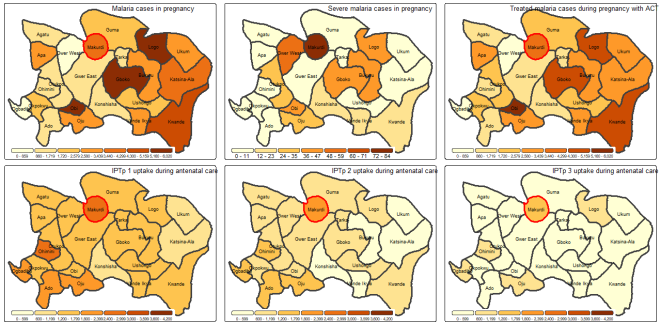
The data for malaria cases and the various interventions (ACT administration and the uptake of IPTp at different dose during ANC visit) in the various LGAs of Benue State as extracted from DHIS-2 gives the results in Figure 3 using geospatial map for a pictorial view of the results.
Figure 3. The Map of Benue State showing the total of malaria cases, ACT intervention and IPTp uptake in the 23 Local Government Areas.
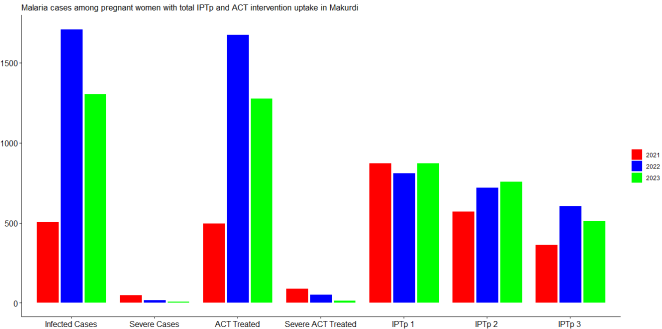
Figure 4. The total yearly reported malaria cases in Makurdi and the various interventions.
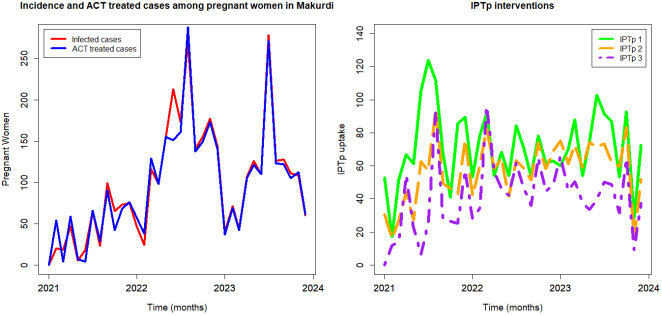
Figure 5. The monthly total recorded malaria incidence cases in Makurdi and the interventions.
Consequent upon the severity of malaria cases recorded across the various LGAs, Makurdi recorded the highest total number of severe cases from 2021 to 2023 even though the total number of incidence cases recorded within this period is less in comparison with other high-burden LGAs such as Gboko, Logo, Obi, among other LGAs. Hence, the choice of Makurdi LGA over Obi, Logo and Gboko which recorded higher number of total malaria incidence cases within the study period.
The distribution of the total yearly reported malaria cases in the selected LGA, and the various interventions are captured in Figure 4 using bar chart. Whereas the monthly data for the incidence cases and the interventions administered in curtailing the spread and impact of malaria infection is shown by the plot in Figure 5.
3.2. Model Calibration and Validation Results
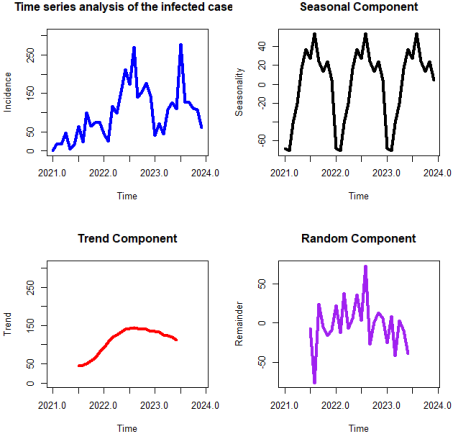
The time series decomposition simulation of the incidence data into trend, random and seasonal components was done to ascertain the seasonality of the data set. The result obtained shows that the data is seasonal as shown in Figure 6. This was done to justify the usage of seasonality factor in the model equation.
Figure 6. Time series decomposition of the incidence cases into trend, random and seasonal components.
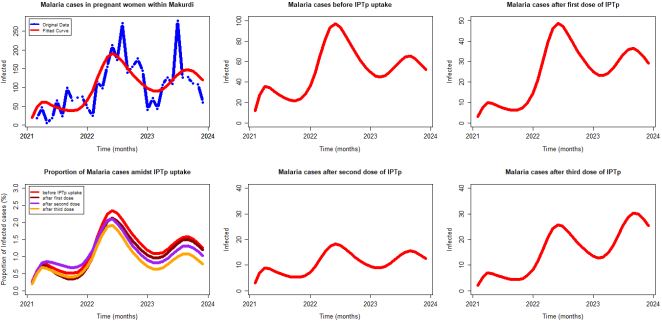
The model simulation for the selected LGA was fitted using the Non-linear Least Squares Method (nlsLM) via a code generated in RStudio. The outcome of the analysis is captured in Figure 7 and the values of the initial state variables given in Table 1 along with the fitted parameter values extracted from the outcome of the curve fitting. In addition to the initial assumptions of the model, the administration of ACT is considered to be uniform across the different compartments of concern, before and after each dose of IPTp uptake. The total number of infected cases extracted from the data and the fitted curve are given in Table 2 showing slight difference in the values with a correlation of 74.5%. The model validation was done by comparing model predictions with observed cases.
As earlier mentioned, the study period covers 2021 to 2023 and the total population of Makurdi in 2021 was projected at 424,582. Using the information for the female population in the age group of 15 to 49 and the fertility rate extracted from the Nigeria population projections and demographic indicators gives the total population of pregnant women, N in 2021 as 50.2% x 4.08% x 424,583 = 8,696 with a monthly recruitment rate of 725 pregnant women.
Table 1. The initial values of state variables for the selected LGA and the model parameters.

Initial States

Known Parameters

Fitted Parameters

Variables

Values

Symbols

Values

Symbols

Values

N0

8,696

Λ

725

β

0.615818

S00

4,780

Λv

2,175

βv

11.011331

I00

12

μ

0.0009

μτ

0.003081

R00

0

μm

0.0012

δ

0.109259

S10

1,484

μv

0.7142

ω0

0.5107

I10

3

τ

0.57

ω1

0.2123

R10

0

ε

0.00267

ω2

0.0367

S20

1,388

λ1

0.171

ω3

0.0125

I20

3

λ2

0.16

ϕ1

0.171

R20

0

λ3

0.118

ϕ2

0.16

S30

1,024

a1

0.00736

ϕ3

0.118

I30

2

a2

0.6158

Ω

1.069223

R30

0

a3

0.07357

ω

0.402168

Sv0

26,028

θ

1.106852

Iv0

60

Figure 7. Dynamics for infected pregnant women in Makurdi LGA (DHIS-2) and the fitted curve obtained via numerical simulation.
Table 2. A comparison of the total number of infected cases (2021 - 2023) extracted from DHIS-2 and model simulation.

Source

Total Number of Infected Cases

DHIS-2 value

3,528

Simulated value

3,589

3.3. Reproduction Number and Sensitivity Analysis
The application of the parameter values given in Table 1 and those extracted from the fitted curve gave the effective reproduction number of 0.403 which is less than one, that is, Re<1 for the disease-free steady state. Indicating that with malaria interventions the disease will gradually die out of the population. Whereas, using the incidence cases and the library (R0) in R programming software to determine the basic reproduction number of the incidence cases gave Rb=1.282654 with the confidence interval of 1.272589, 1.292943, indicating that Rb>1 hence confirming an endemic state in Makurdi, Benue State, Nigeria which could be controlled with effective interventions.
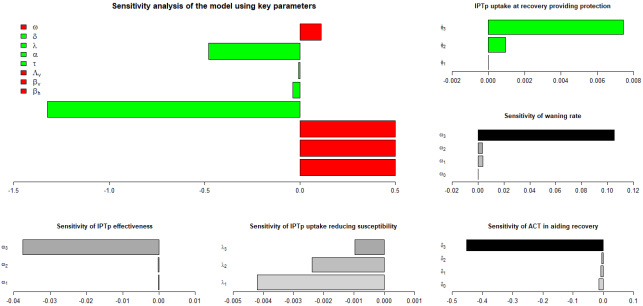
The sensitivity analysis was done via “Google Colab” using the expression in equation (6) and the parameter values as defined in Table 1. The result obtained is shown in Figure 8 via a bar chat demonstrating the various sensitivity level of the parameters.
Figure 8. The sensitivity of the model parameters on Re.
3.4. Scenario Analysis and Optimization
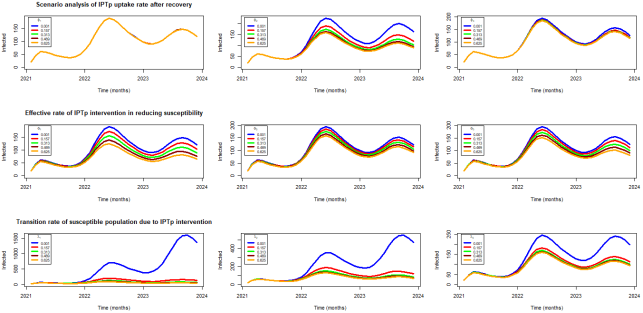
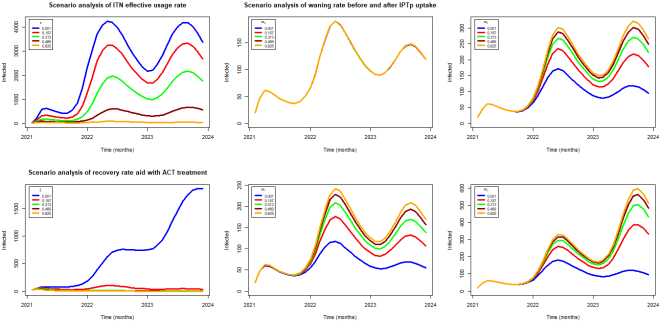
The intervention parameters in the model equation were analyzed to show their various impacts on the disease dynamics using the parameter values obtained from the fitted curves, details are captured in Figures 9 and 10 (also see Table 3).
Figure 9. The impact of IPTp interventions in pregnant women in reducing susceptibility and also at recovery stage.
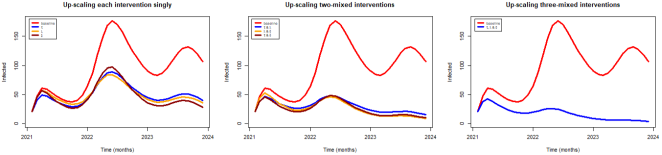
Furthermore, the model was used to simulate different intervention scenarios which include the current standard of care (IPTp + ITNs), scaling strategies combining interventions at different uptake levels and enhanced ANC attendance with intervention coverage. In addition, the model analysis was done to identify optimal combinations of interventions to maximize impact of ANC in mitigating malaria transmission (see Figure 11 and Table 4 for the details extracted from the results obtained).
Figure 10. The impact of the various interventions (ITN, antimalaria drugs, and IPTp uptake at different dosage) on the disease dynamics at different scale.
Table 3. The total number of infected cases at different scale for the key parameters of the model.

Scale (%)

Total number of infected cases

Recovered transiting rate due to IPTp uptake

Effective rate of IPTp in reducing susceptibility

Susceptible transiting rate due to IPTp uptake

ITN effective usage rate

Recovery rate aided by ACT

Waning rate before and after IPTp uptake

ϕ1

ϕ2

ϕ3

a1

a2

a3

λ1

λ2

λ3

τ

δ

ω0

ω1

ω2

ω3

0.1

3,591

4,311

3,701

3,603

3,662

3,699

18,452

7,962

4,803

87,075

24,107

3,577

2,279

3,205

3,336

15.7

3,589

3,597

3,569

3,255

3,476

3,466

3,810

3,612

3,452

64,642

1,748

3,584

3,337

4,533

5,870

31.3

3,587

3,283

3,523

2,937

3,299

3,245

2,479

2,924

3,199

38,332

373

3,587

3,939

5,241

6,999

46.9

3,587

3,110

3,501

2,648

3,128

3,037

2,053

2,664

3,098

11,992

182

3,588

4,307

5,658

7,576

62.5

3,586

3,002

3,488

2,386

2,965

2,842

1,836

2,526

3,037

1,843

124

3,589

4,551

5,928

7,917

Table 4. The total number of infected cases as extracted at different Intervention Scale.

Interventions

Value (%)

Total Infected Cases

Baseline

ITN

57

3,337

IPTp

17.1

ACT

11

Singly

ITN

62.5

1,742

IPTp

31.3

1,707

ACT

15.7

1,638

Mixed

ITN + IPTp

ITN

62.5

IPTp

31.3

1,046

IPTp + ACT

IPTp

31.3

ACT

15.7

916

ITN + ACT

ITN

62.5

ACT

15.7

908

ITN + IPTp + ACT

ITN

62.5

IPTp

31.3

ACT

15.7

598

Figure 11. The impact of the various intervention mixes at different scales on the disease dynamics.
4. Discussion
This research work evaluated the impact of antenatal care (ANC) on the transmission dynamics of malaria infection in pregnancy. The study considered Makurdi, Benue State as the study area due to the severity of malaria incidence cases in pregnancy from 2021 to 2023 as recorded in DHIS-2 account. The data collected from the DHIS-2 platform were analyzed via the application of a deterministic mathematical model developed to study the transmission dynamics of malaria among pregnant women and to evaluate the impact of intervention uptake during ANC visit in mitigating the spread of malaria infection.
Geospatial map was used to study and convey pictorially the results of the data extracted from our source file (DHIS-2) for malaria cases in pregnant women across the 23 LGAs of Benue State. The outcome as captured in Figure 3 makes it easier to understand the spread across LGAs, to identify those with higher incidence cases and those with lower records of malaria cases. The map clearly shows that Obi, Gboko and Logo LGAs recorded the highest cumulative malaria cases between 2021 and 2023 while Makurdi recorded the highest total severe malaria cases in pregnant women within the study period.
In addition to the total number of malaria incidence and severe cases, Figure 3 also captured the map of Benue State showing the various malaria intervention coverage in pregnancy. That is, the result in Figure 3 indicates the coverage result for the treatment of malaria cases in pregnancy during ANC with ACT intervention (which seems to be at the same measure with the total number of malaria cases recorded), the total percentage of IPTp-1, IPTp-2 and IPTp-3 uptake by pregnant women during ANC visit across the 23 LGAs of Benue State. The results show that the total percentage of IPTp uptake seems to be declining across the 23 LGAs. The first dose of IPTp uptake recorded the highest percentage of coverage with a total average of 67.7% uptake. There was significant drop in the second and third doses of IPTp uptake which recorded total average of 50.8% and 30.9% uptake respectively. This result, portrays that pregnant women were more positive and proactive to the first dose of IPTp uptake during ANC visit than the subsequent doses. Their attitude and actions pose great concern and thereby necessitate the need for monitoring intervention and evaluation for further research study in order to salvage the situation.
The values of the total number of cases and malaria infection interventions were extracted from DHIS-2 for pregnant women in Makurdi LGA of Benue State. The yearly and monthly results are represented in a bar chart shown in Figure 4 and the time series plot in Figure 5 respectively. The outcome indicated that the administration of IPTp doses witness monthly increment within each year, that is from 2021 to 2023 though the total yearly value of IPTp uptake declined across board. The results are clearly shown in Figures 4 and 5 respectively.
The mathematical model developed consists of structured compartments accounting for the various malaria preventive interventions in pregnancy and the uptake of IPTp at different dose intervals (first, second and third). The analytical evaluation of the model at equilibrium state gave two steady states: the disease-free and endemic steady states. The analysis of the model equation at the disease-free equilibrium steady state via the next-generation matrix gave the expression for the effective reproduction number.
The data obtained from DHIS-2 was used to carry out numerical simulation with the model equation and fitted some of the model parameters that were unknown. This was done using the Non-linear Least Squares Method (nlsLM) provided by the RStudio in R programming software. The details of the initial state variables and parameter values obtained from secondary sources along with the fitted curve output as earlier stated are recorded in Table 1.
The numerical simulation of the equation for the effective reproduction number (equation (5)) using the parameter values obtained in Table 1 gave a value of Re=0.403, which implies that Re<1. Consequently, the result indicates that with malaria interventions, the number of secondary infections will fade off gradually thus the disease will eventually die out of the population with time. The effective reproduction number as defined in equation (5) was further used to carry out the sensitivity analysis of some key model parameters (β, βv, Λv, λ, τ, a, δ, ω and ϕ) using the expression defined in equation (6). This was done to determine their impact on the transmission dynamics of malaria infection over time among the study population.
In Table 2, the total number of incidence cases obtained from DHIS-2 for pregnant women within the study period was compared with the result for the total number of cases simulated from the fitted curve. The outcome shows a very close estimation of the actual with the fitted curve having a correlation value of 74.5%. The output of the fitted curve was further used to generate the numerical simulation of the model equation which gave the dynamics of the spread of malaria infection in pregnant women between 2021 and 2023 in Makurdi LGA. The result in Figure 7 displays the fitted result using the Non-linear Least Squares Method, the dynamics for the infected cases before IPTp uptake and the number of cases after first, second and third dose of IPTp uptake respectively.
The results show decline in the number of infected cases after each dose of IPTp indicating the significance of IPTp uptake at each stage of administrating the IPTp doses in pregnancy. Before the uptake of IPTp-1, the infected cases were controlled through the impact of other interventions to 43.1% relative to the number of the susceptible pregnant women while after the IPTp-1 uptake the percentage of infected cases obtained relatively to the susceptible population reduced to 38.3%. Similarly, after IPTp-2 and IPTp-3 the percentage were 38.7% and 31.5% respectively. Indicating a decline from 43.1% to 31.5% total infected cases of malaria in pregnancy with the complete three doses of IPTp uptake during ANC visit.
The result for the sensitivity analysis shows that ITN intervention would have the highest impact in mitigating the spread of malaria infection in pregnancy as indicated in Figure 8. The outcome agrees with the results obtained by other researchers . The next significant parameters are the administration of ACT in aiding the recovery of infected pregnant women, the effectiveness of IPTp and the impact of IPTp uptake in reducing susceptibility of pregnant women during ANC visit. In contrast, the increment in mosquito population, transmission rate of infection from mosquitoes to pregnant women and vis-à-vis, causes corresponding increment in the number of infected cases of pregnant women in Makurdi. Similarly, increase in the immunity waning rate of pregnant women will also cause a corresponding increase in the number of malaria infected cases among the population.
Furthermore, as unraveled by the result of the sensitivity analysis of the model parameters, the administration of ACT in aiding recovery from malaria infection at the different uptake of IPTp doses is not the same across board as initially assumed. The outcome in Figure 8 indicates that the administration of ACT in aiding recovery at the IPTp-3 uptake has much significant impact in reducing the number of malaria infected cases in pregnancy relatively due to the population of pregnant women transiting into the third stage. The transitions are as a result of the preventive interventions, IPTp uptake after the first and second dose respectively which provides some measure of temporary prophylactic protection against malaria infection in pregnancy.
The intervention scenarios carried out for the key parameters used in the sensitivity analysis generated the results displayed in Figures 9 and 10 which affirmed the results obtained in Figure 8. The total number of infected cases in each scenario was extracted and captured in Table 3 to give further insight on the impact of the model parameters as obtained from the outcome. The analysis for the effective usage of ITN shows that the infection rate of malaria in pregnancy would be effectively controlled at the early stage of IPTp uptake with the total number of infected cases reduced to the nearest minimum when the rate of ITN effective usage in preventing malaria infection is increased significantly among pregnant women in Makurdi.
The results of the intervention scenario analysis further brought to limelight that increasing the effectiveness of IPTp interventions, which aim at reducing susceptibility of pregnant women, generated much significant impact at the first stage, that is, during IPTp-1 uptake thus serving as a preventive measure of malaria infection in pregnancy. As such, this preventive intervention strategy should be greatly encouraged and communicated adequately to convey the message for effective implementation. Similarly, increasing the number of susceptible pregnant women transiting as a result of IPTp-1 uptake and the subsequent doses reduces susceptibility rate drastically and consequently minimizes infection. Whereas the impact of IPTp uptake after recovering from an initial infection had significant effect only at the second dose uptake.
Furthermore, increase in the waning rate of malaria immunity in pregnancy shows a corresponding increase in the total number of infected cases. Therefore, the uptake of IPTp should be strongly encouraged to increase the prophylactic protection of pregnant women. Knowing that as they lose their immunity against malaria infection, the possibility of infection rises as shown in Figure 10.
In as much as the administration of malaria preventive interventions shows significant impact in the control of malaria infection in pregnancy, the results of the intervention mixes show better results as control measures (see Figure 11 and Table 4) and agrees with existing findings from other literatures .
5. Conclusions
Malaria contributes significantly to the major concerns in public health which include maternal and neonatal morbidity and mortality. The impact of malaria infection is high among pregnant women since they are considered more vulnerable due to their immunological changes that increases susceptibility to Plasmodium falciparum infections. It is obvious that the role of ANC in mitigating the impact of malaria infection cannot be overemphasized. The outcome of this study indicates that ANC can significantly influence the impact of malaria transmission among pregnant women. The results from the analysis show that increase in the various interventions have significant impact in mitigating malaria infection in pregnancy with the effective usage of ITN having the highest impact as shown by the sensitivity and scenario analysis. It reduces infectivity effectively at the early stage of IPTp uptake and minimizes the total number of malaria cases.
Furthermore, the result indicates that pregnant women are more proactive in the uptake of the first dose of IPTp (IPTP-1) during ANC than the subsequent doses with an average total of 67.7% uptake at first stage, 50.8% uptake at the second stage and 30.9% at the third stage of uptake. The administration of ACT in aiding recovery is much at IPTp-3 uptake which could be relatively due to the population of pregnant women transiting to the third stage as a result of IPTp-1 and IPTp-2 uptake. Generally, IPTp intervention shows significant impact in reducing susceptibility consequently reducing the number of infected cases among pregnant women over time. The percentage of infected cases relative to the susceptible population was reduced within the study period from 43.1% to 38.3%, 38.7% and 31.5% at the various stages of IPTp-1, IPTp-2 and IPTp-3 respectively.
The preventive interventions for malaria infection should be strongly encouraged, especially ITN effective usage and IPTp-1 uptake to reduce malaria infection risk and provide some level of protection against malaria infection in pregnancy. Furthermore, in as much as singly preventive interventions show significant impact as control measures, mixed interventions generated much better outcome in mitigating and controlling malaria infection in pregnant women. Hence, it is pertinent that ITN and IPTp preventive intervention be encouraged during ANC visit at each stage with the administration of ACT whenever it is necessary in aiding the recovery of infected pregnant women. These recommendations are essential to both Makurdi environs and beyond for effective malaria control in pregnancy.
The use of compartmental modelling in this study plays significant role in providing the mathematical framework for effective understanding and optimizing ANC interventions for malaria infection among pregnant women in Makurdi. The use of local epidemiological data that were specific to the study area and population, provided a realistic scenario with valuable insights to the transmission dynamics of malaria infection among pregnant women in Makurdi, Benue State, Nigeria. In line with existing knowledge that IPTp reduces maternal malaria and the usage of ITN in pregnancy decreases malaria incidence and low birth weight, the results from this research study drive home the benefits of optimal uptake of ANC in Makurdi. Showing that ANC services are important strategic control measures in mitigating malaria infection and its’ impact on pregnant women thereby significantly reducing the burden of malaria infection.
In addition, the study has contributed to the existing literatures on ANC interventions for controlling malaria infection in pregnancy using incidence and intervention data of Makurdi, Benue State and also provides information on: estimates of the current impact of ANC-based malaria interventions in Makurdi, the most effective intervention strategies for reducing malaria in pregnancy, the potential benefits of improving ANC attendance and intervention coverage, and guidance to inform policy decisions on malaria control in pregnancy in Makurdi Local Government Area of Benue State. The mathematical model developed through this research could serve as a tool for ongoing evaluation of malaria control strategies and could be adapted for other similar settings in Nigeria.
Abbreviations

ANC

Antenatal-Care

SI

Susceptible-Infected

SIRS

Susceptible-Infected-Removed-Susceptible

IPTp

Intermittent Preventive Treatment in Pregnancy

SP

Sulfadoxine-Pyrimethamine

DHIS-2

District Health Information Systems 2

ITN

Insecticide Treated Net

ACT

Artemisinin-based Combination Therapy

IRS

Indoor Residual Spraying

LGA

Local Government Area

WHO

World Health Organization

nlsLM

Non-linear Least Squares Method

Acknowledgments
Special thanks to Prof. Daprim Ogaji. the Postgraduate Coordinator in One Health and Disease Modelling at the Africa Centre of Excellence in Public Health, University of Port Harcourt, Nigeria and the Management Team of Corona Management System, Abuja, Nigeria for sponsoring my MSc programme in One Health and Disease Modelling at the University of Port Harcourt, Nigeria.
Author Contributions
Grace Omeche Agaba: Conceptualization, Data curation, Formal Analysis, Methodology, Resources, Software, Supervision, Validation, Writing – original draft, Writing – review & editing
Ifeoma Chinyere Ofurum: Conceptualization, Methodology, Validation, Writing – review & editing
Data Availability Statement
The data is available from the corresponding author upon reasonable request.
Conflicts of Interest
The authors declare no conflicts of interest.
References
[1] Balami, A. D., Salmiah, M. S., and Nor Afiah, M. Z. Malaria in pregnancy: A review, International Journal of Public Health and Clinical Sciences. 2018, 5(2).
[2] WHO Guidelines for Malaria, 2023. Geneva: World Health Organization. WHO/UCN/GMP/2023.01 Rev. 1.
[3] Minwuyelet, A., Yewhalaw, D., Siferih, M., and Atenafu, G. Current update on malaria in pregnancy: a systematic review, Tropical Diseases, Travel Medicine and Vaccines. 2025, 11-14.
[4] Adabara, N. U., Kuta, F. A., Tijani, R., Bala, J. D., Adedeji, A. S., Zakari, H., and Tijani, R. Prevalence of malaria among pregnant women attending antenatal clinic at the General Hospital, Minna, Nigeria. Journal of Science, Technology, Mathematics and Education (JOSTMED). 2017, 13(3).
[5] World Health Organization Regional Office for Africa. Pregnant women attending antenatal care at least once and receiving at least 3 doses of Intermittent Preventive Treatment of Malaria for Pregnant Women (IPTp3) (%). WHO Global Health Observatory 2024.
[6] Edmond, M., Esuabom, M., Ishaku, A., Dambazau, Z., Ademu, C., Jude, M. R., and Musa, I. E. Why does malaria remain endemic in Nigeria despite proven interventions? Severe Malaria Observatory 2026.
[7] Olasupo, I. I., Bakare, E. A., and Salaudeen, L. O. Modelling the role of human and vector behavioural patterns on the persistent transmission of Plasmodium falciparum malaria in Nigeria. medRxiv 2026.
[8] Alom, U. A., Manyi, M. M., and Azua, E. T. Abundance and Species Composition of Common Mosquito Species in Makurdi Metropolis, Benue State Nigeria. International Journal of Research. 2023, 10(9), 15-24.
[9] Amede, P. O., Umeokonkwo, C. D., Abege, S., Akawe, J., Derek, J., Adedire, E. and Balogun, M. S. Evaluation of malaria surveillance system in Benue State, Nigeria, Malaria Journal. 2022, 21: 348.
[10] Report on malaria in Nigeria 2022. World Health Organization, Regional Office for Africa; 2023.
[11] Ahmed, U. C., Matur, B. M., and Malann, Y. D. Comparative assessment of the vector competence and transmission of malaria and filariasis in Makurdi, Benue State, Nigeria. International Journal of Mosquito Research. 2018, 3(2), 76-81.
[12] Adaji, J. O., Idoko, O. J., Atu, B. O. Epidemiology of Malaria in an Urban and a Rural Area of Benue State of Nigeria. IOSR Journal of Pharmacy and Biological Sciences (IOSR-JPBS), 2022, 17(2): 1-22.
[13] Steketee, R. W., Nahlen, B. L., Parise, M. E., and Menendez, C. The burden of malaria in pregnancy in malaria-endemic areas, American Journal of Tropical Medicine and Hygiene. 2001, 64(1, 2) S, 28-35.
[14] Das, J. K., Lakhani, S., Rahman, A. R., Siddiqui, F., Ali Padhani, Z., Rashid, Z., et al. Malaria in pregnancy: Meta-analyses of prevalence and associated complications. Epidemiology and Infection. 2024, 152, e39.
[15] Chua, C. L. L., Khoo, S. K. M., Ong, J. L. E., Ramireddi, G. K., Yeo, T. W., and Teo, A. Malaria in pregnancy: From placental infection to its abnormal development and damage. Frontiers in Microbiology. 2021, 12, 777343.
[16] Onyinyechi, O. M., Ismail, S., and Nazan, A. Prevention of malaria in pregnancy through health education intervention programs on insecticide-treated nets use: a systematic review, BMC Public Health. 2024, 24, 755.
[17] Takem, E. N., and D’Alessandro, U. Malaria in Pregnancy: A Review, Mediterranean Journal of Hematology and Infectious Diseases. 2013, 5(1).
[18] Lagerberg, R. E. Malaria in pregnancy: A literature review. Journal of Midwifery and Women‘s Health. 2008, 53(3), 209-215.
[19] Gill, J. and Anvikar, A. R. New strides in prevention of malaria during pregnancy present multitudinous opportunities. ACS Infectious Diseases. 2024, 10(11), 3721-3735.
[20] WHO ANC. DT. 38 Deworming and malaria prophylaxis. WHO Antenatal Care Guideline Implementation Guide 2025.
[21] Babylon, P., Onyekwena, P. S. R., Rahila, T., Headman, C. N., Ibrahim, K. M., Ubandoma, E. F., and Audu, N. B. Some advances in malaria control in Nigeria: A critical review. Direct Research Journal of Health and Pharmacology. 2025, 12(1).
[22] Amuta, E., Houmsou, R., Wama, E., and Ameh, M. Malarial infection among antenatal and maternity clinics attendees at the Federal Medical Centre, Makurdi, Benue State, Nigeria. Infectious Disease Reports. 2014, 6(1), 5050.
[23] Nigeria malaria fact sheet. National Malaria Elimination Programme (NMEP) 2021, Abuja, Nigeria.
[24] World Malaria Report 2022. Geneva: World Health Organization.
[25] Balami, A. D., Said, S. M., Zulkefli, N. M., Norsa’adah B., and Audu, B. Improving malaria preventive practices and pregnancy outcomes through a health education intervention: A randomized controlled trial, Malaria Journal. 2021, 20, 55.
[26] Atser, P. N., Hayat, G., and Okafor, U. B. Effect of health education intervention on knowledge and adherence to intermittent preventive treatment of malaria in pregnancy among women. Healthcare. 2025, 13, 105.
[27] Omole, O. R., Ezirim, E. O., Abali, I. O., Akwuruoha, E. M., Airaodion, A. I., et al. Prevalence, knowledge and prevention of malaria among pregnant women attending antenatal care at a Teaching Hospital in Southern Nigeria. Journal of Gynecology and Reproductive Health. 2024, 2(1), 1-11.
[28] Gutman, J. R., Mwesigwa, J. N., Arnett, K., Robertson, M. et al. Using antenatal care as a platform for malaria surveillance data collection: study protocol. Malaria Journal. 2023, 22, 99.
[29] Jaleta, S. F., Duressa, G. F., and Deressa, C. T. A novel ABC fractional-order mathematical model for malaria transmission dynamics incorporating treatment-seeking behavior. PLOS ONE. 2025, 20(6), e0319166.
[30] Walker, P. G. T., Cairns, M., Slater, H., ter Kuile, F. O., et al. Modelling the incremental benefit of introducing malaria screening strategies to antenatal care in Africa. Nature Communications. 2020, 11(1), 3799.
[31] Chitnis, N., Schapira, A., Smith, D. L., Hay, S. I., Smith, T., and Steketee, R. W. Mathematical modelling to support malaria control and elimination. Progress and impact series. 2010, 5(2010), World Health Organization on behalf of the Roll Back Malaria Partnership Secretariat.
[32] Blanchard, P., Devaney, R. L., and Hall, G. R. Differential equation, 4th ed., Cengage Learning, 2019.
[33] Knight, G. M., Dharan, N. J., Fox, G. J., Stennis, N., Zwerling, A., Khurana, R., and Dowdy, D. W. Bridging the gap between evidence and policy for infectious diseases: How models can aid public health decision-making. International Journal of Infectious Diseases. 2016, 42(2016), 17-23.
[34] Kretzschmar, M. Disease modeling for public health: added value, challenges, and institutional constraints. Journal of Public Health Policy. 2020, 41(2020), 39-51.
[35] Mandal, S., Sarkar, R. R., and Sinha, S. Mathematical models of malaria - a review. Malaria Journal. 2011, 10(1), 202.
[36] Cirera, L., Sacoor, C., Meremikwu, M., Ranaivo, L., Manun’Ebo, M. F., Pons-Duran, C. et al. Cost-effectiveness of community-based distribution of intermittent preventive treatment of malaria in pregnancy in Madagascar, Mozambique, Nigeria, and the Democratic Republic of Congo. BMJ Global Health, 2023, 8.
[37] Ozodiegwu, I. J., Ambrose, M., Galatas, B., Runge, M., Nandi, K. O., Dhanoa, N. P. et al. Application of mathematical modelling to inform national malaria intervention planning in Nigeria. Malaria Journal. 2023, 22(1), 137.
[38] Darnius, O., and Siahaan, D. Modelling of risk factors that influence malaria infection using binary logistics regression Journal of Physics: Conference Series. 2023, 2421(2023), 1-7.
[39] Oniyelu, D. O., Folorunsho, O., Adewole, L., Bakare, E. A., Okoronkwo, C., Eze, N. et al. Time series analysis of malaria in pregnancy, using wavelet and SARIMAX models. PLOS One. 2025, 20(8), 1-41.
[40] Ogunsakin, R. E., Chen, D. G. Bayesian Spatial-Temporal Disease Modeling with Application to Malaria. In: Chen, X., Chen, D. G. (eds) Statistical Methods for Global Health and Epidemiology. ICSA Book Series in Statistics: Springer, Cham; 2020, pp. 319-334.
[41] Adeniyi, M. O., Aderele, O. R., Oludoun, O. Y., Ekum, M. I., Matadi, M. B., Oke, S. I., and Ntiamoah, D. A mathematical and exploratory data analysis of malaria disease transmission through blood transfusion. Frontiers in Applied Mathematics and Statistics. 2023, 9, 1-18.
[42] Opaginni, D. B., and Durojaye, M. O. Mathematical modelling and analysis of malaria transmission dynamics with early and late treatment interventions. Asian Research Journal of Mathematics. 2025, 21(7), 78-98.
[43] Akinnubi, R. T., and Ojo, M. O. Persistent disparities and climate vulnerabilities: Analysing Nigeria's malaria burden (2010-2022) and pathways to climate-resilient control. Anchor University Journal of Science and Technology. 2025, 6(1).
[44] Suleiman, A. G., Kareen, L., and Obi, C. Modelling the effect of indoor residual spraying on malaria transmission in Nassarawa State, North-central Nigeria. Nigerian Medical Journal. 2025, 66(2), 528-539.
[45] Imoukhedeme, P., Tasiu, A. R., and Jafar, A. Mathematical modeling of the effects of optimized drainage systems on mosquito dynamics in prevention of malaria. Intermaths. 2025, 6(1), 37-63.
[46] Alhassan, C. J., and Achema, K. O. A spatial nonlinear mathematical model of malaria transmission dynamics using vector control strategies. Annals of Communications in Mathematics. 2024, 7(3), 205-240.
[47] Rahman, B., Khoshnaw, S. H. A., Agaba, G. O., Basir, F. A. l. How containment can effectively suppress the outbreak of covid-19: A mathematical modelling. Axioms. 2021, 10(3).
[48] National Bureau of Statistics, Federal Republic of Nigeria, 2006 Population Census, Nigeria.
[49] Nigeria population projections and demographic indicators: National and States, National Population Commission, Abuja, Nigeria. 2020.
[50] Manyi, M., Vajime, C. G., Imandeh, G. N., Manyi, M. M. Seasonal changes of microfilarial infection and infectivity rates in mosquito populations within Makurdi, Benue State, Nigeria, International Journal of Mosquito Research. 2014, 1(4), 1-9.
[51] Ochieng, F. O. SEIRS model for malaria transmission dynamics incorporating seasonality and awareness campaign. Infectious Disease Modelling. 2024, 9(1), 84-102.
[52] Durnez, L., and Coosemans, M. Residual transmission of malaria: An old issue for new approaches. Anopheles mosquitoes - New insights into malaria vectors, 2013.
[53] Korsah, M. A., Johnson, S. T., Tiedje, K. E., Day, K. P., Flegg, J. A., and Walker, C. R. Mathematical assessment of the role of intervention programs for malaria control. Mathematical Biology. 2024, 86, 91.
[54] Shaukat, A. M., Breman, J. G., Mckenzie, E. Using the entomological inoculation rate to assess the impact of vector control on malaria parasite transmission and elimination. Malaria Journal. 2010, 9, 122.
Cite This Article
  • APA Style

    Agaba, G. O., Ofurum, I. C. (2026). Compartmental Modelling of Antenatal-care Interventions for Malaria in Pregnancy, Makurdi, Benue State, Nigeria. American Journal of Applied Mathematics, 14(4), 227-243. https://doi.org/10.11648/j.ajam.20261404.16

    Copy | Download

    ACS Style

    Agaba, G. O.; Ofurum, I. C. Compartmental Modelling of Antenatal-care Interventions for Malaria in Pregnancy, Makurdi, Benue State, Nigeria. Am. J. Appl. Math. 2026, 14(4), 227-243. doi: 10.11648/j.ajam.20261404.16

    Copy | Download

    AMA Style

    Agaba GO, Ofurum IC. Compartmental Modelling of Antenatal-care Interventions for Malaria in Pregnancy, Makurdi, Benue State, Nigeria. Am J Appl Math. 2026;14(4):227-243. doi: 10.11648/j.ajam.20261404.16

    Copy | Download

  • @article{10.11648/j.ajam.20261404.16,
      author = {Grace Omeche Agaba and Ifeoma Chinyere Ofurum},
      title = {Compartmental Modelling of Antenatal-care Interventions for Malaria in Pregnancy, Makurdi, Benue State, Nigeria},
      journal = {American Journal of Applied Mathematics},
      volume = {14},
      number = {4},
      pages = {227-243},
      doi = {10.11648/j.ajam.20261404.16},
      url = {https://doi.org/10.11648/j.ajam.20261404.16},
      eprint = {https://article.sciencepublishinggroup.com/pdf/10.11648.j.ajam.20261404.16},
      abstract = {Malaria remains a serious public health concern contributing significantly to maternal and neonatal morbidity and mortality. Impact of malaria infection seems high in pregnant women due to their immunological changes that increases susceptibility to plasmodium falciparum infections and can be controlled with preventive interventions. This study evaluates antenatal-care (ANC) impact in mitigating malaria in pregnancy using SIRS-SI deterministic compartmental model that accounts for malaria interventions at different uptake of intermittent preventive treatment in pregnancy (IPTp). The equilibrium states and effective reproduction number were obtained using next-generation matrix while numerical simulations were done via RStudio in R using Makurdi data extracted from District Health Information Systems (DHIS-2) covering 2021 to 2023. The various interventions mitigated malaria in pregnancy with insecticide treated net (ITN) effective usage having the highest impact at early stage of IPTp uptake. Pregnant women were more proactive in taking IPTp first dose (IPTp-1) during ANC (average of 67.7%) than subsequent doses (50.8% and 30.9% respectively). Artemisinin-based combination therapy (ACT) aids recovery of those infected while IPTp significantly reduced susceptibility of pregnant women. Infected cases were reduced from 43.1% to 38.3%, 38.7% and 31.5% in proportion to the susceptible that took IPTp-1, IPTp-2 and IPTp-3 respectively. Mixed intervention generated better outcome for malaria control in pregnancy relative to the impact of each intervention done singly. Consequently, early preventive interventions during ANC, especially ITN effective usage and IPTp uptake should be strongly encouraged to minimize malaria infection risk and ACT support given to those infected whenever necessary.},
     year = {2026}
    }
    

    Copy | Download

  • TY  - JOUR
    T1  - Compartmental Modelling of Antenatal-care Interventions for Malaria in Pregnancy, Makurdi, Benue State, Nigeria
    AU  - Grace Omeche Agaba
    AU  - Ifeoma Chinyere Ofurum
    Y1  - 2026/07/24
    PY  - 2026
    N1  - https://doi.org/10.11648/j.ajam.20261404.16
    DO  - 10.11648/j.ajam.20261404.16
    T2  - American Journal of Applied Mathematics
    JF  - American Journal of Applied Mathematics
    JO  - American Journal of Applied Mathematics
    SP  - 227
    EP  - 243
    PB  - Science Publishing Group
    SN  - 2330-006X
    UR  - https://doi.org/10.11648/j.ajam.20261404.16
    AB  - Malaria remains a serious public health concern contributing significantly to maternal and neonatal morbidity and mortality. Impact of malaria infection seems high in pregnant women due to their immunological changes that increases susceptibility to plasmodium falciparum infections and can be controlled with preventive interventions. This study evaluates antenatal-care (ANC) impact in mitigating malaria in pregnancy using SIRS-SI deterministic compartmental model that accounts for malaria interventions at different uptake of intermittent preventive treatment in pregnancy (IPTp). The equilibrium states and effective reproduction number were obtained using next-generation matrix while numerical simulations were done via RStudio in R using Makurdi data extracted from District Health Information Systems (DHIS-2) covering 2021 to 2023. The various interventions mitigated malaria in pregnancy with insecticide treated net (ITN) effective usage having the highest impact at early stage of IPTp uptake. Pregnant women were more proactive in taking IPTp first dose (IPTp-1) during ANC (average of 67.7%) than subsequent doses (50.8% and 30.9% respectively). Artemisinin-based combination therapy (ACT) aids recovery of those infected while IPTp significantly reduced susceptibility of pregnant women. Infected cases were reduced from 43.1% to 38.3%, 38.7% and 31.5% in proportion to the susceptible that took IPTp-1, IPTp-2 and IPTp-3 respectively. Mixed intervention generated better outcome for malaria control in pregnancy relative to the impact of each intervention done singly. Consequently, early preventive interventions during ANC, especially ITN effective usage and IPTp uptake should be strongly encouraged to minimize malaria infection risk and ACT support given to those infected whenever necessary.
    VL  - 14
    IS  - 4
    ER  - 

    Copy | Download

Author Information
  • Nursing/Public Health/Toxicology Division, University of Port Harcourt, Port Harcourt, Nigeria

    Biography: Grace Omeche Agaba is a Senior Lecturer at Mathematics/Computer Science Department, Rev. Fr. Moses Orshio Adasu University, Makurdi, Nigeria. She holds a PhD degree in Mathematics from University of Sussex, Brighton, UK, specializes in mathematical modelling and epidemiology with several publications in reputable journals. She has participated in multiple international research collaborations and currently a member of the Editorial Board of Nigerian Annals of Pure and Applied Sciences, Fellow of the Nigeria Malaria Modelling Fellowship, Corona Management System, Abuja and a Postgraduate student at Africa Centre of Excellence in Public Health and Toxicological Research, University of Port Harcourt, Nigeria.

    Research Fields: Mathematics, Biomathematics, Numerical Analysis, Mathematical Modelling, Epidemiology.

  • Department of Preventive and Social Medicine, University of Port Harcourt, Port Harcourt, Nigeria

    Biography: Ifeoma Chinyere Ofurum is a distinguished public health lecturer at University of Port Harcourt with extensive experience in academia, health administration, and youth health services. She previously served as Principal Assistant Registrar and Health Administrator, leading sexual and reproductive health programs and coordinating malaria morbidity reporting. Holding doctoral degrees in Public Health and Community Health respectively, she specializes in sexual and reproductive health, adolescent health, and public health interventions. Dr. Ofurum teaches and supervises postgraduate and medical students, contributes to research and scholarly publishing, reviews academic journals, and actively participates in professional public health organizations focused on health advancement.

    Research Fields: Sexual and Reproductive Adolescent Health, Malaria Morbidity Reporting, Public Health Interventions, HIV/AIDS, Family Planning.

  • Abstract
  • Keywords
  • Document Sections

    1. 1. Introduction
    2. 2. Material and Methods
    3. 3. Results
    4. 4. Discussion
    5. 5. Conclusions
    Show Full Outline
  • Abbreviations
  • Acknowledgments
  • Author Contributions
  • Data Availability Statement
  • Conflicts of Interest
  • References
  • Cite This Article
  • Author Information