
Cloud computing has fundamentally transformed how computing resources are delivered, offering scalable, on-demand, and cost-efficient services to users across diverse domains. Despite these advantages, the inherently dynamic and heterogeneous characteristics of cloud environments create persistent challenges in achieving efficient workload distribution and optimal resource utilization. When load balancing mechanisms are ineffective, systems experience increased response times, underutilized or overburdened resources, and an overall decline in Quality of Service (QoS), which directly affects user satisfaction and system reliability. To address these issues, this study proposes a comprehensive conceptual framework designed to improve load balancing and resource optimization in cloud infrastructures. The framework emphasizes the integration of multiple components, including advanced task scheduling techniques and dynamic load balancing strategies that can adapt to fluctuating workloads in real time. By leveraging these mechanisms, the system can distribute tasks more evenly across available resources, minimizing bottlenecks and enhancing performance efficiency. A key aspect of the framework is the incorporation of emerging computing paradigms such as fog computing. This approach extends cloud capabilities closer to the data source, thereby reducing latency and improving response times, especially for time-sensitive applications. Additionally, the framework adopts intelligent optimization techniques, combining hybrid metaheuristic algorithms with machine learning models to effectively manage complex and unpredictable workloads. These methods enable the system to learn from past patterns, predict future demands, and make informed decisions regarding resource allocation and task scheduling. The framework also highlights the importance of evaluating system performance using critical metrics such as throughput, response time, makespan, and scalability. These indicators provide a comprehensive understanding of how well the system performs under varying conditions and workloads. By analyzing these metrics, researchers and practitioners can identify areas for improvement and refine the system for better efficiency. Overall, the proposed framework offers a flexible, extensible, and forward-looking foundation for enhancing cloud resource management. It is particularly valuable for guiding future research focused on developing deep learning-driven hybrid optimization models that can further improve adaptability, efficiency, and performance in increasingly complex cloud environments.
| Published in | American Journal of Computer Science and Technology (Volume 9, Issue 2) |
| DOI | 10.11648/j.ajcst.20260902.12 |
| Page(s) | 58-64 |
| Creative Commons |
This is an Open Access article, distributed under the terms of the Creative Commons Attribution 4.0 International License (http://creativecommons.org/licenses/by/4.0/), which permits unrestricted use, distribution and reproduction in any medium or format, provided the original work is properly cited. |
| Copyright |
Copyright © The Author(s), 2026. Published by Science Publishing Group |
Cloud Computing, Load Balancing, Task Scheduling, Resource Optimization, Fog Computing, Metaheuristic Algorithms, QoS, Bursty Workloads
ACO | Ant Colony Optimization |
GA | Genetic Algorithms |
PSO | Particle Swarm Optimization |
CNN | Convolutional Neural Networks |
RNN | Recurrent Neural Networks |
BA | Bat Algorithm |
FCFS | First Come First Serve |
RR | Round Robin |
| [1] | Attaran M, Woods J. Cloud computing technology: Concepts and applications. J Inf Syst. 2019; 33(2): 45–60. |
| [2] | Devi K. Load balancing in cloud computing: A review. Int J Adv Res Comput Sci. 2017; 8(5): 234–240. |
| [3] | Mi H, et al. Dynamic load balancing for cloud-based applications. Cluster Comput. 2007; 10(2): 1–10. |
| [4] | Uparosiya J, Kumar M. Two-level task scheduling in cloud computing. Future Internet. 2023; 15(2): 1–18. |
| [5] | Mishra R. Security challenges in cloud computing. Int J Comput Sci Issues. 2012; 9(1): 1–5. |
| [6] | Pilavare V, Desai P. Soft computing techniques in load balancing. Int J Comput Appl. 2015; 120(3): 1–6. |
| [7] | Lin X, Zhang Y. Predictive resource allocation in cloud computing. Comput Netw. 2020; 220: 109–120. |
| [8] | Rugwiro H, et al. Cloud computing architecture and load balancing. 2019. |
| [9] | Bhatia V. Cloud computing characteristics and deployment models. Int J Comput Appl. 2024; 182(10): 1–8. |
| [10] | Li X, et al. Cloud service models and applications. Comput Netw. 2023; 220: 109–120. |
| [11] | Oracle. Benefits of cloud computing. Available from: |
| [12] | Aladwani A. Task scheduling algorithms in cloud computing: A review. J Cloud Comput. 2020; 9(1): 1. |
| [13] | Aluvalu R, et al. Fog computing: Architecture and applications. Future Gener Comput Syst. 2023; 137: 123–1. |
| [14] | Yuce, B., Packianather, M., Mastrocinque, E., Pham, D., & Lambiase, A. (2013). Honey Bees Inspired Optimization Method: The Bees Algorithm. Insects, 4(4), 646–662. |
| [15] | Devi, N., Dalal, S., Solanki, K., Dalal, S., Lilhore, U. K., Simaiya, S., & Nuristani, N. (2024). A systematic literature review for load balancing and task scheduling techniques in cloud computing. Artificial Intelligence Review, 57(10), 276. |
APA Style
Nwoke, E. C., Asagba, P. O., Eke, B. O., Ohia, P. N. (2026). A Conceptual Framework for Load Balancing and Resource Optimization in Cloud Infrastructure Using Intelligent Scheduling Approaches. American Journal of Computer Science and Technology, 9(2), 58-64. https://doi.org/10.11648/j.ajcst.20260902.12
ACS Style
Nwoke, E. C.; Asagba, P. O.; Eke, B. O.; Ohia, P. N. A Conceptual Framework for Load Balancing and Resource Optimization in Cloud Infrastructure Using Intelligent Scheduling Approaches. Am. J. Comput. Sci. Technol. 2026, 9(2), 58-64. doi: 10.11648/j.ajcst.20260902.12
@article{10.11648/j.ajcst.20260902.12,
  author = {Evaristus Chibuzor Nwoke and Prince Oghenekaro Asagba and Bartholomew Okechukwu Eke and Paul Ndudiri Ohia},
  title = {A Conceptual Framework for Load Balancing and Resource Optimization in Cloud Infrastructure Using Intelligent Scheduling Approaches},
  journal = {American Journal of Computer Science and Technology},
  volume = {9},
  number = {2},
  pages = {58-64},
  doi = {10.11648/j.ajcst.20260902.12},
  url = {https://doi.org/10.11648/j.ajcst.20260902.12},
  eprint = {https://article.sciencepublishinggroup.com/pdf/10.11648.j.ajcst.20260902.12},
  abstract = {Cloud computing has fundamentally transformed how computing resources are delivered, offering scalable, on-demand, and cost-efficient services to users across diverse domains. Despite these advantages, the inherently dynamic and heterogeneous characteristics of cloud environments create persistent challenges in achieving efficient workload distribution and optimal resource utilization. When load balancing mechanisms are ineffective, systems experience increased response times, underutilized or overburdened resources, and an overall decline in Quality of Service (QoS), which directly affects user satisfaction and system reliability. To address these issues, this study proposes a comprehensive conceptual framework designed to improve load balancing and resource optimization in cloud infrastructures. The framework emphasizes the integration of multiple components, including advanced task scheduling techniques and dynamic load balancing strategies that can adapt to fluctuating workloads in real time. By leveraging these mechanisms, the system can distribute tasks more evenly across available resources, minimizing bottlenecks and enhancing performance efficiency. A key aspect of the framework is the incorporation of emerging computing paradigms such as fog computing. This approach extends cloud capabilities closer to the data source, thereby reducing latency and improving response times, especially for time-sensitive applications. Additionally, the framework adopts intelligent optimization techniques, combining hybrid metaheuristic algorithms with machine learning models to effectively manage complex and unpredictable workloads. These methods enable the system to learn from past patterns, predict future demands, and make informed decisions regarding resource allocation and task scheduling. The framework also highlights the importance of evaluating system performance using critical metrics such as throughput, response time, makespan, and scalability. These indicators provide a comprehensive understanding of how well the system performs under varying conditions and workloads. By analyzing these metrics, researchers and practitioners can identify areas for improvement and refine the system for better efficiency. Overall, the proposed framework offers a flexible, extensible, and forward-looking foundation for enhancing cloud resource management. It is particularly valuable for guiding future research focused on developing deep learning-driven hybrid optimization models that can further improve adaptability, efficiency, and performance in increasingly complex cloud environments.},
 year = {2026}
}
TY  - JOUR
T1  - A Conceptual Framework for Load Balancing and Resource Optimization in Cloud Infrastructure Using Intelligent Scheduling Approaches
AU  - Evaristus Chibuzor Nwoke
AU  - Prince Oghenekaro Asagba
AU  - Bartholomew Okechukwu Eke
AU  - Paul Ndudiri Ohia
Y1  - 2026/05/27
PY  - 2026
N1  - https://doi.org/10.11648/j.ajcst.20260902.12
DO  - 10.11648/j.ajcst.20260902.12
T2  - American Journal of Computer Science and Technology
JF  - American Journal of Computer Science and Technology
JO  - American Journal of Computer Science and Technology
SP  - 58
EP  - 64
PB  - Science Publishing Group
SN  - 2640-012X
UR  - https://doi.org/10.11648/j.ajcst.20260902.12
AB  - Cloud computing has fundamentally transformed how computing resources are delivered, offering scalable, on-demand, and cost-efficient services to users across diverse domains. Despite these advantages, the inherently dynamic and heterogeneous characteristics of cloud environments create persistent challenges in achieving efficient workload distribution and optimal resource utilization. When load balancing mechanisms are ineffective, systems experience increased response times, underutilized or overburdened resources, and an overall decline in Quality of Service (QoS), which directly affects user satisfaction and system reliability. To address these issues, this study proposes a comprehensive conceptual framework designed to improve load balancing and resource optimization in cloud infrastructures. The framework emphasizes the integration of multiple components, including advanced task scheduling techniques and dynamic load balancing strategies that can adapt to fluctuating workloads in real time. By leveraging these mechanisms, the system can distribute tasks more evenly across available resources, minimizing bottlenecks and enhancing performance efficiency. A key aspect of the framework is the incorporation of emerging computing paradigms such as fog computing. This approach extends cloud capabilities closer to the data source, thereby reducing latency and improving response times, especially for time-sensitive applications. Additionally, the framework adopts intelligent optimization techniques, combining hybrid metaheuristic algorithms with machine learning models to effectively manage complex and unpredictable workloads. These methods enable the system to learn from past patterns, predict future demands, and make informed decisions regarding resource allocation and task scheduling. The framework also highlights the importance of evaluating system performance using critical metrics such as throughput, response time, makespan, and scalability. These indicators provide a comprehensive understanding of how well the system performs under varying conditions and workloads. By analyzing these metrics, researchers and practitioners can identify areas for improvement and refine the system for better efficiency. Overall, the proposed framework offers a flexible, extensible, and forward-looking foundation for enhancing cloud resource management. It is particularly valuable for guiding future research focused on developing deep learning-driven hybrid optimization models that can further improve adaptability, efficiency, and performance in increasingly complex cloud environments.
VL  - 9
IS  - 2
ER  -
Department of Computer Science, University of Agriculture and Environmental Sciences, Owerri, Nigeria
Biography: Evaristus Chibuzor Nwoke's academic journey is impressive, with a Ph.D. candidacy in Computer Science at the University of Port Harcourt, where he also earned his Bsc and Msc degrees. His research focuses on cloud-based image privacy detection and load-balancing algorithms for cloud infrastructure networks. He has received multiple honors, including Best Departmental Course Representative and Best Conference Paper Presenter. Professional Experience and Qualifications: As a Computer System Programmer at UAES, Nwoke assists the Computer Science department in lecturing; he also lectures in the Centers of Continuing Education at UAES, also holds several offices in the University, such as Data Protection Officer, NYSC Data Entry Officer, NERD Digitalization officer, and others. His professional experience spans web and mobile application development, ICT system administration, and hardware and software maintenance. Nwoke is also a member of the Nigerian Computer Society and has participated in national and international conferences and workshops.
Research Fields: Image Privacy detection; Load Balance Optimization; Green Computing

Department of Computer Science, University of Port Harcourt, Choba, Nigeria
Department of Computer Science, University of Port Harcourt, Choba, Nigeria
Department of Computer Science, University of Port Harcourt, Choba, Nigeria
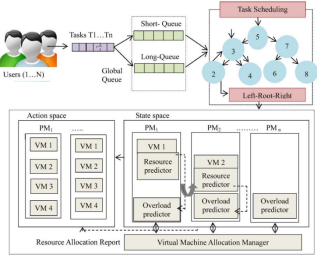
Figure 1. Cloud Computing Architecture [8].
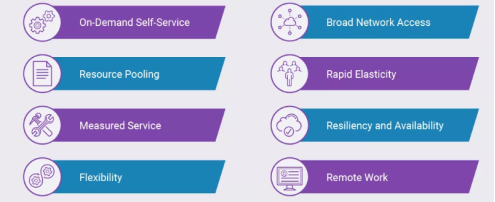
Figure 2. Characteristics of Cloud Computing Technology [9].
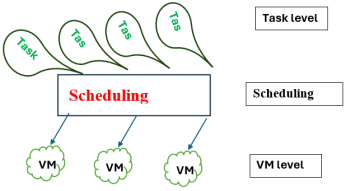
Figure 3. Task Scheduling System [12].
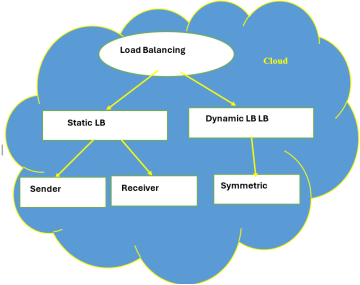
Figure 4. Branches of Load Balancing [4].
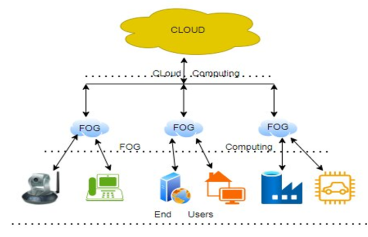
Figure 5. Fog Computing Architecture [13].
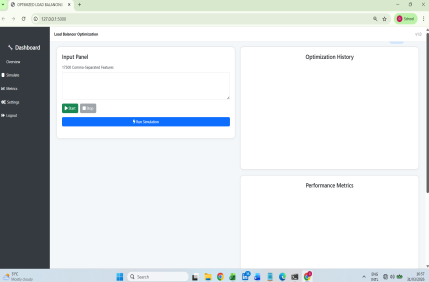
Figure A1. Main dashboard interface with Input Panel, Simulation Controls, and Visualization Cards.
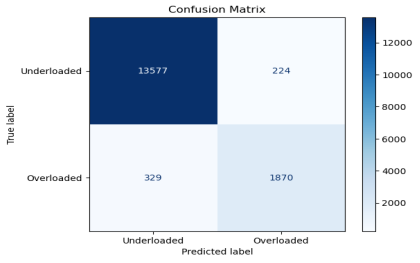
Figure A2. Confusion Matrix.

Information



 Share This Article
 Twitter
 Linked In
 Facebook
 Copy
Copy Download