Abstract
The majority of faecal sludge in Yaounde is disposed of as uncontrolled discharge from Nomayos, a small village located at 15km of South West of Yaoundé without treatment. This uncontrolled discharge is found beside the Avo’o river whose waters are used for multiple purposes by the people of this locality. The objective of this study is to contribute to understanding the impact of the uncontrolled landfill on the health of the populations of Nomayos through Ecosystem Approaches to Human Health. The results show that the people are aware of the presence of (the) uncontrolled discharge of faecal sludge. They neglect or ignore the potential health risks that may be caused by sludge, clinging instead to the financial revenues from the management of this uncontrolled faecal sludge discharge. People get their water from wells and springs. The average concentrations of helminths eggs in environmental components are 3601 eggs/L in sludge, 857 eggs/L in irrigation waters, 688 eggs/L in wells and 60 eggs/L for springs. There is a significant difference at 5% between the complaints of the people and drinking water. In addition, 54% of inhabitants are infected by various parasites; children under five years and women farmers are the most affected. The Parasites identified are: Ascaris lumbricoides, Entamoeba hystolytica, Trichuris trichuira, Giadia intestinalis and Angulula sp. From the findings, it is urgent to implement a treatment plant sludge.
Keywords
Faecal Sludge, Impact, Potential Risks, Helminths, Uncontrolled Discharge, Nomayos Yaoundé-Cameroon
1. Introduction
The major metropolises of African countries are experiencing significant demographic growth, with rural populations migrating to urban areas in search of jobs and better living conditions. These newly-arrived populations often settle on the outskirts of large metropolises, leading to the emergence of informal settlements that have not previously benefited from development plans and are characterized by a lack of basic infrastructure such as drinking water supply and sanitation networks.
In Cameroon, statistics show that less than 50% of the urban population has access to a conventional drinking water supply network
| [14] | Institute of National statistics and PNUD. 2010. National progress reports on the objectives of the millennium Development goal. Website of the National Directorate of statistics of Cameroon. |
[14]
. This low coverage rate forces a large proportion of the population to rely on groundwater (springs, wells)
| [23] | Ndjama, J., Kamgang Kabeyene B. V., Sigha Nkamdjou, L., Ekodeck, G., Tita Magaret Away, 2008. Water supply, sanitation and health risks in Douala Cameroun. African journal of Environnemental Science and Technology 2(2): 422-429. |
| [30] | Temgoua, E., Ngnikam, E., Dongson, B., 2009. Drinking water quality: stakes of control and sanitation in the town of Dschang A-Cameroon. International of Biological and chemical Sciences, 3(3): 441-447. |
[23, 30]
. The sanitation sector is dominated (60-95%) by autonomous sanitation systems
| [2] | Ambassa, N., 2005. Contribution to the characterization of fecal sludge production in the city of Yaounde. DESS Thesis, University of Yaounde I, 41 p. |
| [16] | Kengne, I. M., 2008. Potentials of sludge drying beds vegetated with Cyperus papyrus L. and Echinochloa pyramidalis (Lam.) Hitchc. Chase for faecal sludge treatment in tropical regions. Doctorate Thesis / PhD defended at the University of Yaounde I. 113p. |
[2, 16]
. According to worldwide data
| [32] | UNECIF, 2025. Annual Report for UNICEF. |
[32]
, this type of sanitation produces around one million tonnes of sludge every day, requiring repeated emptying. Faecal sludge is a mixture of human excrement, urine and wastewater from on-site sewage systems (latrines, public toilets, septic tanks and cesspools)
| [12] | Heinss, U., T., Koottatep, 1998. Use of Reed Beds for Faecal Sludge Dewartering. EAWAG/AIT. Unpublish report. pp 2-10. |
[12]
.
Unfortunately, faecal sludge is often dumped untreated close to dwellings, in watercourses, gutters or on unoccupied land. Sludge contains high concentrations of pathogenic germs such as bacteria, viruses, fungi, helminth eggs and protozoan cysts
| [5] | Bolomey, S., Koné, D., Strauss, M. (2003). Improving fecal sludge management through strengthening the local private sector: Studies and tools - Case of Council VI of the District of Bamako. Eawag / Sandec, Switzerland. 48p. |
[5]
and pose a health risk to human populations in the event of contamination. Water contaminated by these sludges is likely to cause diseases (diarrhoea, onchocerciasis, abdominal pain, etc.) responsible for mortality in children under five
| [13] | Institute of national statistics (INS), 2004. Annual statistics of Cameroon. Website of the National Directorate of statistics of Cameroon. |
| [29] | Tabue Youmbi J. G., Ntamack D., Feumba R., Ngnikam E., Wethe J. ET Tanawa E. 2009. Vulnérabilité des eaux souterraines et Périmètres de protection dans un bassin versant de la Mingoa (Yaoundé, Cameroun), Revue de l’Université de Moncton, vol. 40, N°2, 71-96 pp. |
| [31] | Temgoua, E. 2011. Chemical and bactériological analysis of drinking water from alternative sources in the Dschang Municipality, Cameroon. Journal of Environnemental Protection, 2: 620-628. |
| [32] | UNECIF, 2025. Annual Report for UNICEF. |
[13, 29, 31, 32]
. In Yaounde, this sludge is transported in emptying trucks chartered by private companies and dumped at Nomayos, close to a watercourse, the Avo'o steam, which is also a tributary of the Mefou, one of Yaounde's main watercourses, serving as its water supply. The local population uses waters from the Avo'o stream for their domestic needs and agricultural activities.
The main objective of this study was to contribute to understanding the impact of the faecal sludge dump on the health of the Nomayos population. Specifically, the aim was to describe how the local populations behavior of towards the faecal sludge dump, determine the parasitological characteristics of samples of fresh faecal sludge, water and crops; and establish the impact of the dump on the prevalence of water-related diseases in the area. That is, a comparison between pre- and post-activity periods; and coprological analyses of a representative sample of the population, in order to develop proposals for improving the living conditions of these populations.
Following an ecosystemic approach to human health, which requires the integration of three methodological pillars - community participation, transdisciplinarity, and gender and equity - this article sets out to show the impact of this landfill on the health of the Nomayos populations.
2. Materials and Method
2.1. Presentation of the Study Site
Nomayos is a small town located 15 km southwest of the capital city of Cameroon, Yaoundé. It has more than 2,500 inhabitants and is crossed by the Avo'o river. It is in this village that the tanker trucks of sewage disposal companies come to dump the majority of the sludge collected in the city of Yaoundé. Field observations reveal a space of around 300 m
2, capable of simultaneously accommodating three to four vacuum trucks discharging a volume of sludge ranging from 755 m
3 to 1,350 m
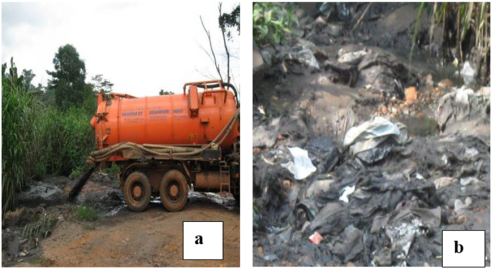
3 per week. Located one kilometer from the N° 3 national road linking the cities of Yaounde and Douala, the dump is connected to this axis by a road whose state of physical deterioration indicates the high level of use of the site. Not far downstream is the Avo'o stream, into which the sewage sludge flows (
Figure 1).
Figure 1. a-emptying on site; b-miscellaneous waste observed on site.
2.2. Socio-anthropological Data Collection
After the presentation of objectives of the study and consent obtained, data were collected using structured interviews, direct observations and informal or focused group discussions. The choice of these different data collection techniques is justified by the typology of the theme studied, which has an essentially qualitative and sociological dimension.
Interviews were carried out with a random sample, using a survey form to gather information on socio-demographic, environmental (access to drinking water, sanitation) and health characteristics. In addition, a number of questions were administered to the target actors on the quantity of sludge dumped, number and type of trucks involved in the activity. Moreover, to determine the health hazard associated with the faecal sludge dump, population's perception of the dump, number of market gardeners growing crops around the site among others in order to assess and quantify some of the phenomena studied.
Observations, focus groups and informal discussions were carried out in turn with young people, women, men, officials from the town hall, the sub-prefecture, agents responsible for collecting taxes on the dump site and traditional authorities, in order to assess the level of knowledge of the various social groups on the link between dumping and health.
The various social groups were recruited through associations, and meetings were held in the courtyard of the Nomayos chiefdom and in classrooms. Discussions were led by a sociologist assisted by association leaders. The people recruited (325 in all) were those who had been resident in the area for at least a year, and who were involved in the activities around the dump or consumed water from wells in the area.
2.3. Water and Faecal Sludge Analysis
2.3.1. Fresh Faecal Sludge
Fresh sewage sludge samples were collected in 1L polyethylene bottles during two visits, when the sewage trucks were being unloaded. A total of 12 samples were collected and transported to the Laboratory of Biotechnology and Environment of the Faculty of Sciences, University of Yaoundé I, in a cooler at 5°C, for parasitological analysis. At the laboratory, 100 ml of fresh sludge was collected in a 1L flask and diluted to 1/10th. The mixture was shaken, placed in a container and left to settle for 8 hours. The supernatant was discarded and the pellet subjected to the modified Bailenger method, which comprises four steps
| [3] | Ayres R. M., Mara, D. D., 1996. Analysis of wastewater for use in agriculture: A laboratory manual of parasitological and bacteriological techniques. WHO, Geneva, 38p. |
[3]
: separation, concentration, identification and observation in a Mac Master cell to facilitate microscopic egg counting.
The number of eggs was calculated as a function of the initial volume according to the formula:
where
N = number of eggs per liter of sample
A = average number of eggs in the Mac Master cell
X = final sample volume (ml)
P = volume of the Mac Master cell (0.3 ml)
V = initial volume of wastewater to be analyzed (2 liters)
2.3.2. Surface Water
A total of 33 surface water samples were taken at market garden irrigation, bathing, laundry and dishwashing points (S1, S2, S3) in 2L polystyrene bottles and transported to the laboratory in a cooler at 5°C for parasitological analysis.
2.3.3. Groundwater
(i). Well Water
A total of 33 well water samples (less than 1 m below ground level) were analyzed. These were wells located upstream (P1 and P2) and downstream (P3) of the faecal sludge dump. Water samples were collected in 2 L vials and transported in a cooler at 5°C to the laboratory for parasitological analysis.
(ii). Spring Water
A total of 22 spring water samples were collected upstream (P4) and downstream (P5) of the faecal sludge dump site. Samples were collected in 2 L polystyrene bottles and transported in a cooler at 5°C to the laboratory for parasitological analysis. At the laboratory, raw water samples were left to settle for 8 hours. The supernatant was discarded. The supernatant was removed and the pellet subjected to the modified Bailenger method
| [3] | Ayres R. M., Mara, D. D., 1996. Analysis of wastewater for use in agriculture: A laboratory manual of parasitological and bacteriological techniques. WHO, Geneva, 38p. |
| [35] | World health Organization (WHO). 2003. Bench Aids for the diagnosis of intestinal parasites, ISBN 92 4 1544767 5 (NLM Classification: WC 698). |
[3, 35]
.
Table 1. Surface and groundwater sampling points.
Type of resource | Identifier of points | Names | Observations |
Surface water | S1 | Avo'o | located upstream of the landfill |
S2 | Avo'o | Located at 130 m from the faecal sludge landfill. Irrigation point for market gardening |
S3 | Avo'o | located downstream of the sewage sludge dump |
Groundwater | P1 | Well | located at 300 m upstream of the dump |
P2 | Well | located at 1 km upstream of the dump |
Landfill | P3 | Well | located at 300 m downstream of the dump |
P4 | Spring | located upstream of the dump |
P5 | Spring | located at 1 km downstream of the dump |
2.4. Health Data Collection
2.4.1. Retrospective Data on Water-related Pathologies
Data on pathologies such as malaria, dermatoses, diarrhea, intestinal parasitosis, typhoid fever, bilharzia, cholera, etc were collected retrospectively from the registers of the study area's health center before and after the period marking the start of sludge dumping on the site (i.e. in 2000 and 2011).
2.4.2. Parasite Analysis of Stools
Coprological analysis
During the focus group phase, 325 volunteers (men, women and children) were recruited for bioethical health monitoring. Only 286 stool samples were collected and transported to the medical laboratory, as 39 patients withdrew due to cultural influences that “stool cannot be entrusted to strangers”. The day before the sample was taken, the patient was given a survey form to fill in: surname, first name, name of the neighborhood, sources of water supply, date of last antihelminthiasis treatment, existence and type of self-contained evacuation system, symptoms complained of and a well-labeled plastic collection jar. The sample was taken at home by the patient. Completed forms and stool containers were collected the following morning.
Ethical considerations
Ethical norms were taken into account during the coprological analyses. It was a question of respecting and holding accountable all those involved in the study in order to obtain their consent. Administrative, traditional and religious authorities were informed, involved and gave their consent to the study's participation. In addition, the population was sensitized during the survey phase and their consent was obtained. The results of the parasitological examinations of consenting individuals were transmitted to them in a confidential manner.
2.5. Data Processing
Data were analyzed using Excel software. Analysis of variance (ANOVA) and comparisons of means were performed using the Student, Newman Keuls and Duncan tests for retrospective data. Comparisons between complaints, water supply sources and parasites were made using the Kolmogorov-Smirnov and Chi2 tests. Complaints" data were obtained from information sheets distributed to patients selected for the prospective study.
3. Results
3.1. Behaviors of the Nomayos Population with Regard to the Faecal Sludge Dump
As the waste collection bin is no longer in use, tanker trucks empty their contents in the middle of the road. The same road is used by men and women on their way to the fields. Similarly, the poured waste now flows directly into the Avo'o river, a watercourse used by market gardeners to water their plants. Children under 5 are brought to the field by their parents, where they are also exposed to mosquito bites. Moreover, in these fields, some women breastfeed their children without protecting themselves; that is, without respecting basic rules of hygiene.
However, the people of Nomayos are not particularly interested in issues relating to human health and environmental degradation. They are more interested in the financial spin-offs; indeed, the Nomayos dump represents a major financial mine for them. In terms of the benefits derived from the landfill, two main avenues can be explored: fertilizers and community projects. In addition, these populations consider any food or medicine discarded at the dump by companies or administrative structures as manna from heaven, and do not hesitate to recover them for consumption and use.
3.1.1. Fertilizers
The sludge was poured in a liquid state into a tank by the drainers. It settled and formed a sandy paste at the bottom of the tank, which was then bagged and drained in the sun. The resulting product was used as a fertilizer by market gardeners in the study area. The effectiveness of this ecological fertilizer has earned it a reputation among women farmers who grow vegetables on Yaoundé's peri-urban land.
3.1.2. Community Projects
The Nomayos village development committee, on the basis of the financial spin-offs from the landfill (payment of the 3,000 by the emptying trucks°), has undertaken to set up projects to benefit the entire population of the area. Thanks to this committee, plastic chairs have been purchased for the local population, and a solidarity fund has been set up to help members on various occasions.
3.2. Analysis of Parasitological Parameters
The analysis of the parasitological parameters in selected environmental components (sewage sludge, surface water and groundwater) revealed interesting results.
3.2.1. Faecal Sludge
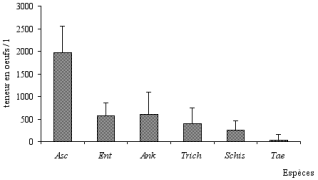
The 12 faecal sludge samples collected and analyzed in the laboratory had an average helminth egg concentration of 3,601 eggs/L. The helminth eggs identified belonged to the nematode and cestode classes, with a strong predominance of nematodes. The species identified were Ascaris sp, Enterobius sp Ankylostoma sp, Trichuris sp Schistosoma sp in the nematode family Taenia sp in the cestode family (
Figure 2).
Figure 2. Mean concentration and standard deviation of helminth eggs in sludge.
3.2.2. Irrigation Water
The parasites identified in the water sampled at points S1, S2 and S3 belonged mainly to the nematode classes and were represented by the species:
Ascaris sp,
Enterobius sp,
Ankylostoma sp,
Trichuris sp and
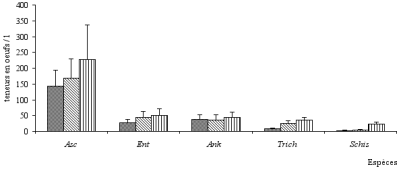
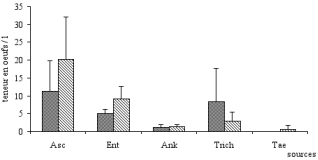
Schistosoma sp. Average helminth egg concentrations were: 214 eggs/L for S1, 230 eggs/L for S2 and 363 eggs/L for S3 (
Figure 3). There was a significant difference between the sites near the faecal sludge dump and the upstream site at the α = 0.05% threshold, with F = 5.007 and P = 0.002. There was a significant difference at threshold α = 0.05% between
Ascaris sp and other species (F = 8.27 and P = 0.001).
In terms of species frequency, Ascaris sp. eggs predominated whatever the sampling source.
Figure 3. Mean concentration and standard deviation of helminth eggs in irrigation water.
3.2.3. Groundwater
(i). Well Water
Parasites identified in water sampled from wells P1, P2 and P3 belonged mainly to the nematode classes and were represented by the species:
Ascaris sp,
Enterobius sp,
Ankylostoma sp,
Trichuris sp and
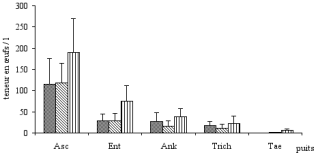
Taenia sp. Mean helminth egg concentrations were: 175 eggs/L for P1 and 188 eggs/L for P2 and 325 eggs/L for P3 (
Figure 4). There was a significant difference at the α = 0.05% threshold between water from upstream and downstream wells, with F = 16.92 and P = 0.002.
Figure 4. Mean concentration and standard deviation of helminth species in wells.
(ii). Spring Water
Parasites identified in water taken from springs P4 and P5 belonged mainly to the nematode classes and were represented by the species:
Ascaris sp,
Enterobius sp,
Ankylostoma sp,
Trichuris sp and
Taenia sp. Average helminth egg concentrations were: 26 eggs/L for P4 and 34 eggs/L for P5 (
Figure 5).
Figure 5. Mean concentration and standard deviation of helminth species in spring water.
3.3. Health Data
Retrospective study of health data before and after the installation of the dump. Analysis of register data from health centers in the study area revealed a significant difference at the 95% level between the number of children aged 0 to 5 and patients aged over 5 suffering from malaria in 2000 and 2011. However, there was no significant difference between typhoid, bilharzia, onchocerciasis and the number of deaths in the sample (
Table 2).
Sample profile for health impact analysis
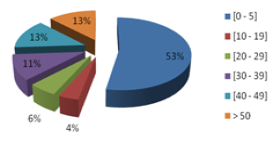
Samples were selected by sex and age group: [0-5 years], [10-19], [20-29], [30-39], [40-49] and ≥50. (
Figure 6). In Nomayos, the age groups were characterized by the representation of children under five and the elderly. Females (51%).
Figure 6. Sample profile.
3.4. Water Supply
Analysis of the survey forms completed by Nomayos residents shows that the main sources of water for drinking, bathing and domestic use were wells (66.20%) and springs (30.99%). Other sources (boreholes) accounted for 2.82%.
3.4.1. Signs and Symptoms of Water-borne Diseases in the Population
The clinical complaints observed in the population were generally symptoms of water-borne diseases caused by pathogens, the species of which were identified in the subjects by microscopic observations of stools. In the following, the various results of the stool examinations obtained were presented in order to establish the prevalence of water-borne diseases.
Abdominal pain
There was a significant difference between abdominal pain and age irrespective of sex at the α = 0.05% threshold for children aged 0 to 5 years (Z = 1.36 and Z = 2.52) for the female and male sexes respectively. There was also a significant difference between individuals ≥ 50 years of age (Z = 1.66 and Z = 1.59) for female and male genders respectively. However, there was no significant difference at the α = 0.05% threshold for abdominal pain between individuals aged 20-49 (Z = 1.77 and Z = 0.33). There were significant differences between non-working males (Z = 1.78) and farmers (Z = 1.51 and Z = 2.23) for the male and female genders respectively.
Itching
There was no significant difference at the α = 5% threshold between itching and age for individuals aged 0 to 5 years (Z = 0.96 and Z = 1.19) and those aged 10 to 49 years (Z = 1.05 and Z = 0.28) regardless of sex. However, for individuals ≥ 50 years of age, there was a significant difference between itching and female individuals at the α = 5% threshold with Z = 1.66.
Diarrhea
There were significant differences at the α = 5% threshold between diarrhea in male children aged 0-5 years (Z = 2.81), young people aged 10-19 years (Z = 1.95 and Z = 1.64) for males and females respectively and male individuals ≥ 50 years (Z = 1.41). There is a significant difference between diarrhea and non-activity regardless of gender (Z = 1.78 and Z = 1.40) for male and female genders respectively. There was also a significant difference between diarrhoea and farmers regardless of sex (Z = 1.92 and Z = 2.20) for males and females respectively.
3.4.2. Stool Examination
Of 286 stool samples analyzed, 154 were positive and 134 negative, giving a prevalence rate of 54%.
(i). Parasitic Species Distribution on 154 Positive Stool Samples
On 154 positive stool samples, the species identified were distributed as follows: 52.60%
Ascaris lombricoides (81), 5.20%
Trichuris trichiura (8), 40.30%
Entamoeba hystolitica (62), 0.60%
Angulula (1) and 1.30%
Giardia intestinalis (2) (
Table 2).
Table 2. Parasite species distribution for the 154 positive stool examinations.
Species | Total | % Examination |
Helminthes | Trichuris trichiura | 8 | 5,20 |
Ascaris lumbricoides | 81 | 52,60 |
Angulules | 1 | 0,64 |
Amoebae | Total | 90 | 58,44 |
Entamoeba histolytica | 62 | 40,30 |
Entamoeba coli | ₋ | ₋ |
Flagellates | Total | 62 | 40,30 |
Giardia intestinalis | 2 | 1,30 |
Total | 154 | 100 |
The parasitized subjects were divided according to sex, and it was found that men were just as parasitized as women.
Polyparasites were more common in women than in men. Entamoeba hystolitica + Ascaris lombricoïdes, Ascaris + Trichuris trichuira.
Cross-tests were performed between age groups and parasitic species encountered. The Chi2 and Kolmogorov-Smirnov tests showed that there was a significant difference between age groups and parasitic species at the α = 0.05 threshold.
To check whether contamination rates are related to the source of water supply, the Kolmogorov- Smirnov Z test was performed between water supply sources and parasite species on the one hand, and with clinical complaints on the other.
(ii). Well Water Consumption and Parasitic Infestation in Populations
There was a significant difference between Ascaris sp and well water at the α = 5% threshold with Z = 2.60. There was also a significant difference between well water and Entamoeba hystolytica at the α = 5% threshold with Z = 1.78. However, it should be noted that there was no significant difference between parasite species and spring water supply.
(iii). Well Water Consumption and Abdominal Pain
There was a significant difference between well water consumption and abdominal pain at the α = 5% threshold with Z = 3.78.
(iv). Well Water Use and Diarrhoea
There was a significant difference between diarrhoea and well water at the α = 5% threshold with Z = 4.54.
(v). Well Water Use and Skin Itching
There was a significant difference between skin itching and well water use at the α = 5% threshold with Z = 1.76.
4. Discussion
The local population is all aware of the presence of the faecal sludge dump. However, their perceptions of the presence of this dump and its impact on the environment are divergent. The study shows that, despite the health impacts to which the populations are exposed, they accept to live with this waste, preferring to wait for the financial rewards. These behaviors and practices could be justified by poverty
| [24] | Obrist, B. 2006. Risk and Vulnerability in Urban Health Research. Vertigo, Online Journal of Environmental Sciences. 6P. |
| [33] | Wethe, J., M., Radoux, and E. Tanawa, 2003. Wastewater Treatment and Socio-Health and Environmental Risks in a Planned Residential Area of Yaounde (Cameroon). Vertigo - The Online Journal of Environmental Sciences, Vol. 4, May 2003. |
[24, 33]
, which is one of the factors driving vulnerable populations to develop practices that expose them to health risks. The faecal sludge dump is perceived by some families as a godsend, enabling them to solve their daily agricultural problems.
Contrary to the numerous studies showing that women are more vulnerable than men
| [10] | Dubresson, A. et S., Jaglin, 2002, « Urbain gouvernance in Sub-Sahara Africa. For a Geography of Regulation », in Bart, F. et al., A look on Africa, International Gography Union /French National Committee of geography/IRD pp. 67-75. |
| [13] | Institute of national statistics (INS), 2004. Annual statistics of Cameroon. Website of the National Directorate of statistics of Cameroon. |
| [32] | UNECIF, 2025. Annual Report for UNICEF. |
[10, 13, 32]
, in Nomayos, women, considered to be the backbone of society, are just as exposed as men. In this village, both men and women are involved in farming. What's more is the fact that men are those who handle the sewage sludge more to improve the soil nutrient content, without taking any precautions beforehand. However, it should be noted that women are more involved in the weeding process andsome women breastfeed their newborns in the fields without respecting hygiene rules. These children are exposed to contamination, mosquito bites and foul odors
| [18] | Koottatep, T., Polprasert, C., Oanh, N. T. K., Surinkul, N., Montangero, A. et M, Strauss, 2002. Constructed wetlands for septage treatment. Towards effective faecal sludge management. In: wetlands systems for water pollution. Arushia, Tanzania.pp 15-19. |
| [31] | Temgoua, E. 2011. Chemical and bactériological analysis of drinking water from alternative sources in the Dschang Municipality, Cameroon. Journal of Environnemental Protection, 2: 620-628. |
[18, 31]
.
Laboratory analysis of sewage sludge samples revealed a high concentration of helminth eggs, demonstrating the high level of parasitism in the area, and the need to remove pathogens from the sludge before releasing it into the environment. This result is in line with those of studies carried out by
| [1] | Adou- Bryyn, D., M., Kouassi, J., Brou, J., A., Oohon Assoumou, 2001. Overall prevalence of orally transmitted parasites among children in Tournodi (Ivory Coast). Black African Medicine. 48(10): 393-398 PP. |
| [2] | Ambassa, N., 2005. Contribution to the characterization of fecal sludge production in the city of Yaounde. DESS Thesis, University of Yaounde I, 41 p. |
| [12] | Heinss, U., T., Koottatep, 1998. Use of Reed Beds for Faecal Sludge Dewartering. EAWAG/AIT. Unpublish report. pp 2-10. |
| [16] | Kengne, I. M., 2008. Potentials of sludge drying beds vegetated with Cyperus papyrus L. and Echinochloa pyramidalis (Lam.) Hitchc. Chase for faecal sludge treatment in tropical regions. Doctorate Thesis / PhD defended at the University of Yaounde I. 113p. |
| [17] | Kengne, I.M., Amougou Akoa, Koné Doulaye, 2009. Recovery of biosolids from constructed wetland used for faecal sludge dewatering in Tropical Regions. Environment Science Technology, 43(1): 6816-6821. |
[1, 2, 12, 16, 17]
in which high concentrations of helminth eggs were also observed in fresh sludge.
Analysis of irrigation water samples taken from various parts of the Avo'o stream showed that the helminth species identified all belonged to the Nematode class. It should be noted that practically the same helminth species (with the exception of Taenia sp, identified only in the sludge) were also found in the sludge samples and in the irrigation water for the market garden crops.
The analysis of irrigation water samples taken at different sites (S1, S2, S3) along the watercourse, depending on proximity to the dump, revealed higher concentrations of helminth eggs at S2 and S3 than at S1. This difference in concentrations could be justified by the daily gravitational flow of large quantities of faecal sludge from site S2 to S3.
The presence of pathogens in water used to irrigate crops represents a major health risk for both the market gardeners who handle this water and the consumers of these products. Concentrations of helminth eggs in these waters far exceed the standards set by the World Health Organization (WHO) for irrigation water for market gardening, which must contain a parasite load of 1 egg/L or less. These results corroborate those of
| [1] | Adou- Bryyn, D., M., Kouassi, J., Brou, J., A., Oohon Assoumou, 2001. Overall prevalence of orally transmitted parasites among children in Tournodi (Ivory Coast). Black African Medicine. 48(10): 393-398 PP. |
| [4] | Blumenthal, 2000. Crop irrigation with untreated waste water causes significant excess infection with irrigated crop and those who work in irrigated field. Cholera typhoid tape worm baduel infection. |
| [11] | Gaspard, P., J., Wiart and J. Schwartzbrod, 1997. Parasitological contamination of urban sludge used for agricultural purposes. Waste Management & Research. (15): 429-436. |
| [15] | Jimenez-Cisneros, B. E., C. Rendon-Maya, and G. Valaquez-Salgado, 2001. The elimination of helminth ova, faecal coliforms, Salmonella and protozoan cysts by various physicochemical processes in wastewater and sludge. Water Science and Tecthnology, 43(12): 179-182. |
| [20] | Mpoame M. M., Komtangi C., Kouatcho Djitie F., 2008. Evaluation of the anthelmintic efficacy of ethanolic extracts of papaya seeds (Carica papaya L.) against avian ascariasis caused by Ascaridia galli in broiler chickens. TROPICULTURA, 26 (3): 179-181. |
| [21] | Muhammad, M., B, Alaadin, S. Abuzaid Nabil, 2006. Fate of pathogens in sludge sand drying beds at Quateef, khobar and Dammam: a case Study. International journal of Environnemental Research, 1(1): 19-27. |
| [22] | Naour, N. 1996. mpact of wastewater reuse in agriculture on crop contamination by helminth eggs. Doctoral dissertation, Faculty of Science, Marrakech 33P. |
| [25] | Peterson, S. R., Ashbolt, N. J., A. Sharma, 2001. Microbial risks from wastewater irrigation of salad crops: a screening-level risk assessment. Water Environment Research, 72(6): 667-672. |
[1, 4, 11, 15, 20-22, 25]
.
Parasitological analysis of well and spring water shows that average helminth egg concentrations in wells and springs located downstream of the dump are much higher than those in wells and springs located upstream of the faecal sludge dump, regardless of distance. These values are very high compared with the standards published by the
| [34] | World health Organization (WHO). 1989. The Use of Wastewater in Agriculture and Aquaculture: Recommendations for Public Health. Report of a WHO Scientific Group. World Health Organization, Technical Report No. 778, Geneva. |
[34]
. This difference could be explained by the direction of flow of faecal sludge from upstream to downstream. These results corroborate those of
| [6] | Boujamaa Imziln & Mustapha Barakate., 1997. Impact of fecal pollution on the distribution of mesophilic Aeromonas in different aquatic environments in Marrakech, Morocco. Freshwater Contamination (proceedings of Rabat symposium). (243): 129- 137. |
| [7] | Bouhoum, K., 1996. Epidemiological study of helminth infections among children in wastewater spreading areas in Marrakech. Fate of Protozoan cytes and Helminth eggs in different extensive Wastewater Tereatment systems. Doctoral Thesis, Faculty of Science, Semlalia, Marrakech. |
| [8] | Bouhoum, K., O., Omahmid, K, H., Habba, Schwartzbrod, 1997. Fate of Helminth eggs and Protozoan cysts in an open cannals supplied by Wastewater from Marrakech. Rev. Sci. Water 2: 217- 232. |
| [27] | Sasakovan, N., Juris, P., Papajova, I., Vargova, M., Ondrasovicova, M., Ondrasovic, A., Kaskova, E., Szabova. 2005. Parasitological and bacteriological risks to animal and human health arising from wastewater treatment plants. Helminthologia, 42(3): 137-142. |
[6-8, 27]
. These waters represent a potential health risk for the population around and along the water course.
An analysis of the population's complaints revealed that abdominal pain, diarrhea and itchy skin were recurrent (
Figure 5). Malaria, which is endemic and monitored by the national malaria control program relayed by the health district, was not studied. However, in the Nomayos locality, the proportion of such complaints is higher, with a 35-point increase for abdominal pain, a 19-point increase for itchy skin and a 40-point increase for diarrhoea. These results concur with those of
| [9] | Coulibaly, L., D., Diomandé, A., Coulibaly, G., Gourène, 2004. Use of Water and Resources Health risks in the Informal Settlements of Port-Bouet Council (Abidjan; Ivory Coast). Vertigo, Science review of the Environment, Vol 5 n°3.7p. |
| [17] | Kengne, I.M., Amougou Akoa, Koné Doulaye, 2009. Recovery of biosolids from constructed wetland used for faecal sludge dewatering in Tropical Regions. Environment Science Technology, 43(1): 6816-6821. |
| [18] | Koottatep, T., Polprasert, C., Oanh, N. T. K., Surinkul, N., Montangero, A. et M, Strauss, 2002. Constructed wetlands for septage treatment. Towards effective faecal sludge management. In: wetlands systems for water pollution. Arushia, Tanzania.pp 15-19. |
| [19] | Kravitz, J., D., Nyaphisi, M., R. Mandel, et E. Petersen, 2000. Quantitative bacteriological assessment of domestic water supplies in the highlands of Lesotho: water quality, sanitation, and health issues at the village level. World Health Organization Bulletin. (2): 113-118. |
| [26] | Salem, G., Van de Velden, L., Laloé, F., Maire, B., A., Ponton, P., Traissac, A. Prost, 1994. Parasitoses intestinales et environnement dans les villes Sahélo-Soudaniennes: l’exemple de Pikine (Sénégal). Rev. Epidém. Et santé publ., (42): 322- 333. |
| [28] | Shuval, H. I., P., Yekutiel, B. Fattal, 1984. Epidemiological evidence for helminth and cholera transmission by vegetables irrigated with wastewater: Jerusalem a case study. Wat. Sc. Tech. 17: 443-442. |
[9, 17-19, 26, 28]
who show that well water is the cause of waterborne diseases.
Generally speaking, Nomayos water is contaminated with helminth eggs due to the presence of the sewage sludge dump. This poor water quality could justify the differences in complaints observed at the 5% threshold and the high prevalence of parasites obtained in Nomayos (54%).
To help improve the sanitary condition of the site and surrounding area, various actions were carried out in the field (
Table 3)
Table 3. Actions carried out in the field.
Problems identified | Actions carried out |
Risks linked to the dumping site | Raising public awareness (excreta management, household waste, use of faecal sludge, protection of children under 5); installation of faecal sludge treatment basins (planted filter and lagooning) on the current site setting up a protective perimeter between the village and the landfill site, with cultivated plots moved to less contaminated areas |
Identified pathologies | training people in water purification methods (sodis method) and water conservation (bucket with tap); distribution of mosquito nets and anti-helminthiases to people who took part in the surveys. |
Contaminated vegetable crops | Contaminated vegetable crops Invitation to the population to wash vegetable crops with bleach before cooking or using them. Installation of a basic treatment system (gravel and sand filters) to treat water before it is used to water market garden crops. |
5. Conclusion
Generally speaking, the average helminth egg content of Nomayos water is very high compared with WHO recommendations for drinking water. This poor water quality could explain the complaints observed and the high prevalence of intestinal parasitosis among these populations, given the results of biomedical analyses of stool samples. Complaints have also been recorded in the area about the proliferation of mosquitoes (female Anopheles, the vector of malaria), “mouts-mouts”, which are said to cause both malaria and skin diseases, and foul odours. Moreover, given the close relationship between humans and waste, it's easy to understand that this site represents a real health risk for the population. To safeguard the health of the people of Nomayos, short- and long-term solutions need to be found: raising awareness of the risks associated with faecal sludge, training the people of Nomayos in techniques for making drinking water potable at home, building boreholes and installing a faecal sludge treatment plant in Nomayos.
Abbreviations
ANOVA | Analysis of Variance |
INS | National Institute of Statistics |
UNICEF | United Nations International Children’s Emergency Fund |
WHO | World Health Organization |
Acknowledgments
ECOSANTE from the International Development Research Centre (IDRC) through the partnership established between the Ecole Nationale Polytechnique (University of Yaoundé I, Cameroon) and the University of Abomey Calavi (BENIN).
COPES-AOC (Communauté des Pratiques en ECOSANTE en Afrique de l'Ouest et du Centre) through training in ECOSANTE and a research grant for young researchers.
Author Contributions
Valerie Njitat Tsama: Conceptualization, Data curation, Methodology, Resources
Tatiana Mossus: Data curation, Formal Analysis, Methodology
Francis Meliphe Kom: Investigation, Writing – review & editing
Julius Kajoh Boyah: Methodology, Writing – review & editing
Ambang Zachee: Methodology, Supervision, Writing – review & editing
Conflicts of Interest
The authors declare no conflicts of interest.
References
| [1] |
Adou- Bryyn, D., M., Kouassi, J., Brou, J., A., Oohon Assoumou, 2001. Overall prevalence of orally transmitted parasites among children in Tournodi (Ivory Coast). Black African Medicine. 48(10): 393-398 PP.
|
| [2] |
Ambassa, N., 2005. Contribution to the characterization of fecal sludge production in the city of Yaounde. DESS Thesis, University of Yaounde I, 41 p.
|
| [3] |
Ayres R. M., Mara, D. D., 1996. Analysis of wastewater for use in agriculture: A laboratory manual of parasitological and bacteriological techniques. WHO, Geneva, 38p.
|
| [4] |
Blumenthal, 2000. Crop irrigation with untreated waste water causes significant excess infection with irrigated crop and those who work in irrigated field. Cholera typhoid tape worm baduel infection.
|
| [5] |
Bolomey, S., Koné, D., Strauss, M. (2003). Improving fecal sludge management through strengthening the local private sector: Studies and tools - Case of Council VI of the District of Bamako. Eawag / Sandec, Switzerland. 48p.
|
| [6] |
Boujamaa Imziln & Mustapha Barakate., 1997. Impact of fecal pollution on the distribution of mesophilic Aeromonas in different aquatic environments in Marrakech, Morocco. Freshwater Contamination (proceedings of Rabat symposium). (243): 129- 137.
|
| [7] |
Bouhoum, K., 1996. Epidemiological study of helminth infections among children in wastewater spreading areas in Marrakech. Fate of Protozoan cytes and Helminth eggs in different extensive Wastewater Tereatment systems. Doctoral Thesis, Faculty of Science, Semlalia, Marrakech.
|
| [8] |
Bouhoum, K., O., Omahmid, K, H., Habba, Schwartzbrod, 1997. Fate of Helminth eggs and Protozoan cysts in an open cannals supplied by Wastewater from Marrakech. Rev. Sci. Water 2: 217- 232.
|
| [9] |
Coulibaly, L., D., Diomandé, A., Coulibaly, G., Gourène, 2004. Use of Water and Resources Health risks in the Informal Settlements of Port-Bouet Council (Abidjan; Ivory Coast). Vertigo, Science review of the Environment, Vol 5 n°3.7p.
|
| [10] |
Dubresson, A. et S., Jaglin, 2002, « Urbain gouvernance in Sub-Sahara Africa. For a Geography of Regulation », in Bart, F. et al., A look on Africa, International Gography Union /French National Committee of geography/IRD pp. 67-75.
|
| [11] |
Gaspard, P., J., Wiart and J. Schwartzbrod, 1997. Parasitological contamination of urban sludge used for agricultural purposes. Waste Management & Research. (15): 429-436.
|
| [12] |
Heinss, U., T., Koottatep, 1998. Use of Reed Beds for Faecal Sludge Dewartering. EAWAG/AIT. Unpublish report. pp 2-10.
|
| [13] |
Institute of national statistics (INS), 2004. Annual statistics of Cameroon. Website of the National Directorate of statistics of Cameroon.
|
| [14] |
Institute of National statistics and PNUD. 2010. National progress reports on the objectives of the millennium Development goal. Website of the National Directorate of statistics of Cameroon.
|
| [15] |
Jimenez-Cisneros, B. E., C. Rendon-Maya, and G. Valaquez-Salgado, 2001. The elimination of helminth ova, faecal coliforms, Salmonella and protozoan cysts by various physicochemical processes in wastewater and sludge. Water Science and Tecthnology, 43(12): 179-182.
|
| [16] |
Kengne, I. M., 2008. Potentials of sludge drying beds vegetated with Cyperus papyrus L. and Echinochloa pyramidalis (Lam.) Hitchc. Chase for faecal sludge treatment in tropical regions. Doctorate Thesis / PhD defended at the University of Yaounde I. 113p.
|
| [17] |
Kengne, I.M., Amougou Akoa, Koné Doulaye, 2009. Recovery of biosolids from constructed wetland used for faecal sludge dewatering in Tropical Regions. Environment Science Technology, 43(1): 6816-6821.
|
| [18] |
Koottatep, T., Polprasert, C., Oanh, N. T. K., Surinkul, N., Montangero, A. et M, Strauss, 2002. Constructed wetlands for septage treatment. Towards effective faecal sludge management. In: wetlands systems for water pollution. Arushia, Tanzania.pp 15-19.
|
| [19] |
Kravitz, J., D., Nyaphisi, M., R. Mandel, et E. Petersen, 2000. Quantitative bacteriological assessment of domestic water supplies in the highlands of Lesotho: water quality, sanitation, and health issues at the village level. World Health Organization Bulletin. (2): 113-118.
|
| [20] |
Mpoame M. M., Komtangi C., Kouatcho Djitie F., 2008. Evaluation of the anthelmintic efficacy of ethanolic extracts of papaya seeds (Carica papaya L.) against avian ascariasis caused by Ascaridia galli in broiler chickens. TROPICULTURA, 26 (3): 179-181.
|
| [21] |
Muhammad, M., B, Alaadin, S. Abuzaid Nabil, 2006. Fate of pathogens in sludge sand drying beds at Quateef, khobar and Dammam: a case Study. International journal of Environnemental Research, 1(1): 19-27.
|
| [22] |
Naour, N. 1996. mpact of wastewater reuse in agriculture on crop contamination by helminth eggs. Doctoral dissertation, Faculty of Science, Marrakech 33P.
|
| [23] |
Ndjama, J., Kamgang Kabeyene B. V., Sigha Nkamdjou, L., Ekodeck, G., Tita Magaret Away, 2008. Water supply, sanitation and health risks in Douala Cameroun. African journal of Environnemental Science and Technology 2(2): 422-429.
|
| [24] |
Obrist, B. 2006. Risk and Vulnerability in Urban Health Research. Vertigo, Online Journal of Environmental Sciences. 6P.
|
| [25] |
Peterson, S. R., Ashbolt, N. J., A. Sharma, 2001. Microbial risks from wastewater irrigation of salad crops: a screening-level risk assessment. Water Environment Research, 72(6): 667-672.
|
| [26] |
Salem, G., Van de Velden, L., Laloé, F., Maire, B., A., Ponton, P., Traissac, A. Prost, 1994. Parasitoses intestinales et environnement dans les villes Sahélo-Soudaniennes: l’exemple de Pikine (Sénégal). Rev. Epidém. Et santé publ., (42): 322- 333.
|
| [27] |
Sasakovan, N., Juris, P., Papajova, I., Vargova, M., Ondrasovicova, M., Ondrasovic, A., Kaskova, E., Szabova. 2005. Parasitological and bacteriological risks to animal and human health arising from wastewater treatment plants. Helminthologia, 42(3): 137-142.
|
| [28] |
Shuval, H. I., P., Yekutiel, B. Fattal, 1984. Epidemiological evidence for helminth and cholera transmission by vegetables irrigated with wastewater: Jerusalem a case study. Wat. Sc. Tech. 17: 443-442.
|
| [29] |
Tabue Youmbi J. G., Ntamack D., Feumba R., Ngnikam E., Wethe J. ET Tanawa E. 2009. Vulnérabilité des eaux souterraines et Périmètres de protection dans un bassin versant de la Mingoa (Yaoundé, Cameroun), Revue de l’Université de Moncton, vol. 40, N°2, 71-96 pp.
|
| [30] |
Temgoua, E., Ngnikam, E., Dongson, B., 2009. Drinking water quality: stakes of control and sanitation in the town of Dschang A-Cameroon. International of Biological and chemical Sciences, 3(3): 441-447.
|
| [31] |
Temgoua, E. 2011. Chemical and bactériological analysis of drinking water from alternative sources in the Dschang Municipality, Cameroon. Journal of Environnemental Protection, 2: 620-628.
|
| [32] |
UNECIF, 2025. Annual Report for UNICEF.
|
| [33] |
Wethe, J., M., Radoux, and E. Tanawa, 2003. Wastewater Treatment and Socio-Health and Environmental Risks in a Planned Residential Area of Yaounde (Cameroon). Vertigo - The Online Journal of Environmental Sciences, Vol. 4, May 2003.
|
| [34] |
World health Organization (WHO). 1989. The Use of Wastewater in Agriculture and Aquaculture: Recommendations for Public Health. Report of a WHO Scientific Group. World Health Organization, Technical Report No. 778, Geneva.
|
| [35] |
World health Organization (WHO). 2003. Bench Aids for the diagnosis of intestinal parasites, ISBN 92 4 1544767 5 (NLM Classification: WC 698).
|
Cite This Article
-
APA Style
Tsama, V. N., Mossus, T., Kom, F. M., Boyah, J. K., Zachee, A. (2026). Impact of the Faecal Sludge Dump on the Health of the People of Nomayos (Yaounde-Cameroon). American Journal of Environmental Protection, 15(3), 67-76. https://doi.org/10.11648/j.ajep.20261503.11
 Copy
|
Copy
|
 Download
ACS Style
Tsama, V. N.; Mossus, T.; Kom, F. M.; Boyah, J. K.; Zachee, A. Impact of the Faecal Sludge Dump on the Health of the People of Nomayos (Yaounde-Cameroon). Am. J. Environ. Prot. 2026, 15(3), 67-76. doi: 10.11648/j.ajep.20261503.11
Copy
|
Download
AMA Style
Tsama VN, Mossus T, Kom FM, Boyah JK, Zachee A. Impact of the Faecal Sludge Dump on the Health of the People of Nomayos (Yaounde-Cameroon). Am J Environ Prot. 2026;15(3):67-76. doi: 10.11648/j.ajep.20261503.11
Copy
|
Download
-
@article{10.11648/j.ajep.20261503.11,
  author = {Valerie Njitat Tsama and Tatiana Mossus and Francis Meliphe Kom and Julius Kajoh Boyah and Ambang Zachee},
  title = {Impact of the Faecal Sludge Dump on the Health of the People of Nomayos (Yaounde-Cameroon)},
  journal = {American Journal of Environmental Protection},
  volume = {15},
  number = {3},
  pages = {67-76},
  doi = {10.11648/j.ajep.20261503.11},
  url = {https://doi.org/10.11648/j.ajep.20261503.11},
  eprint = {https://article.sciencepublishinggroup.com/pdf/10.11648.j.ajep.20261503.11},
  abstract = {The majority of faecal sludge in Yaounde is disposed of as uncontrolled discharge from Nomayos, a small village located at 15km of South West of Yaoundé without treatment. This uncontrolled discharge is found beside the Avo’o river whose waters are used for multiple purposes by the people of this locality. The objective of this study is to contribute to understanding the impact of the uncontrolled landfill on the health of the populations of Nomayos through Ecosystem Approaches to Human Health. The results show that the people are aware of the presence of (the) uncontrolled discharge of faecal sludge. They neglect or ignore the potential health risks that may be caused by sludge, clinging instead to the financial revenues from the management of this uncontrolled faecal sludge discharge. People get their water from wells and springs. The average concentrations of helminths eggs in environmental components are 3601 eggs/L in sludge, 857 eggs/L in irrigation waters, 688 eggs/L in wells and 60 eggs/L for springs. There is a significant difference at 5% between the complaints of the people and drinking water. In addition, 54% of inhabitants are infected by various parasites; children under five years and women farmers are the most affected. The Parasites identified are: Ascaris lumbricoides, Entamoeba hystolytica, Trichuris trichuira, Giadia intestinalis and Angulula sp. From the findings, it is urgent to implement a treatment plant sludge.},
 year = {2026}
}
Copy
|
Download
-
TY  - JOUR
T1  - Impact of the Faecal Sludge Dump on the Health of the People of Nomayos (Yaounde-Cameroon)
AU  - Valerie Njitat Tsama
AU  - Tatiana Mossus
AU  - Francis Meliphe Kom
AU  - Julius Kajoh Boyah
AU  - Ambang Zachee
Y1  - 2026/05/11
PY  - 2026
N1  - https://doi.org/10.11648/j.ajep.20261503.11
DO  - 10.11648/j.ajep.20261503.11
T2  - American Journal of Environmental Protection
JF  - American Journal of Environmental Protection
JO  - American Journal of Environmental Protection
SP  - 67
EP  - 76
PB  - Science Publishing Group
SN  - 2328-5699
UR  - https://doi.org/10.11648/j.ajep.20261503.11
AB  - The majority of faecal sludge in Yaounde is disposed of as uncontrolled discharge from Nomayos, a small village located at 15km of South West of Yaoundé without treatment. This uncontrolled discharge is found beside the Avo’o river whose waters are used for multiple purposes by the people of this locality. The objective of this study is to contribute to understanding the impact of the uncontrolled landfill on the health of the populations of Nomayos through Ecosystem Approaches to Human Health. The results show that the people are aware of the presence of (the) uncontrolled discharge of faecal sludge. They neglect or ignore the potential health risks that may be caused by sludge, clinging instead to the financial revenues from the management of this uncontrolled faecal sludge discharge. People get their water from wells and springs. The average concentrations of helminths eggs in environmental components are 3601 eggs/L in sludge, 857 eggs/L in irrigation waters, 688 eggs/L in wells and 60 eggs/L for springs. There is a significant difference at 5% between the complaints of the people and drinking water. In addition, 54% of inhabitants are infected by various parasites; children under five years and women farmers are the most affected. The Parasites identified are: Ascaris lumbricoides, Entamoeba hystolytica, Trichuris trichuira, Giadia intestinalis and Angulula sp. From the findings, it is urgent to implement a treatment plant sludge.
VL  - 15
IS  - 3
ER  -
Copy
|
Download





 Share This Article
 Twitter
 Linked In
 Facebook