Abstract
Nigeria possesses substantial deposits of gold, tin, columbite, tantalite, iron ore, lead-zinc, limestone, barite, lithium, coal, and other solid minerals. Despite this resource endowment, the mining sector has made only a limited contribution to national development. This article examines the political dimensions of mining governance in Nigeria and argues that the sector’s underperformance is not primarily a consequence of geological uncertainty or a lack of mineral potential. Rather, it reflects the interaction of political patronage, institutional fragmentation, corruption, weak regulatory enforcement, insecure tenure, illegal mining, environmental degradation, and unresolved questions of resource control. The analysis situates contemporary mining politics within Nigeria’s historical shift from a relatively active colonial mining economy to post-independence state control and, later, market-oriented reform. It further examines how the allocation and administration of mineral titles, the federal structure of mineral ownership, the marginalization of host communities, and the growth of artisanal and illegal mining have shaped sectoral outcomes. The article adopts a qualitative political-economy approach based on documentary analysis of Nigerian legislation, institutional reports, policy documents, and secondary literature. It finds that the Nigerian Minerals and Mining Act 2007 provides an important legal foundation, including provisions relating to mineral titles, environmental responsibilities, and community development; however, implementation remains constrained by limited institutional capacity, overlapping mandates, insufficient transparency, and weak accountability. Illegal mining should therefore not be treated only as a law-enforcement problem. It is also a governance problem rooted in poverty, limited livelihood alternatives, inaccessible formalization pathways, elite protection, transborder mineral flows, and inadequate state presence in mining communities. The article recommends a governance reform agenda centered on transparent licensing, strengthened institutional autonomy, formalization of artisanal and small-scale mining, improved revenue administration, environmental accountability, community participation, conflict-sensitive security, and public disclosure of mining data. Sustainable mining in Nigeria requires not merely more extraction but a political settlement that connects mineral development to public accountability, local livelihoods, environmental protection, and inclusive national development.
Keywords
Mining Politics, Nigeria, Illegal Mining, Mineral Governance, Artisanal Mining, Corruption, Resource Control,
Environmental Degradation
1. Introduction
Nigeria's mining sector occupies a paradoxical position in the country’s political economy. The country is endowed with diverse mineral resources distributed across many states, yet the sector remains comparatively underdeveloped, weakly integrated into domestic industry, and vulnerable to illegal extraction. Mining has the potential to support economic diversification, generate public revenue, stimulate manufacturing, and create employment outside the petroleum industry. Nevertheless, the sector continues to be associated with political interference, environmental damage, insecurity, revenue leakage, and contestation among federal authorities, state governments, local communities, traditional institutions, mining operators, and informal miners. The central argument of this article is that the difficulties confronting Nigeria’s mining sector are fundamentally political. Mineral deposits may be located underground, but decisions concerning access, ownership, licensing, taxation, security, environmental protection, and benefit sharing are made through institutions and relationships shaped by power. The question is therefore not simply whether Nigeria has sufficient mineral resources. It is whether the country possesses the political and institutional capacity to govern those resources transparently and in the public interest. This article is based on identifying political interference, corruption, weak regulatory enforcement, illegal mining, environmental degradation, insecurity, and federal-state disputes as central features of Nigeria’s mining crisis. It also emphasizes the historical neglect of mining following the rise of petroleum and highlights the consequences of politically influenced licensing and weak institutional oversight. This expanded article develops those themes into a more systematic analysis while refining the language, structure, and evidentiary basis of the argument.
The political character of mining becomes especially visible in the administration of mineral titles. Although the legal framework provides for the allocation of exploration licenses, mining leases, quarry leases, small-scale mining leases, and water-use permits, the effectiveness of that framework depends on the integrity of the institutions responsible for administering it. Where access to mineral rights is influenced by political connections, opaque business relationships, or administrative discretion, the licensing system ceases to function as a mechanism for matching capable investors with mineral opportunities. Instead, it can become a channel for rent-seeking and speculative acquisition. The consequences extend beyond the loss of public revenue. When licensed operators do not develop their concessions, local populations may continue to mine informally. When illegal miners are selectively prosecuted while politically protected actors remain untouched, enforcement loses legitimacy. When environmental obligations are not monitored, the social and ecological costs of extraction are shifted to communities. When host communities receive few visible benefits, mining may be perceived as an externally imposed activity rather than a contributor to local development.
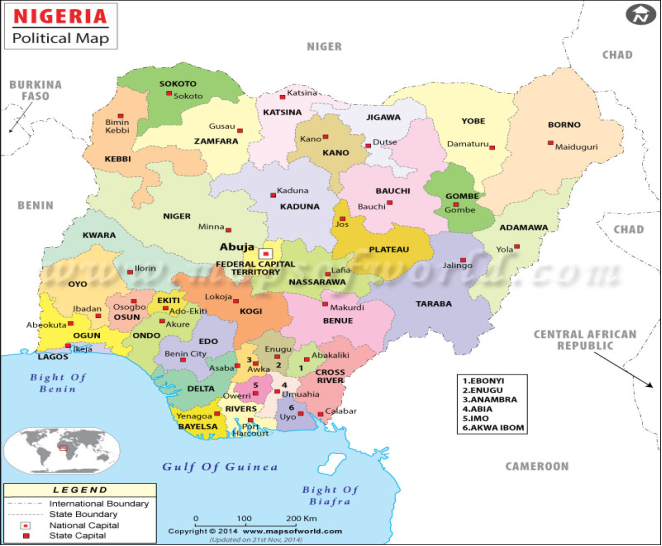
The mining sector in Nigeria (
Figure 1) is deeply intertwined with political interests, historical legacies, and governance structures. Political dynamics influence regulatory frameworks, resource allocation, community relations, and environmental management. This review synthesizes current academic and policy literature on the political aspects of mining in Nigeria. Historical context mining in Nigeria dates back to colonial times, with tin and coal as early focus minerals
| [1] | Adekoya, J. A. (2003). “Environmental effects of solid minerals mining." Journal of Physical Sciences, 625-640. |
[1]
. The colonial administration established extractive institutions that prioritized export-oriented mining, often disregarding local interests
. Post-independence, mining was nationalized, but the sector experienced neglect due to the oil boom, leading to regulatory decay and informality
. The Nigerian government has implemented several reforms to revitalize mining, notably the Nigerian Minerals and Mining Act of 2007. However, studies indicate that governance is marred by overlapping authorities, weak institutional capacity, and pervasive corruption
. Political elites often use mining licenses as patronage, reinforcing clientelism and undermining transparency
. Resource Control and Federalism Resource control is a major political issue, particularly in relation to federal-state power dynamics. The federal government retains ownership of mineral resources, creating tension with state and local governments seeking greater autonomy and revenue
. This centralization often fuels conflict and limits local participation in decision-making
. Political Economy and Conflict Mining activities, especially artisanal and small-scale mining (ASM), are linked to conflict and insecurity. Competition for access to lucrative sites fuels local disputes, while weak regulation enables illegal mining, often with tacit political protection
| [11] | Okafor, J. C. (2020). “Artisanal and Small-Scale Mining in Nigeria: Challenges and Prospects." Journal of Sustainable Development in Africa, 22(3), 45-58. |
[11]
. The politics of exclusion, marginalization, and environmental degradation have also led to community resistance and violence
| [12] | Ololade, O. O., & Annegarn, H. J. (2013). “Contrasting community and corporate perceptions of sustainability: A case study within the platinum mining region of South Africa”. Resources Policy, 38(4), 568-576.
https://doi.org/10.1016/j.resourpol.2013.09.003 |
[12]
. Corruption and Rent-Seeking Corruption is pervasive in the allocation of mining rights and enforcement of environmental regulations. Political actors and their proxies frequently benefit from opaque licensing processes and resource rents, undermining sectoral development and public trust
. Environmental Politics Mining in Nigeria has significant environmental impacts, often exacerbated by weak state oversight. Political interests shape regulatory enforcement, with powerful actors sometimes shielding companies from accountability
| [12] | Ololade, O. O., & Annegarn, H. J. (2013). “Contrasting community and corporate perceptions of sustainability: A case study within the platinum mining region of South Africa”. Resources Policy, 38(4), 568-576.
https://doi.org/10.1016/j.resourpol.2013.09.003 |
[12]
. Civil society and affected communities have mobilized to demand environmental justice, though with limited success due to political barriers. International Dimensions Foreign investors and multinational corporations are key players, navigating Nigeria’s complex political landscape to secure mining concessions
. Political connections often determine access to lucrative deals, sometimes at the expense of local interests and sustainable development.
Figure 1. Political Map of Nigeria.
This article has four objectives. First, it examines the historical evolution of mining politics in Nigeria. Second, it analyzes the institutional and regulatory factors that enable political interference and corruption. Third, it considers the connections between illegal mining, environmental degradation, insecurity, and community conflict. Fourth, it proposes policy measures capable of improving transparency, accountability, investment, and sustainable development in the sector.
2. Historical Evolution of Mining Politics in Nigeria
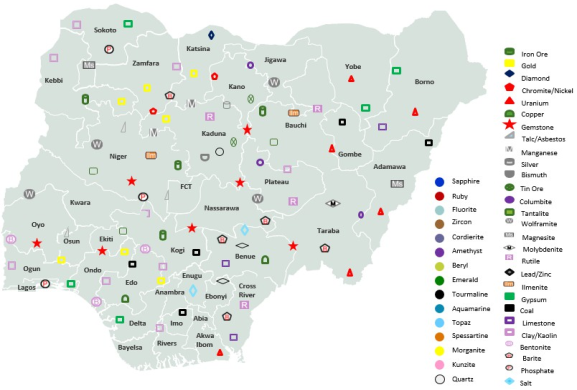
Formal commercial mining in Nigeria developed significantly during the colonial period. Tin mining on the Jos Plateau, coal mining in Enugu, and the extraction of columbite and other minerals created important export activities (
Figure 2). Colonial mining institutions were designed primarily to serve imperial economic interests. The organization of production, the allocation of mineral rights, labor arrangements, and transportation infrastructure were structured around the extraction and export of raw materials rather than the development of broad-based domestic industrial capacity.
This historical pattern established several features that continued after independence. First, mining was largely treated as an enclave activity. Production was connected to external markets, while local communities often bore the social and environmental consequences without receiving proportionate benefits. Second, mining governance was centralized and administrative, with limited mechanisms for community participation. Third, the sector was shaped by the interests of political and commercial intermediaries who controlled access to land, labor, transportation, and markets. At independence, Nigeria inherited a mining economy with established production sites but limited domestic processing capacity. The new state faced the difficult task of converting a colonial extractive system into an instrument of national development. Rather than achieving a stable balance between public ownership, private investment, and community interests, mining governance became increasingly centralized and vulnerable to political influence.
Figure 2. List of mineral resources in Nigeria and their locations. Source: Nigeria Mining Week (2020)
After independence, successive governments expanded the role of the state in the ownership and management of strategic economic activities. The Nigerian Mining Corporation was established in the 1970s as part of this broader state-led development strategy. Although state participation was intended to promote national control and development, bureaucratic management, inadequate investment, technological limitations, and political interference weakened operational performance.
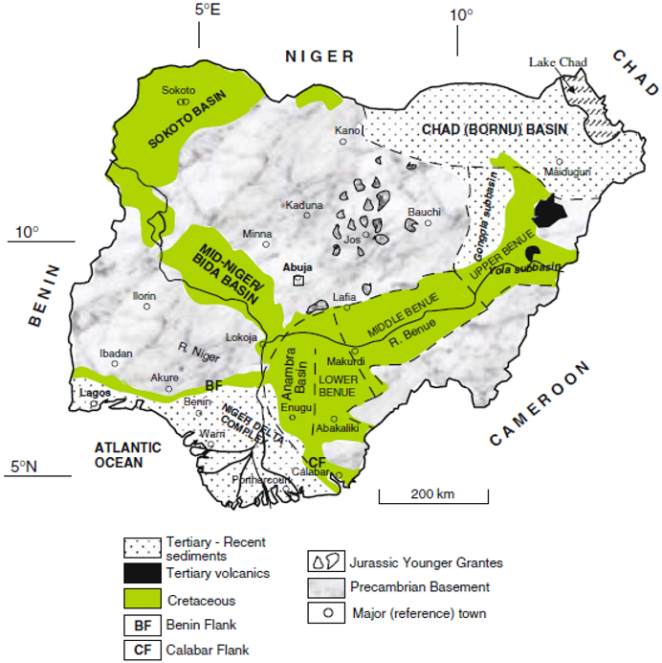
The increasing importance of petroleum further marginalized mining. The oil boom redirected public attention, foreign investment, infrastructure, and administrative capacity toward the petroleum industry. Mining institutions lost influence, geological information (
Figure 3) became outdated, and many formal mining operations declined. As the formal sector weakened, artisanal and informal mining expanded, often outside the effective reach of regulators. The dominance of petroleum also influenced the political imagination of resource governance. Oil became the principal source of public revenue and a central instrument of federal power. Because mineral ownership remained constitutionally vested in the federal government, state governments and local communities frequently felt excluded from decisions concerning resources located within their territories. This arrangement generated continuing debates about fiscal federalism, land rights, local consent, and the distribution of mining benefits.
3. The Political Economy of Mining Governance
The Nigerian Constitution and the Nigerian Minerals and Mining Act establish a centralized system in which mineral resources are controlled by the federal government. Centralized ownership may facilitate national standards and coordinated policy, but it can also distance resource decisions from the communities and states where extraction occurs. State governments may have limited authority over mineral titles even when they are responsible for roads, public health, land-use planning, environmental concerns, and local security. This institutional arrangement creates an accountability gap. The federal government grants mining rights and collects certain revenues, while host communities experience the immediate effects of mining. State and local governments may therefore have political incentives to tolerate or encourage mining activities that they do not formally control. Conversely, federal agencies may prioritize national revenue or investment promotion without adequately addressing local concerns. The absence of effective intergovernmental coordination can result in multiple charges, overlapping administrative requirements, delays in approvals, and uncertainty about the responsibilities of different agencies. The Nigeria Extractive Industries Transparency Initiative has repeatedly emphasized the importance of clearer information, stronger revenue administration, and improved governance across the solid minerals sector
. Such concerns are particularly important in a federal system where institutional overlap can create opportunities for rent extraction.
3.1. Patronage and the Allocation of Mineral Titles
The distribution of mineral titles is one of the most politically sensitive aspects of mining governance. In a well-functioning system, licensing decisions should be guided by geological evidence, technical competence, financial capacity, environmental performance, and the applicant’s ability to meet work obligations. In a politicized system, however, mineral titles may be acquired for speculative purposes or as assets of political patronage. A title holder who lacks the intention or capacity to develop a concession may retain the right, wait for its value to increase, and transfer or sell access to another operator. This practice can prevent serious investors from entering the market and may encourage local populations to continue extracting minerals informally. It also creates an opportunity for politically connected actors to profit from mineral rights without undertaking the difficult work of exploration, environmental management, infrastructure development, and processing. Transparent licensing requires more than the existence of an online cadastre or formal application procedures. It requires public access to information concerning beneficial ownership, application status, title transfers, work obligations, production volumes, payments, environmental approvals, and violations. Without such disclosure, it is difficult for civil society, journalists, researchers, host communities, and competing investors to determine whether the system is functioning fairly.
3.2. Resource Control
The politics of resource control is the struggle between different groups or individuals over the management, ownership, and utilization of natural resources such as oil, gas, minerals, land, and water
| [2] | Akinboyo, O. O. (2020). "Natural resource governance and sustainable development in Nigeria: A critical analysis of artisanal mining in the Niger Delta region." Journal of Environmental Science and Management, 23(2), 41-54. |
[2]
. This is a complicated interaction of economic, social, and political factors that determine how these resources are allocated, distributed, and used.
Resource control politics is fundamentally about power and influence. Those who own the resources typically have significant power over governments, markets, and societies, enabling them to influence policies, regulations, and institutions in their favor. This can create tensions and conflicts between different groups with competing interests, such as governments, corporations, local communities, and environmental advocates. In some instances, the struggle for control of resources can lead to violence, displacement of populations, and degradation of the environment. At the same time, effective management and equitable distribution of natural resources can contribute to economic development, social well-being, and environmental sustainability. Understanding the politics of resource control is key to solving many of the most pressing problems facing our planet, from climate change and biodiversity loss to poverty and inequality.
Akinwale
| [3] | Akinwale, O. P. (2018). “Illegal mining and Nigeria's environment." Journal of Sustainable Mining, 17(3), 103-110. |
[3]
argued that the politics of resource control has been a contentious issue in Nigeria, especially in relation to oil and mining resources. Nigeria is one of the gradually evolving mining countries, considering the global recognition of lithium deposits. Despite not being a top African producer yet, Nigeria's exploration and processing activity is sharply increasing, drawing the attention of both China and the United States. However, the benefits of this oil wealth and other critical minerals have not been evenly distributed among the Nigerian population. Instead, there has been a long history of conflict between the federal government and various groups over the management and distribution of revenues. One of the main issues at the center of this struggle has been the problem of control over oil and other natural resources. Many Nigerians, especially those in the Niger Delta region and other places where most of the oil and other natural resources are found and harnessed, argue that they should have more control over the resources in their communities. They cite the environmental damage caused by oil extraction and other mining-related activities and the lack of economic development and social services in the region as evidence that the current system is unfair
| [4] | Ali, A. U., & Nwabueze, R. O. (2019). Artisanal mining in Nigeria: An overview and prospects for the analysis of artisanal mining in the Niger Delta region. Journal of Sustainable Mining, 18(2), 79-88. |
[4]
. In reaction to these concerns, concerned groups have organized protests, strikes, and even armed conflicts to demand greater control over the resources in their areas. These conflicts have sometimes been violent, with attacks on production facilities causing significant economic damage. Meanwhile, the federal government has tried to keep control of all natural resources, saying it is needed for national security and economic stability. Policies have been introduced by the government to raise revenue from these various resources, such as increasing taxes and fees on oil companies, charges on mining licenses, and other related charges
| [16] | United Nations Environment Programme. (2011). Environmental assessment of Ogoniland. |
[16]
. However, the politics of resource control in Nigeria remains a complex and often fraught issue. The government and different groups have wrestled with how best to manage and distribute the revenues earned from these natural resources, and there are no easy answers on the horizon.
4. Corruption and Institutional Incentives
Corruption in mining can occur at multiple stages. It may arise during the issuance or renewal of licenses, the assessment of royalties, the inspection of production sites, the transportation of minerals, the enforcement of environmental standards, or the prosecution of illegal operators. It may also involve the concealment of beneficial ownership and the underreporting of production. The political economy of corruption is strengthened when regulators have limited resources, salaries are inadequate, institutional mandates overlap, and sanctions are uncertain. In such circumstances, enforcement officers may lack the independence or capacity to challenge powerful operators. The situation is worsened where informal payments are treated as an ordinary cost of doing business or where political actors intervene in administrative and criminal processes. Transparency is therefore necessary but not sufficient. Public disclosure must be combined with independent oversight, audit mechanisms, whistle-blower protections, enforceable sanctions, and institutional autonomy. The Nigeria Extractive Industries Transparency Initiative provides an important accountability mechanism through its reconciliation and audit reports, which compare company payments with government receipts and identify weaknesses in reporting and compliance
. However, the policy value of such audits depends on whether identified discrepancies lead to recovery, prosecution, administrative reform, and improved future reporting.
4.1. Illegal Mining and Artisanal Production
Illegal mining is often described as an activity conducted without a valid license or in violation of the conditions attached to a mineral title. In practice, the boundary between artisanal, informal, small-scale, and illegal mining can be difficult to draw. Many miners operate outside the formal system because they lack information, capital, technical support, acceptable documentation, or realistic access to licensing. Others may deliberately evade regulation, particularly where mineral prices are high and the probability of detection is low. The expansion of illegal mining reflects the failure of formal governance to accommodate the economic realities of rural communities. Artisanal and small-scale mining provides livelihoods for many people, including miners, traders, transporters, processors, and service providers. A purely punitive response can therefore deepen poverty, push mining further underground, and strengthen the influence of criminal networks. Formalization must be designed as a practical pathway that offers legal recognition, simplified licensing, access to finance, technical assistance, safer technology, and reliable markets. At the same time, the social importance of artisanal mining should not be used to excuse organized criminal exploitation. There is a critical difference between low-income miners working with basic tools and well-financed networks that sponsor extraction, smuggle minerals, finance armed actors, or use political connections to evade enforcement. Policy must distinguish among these groups rather than treating all informal mining as a single category. NEITI reports have identified illegal mining sites and weaknesses in revenue and environmental compliance across the sector
. Recent public discussions have also emphasized that artisanal and small-scale mining accounts for a large share of production while contributing disproportionately little to recorded royalties, illustrating the gap between production and formal public revenue
| [8] | Nigeria Extractive Industries Transparency Initiative. (2025). “NEITI seeks an end to multiple taxation in the solid minerals sector." Journal of Sustainable Mining, 18(2), 79-88.
https://neiti.gov.ng |
[8]
. This gap is not simply a matter of miners refusing to pay. It also reflects inadequate registration systems, weak local administration, poor traceability, and limited state engagement.
4.2. Illegal Mining and Security
The relationship between mining and insecurity is complex. In some regions, insecurity creates conditions in which illegal miners can operate with limited oversight. In other cases, mineral revenues help finance armed groups, banditry, or local protection networks. Mining sites may become points of conflict among miners, landowners, communities, traders, criminal groups, and security agencies. Gold mining in parts of northwestern Nigeria has received particular attention because of the interaction among mineral extraction, armed banditry, rural displacement, and weak government presence. However, it would be analytically incomplete to assume that mining alone causes insecurity. Conflict is shaped by wider factors, including land disputes, political competition, poverty, arms proliferation, weak justice institutions, and the erosion of trust between communities and the state. Security operations are necessary where mining is linked to organized violence, but militarization without governance reform may produce temporary displacement rather than lasting resolution. Enforcement agencies must be accountable for their conduct, and security strategies should be linked to mineral traceability, community intelligence, judicial capacity, and alternative livelihoods. Otherwise, the removal of one group of miners may simply create space for another.
5. Environmental and Social Consequences and Public Health Experience
Mining can produce substantial environmental benefits when it is planned, regulated, and rehabilitated properly. It can also create severe damage when extraction is uncontrolled. Open pits, deforestation, soil erosion, abandoned workings, dust, noise, and the diversion of waterways affect agriculture, grazing, settlement, and public health. Processing activities may release heavy metals and other contaminants into water and soil. The environmental impacts of mining are not evenly distributed. Host communities generally bear the immediate costs, while mineral traders, politically connected title holders, and distant consumers capture a larger share of the value. This unequal distribution is a central feature of mining politics. It can generate resentment, protests, sabotage, and resistance, especially where land is acquired without meaningful consultation or compensation. The Nigerian legal framework contains environmental obligations, but regulatory effectiveness depends on monitoring and enforcement. The World Bank’s assessment of Nigeria’s mining environmental regulatory framework highlighted the importance of environmental governance in the development of a viable industrial mining sector
| [17] | World Bank. (2010). Assessment of the environmental regulatory framework of the mining sector. World Bank. |
| [18] | World Bank. (2024). “Nigeria: Mineral Sector Support for Economic Diversification Project—Implementation status and results report." World Bank. |
[17, 18]
. Environmental impact assessments should not be treated as administrative documents prepared only to obtain approval. They should guide project design, establish measurable mitigation obligations, and provide a basis for continuous public monitoring.
The lead-poisoning crisis associated with artisanal gold processing in Zamfara State, Nigeria, demonstrated the severe public-health risks that can arise when mineral extraction occurs without technical controls. The crisis was linked to the processing of lead-containing ore in and around residential areas, exposing children and adults to dangerous contamination. It showed that mining governance is also a health-governance issue. A comprehensive policy response must connect mining regulation with public-health surveillance, environmental remediation, occupational safety, and community education. It must also address the economic pressures that lead households to process ore in unsafe locations. Relocating processing facilities, providing safer equipment, monitoring blood-lead levels, and restoring contaminated land are essential, but long-term success requires viable livelihoods and enforceable local planning rules.
5.1. Community Participation, Benefit Sharing, and Regulatory Challenges
Host communities often complain that mining produces few visible local benefits. Roads may remain poor, employment may be temporary, and public services may not improve despite the presence of valuable minerals. These grievances are intensified when communities are excluded from decisions about exploration, land access, environmental management, and compensation.
Community participation should involve more than consultation after major decisions have already been made. Communities need access to information, independent legal and technical advice, grievance mechanisms, and meaningful opportunities to negotiate development commitments. Community development agreements should contain specific, costed, and monitorable obligations rather than broad promises. Their implementation should be publicly reported. Benefit sharing must also be designed carefully. Direct payments to local elites can deepen inequality and create new conflicts. Transparent community funds, representative oversight committees, public expenditure reporting, and gender-inclusive participation can improve legitimacy. The aim should be to connect mineral extraction with durable improvements in education, health, water, roads, livelihoods, and environmental restoration.
The Nigerian Minerals and Mining Act 2007 provides the principal legal foundation for the sector. It addresses mineral ownership, mineral titles, mining operations, environmental responsibilities, and relationships among different sectoral institutions
| [5] | Federal Republic of Nigeria. (2007). "Nigerian Minerals and Mining Act, 2007”. Federal Government Printer. Management, 23(2), 41-54. |
[5]
. The Act was intended to create a predictable framework capable of attracting investment while preserving federal control over mineral resources. The difficulty lies in the implementation gap. Laws may be comprehensive on paper but ineffective in practice when institutions lack the resources, data, personnel, independence, or political backing necessary to enforce them. Regulatory agencies may also struggle where their roles are unclear or where companies must interact with multiple bodies that impose overlapping obligations.
5.2. Several Institutional Problems Are Especially Important
(i) Inadequate geological data increases investment risk and encourages speculative licensing. (ii) Weak inspection capacity limits the detection of unsafe and environmentally damaging operations. (iii) Poor coordination among licensing, environmental, revenue, land, and security institutions creates loopholes. (iv) Incomplete beneficial-ownership information makes it difficult to identify politically exposed persons. (v) Delays in license processing and title transfers encourage informal payments and administrative bargaining. (vi) Limited prosecution and recovery of public revenue weaken deterrence. (vii) Inconsistent treatment of artisanal miners undermines efforts at formalization. The solution is not necessarily the creation of more agencies. Nigeria has often responded to governance problems by adding institutions without resolving mandate conflicts. Reform should instead focus on clarifying responsibilities, improving data exchange, strengthening professional standards, and establishing measurable performance indicators.
5.3. Economic Implications
The underperformance of the mining sector has several economic consequences. First, the government loses royalties, taxes, fees, and export earnings when minerals are extracted or traded outside the formal system. Second, the country loses opportunities for mineral processing and industrial linkages. Third, uncertainty and poor governance discourage long-term investment. Fourth, environmental damage imposes costs on agriculture, health systems, land values, and local infrastructure. Revenue losses should be interpreted carefully. Estimates of the value lost to illegal mining vary according to the minerals included, production assumptions, prices, smuggling routes, and the quality of available data. Therefore, claims that Nigeria loses a specific amount annually should be tied to a clearly identified methodology and source. Official audit reports and reconciled production data are more useful for policy than unsupported headline estimates. Mining can contribute to economic diversification only when it is connected to domestic value addition. Exporting unprocessed ore limits employment, technology transfer, and industrial development. Nigeria’s policy framework should therefore support mineral processing, local procurement, geological services, equipment manufacturing, transport infrastructure, and skills development. However, local content requirements must be matched with realistic access to finance and technical capacity; otherwise, they may become another source of political allocation and rent-seeking. Investment-friendly policy does not mean deregulation. Serious investors require clear rules, secure tenure, fair competition, reliable infrastructure, predictable taxation, effective dispute resolution, and credible environmental standards. A sector in which politically connected operators obtain privileged access may attract opportunistic capital but is unlikely to attract patient, responsible investment.
6. Toward a Reform Agenda
The licensing process should be fully transparent from application to renewal, transfer, suspension, and cancellation. Publicly accessible information should include the location and size of concessions, title type, applicant identity, beneficial owners, work obligations, environmental approvals, community agreements, payment records, and enforcement history.
Beneficial-ownership disclosure is particularly important because companies may be formally registered in the names of intermediaries while politically exposed persons or powerful business interests control them. Disclosure should be linked to verification and sanctions for false reporting. Transparency without consequences will not prevent political capture.
6.1. Formalizing Artisanal and Small-scale Mining
Formalization should provide practical benefits rather than merely impose new fees. The government should simplify licensing, establish accessible registration points, support cooperatives, provide geological and technical assistance, improve access to credit, and develop designated processing centers. Miners who comply with environmental and safety standards should receive clear commercial advantages, including access to legal buyers and public support programs. Formalization should be accompanied by mineral traceability. Digital production records, verified buying centers, transport documentation, and regional cooperation can reduce smuggling. Traceability systems must be affordable and understandable to small operators; otherwise, they may exclude the very miners they are intended to regulate.
6.2. Strengthening Environmental Accountability and Community Governance
Environmental management should begin before exploitation and continue through closure and rehabilitation. Operators should provide financial guarantees sufficient to cover site restoration, and regulators should conduct regular inspections using satellite imagery, geographic information systems, water testing, and community reporting. Environmental violations should attract predictable penalties that are proportionate to the damage and strong enough to deter noncompliance. For abandoned or contaminated sites, government should establish a remediation fund financed through operator contributions, recovered penalties, and carefully targeted public resources. Remediation priorities should be based on health risk, population exposure, water contamination, and the vulnerability of affected groups.
Communities should participate in the design, implementation, and monitoring of community development agreements. Representatives should be selected through transparent and inclusive procedures, with attention to women, youth, traditional authorities, land users, and people whose livelihoods depend on farming or grazing. Public reporting should show what companies have promised, what they have spent, and whether projects are functioning. Grievance mechanisms must be accessible, independent, and capable of resolving disputes before they escalate. Courts and administrative bodies should provide timely remedies for land, compensation, pollution, and employment disputes. Community participation cannot replace state regulation, but it can make regulation more informed and legitimate.
6.3. Building Accountable Security Institutions and Using Audit for Reform
Security responses should target organized criminal networks, mineral smuggling, weapons flows, and political protection rather than indiscriminately criminalizing poor miners. Mining-related security operations should be guided by clear rules, civilian oversight, and respect for human rights. Information from communities should be protected, and security agencies should not become unauthorized participants in mineral extraction or informal taxation.
NEITI and other oversight bodies generate information that can identify gaps in licensing, revenue collection, environmental compliance, and institutional performance. These findings should be linked to action plans, deadlines, responsible agencies, and public progress reports. Parliamentary committees, civil society organizations, journalists, and researchers should be able to track whether recommendations have been implemented.
7. Conclusion
The menace of mining politics in Nigeria is not reducible to illegal miners, corrupt officials, or weak laws considered separately. It is produced by the interaction of political patronage, centralized resource ownership, institutional fragmentation, poverty, insecurity, weak enforcement, environmental neglect, and limited community participation. Nigeria’s mining sector therefore cannot be transformed through enforcement campaigns alone. Sustainable reform requires changes in the political and institutional conditions that make illegal extraction, speculative licensing, revenue leakage, and environmental abuse possible. The Nigerian Minerals and Mining Act 2007 provides a foundation for regulation, but the effectiveness of any legal framework depends on implementation. Transparent licensing, verified beneficial ownership, reliable geological information, accountable revenue collection, formalization of artisanal mining, community participation, environmental safeguards, and conflict-sensitive security should form the core of a renewed governance strategy. The objective should not be to maximize extraction at any cost. It should be to create a mining sector that generates public value, protects communities, supports responsible investment, and contributes to industrial diversification. Nigeria’s mineral wealth will become a development asset only when institutions are strong enough to prevent private capture and political actors are held accountable for the decisions they make. The future of mining in Nigeria is therefore ultimately a question of governance: who controls mineral resources, who benefits from them, who bears the costs, and whose interests shape the rules.
Abbreviations
ASM | Artisanal and Small Scale Mining |
NEITI | Nigeria Extractive Industries Transparency Initiatives |
Author Contributions
Johnson Kayode Ayeni: Conceptualization, Methodology, Resources, Writing – review & editing
Conflicts of Interest
The author declares no conflicts of interest.
References
| [1] |
Adekoya, J. A. (2003). “Environmental effects of solid minerals mining." Journal of Physical Sciences, 625-640.
|
| [2] |
Akinboyo, O. O. (2020). "Natural resource governance and sustainable development in Nigeria: A critical analysis of artisanal mining in the Niger Delta region." Journal of Environmental Science and Management, 23(2), 41-54.
|
| [3] |
Akinwale, O. P. (2018). “Illegal mining and Nigeria's environment." Journal of Sustainable Mining, 17(3), 103-110.
|
| [4] |
Ali, A. U., & Nwabueze, R. O. (2019). Artisanal mining in Nigeria: An overview and prospects for the analysis of artisanal mining in the Niger Delta region. Journal of Sustainable Mining, 18(2), 79-88.
|
| [5] |
Federal Republic of Nigeria. (2007). "Nigerian Minerals and Mining Act, 2007”. Federal Government Printer. Management, 23(2), 41-54.
|
| [6] |
Nigeria Extractive Industries Transparency Initiative. (2019). “Improving transparency and governance in Nigeria’s mining sector: Solid minerals report."
https://neiti.gov.ng
|
| [7] |
Nigeria Extractive Industries Transparency Initiative. (2020). “Solid minerals industry report 2020."
https://neiti.gov.ng/cms/wp-content/uploads/2022/08/Final-2020-SMA-Report.pdf
|
| [8] |
Nigeria Extractive Industries Transparency Initiative. (2025). “NEITI seeks an end to multiple taxation in the solid minerals sector." Journal of Sustainable Mining, 18(2), 79-88.
https://neiti.gov.ng
|
| [9] |
Obi, C. (2010). “Oil extraction, dispossession, resistance, and conflict in Nigeria’s oil-rich Niger Delta." Canadian Journal of Development Studies, 30(1-2), 219-236.
https://doi.org/10.1080/02255189.2010.9669289
|
| [10] |
Ogege, S. O., & Ogege, D. I. (2016). “Resource curse and national security: The challenge of crude oil theft in Nigeria." African Security Review, 25(2), 144-157.
https://doi.org/10.1080/10246029.2016.1162070
|
| [11] |
Okafor, J. C. (2020). “Artisanal and Small-Scale Mining in Nigeria: Challenges and Prospects." Journal of Sustainable Development in Africa, 22(3), 45-58.
|
| [12] |
Ololade, O. O., & Annegarn, H. J. (2013). “Contrasting community and corporate perceptions of sustainability: A case study within the platinum mining region of South Africa”. Resources Policy, 38(4), 568-576.
https://doi.org/10.1016/j.resourpol.2013.09.003
|
| [13] |
Ovadia, J. S. (2016). “Local content policies and petro-development in Sub-Saharan Africa: A comparative analysis." Resources Policy, 49, 20-30.
https://doi.org/10.1016/j.resourpol.2016.04.012
|
| [14] |
Transparency International. (2021). “Corruption in mining operations": Nigeria country report. Retrieved from
https://www.transparency.org/
|
| [15] |
Udeke, C. U., Onoh, J. N., & Eze, L. O. (2022). “Federalism and resource control in Nigeria: Issues and prospects." Journal of African Law, 66(1), 101-120.
https://doi.org/10.1017/S0021855321000190
|
| [16] |
United Nations Environment Programme. (2011). Environmental assessment of Ogoniland.
|
| [17] |
World Bank. (2010). Assessment of the environmental regulatory framework of the mining sector. World Bank.
|
| [18] |
World Bank. (2024). “Nigeria: Mineral Sector Support for Economic Diversification Project—Implementation status and results report." World Bank.
|
| [19] |
N. G. Obaje: Geology and Mineral Resources of Nigeria, Lecture Notes in Earth Sciences 120 (Berlin: Springer, 2009).
|
Cite This Article
-
APA Style
Ayeni, J. K. (2026). Menace of Mining Politics in Nigeria: Governance, Conflict, Resource Control, and the Challenge of Sustainable Mineral Development. American Journal of Environmental and Resource Economics, 11(3), 87-96. https://doi.org/10.11648/j.ajere.20261103.14
 Copy
|
Copy
|
 Download
ACS Style
Ayeni, J. K. Menace of Mining Politics in Nigeria: Governance, Conflict, Resource Control, and the Challenge of Sustainable Mineral Development. Am. J. Environ. Resour. Econ. 2026, 11(3), 87-96. doi: 10.11648/j.ajere.20261103.14
Copy
|
Download
AMA Style
Ayeni JK. Menace of Mining Politics in Nigeria: Governance, Conflict, Resource Control, and the Challenge of Sustainable Mineral Development. Am J Environ Resour Econ. 2026;11(3):87-96. doi: 10.11648/j.ajere.20261103.14
Copy
|
Download
-
@article{10.11648/j.ajere.20261103.14,
  author = {Johnson Kayode Ayeni},
  title = {Menace of Mining Politics in Nigeria: Governance, Conflict, Resource Control, and the Challenge of Sustainable Mineral Development},
  journal = {American Journal of Environmental and Resource Economics},
  volume = {11},
  number = {3},
  pages = {87-96},
  doi = {10.11648/j.ajere.20261103.14},
  url = {https://doi.org/10.11648/j.ajere.20261103.14},
  eprint = {https://article.sciencepublishinggroup.com/pdf/10.11648.j.ajere.20261103.14},
  abstract = {Nigeria possesses substantial deposits of gold, tin, columbite, tantalite, iron ore, lead-zinc, limestone, barite, lithium, coal, and other solid minerals. Despite this resource endowment, the mining sector has made only a limited contribution to national development. This article examines the political dimensions of mining governance in Nigeria and argues that the sector’s underperformance is not primarily a consequence of geological uncertainty or a lack of mineral potential. Rather, it reflects the interaction of political patronage, institutional fragmentation, corruption, weak regulatory enforcement, insecure tenure, illegal mining, environmental degradation, and unresolved questions of resource control. The analysis situates contemporary mining politics within Nigeria’s historical shift from a relatively active colonial mining economy to post-independence state control and, later, market-oriented reform. It further examines how the allocation and administration of mineral titles, the federal structure of mineral ownership, the marginalization of host communities, and the growth of artisanal and illegal mining have shaped sectoral outcomes. The article adopts a qualitative political-economy approach based on documentary analysis of Nigerian legislation, institutional reports, policy documents, and secondary literature. It finds that the Nigerian Minerals and Mining Act 2007 provides an important legal foundation, including provisions relating to mineral titles, environmental responsibilities, and community development; however, implementation remains constrained by limited institutional capacity, overlapping mandates, insufficient transparency, and weak accountability. Illegal mining should therefore not be treated only as a law-enforcement problem. It is also a governance problem rooted in poverty, limited livelihood alternatives, inaccessible formalization pathways, elite protection, transborder mineral flows, and inadequate state presence in mining communities. The article recommends a governance reform agenda centered on transparent licensing, strengthened institutional autonomy, formalization of artisanal and small-scale mining, improved revenue administration, environmental accountability, community participation, conflict-sensitive security, and public disclosure of mining data. Sustainable mining in Nigeria requires not merely more extraction but a political settlement that connects mineral development to public accountability, local livelihoods, environmental protection, and inclusive national development.},
 year = {2026}
}
Copy
|
Download
-
TY  - JOUR
T1  - Menace of Mining Politics in Nigeria: Governance, Conflict, Resource Control, and the Challenge of Sustainable Mineral Development
AU  - Johnson Kayode Ayeni
Y1  - 2026/09/30
PY  - 2026
N1  - https://doi.org/10.11648/j.ajere.20261103.14
DO  - 10.11648/j.ajere.20261103.14
T2  - American Journal of Environmental and Resource Economics
JF  - American Journal of Environmental and Resource Economics
JO  - American Journal of Environmental and Resource Economics
SP  - 87
EP  - 96
PB  - Science Publishing Group
SN  - 2578-787X
UR  - https://doi.org/10.11648/j.ajere.20261103.14
AB  - Nigeria possesses substantial deposits of gold, tin, columbite, tantalite, iron ore, lead-zinc, limestone, barite, lithium, coal, and other solid minerals. Despite this resource endowment, the mining sector has made only a limited contribution to national development. This article examines the political dimensions of mining governance in Nigeria and argues that the sector’s underperformance is not primarily a consequence of geological uncertainty or a lack of mineral potential. Rather, it reflects the interaction of political patronage, institutional fragmentation, corruption, weak regulatory enforcement, insecure tenure, illegal mining, environmental degradation, and unresolved questions of resource control. The analysis situates contemporary mining politics within Nigeria’s historical shift from a relatively active colonial mining economy to post-independence state control and, later, market-oriented reform. It further examines how the allocation and administration of mineral titles, the federal structure of mineral ownership, the marginalization of host communities, and the growth of artisanal and illegal mining have shaped sectoral outcomes. The article adopts a qualitative political-economy approach based on documentary analysis of Nigerian legislation, institutional reports, policy documents, and secondary literature. It finds that the Nigerian Minerals and Mining Act 2007 provides an important legal foundation, including provisions relating to mineral titles, environmental responsibilities, and community development; however, implementation remains constrained by limited institutional capacity, overlapping mandates, insufficient transparency, and weak accountability. Illegal mining should therefore not be treated only as a law-enforcement problem. It is also a governance problem rooted in poverty, limited livelihood alternatives, inaccessible formalization pathways, elite protection, transborder mineral flows, and inadequate state presence in mining communities. The article recommends a governance reform agenda centered on transparent licensing, strengthened institutional autonomy, formalization of artisanal and small-scale mining, improved revenue administration, environmental accountability, community participation, conflict-sensitive security, and public disclosure of mining data. Sustainable mining in Nigeria requires not merely more extraction but a political settlement that connects mineral development to public accountability, local livelihoods, environmental protection, and inclusive national development.
VL  - 11
IS  - 3
ER  -
Copy
|
Download





 Share This Article
 Twitter
 Linked In
 Facebook