1. Introduction
With the growing global awareness of environmental protection, waterborne polyurethane coatings, as a green organic polymer material, have garnered widespread attention for their ability to significantly reduce the release of volatile organic compounds (VOCs). Waterborne polyurethane coatings utilize water as the dispersion medium. Compared to traditional solvent-based polyurethane coatings, they offer significant advantages such as safety, non-toxicity, and the absence of solvent volatilization. These properties present broad application prospects in sectors including construction, automotive, and aerospace. However, conventional waterborne polyurethane coatings still suffer from performance limitations such as low hardness, poor solvent resistance, insufficient surface gloss, and suboptimal coating texture. These issues constrain their further adoption in high-end applications. To overcome these shortcomings, researchers have optimized water-based polyurethanes through various modification techniques, aiming to enhance their overall performance and broaden their application scope. In recent years, methods such as organosilicon modification, acrylate modification, epoxy resin modification, and nanomaterial modification have emerged as research hotspots, offering new avenues for the multifunctional development of water-based polyurethane coatings.
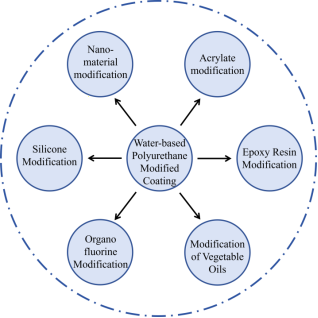
Figure 1. Modification Methods for Waterborne Polyurethane Coatings.
Research on multifunctional modified waterborne polyurethane coatings is not only crucial for enhancing material properties but also lays a solid foundation for their extensive applications across multiple fields (as shown in
Figure 1: Modification Methods for Waterborne Polyurethane Coatings). By modifying waterborne polyurethanes, their mechanical properties, chemical resistance, and thermal stability can be significantly improved to meet the demands of diverse application scenarios. Furthermore, multifunctional modification techniques can endow water-based polyurethane coatings with specialized functions such as self-healing, antibacterial properties, and flame retardancy. The integration of these functionalities further expands their application boundaries. From an environmental perspective, the development of multifunctionally modified water-based polyurethane coatings aligns with green chemistry principles, helping reduce the environmental impact of industrial production and promoting sustainable development. Concurrently, research achievements in this field provide technical support for industrial advancement, driving technological progress and industrial upgrading within the coatings sector.
2. Synthesis Methods and Processes for Water-Based Polyurethane Coatings
2.1. Traditional Synthesis Methods
Traditional synthesis methods for water-based polyurethane coatings primarily include the prepolymer method and the acetone method, both of which have extensive industrial application bases. The prepolymer method involves reacting oligomeric diols with diisocyanates to produce prepolymers, followed by adding chain extenders and water for emulsification, ultimately forming stable water-based polyurethane dispersions. This method is simple to operate and cost-effective, but its drawback is the substantial use of emulsifiers during the emulsification process, which may compromise coating film properties
. The acetone method, however, introduces acetone as a solvent during prepolymer synthesis to reduce system viscosity and enhance reaction controllability. After prepolymer synthesis is complete, acetone is removed via distillation, and water is added for emulsification. This approach effectively addresses the shortcomings of the prepolymer method. However, its environmental sustainability is somewhat limited due to the use of organic solvents. Furthermore, traditional synthesis methods exhibit high sensitivity to raw material ratios and reaction conditions, necessitating strict control of process parameters in practical applications to ensure product quality.
2.2. Novel Synthesis Process
In recent years, with heightened environmental requirements and advancements in materials science, novel synthesis techniques such as self-emulsification and capping methods have garnered increasing attention. The self-emulsification method introduces hydrophilic groups (e.g., carboxyl groups, sulfonic acid groups) into the molecular chain, endowing polyurethane resins with self-emulsifying capabilities. This allows direct dispersion in water without requiring additional emulsifiers. This approach not only significantly reduces volatile organic compound (VOC) emissions but also effectively enhances the mechanical properties and water resistance of the coating film
| [2] | Wu Yifan, Yu Peng. Research Progress on Modified Waterborne Polyurethanes in China [J]. China and Foreign Energy, 2022, 27(07): 70-77. |
[2]
. The capping method, on the other hand, utilizes capping agents to protect isocyanate groups in the prepolymer. These groups are decapped through heating or other methods prior to emulsification, enabling controlled emulsification. This approach prevents side reactions between isocyanate groups and water during emulsification, significantly improving coating stability and storage performance. Furthermore, novel synthesis processes have expanded the functionality of water-based polyurethane coatings through optimized molecular structure design, laying the foundation for their application in high-end fields.
3. Research Progress on Multifunctional Modification Methods
3.1. Functional Monomer Modification Technology
Organic functional monomers serve as key raw materials for modifying water-based polyurethane coatings, with their diverse structures and properties offering multiple avenues for enhancing coating performance. Acrylate monomers have garnered significant attention due to their excellent light resistance, weatherability, and favorable physical-mechanical properties. However, their inherent drawbacks—relatively high hardness and poor low-temperature tolerance—limit their standalone application. Epoxy resins, renowned for their reactive epoxy and hydroxyl functional groups, exhibit outstanding adhesion and heat resistance, significantly enhancing coating mechanical strength and chemical corrosion resistance
. Furthermore, organosilicon compounds, as semi-inorganic/semi-organic materials, combine low surface tension, low-temperature resistance, aging resistance, and hydrophobicity. They are widely used to improve the water resistance and mechanical properties of water-based polyurethanes. These organic functional monomers play a crucial role in modifying water-based polyurethane coatings through their unique structural and performance characteristics.
The modification of water-based polyurethanes by organic functional monomers is primarily achieved through chemical reactions such as copolymerization and grafting. During copolymerization, acrylic ester monomers undergo free-radical polymerization with water-based polyurethane prepolymers, forming composite emulsions with a core-shell structure that combines the advantages of both components. Terminally hydroxylated polyacrylate (PA) was synthesized via solution radical polymerization and reacted with polyurethane (PU) prepolymers to produce a PA-PU-PA triblock copolymer composite emulsion, significantly enhancing the water resistance and heat resistance of the latex film
. Graft modification involves introducing specific functional groups to chemically bond organic functional monomers with the water-based polyurethane molecular chain, thereby improving the overall performance of the coating.
The modification mechanism of epoxy resin lies in the reaction between its epoxy groups and the isocyanate groups in water-based polyurethane, forming a crosslinked network structure that enhances the coating's hardness and viscosity. Epoxy resin modification of water-based polyurethane is primarily achieved through two methods: physical blending modification and chemical modification. Physical blending modification involves directly dispersing epoxy resin within the water-based polyurethane matrix. This allows partial reaction between the epoxy groups and secondary hydroxyl groups in the epoxy resin with the isocyanate groups in the water-based polyurethane, thereby improving the mechanical properties and thermal stability of the coating film. However, since this method relies solely on physical mixing, the modification effect is often limited, and phase separation is prone to occur during long-term use
. In contrast, chemical modification involves covalent bonding between the active groups in the epoxy resin and the water-based polyurethane prepolymer, forming a crosslinked network structure that significantly enhances the mechanical strength and heat resistance of the coating film. Research indicates that adding 5% epoxy resin (EP) yields optimal thermal stability and water resistance in modified water-based polyurethane matting resins. This is primarily attributed to the chemical reaction between epoxy and isocyanate groups forming a stable crosslinked structure. Furthermore, the incorporation of epoxy resin enhances the coating film's adhesion and chemical resistance, offering broad application prospects in construction and anti-corrosion fields.
3.2. Nanomaterial Modification Technology
Nanoparticles exhibit significant advantages in modifying water-based polyurethanes due to their unique size effects and high specific surface area. Commonly used nano-modified materials include nano-silica (SiO
2), nano-zinc oxide (ZnO), graphene, and montmorillonite. These nanoparticles significantly enhance the comprehensive properties of the coating film by forming covalent bonds or hydrogen bond interactions with the water-based polyurethane molecular chains. For instance, Dong Yongbing et al. prepared nano-SiO
2-modified water-based polyurethane adhesives via in-situ polymerization. Their research revealed that partial Si-OH groups on the nano-SiO
2 surface reacted with the -NCO groups in the water-based polyurethane, effectively improving the thermal stability and mechanical properties of the coating film. When the mass fraction of nano-SiO
2 reached 2.0%, the modified water-based polyurethane adhesive exhibited optimal comprehensive properties, with tensile strength and elongation at break increasing by approximately 30% and 20%, respectively
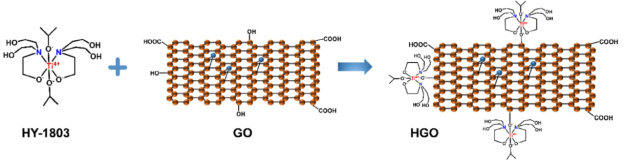
. Similarly, nano-ZnO, due to its excellent UV shielding and antibacterial properties, is also widely used in modifying water-based polyurethane coatings. The incorporation of nanofillers synergistically enhances both the mechanical strength and anti-corrosion barrier properties of WPU. In studies on nanofiller-modified waterborne polyurethanes (WPU), functionalized graphene oxide (GO) has emerged as an effective strategy for improving coating performance due to its high specific surface area and outstanding barrier effects. Li et al.
| [6] | Li Z, Zhu Y, Dai R, et al. Enhancement in the Mechanical Properties and Corrosion Resistance of Waterborne Polyurethane Coatings by Using Titanate‐Functionalized Graphene Oxide [J]. Journal of Applied Polymer Science, 2026: e70311.
https://doi.org/10.1002/app.70311 |
[6]
surface-modified graphene oxide (GO) using a titanate coupling agent (as shown in
Figure 2: Schematic diagram of the HGO/CWPU composite structure), producing titanate-functionalized graphene oxide (T-GO) with good dispersion stability. This T-GO was then incorporated as a nano-reinforcing phase into the WPU matrix. The results indicate that the introduction of T-GO not only significantly improves the compatibility of nanosheets in aqueous systems but also effectively enhances the compactness of the composite coating. At a T-GO loading of just 0.5 wt%, the tensile strength of the WPU coating increased by approximately 68%. Simultaneously, the electrochemical impedance modulus (|Z|
0.01 Hz) in a 3.5 wt% NaCl solution improved by nearly two orders of magnitude, with a significant reduction in corrosion current density, demonstrating outstanding anti-corrosion barrier performance. This work provides a viable pathway for developing high-performance, environmentally friendly anti-corrosion coatings with low additive requirements.
Figure 2. Schematic diagram of the HGO/CWPU composite structure.
Chen et al.
| [8] | Chen Y, Wen S, Wang J, et al. Preparation of α-Fe2O3@ TA@ GO composite material and its anticorrosion performance in epoxy modified acrylic resin coatings [J]. Progress in Organic Coatings, 2021, 154: 105987.
https://doi.org/10.1016/j.porgcoat.2020.105987 |
[8]
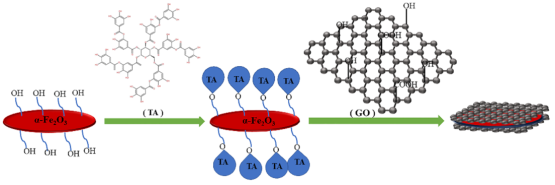
designed an α-Fe
2O
3@tannic acid@graphene oxide (α-Fe
2O
3@TA@GO) composite with a core-shell structure (as shown in
Figure 3: Formation process of α-Fe2O3@TA@GO composite), wherein α-Fe
2O
3 promotes metal surface passivation, tannic acid (TA) provides strong interfacial bonding and corrosion inhibition, while the outer graphene oxide layer forms a dense physical barrier. Incorporating this filler into epoxy-modified acrylic resin significantly increased the coating's impedance modulus and substantially enhanced its corrosion protection performance. Research indicates that the incorporation of nano-zinc oxide not only substantially improves the weather resistance of the coating film but also endows it with self-cleaning capabilities, thereby expanding its application scope in outdoor coating systems.
3.3. Bio-based Modification Technologies
Bio-based raw materials, as sustainable resources, have garnered significant attention in recent years for modifying waterborne polyurethane coatings. Typical bio-based feedstocks include vegetable oils, biomass polyols, and natural polymers. These materials feature abundant sources, strong renewability, and environmental friendliness, effectively reducing the proportion of traditional petrochemical feedstocks used and aligning with green chemistry principles. In recent years, preparing environmentally friendly waterborne polyurethanes (WPU) from renewable resources has become a research hotspot. Zhang et al.
| [19] | Zhang Y, Huang X, Li Y, et al. Epoxidized soybean oil-based waterborne polyurethane coatings modified by PEG and gemini quaternary ammonium salt for antifouling applications [J]. Industrial Crops and Products, 2025, 235: 121747.
https://doi.org/10.1016/j.indcrop.2025.121747 |
[19]
successfully synthesized bio-based waterborne polyurethanes with both excellent mechanical properties and biodegradability using epoxidized soybean oil, offering new insights for sustainable coating development. Castor oil, a hydroxyl-rich vegetable oil, can be converted into polyols via transesterification reactions for synthesizing waterborne polyurethane prepolymers. Research indicates that castor oil-based bio-based waterborne polyurethanes not only exhibit good mechanical properties and water resistance but also reduce environmental impact while lowering production costs
| [9] | Ji Shaoni. Development and Modification Analysis of Water-Based Polyurethane Architectural Coatings [J]. Adhesion, 2022, 49(07): 73-75+79. |
[9]
. Furthermore, the incorporation of biomass polyols enhances the biodegradability of waterborne polyurethanes, making them potentially valuable for applications in disposable packaging materials or degradable coatings.
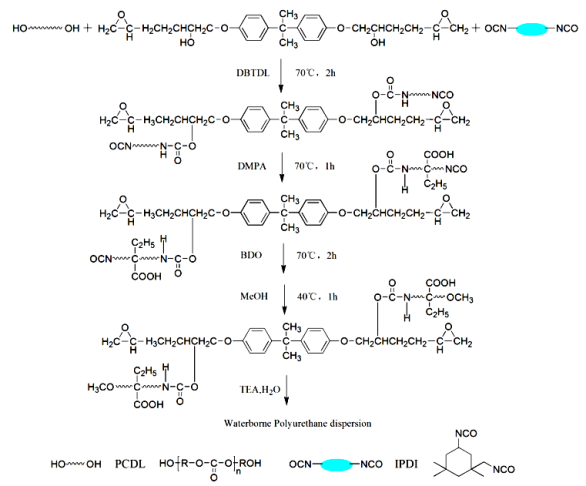
Figure 4. Schematic Diagram of the Preparation of Epoxy-Modified Waterborne Polyurethane Emulsion.
Research on bio-based modified waterborne polyurethanes primarily focuses on two aspects: performance optimization and application expansion. Regarding performance optimization, researchers have successfully developed a series of modified waterborne polyurethane coatings with outstanding comprehensive properties by adjusting the types and quantities of bio-based raw materials. Jiang Xiaofei et al.
employed triethylamine (TEA) as a neutralizing agent (as shown in
Figure 4:
Schematic Diagram of the Preparation of Epoxy-Modified Waterborne Polyurethane Emulsion) to develop a waterborne polyurethane adhesive based on castor oil. Experimental results demonstrated that this adhesive not only exhibits low ammonia odor but also delivers excellent bonding strength and heat resistance, meeting the environmental requirements for automotive interior coatings. In application expansion, bio-based modified waterborne polyurethanes have gradually been applied across multiple sectors including construction, textiles, and packaging. In the construction field, lignin-based waterborne polyurethane coatings have garnered significant attention due to their outstanding weather resistance and low cost. In textiles, chitosan-based waterborne polyurethane coatings are widely used in functional apparel production due to their antibacterial properties and breathability
| [2] | Wu Yifan, Yu Peng. Research Progress on Modified Waterborne Polyurethanes in China [J]. China and Foreign Energy, 2022, 27(07): 70-77. |
[2]
. Despite demonstrating promising development potential, bio-based modified waterborne polyurethanes still require further improvement in mechanical properties and durability, particularly for applications under high loads or extreme conditions.
3.4. Self-Healing Modification Technology
The core principle of self-healing modified water-based polyurethane coatings lies in introducing microcapsule-type or intrinsic self-healing mechanisms, enabling the coating to automatically restore its original properties after damage. Microcapsule-based self-healing technology embeds microcapsules containing repair agents within the coating. When the coating sustains external damage, the microcapsules rupture and release the repair agents. These agents then undergo chemical reactions with active groups within the coating, thereby repairing the damaged area. For instance, Suzana et al.
| [11] | Cakić, Suzana M., et al. "Waterborne polyurethane-silica nanocomposite adhesives based on castor oil-recycled polyols: Effects of (3-aminopropyl) triethoxysilane (APTES) content on properties." International Journal of Adhesion and Adhesives 90 (2019): 22-31.
https://doi.org/10.1016/j.ijadhadh.2019.01.005 |
[11]
successfully developed a self-healing coating material using water-based polyurethane derived from castor oil-based renewable polyols combined with silica nano-composite adhesives. Studies demonstrated that when scratches appeared on the coating surface, embedded microcapsules rapidly released repair agents to fill the damaged areas, restoring the coating's integrity and mechanical properties within a short timeframe. Intrinsic self-healing technology relies on the coating's own dynamic chemical bonds or reversible physical interactions—such as hydrogen bonds, π-π stacking, or dynamic covalent bonds—which can re-establish at the damaged site to achieve self-repair. Although both self-healing mechanisms possess distinct advantages, their practical application still faces numerous challenges. For instance, microcapsule-based self-healing technology suffers from low repair efficiency, while intrinsic self-healing technology struggles with insufficient stability, issues that require urgent resolution.
Self-healing modified water-based polyurethane coatings show great promise in practical applications, but their technological maturity still needs improvement. In the construction sector, self-healing coatings are widely applied in exterior wall paints to extend coating lifespan and reduce maintenance costs. To impart self-healing capabilities to WPU, Liu et al.
incorporated reversible Diels-Alder adducts, developing a water-based polyurethane coating capable of multiple repairs under mild conditions, significantly enhancing material durability. Studies indicate that this coating can automatically restore its waterproofing properties within a certain timeframe after mechanical damage, substantially improving coating durability. However, self-healing modification technology still faces numerous challenges in practical applications. First, microcapsule-based self-healing technologies exhibit low repair efficiency, particularly for large-area damage where the released repair agent may be insufficient to fully fill the damaged area. Second, intrinsic self-healing technologies exhibit insufficient stability. Dynamic chemical bonds or reversible physical interactions may undergo irreversible changes during prolonged use, leading to gradual loss of self-healing functionality. Additionally, the high cost of self-healing modified water-based polyurethane coatings limits their application in large-scale industrial production. Therefore, enhancing self-healing efficiency, improving coating stability, and reducing production costs represent key challenges requiring focused attention in future research.
3.5. Antibacterial and Flame-Retardant Modification Technologies
Research on antimicrobial modified water-based polyurethane coatings has primarily focused on the application of inorganic and organic antimicrobial agents and the exploration of their antimicrobial mechanisms. Inorganic antibacterial agents primarily include metal ions such as silver ions, zinc ions, and copper ions, along with their compounds. Their antibacterial mechanism involves releasing metal ions to disrupt microbial cell walls and membranes, thereby inhibiting growth and reproduction. Using nano-sized zinc oxide as the antibacterial agent, a water-based polyurethane coating with outstanding antibacterial properties was successfully developed. Experimental results indicate that the incorporation of nano-ZrO
2 not only significantly enhances the antibacterial efficiency of the coating film but also confers UV shielding capability, thereby expanding its application scope in outdoor coatings. Regarding antibacterial functionality expansion, silver nanoparticles (AgNPs) have been widely adopted in studies to impart antibacterial properties to water-based polyurethane (WPU) coatings due to their broad-spectrum, highly effective, and persistent antibacterial activity. Inspired by the mussel adhesion mechanism, Li and Qu
| [13] | Li H, Qu J. Musselâ inspired synthesis of silver nanoparticles as fillers for preparing waterborne polyurethane/Ag nanocomposites with excellent mechanical and antibacterial properties [J]. Polymer International, 2022, 71(1): 146-153.
https://doi.org/10.1002/pi.6295 |
[13]
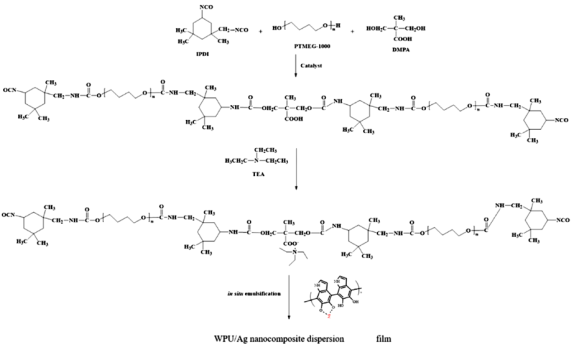
successfully synthesized silver nanoparticles rich in catechol groups on their surfaces through in situ reduction of silver ions using dopamine analogues. These nanoparticles were uniformly dispersed as functional fillers within the WPU matrix (as shown in
Figure 5: Schematic diagram of the preparation process for water-based polyurethane/silver nanocomposites). The resulting WPU/Ag nanocomposite not only exhibits outstanding antibacterial efficacy against Escherichia coli and Staphylococcus aureus (inhibition rate >99%) but also demonstrates significantly enhanced tensile strength and elongation at break. Organic antimicrobial agents primarily include quaternary ammonium salts, guanidine derivatives, and phenolic compounds. Their antibacterial mechanism involves binding to the phospholipid bilayer of microbial cell membranes via electrostatic interactions or hydrogen bonds, disrupting membrane integrity and causing leakage of cellular contents. Although both inorganic and organic antimicrobial agents demonstrate good antibacterial efficacy, their practical application still faces certain challenges. Long-term use of inorganic antimicrobials may lead to metal ion accumulation, posing potential environmental hazards. Organic antimicrobials, meanwhile, exhibit poor heat resistance and durability, potentially losing antimicrobial activity under high-temperature or high-humidity conditions. Therefore, developing highly effective, environmentally friendly, and durable antimicrobial-modified water-based polyurethane coatings remains a crucial direction for future research.
Figure 5. Schematic diagram of the preparation process for water-based polyurethane/silver nanocomposites.
Research on flame-retardant modified water-based polyurethane coatings has primarily focused on the classification of halogenated and halogen-free flame retardants and the exploration of their flame-retardant mechanisms. Halogenated flame retardants primarily include brominated and chlorinated types. Their flame-retardant mechanism involves generating halogenated hydrogen gases (such as HBr and HCl) through thermal decomposition. These gases capture free radicals produced during combustion, thereby interrupting chain reactions and reducing the combustion rate. Research utilizing decabromodiphenyl ether as a flame retardant successfully developed a water-based polyurethane coating with outstanding flame-retardant properties. Experimental results indicate that when the decabromodiphenyl ether content reaches 15%, the limiting oxygen index (LOI) of the coating film increases from 20% to 28%, demonstrating significant flame-retardant effects
| [14] | Li Wei, Lü Chen, Wang Shenghua, et al. Research Progress on Flame Retardant Modification Methods and Applications of Waterborne Polyurethanes [J]. Polyurethane Industry, 2024, 39(02): 14-18. |
[14]
. However, halogenated flame retardants release large amounts of toxic gases and smoke during combustion, causing severe environmental pollution, leading to restrictions on their use. Halogen-free flame retardants primarily include phosphorus-based, nitrogen-based, and silicon-based compounds. Their flame-retardant mechanism involves forming a char layer that isolates oxygen and heat transfer, thereby inhibiting the progression of combustion reactions. Epoxy resin, a common halogen-free flame retardant, can be chemically modified and incorporated into water-based polyurethane systems to significantly enhance the thermal stability and flame retardancy of the coating film. Studies indicate that when epoxy resin is added at a concentration of 5%, the thermal decomposition temperature of the coating film increases by approximately 50°C. Moreover, the char layer formed during combustion is dense and uniform, effectively slowing the flame propagation rate. Although halogen-free flame retardants offer significant environmental advantages, their flame retardancy efficiency typically falls below that of halogenated flame retardants. Therefore, balancing flame retardancy performance with environmental requirements remains a key challenge for future research.
4. Research Progress on Functional Modification
4.1. High-Performance Modification
The mechanical properties of water-based polyurethane coatings are key indicators of their application performance. Modification techniques can significantly enhance parameters such as hardness, tensile strength, and elongation at break. Research indicates that silicone modification and nanoparticle modification are two effective approaches. Zheng Shaojun et al.
modified water-based polyurethane using acrylic monomers, significantly improving the coating's water resistance and hardness while enhancing its mechanical properties. Dong Yongbing et al.
incorporated nano-SiO
2 into the water-based polyurethane system via in-situ polymerization, finding that the coating's thermal stability and mechanical properties reached optimal levels when the nano-SiO
2 mass fraction was 2.0%. Furthermore, Jiang Xiaofei et al.
demonstrated that water-based polyurethane adhesives prepared using tetraethylammonium hydroxide (TEAH) as a neutralizing agent exhibit outstanding comprehensive properties, with both hardness and tensile strength surpassing those of conventional systems. These studies provide theoretical support and technical assurance for the application of water-based polyurethane coatings in fields requiring high-strength coatings.
Chemical resistance is one of the key challenges that water-based polyurethane coatings must overcome in practical applications, particularly in corrosive environments involving acids, alkalis, solvents, and other aggressive substances. In recent years, researchers have significantly enhanced the chemical resistance of water-based polyurethane coatings through various modification methods. For instance, Ge et al.
| [15] | Ge Shuoshuo, Zhang Pingbo, Jiang Pingping, et al. Preparation and Performance Study of Nano-Diamond-Modified Waterborne Polyurethane [J]. New Materials for Chemical Industry, 2017, 45(12): 37-40+44. |
[15]
successfully developed coating materials with outstanding acid and alkali resistance by combining surface-modified nanodiamond (ND) with water-based polyurethane. Experimental results demonstrated that the film exhibited excellent stability across a pH range of 3-11, with significantly enhanced solvent resistance. Additionally, Kang Yuan et al.
employed organosilicon-modified water-based polyurethane emulsions, observing a marked reduction in swelling rates of the coating film in organic solvents such as toluene and xylene, indicating substantially improved solvent resistance. These research achievements not only broaden the application of water-based polyurethane coatings in the protection of chemical equipment but also provide new insights for developing high-performance anti-corrosion coatings.
4.2. Functional Integrated Modification
With the increasing demand for multifunctional materials, water-based polyurethane coatings that combine multiple functions such as antibacterial, flame-retardant, and self-healing properties have gradually become a research hotspot. For example, Zhou Tingting et al.
| [17] | Zhou Tingting. Preparation and Performance Study of Sulfonic Acid-Type Waterborne Polyurethanes [D]. Anhui University, 2012. |
[17]
successfully prepared a multifunctional coating with both antibacterial and flame-retardant properties by modifying sulfonic acid-type water-based polyurethane with the silane coupling agent KH-550. Research indicates that this coating film exhibits significant antibacterial effects upon contact with Escherichia coli and Staphylococcus aureus, while its limiting oxygen index (LOI) reaches 28%, demonstrating excellent flame-retardant properties. Current research is evolving from single-function to multifunctional synergistic approaches. Li et al.
| [18] | Li Y, Jin Y, Zhou R, et al. A rapid room-temperature self-healing, antibacterial, photoluminescent waterborne polyurethane coating with excellent mechanical properties based on double dynamic cross-linked network used for leather finishing [J]. Progress in Organic Coatings, 2024, 190: 108386.
https://doi.org/10.1016/j.porgcoat.2024.108386 |
[18]
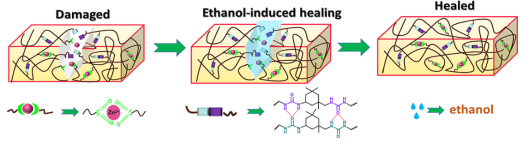
recently developed a WPU coating integrating self-healing, antibacterial, and UV-resistant properties (as shown in
Figure 6: Schematic of Ethanol-Induced Self-Repair Mechanism), demonstrating broad prospects in smart packaging and outdoor protection applications. This represents the developmental direction for next-generation high-performance eco-friendly coatings. These research examples demonstrate that through rational design of modification strategies, synergistic effects of multiple functions can be achieved, providing important references for the functional integration of water-based polyurethane coatings.
Figure 6. Schematic of Ethanol-Induced Self-Repair Mechanism.
4.3. Green Sustainable Modification
With the continuous growth of environmental awareness, developing eco-friendly modifiers has become a key research direction in water-based polyurethane coatings. Bio-based modifiers have garnered widespread attention due to their renewable nature and low environmental impact. Castor oil, as a typical bio-based raw material, has been successfully applied in the modification of water-based polyurethanes. Suzana et al.
| [11] | Cakić, Suzana M., et al. "Waterborne polyurethane-silica nanocomposite adhesives based on castor oil-recycled polyols: Effects of (3-aminopropyl) triethoxysilane (APTES) content on properties." International Journal of Adhesion and Adhesives 90 (2019): 22-31.
https://doi.org/10.1016/j.ijadhadh.2019.01.005 |
[11]
prepared a water-based polyurethane-silica nano-composite adhesive using castor oil-derived renewable polyols. Their study revealed that the incorporation of (3-aminopropyl) triethoxysilane (APTES) significantly enhanced the thermal stability and mechanical properties of the modified material. Furthermore, waterborne epoxy resins, as environmentally friendly modifiers, are widely adopted in construction due to their excellent heat and water resistance. Studies indicate that incorporating waterborne epoxy resins significantly improves the storage stability and film-forming properties of waterborne polyurethane emulsions while reducing volatile organic compound (VOC) emissions. These investigations provide crucial support for the green development of waterborne polyurethane coatings.
Green sustainable modification holds significant importance for the sustainable development of the water-based polyurethane coatings industry. First, the application of environmentally friendly modifiers significantly reduces dependence on petrochemical resources, driving the coatings industry toward utilizing renewable resources. For instance, the use of bio-based raw materials such as vegetable oils and biomass polyols not only lowers production costs but also minimizes negative environmental impacts. Second, reducing VOC emissions through modification technologies helps improve air quality and aligns with increasingly stringent global environmental regulations. Finally, green sustainable modification promotes the large-scale application of water-based polyurethane coatings in sectors like construction, furniture, and automotive, driving technological advancement and industrial upgrading across related industries. These developments not only lay the foundation for the sustainable development of water-based polyurethane coatings but also provide valuable insights for green research in other polymer materials.
5. Application Areas
5.1. Construction Sector
Multifunctional modified water-based polyurethane coatings find extensive application in the construction sector, with their outstanding properties making them an ideal choice for exterior walls, interior walls, and floor coatings. For exterior wall coatings, nano-modification technology significantly enhances the coating's density and weather resistance, effectively combating environmental factors like UV aging and acid rain erosion. Simultaneously, composite modification methods—such as incorporating organosilicon and acrylic esters—further strengthen the film's water resistance and adhesion, ensuring long-term stability. For interior wall applications, the water-based polyurethane coating undergoes antimicrobial modification to inhibit mold and bacterial growth, providing enhanced hygiene assurance for indoor environments. Furthermore, in floor coatings, its outstanding abrasion resistance and impact resistance make it particularly suitable for high-traffic areas such as shopping malls and hospitals, significantly extending the service life of flooring surfaces.
5.2. Automotive Sector
In the automotive manufacturing industry, multifunctional modified water-based polyurethane coatings are widely used for painting automotive components and vehicle bodies to enhance overall vehicle performance. Modifying the coating with nano-SiO2 particles significantly improves hardness and scratch resistance, effectively protecting the body surface from external damage. Furthermore, the application of self-healing modification technology endows the coating with a degree of self-repair capability, enabling it to automatically restore surface smoothness after minor scratches occur, thereby reducing maintenance costs. For automotive components, flame-retardant modified water-based polyurethane coatings are employed in high-temperature areas like engine compartments to provide additional safety assurance. Their low VOC emission characteristics also align with modern automotive manufacturing's environmental requirements. The application of these modification technologies not only elevates the aesthetic quality of vehicles but also enhances their durability and safety.
5.3. Aerospace Sector
The aerospace sector imposes extremely stringent requirements on material performance, and multifunctional modified water-based polyurethane coatings demonstrate tremendous application potential in this field due to their outstanding properties. First, after special modification, these coatings can meet the surface protection needs of aircraft. By incorporating organic fluorine monomers during modification, the coatings' high-temperature resistance and hydrophobic properties are significantly enhanced, enabling them to withstand extreme environmental conditions. Second, addressing specialized functional demands in aerospace, researchers have developed modified water-based polyurethane coatings with properties such as conductivity and electromagnetic shielding, providing protection for aircraft electronic equipment. Furthermore, the application of bio-based modification technology enables these coatings to maintain high performance while offering environmental advantages, aligning with the aerospace industry's sustainable development goals. The integrated use of these modification technologies provides the aerospace sector with more high-performance, multifunctional options.
5.4. Other Fields
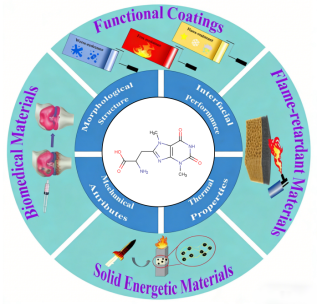
Beyond construction, automotive, and aerospace sectors, multifunctional modified waterborne polyurethane coatings find extensive applications in furniture, medical, and electronics industries (as illustrated in
Figure 7: Schematic Diagram of Application Categories for Multifunctional Modified Waterborne Polyurethanes). In furniture manufacturing, silicone-modified coatings significantly enhance abrasion resistance and chemical corrosion resistance, making them suitable for diverse home environments. In healthcare, antimicrobial-modified water-based polyurethane coatings are widely applied to surgical instruments and medical equipment surfaces to reduce infection risks. Furthermore, in electronics and appliances, flame-retardant modified water-based polyurethane coatings are employed for circuit boards, housings, and other components due to their superior insulation and fire-resistant properties, enhancing product safety and reliability. These diverse applications fully demonstrate the broad applicability and development potential of multifunctional modified water-based polyurethane coatings.
Figure 7. Schematic Diagram of Application Categories for Multifunctional Modified Waterborne Polyurethanes.
6. Summary and Outlook
Research on multifunctional modified waterborne polyurethane coatings has made remarkable progress in recent years, particularly in modification methods, performance enhancement, and application expansion. Regarding modification techniques, organic functional monomer modification, nanomaterial modification, bio-based modification, self-healing modification, and antimicrobial/flame-retardant modification have gradually become research hotspots. For instance, organic functional monomers like acrylates and epoxides significantly enhance coating weatherability and adhesion through copolymerization or grafting reactions. Meanwhile, nanomaterials such as nano-SiO2 and nano-TiO2 effectively improve coating hardness and abrasion resistance by increasing coating density. Furthermore, the application of bio-based raw materials like vegetable oils and biomass polyols not only demonstrates environmental advantages but also provides new pathways for sustainable development in the coatings industry. In terms of performance enhancement, multifunctional modified waterborne polyurethane coatings exhibit outstanding characteristics in mechanical properties, chemical resistance, and weatherability, meeting the demand for high-performance coatings across various sectors. Regarding application fields, these coatings have been widely adopted in construction, automotive, aerospace, and other industries, showing promising market prospects.
Despite significant achievements in researching multifunctional modified waterborne polyurethane coatings, several pressing issues remain unresolved. First, certain modification methods incur prohibitively high costs, limiting their industrial application. While organofluorosilicon modification significantly enhances coating performance, the high price of fluorinated monomers and potential environmental concerns pose challenges for large-scale production. Second, some modification techniques may introduce new defects while improving coating properties. For instance, excessive addition of organosilicon modifiers can exacerbate phase separation, thereby degrading mechanical properties. Furthermore, the performance stability of some modification methods remains inadequate, particularly requiring further validation of long-term performance under complex environmental conditions. In practical applications, self-healing modified coatings may exhibit inconsistent repair efficacy due to uneven microcapsule rupture. These challenges indicate that significant room for improvement remains in the research of multifunctional modified water-based polyurethane coatings.
Addressing the limitations in existing research, future development of multifunctional modified waterborne polyurethane coatings should focus on the following directions: First, develop novel modification methods to achieve more efficient performance enhancement while reducing production costs. Synthesizing new high-efficiency photoinitiators through molecular design can mitigate the impact of residual photoinitiators on material aging during UV dual-curing modification. Second, achieve multifunctional synergistic optimization by integrating multiple functions through multilayer composites or blending technologies to further enhance the coating's overall performance. Develop multifunctional coatings suitable for medical devices by combining antibacterial and wear-resistant properties. Third, advance green sustainability by focusing on the application of environmentally friendly modifiers, such as bio-based modifiers and waterborne epoxy resins, while exploring technical pathways to reduce VOC emissions. Fourth, enhance intelligent responsive modification research by designing specialized molecular structures or incorporating smart responsive materials to impart thermosensitive, pH-responsive, or photosensitive properties to coatings. This addresses emerging demands in smart buildings and packaging. Through these efforts, multifunctional modified waterborne polyurethane coatings are poised for broader future applications and will drive sustainable development within the coatings industry.





 Share This Article
 Twitter
 Linked In
 Facebook
 Copy
Copy Download