Peripheral artery disease (PAD) is a manifestation of systemic atherosclerosis associated with increased cardiovascular morbidity and mortality, and diabetes mellitus is one of its most important risk factors; however, a large proportion of patients remain asymptomatic and undiagnosed, and the ankle–brachial index (ABI) is a simple, non-invasive and reliable method recommended for its screening. This study aimed to determine the prevalence of PAD in diabetic patients using ABI and to evaluate its association with cardiovascular risk factors in a hospital setting in Senegal. We conducted a prospective cross-sectional descriptive and analytical study from September 2021 to October 2022 in the cardiology and internal medicine departments of the Idrissa Pouye General Hospital; adult diabetic patients aged ≥18 years were included, and sociodemographic characteristics, cardiovascular risk factors, clinical findings and laboratory data were collected. ABI was measured using a handheld Doppler device, PAD was defined as ABI < 0.9, and associations between PAD and cardiovascular risk factors were evaluated using appropriate statistical tests with a significance level of p < 0.05. A total of 100 patients with diabetes were included; the mean age was 60.6 ± 11.7 years, 57% were women, and the median duration of diabetes was 8 years. The most frequent cardiovascular risk factors were hypertension (64%), physical inactivity (58%), dyslipidemia (27%), smoking (19%) and obesity (11.9%); intermittent claudication was reported by 18% of patients, while erectile dysfunction was observed in 67.4% of men (29 of 43). The prevalence of lower extremity PAD, defined by an ABI < 0.9, was 17%; most cases were well compensated (70.6%), while 23.5% were poorly compensated and 5.9% had severe hemodynamic impairment. PAD was more frequent in patients older than 60 years, although this association was not statistically significant, whereas smoking (p = 0.04) and dyslipidemia (p = 0.03) were significantly associated with PAD. In conclusion, lower extremity PAD was relatively frequent among patients with diabetes in this hospital-based Senegalese population and was often clinically under-recognized; these findings support the integration of ABI measurement into the routine cardiovascular assessment of patients with diabetes, particularly in those with additional risk factors, to improve early detection and prevention of vascular complications.
This is an Open Access article, distributed under the terms of the Creative Commons Attribution 4.0 International License (http://creativecommons.org/licenses/by/4.0/), which permits unrestricted use, distribution and reproduction in any medium or format, provided the original work is properly cited.
Peripheral artery disease (PAD) is a frequent expression of systemic atherosclerosis in which the arteries supplying the lower limbs become progressively narrowed or occluded. The condition carries a considerable risk of major cardiovascular events, such as myocardial infarction, stroke and death of cardiovascular origin
[1]
Gornik HL, Aronow HD, Goodney PP, Arya S, Brewster LP, et al. 2024 ACC/AHA/AACVPR/APMA/ABC/SCAI/SVM/SVN/SVS Guideline for the Management of Lower Extremity Peripheral Artery Disease. Circulation. 2024; 149: e1313–e1410.
Mazzolai L, Teixido-Tura G, Lanzi S, et al. 2024 ESC Guidelines for the management of peripheral arterial and aortic diseases. European Heart Journal. 2024; 45(36): 3538–3700.
PAD is now recognized as a worldwide public health problem. More than 200 million people are estimated to live with the disease globally, and the burden is rising most rapidly in low- and middle-income countries. This upward trend is fueled by the increasing frequency of diabetes mellitus, the aging of populations and the ongoing weight of conventional cardiovascular risk factors
[4]
Fowkes FG, Rudan D, Rudan I, Aboyans V, Denenberg JO, McDermott MM, et al. Comparison of global estimates of prevalence and risk factors for peripheral artery disease in 2000 and 2010. Lancet. 2013; 382: 1329-40.
Song P, Rudan D, Zhu Y, Fowkes FJI, Rahimi K, Fowkes FGR, Rudan I. Global, regional, and national prevalence and risk factors for peripheral artery disease in 2015: an updated systematic review and analysis. The Lancet Global Health. 2019; 7(8): e1020-e1030.
Diabetes mellitus is a key driver of arterial disease of the lower limbs. Sustained hyperglycemia favors endothelial dysfunction, inflammation and accelerated atherosclerosis, so that arterial involvement appears earlier and is more widespread. Compared with people without diabetes, those with the condition are two to four times more likely to develop PAD, and when PAD does occur it tends to follow a more severe course, with a greater likelihood of critical limb ischemia and lower-limb amputation
[6]
Soyoye DO, Abiodun OO, Ikem RT, Kolawole BA, Akintomide AO. Diabetes and peripheral artery disease: A review. World Journal of Diabetes. 2021; 12(6): 827–838.
Barnes JA, Eid MA, Creager MA, Goodney PP. Epidemiology and Risk of Amputation in Patients with Diabetes Mellitus and Peripheral Artery Disease. Arteriosclerosis, Thrombosis, and Vascular Biology. 2020; 40(8): 1808-1817.
In spite of its clinical relevance, PAD is frequently missed. Many patients have no symptoms at all or report only atypical complaints, and typical intermittent claudication is present in only a small subset, which restricts the usefulness of clinical assessment on its own
[1]
Gornik HL, Aronow HD, Goodney PP, Arya S, Brewster LP, et al. 2024 ACC/AHA/AACVPR/APMA/ABC/SCAI/SVM/SVN/SVS Guideline for the Management of Lower Extremity Peripheral Artery Disease. Circulation. 2024; 149: e1313–e1410.
The ankle–brachial index (ABI) offers a simple, non-invasive way of comparing systolic pressure at the ankle with that at the brachial artery. A ratio below 0.9 is accepted as diagnostic of PAD and is broadly recommended for screening people at high risk. Beyond its high sensitivity and specificity for lower limb arterial disease, the ABI also carries useful prognostic information about overall cardiovascular risk
[10]
Xu D, Li J, Zou L, Xu Y, Hu D, Pagoto SL, Ma Y. Sensitivity and specificity of the ankle-brachial index to diagnose peripheral artery disease: a structured review. Vascular Medicine. 2010; 15(5): 361-369.
Ankle Brachial Index Collaboration; Fowkes FGR, Murray GD, Butcher I, Heald CL, Lee RJ, et al. Ankle brachial index combined with Framingham Risk Score to predict cardiovascular events and mortality: a meta-analysis. JAMA. 2008; 300(2): 197-208.
Data on the epidemiology of PAD in sub-Saharan Africa remain scarce. Given the rising frequency of diabetes and other cardiovascular risk factors across the region, PAD is likely to become an increasingly significant clinical concern; yet restricted access to diagnostic equipment and the lack of routine screening mean that its true burden is probably underestimated
[12]
Johnston LE, Stewart BT, Yangni-Angate H, Veller M, Upchurch GR Jr, Gyedu A. Peripheral Arterial Disease in Sub-Saharan Africa: A Review. JAMA Surgery. 2016; 151(6): 564–572.
Against this background, we set out to estimate the prevalence of peripheral artery disease among patients with diabetes using the ankle–brachial index and to examine how it relates to cardiovascular risk factors in a hospital setting in Senegal.
2. Methodology
We carried out a prospective, cross-sectional study with both descriptive and analytical components over a 14-month period, between September 2021 and October 2022. Eligible participants were men and women aged 18 years or older with an established diagnosis of diabetes mellitus who were being followed in the cardiology and internal medicine departments of Idrissa Pouye General Hospital in Dakar, Senegal. For each patient we recorded sociodemographic characteristics, cardiovascular risk factors and clinical as well as paraclinical findings, which were gathered through a structured questionnaire and entered on a standardized data collection form.
The ankle–brachial index was calculated as the ratio of the systolic pressure recorded at the ankle, over the anterior and posterior tibial arteries, to the systolic pressure recorded at the arm. A value below 0.9 was taken to indicate peripheral artery disease
[4]
Fowkes FG, Rudan D, Rudan I, Aboyans V, Denenberg JO, McDermott MM, et al. Comparison of global estimates of prevalence and risk factors for peripheral artery disease in 2000 and 2010. Lancet. 2013; 382: 1329-40.
Aboyans V, Ricco JB, Bartelink MEL, Björck M, Brodmann M, Cohnert T, et al. 2017 ESC Guidelines on the diagnosis and treatment of peripheral arterial diseases. Eur Heart J. 2018; 39: 763-816.
. The severity of arterial disease was graded according to the ABI value: well-compensated disease was defined as an ABI of 0.75–0.89, poorly compensated disease as an ABI of 0.40–0.74, and severe hemodynamic impairment (critical ischemia) as an ABI below 0.40. Measurements were performed with a Spengler manual sphygmomanometer together with an EDAN SD3 VASCULAR pocket Doppler (Hamburg, Germany). Before testing, each participant received an explanation of lower extremity peripheral artery disease, of the ankle–brachial index and of how the measurement would be carried out, a procedure that took approximately 5 to 10 minutes. Patients whose ankle–brachial index was abnormal were either started on medical treatment or referred to vascular medicine for optimal management.
The study was carried out with the agreement of the Director of Idrissa Pouye General Hospital, once institutional approval had been granted through signature of the center's confidentiality form. Each participant was given an information sheet summarizing the study; this two-page document set out the title, objectives, target population, duration, planned sample size, the potential benefits and drawbacks of taking part, and the investigators' contact details. All participants provided written informed consent, and those who declined to take part were not enrolled, with no consequence for their care or follow-up in the department. Every patient was also assured of the confidential handling of the study data.
Statistical analyses were conducted with Epi Info version 7 and R version 4. Categorical variables were summarized as frequencies and percentages, whereas continuous variables were expressed as the mean and standard deviation together with the range and median. Associations between lower extremity peripheral artery disease and the remaining variables were examined in bivariate analysis, and proportions were compared using Fisher's exact test, the Pearson chi-square test and the Yates-corrected chi-square test. Statistical significance was set at a p-value below 0.05.
3. Results
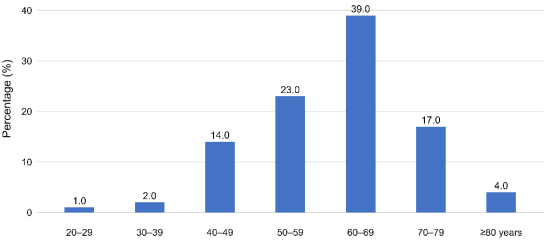
Our study included 100 patients. A female predominance was observed, with a sex ratio of 0.75. The mean age was 60.6 ± 11.7 years, with a median age of 61 years and extremes ranging from 28 to 88 years. The 60–69-year age group was the most represented (Figure 1). Most patients came from the suburbs of Dakar, accounting for 61% of the study population.
Figure 1. Distribution of the population by age group (n = 100).
All patients included in the study had diabetes. The duration of diabetes was documented for all patients, with a mean duration of 12.26 ± 7.19 years and a maximum duration of 31 years. The median duration was 8 years. The main cardiovascular risk factors identified were hypertension (64%), physical inactivity (58%), dyslipidemia (27%), smoking (19%) and obesity (11.9% of the 84 patients with body mass index available).
Clinically, 18% of patients presented with intermittent claudication. Among them, 29% reported numbness and 71% reported cramps. Erectile dysfunction was observed in 29 of the 43 men (67.4%). It was moderate in 12 cases (41.4%) and severe in 8 cases (27.6%). Peripheral pulse examination showed absent pedal pulses in 6% of cases and reduced pulses in 5%. The main lipid abnormalities were elevated total cholesterol (59%), elevated low-density lipoprotein (LDL) cholesterol (18%) and elevated triglycerides (18%). Electrocardiographic abnormalities were mainly conduction disorders, observed in 24% of patients, followed by rhythm disorders in 5%. On echocardiography, left ventricular systolic ejection fraction was reduced in 27% of patients, and filling pressures were elevated in 20%.
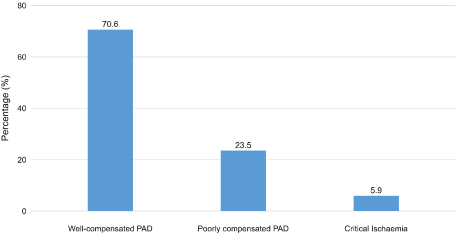
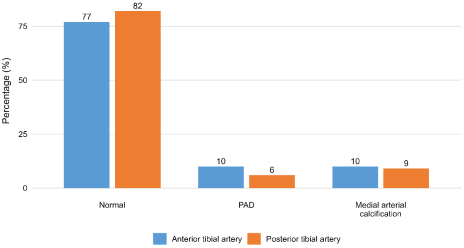
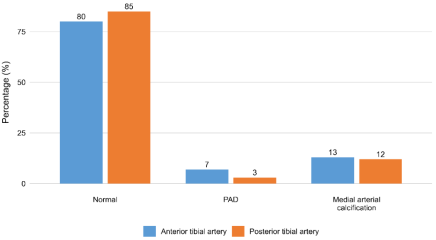
Measurement of the ankle–brachial index revealed a prevalence of lower extremity peripheral artery disease, defined as an ABI < 0.9, of 17%. Among these patients, 70.6% had well-compensated arterial disease, 23.5% had poorly compensated arterial disease and 5.9% had PAD with severe hemodynamic impairment (Figure 2). The right lower limb was more frequently affected, accounting for 61.53% of cases, with predominant involvement of the anterior tibial artery (62.25%) (Figure 3). The left lower limb was affected in 38.46% of cases, also with predominant involvement of the anterior tibial artery (70%), as shown in Figure 4.
Figure 4. Distribution of the study population according to the ABI in the left lower limb.
Lower extremity peripheral artery disease was more frequent among women, who accounted for 52.9% of cases, with a sex ratio of 0.89. It was also more frequent among patients older than 60 years, who represented 70.6% of cases (p = 0.27). The mean age of patients with PAD was 60.2 ± 12.5 years. Factors associated with the occurrence of lower extremity peripheral artery disease were smoking (p = 0.04) and dyslipidemia (p = 0.03) (Table 1). No association was found between peripheral artery disease and treatment duration, other cardiovascular risk factors, or electrocardiographic and echocardiographic abnormalities.
Table 1. Distribution of peripheral artery disease according to cardiovascular risk factors.
PAD
Total
p
Yes
No
Smoking
Count
6
13
19
0.04
%
35.3%
15.7%
19.0%
Sedentary lifestyle
Count
9
49
58
0.643
%
52.9%
59.0%
58.0%
Dyslipidemia
Count
6
21
27
0.03
%
35.3%
25.3%
27.0%
Hypertension
Count
12
52
64
0.534
%
70.6%
62.7%
64.0%
Obesity
Count
3
7
10
0.288
%
18.8%
10.3%
11.9%
Abdominal obesity
Count
4
15
19
0.551
%
23.5%
21.7%
22.1%
Percentages for obesity are calculated among the 84 patients for whom body mass index was available (16 with PAD, 68 without), and percentages for abdominal obesity among the 86 patients for whom waist circumference was available (17 with PAD, 69 without).
4. Discussion
Our study has several limitations related to its single-center design and cross-sectional nature, which do not allow a formal causal relationship to be established between the risk factors studied and the occurrence of lower extremity peripheral artery disease. In addition, the hospital-based setting and the relatively limited sample size may restrict the generalizability of the findings to the wider population of patients with diabetes. Despite these limitations, our study provides important data on the epidemiology of peripheral artery disease among patients with diabetes in Senegal and highlights the value of systematic screening using the ankle–brachial index.
We observed a high prevalence of peripheral artery disease, with 17% of participants having an ankle–brachial index below 0.9, suggestive of obstructive arterial disease. The prevalence observed in our study is consistent with several international epidemiological studies. The PARTNERS Program
[8]
Hirsch AT, Criqui MH, Treat-Jacobson D, Regensteiner JG, Creager MA, Olin JW, et al. Peripheral arterial disease detection, awareness, and treatment in primary care. JAMA. 2001; 286: 1317-24.
, conducted in the United States, reported a prevalence of approximately 29% among high-risk patients in primary care, particularly those with diabetes or multiple cardiovascular risk factors. Similarly, the Edinburgh Artery Study
[14]
Fowkes FGR, Housley E, Cawood EHH, Macintyre CCA, Ruckley CV, Prescott RJ. Edinburgh Artery Study: prevalence of asymptomatic and symptomatic peripheral arterial disease in the general population. International Journal of Epidemiology. 1991; 20(2): 384–392.
found evidence of peripheral artery disease in approximately 20% of individuals aged 55–74 years in the general population.
Among populations with diabetes, the prevalence of peripheral artery disease varies widely according to the population studied and the diagnostic criteria used. In the Framingham Heart Study
[15]
Kannel WB, Skinner JJ Jr, Schwartz MJ, Shurtleff D. Intermittent claudication: incidence in the Framingham Study. Circulation. 1970; 41(5): 875–883.
, prevalence ranged from 10% to 20%, increasing significantly with age and the presence of cardiovascular risk factors. Epidemiological data likewise indicate that diabetes is independently associated with a two- to fourfold increased risk of developing peripheral artery disease
[6]
Soyoye DO, Abiodun OO, Ikem RT, Kolawole BA, Akintomide AO. Diabetes and peripheral artery disease: A review. World Journal of Diabetes. 2021; 12(6): 827–838.
Our findings are also comparable to those reported in studies conducted in developing countries. A meta-analysis by Fowkes and colleagues
[4]
Fowkes FG, Rudan D, Rudan I, Aboyans V, Denenberg JO, McDermott MM, et al. Comparison of global estimates of prevalence and risk factors for peripheral artery disease in 2000 and 2010. Lancet. 2013; 382: 1329-40.
estimated that more than 200 million people worldwide are affected by peripheral artery disease, with a marked increase in low- and middle-income countries.
In sub-Saharan Africa, studies suggest a prevalence ranging from 12% to 25% among populations with diabetes, indicating that peripheral artery disease represents a growing public health concern in the region
[12]
Johnston LE, Stewart BT, Yangni-Angate H, Veller M, Upchurch GR Jr, Gyedu A. Peripheral Arterial Disease in Sub-Saharan Africa: A Review. JAMA Surgery. 2016; 151(6): 564–572.
In our study, peripheral artery disease was more frequent among older patients, although this association did not reach statistical significance (p = 0.27). The majority of patients with an abnormal ankle–brachial index were older than 60 years, which is consistent with the Rotterdam Study
[19]
Meijer WT, Hoes AW, Rutgers D, Bots ML, Hofman A, Grobbee DE. Peripheral arterial disease in the elderly: The Rotterdam Study. Arterioscler Thromb Vasc Biol. 1998; 18: 185-92.
McDermott MM. The magnitude of the problem of peripheral arterial disease: epidemiology and clinical significance. Cleve Clin J Med. 2006 Oct; 73 Suppl 4: S2-7.
Our study found a slight female predominance. Although peripheral artery disease has historically been considered more common in men, recent epidemiological data suggest that its prevalence may be similar, or even higher, among women, particularly after menopause
[22]
Higgins JP, Higgins JA. Epidemiology of peripheral arterial disease in women. Journal of Epidemiology. 2003; 13(1): 1–14.
Petrov ME, Gupta N, Foody JM, et al. Peripheral Arterial Disease in Women: an Overview of Risk Factor Profile, Clinical Features, and Outcomes. Current Atherosclerosis Reports. 2018; 20(8): 40.
Another important finding of our study was the high proportion of asymptomatic cases. Nearly half of the patients with an abnormal ankle–brachial index did not report intermittent claudication. This observation is consistent with previous studies showing that up to two-thirds of peripheral artery disease cases may be asymptomatic
[8]
Hirsch AT, Criqui MH, Treat-Jacobson D, Regensteiner JG, Creager MA, Olin JW, et al. Peripheral arterial disease detection, awareness, and treatment in primary care. JAMA. 2001; 286: 1317-24.
Our analysis also showed that some cardiovascular risk factors, such as dyslipidemia (p = 0.03) and smoking (p = 0.04), were significantly associated with peripheral artery disease in our study population. Diabetes plays an important role in the development of vascular complications, particularly through the cumulative effects of chronic hyperglycemia on the vascular endothelium, inflammation, oxidative stress and atherosclerosis
[6]
Soyoye DO, Abiodun OO, Ikem RT, Kolawole BA, Akintomide AO. Diabetes and peripheral artery disease: A review. World Journal of Diabetes. 2021; 12(6): 827–838.
Regarding smoking, its strong epidemiological association with peripheral artery disease is well established, with the risk being approximately threefold higher among smokers and proportional to the level of tobacco exposure. This finding is consistent with classical data from the literature identifying smoking as one of the most powerful risk factors for peripheral artery disease. Smoking promotes endothelial dysfunction, vascular inflammation, hypercoagulability and the progression of atherosclerosis. In patients with diabetes, its harmful effects are further amplified by metabolic abnormalities
[6]
Soyoye DO, Abiodun OO, Ikem RT, Kolawole BA, Akintomide AO. Diabetes and peripheral artery disease: A review. World Journal of Diabetes. 2021; 12(6): 827–838.
. Smoking cessation should therefore be a priority in any cardiovascular prevention strategy.
Although the association between peripheral artery disease and other risk factors such as hypertension, obesity, physical inactivity and certain demographic variables was not statistically significant, these factors remain part of the broader cardiovascular risk profile.
Erectile dysfunction was found in 67.4% of men. Erectile dysfunction may be considered an early marker of endothelial dysfunction and systemic atherosclerosis. In patients with diabetes, it shares several pathophysiological mechanisms with peripheral artery disease, including endothelial dysfunction, chronic inflammation, microvascular abnormalities and neuropathic involvement
[24]
Nehra A, Jackson G, Miner M, Billups KL, Burnett AL, Buvat J, et al. The Princeton III Consensus Recommendations for the Management of Erectile Dysfunction and Cardiovascular Disease. Mayo Clinic Proceedings. 2012; 87(8): 766-778.
Our findings support data from the literature suggesting that ankle–brachial index measurement should be integrated into the systematic assessment of cardiovascular risk in high-risk populations. The ankle–brachial index is a simple, non-invasive and inexpensive diagnostic tool that can be easily used in clinical practice, including in resource-limited settings. Its use is recommended by major international guidelines, including those of the European Society of Cardiology
[2]
Mazzolai L, Teixido-Tura G, Lanzi S, et al. 2024 ESC Guidelines for the management of peripheral arterial and aortic diseases. European Heart Journal. 2024; 45(36): 3538–3700.
Aboyans V, Ricco JB, Bartelink MEL, Björck M, Brodmann M, Cohnert T, et al. 2017 ESC Guidelines on the diagnosis and treatment of peripheral arterial diseases. Eur Heart J. 2018; 39: 763-816.
In sub-Saharan Africa, where access to advanced vascular imaging may be limited, screening using the ankle–brachial index could play a crucial role in the early detection of peripheral artery disease and the prevention of cardiovascular complications.
5. Conclusion
This study shows that lower extremity peripheral artery disease is common among patients with diabetes followed in a hospital setting in Senegal, with a prevalence of 17% assessed using the ankle–brachial index. The high proportion of asymptomatic cases highlights the limitations of clinical examination alone and supports the value of systematic ABI screening, particularly among older patients or those with multiple cardiovascular risk factors. Smoking and dyslipidemia were associated with peripheral artery disease in our study population. These findings support the integration of ABI measurement into the cardiovascular assessment of patients with diabetes, in order to improve early detection, cardiovascular risk stratification, and prevention of severe vascular complications.
6. Recommendations
To improve the screening and management of lower extremity peripheral artery disease among patients with diabetes, the following actions may be proposed:
1) Integrate ankle–brachial index measurement into the routine cardiovascular assessment of patients with diabetes, particularly those older than 60 years or those with multiple cardiovascular risk factors.
2) Strengthen cardiovascular prevention through active management of smoking, dyslipidemia, hypertension, obesity and physical inactivity.
3) Promote education of patients with diabetes about symptoms suggestive of peripheral artery disease, the importance of foot care, adapted physical activity and treatment adherence.
4) Train healthcare professionals in ankle–brachial index measurement and in the early identification of peripheral vascular complications of diabetes.
5) Develop referral pathways between cardiology, internal medicine, diabetology, vascular medicine and vascular surgery departments to ensure multidisciplinary management.
6) Encourage multicenter and longitudinal studies to better assess the true prevalence of peripheral artery disease among patients with diabetes in Senegal and to identify its prognostic determinants.
These measures could improve the early detection of peripheral artery disease, reduce severe vascular complications, particularly trophic disorders and amputations, and strengthen global cardiovascular prevention among patients with diabetes.
Mazzolai L, Teixido-Tura G, Lanzi S, et al. 2024 ESC Guidelines for the management of peripheral arterial and aortic diseases. European Heart Journal. 2024; 45(36): 3538–3700.
Fowkes FG, Rudan D, Rudan I, Aboyans V, Denenberg JO, McDermott MM, et al. Comparison of global estimates of prevalence and risk factors for peripheral artery disease in 2000 and 2010. Lancet. 2013; 382: 1329-40.
Song P, Rudan D, Zhu Y, Fowkes FJI, Rahimi K, Fowkes FGR, Rudan I. Global, regional, and national prevalence and risk factors for peripheral artery disease in 2015: an updated systematic review and analysis. The Lancet Global Health. 2019; 7(8): e1020-e1030.
Barnes JA, Eid MA, Creager MA, Goodney PP. Epidemiology and Risk of Amputation in Patients with Diabetes Mellitus and Peripheral Artery Disease. Arteriosclerosis, Thrombosis, and Vascular Biology. 2020; 40(8): 1808-1817.
Xu D, Li J, Zou L, Xu Y, Hu D, Pagoto SL, Ma Y. Sensitivity and specificity of the ankle-brachial index to diagnose peripheral artery disease: a structured review. Vascular Medicine. 2010; 15(5): 361-369.
Ankle Brachial Index Collaboration; Fowkes FGR, Murray GD, Butcher I, Heald CL, Lee RJ, et al. Ankle brachial index combined with Framingham Risk Score to predict cardiovascular events and mortality: a meta-analysis. JAMA. 2008; 300(2): 197-208.
Johnston LE, Stewart BT, Yangni-Angate H, Veller M, Upchurch GR Jr, Gyedu A. Peripheral Arterial Disease in Sub-Saharan Africa: A Review. JAMA Surgery. 2016; 151(6): 564–572.
Aboyans V, Ricco JB, Bartelink MEL, Björck M, Brodmann M, Cohnert T, et al. 2017 ESC Guidelines on the diagnosis and treatment of peripheral arterial diseases. Eur Heart J. 2018; 39: 763-816.
Fowkes FGR, Housley E, Cawood EHH, Macintyre CCA, Ruckley CV, Prescott RJ. Edinburgh Artery Study: prevalence of asymptomatic and symptomatic peripheral arterial disease in the general population. International Journal of Epidemiology. 1991; 20(2): 384–392.
McDermott MM. The magnitude of the problem of peripheral arterial disease: epidemiology and clinical significance. Cleve Clin J Med. 2006 Oct; 73 Suppl 4: S2-7.
Petrov ME, Gupta N, Foody JM, et al. Peripheral Arterial Disease in Women: an Overview of Risk Factor Profile, Clinical Features, and Outcomes. Current Atherosclerosis Reports. 2018; 20(8): 40.
Nehra A, Jackson G, Miner M, Billups KL, Burnett AL, Buvat J, et al. The Princeton III Consensus Recommendations for the Management of Erectile Dysfunction and Cardiovascular Disease. Mayo Clinic Proceedings. 2012; 87(8): 766-778.
Gaye, N. D., Mingou, J. S., Ndiaye, M., Ndiaye, M., Diouf, M. T., et al. (2026). Ankle–Brachial Index Screening for Peripheral Artery Disease in Diabetic Patients: A Hospital-Based Study in Senegal. Cardiology and Cardiovascular Research, 10(3), 33-40. https://doi.org/10.11648/j.ccr.20261003.12
Gaye, N. D.; Mingou, J. S.; Ndiaye, M.; Ndiaye, M.; Diouf, M. T., et al. Ankle–Brachial Index Screening for Peripheral Artery Disease in Diabetic Patients: A Hospital-Based Study in Senegal. Cardiol. Cardiovasc. Res.2026, 10(3), 33-40. doi: 10.11648/j.ccr.20261003.12
Gaye ND, Mingou JS, Ndiaye M, Ndiaye M, Diouf MT, et al. Ankle–Brachial Index Screening for Peripheral Artery Disease in Diabetic Patients: A Hospital-Based Study in Senegal. Cardiol Cardiovasc Res. 2026;10(3):33-40. doi: 10.11648/j.ccr.20261003.12
@article{10.11648/j.ccr.20261003.12,
  author = {Ngone Diaba Gaye and Joseph Salvador Mingou and Moussa Ndiaye and Malick Ndiaye and Marguerite Tening Diouf and Lamine Ly and Seydina Oumar Gueye and Mamadou Adama Thiam and Alassane Mbaye and Abdoul Kane and Aliou Alassane Ngaide},
  title = {Ankle–Brachial Index Screening for Peripheral Artery Disease in Diabetic Patients: A Hospital-Based Study in Senegal},
  journal = {Cardiology and Cardiovascular Research},
  volume = {10},
  number = {3},
  pages = {33-40},
  doi = {10.11648/j.ccr.20261003.12},
  url = {https://doi.org/10.11648/j.ccr.20261003.12},
  eprint = {https://article.sciencepublishinggroup.com/pdf/10.11648.j.ccr.20261003.12},
  abstract = {Peripheral artery disease (PAD) is a manifestation of systemic atherosclerosis associated with increased cardiovascular morbidity and mortality, and diabetes mellitus is one of its most important risk factors; however, a large proportion of patients remain asymptomatic and undiagnosed, and the ankle–brachial index (ABI) is a simple, non-invasive and reliable method recommended for its screening. This study aimed to determine the prevalence of PAD in diabetic patients using ABI and to evaluate its association with cardiovascular risk factors in a hospital setting in Senegal. We conducted a prospective cross-sectional descriptive and analytical study from September 2021 to October 2022 in the cardiology and internal medicine departments of the Idrissa Pouye General Hospital; adult diabetic patients aged ≥18 years were included, and sociodemographic characteristics, cardiovascular risk factors, clinical findings and laboratory data were collected. ABI was measured using a handheld Doppler device, PAD was defined as ABI < 0.9, and associations between PAD and cardiovascular risk factors were evaluated using appropriate statistical tests with a significance level of p < 0.05. A total of 100 patients with diabetes were included; the mean age was 60.6 ± 11.7 years, 57% were women, and the median duration of diabetes was 8 years. The most frequent cardiovascular risk factors were hypertension (64%), physical inactivity (58%), dyslipidemia (27%), smoking (19%) and obesity (11.9%); intermittent claudication was reported by 18% of patients, while erectile dysfunction was observed in 67.4% of men (29 of 43). The prevalence of lower extremity PAD, defined by an ABI < 0.9, was 17%; most cases were well compensated (70.6%), while 23.5% were poorly compensated and 5.9% had severe hemodynamic impairment. PAD was more frequent in patients older than 60 years, although this association was not statistically significant, whereas smoking (p = 0.04) and dyslipidemia (p = 0.03) were significantly associated with PAD. In conclusion, lower extremity PAD was relatively frequent among patients with diabetes in this hospital-based Senegalese population and was often clinically under-recognized; these findings support the integration of ABI measurement into the routine cardiovascular assessment of patients with diabetes, particularly in those with additional risk factors, to improve early detection and prevention of vascular complications.},
 year = {2026}
}
TY  - JOUR
T1  - Ankle–Brachial Index Screening for Peripheral Artery Disease in Diabetic Patients: A Hospital-Based Study in Senegal
AU  - Ngone Diaba Gaye
AU  - Joseph Salvador Mingou
AU  - Moussa Ndiaye
AU  - Malick Ndiaye
AU  - Marguerite Tening Diouf
AU  - Lamine Ly
AU  - Seydina Oumar Gueye
AU  - Mamadou Adama Thiam
AU  - Alassane Mbaye
AU  - Abdoul Kane
AU  - Aliou Alassane Ngaide
Y1  - 2026/08/10
PY  - 2026
N1  - https://doi.org/10.11648/j.ccr.20261003.12
DO  - 10.11648/j.ccr.20261003.12
T2  - Cardiology and Cardiovascular Research
JF  - Cardiology and Cardiovascular Research
JO  - Cardiology and Cardiovascular Research
SP  - 33
EP  - 40
PB  - Science Publishing Group
SN  - 2578-8914
UR  - https://doi.org/10.11648/j.ccr.20261003.12
AB  - Peripheral artery disease (PAD) is a manifestation of systemic atherosclerosis associated with increased cardiovascular morbidity and mortality, and diabetes mellitus is one of its most important risk factors; however, a large proportion of patients remain asymptomatic and undiagnosed, and the ankle–brachial index (ABI) is a simple, non-invasive and reliable method recommended for its screening. This study aimed to determine the prevalence of PAD in diabetic patients using ABI and to evaluate its association with cardiovascular risk factors in a hospital setting in Senegal. We conducted a prospective cross-sectional descriptive and analytical study from September 2021 to October 2022 in the cardiology and internal medicine departments of the Idrissa Pouye General Hospital; adult diabetic patients aged ≥18 years were included, and sociodemographic characteristics, cardiovascular risk factors, clinical findings and laboratory data were collected. ABI was measured using a handheld Doppler device, PAD was defined as ABI < 0.9, and associations between PAD and cardiovascular risk factors were evaluated using appropriate statistical tests with a significance level of p < 0.05. A total of 100 patients with diabetes were included; the mean age was 60.6 ± 11.7 years, 57% were women, and the median duration of diabetes was 8 years. The most frequent cardiovascular risk factors were hypertension (64%), physical inactivity (58%), dyslipidemia (27%), smoking (19%) and obesity (11.9%); intermittent claudication was reported by 18% of patients, while erectile dysfunction was observed in 67.4% of men (29 of 43). The prevalence of lower extremity PAD, defined by an ABI < 0.9, was 17%; most cases were well compensated (70.6%), while 23.5% were poorly compensated and 5.9% had severe hemodynamic impairment. PAD was more frequent in patients older than 60 years, although this association was not statistically significant, whereas smoking (p = 0.04) and dyslipidemia (p = 0.03) were significantly associated with PAD. In conclusion, lower extremity PAD was relatively frequent among patients with diabetes in this hospital-based Senegalese population and was often clinically under-recognized; these findings support the integration of ABI measurement into the routine cardiovascular assessment of patients with diabetes, particularly in those with additional risk factors, to improve early detection and prevention of vascular complications.
VL  - 10
IS  - 3
ER  -
Faculty of Medicine, Cheikh Anta Diop University, Dakar, Senegal; Department of Cardiac Rehabilitation, Ibra Mamadou Wane Medical Center, Dakar, Senegal
Faculty of Medicine, Cheikh Anta Diop University, Dakar, Senegal; Cardiology Department, Aristide Le Dantec Hospital, Dakar, Senegal
Moussa Ndiaye
Faculty of Medicine, Cheikh Anta Diop University, Dakar, Senegal; Department of Cardiac Rehabilitation, Ibra Mamadou Wane Medical Center, Dakar, Senegal
Gaye, N. D., Mingou, J. S., Ndiaye, M., Ndiaye, M., Diouf, M. T., et al. (2026). Ankle–Brachial Index Screening for Peripheral Artery Disease in Diabetic Patients: A Hospital-Based Study in Senegal. Cardiology and Cardiovascular Research, 10(3), 33-40. https://doi.org/10.11648/j.ccr.20261003.12
Gaye, N. D.; Mingou, J. S.; Ndiaye, M.; Ndiaye, M.; Diouf, M. T., et al. Ankle–Brachial Index Screening for Peripheral Artery Disease in Diabetic Patients: A Hospital-Based Study in Senegal. Cardiol. Cardiovasc. Res.2026, 10(3), 33-40. doi: 10.11648/j.ccr.20261003.12
Gaye ND, Mingou JS, Ndiaye M, Ndiaye M, Diouf MT, et al. Ankle–Brachial Index Screening for Peripheral Artery Disease in Diabetic Patients: A Hospital-Based Study in Senegal. Cardiol Cardiovasc Res. 2026;10(3):33-40. doi: 10.11648/j.ccr.20261003.12
@article{10.11648/j.ccr.20261003.12,
  author = {Ngone Diaba Gaye and Joseph Salvador Mingou and Moussa Ndiaye and Malick Ndiaye and Marguerite Tening Diouf and Lamine Ly and Seydina Oumar Gueye and Mamadou Adama Thiam and Alassane Mbaye and Abdoul Kane and Aliou Alassane Ngaide},
  title = {Ankle–Brachial Index Screening for Peripheral Artery Disease in Diabetic Patients: A Hospital-Based Study in Senegal},
  journal = {Cardiology and Cardiovascular Research},
  volume = {10},
  number = {3},
  pages = {33-40},
  doi = {10.11648/j.ccr.20261003.12},
  url = {https://doi.org/10.11648/j.ccr.20261003.12},
  eprint = {https://article.sciencepublishinggroup.com/pdf/10.11648.j.ccr.20261003.12},
  abstract = {Peripheral artery disease (PAD) is a manifestation of systemic atherosclerosis associated with increased cardiovascular morbidity and mortality, and diabetes mellitus is one of its most important risk factors; however, a large proportion of patients remain asymptomatic and undiagnosed, and the ankle–brachial index (ABI) is a simple, non-invasive and reliable method recommended for its screening. This study aimed to determine the prevalence of PAD in diabetic patients using ABI and to evaluate its association with cardiovascular risk factors in a hospital setting in Senegal. We conducted a prospective cross-sectional descriptive and analytical study from September 2021 to October 2022 in the cardiology and internal medicine departments of the Idrissa Pouye General Hospital; adult diabetic patients aged ≥18 years were included, and sociodemographic characteristics, cardiovascular risk factors, clinical findings and laboratory data were collected. ABI was measured using a handheld Doppler device, PAD was defined as ABI < 0.9, and associations between PAD and cardiovascular risk factors were evaluated using appropriate statistical tests with a significance level of p < 0.05. A total of 100 patients with diabetes were included; the mean age was 60.6 ± 11.7 years, 57% were women, and the median duration of diabetes was 8 years. The most frequent cardiovascular risk factors were hypertension (64%), physical inactivity (58%), dyslipidemia (27%), smoking (19%) and obesity (11.9%); intermittent claudication was reported by 18% of patients, while erectile dysfunction was observed in 67.4% of men (29 of 43). The prevalence of lower extremity PAD, defined by an ABI < 0.9, was 17%; most cases were well compensated (70.6%), while 23.5% were poorly compensated and 5.9% had severe hemodynamic impairment. PAD was more frequent in patients older than 60 years, although this association was not statistically significant, whereas smoking (p = 0.04) and dyslipidemia (p = 0.03) were significantly associated with PAD. In conclusion, lower extremity PAD was relatively frequent among patients with diabetes in this hospital-based Senegalese population and was often clinically under-recognized; these findings support the integration of ABI measurement into the routine cardiovascular assessment of patients with diabetes, particularly in those with additional risk factors, to improve early detection and prevention of vascular complications.},
 year = {2026}
}
TY  - JOUR
T1  - Ankle–Brachial Index Screening for Peripheral Artery Disease in Diabetic Patients: A Hospital-Based Study in Senegal
AU  - Ngone Diaba Gaye
AU  - Joseph Salvador Mingou
AU  - Moussa Ndiaye
AU  - Malick Ndiaye
AU  - Marguerite Tening Diouf
AU  - Lamine Ly
AU  - Seydina Oumar Gueye
AU  - Mamadou Adama Thiam
AU  - Alassane Mbaye
AU  - Abdoul Kane
AU  - Aliou Alassane Ngaide
Y1  - 2026/08/10
PY  - 2026
N1  - https://doi.org/10.11648/j.ccr.20261003.12
DO  - 10.11648/j.ccr.20261003.12
T2  - Cardiology and Cardiovascular Research
JF  - Cardiology and Cardiovascular Research
JO  - Cardiology and Cardiovascular Research
SP  - 33
EP  - 40
PB  - Science Publishing Group
SN  - 2578-8914
UR  - https://doi.org/10.11648/j.ccr.20261003.12
AB  - Peripheral artery disease (PAD) is a manifestation of systemic atherosclerosis associated with increased cardiovascular morbidity and mortality, and diabetes mellitus is one of its most important risk factors; however, a large proportion of patients remain asymptomatic and undiagnosed, and the ankle–brachial index (ABI) is a simple, non-invasive and reliable method recommended for its screening. This study aimed to determine the prevalence of PAD in diabetic patients using ABI and to evaluate its association with cardiovascular risk factors in a hospital setting in Senegal. We conducted a prospective cross-sectional descriptive and analytical study from September 2021 to October 2022 in the cardiology and internal medicine departments of the Idrissa Pouye General Hospital; adult diabetic patients aged ≥18 years were included, and sociodemographic characteristics, cardiovascular risk factors, clinical findings and laboratory data were collected. ABI was measured using a handheld Doppler device, PAD was defined as ABI < 0.9, and associations between PAD and cardiovascular risk factors were evaluated using appropriate statistical tests with a significance level of p < 0.05. A total of 100 patients with diabetes were included; the mean age was 60.6 ± 11.7 years, 57% were women, and the median duration of diabetes was 8 years. The most frequent cardiovascular risk factors were hypertension (64%), physical inactivity (58%), dyslipidemia (27%), smoking (19%) and obesity (11.9%); intermittent claudication was reported by 18% of patients, while erectile dysfunction was observed in 67.4% of men (29 of 43). The prevalence of lower extremity PAD, defined by an ABI < 0.9, was 17%; most cases were well compensated (70.6%), while 23.5% were poorly compensated and 5.9% had severe hemodynamic impairment. PAD was more frequent in patients older than 60 years, although this association was not statistically significant, whereas smoking (p = 0.04) and dyslipidemia (p = 0.03) were significantly associated with PAD. In conclusion, lower extremity PAD was relatively frequent among patients with diabetes in this hospital-based Senegalese population and was often clinically under-recognized; these findings support the integration of ABI measurement into the routine cardiovascular assessment of patients with diabetes, particularly in those with additional risk factors, to improve early detection and prevention of vascular complications.
VL  - 10
IS  - 3
ER  -





 Share This Article
 Twitter
 Linked In
 Facebook
 Copy
Copy Download