Research Article | | Peer-Reviewed

Construction of the Supply System of Wellness Tourism Destinations Based on the NCLS (Nature-Culture-Sports-Longevity) Four-dimensional Integration Model - A Case Study of Anhui Province

Received: 29 January 2026     Accepted: 13 March 2026     Published: 2 April 2026
Views:       Downloads:
Abstract

This study adopts a holistic and systematic perspective to construct a theoretical framework for the supply system of wellness tourism destinations. Based on a review of domestic and international research on wellness tourism supply, this paper summarizes the core components of the supply system and proposes the four-dimensional integrated model of Nature-Culture-Sports-Longevity (NCLS). The connotation of the NCLS model can be illustrated through the practice of Anhui Province: high-quality natural ecosystems provide the material foundation for wellness tourism development; Huizhou culture endows tourism products with profound cultural connotations and spiritual experiences; longevity-oriented wellness resources form differentiated competitiveness and attract tourists seeking health preservation; and diverse sports activities further enhance the effectiveness of wellness, promoting the physical and psychological coordination of tourists. The four dimensions interact synergistically and organically, jointly forming a destination supply system centered on comprehensive wellness experiences. This study addresses the limitations of existing research that often focus on single factors and overemphasize the demand side. It establishes a wellness tourism supply system more suitable for China’s local context, and can provide theoretical references and practical insights for the supply-side reform of wellness tourism destinations.

Published in International Journal of Economics, Finance and Management Sciences (Volume 14, Issue 2)
DOI 10.11648/j.ijefm.20261402.11
Page(s) 119-129
Creative Commons

This is an Open Access article, distributed under the terms of the Creative Commons Attribution 4.0 International License (http://creativecommons.org/licenses/by/4.0/), which permits unrestricted use, distribution and reproduction in any medium or format, provided the original work is properly cited.

Copyright

Copyright © The Author(s), 2026. Published by Science Publishing Group

Keywords

Wellness Tourism, Supply System, NCLS Model, Destination, Traditional Sports, Longevity Villages, Huizhou Culture

1. Introduction to the Research on Wellness Tourism Supply System
Wellness tourism is rapidly emerging as a core engine for regional economic growth, driven by national strategies such as China's "Healthy China 2030" and increasing consumer demand for holistic well-being . The Chinese wellness tourism market was estimated to be close to 90 billion yuan in 2023 and is projected to exceed 120 billion yuan by 2025, demonstrating an annual growth rate more than double that of conventional tourism globally. This expansion is characterized by a prominent demand for high-quality experiences catering to all age groups. However, despite rapid industrial development, theoretical research on wellness tourism, particularly concerning its supply system, has lagged, creating a critical research gap .
Existing scholarship often exhibits a "dual focus bias". Firstly, most research primarily concentrates on demand-side analysis, such as exploring the medical needs of the elderly or the stress-relief preferences of younger demographics, often neglecting the fundamental supportive role of the supply system. This tendency of "valuing demand over supply" acts as a theoretical impediment to industrial upgrading. Secondly, even when supply-side aspects are addressed, research tends to be limited to single-factor interventions, like optimizing hot spring services or designing yoga retreat curricula, without fostering a systematic, integrated approach capable of meeting complex market demands. This fragmented research has resulted in a dearth of academic models that can holistically integrate core elements such as natural ecology, regional culture, sports activities, and longevity resources. Consequently, it has been challenging to guide the industry's transformation from mere "factor superposition" to genuine "value integration," thereby failing to align with the market's demand for a "full-chain health experience" .
Globally, wellness tourism is trending towards an integration guided by the concept of "holistic health" . International academic discourse, through a systematic review of health and wellness tourism literature over the past two decades, has identified ten core components for a health tourism supply system: hot springs, spas, medical tourism, physical and mental care, food and wine, sports, nature and environment, culture, spirituality, and distinctive activities . This multi-dimensional integrated supply logic effectively addresses the evolving and comprehensive health needs of tourists, encompassing their physiological, psychological, and spiritual well-being, thereby underscoring the limitations of single-factor supply models . Although preliminary forms of multi-resource integration have emerged in domestic practices, China has not yet established a mature and systematic framework. Most tourist destinations still suffer from the blind stacking of resources, making it difficult to achieve in-depth coordination and value co-creation among different elements.
Anhui Province boasts unique advantages in “the coordinated coexistence of multiple resources and the innovative integration of diverse elements,” providing a highly persuasive practical case for addressing the research challenges of “single tourism formats” and “coordinated innovation and integration among tourism elements.” The region is supported by abundant and concrete research examples across fundamental dimensions, including natural, cultural, sports, and longevity resources. For instance, Xiuning County has a forest coverage rate of 83.52% and an average annual negative ion concentration exceeding 3,000 ions per cubic centimeter, earning it the reputation of “China’s Natural Oxygen Bar” and offering an excellent natural ecological foundation for the wellness industry . Empirical studies have confirmed a positive correlation between such natural environments and wellness outcomes: research indicates that in regions with forest coverage above 80% and high negative ion concentrations, visitors exhibit a significant increase in physiological relaxation (38%) and psychological well-being scores (42%) compared with ordinary areas .
In the cultural domain, profound integration between resources such as Huizhou Culture and Xin’an Medicine and wellness experiences highlights the core value of “cultural wellness.” Furthermore, the integration mechanism between regional culture and wellness has attracted extensive academic attention in recent years . Regarding sports and longevity, southern Anhui has developed sports venues through cross-country races and outdoor activities. Notably, the proportion of centenarians in this region is far higher than the national average, demonstrating a distinctive advantage in “sports + longevity” , which also constitutes a unique wellness attraction of Huangshan, Anhui.
Yongquan Town in Tongling serves as a typical model of innovative integration. Here, abandoned mines have been transformed into a wellness resort integrating forests, hot springs, and homestays, illustrating the successful reconstruction of resource value and providing a replicable model for the transformation of industrial heritage into wellness destinations . These practices have laid a solid foundation for proposing our integrated tourism supply system model constructed through the coordination of “nature–culture–sports–longevity” diversified resources.
Nevertheless, the concept of wellness itself is multifaceted: it refers not merely to the absence of disease, but to a complete state of physical, mental, and social well-being . This holistic view necessitates distinguishing between objective disease and subjective illness, which has significant implications for medical ethics, public health, and economic decisions . Approaches like "One Health" and the "Quadruple Aim" recognize the interconnectedness of individual wellness with ecosystem and community health . Wellness can be measured through subjective well-being (SWB) scales, which combine hedonic and eudaimonic elements, and the capability approach, which focuses on an individual's freedom and opportunity to live a valued life. Eudaimonic well-being, specifically, emphasizes flourishing and living a life of meaning and purpose, encompassing personal growth, autonomy, environmental mastery, positive relationships, purpose in life, and self-acceptance . The global development of wellness tourism has progressed through distinct stages, from early spas to therapeutic tourism and modern wellness tourism . In China, its evolution reflects changes in the business system since the founding of New China . Despite different origins, the overarching goal of wellness tourism worldwide is to satisfy health-oriented needs . A holistic perspective is crucial for understanding the wellness tourism offer system, as it requires considering various components necessary for staging comprehensive wellness experiences . This approach broadens the types of services and experiences that contribute to people's well-being .
Furthermore, current literature underscores the importance of integrating digital technologies into the tourism industry, drawing parallels from fields like Industry 4.0 research on smart ports and supply chain management, and the application of digital twin technology in manufacturing systems . These advancements offer valuable insights for the intelligent and refined development of wellness tourism supply systems. Deep research in specific health domains also provides scientific backing for wellness tourism. For instance, studies on the pathophysiological effects of heme oxygenase-1 in neuroinflammation and depression and the evaluation of benefits and harms of plant-based cannabis for post-traumatic stress disorder offer scientific evidence for designing new wellness tourism products and services .
In conclusion, by using Anhui Province as a case study, research can focus on constructing a multi-dimensional integrated supply system for wellness tourism, aiming to overcome the current "dual focus bias" in research . This involves systematically analyzing the coordination mechanisms of Anhui's four-dimensional resources—nature, culture, sports, and longevity—to refine a replicable supply system mode . This endeavor will provide theoretical support and practical guidance for propelling China’s health and wellness tourism industry from a simple superposition of tourism elements toward a genuine value integration among health and wellness tourism resources, aligning with the global “holistic health” paradigm.
2. Research Methods
Health tourism has evolved from a narrow focus on medical treatment to a comprehensive well-being orientation, emphasizing a multi-dimensional view of health that encompasses physical, psychological, social, and environmental aspects . This expanded perspective acknowledges that health tourism integrates various lifestyle dimensions, including physical activity, healthy diets, relaxation, and environmental engagement, to foster overall well-being . The growing recognition of this multi-dimensional health concept is driven by shifts in health paradigms, increasing social pressures, and the role of tourism experiences in enhancing individual well-being . This necessitates a synergistic integration of various supply factors to meet diverse tourist needs .
Within the health tourism supply system, several key elements contribute to well-being: Natural Ecological Elements are foundational for wellness, providing ecological healing mechanisms through factors such as negative ions, plant essential oils, and conducive climates that regulate the nervous system, reduce stress, and boost immunity. High air quality, for instance, has been shown to correlate positively with tourist volume in wellness destinations. The supply of forest wellness tourism exhibits spatial differentiation, with resource endowment and environmental quality being critical factors.
Cultural Elements offer a spiritual core for wellness, facilitating emotional resonance and psychological restoration through cultural identity. Integrating regional cultural symbols into tourism experiences, such as the "Zhuangyuan Banquet" in Xiuning County, can extend tourist stays. Cultural wellness development, as seen in Hongcun, can transform heritage sites into significant cultural IPs with substantial economic returns. Immersive experiences in traditional folk customs and intangible cultural heritage have been shown to reduce psychological anxiety.
Sports elements can act as an innovative carrier for health and wellness. By means of integrated sports-tourism scenarios, they facilitate the activation of human physiological functions and the relief of psychological stress. Sports events represented by the Xihong 168 Cross-Country Race integrate athletic competition with sightseeing and recreation, which helps to consolidate the effects of health and wellness. Naturally, recreational sports such as hiking and yoga conducted in pleasant natural environments can effectively improve cardiopulmonary function and enhance physical and mental well-being.
Medical and Physical and Mental Care Elements provide a professional guarantee for wellness, combining preventive health concepts with modern health management to create a full-chain service system of prevention, conditioning, and rehabilitation. The integration of Traditional Chinese Medicine (TCM) with tourism, Traditional Chinese medicine (TCM) is a traditional medical system that uses herbal medicine, acupuncture, tuina massage, and other conventional therapies to regulate imbalances in qi, blood, yin, and yang within the human body, thereby achieving disease prevention, treatment, and health maintenance leveraging resources like Xin'an Medicine, offers specialized wellness services, including constitution identification, herbal conditioning, and cultural explanations. Scenario-based applications of traditional medical technologies such as acupuncture, moxibustion, and aromatherapy, supported by professional care teams, address personalized health needs and contribute to the competitiveness of wellness offerings.
Current health tourism research broadly covers destination characteristics, the impact of tourism on tourists' health, and community well-being. While demand-side research has elucidated tourist preferences for diverse health services, there remains an insufficient focus on the systematic integration of supply-side elements. Meeting the comprehensive needs of health tourism requires an overarching supply framework that encompasses diversified health value propositions and integrates various health service components, managed systematically within tourism scenarios . Despite advancements, a significant limitation in existing literature is the lack of integration, often focusing on single-factor analyses rather than the interaction mechanisms and synergistic paths among natural, cultural, sports, and medical factors. The positive correlation between the coupling coordination degree of wellness tourism supply and competitiveness highlights the importance of integrated development, yet current coordination levels are often low.
Furthermore, much mainstream research is based on Western medical rehabilitation contexts, overlooking the unique characteristics of China's "policy-driven + TCM prevention + longevity culture" approach . While China's "Healthy China 2030" initiative promotes the integration of health with tourism and TCM, theoretical models often fail to incorporate these local practical experiences, leading to a disconnect between theory and industry . Therefore, there is a clear need for an integrated analytical framework that clarifies the coordination logic of core elements—nature, culture, sports, and medical care—to support research and guide industrial practice more effectively .
3. Theoretical Model Construction
To construct a supply system model of wellness tourism destinations that conforms to China's national conditions, we adopt a systematic approach. By integrating relevant literature reviews and case study methods, we ensure that the proposed model possesses scientificity and practical application value. The research process we conducted is divided into four key stages: relevant literature analysis, extraction of different dimensions, model development, and practical case verification, forming a closed-loop research paradigm.
The initial stage, Research Design, aims to establish a clear research framework and identify core issues by adopting a supply-demand coupling logic. Recognizing the direct impact of destination supply system integrity on sustainable tourism development, this research addresses existing gaps in integration mechanisms and the specific Chinese context. Two primary tasks guide this stage: first, a systematic review of domestic and international literature on wellness tourism supply to pinpoint core components; second, the development and validation of a localized supply system model that clarifies the coordination logic among multiple factors, using Anhui Province as an empirical case. This leads to key research questions concerning the core dimensions of China's policy-driven, TCM prevention, and longevity culture-infused wellness tourism, their connotations, and practical manifestations. It also seeks to explain how the "Nature-Culture-Longevity-Sports" (NCLS) model integrates these four dimensions to reveal multi-factor synergy and address the lack of factor integration in current research, ultimately evaluating its practical application in Anhui and its utility for other regions in balancing supply and demand.
3.1. Research Design
The Research Selection stage gathers essential material support for model construction and verification through a dual pathway of literature screening and case selection, following established systematic literature review protocols. In the literature retrieval process, this study adopts an approach combining keyword search and topic screening. Using "wellness tourism", "health tourism", "supply system" and other terms as search keywords, we conducted searches in databases including CNKI, VIP and Web of Science. The publication time of the literature is restricted to 2000—2025, and more than 300 relevant documents are initially screened. Subsequent abstract analysis filtered these to 118 papers focusing on supply-side factors, integration models, and localized practices, specifically retaining studies that include core supply modules like tourism attractions, service facilities, and support systems. After excluding demand-only analyses and incorporating classic studies via citation snowballing, a final analytical sample of 89 core multidisciplinary papers was established, spanning tourism management, public health, regional economy, and cultural studies. For case selection, Anhui Province was chosen due to its integrated endowment of natural ecology, Huizhou culture, sports infrastructure, and longevity villages, and its innovative practices like "mine restoration + wellness" and "culture + sports + medical care". Anhui's representative resource endowment and industrial development stage, along with its spatial differentiation characteristics, provide a robust context for model generalizability.
3.2. Research Selection
The Research Selection stage gathers essential material support for model construction and verification through a dual pathway of literature screening and case selection, following established systematic literature review protocols. For literature, a combined strategy of "keyword retrieval + theme screening + snowball supplementation" is employed. Using keywords such as "wellness tourism," "health tourism," and "supply system," searches across databases like CNKI, VIP, Web of Science, and Scopus, with a publication timeframe of 2000-2025, initially yielded 326 relevant documents. Subsequent abstract analysis filtered these to 118 papers focusing on supply-side factors, integration models, and localized practices, specifically retaining studies that include core supply modules like tourism attractions, service facilities, and support systems. After excluding demand-only analyses and incorporating classic studies via citation snowballing, a final analytical sample of 89 core multidisciplinary papers was established, spanning tourism management, public health, regional economy, and cultural studies. For case selection, Anhui Province was chosen due to its integrated endowment of natural ecology, Huizhou culture, sports infrastructure, and longevity villages, and its innovative practices like "mine restoration + wellness" and "culture + sports + medical care". Anhui's representative resource endowment and industrial development stage, along with its spatial differentiation characteristics, provide a robust context for model generalizability.
3.3. Article Analysis (Coding Process)
In the Article Analysis (Coding Process) stage, open coding, a qualitative analysis method proven effective in identifying dimensions within tourism supply systems, is applied to both core literature and case materials. Two independent researchers performed the coding, adhering to qualitative research reliability and validity standards. Initially, 127 codes were generated from the 89 core literatures, covering aspects like tourism attractions, facility services, cultural carriers, and policy support. These initial codes were then compared and merged based on semantic similarity and consistent connotations; for instance, "forest resources," "negative ions," and "hot springs" were grouped into "natural ecological factors," while "folk experience," "intangible cultural heritage inheritance," and "cultural festivals" became "cultural factors". This process resulted in 16 core categories, including nature, culture, sports, longevity, medical care, community, and policy. Through homogeneous grouping and logical integration, and considering the local characteristics of Chinese wellness tourism, auxiliary factors like medical care and community were excluded, establishing nature, culture, sports, and longevity as the four core dimensions of the supply system. The coding consistency reached 85%, meeting the standard threshold for qualitative research reliability.
Table 1. Core Connotations, Anhui Practice Examples and Key Literatures of NCLS Four-Dimensional Wellness Dimensions.

Dimension (First-Order Construct)

Code

Core Connotation

Anhui Practice Examples

Key Literatures

Nature (N)

Anhui Natural Wellness

Natural capital such as negative ions, hot springs and climate comfort provides the base for "passive wellness"

High concentration of negative ions in Huangshan, water conservation, soil conservation and biodiversity in the Dabie Mountains of western Anhui and the mountainous areas of southern Anhui

Li, A., Li, Q., Yang, Y., Hu, Y., Xiao, S., Li, Z., & Zhou, B. (2024). Zhang, Y., Hu, Y., Liu, Y., Guo, H., Xue, F., Wang, Y., Hou, S., & Liu, J. (2024). Yun, J., Yao, W., Wang, X., Chen, F., & Wang, S. (2023). Tonggang, Z. (2024). Gou, R., Li, W., Yang, Y., Bai, J., Meng, Y., Wu, J., Ding, Y., Dai, Z., Shi, Q., Song, S., & Lin, G. (2020). Huang, M., Wang, Q., Yin, Q., Li, W., Zhang, G., Ke, Q., & Guo, Q. (2023). Liu, X.-Y., Liu, S.-L., Wei, H.-W., Wang, X.-W., Yu, J., Shen, S., & Zhou, L.-W. (2023).

Culture (C)

Anhui Cultural Wellness

Regional cultural narration → emotional resonance → psychological restoration

Traditional living environment formed in the historical development of Hongcun and Xidi villages that is highly integrated with nature, Sizhou Opera and traditional martial arts culture, Huizhou culture carried by Huizhou architecture, Fish Lantern Night Tour, Xin'an Medicine

Huadong, G. (2013). Haiyan, X. (2019). Ting, X. (2013). Zheng, Y. C., & Yan, C. M. (2011). Qi Qingfu. (2009). Sang, Y., & Yang, J. (2023)

Longevity (L)

Anhui Longevity Wellness

Centenarian communities + selenium-rich diet + slow life → demonstration effect

Shitai "selenium-rich meals + longevity village" sojournIn southern Anhui, priority is given to food that is mild, moist and easy to digest

Long, Z., Yuan, L., Hou, Y., Bañuelos, G. S., Liu, Y., Pan, L., Liu, X., & Yin, X. (2018). Li, B., Liu, X., Yu, T., Lin, K., Ma, X., Li, C., Yang, Z., Tang, Q., Zheng, G., Qin, J., & Wang, Y. (2024). Haidi, Z., Xue, M., Chenglong, W., Youhua, M., Guiyou, Z., Jing, W., & Tao, Z. (2017). Niu, J., Li, B., Zhang, Q., Chen, G., & Papadaki, A. (2024).

Sport(S)

Anhui Sports Wellness

Integration and innovation of "sports + wellness"

Yecun Die Luohan (Stacking Arhats) in Yixian County, Chinese traditional physical and mental exercise methods such as Tai Chi and Qigong

Jahnke, R., Larkey, L., Rogers, C., Etnier, J., & Lin, F. (2010). Guo, Y., Shi, H., Yu, D., & Qiu, P. (2016). Cheng, M., Wang, Y., Wang, S., Cao, W., & Wang, X. (2023).

3.4. Interpretation and Reporting
The final stage, Interpretation and Reporting, involves the construction and applicability testing of the NCLS model through logical deduction and case verification. Based on the coding analysis and Anhui's operational logic—"nature as foundation, culture as empowerment, longevity as demonstration, and sports as efficiency enhancer"—the NCLS supply system model of "Nature-Culture-Longevity-Sports" is developed. This model delineates the action mechanisms and coordination relationships of each dimension, supported by Gunn's tourism function system theory. Anhui Province serves as the case for empirical validation, utilizing policy documents, statistical data, and field research conducted from July to September 2024 in destinations such as Huangshan, Xiuning, and Shitai. The evaluation assesses the fit between Anhui's practices and the model across natural, cultural, longevity, and sports wellness dimensions, examining the model's explanatory power concerning the "resource advantage → product advantage →competitiveness advantage" transformation pathway. The research concludes by summarizing the model's theoretical contribution and practical value, highlighting its role in addressing the lack of integration mechanisms and Chinese context in wellness tourism research, and guiding industrial supply-side reform. The integrated NCLS model visually represents the correlation between resource input and wellness experience across its four dimensions. A systematic review typically follows distinct phases, including identification, screening, eligibility, and inclusion. The identification phase involves comprehensive database searches to capture all relevant studies, removing duplicates to ensure uniqueness. Screening and eligibility stages apply pre-specified inclusion and exclusion criteria to refine the selection. A high-quality systematic review relies on a pre-registered protocol that uses frameworks like PICOS to define the research question and methods, minimizing bias and enhancing transparency. It also critically appraises each study for risk of bias and the entire body of evidence for publication bias to ensure a trustworthy synthesis. These methods are foundational to evidence-based practice and influence guidelines across various fields.
The concept of wellness tourism itself is dynamic and evolving, encompassing physical, psychological, and spiritual aspects . Research indicates a growing demand for health-oriented lifestyles globally, with wellness tourism emerging as a significant sector . In China, wellness tourism has seen rapid development, driven by increased health awareness, an aging population, and rising wealth . However, compared to international studies, research on wellness tourism in China started later and often lags behind . The Chinese context integrates traditional Chinese medicine (TCM) prevention and longevity culture into its wellness tourism offerings .
To measure the impact of wellness tourism experiences, researchers have developed various scales and frameworks. The Physical, Mental, Spiritual, and Environmental (PMSE) framework has been proposed for enhancing wellness tourism experiences and validated in contexts like Kerala, India . Similarly, researchers have focused on developing scales to measure memorable wellness tourism experiences, acknowledging the unique expectations of wellness tourists . Tourist satisfaction plays a mediating role in the impact of wellness tourism experiences on tourist well-being . Studies also explore consumer behavior and factors influencing travel intentions related to wellness tourism .
The supply system for wellness tourism involves various components, including natural and cultural resources, service facilities, and support systems . Stakeholders' perceptions of the tourism supply structure are crucial for sustainable development . Mathematical models are also being developed to optimize the profitability of medical and wellness tourism supply chains, incorporating diverse medical services . The development of rural-based wellness tourism also highlights the importance of infrastructure and policy considerations, particularly in regions rich with natural and cultural resources . Understanding the health benefits derived from wellness tourism often categorizes them into physical fitness, psychological fitness, quality of life, and environmental health .
4. Case Embedding: Application of the NCLS Supply System Model in Anhui Wellness Tourism Destinations
Anhui's wellness tourism development demonstrates a comprehensive implementation of the Nature-Culture-Longevity-Sports (NCLS) four-dimensional integrated supply system model, substantiated through logical deduction, empirical evidence, and policy alignment. This approach integrates diverse regional resources into a coherent wellness tourism strategy.
4.1. Natural Wellness (Nature): Ecological Resource as the Basic Support
Natural Wellness (Nature) is fundamentally supported by abundant ecological resources, enabling body regulation through passive exposure and mild activities. Anhui's Huangshan-Gengcheng Town, for instance, exhibits peak negative ion concentrations reaching up to 9×10⁴ ions/cm³ and selenium-rich water bodies suitable for both drinking and bathing, embodying the concept of "ecological healing". The province boasts a forest coverage rate of 30.22% and the Huangshan Scenic Area alone reports negative ion concentrations exceeding 20,000 ions/cm³, alongside 18% of East China's natural hot spring reserves. Gengcheng Town specifically features over 85% forest coverage and certain areas with negative ion concentrations up to 90,000 ions/cm³, coupled with selenium-rich water utilized by companies like Nongfu Spring, fostering an "ecological sightseeing + selenium-rich wellness" product chain. This aligns directly with the "14th Five-Year Plan for the Development of Wellness Tourism in Anhui Province" which mandates the establishment of natural wellness bases reliant on ecological resources, showcasing a robust triple coupling of policy, indicators, and spatial development. The role of natural environments in promoting health and well-being is increasingly recognized, with studies highlighting the benefits of perceived restorative environments in wellness tourism destinations .
4.2. Cultural Wellness (Culture): Living Transformation of Huizhou Culture
Cultural Wellness (Culture) involves the "living transformation" of Huizhou culture, emphasizing an immersive experience that evokes emotional resonance and psychological restoration. Ancient villages such as Hongcun and Xidi have innovated their cultural wellness offerings through an integrated model of "Huizhou architecture + intangible cultural heritage experience + Huizhou medical wellness". These sites, like Yuezhao and Chengzhi Hall, are developed into cultural display scenes where "buildings are readable," attracting over 500,000 cultural research teams annually. Interactive programs, including bamboo weaving and Huizhou Opera performances, contribute to a significant cultural experience consumption, reaching 45% in 2024, thereby transforming Huizhou culture into wellness products. Xin'an Medicine, a core component of Huizhou culture, is integrated into an "diagnostic services + medicinal diet and tea drinks + cultural and creative experiences" model at Qiyunshan Ecological and Cultural Tourism Resort. Cross-border Traditional Chinese Medicine (TCM) products have successfully attracted over 60% young tourists, with the resort receiving 1.6875 million visitors from January to August 2025. This development is consistent with policies promoting the integration of cultural resources and the wellness industry, demonstrating Huizhou culture's evolution from static heritage to dynamic "wellness capital". Traditional Chinese Medicine, including concepts like Yin-Yang and the Five Phases, offers a sophisticated system for understanding health and illness, which can be integrated into wellness offerings.
4.3. Longevity Wellness (Longevity): Industrial Empowerment of Longevity Resources
Longevity Wellness (Longevity) focuses on industrializing longevity resources by demonstrating centenarian communities, selenium-rich geographies, and slow-life rituals to activate tourists' self-imagination of health. Regions recognized as "China's Hometowns of Longevity," such as Shitai County and Jingde County, have established a "longevity villages + selenium-rich diet wellness" supply system leveraging selenium-rich soil, clean water, and slow lifestyles. The development of Anhui's longevity resources centers on coordinating ecological environment with wellness services. Shitai County achieved a total tourism income of 13.26 billion yuan in 2024 through "selenium-rich diet wellness + village sojourn" products. "Shitai Selenium Rice" has gained national recognition as a premium agricultural product, forming standardized wellness products with four experience stores in the Yangtze River Delta region and annual sales exceeding 200 million yuan. This model supports the policy of cultivating longevity wellness brands and establishing a wellness sojourn destination in the Yangtze River Delta, effectively transforming longevity resources into measurable, standardized wellness product packages. The focus on natural healing is a primary motivation for elderly wellness tourism, with 73.91% of respondents in one study prioritizing it .
4.4. Sports Wellness (Sports): Integration and Innovation of "Sports + Wellness"
Sports Wellness (Sports) involves the integration and innovation of "sports + wellness" to trigger endogenous health benefits through moderate physical activities. This supply logic follows a sequence of "event attraction → scene retention → lifestyle embedding". Anhui promotes diverse sports wellness offerings, with Chizhou City developing a "medical treatment, sports, rehabilitation and wellness" model that integrates sports resources with the wellness industry. Bozhou City leverages sports wellness towns to explore traditional sports culture and TCM wellness, aiming to build a characteristic sports wellness destination based on policy support and geographical advantages. The "Anhui Provincial Sports Tourism Development Plan (2019-2025)" specifically proposes creating sports wellness products such as Tai Chi, mountaineering, and marathons. Concrete implementations include the "Tai Chi Qigong + mountain sports" project in Guangde Taiji Cave Scenic Area and mountaineering wellness routes in Huangshan, which saw a 34% year-on-year increase in tourist volume during the National Day holiday in 2024. These initiatives not only validate the "sports efficiency enhancement" dimension of NCLS but also achieve cross-dimensional coupling with natural and cultural resources, promoting a comprehensive wellness lifestyle. Overall, these efforts align with the growing demand for health-oriented tourism, which has become an emerging form of tourism economy .
5. Conclusions
Summative Problem Analysis: The global wellness tourism market is showing a rapid growth trend and has become one of the fastest-growing market segments in the world. The global wellness tourism market is experiencing significant growth, projected to reach over USD 1 trillion by 2027 globally, with China's market anticipated to exceed 120 billion yuan by 2025 . This growth is driven by increasing health awareness and rising income levels, leading to a demand for holistic, high-quality, and diversified wellness experiences. Wellness tourism focuses on improving physical, psychological, and spiritual well-being, often integrating aspects of entertainment, education, aesthetics, and escapism to enhance the overall experience . Despite this rapid expansion, the wellness tourism sector, particularly in China, faces substantial supply-side challenges. Many destinations primarily focus on single-resource development, such as hot springs or forest retreats, leading to product homogenization and an inability to meet the complex and multifaceted demands of tourists seeking integrated wellness experiences . At present, the contradiction between supply and demand in the medical and health field is also quite prominent. The market pays excessive attention to high-end medical and health products, but often overlooks the actual needs of a broader group for convenient, daily and all-round health services . Meanwhile, the administrative obstacles existing between different government functional departments (including health, culture, tourism, sports, natural resources, etc.) not only affect the effective integration of various resources, but also hinder the implementation of comprehensive policy support, restricting the high-quality development of the industry .
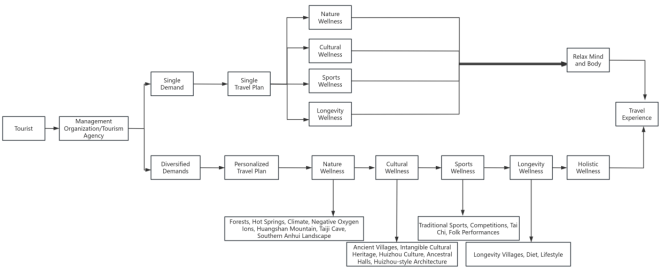
Figure 1. Supply-Demand Synergy Mechanism of the NCLS Four-Dimensional Integration Model for Wellness Tourism Destinations.
Innovative Solutions: To address the above problems, the research proposes the Nature-Culture-Sports-Longevity (NCLS) four-dimensional integration model as an effective path to solve the predicament. This model covers four core dimensions: Nature, Culture, Sports, and Longevity, and clarifies the logical system of "taking nature as the foundation, culture as the support, longevity as the benchmark, and sports as the efficiency enhancer" . The application of the NCLS model in regions such as Anhui Province demonstrates its potential to create diversified and composite wellness product systems that accurately match complex market demands .
This integrated approach facilitates the development of a wellness experience-centered supply system, providing a three-in-one health improvement pathway that addresses physical, mental, and spiritual well-being, aligning with the global trend of holistic health . The model theoretically overcomes the limitations of fragmented research on single factors by solving the "black box problem" of multi-factor coordination, offering quantifiable indicators for each dimension . Practically, it provides a replicable path for supply-side reform in wellness tourism, moving the industry from mere "factor superposition" to "value integration". Such integration also fosters inter-departmental collaborative governance mechanisms, optimizing resource allocation and providing solid support for industrial development, ultimately promoting the transformation of the wellness tourism industry from scale expansion to quality and efficiency improvement .
Moreover, the successful implementation of the NCLS model, as evidenced by Anhui's practice, provides valuable insights for several critical areas. It offers a tangible reference for resource integration and product innovation, which can be instrumental in driving rural revitalization through wellness tourism . The industrial integration logic inherent in the model also enriches research on the evolutionary game theory of wellness tourism industry integration . By fostering inter-departmental collaborative governance mechanisms, the NCLS model helps dismantle administrative barriers, optimize resource allocation, and strengthen policy support systems, thereby promoting the high-quality development of the wellness tourism industry from mere scale expansion to enhanced quality and efficiency . This ultimately achieves a high-level dynamic balance between supply and demand in the wellness tourism market .
Abbreviations

NCLS

Nature-Culture-Sports-Longevity

TCM

Traditional Chinese Medicine

Conflicts of Interest
The authors declare that they have no known competing financial interests or personal relationships that could have appeared to influence the work reported in this paper.
References
[1] Li, Q., Zakariya, Z., Cai, Y., & Bamiro, N. B. (2024). THE DEVELOPMENT AND CONCEPTUALIZATION OF WELLNESS TOURISM: A COMPARATIVE STUDY OF GLOBAL AND CHINESE PERSPECTIVES. Journal of Tourism, Hospitality and Environment Management, 9(37), 20–30.
[2] Dini, M., & Pencarelli, T. (2021). Wellness tourism and the components of its offer system: a holistic perspective. Tourism Review, 77(2), 394–412.
[3] Paraskevas, A., Madas, M., Zeimpekis, V., & Fouskas, K. (2024). Smart Ports in Industry 4.0: A Systematic Literature Review. Logistics, 8(1), 28.
[4] Majiwala, H., & Kant, R. (2023). A bibliometric review of a decade’ research on industry 4.0 & supply chain management. Materials Today: Proceedings, 72, 824–833.
[5] Tao, F., Xiao, B., Qi, Q., Cheng, J., & Ji, P. (2022). Digital twin modeling. Journal of Manufacturing Systems, 64, 372–389.
[6] Wang, J., Behl, T., Rana, T., Sehgal, A., Wal, P., Saxena, B., Yadav, S., Mohan, S., Anwer, Md. K., Chigurupati, S., Zaheer, I., Shen, B., & Singla, R. K. (2024). Exploring the pathophysiological influence of heme oxygenase-1 on neuroinflammation and depression: A study of phytotherapeutic-based modulation. Phytomedicine, 127, 155466.
[7] O’Neil, M. E., Nugent, S. M., Morasco, B. J., Freeman, M., Low, A., Kondo, K., Zakher, B., Elven, C., Motu’apuaka, M., Paynter, R., & Kansagara, D. (2017). Benefits and Harms of Plant-Based Cannabis for Posttraumatic Stress Disorder. Annals of Internal Medicine, 167(5), 332–340.
[8] Lee, T. J., Han, J.-S., & Ko, T.-G. (2020). Health-Oriented Tourists and Sustainable Domestic Tourism. Sustainability, 12(12), 4988.
[9] Kay Smith, M., & Diekmann, A. (2017). Tourism and wellbeing. Annals of Tourism Research, 66, 1–13.
[10] Liao, C., Zuo, Y., Xu, S., Law, R., & Zhang, M. (2023). Dimensions of the health benefits of wellness tourism: A review. Frontiers in Psychology, 13.
[11] Kongtaveesawas, N., Prasarnphanich, P., Sinthupinyo, S., & Ashton, A. S. (2022). Attribute Framework Validation for Wellness Tourism within the Context of Thailand. Sustainability, 14(10), 5953.
[12] DSouza, K. J., & Shetty, A. (2024). Tourism and wellbeing: curating a new dimension for future research. Cogent Social Sciences, 10(1).
[13] Wang, G., Ren, L., Qiu, H., & Yao, Y. (2022). Salient health goal, salient restoration? A transformative model of wellness tourism. Journal of Travel & Tourism Marketing, 39(7–9), 591–608.
[14] Jevtić, M., Gajić, T., & Vukolić, D. (2024). Theoretical review and literature analysis of the role of the environment in health tourism. Turisticko Poslovanje, 34, 69–79.
[15] Pessot, E., Spoladore, D., Zangiacomi, A., & Sacco, M. (2021). Natural Resources in Health Tourism: A Systematic Literature Review. Sustainability, 13(5), 2661.
[16] Schmude, J., Pillmayer, M., Witting, M., & Corradini, P. (2021). Geography Matters, But Evolving Success Factors for Nature-Oriented Health Tourism within Selected Alpine Destinations. International Journal of Environmental Research and Public Health, 18(10), 5389.
[17] Ahn, Y., & Kim, K. B. (2024). Understanding the Interplay between Wellness Motivation, Engagement, Satisfaction, and Destination Loyalty. Behavioral Sciences, 14(3), 239.
[18] Jeong, H. (2024). Relationship Between Tourists’ Perceived Restorative Environment and Wellness Tourism Destinations. International Journal of Tourism Research, 26(5).
[19] Liao, C., Tian, D., Law, R., Xu, S., & Zhang, M. (2023). Research on the spatial distribution and driving mechanism of the integrated development of the health tourism industry. Asia Pacific Journal of Tourism Research, 28(12), 1399–1416.
[20] Zhao, Y. (2022). Research on the Development of Traditional Chinese Medicine Health
[21] Yan, L. (2024). A systematic review of traditional health tourism: A priori of wellness tourism. Multidisciplinary Reviews, 7(5), 2024096.
[22] Sun, S., Zhong, L., Law, R., Li, X., Deng, B., & Yang, L. (2022). Health Tourism Evolution: A Review Based on Bibliometric Analysis and the China National Knowledge Infrastructure Database. Sustainability, 14(16), 10435.
[23] Peng, J., Yang, X., Fu, S., & Huan, T.-C. (T. C.). (2023). Exploring the influence of tourists’ happiness on revisit intention in the context of Traditional Chinese Medicine cultural tourism. Tourism Management, 94, 104647.
[24] Figueiredo, N., Abrantes, J. L., & Costa, S. (2024). Mapping the Sustainable Development in Health Tourism: A Systematic Literature Review. Sustainability, 16(5), 1901.
[25] Shokri Garjan, H., Paydar, M. M., & Divsalar, A. (2023). A sustainable supply chain for a wellness tourism center considering discount and quality of service. Expert Systems with Applications, 211, 118682.
[26] Li, Y., Deng, Q., Peng, F., & He, M. (2023). Development and Verification of the Wellness Tourism Experience Scale. Journal of Travel Research, 64(1), 158–171.
[27] Liu, C. Y. N., Jin, B., Choi, S., & Ren, G. (2025). The Evolving Complexity of Wellness Tourism: A Multidisciplinary Framework for Future Research. International Journal of Tourism Research, 27(6).
[28] Warih Wulandari, L. (2025). Exploring The Role of the 4Es (Entertainment, Educational, Aesthetic, Escapist) in Enhancing Wellness Tourism Experiences. Asian Journal of Social and Humanities, 3(9), 1704–1716.
[29] Li, Z. (Linda), & Gao, Y. (Lisa). (2023). Better Wealth, Better Health: Wellness Hotel Attributes and Consumer Preferences in China. Journal of China Tourism Research, 20(2), 333–355.
[30] Linsheng, Z. (2023). Comparison and prospect of wellness tourism at home and abroad. In World Regional Studies.
[31] Pan, X., Yang, Z., Han, F., Lu, Y., & Liu, Q. (2019). Evaluating Potential Areas for Mountain Wellness Tourism: A Case Study of Ili, Xinjiang Province. Sustainability, 11(20), 5668.
[32] Kandan Parakkal, A., Vazhakkatte Thazhathethil, B., & George, B. (2024). The Physical, Mental, Spiritual, and Environmental (PMSE) Framework for Enhancing Wellness Tourism Experiences and Its Validation in the Context of Kerala, India. Administrative Sciences, 14(7), 140.
[33] Sthapit, E., Ji, C., Li, M., Garrod, B., Ibrahim, B., & Björk, P. (2025). Memorable wellness tourism experiences: antecedents that lead to enjoyable outcomes. International Journal of Spa and Wellness, 8(2), 155–181.
[34] Dahanayake, S., Wanninayake, B., & Ranasinghe, R. (2025). Memorable wellness tourism experiences: Scale development and validation. Journal of Vacation Marketing.
[35] Liu, L., Zhou, Y., & Sun, X. (2023). The Impact of the Wellness Tourism Experience on Tourist Well-Being: The Mediating Role of Tourist Satisfaction. Sustainability, 15(3), 1872.
[36] Wangzhou, K. (2023). Investigating consumer’s behavioral intentions of wellness tourism hainan. In TRANSFORMATIONS IN BUSINESS & ECONOMICS.
[37] Zhou, Y., Liu, L., Han, S., & Sun, X. (2023). Comparative analysis of the behavioral intention of potential wellness tourists in China and South Korea. Humanities and Social Sciences Communications, 10(1).
[38] Chauhan, J. S., Sharma, A., Anuj, Sharma, A., Ahalawat, K., & Agarwal, P. (2025). AI-Driven Decision Making in Wellness Tourism: Understanding Consumer Preferences and Optimizing Tourism Strategies. 2025 First International Conference on Advances in Computer Science, Electrical, Electronics, and Communication Technologies (CE2CT), 663–669.
[39] Heung, V. C. S., & Kucukusta, D. (2012). Wellness Tourism in China: Resources, Development and Marketing. International Journal of Tourism Research, 15(4), 346–359.
[40] Liu, J., & Ma, Y. (2017). The Perceptual Differences among Stakeholders in the Tourism Supply of Xi’an City, China. Sustainability, 9(2), 214.
[41] Dinkoksung, S., Pitakaso, R., Khonjun, S., Srichok, T., & Nanthasamroeng, N. (2023). Modeling the medical and wellness tourism supply chain for enhanced profitability: An open innovation approach. Journal of Open Innovation: Technology, Market, and Complexity, 9(3), 100137.
[42] Suntararak, P., & Boonyanmethaporn, W. (2024). Building the future of rural-based wellness tourism: Infrastructure and policy considerations for rural Thailand. Journal of Infrastructure Policy and Development, 8(14), 9387.
[43] Hu, X. (2025). Demand-Driven Market Segmentation and Cultural-Tourism Integration: Innovations in Elderly Wellness Tourism from Wenzhou. Journal of Education and Educational Research, 12(3), 115–120.
[44] Li, L., & Chen, X. (2022). Empirical Research into the Development Mechanism of Industry Innovation of Health and Wellness Tourism in the Context of the Sharing Economy. International Journal of Environmental Research and Public Health, 19(19), 12479.
[45] Wang, S. (2022). [Retracted] Route Planning of Health Care Tourism Based on Computer Deep Learning. Wireless Communications and Mobile Computing, 2022(1).
[46] Piatto Clerici, A., Murphy, C., & Castanheira Almeida, N. M. (2023). The future of wellness tourism after COVID-19. European Spatial Research and Policy, 30(1), 103-122.
[47] Luo, Y., Lanlung (Luke), C., Kim, E., Tang, L. R., & Song, S. M. (2017). Towards quality of life: the effects of the wellness tourism experience. Journal of Travel & Tourism Marketing, 35(4), 410-424.
[48] Kucukusta, D., & Heung, V. C. S. (2012). The Problems of Developing Wellness Tourism in China: From Supply Perspective. Journal of China Tourism Research, 8(2), 146–158.
[49] Hekmat, N., Marques, J., A. Quintela, J., & Ramazanova, M. (2022). Wellness tourism from consumers’ perspective – An exploratory analysis. International Conference on Tourism Research, 15(1), 554–560.
[50] Pan, H., Mi, H., Chen, Y., Chen, Z., & Zhou, W. (2024). Measurement and Evaluation of the Development Level of Health and Wellness Tourism from the Perspective of High-Quality Development. Sustainability, 16(18), 8082.
Cite This Article
  • APA Style

    Zhou, P., Su, Z., Song, Y. (2026). Construction of the Supply System of Wellness Tourism Destinations Based on the NCLS (Nature-Culture-Sports-Longevity) Four-dimensional Integration Model - A Case Study of Anhui Province. International Journal of Economics, Finance and Management Sciences, 14(2), 119-129. https://doi.org/10.11648/j.ijefm.20261402.11

    Copy | Download

    ACS Style

    Zhou, P.; Su, Z.; Song, Y. Construction of the Supply System of Wellness Tourism Destinations Based on the NCLS (Nature-Culture-Sports-Longevity) Four-dimensional Integration Model - A Case Study of Anhui Province. Int. J. Econ. Finance Manag. Sci. 2026, 14(2), 119-129. doi: 10.11648/j.ijefm.20261402.11

    Copy | Download

    AMA Style

    Zhou P, Su Z, Song Y. Construction of the Supply System of Wellness Tourism Destinations Based on the NCLS (Nature-Culture-Sports-Longevity) Four-dimensional Integration Model - A Case Study of Anhui Province. Int J Econ Finance Manag Sci. 2026;14(2):119-129. doi: 10.11648/j.ijefm.20261402.11

    Copy | Download

  • @article{10.11648/j.ijefm.20261402.11,
      author = {Peiquan Zhou and Zhaozhao Su and Ying Song},
      title = {Construction of the Supply System of Wellness Tourism Destinations Based on the NCLS 
    (Nature-Culture-Sports-Longevity) Four-dimensional Integration Model - A Case Study of Anhui Province},
      journal = {International Journal of Economics, Finance and Management Sciences},
      volume = {14},
      number = {2},
      pages = {119-129},
      doi = {10.11648/j.ijefm.20261402.11},
      url = {https://doi.org/10.11648/j.ijefm.20261402.11},
      eprint = {https://article.sciencepublishinggroup.com/pdf/10.11648.j.ijefm.20261402.11},
      abstract = {This study adopts a holistic and systematic perspective to construct a theoretical framework for the supply system of wellness tourism destinations. Based on a review of domestic and international research on wellness tourism supply, this paper summarizes the core components of the supply system and proposes the four-dimensional integrated model of Nature-Culture-Sports-Longevity (NCLS). The connotation of the NCLS model can be illustrated through the practice of Anhui Province: high-quality natural ecosystems provide the material foundation for wellness tourism development; Huizhou culture endows tourism products with profound cultural connotations and spiritual experiences; longevity-oriented wellness resources form differentiated competitiveness and attract tourists seeking health preservation; and diverse sports activities further enhance the effectiveness of wellness, promoting the physical and psychological coordination of tourists. The four dimensions interact synergistically and organically, jointly forming a destination supply system centered on comprehensive wellness experiences. This study addresses the limitations of existing research that often focus on single factors and overemphasize the demand side. It establishes a wellness tourism supply system more suitable for China’s local context, and can provide theoretical references and practical insights for the supply-side reform of wellness tourism destinations.},
     year = {2026}
    }
    

    Copy | Download

  • TY  - JOUR
    T1  - Construction of the Supply System of Wellness Tourism Destinations Based on the NCLS 
    (Nature-Culture-Sports-Longevity) Four-dimensional Integration Model - A Case Study of Anhui Province
    AU  - Peiquan Zhou
    AU  - Zhaozhao Su
    AU  - Ying Song
    Y1  - 2026/04/02
    PY  - 2026
    N1  - https://doi.org/10.11648/j.ijefm.20261402.11
    DO  - 10.11648/j.ijefm.20261402.11
    T2  - International Journal of Economics, Finance and Management Sciences
    JF  - International Journal of Economics, Finance and Management Sciences
    JO  - International Journal of Economics, Finance and Management Sciences
    SP  - 119
    EP  - 129
    PB  - Science Publishing Group
    SN  - 2326-9561
    UR  - https://doi.org/10.11648/j.ijefm.20261402.11
    AB  - This study adopts a holistic and systematic perspective to construct a theoretical framework for the supply system of wellness tourism destinations. Based on a review of domestic and international research on wellness tourism supply, this paper summarizes the core components of the supply system and proposes the four-dimensional integrated model of Nature-Culture-Sports-Longevity (NCLS). The connotation of the NCLS model can be illustrated through the practice of Anhui Province: high-quality natural ecosystems provide the material foundation for wellness tourism development; Huizhou culture endows tourism products with profound cultural connotations and spiritual experiences; longevity-oriented wellness resources form differentiated competitiveness and attract tourists seeking health preservation; and diverse sports activities further enhance the effectiveness of wellness, promoting the physical and psychological coordination of tourists. The four dimensions interact synergistically and organically, jointly forming a destination supply system centered on comprehensive wellness experiences. This study addresses the limitations of existing research that often focus on single factors and overemphasize the demand side. It establishes a wellness tourism supply system more suitable for China’s local context, and can provide theoretical references and practical insights for the supply-side reform of wellness tourism destinations.
    VL  - 14
    IS  - 2
    ER  - 

    Copy | Download

Author Information