1. Introduction
The catering industry has attracted many investors in recent years, who have invested capital in improving the quality standards of restaurants across the island
. According to Eurostat’s NACE Rev. 2 classification, fine dining restaurants (FDR) are empirically categorised under food and beverage service activities within the accommodation and food service sector, alongside other restaurant formats, regardless of service level or pricing strategy
. Malta has approximately 813 restaurants in total
, including six MICHELIN Star restaurants, one Two-MICHELIN Stars restaurant, 5 Bib Gourmand Award restaurants, and a total of 43 MICHELIN-recommended Restaurants
. Before 2022, only one restaurant in the Maltese Islands held a MICHELIN Star
, providing further evidence of the investment in improving service quality standards in Fine Dining Restaurants (FDRs). However, although there has been a sufficient increase in the investments made towards improving the standard of quality within the industry, as of recent years, the catering industry has been facing a significant labour shortage, resulting in many setbacks, most especially in the standard of service in fine dining establishments
| [4] | Kausar, R., Malik, S. A., & Akram, B. (2014). Effects and outcome of service quality and consumer attitudes towards restaurant brands: a study of fine dining restaurants in Pakistan. International Journal of Hospitality and Event Management, 1(2), 187.
https://doi.org/10.1504/IJHEM.2014.067000 |
[4]
.
1.1. Background
Due to the recent increase in staff shortages across all establishments in the Maltese catering industry, restaurant owners are turning to employing Third Country Nationals (TCNs) to sustain their operations
. This is further supported by
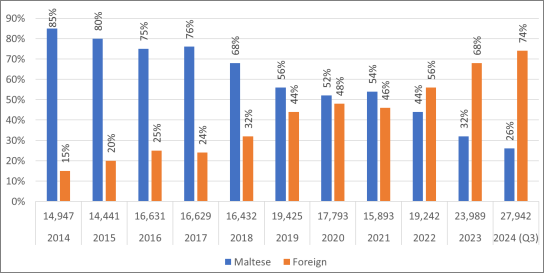
Figure 1, which highlights that 85% of workers in accommodation and food service activities were Maltese, while 15% were foreign nationals in 2014. However, by the third quarter of 2024, this trend had reversed, with only 25% of workers being Maltese and a significant 75% being foreigners
.
Figure 1. Composition of employees in the accommodation and food services activities.
The Malta’s Institute of Tourism Studies (ITS) Chief Executive Officer (CEO) explained that significant staff turnover, driven by considerable volumes of untrained workers and compounded by a shortage in the local workforce, along with the increased employment of TCNs in the catering industry has posed a substantial challenge for FDR middle and upper management to maintain the desired quality standards in their restaurants
. Former food critic Ed Eats also stated that giving your dish to the wrong table might not entirely affect the quality of service.
Hospitality businesses in the UK increasingly depend on migrant workers to address retention and skills shortages, underscoring the structural shift in the workforce and the importance of effective management strategies to integrate this labour force
| [8] | Devine, F., Baum, T., Hearns, N. and Devine, A., 2007. Cultural diversity in hospitality work: the Northern Ireland experience. The International Journal of Human Resource Management, 18(2), pp. 333-349.
https://doi.org/10.1080/09585190601102596 |
[8]
. A systematic review of hospitality labour research shows that migrant workers disproportionately occupy labour-intensive and low-paid roles, and that employers frequently invest less in training and career progression for these workers, factors that can complicate efforts to sustain service quality and workforce stability
| [9] | Gürlek, M., 2023. Migrant Worker Research in the Field of Hospitality and Tourism: State of the Art and Future Perspectives. Alanya Akademik Bakış, 7(3), pp. 1401-1424. |
[9]
.
1.2. Rationale Behind the Study
This study aimed to uncover the quality standards sought by FDR middle and upper management and to investigate how the composition and shortage of the existing workforce may be challenging their attainment. This may be due to the challenges posed by the existing workforce shortage, combined with the rise in employment of underqualified TCNs, in maintaining the desired quality standards in FDRs.
Research questions have been carefully formulated to provide a structured approach to data collection, analysis, and interpretation, ensuring alignment with the overarching objectives of the study:
RQ 1: What are the desired quality standards of service that are being looked for by the middle and upper management of fine dining restaurants?
RO1: To identify the key service quality standards expected by middle and upper management in fine dining restaurants.
RO2: To examine how middle and upper management define, interpret, and prioritise service quality standards within fine dining restaurant operations.
RQ2: How is the current workforce shortage in the industry affecting the desired overall quality standard of service set out by middle and upper management of fine dining restaurants?
RO1: To explore how workforce shortages in fine dining restaurants impact the ability of management to achieve and maintain desired quality standards of service.
RO2: To investigate specific challenges posed by workforce shortages in the catering industry in maintaining quality service standards in fine-dining restaurants.
RQ3: What measures and safeguards are adopted within the fine dining industry to ensure the development and retention of a consistent, high-quality workforce?
RO3: To evaluate strategies that the middle and upper management of fine dining restaurants implement to mitigate the effects of workforce shortages on service quality.
RO4: To explore potential measures and safeguards adopted by the fine dining industry to ensure a consistent, high-quality workforce in fine dining restaurants.
The following study begins with an introduction that provides a contextual background for this research, including its scope, questions, and objectives. The second chapter is the literature review, which provides a solid foundation by drawing on international scholarly articles on the topic. The methodology, presented in chapter three, includes information on data collection and analysis, as well as the adopted research design and approach. The subsequent chapter presents the results analysis and discussion, which provides an in-depth thematic analysis of the data gathered through semi-structured interviews, complemented by a detailed comparison with observations undertaken and the literature reviewed. This is followed by the conclusions, which propose numerous recommendations to various stakeholders to address the current research problem.
2. Review of Past Studies
‘Quality Management’ is defined as a strategic approach adopted by organisations to evaluate their performance, systems, procedures, and processes, to identify and correct underperforming processes and/or methods
. Quality assurance is a procedure necessary to ensure that the set quality standards are maintained and, in certain instances, even enhanced
| [11] | Woodhouse, D. (1999). Quality and quality assurance. Quality and Internationalisation in Higher Education, 29–44. |
[11]
. Effectively assuring customer quality involves establishing standards, methods, and strict guidelines to support service quality throughout its entire development process
. The concept of quality management involves managing the whole company by emphasising the importance of providing customers with exemplary quality assurance
| [13] | Chase, R. B., Aquilano, N. J., & Jacobs, F. R. (1998). Production and operations management: manufacturing and services. |
[13]
. This adheres to Total Quality Management (TQM) theory, which views quality as a holistic, organisation-wide responsibility rather than the outcome of isolated operational activities, being a shared organisational commitment to quality
| [14] | Juran, J. M. (1988). Juran on planning for quality. New York: London. |
[14]
. Unlike traditional TQM theory, recent hospitality research favours service quality models such as SERVQUAL and the RATER framework, which conceptualise quality in terms of reliability, assurance, responsiveness, empathy, and tangibles
| [9] | Gürlek, M., 2023. Migrant Worker Research in the Field of Hospitality and Tourism: State of the Art and Future Perspectives. Alanya Akademik Bakış, 7(3), pp. 1401-1424. |
| [15] | Marković, S., Dorčić, J., Rašan, D., Bucić, B., & Blažić, M. (2021). The Importance of Aesthetic Experience in Fine Dining Restaurants. 7th ERAZ Selected Papers (Part of ERAZ Conference Collection), 147–154.
https://doi.org/10.31410/eraz.s.p.2021.147 |
[9, 15]
.
The attributes that comprise FDRs are complex and encompass several areas
. FDRs provide three key quality attributes: ambience, which includes the physical environment of the establishment; quality of service, which refers to the interaction between restaurant staff and customers; and food quality, which highlights the overall quality of the food
| [17] | Vigilia, A. Y. (2020). Consumers’ Perceived quality of Restaurants in Nueva Ecija. International Journal of Humanities and Education Development (IJHED), 2(6), 543–547. https://doi.org/10.22161/ |
[17]
. FDRs are planned to focus solely on providing clients with exemplary food and service quality, as well as a remarkable ambience
| [18] | Jin, N. (Paul), Line, N. D., & Merkebu, J. (2015). Examining the Impact of Consumer Innovativeness and Innovative Restaurant Image in Upscale Restaurants. Cornell Hospitality Quarterly, 57(3), 268–281.
https://doi.org/10.1177/1938965515619229 |
[18]
. These attributes strongly influence customers' restaurant choices, as they expect high food quality to align closely with strong service quality and specialised service elements
| [19] | DiPietro, R., Martin, D., & Pratt, T. (2019). Understanding employee longevity in independent fine dining restaurants. International Journal of Contemporary Hospitality Management, 31(10), 4062–4085.
https://doi.org/10.1108/ijchm-10-2018-0869 |
[19]
.
2.1. Inspecting Quality Levels in Fine Dining Restaurants
The soul of every quality-oriented dish depends heavily on ingredient freshness
. However, patrons of FDRs do not judge their dining experience solely on the food and beverages but also consider other intangible aspects, such as their interactions with the restaurant’s ambience and staff
| [21] | Kiatkawsin, K., & Sutherland, I. (2020). Examining Luxury Restaurant Dining Experience towards Sustainable Reputation of the Michelin Restaurant Guide. Sustainability, 12(5), 2134.
https://doi.org/10.3390/su12052134 |
[21]
. MICHELIN Guide inspectors not only analyse the taste and the presentation of the food, but they also examine how the service team introduces the dishes to determine whether the front-of-house staff can accurately convey the chef’s ideas to the dining clients
. Overall quality is assessed by combining the meal's functional quality with the staff’s technical attributes in their interactions with diners
| [21] | Kiatkawsin, K., & Sutherland, I. (2020). Examining Luxury Restaurant Dining Experience towards Sustainable Reputation of the Michelin Restaurant Guide. Sustainability, 12(5), 2134.
https://doi.org/10.3390/su12052134 |
[21]
. To elevate the quality of the dining experience the chefs must input their personal touches to make dishes memorable for the dining clients, as well as the front-of-house staff must resonate with the diners to portray the chef’s intentions as accurately as possible, whilst also leaving some space to let the dining clients’ imagination roam free
.
2.2. Achieving Excellence Through a Skilled Workforce
The most crucial objective of an organisation in the culinary arts is to develop a dedicated workforce focused on meeting strategic goals, as employees are its most vital asset
| [22] | Suhairom, N., Musta’amal, A. H., Mohd Amin, N. F., Kamin, Y., & Abdul Wahid, N. H. (2019). Quality culinary workforce competencies for sustainable career development among culinary professionals. International Journal of Hospitality Management, 81, 205–220.
https://doi.org/10.1016/j.ijhm.2019.04.010 |
[22]
. Interactional qualities (referring to customers’ varied perceptions of how employees deliver quality through their attitude, behaviour and expertise) are vital for fostering a positive attitude toward an FDR’s brand
| [4] | Kausar, R., Malik, S. A., & Akram, B. (2014). Effects and outcome of service quality and consumer attitudes towards restaurant brands: a study of fine dining restaurants in Pakistan. International Journal of Hospitality and Event Management, 1(2), 187.
https://doi.org/10.1504/IJHEM.2014.067000 |
[4]
. Furthermore, customers dining in restaurants were highly attentive to employees' actions
| [17] | Vigilia, A. Y. (2020). Consumers’ Perceived quality of Restaurants in Nueva Ecija. International Journal of Humanities and Education Development (IJHED), 2(6), 543–547. https://doi.org/10.22161/ |
[17]
. Hence, the quality provided to customers highly depends on the level of quality workforce the restaurant possesses
| [22] | Suhairom, N., Musta’amal, A. H., Mohd Amin, N. F., Kamin, Y., & Abdul Wahid, N. H. (2019). Quality culinary workforce competencies for sustainable career development among culinary professionals. International Journal of Hospitality Management, 81, 205–220.
https://doi.org/10.1016/j.ijhm.2019.04.010 |
[22]
. Furthermore, achieving customer satisfaction depends on exceeding customer expectations through delivering exceptional quality
| [23] | Tsaur, S.-H., & Yen, C.-H. (2019). Service redundancy in fine dining: evidence from Taiwan. International Journal of Contemporary Hospitality Management, 31(2), 830–854.
https://doi.org/10.1108/ijchm-09-2017-0574 |
[23]
.
Culinary professionals must convey their qualities through their culinary creations and possess strong values and a positive attitude towards the profession to achieve consistent success
| [22] | Suhairom, N., Musta’amal, A. H., Mohd Amin, N. F., Kamin, Y., & Abdul Wahid, N. H. (2019). Quality culinary workforce competencies for sustainable career development among culinary professionals. International Journal of Hospitality Management, 81, 205–220.
https://doi.org/10.1016/j.ijhm.2019.04.010 |
[22]
. Chefs must have the necessary skills to create distinctive, aesthetically stimulating dishes
| [19] | DiPietro, R., Martin, D., & Pratt, T. (2019). Understanding employee longevity in independent fine dining restaurants. International Journal of Contemporary Hospitality Management, 31(10), 4062–4085.
https://doi.org/10.1108/ijchm-10-2018-0869 |
[19]
. In fact, chefs in culinary establishments must excel in techniques and possess remarkable technical qualities, as outlined in the industry's skill standards
| [22] | Suhairom, N., Musta’amal, A. H., Mohd Amin, N. F., Kamin, Y., & Abdul Wahid, N. H. (2019). Quality culinary workforce competencies for sustainable career development among culinary professionals. International Journal of Hospitality Management, 81, 205–220.
https://doi.org/10.1016/j.ijhm.2019.04.010 |
[22]
.
Customers of FDRs expect front-of-house employees to possess advanced culinary knowledge and expertise
| [19] | DiPietro, R., Martin, D., & Pratt, T. (2019). Understanding employee longevity in independent fine dining restaurants. International Journal of Contemporary Hospitality Management, 31(10), 4062–4085.
https://doi.org/10.1108/ijchm-10-2018-0869 |
[19]
. Patrons of FDRs evaluate the dining experience by assessing the quality of the various activities offered by FDRs
| [24] | Lin, I. Y., & Mattila, A. S. (2010). Restaurant Servicescape, Service Encounter, and Perceived Congruency on Customers’ Emotions and Satisfaction. Journal of Hospitality Marketing & Management, 19(8), 819–841.
https://doi.org/10.1080/19368623.2010.514547 |
[24]
. Hence, it is of utmost importance that front-of-house employees demonstrate their abilities by interacting with customers and providing technical expertise, such as recommending appropriate wine pairings, while maintaining a high standard of service in their work
| [19] | DiPietro, R., Martin, D., & Pratt, T. (2019). Understanding employee longevity in independent fine dining restaurants. International Journal of Contemporary Hospitality Management, 31(10), 4062–4085.
https://doi.org/10.1108/ijchm-10-2018-0869 |
[19]
.
2.3. Enhancing Quality Management Through a Competent Workforce
Ongoing post-pandemic labour shortages have led to measurable declines in service consistency, increased managerial supervision, and greater pressure on front-of-house staff in upscale and fine dining restaurants, raising concerns about the long-term sustainability of service quality standards
| [25] | Baum, T., Kralj, A., Robinson, R. N. S., & Solnet, D. (2024). Hospitality labour shortages and service sustainability in the post-pandemic era. International Journal of Hospitality Management. https://doi.org/10.1016/j.ijhm.2025.104258 |
[25]
. One of the most significant expenses for culinary establishments is the cost of hiring and managing employees
| [26] | Escoffier. (n.d.). Auguste Escoffier School of Culinary Arts. Available at: https://www.escoffier.edu/ (Accessed 19 Aug. 2025). |
[26]
. Since FDRs are highly reliant on maintaining and improving quality standards, it is of utmost importance to recruit employees with the necessary experience and skill sets to uphold them
. The labour-intensive and dynamic nature of the culinary profession presents managers with a significant challenge in managing their workforce effectively, thereby enhancing performance
| [22] | Suhairom, N., Musta’amal, A. H., Mohd Amin, N. F., Kamin, Y., & Abdul Wahid, N. H. (2019). Quality culinary workforce competencies for sustainable career development among culinary professionals. International Journal of Hospitality Management, 81, 205–220.
https://doi.org/10.1016/j.ijhm.2019.04.010 |
[22]
. To provide a positive fine-dining experience for patrons, FDRs must possess a well-trained, highly qualified workforce
| [27] | Oubre, J. J., & Brown, D. M. (2009). Stakeholder service perspectives: A triadic analysis of service quality in South Mississippi fine-dining restaurants. Journal of Hospitality and Tourism Research, 3(2), 193–210. |
[27]
. Adopting a company culture focused on excelling in their tasks and building a quality workforce that shares the same vision is essential for continuous quality improvement
. Organisations that invest in their workforce will benefit from enhanced customer service as their employees' skills improve drastically over time.
A business’s workforce determines whether its quality management strategies will succeed or fail
. Culinary educators emphasised that employees in culinary establishments must possess technical competencies (specific skills required to maintain industry standards) to cope with the pressure of providing quality service under high food production volumes
| [22] | Suhairom, N., Musta’amal, A. H., Mohd Amin, N. F., Kamin, Y., & Abdul Wahid, N. H. (2019). Quality culinary workforce competencies for sustainable career development among culinary professionals. International Journal of Hospitality Management, 81, 205–220.
https://doi.org/10.1016/j.ijhm.2019.04.010 |
[22]
. It was further emphasised that high-end restaurants must maintain a higher employee-to-guest ratio than other casual restaurants, as FDRs involve more guest-related activities. Hence, fine dining establishments must recruit a more quality-oriented workforce than casual service establishments to effectively provide quality services
| [26] | Escoffier. (n.d.). Auguste Escoffier School of Culinary Arts. Available at: https://www.escoffier.edu/ (Accessed 19 Aug. 2025). |
[26]
. Whilst serving fewer customers in one lunch or dinner service provides FDRs with the opportunity to offer a unique set of qualities, it is also essential that these FDRs attain the needed workforce to consistently perform under the pressure that grows through the elevated level of customer expectation that arises
| [19] | DiPietro, R., Martin, D., & Pratt, T. (2019). Understanding employee longevity in independent fine dining restaurants. International Journal of Contemporary Hospitality Management, 31(10), 4062–4085.
https://doi.org/10.1108/ijchm-10-2018-0869 |
[19]
. Moreover, the highest level of service provision to customers in the culinary profession is achieved when the workforce possesses innate aptitudes, such as passion, vision, dreams, and goals
| [22] | Suhairom, N., Musta’amal, A. H., Mohd Amin, N. F., Kamin, Y., & Abdul Wahid, N. H. (2019). Quality culinary workforce competencies for sustainable career development among culinary professionals. International Journal of Hospitality Management, 81, 205–220.
https://doi.org/10.1016/j.ijhm.2019.04.010 |
[22]
.
As FDRs hold higher service expectations for their customers, employee turnover significantly affects productivity levels, lowering efficiency and quality of service, and creating numerous obstacles that interfere with quality management strategies
| [19] | DiPietro, R., Martin, D., & Pratt, T. (2019). Understanding employee longevity in independent fine dining restaurants. International Journal of Contemporary Hospitality Management, 31(10), 4062–4085.
https://doi.org/10.1108/ijchm-10-2018-0869 |
[19]
. Furthermore, when restaurants fail to provide services that meet standards, it dramatically affects customer loyalty and hinders quality management strategies, resulting in unnecessary costs and poor service performance
| [23] | Tsaur, S.-H., & Yen, C.-H. (2019). Service redundancy in fine dining: evidence from Taiwan. International Journal of Contemporary Hospitality Management, 31(2), 830–854.
https://doi.org/10.1108/ijchm-09-2017-0574 |
[23]
. Hence, it is of utmost importance to build a workforce that recognises the benefits of implementing quality management strategies
.
2.4. Literature Gap
Past studies cover various aspects of FDRs, contributing to a quality dining experience that exceeds customer expectations. The reviewed studies all provide significant findings through their studies, which contribute to delivering quality attributes that make up a FDR
| [4] | Kausar, R., Malik, S. A., & Akram, B. (2014). Effects and outcome of service quality and consumer attitudes towards restaurant brands: a study of fine dining restaurants in Pakistan. International Journal of Hospitality and Event Management, 1(2), 187.
https://doi.org/10.1504/IJHEM.2014.067000 |
| [17] | Vigilia, A. Y. (2020). Consumers’ Perceived quality of Restaurants in Nueva Ecija. International Journal of Humanities and Education Development (IJHED), 2(6), 543–547. https://doi.org/10.22161/ |
| [19] | DiPietro, R., Martin, D., & Pratt, T. (2019). Understanding employee longevity in independent fine dining restaurants. International Journal of Contemporary Hospitality Management, 31(10), 4062–4085.
https://doi.org/10.1108/ijchm-10-2018-0869 |
| [28] | Harr, K. K. L. (2008). Service dimensions of service quality impacting customer satisfaction of fine dining restaurants in Singapore. |
| [29] | Saah, F. I., & Amu, H. (2020). Sleep quality and its predictors among waiters in upscale restaurants: A descriptive study in the Accra Metropolis. PLOS ONE, 15(10), e0240599.
https://doi.org/10.1371/journal.pone.0240599 |
| [30] | Ryu, K., & Han, H. (2010). Influence of the Quality of Food, Service, and Physical Environment on Customer Satisfaction and Behavioral Intention in Quick-Casual Restaurants: Moderating Role of Perceived Price. Journal of Hospitality & Tourism Research, 34(3), 310–329.
https://doi.org/10.1177/1096348009350624 |
| [31] | Rozekhi, N., Hussin, S., Siddik, A., Abd, K., Siddiqe, R., Dahlia, P., Rashid, A., & Salmi, N. (2016). The Influence of Food Quality on Customer Satisfaction in Fine Dining Restaurant: Case in Penang. International Academic Research Journal of Business and Technology, 2(2), 45–50.
https://www.iarjournal.com/wp-content/uploads/IARJBT2016_2_45-50.pdf |
| [32] | Majid, M. A. A., Samsudin, A., Noorkhizan, M. H. I., Zaki, M. I. M., & Bakar, A. M. F. A. (2018). Service Quality, Food Quality, Image and Customer loyalty: An Empirical Study at a Hotel Restaurant. International Journal of Academic Research in Business and Social Sciences, 8(10).
https://doi.org/10.6007/ijarbss/v8-i10/5310 |
| [33] | Do, K., Tai-Rawhiti, J., & Potroz, M. (2021, March 23). Food Service in Fine-Dining Restaurants.
https://doi.org/10.13140/RG.2.2.33550.02882 |
| [34] | Fine, G. A. (1990). Organizational Time: Temporal Demands and the Experience of Work in Restaurant Kitchens. Social Forces, 69(1), 95–114. https://doi.org/10.1093/sf/69.1.95 |
[4, 17, 19, 28-34]
. Furthermore, the studies conducted by
| [19] | DiPietro, R., Martin, D., & Pratt, T. (2019). Understanding employee longevity in independent fine dining restaurants. International Journal of Contemporary Hospitality Management, 31(10), 4062–4085.
https://doi.org/10.1108/ijchm-10-2018-0869 |
| [22] | Suhairom, N., Musta’amal, A. H., Mohd Amin, N. F., Kamin, Y., & Abdul Wahid, N. H. (2019). Quality culinary workforce competencies for sustainable career development among culinary professionals. International Journal of Hospitality Management, 81, 205–220.
https://doi.org/10.1016/j.ijhm.2019.04.010 |
| [23] | Tsaur, S.-H., & Yen, C.-H. (2019). Service redundancy in fine dining: evidence from Taiwan. International Journal of Contemporary Hospitality Management, 31(2), 830–854.
https://doi.org/10.1108/ijchm-09-2017-0574 |
| [29] | Saah, F. I., & Amu, H. (2020). Sleep quality and its predictors among waiters in upscale restaurants: A descriptive study in the Accra Metropolis. PLOS ONE, 15(10), e0240599.
https://doi.org/10.1371/journal.pone.0240599 |
| [34] | Fine, G. A. (1990). Organizational Time: Temporal Demands and the Experience of Work in Restaurant Kitchens. Social Forces, 69(1), 95–114. https://doi.org/10.1093/sf/69.1.95 |
| [35] | Cairncross, G., Wilde, S., & Hutchinson, L. (2008). Training and Service Quality—A Case Study Analysis of Regional Australian Restaurants. Tourism and Hospitality Planning & Development, 5(2), 149–163.
https://doi.org/10.1080/14790530802252800 |
[19, 22, 23, 29, 34, 35]
, provide significant information regarding the importance of having a quality workforce in restaurants
| [19] | DiPietro, R., Martin, D., & Pratt, T. (2019). Understanding employee longevity in independent fine dining restaurants. International Journal of Contemporary Hospitality Management, 31(10), 4062–4085.
https://doi.org/10.1108/ijchm-10-2018-0869 |
| [23] | Tsaur, S.-H., & Yen, C.-H. (2019). Service redundancy in fine dining: evidence from Taiwan. International Journal of Contemporary Hospitality Management, 31(2), 830–854.
https://doi.org/10.1108/ijchm-09-2017-0574 |
[19, 23]
, as well as the effects that a quality workforce holds on quality management strategies within upscale and fine dining restaurants
| [22] | Suhairom, N., Musta’amal, A. H., Mohd Amin, N. F., Kamin, Y., & Abdul Wahid, N. H. (2019). Quality culinary workforce competencies for sustainable career development among culinary professionals. International Journal of Hospitality Management, 81, 205–220.
https://doi.org/10.1016/j.ijhm.2019.04.010 |
[22]
.
Although numerous studies have examined aspects of attaining a quality workforce and its impact on FDRs' quality management strategies internationally, there is a lack of studies in Malta that explore the implications of the current workforce shortage on these strategies. Hence, this study differs from the aforementioned studies as it focuses on identifying the standards of quality sought after by FDR owners and upper management within their food, service, and ambience attributes, as well as how the current shortage of a skilled workforce is affecting the quality management strategies that have been implemented to attain these standards.
3. Materials and Methods
Primary data was gathered for this study, as it provided first-hand, reliable, specific, and up-to-date insights from industry professionals. Using primary data ensured that the information collected was directly relevant to the research objectives and reflected the current challenges. By engaging with the activities of various FDRs in Malta through observations and semi-structured interviews with participants, the study uncovered unique perspectives, specific challenges, and real-world experiences that were integral to understanding the workforce shortage challenges impacting the quality standards in FDRs.
This study employed a qualitative method to gather data, focusing on two distinct techniques: participant observation and semi-structured interviews. Qualitative analysis was essential for this study, as it enabled an in-depth understanding of the challenges faced by FDR's middle and upper management in achieving and maintaining quality standards amid a workforce shortage. It also provided contextual insights that cannot be captured using quantitative techniques. Hence, this approach was valuable in exploring subjective experiences, management expectations, and workforce dynamics, which were of utmost importance in comprehensively addressing the research problem.
3.1. Participant Observations
Before generating the interview questions, this study conducted three qualitative observations in April, two at MICHELIN-starred restaurants and one at a Bib Gourmand Awarded restaurant. The observations at the MICHELIN-starred restaurants occurred during dinner service, while the subsequent observation at the Bib Gourmand Award restaurant was conducted during lunch service. This provided the opportunity to observe and take notes on the overall quality of service during different service hours and under varying customer expectations. Subsequently, questions were formulated based on the observations made to be asked during the semi-structured interviews.
Observations have been conducted systematically, with notes recorded in a notebook to ensure accurate data recording and safekeeping. A structured checklist guided the observations, focusing on the following four key elements: the restaurant’s ambience, food quality, service quality, and workforce competency. Each criterion has been carefully selected to align with the research objectives, ensuring that the data collected is relevant and effective in tackling the research problem.
3.2. Semi-structured Interviews
Six face-to-face, semi-structured interviews comprising 12 to 15 questions per interview have been utilised to gather all the information needed for this study. This number was determined due to thematic saturation, with no new themes or sub-themes emerging during the final interview, given the small size of Malta’s fine-dining industry. The use of semi-structured interviews allowed for further elaboration on questions that were not fully answered or were answered vaguely. This balance fostered a conversational yet focused environment, ensuring that all necessary data was gathered without stifling the participants' input. These interviews lasted approximately 45 to 60 minutes and were voice-recorded to facilitate effective transcription and data analysis. A pilot test was conducted following ethical approval from the Malta College of Arts, Science and Technology (MCAST) Research Ethics Committee on the final draft of the semi-structured interview with a restaurant owner who did not participate in this study to assess the clarity of the questions and their apparentness to both the researcher and the interviewee. The interviews were conducted at the participants’ workplaces and structured into three separate sessions, each focusing exclusively on their areas of expertise. These interviews were further divided into distinct sections to efficiently gather the required data and address the research objectives outlined in Appendix 1.
3.3. Target Participants and Sample Size
The definition of FDR used in this study follows
, which defines them as a high-quality experience distinguished from casual dining by exemplary service, premium ambience, and impeccable food. By 2025, Malta hosted 42 MICHELIN-recommended restaurants, including seven MICHELIN-starred restaurants, one of which holds two MICHELIN Stars, and five Bib Gourmand Award restaurants
.
This study employed purposive sampling, selecting six participants who were knowledgeable about meeting the study’s objectives (
Table 1). All participants chosen for this study held professional roles in the industry, which facilitated the collection of vast, detailed information necessary for the study. The study deliberately focused on middle and upper management, as these stakeholders are responsible for designing, implementing, and monitoring quality management within FDR. Front-line staff were not included because the study did not aim to capture employee experiences but rather managerial perspectives on maintaining quality standards amid workforce shortages.
Table 1. Participants of the Study.
Participant | Description |
Participant 1 | MICHELIN-star restaurant owner |
Participant 2 | MICHELIN-star restaurant owner |
Participant 3 | MICHELIN star restaurant owner/Chef Patron |
Participant 4 | Bib Gourmand Award restaurant owner |
Participant 5 | Manager of a FDR |
Participant 6 | Culinary Advisor |
3.4. Data Analysis Methods
Transcription was performed manually by re-listening to the recorded interview sessions and accurately transcribing the participants’ answers. The voice recordings of the interviews were reviewed again, and an exact transcript was generated to ensure validity. Thematic analysis was used to analyse the qualitative data, which required labelling and grouping similar data types
. This was performed using MAXQDA, which provides tools that aid researchers in managing, coding, and analysing qualitative data by extracting meaningful patterns and insights from complex datasets.
The first-cycle coding process is essential for organising qualitative data into meaningful categories by breaking down data into discrete codes that reveal analytical connections
| [38] | Saunders, M., Lewis, P., & Thornhill, A. (2007). Research Methods for Business Students. Pearson Education Limited. |
[38]
. In this study, a total of 804 first-cycle codes were generated, comprising 82 in-vivo codes, 392 process codes, and 330 initial codes. The study eliminated 327 first-cycle codes and subsequently generated 18 categories by systematically grouping related first-cycle codes based on conceptual similarities in the gathered data. This iterative second-cycle coding process involved multiple rounds of data analysis and refinement, during which the previously generated codes from the first cycle were thoroughly revisited. Where necessary, codes that did not align with the study’s research problem and objectives were excluded from further progression and analysis. The categories that emerged from the data gathered were developed into seven themes. Visual outputs generated in MAXQDA, including code hierarchies and code matrix browsers, were used to support the iterative refinement of categories and themes and to ensure transparency in the analytical process. These themes were revised multiple times to accurately capture participants’ responses and the significance of the data.
4. Analysis of Results
The analyses are structured around seven core themes, each representing a distinct challenge arising from the current workforce shortage and its implications on the overall quality management strategies adopted by FDR's middle and upper management to maintain industry standards.
4.1. Upper Management Prioritises Investing in Attitude as Reduced Job Competition Lowers Dedication and Correct Work Ethic
A growing emphasis by upper management on FDRs to prioritise a candidate’s attitude over their experience or technical skills has been highlighted. This shift is primarily driven by an industry-wide decline in job competition due to the current workforce shortage. This prioritisation reflects a strategic adaptation to a rapidly evolving workforce, where the experienced culinary professionals, necessary skill sets, commitment, and work ethic traditionally associated with fine dining are in decline. The decline in job competition has contributed to a noticeable shift in the workforce's mentality, with many new employees showing reduced dedication and an underdeveloped sense of professional responsibility. As a result, Participants 1-5 have been compelled to search for staff who, although inexperienced, are willing to learn and enthusiastic about working in the industry.
The emphasis of recruitment within FDRs has shifted away from technical skill sets, and is now leaning towards values such as openness, adaptability, and alignment with the restaurant’s culture, qualities which the Participants 1-5 ultimately believe to be increasingly easier to develop through training if the right mindset is present. However, this attitude-first recruitment approach creates numerous challenges, as highlighted by MICHELIN Star restaurant owner 1, who stated that:
“These days, you must notice the person’s attitude during the interview, and maybe they show slight experience, because then I believe that you can train an employee to make them better in the long run, but this requires a lot of patience and resources.”
Participants 1-5 further highlighted that the need for continuous training has become a permanent feature of FDRs' operational landscape, rather than a short-term activity undertaken only when new employees join the business. These participants highlighted how they regularly plan for on-the-job training, which has become increasingly challenging to sustain, especially as workforce shortages continue to limit both the frequency and depth of these sessions. Still, the present workforce shortage directly limits FDR’s ability to implement regular training programmes, as staff shortages result in fewer team members available to cover shifts, and fewer experienced employees left to mentor or model best practices. This creates a lack of support that further strains already stretched resources, making training increasingly complicated and disruptive to front-of-house service, which affects the overall customer experience.
Participants 2, 3 and 5 described themselves as becoming increasingly hands-on in the training process, often taking on supervisory roles to ensure that new employees acquire the appropriate behavioural and service standards. This hands-on approach has been deemed necessary, as many new employees enter the workforce without prior culinary experience and require extensive training to develop their skills. As a result, upper and middle management are constantly training new employees to meet even the most basic expectations while also facing the pressure to develop inexperienced workers in a fast-paced, guest-facing environment continually. This was considered financially and physically draining for management, as it required them to sacrifice other critical duties to ensure service consistency.
Furthermore, the participants reached a consensus that the current workforce lacks the level of dedication previously seen in the industry and that many employees do not care about their job, the business, or its clients. All the participants emphasised a lack of ambition and professionalism, highlighting how the current workforce shows little interest in the ambience of the establishment or the finer details that distinguish fine dining from casual dining. This indifference is seen as a symptom of a broader attitude problem, where new workers often enter the industry as a short-term solution rather than a career choice. They usually display an overt lack of concern for delivering excellence, with behaviours such as cutting corners, disengagement with guests, and resistance to feedback becoming more common. This lack of dedication is deeply concerning in a fine-dining context, where attention to detail, consistency, and guest satisfaction are central to each restaurant’s identity. The perceived decrease in the correct work ethic and workforce mentality means that even when employees are provided with technical training, they may not internalise or apply it meaningfully.
4.2. Workforce Quality Issues Persist as TCNs Lack Industry Expertise and Government Support Remains Insufficient
All the participants of the study expressed deep concern over the overwhelming number of TCN applicants, which, while filling vacancies in a time of desperate need, often did so at the expense of quality. The industry has increasingly relied on TCN workers to address staffing shortages. However, this overreliance has revealed significant challenges, a common frustration among restaurant owners and the FDR manager, who noted that most TCN workers entering the sector lacked prior knowledge of fine-dining standards, with many unable to differentiate between casual- and fine-dining service expectations.
Valuable time and resources are being wasted on fundamental skill development, time that could otherwise be invested in refining service excellence or enhancing customer experience. The FDR manager acknowledged that, although TCNs are now a permanent part of the national labour landscape, the industry’s reliance on underqualified or inadequately trained TCNs has diluted overall service quality, disrupting the balance between service delivery and fine-dining guest expectations. Furthermore, the restaurant owners emphasised that TCN staff are frequently associated with short-term employment and high turnover, which prevents their restaurants from benefiting from the stability and consistency necessary to maintain elevated service standards.
This reliance on the TCN workforce has not only limited service quality but also introduced instability into staffing patterns, with the FDR manager stating that many TCN workers do not view their roles as long-term commitments. Additionally, many TCNs are perceived as disrupting the balance between skilled and unskilled staff within the current workforce, thereby placing additional strain on experienced employees who are expected to uphold the restaurant’s fine-dining brand reputation. This imbalance contributes to declining morale and creates a continuous cycle in which experienced staff leave due to burnout, thereby further increasing reliance on underqualified replacements. The sector is caught between being dependent on and hindered by the TCN workforce. Restaurant owners emphasise that while many TCNs are hardworking and well-intentioned, their limited industry background and lack of training create systemic challenges that cannot be resolved solely through internal efforts.
Further exacerbating this issue is the perceived inadequacy of government regulations and workforce policies, which participants described as outdated and misaligned with modern industry needs. The participants also argued that Maltese governmental bodies have failed to prioritise, or even recognise, the strategic importance of the catering industry, particularly in the context of the current local investment in the tourism sector. The participants expressed frustration at the lack of incentivised educational and training programmes, arguing that governmental entities do not sufficiently control and enforce workforce quality standards. This was especially evident when asked regarding the newly introduced skills card, where the MICHELIN Star restaurant owner one stated:
“With the new addition of the skills card, more issues are arising because foreign workers must pay to work in the industry. In turn, we are seeing that also foreign workers are leaving the industry.”
Such regulations, while well-intentioned, were heavily criticised by the restaurant owners and the culinary advisor for reducing the already limited workforce without offering viable alternatives to bridge the current skills gap. According to these participants, the new skills card regulation has further decreased the overall number of available workers, further intensified recruitment challenges and made it harder to fill even the most essential roles.
4.3. Upper Management Upholds Core Principles, But Declining Service Quality Persists
Restaurant owners consistently described how their establishments remained deeply committed to upholding core culinary principles such as using local produce, selecting only the best ingredients, and encouraging the creation of original dishes. Additionally, the FDR manager and the culinary advisor stressed that, despite the absence of rigid service guidelines, there remained an internalised expectation to uphold traditional fine dining values and maintain a high level of creative merit, particularly in kitchen operations.
Awarding institutions, especially the MICHELIN Guide, were frequently mentioned in the interviews as reinforcing these principles by rewarding restaurants for their innovation, performance under unstandardised criteria, and adherence to excellence without necessarily prescribing fixed guidelines. The culinary advisor praised this flexible system for allowing chefs and restaurant owners to showcase their restaurant’s identity, emphasising that French culinary techniques and authenticity remain a consistent preference. The consensus among the participants of the study was that food quality had not just stayed consistent, but in many cases, has improved in creativity and sophistication due to the unwavering vision and investments from upper management, with the FDR manager further emphasising that, “The food quality has increased due to strong kitchen leadership.”
The participants in the study stated that ambience in fine dining is not merely about décor or lighting. It is enacted and reinforced at every customer touchpoint, most notably by staff. Participant 4 stated, “Another aspect of the restaurant I work on heavily is the ambience, minor things I work on because they give me a slight competitive advantage.” However, the FDR manager and culinary advisor pointed out that while the kitchen continued to deliver exceptional output, the guest experience was compromised by inconsistencies in service quality, with several recurring concerns being raised, such as staff being unable to mirror the calm, refined ambience intended by the establishment, or service delivery actively clashing with the atmosphere being curated. The link is perceived as broken, and participants describe the service staff as either poorly trained or insufficient in number to deliver a consistent, high-end experience. The restaurant owners and the FDR manager highlighted that, due to understaffing and low staff competency, service quality has become misaligned with both food quality and ambience quality. This further erodes the holistic fine-dining experience.
The shortage of qualified workers, particularly front-of-house staff, is leaving customers with mixed signals about the quality of the food, the restaurant's ambience, and how they are being served. The culinary advisor argued that this misalignment is causing customer confusion and dissatisfaction, as high-end food and ambience set expectations that inadequate or overstretched staff cannot meet. Moreover, ambience-driven efforts, such as curating music, lighting, and layout to match the food quality, are frequently overshadowed by subpar service interactions that do not reflect or support the same vision.
4.4. Inexperienced Workforce Facing Rising Fine Dining Demands
There is an intensifying strain on the inexperienced workforce in FDRs, primarily due to escalating customer expectations and the growing recognition of local establishments. As restaurants gain greater recognition, primarily through MICHELIN stars, Bib Gourmand Awards, and local awards, there is a corresponding surge in performance demands. The available workforce often struggles to meet these demands because it lacks the required skill sets or is understaffed. A participant stated that:
“The difference between attaining and maintaining the MICHELIN Star is that once you are awarded the star, you are working in an environment with a lot of added pressure and responsibility, both from customers’ expectations and also internally, the pressure to maintain the standard is much higher.”
(MICHELIN Star restaurant owner 1)
While increased recognition is seen as a positive outcome, it has also introduced a new layer of stress across operations, particularly for front-of-house staff, who are now expected to deliver consistently refined service to an increasingly quality-expecting clientele. The attainment of stars and positive media attention is shifting internal expectations, often without the necessary structural or staffing improvements to support them. The result of such a strategic shift is perceived by these participants as a misalignment between aspiration and capacity, with the service team facing increased responsibilities that they are neither equipped nor adequately supported to attain and maintain.
Customer expectations are not only rising but also becoming increasingly misaligned with the realities of the available workforce. The culinary advisor noted that customers, influenced by social media, awards, and fine dining trends, often arrived with elevated and sometimes unrealistic assumptions about the service they would receive, resulting in a misalignment between expectation and reality, which frequently resulted in customer dissatisfaction, as the dining experience fell short of the refined, flawless interaction customers anticipated.
4.5. Upper Management Diverted to Supervision, Resulting in Inconsistent Front-of-House Service
There is a growing strain on upper management, who are increasingly required to sacrifice personal responsibilities to supervise inexperienced front-of-house staff. This has led to significant inconsistencies in service quality by diverting managerial attention away from higher-level strategic tasks. The restaurant owners and the FDR manager emphasised that they monitor and sometimes even deliver service, as no one else is adequately trained to do so. What was once a role focused on leadership and oversight has evolved into a reactive, hands-on position driven by necessity. Participants have stated that they had to abandon administrative, strategic, or even personal duties to ensure adequate service quality. They further noted that this shift is not only unsustainable but also demoralising. Management presence has become the only guarantee of acceptable service. Rather than delegating responsibility, participants found themselves constantly supervising employees, correcting mistakes, and intervening to prevent errors.
The dependency on management to uphold day-to-day performance has also compromised long-term growth and sustainability. Restaurant owners and the FDR Manager say they feel stretched thin, unable to plan or implement broader improvements because their time is consumed supervising front-of-house activities. Ultimately, the pressure on owners and upper management to constantly supervise service quality reflects deeper issues, an inadequate workforce unable to function autonomously and a lack of infrastructure to support proper workforce development.
4.6. Workforce Shifts Toward a Negative Mentality Amid Reduced Job Competition
The data gathered revealed a significant cultural and attitudinal shift in the industry’s workforce, driven by a notable decline in competition for jobs. The culinary advisor stated that the current workforce no longer aligns with the values traditionally upheld in the industry, and this change in mentality is directly impeding growth, development, and the maintenance of standards. One of the primary consequences noted by this participant is a fading sense of quality mentality across the workforce. The study participants highlighted that the current workforce seems disengaged from professional pride and the pursuit of excellence, traits once reinforced by a competitive job market.
The restaurant owners and the FDR manager stated that, instead of fostering collaboration or striving for collective improvement, the current workforce displays an egoistic attitude that is unaligned with the expectations in fine dining. This was further highlighted by the Bib Gourmand Award restaurant owner, who noted that, “Over the years, I have seen that the industry went from team-centred to becoming every employee for himself.” This misalignment is not only disrupting team cohesion within FDRs but also poses a direct threat to maintaining consistent guest experiences. These same participants note that, even after training, staff often lacked internal motivation to maintain standards unless they were constantly supervised.
The current perception that anyone can secure a job in the industry due to workforce shortages has been identified as a major contributor to declining positive competition. In the absence of a strong, highly competitive workforce, the incentive to exceed expectations or pursue advancement has diminished. Participant 4 further added that this has had a ripple effect on discipline, standards, and professionalism. They argued that a healthy level of competition in the past enforced quality control, promoted pride in their roles, and created an environment in which staff valued their positions.
The restaurant owners highlighted that their businesses have struggled and will continue to struggle due to the workforce’s detachment from traditional industry values. These values, once instilled through positive competition and industry pride, are now holding back further development. Instead of aspiring to raise standards, the current workforce sees their job as simply doing the bare minimum, forcing FDRs to scale back their ambitions and accept mediocrity as the new norm.
4.7. Mismatch Between Education and Industry Needs Leads to Lower Recruitment Standards
Participants believe that there is a growing misalignment between the current state of educational institutions and the rapidly evolving needs of the industry. Such misalignment has created a challenge, leaving employers without adequately trained candidates, compelling upper management to adjust recruitment expectations to maintain daily operations.
The main challenge lies in the curriculum's outdated, underdeveloped state in many educational institutions. The culinary advisor highlights that, rather than equipping students with contemporary, industry-relevant skills, the education system continues to teach outdated content and rigid structures that stifle creativity and fail to foster innovation. This is resulting in students graduating without the practical readiness or technical competency that today’s workforce demands.
The third MICHELIN Star restaurant owner highlighted that educational institutions, namely the ITS, have not evolved adequately to meet current industry demands. There appears to be little integration of modern standards, technological advancements, or practical experience through mentorships or industry partnerships. This was further highlighted by MICHELIN Star restaurant owner 1 when stating that:
“In my opinion, there needs to be a greater push from the educational side. Unfortunately, educational institutions, namely the ITS, have dropped their level and have not progressed forward from the standards they held 20 years ago.”
The study participants have also expressed the need for industry professionals, including chefs and restaurant managers from top-tier establishments, to contribute to training within educational institutions. This would help students gain a clearer understanding of industry standards.
Participant 4 highlighted an evident lack of student interest and engagement in educational programmes, reflected in declining enrolment and decreasing graduation rates. This lack of interest further diminishes the quality and quantity of emerging talent available to the industry. The culinary advisor further notes that young people no longer view the industry as a viable or attractive career path, partly because educational institutions are failing to communicate the industry's dynamic and rewarding nature effectively.
The seven themes highlight how persistent workforce shortages have fundamentally altered quality management practices in Maltese FDRs. The findings indicate a shift away from system-driven quality assurance towards continuous managerial intervention, as middle and upper management increasingly compensate for workforce inexperience, high turnover, and declining professional commitment. While food quality and culinary creativity are largely preserved through strong kitchen leadership and sustained investment, service quality and front-of-house consistency remain highly vulnerable due to skill gaps, language barriers, and reduced competition for front-of-house staff. Rising customer expectations, reinforced by local and international recognition, further intensify pressure on an already stretched workforce, exacerbating service inconsistencies and managerial strain.
Collectively, these findings suggest that quality management in FDR is increasingly sustained through direct managerial intervention rather than through embedded organisational systems, indicating a departure from the system-driven logic commonly associated with TQM principles. From a SERVQUAL and RATER perspective, assurance, responsiveness, and empathy are the most affected dimensions, particularly in front-of-house service delivery, despite continued investment in tangible elements such as food quality and ambience. Several issues exacerbate this problem, particularly language barriers, which restaurant owners identify as a persistent challenge. These participants further highlighted that such barriers not only slow recruitment timelines but also make onboarding more complex and stressful for both employers and new employees. What was once considered a standard for excellence in recruitment has been replaced by urgency, with recruitment processes being increasingly driven by short-term operational needs rather than strategic workforce planning. The FDR Manager highlighted that, currently, FDRs accept that they will need to invest additional time and resources in training unprepared recruits, despite the added strain on teams already operating under increasing internal pressure.
5. Conclusion
Beyond its practical implications, this study contributes to TQM theory by offering insights into how the assumptions underpinning TQM may be challenged in fine dining contexts characterised by persistent workforce shortages. Management has adapted by placing greater emphasis on interpersonal attributes during recruitment in the absence of a sufficient technical skills baseline, which participants perceived as constraining service quality. Despite classical TQM assuming that quality can be embedded and sustained through standardised processes, continuous improvement, and employee involvement within a stable and capable workforce, the findings indicate that, in Maltese FDR, quality assurance increasingly depends on constant managerial supervision and intervention. Many FDRs rely on TCNs, who often lack the necessary skills and face language barriers, thereby increasing training and supervision requirements.
The findings further indicate a perceived decline in service consistency, especially in front-of-house operations, as managerial focus shifts from development to operational oversight. Participants also described increased workload pressures and signs of fatigue among experienced staff, alongside a broader lack of workforce commitment to long-term careers with the sector. These perceptions were partly attributed to a misalignment between current industry needs and the skill sets produced by existing educational programmes, as well as to perceived limitations in government support for workforce development.
Taken together, the findings suggest that addressing these challenges may require a collaborative approach, involving government, educational institutions, and industry professionals. Participants emphasised the potential value of enhanced support for recruitment and training, curriculum updates aligned with contemporary industry practices, and initiatives to improve the attractiveness of careers in the catering sector. While the conclusions are grounded in managerial perspectives, they do not diminish the agency or effort of front-line employees, particularly TCNs, who were frequently described as operating under constrained organisational and structural conditions.
Future research could extend this study by incorporating the perspectives of front-of-house employees and TCNs to gain a more comprehensive understanding of how workforce shortages affect service quality and daily operational realities in fine-dining restaurants. Additionally, comparative or longitudinal studies across different hospitality segments or national contexts could examine whether the reliance on sustained managerial intervention identified in this study represents a temporary response to labour shortages or a long-term structural shift in quality management practices.
5.1. Recommendations to Governmental Bodies
When asked to provide recommendations to governmental bodies that oversee quality standards in fine dining, all participants called for the government to take a more active role in standardising and promoting industry-specific training programmes, not just for domestic workers but also for TCNs entering the industry. The study recommends implementing training programmes, in collaboration with educational institutions and industry professionals, to enhance the current skills card regulation by placing greater emphasis on industry needs.
To alleviate the current worker shortage, targeted advertising campaigns and career development programmes should be organised to enhance the industry's attractiveness by portraying it as a worthwhile long-term career. This should improve the industry’s perception, attract local talent, and reduce the overall industry’s reliance on an inadequate workforce. Collaborations with industry professionals to develop regulations are also crucial to ensuring a more resilient and sustainable fine-dining sector. Targeted retention incentives, such as reduced work permit fees, fast-tracked residency pathways, or tax credits for employers who retain trained staff beyond a minimum employment period, could help address high turnover, particularly among Third Country Nationals. This would ensure that the industry’s quality requirements are maintained.
5.2. Recommendations to Educational Institutions
There is an urgent need to realign educational institutions with current industry needs. Emerging results showed that most new workers entering the workforce lack the required dedication, knowledge of expectations, and adequate technical skills. Partially, this is due to educational institutions not keeping pace with industry needs. Increased industry collaboration is required, with practical workshops led by industry professionals, to improve prospective students’ engagement with the industry. Work-based learning components, such as mandatory paid placements in FDRs, could further enhance graduates’ readiness and reduce employers' training burden.
Furthermore, concerns about workforce disengagement from current industry needs and quality standards underscore the need to rebrand the industry as a respectable and viable career path. To ensure prospective students enter the workforce with the full knowledge and skills required, educational institutions are recommended to collaborate with government bodies to co-develop nationally recognised training programmes.
5.3. Recommendations to Industry Professionals and Restaurant Owners
Since participants mentioned they must continuously supervise front-of-house staff, industry professionals, and educational institutions should collaborate to create training programmes that address the demands of FDRs’ day-to-day operations. The study recommends that institutions must become more dynamic and industry-facing by integrating practical experience, updated standards, and mentorship from working professionals. Senior chefs and managers from established fine-dining restaurants could serve as accredited mentors within apprenticeship and training schemes, providing structured on-the-job learning while reinforcing quality standards. This reduces the burden on FDR management, who are currently compelled to supervise staff performance due to frequent gaps in practical training. Such programmes exemplify how structured partnerships between educators and industry professionals can significantly improve workforce competence and reduce operational inefficiencies.
5.4. Limitations
The interviewees may have been susceptible to response bias, as they discussed their businesses and employees. They may have been reluctant to answer specific questions that they perceive could reflect negatively on them or their companies. To minimise such biases, the study ensured participants’ anonymity and confidentiality, thereby encouraging open communication. Furthermore, the researcher maintained a neutral stance during the interviews to reduce the influence of researcher bias. Participants were also allowed to review the questions they would be asked before the interview sessions and to clarify their responses during the sessions, thereby ensuring the accuracy and authenticity of the collected data.
This research examined the impact of the workforce shortage on quality management in FDRs through semi-structured interviews with industry professionals. It reviewed relevant literature, employed an interpretivist methodology, analysed key research findings against existing literature, and concluded with recommendations for stakeholders to address the identified challenges.





 Share This Article
 Twitter
 Linked In
 Facebook
 Copy
Copy Download