
 ,
Celestin Kintomagnimesse Comlan Tchekessi,
Yaya Koudoro,
Harold Noukpo,
Jultesse Banon,
Paulin Azokpota,
Lamine Baba-Moussa
,
Celestin Kintomagnimesse Comlan Tchekessi,
Yaya Koudoro,
Harold Noukpo,
Jultesse Banon,
Paulin Azokpota,
Lamine Baba-Moussa
In Benin, palm kernel oil is used for various purposes, including food, cosmetic, and medicinal applications. However, artisanal production processes raise concerns about the microbiological quality of these oils and may influence their sensory characteristics, thereby questioning consumer safety. The objective of this study was to evaluate the microbiological and sensory quality of palm kernel oils produced using different processing technologies in Benin. To achieve this, oil samples from three different technologies were considered: modern technology with kernel roasting (MT), modern technology with solar drying (MS), and semi-traditional technology (ST). A total of eighty-one palm kernel oil samples were aseptically collected from high-production areas and analyzed using standard methods. Data were processed using Excel 2016 and R 4.4.2 by calculating means and standard deviations, followed by comparisons using ANOVA and the Student–Newman–Keuls test (P < 0.05). The analyzed palm kernel oils were free from major pathogens (Salmonella spp., Escherichia coli, Bacillus cereus), confirming their microbiological safety. However, aerobic mesophilic bacteria (1.58×10³–5×10⁴ CFU/g), total coliforms (0.92×10²–2.37×10² CFU/g), and yeasts/molds (up to 2.8×10² CFU/g) exceeded acceptable limits, and the presence of Staphylococcus spp. (1.5×10¹–2.0×10¹ CFU/g) suggests contamination related to handling, storage, or drying conditions. Sensory evaluation revealed that the semi-traditional technology (ST) best preserves aroma, taste, and overall acceptability, whereas roasting (MT) alters the organoleptic profile. These findings highlight the need to optimize hygiene practices and processing methods to ensure optimal microbiological and sensory quality, thereby guaranteeing the safety and acceptability of the oils produced.
| Published in | International Journal of Microbiology and Biotechnology (Volume 11, Issue 2) |
| DOI | 10.11648/j.ijmb.20261102.12 |
| Page(s) | 59-67 |
| Creative Commons |
This is an Open Access article, distributed under the terms of the Creative Commons Attribution 4.0 International License (http://creativecommons.org/licenses/by/4.0/), which permits unrestricted use, distribution and reproduction in any medium or format, provided the original work is properly cited. |
| Copyright |
Copyright © The Author(s), 2026. Published by Science Publishing Group |
Palm Kernel Oil, Food Hygiene, Quality, Sensory Acceptability, Benin
MICROORGANISMS (CFU/g) | Palm kernel oils | Codex Alimentarius [ 31] | ||
|---|---|---|---|---|
MS | MT | ST | ||
Aerobic mesophilic bacteria | 2,26.104 ± 1,06 | 5.104 ± 2,37 | 1,58.103 ± 1,51 | m ≤ 104 |
Total coliforms | 0,92.102 ± 0,84 | 2,37.102 ± 1,58 | 1,17.102 ± 0,36 | m ≤ 102 |
Thermotolerant coliforms | 2.101 ± 0,10 | 5,50.101 ± 0,16 | 1.101 ± 1,06 | m ≤ 102 |
Escherichia coli | 0 | 0 | 0 | m ≤ 10 |
Enterobacteriaceae | 8 ± 0,04 | 10 ± 0,08 | 5 ± 0,05 | m < 102 |
Salmonella spp | Absence | Absence | Absence | Absence /25 g |
Staphylococcus spp | 2,0.101 ± 1,41 | 1,5.101 ± 0,71 | 1,63.101 ± 1,06 | m ≤ 102 |
Anaerobic sulfite-reducing bacteria | Presence | Absence | Absence | Absence/1g |
Bacillus cereus | <10 | <10 | <10 | m < 102 |
Yeasts | 102 ± 0,04 | 1,1.102±0,03 | < 102 | m < 102 |
Molds | 2,3.102±0,04 | 2,8.102±0,05 | 2.102±0,035 | m < 102 |
Samples | Color | Texture | Odor | Taste | Aftertaste | Overall acceptability |
|---|---|---|---|---|---|---|
MT | 3,97 ± 0,16a | 3,89 ± 0,54a | 2,73 ± 0,74c | 2,43 ± 0,82c | 2,24 ± 0,71c | 2,76 ± 0,83c |
MS | 3,94 ± 0,52a | 3,81 ± 0,52a | 3,27 ± 0,71b | 2,97 ± 0,84b | 3,00 ± 0,70b | 3,24 ± 0,65b |
ST | 4,02 ± 0,52a | 3,81 ± 0,68a | 3,70 ± 0,86a | 3,86 ± 0,78a | 3,62 ± 0,83a | 4,03 ± 0,58a |
Samples | Color | Texture | Odor | Taste | Aftertaste | Overall acceptability |
|---|---|---|---|---|---|---|
MT | 4,00 ± 0,43a | 3,81 ± 0,48a | 2,84 ± 0,69b | 2,38 ± 0,74c | 2,11 ± 0,54c | 2,57 ± 0,80c |
MS | 3,89 ± 0,54a | 3,92 ± 0,35a | 2,86 ± 0,62b | 2,84 ± 0,65b | 2,78 ± 0,70b | 3,08 ± 0,60b |
ST | 4,11 ± 0,58a | 3,82 ± 0,56a | 3,73 ± 0,81a | 3,68 ± 0,87a | 3,73 ± 0,76a | 3,86 ± 0,68a |
ANOVA | Analysis of Variance |
CFU | Colony Forming Units |
EPT | Buffered Peptone Water |
H₂S | Hydrogen Sulfide |
PCA | Plate Count Agar |
PEMBA | Polymyxin Egg Yolk Mannitol Bromothymol Blue Agar |
TBX | Tryptone Bile X-glucuronide Agar |
TSN | Tryptone Sulfite Neomycin |
VRBA | Violet Red Bile Agar |
VRBG | Violet Red Bile Glucose Agar |
| [1] | Ouattara, N., Digbeu, Y. D., Boni, V. W. T., Due, E. A. (2026). Physicochemical Properties and Fatty Acid Composition in Oils Extracted from Fluted Pumpkin (Telfairia occidentalis) in Cote d’Ivoire. International Journal of Nutrition and Food Sciences, 15(2), 34-40. |
| [2] | Akinola, R., Pereira, M. L., Mabhaudhi, T., Rush, L. F. (2020). A review of indigenous food crops in Africa and the potential to improve nutrition and livelihoods. Sustainable Agriculture Reviews / Frontiers in Nutrition (revue synthese). Sustainability, 12(8): 3493. |
| [3] | Konfo, T. R. C., Tchekessi, C. K. C., Baba-Moussa, F. A. K. (2024). Status report on innovations and applications of smart bio-systems for real-time monitoring of food quality. Applied Food Research (2024) 100546, |
| [4] | Pitt, J. I., & Hocking, A. D. (2009). Fungi and food spoilage. Springer. |
| [5] |
Oni, E. O., Adeboye, A. S., Badmos, A. O., & Adeleye, T. M. (2023). Decontamination of aflatoxins in vegetable oils using activated charcoal and Imarsil®. Journal of Food Safety and Technology, 1–10.
https://www.researchgate.net/profile/A-Omemu/publication/384294341 |
| [6] | Niamketchi, G. L., Nyamien, Y. B. J., Konan, J. N., Soro, M. C., & Biego, G. H. (2025). Physicochemical characterization and antifungal activity of palm kernel oil from five traditional oil palm (Elaeis guineensis Jacq.) accessions from Man introduced at the CNRA La Mé Research Station. Pakistan Journal of Nutrition, 24, 30–37. |
| [7] | Hounleba Donoudo, A. D., Tchekessi, C. K. C., Togbe, C. T., Gandeho, G. J., Koudoro, Y., Banon, B. J., Sachi, S. P., Assogba, K., Azokpota, P. and Baba-moussa, L. (2025). Characterization of Production Processes and Various Uses of Palm Kernel Oil in Benin. Pakistan Journal of Nutrition, 24, 74-90. |
| [8] | Flora, O., Oluyemisi, O. E., Olateju, K. S., Mobolaji, O. A., & Adelodun, K. L. (2018). Extent of microbial contamination of refined and unrefined vegetable oils sold in South-west Nigeria. Turkish Journal of Agriculture – Food Science and Technology, 6(4), 396–400. |
| [9] | Razis, A. F. A., Shehzad, M. M., Usman, S., Ali, N. B., Iqbal, S. Z., Naheed, N., & Asi, M. R. (2020). Seasonal variation in aflatoxin levels in edible seeds, estimation of dietary intake, and vitamin E levels in southern areas of Punjab, Pakistan. International Journal of Environmental Research and Public Health, 17(23), 1–14. |
| [10] | Ahiakwo, F. C., & Asiton-A. A. Dick. (2023). Determination of fungi and aflatoxins levels in unbranded palm oil sold in Port Harcourt metropolis. Journal of Health, Applied Sciences and Management, 7(1), 101–107. |
| [11] | Tesfaye, L., Sahile, S., & Madhusudhan, A. (2015). Microbial quality and chemical characteristics evaluation of edible oil sold at Gondar town markets, North West Ethiopia. International Journal of Modern Chemistry and Applied Sciences, 2(4), 238–247. |
| [12] | Gobena, W., Girma, S., Legesse, T., Abera, F., Gonfa, A., Muzeyin, R., Fekade, R., & Yohannes, T. (2018). Microbial safety and quality of edible oil examined at Ethiopian public health institute, Addis Ababa, Ethiopia: A retrospective study. Journal of Microbiology & Experimentation, 6(3). |
| [13] | Mariod, A. A., & Idris, Y. M. A. (2015). Aflatoxin B₁ levels in groundnut and sunflower oils in different Sudanese states. Food Additives & Contaminants: Part B – Surveillance, 8(4), 266–270. |
| [14] | Goggin, K., & Murphy, D. J. (2018). Monitoring the traceability, safety and authenticity of imported palm oils in Europe. Oléagineux, Corps Gras, Lipides, 25(6). |
| [15] | Konfo, C. T. R., Koudoro, A. Y., Tchekessi, C. K. C., Chadare, F. J., Sohounhloue, C. K. D., Avlessi, F. (2025). Harnessing artificial intelligence for the analysis of complex chemical combinations, paving the way for novel flavors in food manufacturing: A comprehensive review. Food Chemistry Advances, 9, (2025) 101177: 1-12. |
| [16] | Tchekessi, C. K. C., Choucounou, I. O., Badoussi, M. E., Yete, P., Koudoro, Y., Banon, J., Sachi, P., Assogba, K., Bleoussi, R., Djogbe, A., Azokpota, P. et Bokossa, Y. I. (2024). Assessment of Microbiological and Nutritional Quality of "akandji", A Traditional Corn (Zea mays L.) Bread Produced in Benin. American Journal of Food Technology, 19 (1): 15-22, |
| [17] | ISO 4833 (2013). Microbiology of the food chain. Horizontal method for the enumeration of microorganisms. Colony-count technique at 30 degrees C. International Organization for Standardization. |
| [18] | ISO 4832, V 08-015 (2006). Microbiology of food and animal feeding stuffs. Horizontal method for the enumeration of coliforms. Colony-count technique. French Association for Standardization (AFNOR). |
| [19] | ISO 4832, V08-060 (2009). Microbiology of food and animal feeding stuffs. Horizontal method for the enumeration of coliforms. Colony-count technique. Association Française de Normalisation. |
| [20] | ISO 16649-2 (2001). Microbiology of food and animal feeding stuffs. Horizontal method for the enumeration of β‑glucuronidase‑positive Escherichia coli. Part 2: Colony-count technique at 44 °C. International Organization for Standardization. |
| [21] | ISO 6888-1 (2021). Microbiology of the food chain. Horizontal method for the enumeration of coagulase-positive staphylococci (Staphylococcus aureus and other species). Part 1: Technique using Baird-Parker agar. International Organization for Standardization. |
| [22] | ISO 6579-1 (2017). Microbiology of the food chain. Horizontal method for the detection, enumeration and serotyping of Salmonella. Part 1: Detection of Salmonella spp. International Organization for Standardization |
| [23] | ISO 21528-2 (2017). Microbiology of the food chain. Horizontal method for the detection and enumeration of Enterobacteriaceae. Part 2: Colony-count technique. International Organization for Standardization. |
| [24] | ISO 15213 (2003). Food microbiology. Horizontal method for the enumeration of microorganisms. Colony-count technique at 30°C. French Association for Standardization (AFNOR). |
| [25] | ISO 7932 (2004). Food microbiology. Horizontal method for the enumeration of presumptive Bacillus cereus. Colony-count technique at 30°C. French Association for Standardization (AFNOR). |
| [26] | ISO 7954 (2003). Microbiology of food and animal feeding stuffs. Horizontal method for the enumeration of yeasts and moulds. Colony-count technique at 25°C. International Organization for Standardization. |
| [27] | ISO 7218, V08-015 (2007). Food microbiology. General guidelines for microbiological examination. French Association for Standardization (AFNOR). |
| [28] | Nanoukon, N. M. C., Tchekessi, K. C. C., Badoussi, E. M., Accrombessi, M. Y. B., Ohin, M. B., N’tcha, C., Havivi, S. A., Déguénon, L., Loumèdjinon, P., Baba-Moussa, A. K. F., Djèdatin, L. G. (2025). Molecular identification of yeasts involved in the alcoholic fermentation of Tchoukoutou and Atan in Benin using sequencing. Cell. Mol. Biol., 71(9): 58-66: |
| [29] | Riegel, P., Carlier, J. P., Monteil, H., Minet, J., & Riegel, P. (2006). Medical bacteriology (2e éd.). Masson. |
| [30] | ISO 11136 (2014). Sensory analysis. Methodology General guidance for conducting hedonic tests with consumers. International Organization for Standardization. |
| [31] |
Codex Alimentarius Commission. (2023). General standard for contaminants and toxins in food and feed (CODEX STAN 193-1995).
https://www.fao.org/input/download/standards/17/CXS_193e_2015.pdf |
| [32] | Koumassa, O. A. B., Ouétchéhou, R., Hounsou, M., Zannou, O., & Dabadé, D. S. (2025). Factors influencing street-vended food quality and safety in developing countries: A review. Discover Food, 5(1). |
| [33] | MacArthur, R. L., Teye, E., & Darkwa, S. (2021). Microbial contamination in palm oil selected from markets in major cities of Ghana. Heliyon, 7(7), e07681. |
| [34] | dos Santos, N. J. A., Bezerra, L. R., Castro, D. P. V., Marcelino, P. D. R., Virgínio Júnior, G. F., da Silva Júnior, J. M., Pereira, E. S., de Andrade, E. A., Silva, T. M., Barbosa, A. M., & Oliveira, R. L. (2022). Effect of dietary palm kernel oil on the quality, fatty acid profile, and sensory attributes of young bull meat. Foods (Basel, Switzerland), 11(4), 609. |
| [35] | Zhang, W., Zhao, F., Zhao, F., Yang, T., & Liu, S. (2019). Solid-state fermentation of palm kernels by Yarrowia lipolytica modulates the aroma of palm kernel oil. Scientific Reports, 9(1), 2538. |
| [36] | Bokossa, A, Dah-Nouvlessounon, D, Adjou, E, Kpatinvoh, B, Konfo, C, Ahoussi-Dahouenon, E. (2019). Technological study of different traditional processes used in the production of flavoured palm oil "zomi" in southern Benin. Journal of Biosciences. 14. 24-39. |
| [37] | Badoussi, M. E., Madode, Y. E., Tchekessi, C. K. C., Honfozo, L., Chabi, I. B., Sika, K. C., Adjatin, A, Hounhouigan, J. D. et Azokpota, P. (2022). Effect of Extraction and Preservation Methods on the Microbiological and Physicochemical Quality of Pentadesma butyracea Butter Produced in a Traditional Area in Benin. Journal of Food Quality, Volume 2022, Article ID 8639311, 1-9, |
| [38] | Habibiasr, M., Mokhtar, M. N., Ibrahim, M. N., Yunos, K. F. M., & Ibrahim, N. A. (2022). Effect of drying on the physical and chemical properties of palm kernel oil. Journal of the Science of Food and Agriculture, 102(10), 4046–4053. |
APA Style
Donoudo, A. D. H., Tchekessi, C. K. C., Koudoro, Y., Noukpo, H., Marty, M., et al. (2026). Microbiological and Sensory Profile of Palm Kernel Oil Produced in Benin. International Journal of Microbiology and Biotechnology, 11(2), 59-67. https://doi.org/10.11648/j.ijmb.20261102.12
ACS Style
Donoudo, A. D. H.; Tchekessi, C. K. C.; Koudoro, Y.; Noukpo, H.; Marty, M., et al. Microbiological and Sensory Profile of Palm Kernel Oil Produced in Benin. Int. J. Microbiol. Biotechnol. 2026, 11(2), 59-67. doi: 10.11648/j.ijmb.20261102.12
@article{10.11648/j.ijmb.20261102.12,
  author = {Ariane Doria Hounleba Donoudo and Celestin Kintomagnimesse Comlan Tchekessi and Yaya Koudoro and Harold Noukpo and Muriel Marty and Aroa Carrio-Garcia and Jultesse Banon and Paulin Azokpota and Lamine Baba-Moussa},
  title = {Microbiological and Sensory Profile of Palm Kernel Oil Produced in Benin},
  journal = {International Journal of Microbiology and Biotechnology},
  volume = {11},
  number = {2},
  pages = {59-67},
  doi = {10.11648/j.ijmb.20261102.12},
  url = {https://doi.org/10.11648/j.ijmb.20261102.12},
  eprint = {https://article.sciencepublishinggroup.com/pdf/10.11648.j.ijmb.20261102.12},
  abstract = {In Benin, palm kernel oil is used for various purposes, including food, cosmetic, and medicinal applications. However, artisanal production processes raise concerns about the microbiological quality of these oils and may influence their sensory characteristics, thereby questioning consumer safety. The objective of this study was to evaluate the microbiological and sensory quality of palm kernel oils produced using different processing technologies in Benin. To achieve this, oil samples from three different technologies were considered: modern technology with kernel roasting (MT), modern technology with solar drying (MS), and semi-traditional technology (ST). A total of eighty-one palm kernel oil samples were aseptically collected from high-production areas and analyzed using standard methods. Data were processed using Excel 2016 and R 4.4.2 by calculating means and standard deviations, followed by comparisons using ANOVA and the Student–Newman–Keuls test (P Salmonella spp., Escherichia coli, Bacillus cereus), confirming their microbiological safety. However, aerobic mesophilic bacteria (1.58×10³–5×10⁴ CFU/g), total coliforms (0.92×10²–2.37×10² CFU/g), and yeasts/molds (up to 2.8×10² CFU/g) exceeded acceptable limits, and the presence of Staphylococcus spp. (1.5×10¹–2.0×10¹ CFU/g) suggests contamination related to handling, storage, or drying conditions. Sensory evaluation revealed that the semi-traditional technology (ST) best preserves aroma, taste, and overall acceptability, whereas roasting (MT) alters the organoleptic profile. These findings highlight the need to optimize hygiene practices and processing methods to ensure optimal microbiological and sensory quality, thereby guaranteeing the safety and acceptability of the oils produced.},
 year = {2026}
}
TY  - JOUR
T1  - Microbiological and Sensory Profile of Palm Kernel Oil Produced in Benin
AU  - Ariane Doria Hounleba Donoudo
AU  - Celestin Kintomagnimesse Comlan Tchekessi
AU  - Yaya Koudoro
AU  - Harold Noukpo
AU  - Muriel Marty
AU  - Aroa Carrio-Garcia
AU  - Jultesse Banon
AU  - Paulin Azokpota
AU  - Lamine Baba-Moussa
Y1  - 2026/05/12
PY  - 2026
N1  - https://doi.org/10.11648/j.ijmb.20261102.12
DO  - 10.11648/j.ijmb.20261102.12
T2  - International Journal of Microbiology and Biotechnology
JF  - International Journal of Microbiology and Biotechnology
JO  - International Journal of Microbiology and Biotechnology
SP  - 59
EP  - 67
PB  - Science Publishing Group
SN  - 2578-9686
UR  - https://doi.org/10.11648/j.ijmb.20261102.12
AB  - In Benin, palm kernel oil is used for various purposes, including food, cosmetic, and medicinal applications. However, artisanal production processes raise concerns about the microbiological quality of these oils and may influence their sensory characteristics, thereby questioning consumer safety. The objective of this study was to evaluate the microbiological and sensory quality of palm kernel oils produced using different processing technologies in Benin. To achieve this, oil samples from three different technologies were considered: modern technology with kernel roasting (MT), modern technology with solar drying (MS), and semi-traditional technology (ST). A total of eighty-one palm kernel oil samples were aseptically collected from high-production areas and analyzed using standard methods. Data were processed using Excel 2016 and R 4.4.2 by calculating means and standard deviations, followed by comparisons using ANOVA and the Student–Newman–Keuls test (P Salmonella spp., Escherichia coli, Bacillus cereus), confirming their microbiological safety. However, aerobic mesophilic bacteria (1.58×10³–5×10⁴ CFU/g), total coliforms (0.92×10²–2.37×10² CFU/g), and yeasts/molds (up to 2.8×10² CFU/g) exceeded acceptable limits, and the presence of Staphylococcus spp. (1.5×10¹–2.0×10¹ CFU/g) suggests contamination related to handling, storage, or drying conditions. Sensory evaluation revealed that the semi-traditional technology (ST) best preserves aroma, taste, and overall acceptability, whereas roasting (MT) alters the organoleptic profile. These findings highlight the need to optimize hygiene practices and processing methods to ensure optimal microbiological and sensory quality, thereby guaranteeing the safety and acceptability of the oils produced.
VL  - 11
IS  - 2
ER  -
Laboratory of Microbiology, Food Technology and Phytopathology, Abomey-Calavi University, Abomey-Calavi, Benin
Laboratory of Microbiology, Food Technology and Phytopathology, Abomey-Calavi University, Abomey-Calavi, Benin
Laboratory of Applied Chemistry Study and Research, Abomey-Calavi University, Abomey-Calavi, Benin
Laboratory of Microbiology, Food Technology and Phytopathology, Abomey-Calavi University, Abomey-Calavi, Benin
Laboratory of Microbiology, Food Technology and Phytopathology, Abomey-Calavi University, Abomey-Calavi, Benin
Laboratory of Food Sciences and Technology, Abomey-Calavi University, Abomey-Calavi, Benin
Laboratory of Microbiology and Molecular Typing, Abomey-Calavi University, Abomey-Calavi, Benin
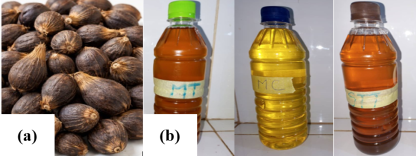
Figure 1. Oil palm fruits (a) and palm kernel oils (b).
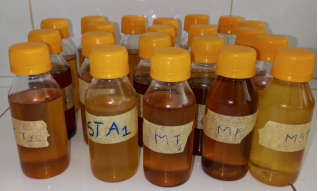
Figure 2. Some palm kernel oil samples.

Figure 3. Three-Class Microbiological Quality Criteria.
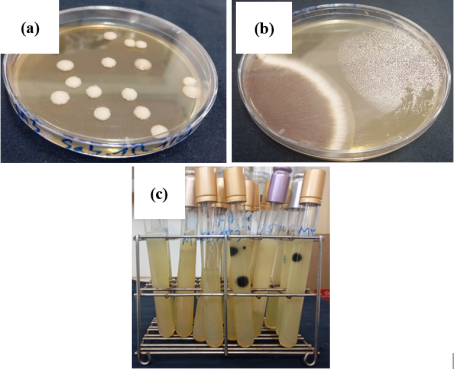
Figure 4. Images of yeast colonies (a), mold colonies (b), and ASR colonies (c).
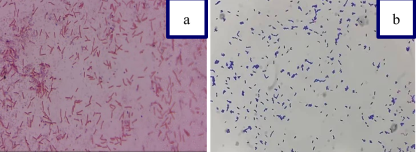
Figure 5. Gram-negative bacilli (a) and Gram-positive bacilli (b).
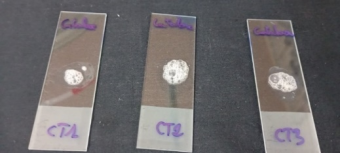
Figure 6. Positive result of a strain in the catalase test.
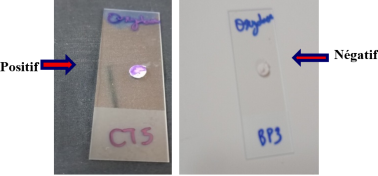
Figure 7. Positive and negative results of strains in the oxidase test.
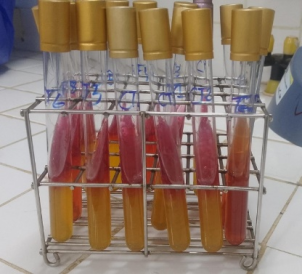
Figure 8. Results of H₂S production tests of the strains.

Information


 Share This Article
 Twitter
 Linked In
 Facebook
 Copy
Copy Download