Review Article | | Peer-Reviewed

Nutritional and Organoleptic Quality of Pork Following the Use of an Algae-Based Feed Supplement as an Alternative to Antibiotics in Pig Farming in Côte d’Ivoire

Received: 29 September 2026     Accepted: 19 October 2026     Published: 16 November 2026
Views:       Downloads:
Abstract

The intensive use of antibiotics in pig farming contributes to the emergence of antimicrobial resistance, thereby encouraging the search for alternatives such as algae-based feed supplements including Algo-Bio®. However, the acceptability of these alternatives depends on their impact on the quality of the meat produced. This study aimed to evaluate the effect of replacing tetracycline with Algo-Bio® on the nutritional and sensory qualities of pork meat. six piglets were divided into three experimental groups of two piglets: the control group (T0), the Algo-Bio®-treated group (T1), and the tetracycline-treated group (T2). After slaughtering the pigs, the Semimembranosus muscles were cut into small pieces and homogenized using a blender. Analyses focused on determining the chemical composition of the meat, followed by hedonic tests performed according to standard methods. Protein content was significantly higher in meat from T1 pigs (22.9%) compared with T0 (14.7%) and T2 (11.9%) (P < 0.05). Fat contents were 6.5% (T1), 5.7% (T0), and 4.7% (T2). Moisture content was lower in T1 (67.8%), while ash content reached its highest level in this group (1.2%). Potassium (326.6 mg/100 g), phosphorus (223.5 mg/100 g), magnesium (24.5 mg/100 g), iron (1.5 mg/100 g), zinc (1.4 mg/100 g), and selenium (23.5 µg/100 g) contents were higher in T1 meat samples. Sensory evaluation was performed on meat samples from pigs in each experimental group and conducted with 100 panelists showed that meat from T1 achieved the highest scores for boiled Semimembranosus muscle, with scores of 7.3 for flavor, 7.7 for juiciness, and 6.6 for tenderness. Algo-Bio® supplementation was associated with improved nutritional and sensory quality of pork meat

Published in International Journal of Microbiology and Biotechnology (Volume 11, Issue 4)
DOI 10.11648/j.ijmb.20261104.13
Page(s) 169-177
Creative Commons

This is an Open Access article, distributed under the terms of the Creative Commons Attribution 4.0 International License (http://creativecommons.org/licenses/by/4.0/), which permits unrestricted use, distribution and reproduction in any medium or format, provided the original work is properly cited.

Copyright

Copyright © The Author(s), 2026. Published by Science Publishing Group

Keywords

Antimicrobial Resistance, Hedonic Tests, Feed Supplements, Semimembranosus Muscles, Quality

1. Introduction
Antibiotics play an essential role in modern livestock production systems due to their effectiveness in the prevention and treatment of bacterial infections. They are also administered to animals to improve zootechnical performance . Their use has not only reduced economic losses associated with animal diseases but has also helped meet the growing demand for animal-derived food products . However, the intensive and inappropriate use of antibiotics has significantly contributed to the emergence and dissemination of antibiotic-resistant bacteria, thereby posing a major public health concern. In this context, the reduction or even replacement of antibiotics in animal production has become a necessity, in line with the “One Health” approach . Accordingly, the search for effective alternatives in animal production represents a major challenge within this framework. Among the proposed alternatives, seaweed-based feed supplements have attracted increasing attention because of their richness in bioactive compounds, particularly sulfated polysaccharides, minerals, and antioxidants . These compounds are recognized for their beneficial effects on intestinal health, immunity, and animal growth performance. Therefore, their use in pig farming could help reduce reliance on antibiotics while maintaining productivity. However, beyond zootechnical and sanitary performance, the acceptability of these alternatives by production sectors largely depends on their impact on the nutritional quality of the meat produced. Indeed, any modification in animal feeding practices may influence the physicochemical composition of muscle tissues and consequently alter the nutritional and organoleptic properties of meat . Protein, lipid, and mineral contents, as well as flavor, tenderness, and juiciness, are among the main determinants of consumer preference and market value. Consequently, replacing antibiotics with algae-based feed supplements raises questions regarding potential changes in the nutritional and sensory quality of meat, as well as consumer acceptability . This issue is of particular importance because, in animal production systems, the adoption of new alternatives depends not only on their sanitary effectiveness but also on their economic implications. Even a strategy that is beneficial for animal health and food safety may face limited adoption if it negatively affects the sensory characteristics of meat and reduces consumer acceptance, since consumers place considerable importance on taste, texture, and visual appearance . In the context of Côte d’Ivoire, where pork meat occupies an important place in the diet and where surveillance systems for antibiotic use remain limited, it is essential to comprehensively evaluate the effects of such alternatives . Furthermore, several studies have shown that the feed supplement Algo-Bio® exhibits bactericidal activity against enteropathogenic Escherichia coli strains responsible for post-weaning diarrhea, as well as against Salmonella strains isolated from pig farms. The assessment of the nutritional and organoleptic characteristics of meat contributes both to ensuring food safety and to enhancing the economic value of the produced meat. Within this framework, the present study aimed to evaluate the impact of replacing antibiotics with this feed supplement on the nutritional and sensory quality of pork meat. The objective of this work was to determine whether this alternative could improve or preserve meat characteristics while addressing the challenges associated with combating antimicrobial resistance.
2. Materials and Methods
2.1. Study Site and Biological Material
The study was conducted on a pig farm located in Adiopodoume, Côte d’Ivoire, along the Abidjan–Dabou road. Recently weaned piglets of similar age and body weight were selected and randomly assigned to three experimental groups of 2 piglets per group. The animals were reared under similar hygiene and feeding conditions in accordance with standard farming practices.
2.2. Experimental Design and Piglet Treatments
Three experimental groups were established: a control group (T0) consisting of two piglets receiving a standard diet without specific supplementation; an Algo-Bio® group (T1) composed of two piglets receiving a standard diet supplemented with an algae-based feed additive (Algo-Bio®); and an antibiotic group (T2) including two piglets fed a standard diet combined with tetracycline treatment administered according to commonly used livestock practices. Treatments were administered from the post-weaning period until slaughter. Specifically, the animals received the treatments during physiologically sensitive stages of the production cycle, particularly the post-weaning and fattening phases. The doses and administration procedures for both the feed supplement and the antibiotic complied with the manufacturer’s recommendations and standard veterinary practices. Pigs in group T2 were reared under standard conditions and received antibiotic administration during critical production periods. In contrast, animals in group T1 were reared under the same conditions but without any antibiotic administration throughout the experimental period. Animals in group T1 received Algo-Bio® supplementation at regular two-week intervals throughout the experiment.
2.3. Sample Collection
At the end of the rearing period, a two-week withdrawal period was observed before slaughtering the animals at 36 weeks of age. The pigs were transported to SIVAC (Ivorian Slaughterhouse and Charcuterie Company) and slaughtered under hygienic conditions. Samples of the Semimembranosus muscle (ham) were collected from each carcass. The samples were packaged and stored at 4°C for immediate analyses and at −20°C for delayed analyses.
2.4. Determination of Physicochemical Parameters of Meat
After slaughter, the Semimembranosus muscles were cut into small pieces and ground using a low-speed blender to obtain a homogenate. The resulting samples were carefully wrapped in aluminum foil and stored at −20°C until analysis. Moisture, ash, and protein contents were determined according to the methods of the Association of Official Analytical Chemists . Fat content was determined using the Soxhlet extraction method. Mineral contents were evaluated by flame atomic absorption spectrophotometry using an air-acetylene flame atomic absorption spectrophotometer (VARIAN AAS 20).
2.5. Sensory Evaluation Design and Panel Selection
Sensory characteristics of pork meat were evaluated using a hedonic test designed to assess consumer acceptance. A total of 100 untrained panelists were recruited among regular pork consumers. Panelists included both males and females aged between 25 and 45 years with diverse socio-professional backgrounds. All participants received basic instructions regarding the evaluation procedure prior to testing. Sensory evaluation sessions were conducted at the Nangui ABROGOUA University under standardized conditions to minimize environmental bias.
2.6. Meat Sample Preparation and Presentation
Samples of the Semimembranosus muscle were collected from each carcass (two carcasses per experimental group: T0, T1, and T2). After collection, samples from each experimental group were processed under identical conditions. Two cooking methods were applied: boiling in water and grilling without seasoning. All samples were cooked to an internal temperature of 85°C to ensure microbiological safety and uniformity. After cooking, samples were cooled to room temperature and cut into standardized cubes of similar size. For sensory testing, coded samples representing each experimental group were randomly presented to panelists in identical containers using a three-digit random coding system to ensure blinding. Each cooking method (boiling and grilling) was evaluated separately by the same panelists.
2.7. Sensory Evaluation Procedure
Each panelist evaluated meat samples from the three experimental groups (T0, T1, and T2) presented in randomized order. Sensory evaluation was performed using representative meat samples rather than individual animals. For each experimental group, five independent meat subsamples were prepared from different carcasses to account for within-group variability. Each subsample was evaluated separately by the panelists. The final sensory score for each experimental group was calculated as the mean of all panelist evaluations across the five independent subsamples. A structured hedonic scale ranging from “extremely unpleasant” to “extremely pleasant” was used, including intermediate and neutral categories. Panelists assessed three sensory attributes: flavor, juiciness, and tenderness. An overall acceptability score was also recorded for each sample. Panelists were instructed to rinse their mouths with water between samples to avoid carry-over effects.
2.8. Statistical Analysis
Data related to physicochemical composition (moisture, protein, fat, ash, and mineral composition), as well as sensory data, were expressed as mean ± standard deviation. Differences between experimental groups were assessed using analysis of variance (ANOVA), followed by a mean comparison test when necessary. The level of significance was set at p < 0.05.
3. Results and Discussion
3.1. Physicochemical Composition of Meat
The physicochemical composition of the Semimembranosus muscles revealed that the moisture content of meat from pigs treated with Algo-Bio® was lower (67.8%) than that of the control pigs (69.4%) and tetracycline-treated pigs (72%). No significant difference (p > 0.05) was observed between the moisture contents of the control pigs and those treated with Algo-Bio®.
Furthermore, meat from pigs supplemented with Algo-Bio® exhibited a significantly higher protein content (p < 0.05), reaching 22.9%, compared with meat from the control pigs (14.7%) and tetracycline-treated pigs (11.9%). Fat contents were 6.5%, 5.7%, and 4.7% in meat from Algo-Bio®-treated pigs, control pigs, and tetracycline-treated pigs, respectively. Finally, the highest ash content was also observed in meat from pigs treated with Algo-Bio® (1.2%) (Table 1).
Table 1. Chemical composition of the semimembranosus muscles of pigs.

Parameters

Chemical composition (% fresh weight)

Control (T0)

Algo-Bio®-treated (T1)

Tetracycline-treated (T2)

Moisture content

69,4 ± 1,18ab

67,8 ± 0,79b

72 ± 0,97a

Ash content

0,7 ± 0,01ab

1,2 ± 0,22a

0,6 ± 0,04b

Fat content

5,7 ± 0,05a

6,5 ± 0,07a

4,7 ± 0,41b

Protein content

14,7 ± 0,98b

22,9 ± 0,87a

11,9 ± 0,06c

The values are expressed as mean ± standard deviation of ten animals per group.
Values followed by the same superscript letters are not significantly different at the 5% significance level (p < 0.05).
3.2. Mineral Composition of Meat
The mineral composition of the Semimembranosus muscles indicated relatively higher values in pigs treated with Algo-Bio®. For phosphorus, values of 200.5 mg, 223.5 mg, and 198.5 mg per 100 g of dry matter (DM) were observed in meat from the control pigs, Algo-Bio®-treated pigs, and tetracycline-treated pigs, respectively. No significant difference (p > 0.05) was observed between the values recorded in control pigs and those in tetracycline-treated pigs. Regarding calcium and magnesium, the values obtained in meat from Algo-Bio®-treated pigs were significantly higher (p < 0.05) than those measured in control pigs. Potassium levels were also significantly higher (p < 0.05) in meat from Algo-Bio®-treated pigs (326.6 mg/100 g DM) compared with those observed in control pigs (314.9 mg/100 g DM) and tetracycline-treated pigs (319.3 mg/100 g DM). Finally, the amounts of iron (1.5 mg/100 g), zinc (1.4 mg/100 g), and selenium (23.5 µg/100 g) observed in meat from Algo-Bio®-treated pigs were significantly higher (p < 0.05) than those recorded in the other groups (Table 2).
Table 2. Mineral Composition of the Semimembranosus Muscles of Pigs.

Macrominerals

Mineral composition

Control (T0)

Algo-Bio®-treated (T1)

Tetracycline-treated (T2)

Calcium (mg/100 g)

5,4 ± 0,11b

6,2 ± 0,2a

6,1 ± 0,15a

Potassium (mg/100 g)

314,9 ± 0,05c

326,6 ± 0,5a

319,3 ± 0,81b

Phosphorus (mg/100 g)

200,5 ± 0,26b

223,5 ± 1,28a

198,5 ± 0,95b

Magnesium (mg/100 g)

19 ± 1b

24,5 ± 0,5a

23,5 ± 1,62a

TOTAL (mg)

539,8 ± 1,42

580,8 ± 2,48

547,4 ± 3,53

Microminerals

Iron (mg/100 g)

0,9 ± 0,07b

1,5 ± 0,15a

0,9 ± 0,04b

Zinc (mg/100 g)

0,9 ± 0,05b

1,4 ± 0,06a

0,8 ± 0,10b

Selenium (µg/100 g)

19,7 ± 0,6b

23,5 ± 0,05a

19,9 ± 0,11b

TOTAL (mg)

1,8 ± 0,12

2,9 ± 0,21

1,7 ± 0,14

The values are expressed as mean ± standard deviation of ten animals per group.
Values followed by the same superscript letters are not significantly different at the 5% significance level (p < 0.05).
3.3. Boiled Semimembranosus Muscles
The results of the hedonic tests performed on boiled Semimembranosus muscles showed that meat from pigs treated with Algo-Bio® obtained the highest scores for the different sensory attributes evaluated. These samples exhibited highly appreciated flavor, with an average score of 7.3. The juiciness of the boiled meat was also high (7.7), clearly above the average score. Statistical analyses revealed significant differences (p < 0.05) in flavor and juiciness among the boiled meat samples (Table 3). In contrast, no significant difference (p > 0.05) was observed between meat from the control group and that from the tetracycline-treated group.
Regarding tenderness, boiled muscles from Algo-Bio®-treated pigs obtained a score of 6.6, compared with 5.8 for both the control pigs and tetracycline-treated pigs. No significant difference was observed among the three groups for this parameter.
Table 3. Organoleptic characteristics of boiled Semimembranosus muscles.

Parameters

Treatment groups

Control (T0)

Algo-Bio®-treated (T1)

Tetracycline-treated (T2)

Flavor

5,6 ± 2,23b

7,3 ± 1,42a

4,3 ± 1,18c

Tenderness

5,8 ± 1,81a

6,6 ± 1,96a

5,8 ± 1,61a

Juiciness

6 ± 1,39b

7,7 ± 1,01a

5 ± 1,1c

The values are expressed as mean ± standard deviation of ten animals per group.
Values followed by the same superscript letters are not significantly different at the 5% significance level (p < 0.05).
3.4. Grilled Semimembranosus Muscles
The results of the hedonic tests performed on grilled Semimembranosus muscles showed that meat from pigs treated with Algo-Bio® achieved the highest sensory scores. These samples exhibited a high flavor score, with an average of 7.8, as well as good juiciness (7.0). Statistical analyses indicated significant differences (p < 0.05) for these parameters between meat from Algo-Bio®-treated pigs and that from the two other groups. However, no significant difference (p > 0.05) was observed between meat from the control pigs and tetracycline-treated pigs. Regarding tenderness, the scores obtained were 6.1 for control pigs, 7.0 for Algo-Bio®-treated pigs, and 5.9 for tetracycline-treated pigs (Table 4).
Table 4. Organoleptic characteristics of grilled semimembranosus muscles.

Parameters

Treatment groups

Control (T0)

Algo-Bio®-treated (T1)

Tetracycline-treated (T2)

Flavor

6,4 ± 1,23b

7,8 ± 0,96a

6 ± 1,34b

Tenderness

6,1 ± 2a

7 ± 1,31a

5,9 ± 1,85a

Juiciness

6,1 ± 1,87b

8 ± 0,90a

6,3 ± 1,33b

The values are expressed as mean ± standard deviation of five determinations.
Values followed by the same superscript letters are not significantly different at the 5% significance level (p < 0.05).
3.5. Overall Meat Appreciation
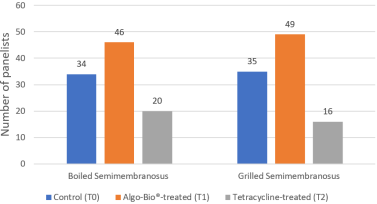
The results of overall meat appreciation indicated that meat from pigs treated with the feed supplement was the most preferred, regardless of the cooking method considered. Algo-Bio®-treated meat from boiled Semimembranosus was preferred by 46 panelists, while grilled Semimembranosus from the same group was preferred by 49 panelists.
The least preferred meat among the tasting panel was that from tetracycline-treated pigs, both in boiled and grilled forms (Figure 1).
Figure 1. Overall meat appreciation according to muscle type and treatment group.
4. Discussion
The physical characteristics of animals (age, sex) and rearing conditions often influence the nutritional, technological, and sensory quality of meat. The physicochemical analysis of the Semimembranosus muscles from ham cuts showed that pigs treated with Algo-Bio® produced meat that was richer in protein and ash compared with meat from control pigs and tetracycline-treated pigs. Indeed, protein levels in meat from Algo-Bio®-treated pigs reached 22.9% fresh weight. These relatively high protein levels may be explained by the consumption of Algo-Bio®, a feed supplement rich in amino acids. The amino acid composition of the diet, particularly the content of essential amino acids, strongly influences animal growth and the relative proportions of lean and fat tissues. In animal nutrition, amino acids are first of all building blocks for protein synthesis. They are known as anabolic factors that promote protein gain by stimulating protein synthesis while inhibiting protein degradation. These effects on protein turnover have been clearly demonstrated in mammals in the work of Hermier and Mariotti . Therefore, the protein content of meat depends on the dietary amino acid supply in livestock systems. Amino acids play a key role in regulating metabolism, growth, development, immune response, and overall animal health . Thus, Algo-Bio® may confer a higher protein value to meat, with an amino acid profile better suited to human nutritional needs. Regarding fat content, no significant differences were observed among the three experimental groups. A direct relationship exists between the fatty acid composition of pig diets and that of fatty acids deposited in meat . This relationship can therefore be exploited to incorporate health-promoting fatty acids into pig diets, which are subsequently transferred to meat consumed by humans. As monogastric animals, pigs directly deposit dietary fatty acids into adipose and muscle tissues . Seaweeds are particularly rich in polyunsaturated fatty acids, especially omega-3 and omega-6 fatty acids . The inclusion of algae-based supplements in pig diets may therefore enhance the nutritional quality of pork fat and provide health benefits to consumers. Indeed, omega-3 and omega-6 fatty acids play an important role in the prevention of cardiovascular diseases, osteoarthritis, and diabetes . Meat from Algo-Bio®-treated pigs showed lower moisture content. Moreover, water content varied among muscles and was inversely related to fat content. The lower moisture levels observed in meat from supplemented pigs could help prevent rapid spoilage. Reduced moisture limits enzymatic degradation reactions and inhibits microbial growth. These findings are consistent with those of Salifou et al. in Benin, who highlighted the role of moisture in the development of initial meat microflora. In addition, meat from Algo-Bio®-treated pigs showed higher ash content (1.2%) compared with control pigs (0.7%) and tetracycline-treated pigs (0.6%). According to Geletu et al. , ash content reflects the mineral content of food. Therefore, ash levels can be used as an indicator of mineral richness in meat. Meat from pigs supplemented with Algo-Bio® was richer in minerals. The mineral composition of meat is closely related to animal diet; in other words, meat mineral content depends on dietary mineral intake . Meat ash analysis allowed quantification of essential minerals for humans, including calcium, potassium, phosphorus, magnesium, iron, zinc, and selenium. Overall, pigs fed with Algo-Bio® showed higher mineral concentrations compared with the other groups. Seaweeds naturally accumulate a wide range of minerals from seawater, including potassium, chlorine, sodium, calcium, magnesium, sulfur, phosphorus, iodine, iron, copper, manganese, zinc, selenium, and molybdenum . Supplementation with iron, copper, and selenium improves growth performance, animal health status, and protection against oxidative stress affecting lipids and proteins. These nutrients may also modify meat mineral composition, which could explain the non-significant differences observed for some minerals such as calcium, magnesium, and iron among samples.
Hedonic test results showed that meat from Algo-Bio®-treated pigs obtained the highest scores, ranging from 6.6 to 8.2 for all evaluated descriptors. These sensory attributes are important determinants of consumers’ perception of meat quality and acceptance This meat was perceived as tender, juicy, and flavorful by panelists. Scores above the hedonic scale average indicate broad consumer acceptance. The perceived flavor and juiciness of this meat may be attributed to its higher fat content. Indeed, the lipid fraction is largely responsible for meat flavor (taste and aroma) according to Schumacher et al. . Flavor compounds are released during cooking from aroma precursor molecules, particularly those associated with fat. The richness of algae in polyunsaturated fatty acids may also explain the enhanced flavor observed in Algo-Bio® meat samples, as reported by Fu et al. , who showed that fatty acid composition influences meat flavor intensity. Juiciness depends on the amount of meat juice released in the mouth during chewing and is enhanced by salivation stimulated by intramuscular fat. It is closely related to the water-holding capacity of muscle, which reflects the ability of meat to retain its own water or added water. The ease of mastication (tenderness) observed in Algo-Bio® meat may be attributed to the quantity and nature of connective tissue, which determines baseline toughness. In addition, lipids from algae may contribute to improved meat tenderness. Meat is composed of muscle fibers, adipose tissue, and connective tissue (collagen), which binds muscle fibers together. According to Purslow and Roy and Bruce , higher collagen content reduces meat tenderness. Meat from tetracycline-treated pigs received the lowest scores (4.3 to 6.3) from panelists. These relatively low scores may be explained by the lower fat content observed in these muscles, which negatively affected perceived juiciness and tenderness. All grilled meats were more appreciated than boiled meats. The proportion of panelists who globally preferred meat from Algo-Bio®-treated pigs was higher than that for control and tetracycline-treated pigs, both for grilled and boiled samples. Indeed, meat is more appreciated when it is juicy, tender, and flavorful. According to Miller and Liu et al. , tenderness is a key quality attribute of meat and a major consumer expectation. Furthermore, juiciness enhances flavor perception and palatability, making meat easier to chew and stimulating salivation . This explains the higher overall acceptance of meat from Algo-Bio®-treated pigs.
5. Conclusion
The replacement of antibiotics with an algae-based feed supplement (Algo-Bio®) represents a relevant alternative in pig production systems. Contrary to initial concerns, this strategy does not lead to a deterioration of meat quality; rather, it contributes to its improvement. Algo-Bio® supplementation resulted in meat with higher protein and essential mineral contents, while maintaining fat levels comparable to those obtained under conventional practices. From a sensory perspective, meat derived from this treatment was significantly more appreciated, particularly in terms of flavor, juiciness, and tenderness. Thus, the use of this feed supplement simultaneously addresses two major challenges: reducing antibiotic use in the context of antimicrobial resistance control and maintaining or even enhancing the organoleptic quality of meat. This dual benefit constitutes an important driver for the adoption of such alternatives by producers. In the Ivorian context, these findings open promising perspectives for the development of more sustainable and safer livestock production systems.
Abbreviations

ANOVA

Analysis of Variance

AOAC

Association of Official Analytical Chemists

DM

Dry Matter

T0

Control Group

T1

Algo-Bio®-Treated Group

T2

Tetracycline-Treated Group

Author Contributions
Kone-Boko Tadiogo Naty Amine: Conceptualization, Data curation, Formal Analysis, Investigation, Methodology, Writing – original draft, Writing – review & editing
Kedjebo Kra Brou Didier: Methodology, Writing – review & editing
Anoman Adjo Therese: Methodology, Writing – review & editing
Guessennd-Kouadio Nathalie: Supervision, Validation, Writing – review & editing
Dadie Adjehi: Conceptualization, Project administration, Supervision, Validation, Writing – review & editing
Conflicts of Interest
The authors declare no conflicts of interest.
References
[1] Abdelhamid, A. S., Brown, T. J., Brainard, J. S., Biswas, P., Thorpe, G. C., Moore, H. J., Deane, K. H., Summerbell, C. D., Worthington, H. V., Song, F. and Hooper, L. Omega-3 fatty acids for the primary and secondary prevention of cardiovascular disease. Cochrane Database of Systematic Reviews 2020, 3(3): CD003177.
[2] Alabi, T. and Adedokun, S. Amino acid nutrition in poultry: A review. Animals, 2025, 15(22): 3323.
[3] AOAC. Official methods of analysis of the Association of Official Analytical Chemists. 2000, 17th edition. Washington DC, USA.
[4] Bava, R., Castagna, F., Lupia, C., Poerio, G., Liguori, G., Lombardi, R., Naturale, M. D., Mercuri, C., Bulotta, R. M., Britti, D. and Palma, E. Antimicrobial resistance in livestock: A serious threat to public health. Antibiotics, 2024, 13(6): 551.
[5] Bryant, C. and Barnett, J. Consumer acceptance of cultured meat: A systematic review. Meat Science, 2018, 143: 8-17.
[6] Chalvon-Demersay, T., Luise, D., Le Floc’h, N., Tesseraud, S., Lambert, W., Bosi, P., Trevisi, P., Beaumont, M. and Corrent, E. Functional amino acids in pigs and chickens: Implication for gut health. Frontiers in Veterinary Science, 2021, 8: 663727.
[7] Corino, C., Modina, S. C., Di Giancamillo, A., Chiapparini, S. and Rossi, R. Seaweeds in pig nutrition. Animals, 2019, 9(12): 1126.
[8] Domaradzki, P., Nowakowicz-Dębek, B., Wlazło, Ł., Ossowski, M., Dmoch, M. and Florek, M. Fatty acid composition of muscle and adipose tissue in pigs fed with addition of natural sorbents. Animals, 2022, 12(13): 1681.
[9] Endale, H., Mathewos, M. and Abdeta, D. Potential causes of spread of antimicrobial resistance and preventive measures in One Health perspective-A review. Infection and Drug Resistance, 2023, 16: 7515-7545.
[10] Escobedo Del Bosque, C. I., Grahl, S., Nolte, T. and Mörlein, D. Meat quality parameters, sensory properties and consumer acceptance of chicken meat from dual-purpose crossbreeds fed with regional faba beans. Foods, 2022, 11(8): 1074.
[11] Fu, Y., Cao, S., Yang, L. and Li, Z. Flavor formation based on lipid in meat and meat products: A review. Journal of Food Biochemistry, 2022, 46(12): e14439.
[12] Geletu, U. S., Usmael, M. A., Mummed, Y. Y. and Ibrahim, A. M. Quality of cattle meat and its compositional constituents. Veterinary Medicine International, 2021, 7340495.
[13] Grunert, K. G., Bredahl, L. and Brunsø, K. Consumer perception of meat quality and implications for product development in the meat sector-A review. Meat Science, 2004, 66(2): 259-272.
[14] Hermier, D. and Mariotti, F. Importance du metabolisme des proteines et des acides amines dans la prevention et la prise en charge du syndrome metabolique. Modulation par les acides gras n-3. Cahiers de Nutrition et de Dietetique, 2018, 53(5): 267-278.
[15] Kim, J. and Ahn, J. Emergence and spread of antibiotic-resistant foodborne pathogens from farm to table. Food Science and Biotechnology, 2022, 31(12): 1481-1499.
[16] Alfred, K. K., Jean-Paul, B. K. M., Hermann, C. W., Mirelle, B. A., & Marcellin, D. K. Assessment of safety risks associated with pork meat sold on the market in Abidjan city (Côte d'Ivoire) using surveys and microbial testing. Heliyon, 2019, 5(7), e02172.
[17] Lebret, B. and Čandek-Potokar, M. Review: Pork quality attributes from farm to fork. Part I. Carcass and fresh meat. Animal, 2022, 16 (Suppl 1): 100402.
[18] Li, S. B., Yao, Q. H., Ye, X. Q., Balasubramanian, B. and Liu, W. C. Unraveling of seaweed bioactive substances and their nutritional regulation functions for poultry. Marine Drugs, 2025, 23(8): 324.
[19] Liu, J., Ellies-Oury, M. P., Stoyanchev, T. and Hocquette, J. F. Consumer perception of beef quality and how to control, improve and predict it? Focus on eating quality. Foods, 2022, 11(12): 1732.
[20] Lozano Muñoz, I. and Díaz, N. F. Minerals in edible seaweed: Health benefits and food safety issues. Critical Reviews in Food Science and Nutrition, 2022, 62(6): 1592-1607.
[21] Mandal, A. K., Parida, S., Behera, A. K., Adhikary, S. P., Lukatkin, A. A., Lukatkin, A. S. and Jena, M. Seaweed in the diet as a source of bioactive metabolites and a potential natural immunity booster: A comprehensive review. Pharmaceuticals, 2025, 18(3): 367.
[22] Mavrommatis, A., Tsiplakou, E., Zerva, A., Pantiora, P. D., Georgakis, N. D., Tsintzou, G. P., Madesis, P. and Labrou, N. E. Microalgae as a sustainable source of antioxidants in animal nutrition, health and livestock development. Antioxidants, 2023, 12(10): 1882.
[23] Miller, R. Drivers of consumer liking for beef, pork, and lamb: A review. Foods, 2020, 9(4): 428.
[24] Montout, L., Poullet, N. and Bambou, J. C. Systematic review of the interaction between nutrition and immunity in livestock: Effect of dietary supplementation with synthetic amino acids. Animals, 2021 11(10): 2813.
[25] Morais, T., Inácio, A., Coutinho, T., Ministro, M., Cotas, J., Pereira, L. and Bahcevandziev, K. Seaweed potential in the animal feed: A review. Journal of Marine Science and Engineering, 2020, 8(8): 559.
[26] O’Quinn, T. G., Legako, J. F., Brooks, J. C. and Miller, M. F. Evaluation of the contribution of tenderness, juiciness, and flavor to the overall consumer beef eating experience. Translational Animal Science, 2018, 2(1): 26-36.
[27] Patel, N., Bergamaschi, M., Magro, L., Petrini, A. and Bittante, G. Relationships of a detailed mineral profile of meat with animal performance and beef quality. Animals, 2019, 9(12): 1073.
[28] Purslow, P. P. The structure and role of intramuscular connective tissue in muscle function. Frontiers in Physiology, 2020, 11: 495.
[29] Rhouma, M., Archambault, M. and Butaye, P. Antimicrobial use and resistance in animals from a One Health perspective. Veterinary Sciences, 2023, 10(5): 319.
[30] Rizos, E. C., Markozannes, G., Tsapas, A., Mantzoros, C. S. and Ntzani, E. E. Omega-3 supplementation and cardiovascular disease: Formulation-based systematic review and meta-analysis with trial sequential analysis. Heart, 2021, 107(2): 150-158.
[31] Rodrigues, S. S. Q., Leite, A., Vasconcelos, L. and Teixeira, A. Exploring the nexus of feeding and processing: Implications for meat quality and sensory perception. Foods, 2024, 13(22): 3642.
[32] Rodrigues, S. S. Q. Feeding and processing affect meat quality and sensory evaluation. Foods, 2025, 14(21): 3756.
[33] Roy, B. C. and Bruce, H. L. Contribution of intramuscular connective tissue and its structural components on meat tenderness-revisited: A review. Critical Reviews in Food Science and Nutrition, 2024, 64(25): 9280-9310.
[34] Ryckebosch, E., Bruneel, C., Termote-Verhalle, R., Goiris, K., Muylaert, K. and Foubert, I. Nutritional evaluation of microalgae oils rich in omega-3 long chain polyunsaturated fatty acids as an alternative for fish oil. Food Chemistry, 2014, 160: 393-400.
[35] Salifou, C. F. A., Boko, K. C., Ahounou, G. S., Tougan, P. U., Kassa, S. K., Houaga, I., Farougou, S., Mensah, G. A., Clinquart, A. and Youssao, A. K. I. Diversite de la microflore initiale de la viande et securite sanitaire des consommateurs. International Journal of Biological and Chemical Sciences, 2013, 7(3): 1351-1369.
[36] Sarmiento-García, A. and Vieira-Aller, C. Improving fatty acid profile in native breed pigs using dietary strategies: A review. Animals, 2023, 13(10): 1696.
[37] Schumacher, M., DelCurto-Wyffels, H., Thomson, J. and Boles, J. Fat deposition and fat effects on meat quality-A review. Animals, 2022, 12(12): 1550.
[38] Thomas, J. E., Xu, V. W., Krizsan, S. J., Aasen, I. M., Oliveira, A., Ramos, H., Tyedmers, P., Hayes, M. and Gröndahl, F. Seaweed as a climate fix for meat and dairy production: An LCA perspective. Scientific Reports, 2025, 15(1): 32597.
[39] Van Boeckel, T. P., Pires, J., Silvester, R., Zhao, C., Song, J., Criscuolo, N. G., Gilbert, M., Bonhoeffer, S. and Laxminarayan, R. Global trends in antimicrobial resistance in animals in low- and middle-income countries. Science, 2019, 365(6459): eaaw1944.
[40] Wang, L., Huang, Y., Wang, Y. and Shan, T. 2021. Effects of polyunsaturated fatty acids supplementation on the meat quality of pigs: A meta-analysis. Frontiers in Nutrition 8: 746765.
[41] Xu, C., Kong, L., Gao, H., Cheng, X. and Wang, X. 2022. A review of current41 bacterial resistance to antibiotics in food animals. Frontiers in Microbiology 13: 822689.
Cite This Article
  • APA Style

    Amine, K. T. N., Didier, K. K. B., Therese, A. A., Nathalie, G., Adjehi, D. (2026). Nutritional and Organoleptic Quality of Pork Following the Use of an Algae-Based Feed Supplement as an Alternative to Antibiotics in Pig Farming in Côte d’Ivoire. International Journal of Microbiology and Biotechnology, 11(4), 169-177. https://doi.org/10.11648/j.ijmb.20261104.13

    Copy | Download

    ACS Style

    Amine, K. T. N.; Didier, K. K. B.; Therese, A. A.; Nathalie, G.; Adjehi, D. Nutritional and Organoleptic Quality of Pork Following the Use of an Algae-Based Feed Supplement as an Alternative to Antibiotics in Pig Farming in Côte d’Ivoire. Int. J. Microbiol. Biotechnol. 2026, 11(4), 169-177. doi: 10.11648/j.ijmb.20261104.13

    Copy | Download

    AMA Style

    Amine KTN, Didier KKB, Therese AA, Nathalie G, Adjehi D. Nutritional and Organoleptic Quality of Pork Following the Use of an Algae-Based Feed Supplement as an Alternative to Antibiotics in Pig Farming in Côte d’Ivoire. Int J Microbiol Biotechnol. 2026;11(4):169-177. doi: 10.11648/j.ijmb.20261104.13

    Copy | Download

  • @article{10.11648/j.ijmb.20261104.13,
      author = {Kone-Boko Tadiogo Naty Amine and Kedjebo Kra Brou Didier and Anoman Adjo Therese and Guessennd-Kouadio Nathalie and Dadie Adjehi},
      title = {Nutritional and Organoleptic Quality of Pork Following the Use of an Algae-Based Feed Supplement as an Alternative to Antibiotics in Pig Farming in Côte d’Ivoire},
      journal = {International Journal of Microbiology and Biotechnology},
      volume = {11},
      number = {4},
      pages = {169-177},
      doi = {10.11648/j.ijmb.20261104.13},
      url = {https://doi.org/10.11648/j.ijmb.20261104.13},
      eprint = {https://article.sciencepublishinggroup.com/pdf/10.11648.j.ijmb.20261104.13},
      abstract = {The intensive use of antibiotics in pig farming contributes to the emergence of antimicrobial resistance, thereby encouraging the search for alternatives such as algae-based feed supplements including Algo-Bio®. However, the acceptability of these alternatives depends on their impact on the quality of the meat produced. This study aimed to evaluate the effect of replacing tetracycline with Algo-Bio® on the nutritional and sensory qualities of pork meat. six piglets were divided into three experimental groups of two piglets: the control group (T0), the Algo-Bio®-treated group (T1), and the tetracycline-treated group (T2). After slaughtering the pigs, the Semimembranosus muscles were cut into small pieces and homogenized using a blender. Analyses focused on determining the chemical composition of the meat, followed by hedonic tests performed according to standard methods. Protein content was significantly higher in meat from T1 pigs (22.9%) compared with T0 (14.7%) and T2 (11.9%) (P < 0.05). Fat contents were 6.5% (T1), 5.7% (T0), and 4.7% (T2). Moisture content was lower in T1 (67.8%), while ash content reached its highest level in this group (1.2%). Potassium (326.6 mg/100 g), phosphorus (223.5 mg/100 g), magnesium (24.5 mg/100 g), iron (1.5 mg/100 g), zinc (1.4 mg/100 g), and selenium (23.5 µg/100 g) contents were higher in T1 meat samples. Sensory evaluation was performed on meat samples from pigs in each experimental group and conducted with 100 panelists showed that meat from T1 achieved the highest scores for boiled Semimembranosus muscle, with scores of 7.3 for flavor, 7.7 for juiciness, and 6.6 for tenderness. Algo-Bio® supplementation was associated with improved nutritional and sensory quality of pork meat},
     year = {2026}
    }
    

    Copy | Download

  • TY  - JOUR
    T1  - Nutritional and Organoleptic Quality of Pork Following the Use of an Algae-Based Feed Supplement as an Alternative to Antibiotics in Pig Farming in Côte d’Ivoire
    AU  - Kone-Boko Tadiogo Naty Amine
    AU  - Kedjebo Kra Brou Didier
    AU  - Anoman Adjo Therese
    AU  - Guessennd-Kouadio Nathalie
    AU  - Dadie Adjehi
    Y1  - 2026/11/16
    PY  - 2026
    N1  - https://doi.org/10.11648/j.ijmb.20261104.13
    DO  - 10.11648/j.ijmb.20261104.13
    T2  - International Journal of Microbiology and Biotechnology
    JF  - International Journal of Microbiology and Biotechnology
    JO  - International Journal of Microbiology and Biotechnology
    SP  - 169
    EP  - 177
    PB  - Science Publishing Group
    SN  - 2578-9686
    UR  - https://doi.org/10.11648/j.ijmb.20261104.13
    AB  - The intensive use of antibiotics in pig farming contributes to the emergence of antimicrobial resistance, thereby encouraging the search for alternatives such as algae-based feed supplements including Algo-Bio®. However, the acceptability of these alternatives depends on their impact on the quality of the meat produced. This study aimed to evaluate the effect of replacing tetracycline with Algo-Bio® on the nutritional and sensory qualities of pork meat. six piglets were divided into three experimental groups of two piglets: the control group (T0), the Algo-Bio®-treated group (T1), and the tetracycline-treated group (T2). After slaughtering the pigs, the Semimembranosus muscles were cut into small pieces and homogenized using a blender. Analyses focused on determining the chemical composition of the meat, followed by hedonic tests performed according to standard methods. Protein content was significantly higher in meat from T1 pigs (22.9%) compared with T0 (14.7%) and T2 (11.9%) (P < 0.05). Fat contents were 6.5% (T1), 5.7% (T0), and 4.7% (T2). Moisture content was lower in T1 (67.8%), while ash content reached its highest level in this group (1.2%). Potassium (326.6 mg/100 g), phosphorus (223.5 mg/100 g), magnesium (24.5 mg/100 g), iron (1.5 mg/100 g), zinc (1.4 mg/100 g), and selenium (23.5 µg/100 g) contents were higher in T1 meat samples. Sensory evaluation was performed on meat samples from pigs in each experimental group and conducted with 100 panelists showed that meat from T1 achieved the highest scores for boiled Semimembranosus muscle, with scores of 7.3 for flavor, 7.7 for juiciness, and 6.6 for tenderness. Algo-Bio® supplementation was associated with improved nutritional and sensory quality of pork meat
    VL  - 11
    IS  - 4
    ER  - 

    Copy | Download

Author Information
  • Department of Food Science and Technology, Nangui Abrogoua University, Abidjan, Côte d’Ivoire

  • Department of Food Science and Technology, Nangui Abrogoua University, Abidjan, Côte d’Ivoire

  • Department of Food Science and Technology, Nangui Abrogoua University, Abidjan, Côte d’Ivoire

  • Department of Bacteriology and Virology, Pasteur Institute, Abidjan, Côte d’Ivoire

  • Department of Food Science and Technology, Nangui Abrogoua University, Abidjan, Côte d’Ivoire

  • Abstract
  • Keywords
  • Document Sections

    1. 1. Introduction
    2. 2. Materials and Methods
    3. 3. Results and Discussion
    4. 4. Discussion
    5. 5. Conclusion
    Show Full Outline
  • Abbreviations
  • Author Contributions
  • Conflicts of Interest
  • References
  • Cite This Article
  • Author Information