Research Article | | Peer-Reviewed

Geotechnical and Physical Characterisation of Alluvial and Lateritic Unfired Clays from Kadey (Eastern Cameroon) for Ceramic Applications

Received: 12 February 2026     Accepted: 28 February 2026     Published: 16 March 2026
Views:       Downloads:
Abstract

This study presents a geotechnical and physical characterization of eight alluvial clays and one lateritic clay from Batouri, eastern Cameroon (GPS coordinates: N 04. 42773°, E 014.36563°), to evaluate their suitability for pressed tile manufacturing. The sampled materials were dried, crushed, and sieved prior to analysis. The test program consisted of determining true density, bulk density, porosity, particle size distribution, Atterberg limits, and methylene blue value. The results indicate a significant variability in particle size distribution: sand content ranged from 29.31 to 85.9 wt.%, silt from 7.7 to 47.88 wt.%, and clay from 6 to 58.05 wt.%. Plasticity Index (PI) values varied between 6.7% and 33.38%, reflecting substantial differences in clay workability and pressing behavior. Methylene blue values, ranging from 0.53 to 2.23 g/100g, suggest variations in water absorption capacity and reactivity. The measured true density of the clays fell between 2.47 and 2.67 g/cm³, while bulk density and total porosity ranged from 1.53 to 1.68 g/cm³ and 34.08 to 42.56%, respectively. These findings demonstrate that while some clays are suitable for direct use in pressing, others require property optimization through blending or treatment. This study provides the first comprehensive geotechnical database for alluvial and lateritic clays from the Kadey region specifically for pressed tile applications, offering essential reference data for local ceramic industry development and establishing preliminary selection criteria for raw material formulation.

Published in International Journal of Materials Science and Applications (Volume 15, Issue 2)
DOI 10.11648/j.ijmsa.20261502.12
Page(s) 52-61
Creative Commons

This is an Open Access article, distributed under the terms of the Creative Commons Attribution 4.0 International License (http://creativecommons.org/licenses/by/4.0/), which permits unrestricted use, distribution and reproduction in any medium or format, provided the original work is properly cited.

Copyright

Copyright © The Author(s), 2026. Published by Science Publishing Group

Keywords

Alluvial Clay, Lateritic Clay, Pressed Tiles, Geotechnical Characterization, Physical Characterization, Ceramic Materials

1. Introduction
Clay has been utilized by humans since antiquity in diverse applications such as cosmetics, paints, pharmaceuticals, and ceramics. Its wide availability, low environmental impact, and plastic nature make it a strategic raw material, particularly in developing countries where access to industrial building materials is often limited .
In the ceramics industry, clays are extensively employed due to their favorable physicochemical and geotechnical properties—including plasticity, particle size distribution, density, and porosity. These properties critically influence the workability, compaction behavior, and ultimate mechanical strength of fired products such as tiles, bricks, and pavers .
Plasticity facilitates the shaping of the green body. Particle size distribution governs compaction and pore structure, as finer particles typically enhance both workability and packing efficiency . True density and bulk density are indicative of material compactness and intrinsic quality, while porosity directly affects key performance attributes like wear resistance and water absorption. Consequently, a thorough understanding of these parameters is essential for optimizing manufacturing processes and ensuring consistent, high-quality end products .
Numerous studies have emphasized the importance of a wide particle size distribution, adequate plasticity, and controlled porosity to ensure the mechanical strength and durability of ceramic products . However, the majority of this research has focused on clays from Europe, Asia, or South America , while a significant portion of the remaining literature deals with other regions of Africa .
In Cameroon, the growing demand for building materials is paradoxically met by significant imports; in 2022 alone, the country imported over 3,021 tonnes of clay-based materials globally . This occurs despite the presence of abundant and diverse local clay deposits, particularly in the western, central, and eastern regions. Currently, there are few structured ceramics industries, despite a surge of interest in recent years. Local clays are primarily used in domestic pottery and by a limited number of industrial operations.
If strategically developed, this indigenous raw material holds considerable promise for the national construction sector—specifically for the production of bricks, roofing tiles, and terracotta or stabilized floor tiles.
Several local studies have already highlighted the technological and ceramic potential of Cameroonian clays for ceramic production . However, due to their abundance, lateritic clays in the region are primarily utilized as a raw material for road construction and building foundations .
Batouri, located in eastern Cameroon, is an area characterized by artisanal and small-scale alluvial gold mining . Both alluvial and lateritic clay deposits are widespread in this region, particularly within the Kadey River basin . Despite the significant volume of alluvial deposits in the Kadey Valley, they remain poorly characterized and largely unexploited for ceramics. These materials are often regarded as waste by mining operators, representing both a loss of valuable resources and a missed economic opportunity for local communities.
Previous studies in eastern Cameroon have investigated clay materials for various applications: alluvial clays from Batouri were characterized for pottery , while lateritic clays from the same region were examined primarily for construction materials . However, no study has systematically compared both alluvial and lateritic clays from the Kadey Valley using a standardized methodology specifically tailored for pressed tile manufacturing. Furthermore, existing research has not established clear selection criteria linking geotechnical properties to pressing performance. The present work fills this gap by: (i) providing a comparative analysis of geotechnical and physical properties of eight alluvial clays and one lateritic clay; (ii) evaluating their suitability for pressed tile production based on plasticity, particle size distribution, and density criteria; and (iii) creating a reference database to guide future formulation optimization for local ceramic industries.
In this context, the present study aims to perform a geotechnical characterization of selected alluvial and lateritic clays from Batouri. Key parameters—including particle size distribution, plasticity, true density, bulk density, and total porosity—will be determined to evaluate their suitability for pressed tile manufacturing. This work will provide essential reference data to support local development initiatives. Furthermore, the findings are intended to establish preliminary selection criteria and guide the optimization of local clay resources, thereby contributing to national efforts promoting the use of indigenous building materials.
2. Materials and Methods
2.1. Raw Material
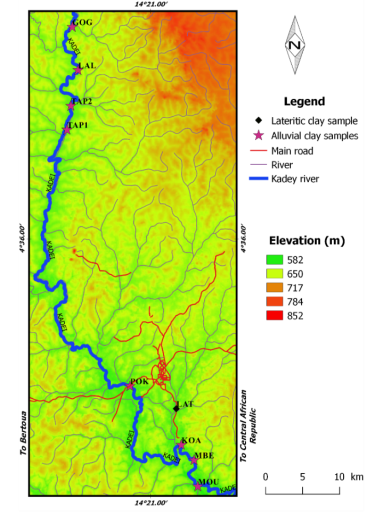
Figure 1. Geomorphological map of the study area showing sampling points, QGis®, October 2025.
Nine clay samples—eight alluvial and one lateritic—were collected in the Batouri area of eastern Cameroon (GPS coordinates: N 04. 42773°, E 014.36563°). The geographical coordinates of the sampling sites are provided in Figure 1.
Following initial morphological description, the samples were subjected to analysis to determine their geotechnical and physical properties. The alluvial clay samples were designated GOG, KOA, LAL, MBE, POK, MOU, TAP1, and TAP2, using a three-letter codereferring to each sampling location. The lateritic sample was labeled LAT.
The laterite sample was collected from a trench, extracted from the fine clayey horizon after removal of the overlying humus layer. The alluvial clays were obtained using a hand auger at depths between 1 and 1.5 meters within marshy zones adjacent to the Kadey River.
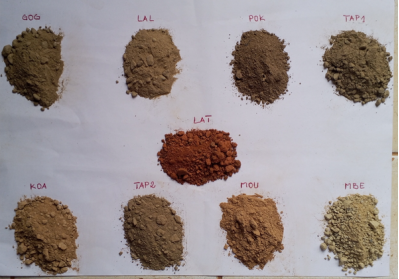
Subsequently, each sample (see Figure 2) underwent a standardized preparation protocol. First, they were air-dried at room temperature in the laboratory for one week. Large aggregates were then manually crushed in a porcelain mortar using a pestle. The resulting material was oven-dried at 105°C in a HERAEUS VT 5042 EK oven for a minimum of 24 hours to eliminate hygroscopic moisture. The dried material was placed in a jar with alumina balls, sealed, and milled for several hours in a ball mill. Finally, the milled powder was sieved through an 80 µm mesh, and the fine fraction passing the sieve was stored in a hermetically sealed container for subsequent analysis.
Figure 2. Photographs of representative clay samples after collection: alluvial clays.
2.2. Experimental Methods
2.2.1. Particle Size Distribution
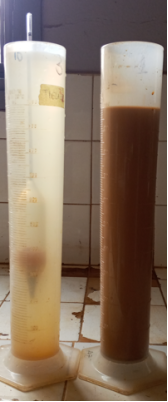
Particle size distribution (PSD) was determined in accordance with ISO 17892-4: 2016. The analysis combined dry sieving for the coarse fraction (> 80 µm) and sedimentation based on Stokes' law for the fine fraction (< 80 µm). Approximately 500 g of each air-dried sample was subjected to mechanical sieving. For the sedimentation analysis, a 40 g sub-sample of the fine fraction was dispersed in a 5% sodium hexametaphosphate solution prior to measurement.
Figure 3. Sedimentation device used for particle size analysis of the fine fraction.
2.2.2. Consistency Analysis: Atterberg Limits of Soil
Atterberg limits define both an indicator of soil plasticity and the test that quantifies these indicators. Depending on its water content, reworked soil has varying consistencies, which can be divided into four (04) states: liquid, plastic, solid with shrinkage, and solid without shrinkage. In reality, soil changes from one state to another, and the respective limits are not defined by Atterberg limits .
This analysis allows us to classify soils. The following parameters are analysed as such: Plasticity Index PI (1), Liquidity Limit LL and Plasticity Limit PL.
PI=LL-PL(1)
2.2.3. Methylene Blue Value
The methylene blue value (MBV) was determined for each sample in accordance with Standard NF P 94-068. This test quantifies the adsorption capacity of a soil, a property highly influenced by clay mineralogy, as montmorillonite (smectite) and organic matter exhibit high dye adsorption whereas illite and kaolinite are less sensitive. The procedure consisted of gradually adding a standard methylene blue solution to a clay suspension in distilled water until saturation of the adsorbent surfaces was visually confirmed via the spot test. The result, expressed in grams of dye per 100 grams of dry soil (g/100g), was then calculated. Following the standard’s interpretation, an MBV below 1 suggests low clay activity, potentially indicating kaolinite dominance. A value between 1 and 2 reflects moderate activity, consistent with the presence of illite or halloysite, while an MBV greater than 2 signifies high activity and the probable presence of smectite-group minerals. Consequently, this test provides an indirect insight into the clay mineralogy, which governs the material’s behaviour in the presence of water and chemical agents .
MBV=V1×0.01M1×100(2)
Where
V1: volume of methylene blue solution drained (ml), M1: dry mass of the test sample (g).
2.2.4. Physical Properties Evaluation
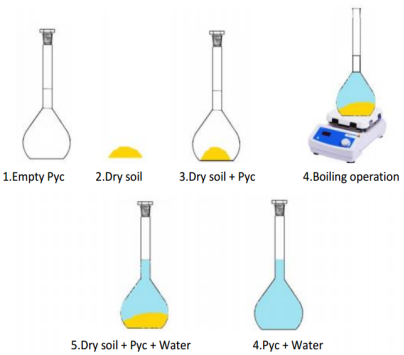
Figure 4. Main steps of the pycnometer test.
The true density (ρ) and bulk density (ρm) of the clay particles were determined for each sample. True density, defined as the mass of solid grains per unit volume excluding all pores, and bulk density, defined as the dry mass per unit volume of the soil including its pore network, were obtained through a series of volumetric measurements and weighings using a standardized pycnometer method (Figure 4), following the procedure described by . For this test, representative subsamples of the homogenized and oven-dried clay powder were used. From these two measured densities, the total porosity (Pt) was calculated using the standard derived relationship:
Pt=(1-ρmρ)(3)
Where
ρm is the apparent density (g/cm³)
ρ is the true density (g/cm³)
2.2.5. Statistical Analysis
To ensure reliability and reproducibility, all tests were performed in triplicate for each clay sample. For each set of measurements, the mean(x̅) and standard deviation (σ) were calculated. The coefficient of variation (CV), expressed as a percentage, was then derived as a standardized metric to compare the relative homogeneity—or conversely, the degree of heterogeneity—across the different material properties. The CV was calculated using the following relationship:
CV(%)=(σx̅)×100(4)
Where
σ is the standard deviation
x̅ is the mean
For Atterberg limits, the liquid limit (LL) and plastic limit (PL) determinations were repeated three times, and the average values were retained when the variation between replicates was below 5%. For the methylene blue test, the titration was performed in duplicate, and the final value was taken as the average when the difference between the two measurements was less than 0.1 g/100g. Particle size analysis by sedimentation was conducted in duplicate, and the particle size distribution curves were averaged. For density measurements, the pycnometer method was repeated three times for each sample.
All statistical calculations were performed using Microsoft Excel software. The mean values and coefficients of variation for each property are presented in Tables 1 and 2, providing a comprehensive overview of both the central tendency and the variability of the measured parameters.
3. Results and Discussion
3.1. Geotechnical Properties
The geotechnical properties of the alluvial and lateritic clays from the Kadey region are summarized in Table 1.
Analysis of variability, expressed by the coefficient of variation (CV), reveals generally low values for all studied properties, typically below 15%. This indicates good measurement repeatability and a moderate degree of variability among the samples.
For the Atterberg limits—Liquid Limit (LL) and Plastic Limit (LP)—the CV values remain very low (below 5%), reflecting excellent measurement stability. This low dispersion is attributed to the standardized nature of the Casagrande method, which is well-established and routinely applied at the MIPROMALO laboratory.
One notable exception is observed: the Plasticity Index (PI) of the KOA sample exhibits a high CV of 51%. This elevated value is not indicative of procedural instability but can be explained by the sample's inherently low mean PI value. In such cases, even a small absolute deviation in measurement results in a high relative coefficient of variation.
Table 1. Geotechnical properties of alluvial and lateritic clays in the Batouri locality.

Properties

Parameter

GOG

KOA

LAL

LAT

MBE

MOU

POK

TAP1

TAP2

Atterberg limits

Liquid Limit (LL) (%)

Mean(x̅)

40.00

64.74

29.50

52.84

55.48

60.70

49.08

59.40

48.28

CV (%)

0.79

4.37

1.22

1.55

1.83

2.18

4.23

0.44

1.81

Plastic Limit (PL) (%)

Mean(x̅)

29.00

58.04

21.87

33.37

22.10

44.30

35.07

41.70

34.99

CV (%)

1.14

3.33

4.10

2.44

2.33

1.24

1.00

1.10

2.54

Plasticity Index (PI) (%)

Mean(x̅)

11.00

6.70

7.63

19.47

33.38

16.40

14.01

17.70

13.29

CV (%)

4.16

51.14

12.66

5.93

3.39

8.72

15.02

2.97

9.39

Particle size distribution (wt.%)

Gravel (Ф>2 mm)

Value

0.55

2.02

0.10

17.40

1.31

0.24

0.29

3.13

0.70

Sand (2>Ф>0.02 mm)

Value

62.79

47.75

85.90

35.26

30.40

32.37

43.61

29.31

63.11

Silt (0.02>Ф>0.002 mm)

Value

25.96

41.86

8.00

7.70

10.24

47.88

30.86

34.65

21.11

Clay (Ф<0.002 mm)

Value

10.69

8.37

6.00

39.60

58.05

19.51

25.25

32.91

15.08

Methylene blue value

MBV (g/100g)

Mean(x̅)

0.83

1.17

0.53

1.00

2.23

1.63

1.67

1.67

1.27

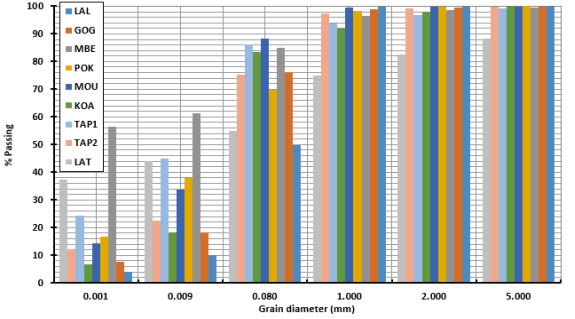
Figure 5. Particle size distribution curves of alluvial and lateritic clay.
The particle size distribution curves (Figure 5) reveal considerable variability in composition among the clays, reflecting their distinct geological origins. The LAL material, for instance, is predominantly sandy (85.90 wt.%), resulting in relatively low plasticity. While this sandy texture reduces the risk of drying cracks, it may also limit the final density of pressed tiles.
Conversely, the MBE and LAT materials are notably clay-rich (58.05 and 39.60 wt.% clay, respectively). This high clay content enhances their plasticity and reduces porosity, rendering them suitable for pressing. However, it concurrently increases the risk of shrinkage and cracking during drying. The MOU sample, which is silt-rich (47.88 wt.%), exhibits intermediate behavior, offering a favorable compromise between compactness and reduced cracking propensity.
The gravel fraction is considerable in the lateritic LAT clay (17.4 wt.%) and moderate in the alluvial TAP1 and KOA materials (3.13 and 2.02 wt.%, respectively). Overall, the Batouri alluvial materials are composed of sand, silt, and clay , but in highly variable proportions: sand content ranges from 29.31 wt.% (TAP1) to 85.9 wt.% (LAL); silt from 7.70 wt.% (LAT) to 47.88 wt.% (MOU); and clay from 6 wt.% (LAL) to 58.05 wt.% (MBE).
From a ceramic processing perspective, the particle size distribution directly influences both the pressing behavior and the final product quality. Well-graded materials such as KOA, LAT, MOU, POK, and TAP1, which contain significant proportions of sand, silt, and clay, are expected to achieve higher green density during pressing due to optimal particle packing . This improved packing reduces inter-particle voids, leading to better mechanical strength in both the unfired and fired states. In contrast, poorly graded materials like the very sandy LAL and GOG clays may exhibit low green strength and require higher compaction pressures to achieve adequate density, potentially increasing production costs. Conversely, the very clay-rich MBE sample, while offering excellent plasticity and cohesion, may be prone to excessive drying shrinkage and cracking, necessitating careful control of drying conditions or blending with coarser materials to mitigate these risks.
The plasticity characteristics of the clays, determined via Atterberg limits, show a significant range. The Liquid Limit (LL) varies from 29.50% for the sandy LAL material to 64.74% for the KOA sample. Similarly, the Plastic Limit (PL) ranges from 21.87% (LAL) to 58.04% (KOA). Consequently, the calculated Plasticity Index (PI) spans from 6.70% (KOA) to 33.60% (MBE).
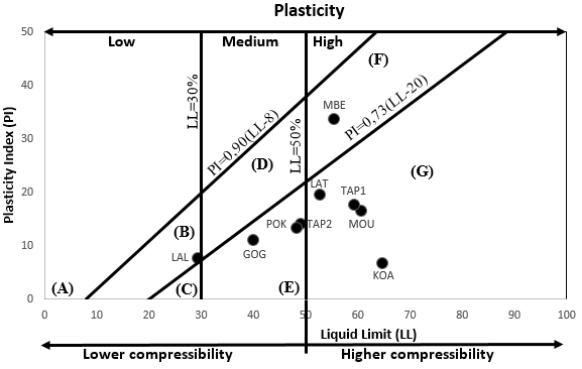
Figure 6. Casagrande diagram for the nine clays studied.
(A) Non-cohesive soil (B) Mineral clay with low plasticity (C) Mineral silt with low compressibility
(D) Mineral clay with medium plasticity (E) Mineral silt with medium compressibility and organic silt
(F) Mineral clay with high plasticity (G) Mineral silt with high compressibility and organic clay
The projection of Liquid Limit (LL) and Plasticity Index (PI) values onto the Casagrande plasticity chart (Figure 6) classifies the studied materials. The majority fall within the domain of highly to medium compressible silts and organic clays. Specifically, the LAT, TAP1, MOU, and KOA samples are classified as highly compressible inorganic silts and organic clays. The GOG, POK, and TAP2 samples correspond to inorganic silts and organic silts of medium compressibility. The LAL material is classified as a low-plasticity inorganic clay, while the MBE sample is identified as a high-plasticity inorganic clay.
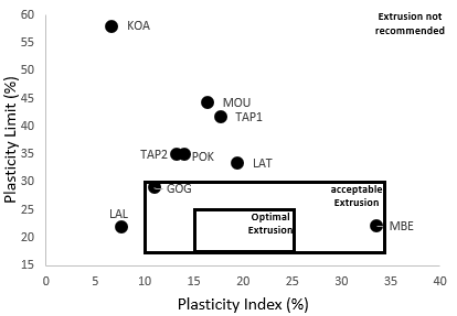
Figure 7. Extrusion prognosis diagram.
The plasticity characteristics have direct implications for the pressing process. For pressed tile manufacturing, an optimal Plasticity Index typically ranges between 10% and 25% . Clays within this range, such as GOG (PI = 11.0%) and POK (PI = 14.01%), offer sufficient workability for shaping while maintaining dimensional stability during drying. Clays with PI values exceeding 25%, like MBE (PI = 33.38%), though highly workable, require extended drying times and precise moisture control to prevent warping and cracking. Such materials may be better suited as plasticizers in blends rather than for direct use. Conversely, clays with PI below 10% (KOA and LAL) lack adequate cohesion and may produce weak green bodies susceptible to damage during handling and pressing . For these materials, the addition of plastic clays or organic binders could improve their pressing performance.
The extrusion prognosis diagram (Figure 7) provides additional insight: only GOG and MBE fall within the optimal extrusion zone, suggesting they possess the ideal balance of plasticity and water content for forming. However, for pressed tiles (which use compaction rather than extrusion), these criteria are somewhat different. The pressing process is less sensitive to plasticity than extrusion but more dependent on particle size distribution and moisture content uniformity. Therefore, materials outside the optimal extrusion zone, such as the well-graded LAT and TAP1 clays, may still be suitable for pressing if properly formulated.
Consequently, materials with excessively high PI values (e.g., KOA, LAT, MOU, POK, TAP1, TAP2) or very low PI values (LAL) generally fall outside the optimal range for direct extrusion. Their use would require precise moisture control, blending, or the use of additives to modify their plasticity.
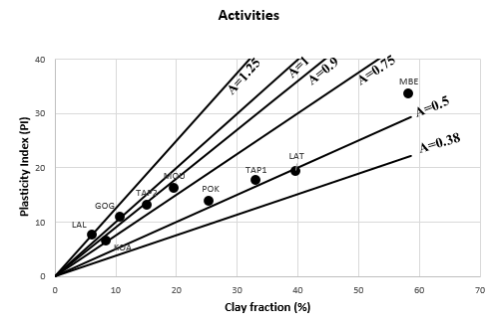
Figure 8. Sample activity value.
The activity diagram (Figure 8) indicates that the materials in this study exhibit a range of clay activity. The activity coefficient is approximately 0.5 for the TAP1 and LAT samples, classifying them as inactive clays with a composition likely dominated by kaolinite. In contrast, the LAL sample has a coefficient greater than 1.25, identifying it as an active clay, which suggests a significant montmorillonite content. The remaining clays exhibit normal activity, with coefficients between 0.5 and 1.25, consistent with a mineralogy dominated by illite, according to Skempton's classification. These activity values provide a preliminary indication of the swelling potential inherent to the different clays.
The methylene blue test (MBT) results, ranging from 0.53 g/100g for LAL to 2.23 g/100g for MBE, confirm a significant diversity in surface reactivity and specific surface area among the samples. Clays with high MBT values, such as MBE, POK, TAP1, and MOU, indicate a substantial proportion of active, colloidal clay minerals. This correlates well with their observed high plasticity and better inter-particle cohesion. Conversely, the lowest MBT values, observed for LAL and GOG, reflect a low content of such active colloids. This mineralogical characteristic suggests a lower capacity to adsorb water, which directly translates to the reduced plasticity measured in these samples.
3.2. Physical Properties
The true density of the clay particles, determined by the water displacement method, ranges from 2.47 g/cm³ (POK) to 2.67 g/cm³ (KOA), as detailed in Table 2. These values fall within the typical range reported for alluvial and lateritic clays (2.3 – 2.9 g/cm³) , confirming the mineralogical consistency of the sampled materials with known clay types. True density reflects the intrinsic density of the solid grains, independent of the sample's pore structure.
The density measurements have significant implications for fired tile properties. The highest true density values, observed for the KOA, LAT, MOU, and LAL clays, suggest a greater proportion of dense minerals such as quartz and iron oxides. The presence of these minerals can contribute to the mechanical strength of the final ceramic product after sintering. In contrast, the lower true densities of the POK, TAP1, GOG, MBE, and TAP2 clays indicate a relative enrichment in lighter minerals or a higher content of fine, low-density clay minerals themselves.
The bulk density of the studied clays exhibits a narrow range, varying from 1.53 g/cm³ (KOA) to 1.68 g/cm³ (TAP2). This property represents the overall density of the material, incorporating both solid particles and the pore network. As expected, bulk density values are systematically lower than the corresponding true densities, a direct consequence of the sample porosity. Both bulk and true density values exceed 1.5 g/cm³, classifying these materials as heavy soils with a coarse texture . Samples such as LAT exhibit high true densities, likely attributable to a high kaolinite content, which is generally favorable for producing resistant ceramic bodies .
The bulk density and total porosity are more directly related to the pressing and firing behavior. Materials with lower total porosity, such as MBE (34.08%), TAP2 (34.10%), and POK (34.16%), are likely to produce denser fired tiles with lower water absorption, which is desirable for floor tiles requiring high mechanical resistance and durability. In contrast, highly porous clays like KOA (42.56%) and MOU (39.08%) may be more suitable for wall tiles where lighter weight and better thermal insulation are valued, though they may exhibit higher water absorption rates that could affect frost resistance.
The lower porosity in TAP2 and MBE is likely due to a more efficient particle size distribution, where finer particles occupy the intergranular spaces between larger grains, thereby reducing void volume. This aligns with the established principle that clay content significantly influences the volume of mesopores and small pores within a soil matrix . While high porosity, as seen in KOA and MOU, can facilitate uniform firing and improve the finish of ceramic products by allowing easier escape of gases , it may also reduce the final product's mechanical strength if excessive.
During firing, the initial porosity influences sintering behavior: materials with higher green porosity allow for better gas escape during organic matter combustion, potentially reducing bloating defects. However, excessive porosity may require higher firing temperatures or longer holding times to achieve adequate densification, impacting energy consumption and production costs. Therefore, the selection of clays for pressed tile manufacturing should consider not only the as-measured properties but also the desired final product characteristics and firing parameters.
Table 2. Physical properties of alluvial and lateritic clays from the Batouri locality.

Properties

True density (g/cm3)

Bulk density (g/cm3)

Porosity (%)

Mean(x̅)

CV (%)

Mean(x̅)

CV (%)

Mean(x̅)

CV(%)

GOG

2.52

0.90

1.64

0.45

34.89

1.00

KOA

2.67

0.09

1.53

0.31

42.56

0.55

LAL

2.59

0.09

1.63

0.26

37.06

0.29

LAT

2.60

0.18

1.67

0.03

35.80

0.27

MBE

2.53

0.80

1.67

0.47

34.08

2.47

MOU

2.60

0.37

1.58

0.11

39.08

0.74

POK

2.47

0.52

1.62

0.69

34.16

2.34

TAP1

2.52

0.18

1.64

1.42

34.94

2.97

TAP2

2.55

0.45

1.68

1.15

34.10

1.35

4. Conclusions
This study characterized nine clays from the Batouri area (eastern Cameroon) to evaluate their suitability for pressed tile manufacturing. The results reveal significant variability in geotechnical and physical properties: sand content ranges from 29.31 to 85.90 wt.%, silt from 7.70 to 47.88 wt.%, and clay from 6.00 to 58.05 wt.%. Plasticity Index varies between 6.70% and 33.38%, while total porosity ranges from 34.08% to 42.56%.
Based on these properties, the clays can be classified into three categories for industrial application. MBE and TAP1 exhibit favorable plasticity (PI >15%), high clay content (>30%), and low porosity (<35%), making them suitable for pressed tile production without major adjustments. GOG, LAT, MOU, POK, and TAP2 possess intermediate properties that could be optimized through blending (e.g., LAT with sandy LAL to improve workability). Sandy clays LAL and GOG (sand >60%, PI <11%) lack sufficient cohesion but can serve as temper materials, while KOA, despite high plasticity, exhibits high porosity (42.56%) and may require flux addition.
For industrial practice, we recommend binary mixtures such as 60% MBE with 40% LAL to achieve intermediate plasticity (≈20-22%) and improved packing. Future work should test such formulations and optimize processing parameters.
This study provides an essential database for local clay valorization and supports the sustainable development of ceramic industries in eastern Cameroon.
Abbreviations

IP

Plasticity Index

LL

Liquidity Limit

PL

Plasticity Limit

MBT

Methylene Blue Test

MBV

Methylene Blue Value

Author Contributions
Mbita Mbita Clyf De Vilier: Conceptualization, Methodology, Investigation, Formal Analysis, Data Curation, Writing – original draft, Visualization
Gnepie Takam Nicolas Wilfred: Formal Analysis, Validation, Writing – review & editing
Matuam Balbine: Investigation, Formal Analysis
Ntouala Roger Firmin Donald: Methodology, Investigation
Edoun Marcel: Conceptualization, Resources, Validation, Supervision, Writing – Review & Editing
Data Availability Statement
The data supporting the outcome of this rese ach work has been reported in this manuscript.
Conflicts of Interest
The authors declare no conflicts of interest.
References
[1] Murray, H. H. Applied clay mineralogy: occurrences, processing and application of kaolins, bentonites, palygorskite–sepiolite, and common clays. Developments in Clay Science. 2007, 2.
[2] Ndiaye, M.; Diop, M. B. Fall, M. Evaluation of Senegalese clays for ceramic applications. Journal of Engineering Sciences. 2020, 42(1), 67–74.
[3] Kalendova, A.; Urbaskova, M.; Merinska, D. Application of clays in nanocomposites and ceramics. Minerals. 2024, 14(1), 93;
[4] Correia, S.; Costa, P.; Silva, P.; Paiva, M.; Mendes, R. Evaluation of raw materials and ceramic masses from construction material companies located in north-eastern Brazil. Minerals. 2024, 14(11), 1062;
[5] Besendorfer G., Roosen A. Effect of particle shape and size on the anisotropic shrinkage of cast-in-band ceramic layers. J. Am. Ceram. Soc. 2008, 91, 2514–2520.
[6] Candeias, C.; Santos, I.; Rocha, F. Characterisation and suitability for ceramic production of clays from Bustos, Portugal. Minerals. 2025, 15(5), 503.
[7] Xanthopoulou, V.; Iliopoulos, L. An overview of the suitability of clay raw materials: the ceramic provinces of northern Peloponnese and southern Epirus, Greece. Buildings. 2023, 13(2), 473;
[8] Ngun, B. K.; Mohamad, H.; Sulaiman, S. K.; Okada, K.; Ahmad, Z. A. Some ceramic properties of clays from central Cambodia. Appl. Clay Sci. 2011, 53, 33–41.
[9] Semiz, B. Characteristics of clay-rich raw materials for ceramic applications in Denizli region (Western Anatolia). Appl. Clay Sci. 2017, 137, 83–93.
[10] Bennour, A.; Mahmoudi, S.; Srasra, E.; Hatira, N.; Boussen, S.; Ouaja, M.; Zargouni, F. Identification and traditional ceramic application of clays from the Chouamekh region in South-Eastern Tunisia. Appl. Clay Sci. 2015, 118, 212–220.
[11] Ban-Nah Mahamat, A., Adam, B. S., Affadine, A. H., Mahamat, A. D., Barka, M., & Gaye, S. Thermomechanical characterization of Massakory clay reinforced by Seyal gum arabic for sustainable building applications. International Journal of Materials Science and Applications, 2025 14(3), 72–78.
[12] Bomeni, I. Y.; Fotsing, M. I.; Nzeukou, N. A.; Kieufack, G.; Fagel, N. Geological and geotechnical characterization of clayey materials from Feutap (West Cameroon): suitability in ceramic industry. Discover Geoscience. 2025, 3, 88.
[13] Tchakounte, J. L.; Elimbi, A.; Djangang, C. N. Use of alluvial clays for the manufacture of fired bricks. Journal of Materials in Civil Engineering. 2017, 29(8), 04017076.
[14] Onana, V. L.; Ntouala, R. F. D.; Mbey, J. A.; Ngo’o Ze, A.; Kabeyene, K. V.; Ekodeck, G. E. Mineralogy and preliminary assessment of the potential uses of alluvial clays from Batouri (Eastern-Cameroon). Cerâmica. 2019, 65: 407–415.
[15] Ntouala, R. F. D.; Ndome-Priso, E.; Nanga, M. T.; Mutlen, J. A.; Ngo’o, Z. A.; Onana, V. L.; Ekodeck, G. E. Mineralogy, geochemistry, and geotechnical characterization of lateritic and alluvial clay deposits from Batouri, East Cameroon. Arabian Journal of Geosciences. 2023, 16, 355.
[16] Kagonbé, B. P,; Tsozué, D.; Nzeukou, A. N.; Ngos, S. Mineralogical, physico-chemical and ceramic properties of clay materials from Sekandé and Gashiga (North, Cameroon) and their suitability in earthenware production. J Hely. 2021.
[17] Kessoum, A. J.; Noa, T. S.; Sababa, E.; Onana, V. L. Weatering profiles developed on gneisses from Batchenga and Doua areas, Centre Cameroon: climate and topography controls. J Afr Earth Sci. 2021, 184, 104367.
[18] Ganou, K. B.; Ndapeu, D.; Tchemou, G.; Messan, A.; Njeugna, E.; Courard, L. Challenges for the development of Cameroon's coastal lands: physical testing and mechanical characterisation of soil material. SN Applied Sciences. 2020, 2, 1340
[19] Robitaille, V.; Tremblay, D. Soil Mechanics: Theory and Practice, Quebec City. 1997.
[20] Reeves, G. M; Sims, I.; Cripps, J. C. Clay materials used in constr uction. Special Publication, Geological Society, London, Eng. Geol. 2006.
[21] Agbelele, C. R. T., Doko, V. K., Ganmavo, B., & Gibigaye, M. Optimization of clayey ferralitic soil stabilization with crushed granite and pulverized ceramic waste through a comparative experimental approach. International Journal of Materials Science and Applications, 2025 14(5), 224–238.
[22] Vieira, C. M. F.; Sánchez, R.; Monteiro, S. N. Characteristics of clays and properties of building ceramics in the state of Rio de Janeiro, Brazil. Constr Build Mater. 2008, 22: 781-787.
[23] Hamisi, H., Park, S. E., Choi, B.-H., An, Y.-T., & Jeongin, L. Influence of firing temperature on physical properties of Same clay and Pugu kaolin for ceramic tiles application. International Journal of Materials Science and Applications, 2014, 3(5), 143–146.
[24] Nzeukou, N. A.; Tsozué, D.; Kagonbé, P. B.; Balo, M. A.; Fangam, D. A.; Ngos III, S.; Nkoumbou, C.; Fagel, N. Clayey soils from Boulgou (North Cameroon): geotechnical, mineralogical, chemical characteristics and properties of their fred products. SN Applied Sciences. 2021, 3: 551;
[25] Wencan, J.; Dong, Z.; Yetian, W. Effects of clay content on pore structure characteristics of soft marine soils. Water. 2021, 13(19), 1160;
Cite This Article
  • APA Style

    Vilier, M. M. C. D., Wilfred, G. T. N., Balbine, M., Donald, N. R. F., Marcel, E. (2026). Geotechnical and Physical Characterisation of Alluvial and Lateritic Unfired Clays from Kadey (Eastern Cameroon) for Ceramic Applications. International Journal of Materials Science and Applications, 15(2), 52-61. https://doi.org/10.11648/j.ijmsa.20261502.12

    Copy | Download

    ACS Style

    Vilier, M. M. C. D.; Wilfred, G. T. N.; Balbine, M.; Donald, N. R. F.; Marcel, E. Geotechnical and Physical Characterisation of Alluvial and Lateritic Unfired Clays from Kadey (Eastern Cameroon) for Ceramic Applications. Int. J. Mater. Sci. Appl. 2026, 15(2), 52-61. doi: 10.11648/j.ijmsa.20261502.12

    Copy | Download

    AMA Style

    Vilier MMCD, Wilfred GTN, Balbine M, Donald NRF, Marcel E. Geotechnical and Physical Characterisation of Alluvial and Lateritic Unfired Clays from Kadey (Eastern Cameroon) for Ceramic Applications. Int J Mater Sci Appl. 2026;15(2):52-61. doi: 10.11648/j.ijmsa.20261502.12

    Copy | Download

  • @article{10.11648/j.ijmsa.20261502.12,
      author = {Mbita Mbita Clyf De Vilier and Gnepie Takam Nicolas Wilfred and Matuam Balbine and Ntouala Roger Firmin Donald and Edoun Marcel},
      title = {Geotechnical and Physical Characterisation of Alluvial and Lateritic Unfired Clays from Kadey (Eastern Cameroon) for Ceramic Applications},
      journal = {International Journal of Materials Science and Applications},
      volume = {15},
      number = {2},
      pages = {52-61},
      doi = {10.11648/j.ijmsa.20261502.12},
      url = {https://doi.org/10.11648/j.ijmsa.20261502.12},
      eprint = {https://article.sciencepublishinggroup.com/pdf/10.11648.j.ijmsa.20261502.12},
      abstract = {This study presents a geotechnical and physical characterization of eight alluvial clays and one lateritic clay from Batouri, eastern Cameroon (GPS coordinates: N 04. 42773°, E 014.36563°), to evaluate their suitability for pressed tile manufacturing. The sampled materials were dried, crushed, and sieved prior to analysis. The test program consisted of determining true density, bulk density, porosity, particle size distribution, Atterberg limits, and methylene blue value. The results indicate a significant variability in particle size distribution: sand content ranged from 29.31 to 85.9 wt.%, silt from 7.7 to 47.88 wt.%, and clay from 6 to 58.05 wt.%. Plasticity Index (PI) values varied between 6.7% and 33.38%, reflecting substantial differences in clay workability and pressing behavior. Methylene blue values, ranging from 0.53 to 2.23 g/100g, suggest variations in water absorption capacity and reactivity. The measured true density of the clays fell between 2.47 and 2.67 g/cm³, while bulk density and total porosity ranged from 1.53 to 1.68 g/cm³ and 34.08 to 42.56%, respectively. These findings demonstrate that while some clays are suitable for direct use in pressing, others require property optimization through blending or treatment. This study provides the first comprehensive geotechnical database for alluvial and lateritic clays from the Kadey region specifically for pressed tile applications, offering essential reference data for local ceramic industry development and establishing preliminary selection criteria for raw material formulation.},
     year = {2026}
    }
    

    Copy | Download

  • TY  - JOUR
    T1  - Geotechnical and Physical Characterisation of Alluvial and Lateritic Unfired Clays from Kadey (Eastern Cameroon) for Ceramic Applications
    AU  - Mbita Mbita Clyf De Vilier
    AU  - Gnepie Takam Nicolas Wilfred
    AU  - Matuam Balbine
    AU  - Ntouala Roger Firmin Donald
    AU  - Edoun Marcel
    Y1  - 2026/03/16
    PY  - 2026
    N1  - https://doi.org/10.11648/j.ijmsa.20261502.12
    DO  - 10.11648/j.ijmsa.20261502.12
    T2  - International Journal of Materials Science and Applications
    JF  - International Journal of Materials Science and Applications
    JO  - International Journal of Materials Science and Applications
    SP  - 52
    EP  - 61
    PB  - Science Publishing Group
    SN  - 2327-2643
    UR  - https://doi.org/10.11648/j.ijmsa.20261502.12
    AB  - This study presents a geotechnical and physical characterization of eight alluvial clays and one lateritic clay from Batouri, eastern Cameroon (GPS coordinates: N 04. 42773°, E 014.36563°), to evaluate their suitability for pressed tile manufacturing. The sampled materials were dried, crushed, and sieved prior to analysis. The test program consisted of determining true density, bulk density, porosity, particle size distribution, Atterberg limits, and methylene blue value. The results indicate a significant variability in particle size distribution: sand content ranged from 29.31 to 85.9 wt.%, silt from 7.7 to 47.88 wt.%, and clay from 6 to 58.05 wt.%. Plasticity Index (PI) values varied between 6.7% and 33.38%, reflecting substantial differences in clay workability and pressing behavior. Methylene blue values, ranging from 0.53 to 2.23 g/100g, suggest variations in water absorption capacity and reactivity. The measured true density of the clays fell between 2.47 and 2.67 g/cm³, while bulk density and total porosity ranged from 1.53 to 1.68 g/cm³ and 34.08 to 42.56%, respectively. These findings demonstrate that while some clays are suitable for direct use in pressing, others require property optimization through blending or treatment. This study provides the first comprehensive geotechnical database for alluvial and lateritic clays from the Kadey region specifically for pressed tile applications, offering essential reference data for local ceramic industry development and establishing preliminary selection criteria for raw material formulation.
    VL  - 15
    IS  - 2
    ER  - 

    Copy | Download

Author Information
  • Laboratory of Mining and Energy Resources Engineering, University of Bertoua, Bertoua, Cameroon;Laboratory of Energetics and Applied Thermics, University of Ngaoundere, Ngaoundere, Cameroon
  • Laboratory of Energetics and Applied Thermics, University of Ngaoundere, Ngaoundere, Cameroon

  • Laboratory of Energetics and Applied Thermics, University of Ngaoundere, Ngaoundere, Cameroon

  • Laboratory of Mining and Energy Resources Engineering, University of Bertoua, Bertoua, Cameroon

  • Laboratory of Energetics and Applied Thermics, University of Ngaoundere, Ngaoundere, Cameroon