Research Article | | Peer-Reviewed

Prospective Analysis of Dietary Risk Factors Involved in the Occurrence of Epigastralgia Among Students of Felix Houphouët Boigny University in Ivory Coast

Received: 30 August 2024     Accepted: 19 September 2024     Published: 29 September 2024
Views:       Downloads:
Abstract

This is a prospective cross-sectional study, with a descriptive and analytical aim, with the main objective of analyzing the dietary risk factors involved in the occurrence of epigastralgia among students of Felix Houphouët Boigny University in Ivory Coast. This is a food and health consumption survey carried out from October 15, 2016 to February 17, 2017, in a population of 1,228 students volunteers, with an average age of 22.5 years, dominated by males. It revealed a high prevalence of epigastralgia (24.5%) and imbalanced dietary. After analyzing the relationship between eating habits and the disease, it turned out that certain behaviors such as high consumption of carbonated drinks, sugary foods, foods containing eggs and/or milk, alcohol, flavor enhancer products, non-alcoholic exciting products, tubers, and low water consumption are responsible for the occurrence of epigastralgia in the population.

Published in International Journal of Nutrition and Food Sciences (Volume 13, Issue 5)
DOI 10.11648/j.ijnfs.20241305.17
Page(s) 219-226
Creative Commons

This is an Open Access article, distributed under the terms of the Creative Commons Attribution 4.0 International License (http://creativecommons.org/licenses/by/4.0/), which permits unrestricted use, distribution and reproduction in any medium or format, provided the original work is properly cited.

Copyright

Copyright © The Author(s), 2024. Published by Science Publishing Group

Keywords

Students, Eating Habits, Epigastralgia

1. Introduction
Eating habits have changed considerably around the world since the middle of the 20th century. This dietary transition has led to an increase in the prevalence of preventable chronic diseases of nutritional origin, both in developed and developing countries .
In Ivory coast, this dietary change is marked by a high consumption of red meat, dairy products (yogurt, cheese), products with a high glycemic index (sweetened drinks, sweetened dairy desserts), fatty products (cheese, sausages and animal fat), coupled with a low consumption of fruits, which can expose populations to diseases such as epigastralgia . Indeed, epigastralgia constitutes a very frequent reason for medical consultation in ivory coast and concerns all socio-professional strata, especially the most disadvantaged including young students .
This is a pain in the upper part of the abdomen located immediately below the sternum, location of the stomach and the left lobe of the liver radiating into the back or shoulder. It usually reflects inflammation of the stomach, or a peptic ulcer generally linked to eating habits.
According to a dietary epidemiological study carried out in a population of students at the Felix Houphouët Boigny University in Abidjan in 2016, several pathologies were noted, with a high prevalence of epigastralgia . and poorly balanced diet. In view of this situation, it would be important to research the specific dietary factors favoring its occurrence in this population, with a view to propose appropriate and adapted solutions. It is in this context that this study was carried out, in order to describe eating habits and identify those which are involved in the occurrence of epigastralgia in ivorian students’ population
2. Material and Methods of the Study
2.1. Material
2.1.1. Framework of the Study
The study was carried out in West Africa, in Ivory Coast precisely at the Félix Houphouët Boigny University of Cocody in Abidjan. It was carried out from October 15, 2016 to February 17, 2017 with student volunteers. It follows the work of Amoikon et al. and N’guessan et al. whom found a significant prevalence of the pathology in an ivorian student population dominated by a poorly structured and poorly balanced diet. This work noted that the students had a diet comprising the seven food groups, namely: milk and dairy products (family 1), meat, fish and eggs (family 2), fats (family 3), cereals, starchy foods, sweet products (family 4), fruits and vegetables (families 5 and 6) and drinks (family 7). All these foods have been classified by category. These categories have been established on the basis of food groups and the different ingredients used in the preparation of meals. These are cereals and derived products, tubers and derived products, protein-oil crops and vegetable fats, fruits and vegetables and derived products, dairy products/foods containing eggs/sweet products and derived products, white meat/fish and derived products, red meat/animal fat and derived products, beverages, alcoholic exciting products, non-alcoholic exciting products, spicy foods, flavor enhancing products and water.
2.1.2. Study Population (Inclusion and Non-Inclusion Criteria)
A total of 1228 males and females students volunteered to participate in the study. All student enrolled in the second year of Chemistry Biology Geology (CBG) at Félix Houphouët-Boigny University whom wished to participate in the study was included. They were not included, all other people whom did not respect the conditions raised.
2.1.3. Data Collection Tools
The survey data was collected using a questionnaire designed for this purpose and validated by a pre-survey of 45 students from the Agrhymet Regional Center of NIAMEY (NIGER). It is structured in three parts: (i) the first part retraced the socio-demographic characteristics of the study population (ii) the second revealed the medical histories regularly experienced by the patients over a period of one year while (iii) the third part was reserved for eating habits (Frequency of food consumption).
2.2. Methods
2.2.1. Type of Study
This is a prospective cross-sectional study with a descriptive and analytical aim based on a food consumption survey associated with a nutritional and health assessment.
2.2.2. Diagnosis of Epigastralgia
The diagnosis of epigastralgia was essentially clinical during this work. Indeed, our investigation consisted solely of a clinical examination consisting of a questioning. These are individuals who have frequently experienced digestive-related epigastralgia over the last 6 months (epigastric pain radiating to the back, the occurrence or calm of which is linked to the consumption of certain foods).
2.2.3. Statistical Analysis
1. Quantification of the frequency of food consumption:
Food consumption is categorized based on the methods used by Amoikon et al, and Kouakou Ossei . Indeed, food consumption was evaluated by the food consumption frequency method and by the retrospective study of eating behavior, readjusted over one week.
a. When the consumption of a food is less than once to once a week, it is considered low.
b. When consumption is 2 times a week, it is considered medium.
c. When consumption is 3 to 4 times per week, it is considered high.
d. When consumption is 5 to 7 times per week, it is considered very high.
2. Quantification of the frequency of water consumption:
a. When water consumption is less than one liter outside of meals per day, it is considered low.
b. When water consumption is 1 to less than 1.5 liters outside of meals per day, the consumption is considered average.
3. Processing of qualitative and quantitative data.
Quantitative and qualitative data were collected. The analysis was done with SPSS 20.0 software. For quantitative variables, the mean, standard deviation, and extreme values were highlighted. At the level of qualitative variables, the distribution and comparison of proportions were retained. The relationship between food habit and the pathology has been searched by the Chi square test.
2.2.4. Ethical Aspects
With regard to ethical considerations, the volunteers were informed of all stages before the start of the investigation and were interviewed or examined after free and informed consent. Confidentiality was assured by assigning an anonymity number to each survey sheet. This study was approved by the Felix Houphouët Boigny University of Ivory Coast and the ethical principles of the Declaration of Helsinki were respected.
3. Results and Discussion
3.1. Results
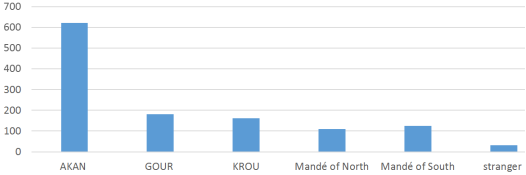
Figure 1. Distribution of respondents according to ethnic group.
3.1.1. Socio-Demographic Characteristics
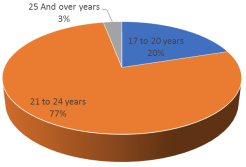
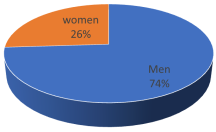
In terms of sociodemographic criteria, three parameters were analyzed, namely ethnic group, age and gender. Regarding the ethnic group, the Akans are the most represented with a number of 621 people, the Krous, the Northern Mandé and the Gour are respectively 161, 109 and 182 and the foreigners are the least represented with a workforce of 31 people (figure 1). Regarding the age of the respondents, the age of the population was subdivided into 3 groups. Thus, respondents aged 17 to 19 years old are 20% and those aged 20 to 24 years old and 25 and over are respectively 77% and 3% (Figure 2). And in this population, 74% are men compared to 26% women (Figure 3).
a) Ethnic group
Figure 2. Distribution of respondents by age.
Figure 3. Distribution of respondents by gender.
3.1.2. Prevalence of Epigastralgia in the Population
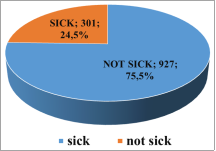
The health assessment in the study population revealed a prevalence of 24.5% of gastric-like epigastralgia in the population.
Figure 4. Distribution of respondents according to their state of health.
3.1.3. Eating Habits and Occurrence of Epigastralgia
The analysis of the relationship between eating habits and the occurrence of epigastralgia in the study population highlighted the involvement of a high consumption of soft drinks, sweet foods, foods containing eggs and or milk, alcohol, flavor enhancer, non-alcoholic exciting products, tubers, and low water consumption. No relationship was found between the level of consumption of the following foods: red meat, fish or white meat, vegetable fat, cereals, and spicy products and the disease. The tables below present the results concerning the foods involved in the occurrence of the pathology.
Table 1. Epigastralgia and level of consumption of sweet foods containing eggs and milk.

Epigastralgia

Consumption frequency N (%)

Total

P value

Low

Medium

High

Very high

No sick

20a

57

86b

764c

927

P = 0,010

57,1%

71,2%

74,1%

76,8%

75,5%

Sick

15a

23

30b

233

301

42,9%

28,8%

25,9%

23,2 %

24,5%

TOTAL

35

80

116

997

1228

100,0%

100,0%

100,0%

100,0%

100,0%

N= 1228.
Table 2. Epigastralgia and level of tuber consumption.

Epigastralgia

Consumption frequency N (%)

Total

P value

Low

Medium

High

Very high

No sick

0a

7

46b

873c

927

P =0,002

0%

58,3%

93,9%

74,9%

75,5%

Sick

0a

5

3b

293

301

0%

41,7%

6,1%

25,1 %

24,5%

TOTAL

0

12

49

1166

1228

0%

100,0%

100,0%

100,0%

100,0%

N= 1228
Table 3. Epigastralgia and level of soft drink consumption.

Epigastralgia

Consumption frequency N (%)

Total

P value

Low

Medium

High

Very high

No sick

474a

121

289b

43c

927

P =0,024

74,5%

76,6%

78,1%

67,2%

75,5%

Sick

162a

37

81b

21

301

25,5%

23,4%

21,9%

32,8 %

24,5%

TOTAL

636

158

370

64

1228

100,0%

100,0%

100,0%

100,0%

100,0%

N= 1228
Table 4. Epigastralgia and level of taste enhancer product consumption.

Epigastralgia

Consumption frequency N (%)

Total

P value

Low

Medium

High

Very high

No sick

149a

1

173b

604c

927

P = 0,042

72,0%

100,0%

72,1%

77,4%

75,5%

Sick

58a

0

67b

176

301

28,0%

0,0%

27,9%

22,6 %

24,5%

TOTAL

207

1

240

780

1228

100,0%

100,0%

100,0%

100,0%

100,0%

N= 1228
Table 5. Epigastralgia and level of alcohol consumption.

Epigastralgia

Consumption frequency N (%)

Total

P value

Low

Average

High

Very high

No sick

727a

82

70

48c

927

P = 0,022

74,0%

82,0%

81,4%

80,0%

75,5%

Sick

255a

18

16b

12

301

26,0%

18,0%

18,6%

20,0 %

24,5%

TOTAL

982

100

86

60

1228

100,0%

100,0%

100,0%

100,0%

100,0%

N= 1228
Table 6. Epigastralgia and level of consumption of non-alcoholic exciting product.

Epigastralgia

Consumption frequency N (%)

Total

P value

Low

Medium

High

Very high

No sick

416a

135

184

192c

927

P =0,004

71,4%

78,5%

81,4%

77,7%

75,5%

Sick

167a

37

42b

55

301

28,6%

21,5%

18,6%

22,3 %

24,5%

TOTAL

583

172

226

247

1228

100,0%

100,0%

100,0%

100,0%

100,0%

N= 1228
Table 7. Epigastralgia and level of water consumption.

Epigastralgia

Consumption frequency N (%)

Total

P value

Low

Average

High

Very high

No sick

236a

613

73

5c

927

P = 0,008

70,2%

77,3%

78,5%

83,3%

75,5%

Sick

100a

180

20b

1

301

29,8%

22,7%

21,5%

16,7 %

24,5%

TOTAL

336

793

93

6

1228

100,0%

100,0%

100,0%

100,0%

100,0%

N= 1228
3.2. Discussion
The objective of the present study is to investigate the relationship between the eating habits of students and the occurrence of epigastralgia. It follows the work of Amoikon et al. and N’guessan et al. whom found a significant prevalence of the pathology in an ivorian student population dominated by a poorly structured and poorly balanced diet.
During the study the predominant ethnic group was that of the Koua Akan with 51% of respondents. This could be explained by the geographical location of the Félix Houphouët Boigny University of Abidjan, which is more accessible to this ethnic group, and also it is because the biosciences specialty is found in other universities in the country located in the North and the center-West of the country. These results are comparable to those of Amoikon et al. . The study population was young with an average age of 22.5 years and dominated by men with a sex ratio of 2.84 in favor of men. This could be explained by the fact that in Ivory Coast the level of education of young boys is higher than that of young girls .
The health status assessment was carried out and a prevalence of 24.5% of epigastralgia was found. This trend is superimposable to that of Klotz and that of Amoikon et al. .
According to N’guessan et al. and the work of Amoikon et al. , the eating habits of students is unbalanced, unstructured (snacking), little varied and poorly hydrated with a predominance of foods low in fiber, slow digestion and a high consumption of foods that can lead to food allergies (dairy products, eggs) . This eating behavior is not without consequences for health. Thus, it was crossed with the occurrence of epigastralgia to look for a probable relationship. It turned out that a link exists between certain dietary practices and the occurrence of the pathology.
Indeed, a high consumption of soft drinks, sweet foods, foods containing eggs and/or milk, alcohol, flavor enhancing products, non-alcoholic exciting products, tubers and a low consumption of water have been identified as factors favoring the occurrence of epigastralgia. This relationship could be explained by the biochemical composition and the reactions that these foods could have on the digestive tract.
Concerning alcohol, several studies have demonstrated its involvement in the occurrence of lesions of the digestive system. Indeed, repeated intake of even minimal alcohol will lead to hypersecretion of gastric acid and promote gastritis with epigastralgia. Furthermore, high consumption would inhibit the production of hydrochloric acid which normally exerts an antiseptic action. By blocking this secretion, alcohol will promote the creation of an environment conducive to the development of Helicobacter pylori, the germ most incriminated in the occurrence of gastric ulcerations. Also, alcohol would delay the healing of ulcerative lesions .
When we take soft drinks, they generally contain acidic substances such as citric acid, malic acid, sodium citrate, phosphoric acid, atric acid, ascorbic acid a significant amount of gas of carbon dioxide . These substances are used as preservatives or flavor enhancers in soft drinks. Unfortunately, they cause a strong secretion of gastric acid, known for its involvement in the occurrence of gastritis and gastric ulcers . Also, carbonated drinks are involved in the occurrence of gastroesophageal reflux disease which is strongly associated with the occurrence of epigastralgia . Furthermore, the consumption of non-alcoholic exciting products, namely coffee or tea, in large quantities could encourage the same phenomenon .
At the level of tubers, foods containing eggs or cow's milk, the results could be explained not only by gastric hypersecretion caused by the long gastric stay of the food bolus but also by food allergy reactions that they can induce . For example, an egg cooked in the form of an omelette or soft-boiled egg spends around three hours in the stomach. The tubers, because of the long starch chains, spend approximately the same time there . On the other hand, eggs and milk are frequently associated with food allergies and chronic gastric inflammation capable of causing serious digestive ulcerations and epigastric pain in the long term in sensitive or allergic subjects .
At the level of flavor enhancer products how could we explain the relationship? These products (seasoning cube, potash) are foods with compositions generally based on sodium chloride (salt), maltodextrin, glutamate, guanylate, inosinate or yeast extract, oil, and flavorings, salt constituting the majority ingredient . In an American study published in Infection and Immunity journal, it has been shown that a diet too rich in salt would reinforce the action of pyloric helicobater in the destruction of the gastric mucosa. This study could justify this result .
In terms of the link between the disease and the level of water consumption, it has revealed that the lower level of water consumption, is linked to the prevalence of gastric ulcer pain in the population. This result could be explained by the fact that good level of water consumption is a factor in regulating gastric PH. To this end, low hydration will promote digestive hyper acidity and lead to gastric inflammation and then ulceration. Moreover, the consumption of one and a half liters of water per day is recommended in the dietary treatment of gastric ulcers .
At the level of certain foods such as fish, vegetable fat, cereals, vegetables, and fruits, no relationship has been identified. This could be justified by their low aggressiveness for the stomach or because of their low level of consumption in the population.
4. Conclusion
Eating habits, when not rationalized, weaken the body and expose it to often chronic and serious illnesses. This study revealed a relationship between high consumption of soft drinks, alcohol, non-alcoholic exciting products, sugary foods, foods containing milk or eggs, starchy flavor enhancers and insufficient hydration of the stomach is linked to the occurrence of epigastralgia. In view of these results, it would be wise to raise awareness about the rationalization of the consumption of different causal foods according to personal sensitivity and seasonal availability, so as to obtain a balance and food security, capable of ensuring lasting digestive homeostasis in the student’s population.
Abbreviations

CBG

Chemistry Biology Geology

WHO

World Health Organization

FAO

Food and Agriculture Organization

INS

National Institute of Public Health

Author Contributions
Anon Franck-Donald N’Guessan: Conceptualization, Data curation, Formal Analysis, Funding acquisition, Investigation, Methodology, Project administration, Resources, Software, Supervision, Validation, Visualization, Writing – original draft
Kouamé Hermann Yeboué: Conceptualization, Data curation, Formal Analysis, Resources
Francis Béranger Angelo Aka: Conceptualization, Formal Analysis, Investigation, Resources, Writing – original draft
Purifine Sassor Odile Aké-Tano: Formal Analysis, Methodology, Project administration, Supervision, Writing – original draft
Ahoua Yapi: Conceptualization, Data curation, Investigation, Methodology, Supervision
Conflicts of Interest
The authors declare no conflicts of interest.
References
[1] Amoikon. K. E., Yapi A., N’Guessan. A., (2016) habitudes alimentaires liées à la survenue de la maladie hémorroïdaire chez les ivoiriens. European Scientific Journal February edition vol. 12, No. 9 ISSN: 1857 – 7881 (Print) e - ISSN 1857- 7431.
[2] Bredenoord AJ, Pandolfino JE, Smout AJ, Gastro-oesophageal reflux disease, LAncet, (2013); 381: 1933-1942.
[3] Chaput M. (2004), Le traitement naturel des allergies, Les Éditions Québécor, 2004. ISBN. 978-2-7640-2024-1; EAN. 9782764020241.
[4] Dukan P. (2011). Dictionnaire Dukan Diététique et Nutrition. Editeur: Le cherche midi France; 480 pages. ISBN-10: ‎ 2749115329 ISBN-13 ‏: ‎ 978-2749115320.
[5] Ein G, Jahrhundert G, (2002) - Maggi Brühwürfel feiert 100-jähriges Jubiläum. p 41-45.
[6] Gaddy J. A, Radin J. N, Loh J. T, Zhang F., Washington M. K, Peek R. M, Algood H. M, Cover T. L et al (2013), High dietary salt intake exacerbates Helicobacter pylori-induced gastric carcinogenesis. Infect Immun journal. 81(6): 2258-67.
[7] Hannifin P. (2011), Purification du CO2 pour le secteur des boissons gazeuses, domnick hunter Industrial Division P 10-13.
[8] Institut national de statistique de Ivory Coast (2015): Enquête de niveau de vie P. 85.
[9] Kadjo K, Ouattara B., Sanogo S., Diallo A. D., Adom A. H., Yangni-Angate Y., et al (1999), Aspects épidémiologiques des ulceres gastro-duodenaux en Côte d’ivoire. P. 102
[10] Kouakou, O. 2010. Origines sociales et comportements disciplinaires des élèves adolescents d’Abidjan. Rev. ivoir. anthropol. sociol. KASA BYA KASA, 122-131.
[11] Kouamé k. (1998). L’Hémorroïde: Quand l’anus se trouve sollicité.
[12] Kan J, Hood M, Burns C, Scholten J, Chuang J, Tian F., Pan X. et al. (2017), Combination of Wheat Peptides and Fucoidan Attenuates Ethanol-Induced Gastric Mucosal Damage through Anti-Oxidant, Anti-Inflammatory, and Pro-Survival Mechanisms.
[13] Klotz. F. (2008), Les épigastralgie en Afrique; prendre en compte le corps et l'imaginaire. Volume 192, Issue 6, June–July 2008, Pages 1215-1220
[14] Nancey. S, Driffa M, Sabine R, André F, Bouvier M, Claudel S, et al, (2005), L'allergie alimentaire et digestive chez l'adulte, Vol 29, N° 3 pp. 255-265.
[15] N’Guessan Anon F-D, ZAHE K, Y Aimé S, Digbé M Blé, Yoboué N’da M-V, AHOUA Yapi and AKE-TANO Sassor Odile Purifine (2024), Food Habits of Students At The Felix Houphouët-Boigny University of Ivory Coast, Indian Journal of Nutrition Volume 11, Issue 1 – 2024.
[16] Nilsson M, Johnsen R, Ye W, Hveem K, Lagergren J, (2004), Lifestyle related risk factors in the aetiology of gastro-oesophageal reflux Gut; 53: 1730-1735.
[17] World Health Organization. (‎2003)‎. Régime alimentaire, nutrition et prévention des maladies chroniques: rapport d' une consultation OMS/FAO d' experts. Organisation mondiale de la Santé.
[18] Orr WC, Sleep-related gastro-oesophageal reflux as a distinct clinical entity, Aliment Pharmacol Ther, (2010); 31: 47-56.
[19] Pivot. M, Morel J (2002) Maggi et la magie du bouillon Kub. Paris, Hoëbeke, p. 67. ISBN-10‏: ‎2842301145 ISBN-13‏: ‎978-2842301149.
[20] Shaheen NJ, Hansen RA, Morgan DR., (2006), The burden of gastrointestinal and liver diseases, Am J Gastroenterol., no 101,‎ p. 2128-2138.
[21] Traoré A., (2008), Etude épidémiologique et clinique du reflux gastro œsophagien dans les centres de santé de référence de Bamako p. 35.
[22] Union Nationale des Mutuelles étudiantes Régionales de France (USEM), (2009), l’enquête sur alimentation des étudiants.
[23] Xie M, Chen H, Nie S, Tong W, Yin J, (2017) Gastroprotective effect of gamma-aminobutyric acid against ethanol-induced gastric mucosal injury. Chem Biol Interact. Jun 25; 272: 125-134.
Cite This Article
  • APA Style

    N’Guessan, A. F., Yeboué, K. H., Aka, F. B. A., Aké-Tano, P. S. O., Yapi, A. (2024). Prospective Analysis of Dietary Risk Factors Involved in the Occurrence of Epigastralgia Among Students of Felix Houphouët Boigny University in Ivory Coast. International Journal of Nutrition and Food Sciences, 13(5), 219-226. https://doi.org/10.11648/j.ijnfs.20241305.17

    Copy | Download

    ACS Style

    N’Guessan, A. F.; Yeboué, K. H.; Aka, F. B. A.; Aké-Tano, P. S. O.; Yapi, A. Prospective Analysis of Dietary Risk Factors Involved in the Occurrence of Epigastralgia Among Students of Felix Houphouët Boigny University in Ivory Coast. Int. J. Nutr. Food Sci. 2024, 13(5), 219-226. doi: 10.11648/j.ijnfs.20241305.17

    Copy | Download

    AMA Style

    N’Guessan AF, Yeboué KH, Aka FBA, Aké-Tano PSO, Yapi A. Prospective Analysis of Dietary Risk Factors Involved in the Occurrence of Epigastralgia Among Students of Felix Houphouët Boigny University in Ivory Coast. Int J Nutr Food Sci. 2024;13(5):219-226. doi: 10.11648/j.ijnfs.20241305.17

    Copy | Download

  • @article{10.11648/j.ijnfs.20241305.17,
      author = {Anon Franck-Donald N’Guessan and Kouamé Hermann Yeboué and Francis Béranger Angelo Aka and Purifine Sassor Odile Aké-Tano and Ahoua Yapi},
      title = {Prospective Analysis of Dietary Risk Factors Involved in the Occurrence of Epigastralgia Among Students of Felix Houphouët Boigny University in Ivory Coast
    },
      journal = {International Journal of Nutrition and Food Sciences},
      volume = {13},
      number = {5},
      pages = {219-226},
      doi = {10.11648/j.ijnfs.20241305.17},
      url = {https://doi.org/10.11648/j.ijnfs.20241305.17},
      eprint = {https://article.sciencepublishinggroup.com/pdf/10.11648.j.ijnfs.20241305.17},
      abstract = {This is a prospective cross-sectional study, with a descriptive and analytical aim, with the main objective of analyzing the dietary risk factors involved in the occurrence of epigastralgia among students of Felix Houphouët Boigny University in Ivory Coast. This is a food and health consumption survey carried out from October 15, 2016 to February 17, 2017, in a population of 1,228 students volunteers, with an average age of 22.5 years, dominated by males. It revealed a high prevalence of epigastralgia (24.5%) and imbalanced dietary. After analyzing the relationship between eating habits and the disease, it turned out that certain behaviors such as high consumption of carbonated drinks, sugary foods, foods containing eggs and/or milk, alcohol, flavor enhancer products, non-alcoholic exciting products, tubers, and low water consumption are responsible for the occurrence of epigastralgia in the population. 
    },
     year = {2024}
    }
    

    Copy | Download

  • TY  - JOUR
    T1  - Prospective Analysis of Dietary Risk Factors Involved in the Occurrence of Epigastralgia Among Students of Felix Houphouët Boigny University in Ivory Coast
    
    AU  - Anon Franck-Donald N’Guessan
    AU  - Kouamé Hermann Yeboué
    AU  - Francis Béranger Angelo Aka
    AU  - Purifine Sassor Odile Aké-Tano
    AU  - Ahoua Yapi
    Y1  - 2024/09/29
    PY  - 2024
    N1  - https://doi.org/10.11648/j.ijnfs.20241305.17
    DO  - 10.11648/j.ijnfs.20241305.17
    T2  - International Journal of Nutrition and Food Sciences
    JF  - International Journal of Nutrition and Food Sciences
    JO  - International Journal of Nutrition and Food Sciences
    SP  - 219
    EP  - 226
    PB  - Science Publishing Group
    SN  - 2327-2716
    UR  - https://doi.org/10.11648/j.ijnfs.20241305.17
    AB  - This is a prospective cross-sectional study, with a descriptive and analytical aim, with the main objective of analyzing the dietary risk factors involved in the occurrence of epigastralgia among students of Felix Houphouët Boigny University in Ivory Coast. This is a food and health consumption survey carried out from October 15, 2016 to February 17, 2017, in a population of 1,228 students volunteers, with an average age of 22.5 years, dominated by males. It revealed a high prevalence of epigastralgia (24.5%) and imbalanced dietary. After analyzing the relationship between eating habits and the disease, it turned out that certain behaviors such as high consumption of carbonated drinks, sugary foods, foods containing eggs and/or milk, alcohol, flavor enhancer products, non-alcoholic exciting products, tubers, and low water consumption are responsible for the occurrence of epigastralgia in the population. 
    
    VL  - 13
    IS  - 5
    ER  - 

    Copy | Download

Author Information
  • Department of Nutrition, National Institute of Public Health, Abidjan, Ivory Coast

  • Department of Biosciences, Felix Houphouet Boigny University, Abidjan, Ivory Coast

  • Department of Nutrition, National Institute of Public Health, Abidjan, Ivory Coast

  • Department of Nutrition, National Institute of Public Health, Abidjan, Ivory Coast

  • Department of Biosciences, Felix Houphouet Boigny University, Abidjan, Ivory Coast