2. Principle of the Code of Life
The subject of this article is The Code of Life, which explains karma, its results, and the reflections of those results.
2.1. Karma: The Structural Element of Existence
“The world is karma-driven.
Whether the result is the foundation of karma,
Reflection is the base of result,
Effectiveness determines the quality of the result”
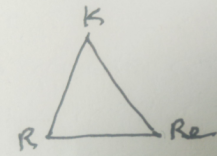
Figure 1. Flow of Karma, Karmaphala, and Pratikarma in the Universe.
The entire universe is engaged in action, or in other words, in karma; universe exists in action that is, in karma. One action becomes the foundation for another action. This is something we can clearly observe
(Bohm (1980) and Capra & Luisi (2014): “The universe can be understood as an interconnected system in which actions and consequences form a coherent whole | [1] | Bohm, D. (1980). Wholeness and the Implicate Order. Routledge. |
| [2] | Capra, F., & Luisi, P. L. (2014). The Systems View of Life: A Unifying Vision. Cambridge University Press. |
Imagining a universe without karma is extremely difficult. as such a universe would be empty. When a universe that existed in emptiness becomes karma driven, motion becomes possible. Motion is the very foundation of karma.
It is a truth that every action has a result. This result itself becomes the key that gives rise to another action
| [12] | Aristotle. (1998). The Metaphysics (H. Tredennick & G. C. Armstrong, Trans.). Harvard University Press. |
[12]
.
The reason living beings that depend on the star called the Sun are able to exist is because the Sun is continuously engaged in action. When the Sun performs its action, the result or outcome manifests as energy. This energy allows us to receive light and heat. This reflection brings about significant changes in our Earth physical environment. This outcome is refer to as a ‘result’ or ‘reaction.’ Which, in turn, becomes the cause for yet another action.
For example, the light and heat produced by the Sun are absorbed by plants and become assimilated within them, leading to cellular changes. This process then gives rise to another action or activity, the outcome of which we call agricultural produce or yields. The outcome of this karma is consumed by humans and other living beings such as birds and animals, which in turn leads to yet another reaction and action. This cycle occurs continuously throughout the universe in all living beings and even in objects that do not visibly appear to be in motion.
The inability to move does not mean that an object is lifeless. Every object in the universe possesses life. Here, ‘life’ refers to the motion of atoms, their electrons, and protons. This motion is the foundation of all life and occurs in all living beings.
As humans, we often perceive things differently because of the actions we witness in this century. Therefore, there is an important truth that we, as human beings, must understand: the nature of our actions themselves determines whether good or bad outcomes arise from them.
(Fromm & Suzuki (1960)“Human awareness and reflective behavior play a crucial role in shaping outcomes | [11] | Schrödinger, E. (1944). What Is Life? The Physical Aspect of the Living Cell. Cambridge University Press. |
Plants receive the beneficial outcomes that come from the Sun, and beyond that, the Earth absorbs what is necessary and rejects what is not.
2.1.1. Karmaphala: Result of Action
The Earth makes this possible through the ozone layer. Through the ozone, harmful rays or unnecessary waves of light are filtered out, and only what is beneficial is allowed to reach the Earth and plant life. As a result, plants that absorb these positive outcomes produce good results in return. When humans consume these good results, why do they not transform their own actions in a way that produces good outcomes as well? For example, if a person does not consume wholesome and nutritious food, but instead consumes impure or harmful things, the body itself becomes impure. This impurity becomes the cause of various diseases, and gradually, it can even lead to death. Therefore, when we consume good results, why should we not also perform good actions?
Observing the karma of the Sun, Earth, and plants, we perceive that their actions are inherently virtuous, producing positive karmaphala (results) that flow harmoniously into the web of life. However, in many instances, individuals, groups, or Nations act primarily for their own benefit, disregarding the broader continuum of existence. As a consequence, the subsequent pratikarma (reflection) manifests negatively, influencing society, Nations, and the Earth itself. According to this framework, each pratikarma becomes the seed for the next cycle of karma, perpetuating the continuous interplay of action, result, and reflection throughout the cosmos.
The Earth itself offers an important philosophical lesson in the process of action and result. It does not receive all influences indiscriminately, nor does it respond blindly to every force that reaches it. Instead, the Earth functions as a natural filter accepting what is necessary for life and rejecting what is harmful
| [4] | Lao Tzu. (2012). Tao Te Ching (D. C. Lau, Trans.). Penguin Classics. |
[4]
Through structures such as the atmosphere and the ozone layer, destructive forces are restrained, while beneficial energies are allowed to reach living beings. As a result, life is sustained not by mere exposure, but by selective reception.
2.1.2. Pratikarma: Reflection and Counter Action
Humans, as part of this natural order, must act similarly. Just as the Earth filters influences to preserve life, human consciousness must learn to filter thoughts, intentions, and actions
| [5] | Patanjali. (1993). The Yoga Sutras of Patanjali (A. Hariharan, Trans.). Shambhala Publications. |
[5]
. By discerning constructive from destructive influences, individuals can shape outcomes that promote well being and harmony. Good results do not arise accidentally; they emerge through conscious selection, reflection, and responsible action
| [3] | Gandhi, M. (1927). The Story of My Experiments with Truth. Navajivan Publishing House. |
[3]
Understanding this principle is essential for achieving positive outcomes in both individual life and the collective human world.
It is because the body engages in good actions that we are able to live with good health that is, to move and function properly. Therefore, our actions too should be directed toward producing good results. Otherwise, by consuming harmful outcomes and allowing the body to engage in negative actions, we move toward disease and eventually toward death. In doing so, our actions may also become harmful to the lives of others. Instead, our actions should sustain life, not become the cause of others’ death or destruction. This is what truly creates the cycle of karma, result, and reflection
| [7] | Dalai Lama, & Cutler, H. C. (1998). The Art of Happiness. Riverhead Books. |
[7]
(
Dalai Lama & Cutler (1998).“Conscious reflection on action fosters ethical responsibility in human life | [9] | Fromm, E., & Suzuki, D. T. (1960). Zen Buddhism and Psychoanalysis. Harper & Brothers. |
A king, or the ruler of a nation, must be the guardian and protector of the nation ’s wealth, not one who plunders it. The foremost duty of a ruler is to safeguard the assets of the country. The most important asset of a country is its people; equally vital is the natural world including mountains, plants, and all other living beings which together sustain the balance and continuity of life. When the rules of righteous conduct are forgotten and decisions are made solely for the benefit of oneself or a select group, karma inevitably brings consequences that affect the individual, society, and the broader world.
In the same way, the industrialists of a nation must work for the prosperity of the country. They should dedicate the fruits of their hard work to the nation. Through this, the welfare of the people is achieved; through the welfare of the people comes unity; and through unity arise the nation’s progress, wealth, peace, and prosperity.
This should be the duty and moral responsibility of every nation and its citizens. Therefore, from a king who performs righteous actions comes a good nation; from an industrialist who performs righteous actions comes true wealth; and from a people who perform righteous actions comes genuine development ultimately benefiting the nation as a whole.
How does this principle become the key or the fundamental The Code of Life? The foundation of all living beings lies in what we call The Code of Life. Before entering into this concept, let us briefly look at the origin of the universe.
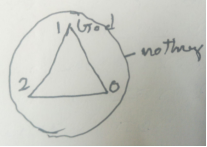
The universe originated from the One. That is, the numerical One gives rise to Two, and these Two emerge from emptiness. Through this duality, light and motion become possible. Because this process is the cause of the universe’s creation, what we are able to perceive is that the first existence was the One; this One transformed into Two; and these Two, in turn, became the cause for the birth of a Third.
In this context, Karma is ever present and is symbolized as the One an infinite, boundless energy. When Karma initiates, the Karmaphala (result of action) manifests in the world, which we perceive as the universe symbolized as Two. Following this, Pratikarma (reflection) emerges, representing the expansion and ongoing dynamism of the universe symbolized as Three. The essence of this reflection may be called nothingness it depends on the Karmaphala, for it is within this void that Karma becomes activated, giving rise to motion, form, and the unfolding of existence.
Here, what truly exists as truth is the One and that One is karma. This karma manifests as Two, which is the result. From this result arises the reflection or reaction. (
Whitehead (1929) “All existence is processual, with actions and results continuously shaping the unfolding of reality | [8] | Capra, F. (1996). The Web of Life: A New Scientific Understanding of Living Systems. Anchor Books. |
Therefore, One is complementary to Two, and Two is complementary to Three. All three are essentially one and the same, yet they also appear distinct. This alone is the fundamental truth of the universe. When we observe it this way, what becomes visible is a code 120. In this code, One represents karma, Two represents the result, and the Third represents the reflection arising from both karma and result. Zero represents emptiness (nothing)
(Figure 2). This emptiness exists as the foundation of karma and its result. When I speak of Three, I include this Zero within it. The value of Zero is One itself. This One becomes the cause of the fundamental transformation of the universe and of life. What determines this transformation is karma. Therefore, always remain engaged in right action. This is precisely what Jesus Christ also taught.
2.2. Application to Human Life
We come to understand this code through the fundamental structure of human beings or rather, of all living organisms hrough the structure of the atom. To state it more clearly, the foundation of human life consists of oxygen, hydrogen, and carbon. Here, I will briefly explain the atomic structure of these elements, because only then can the importance of this code be understood. For this purpose, we consider the outer orbital shell of the electrons.
For example, oxygen has an atomic number of eight, eight protons, and six electrons in its outer shell. To explain this, we can use my calculation method—that is, with an equation. This equation is given below.
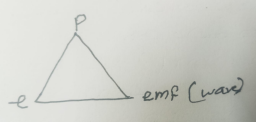
Figure 2. Atomic Structure Illustrating.
p = e x emf2 or w2
e = p x w
w = p/e
P = Proton, e = Electron, w =Wave
In Oxigen:
w = 8/6 = 1
p = 6 x 12 = 6
e = 8 x 1 = 8
Karmma -> p/e =1 (consider only interger part)
Karmma Phal (result) energy -> result + w = 1 +1 = 2
Pradiiphal (reflective enery) -> result - w = 1-1 = 0
Whether we take hydrogen or carbon, the fundamental numerical value we obtain is 120. Therefore, what we call The Code of Life is “120”.
Here, what I have described or reflected upon is energy. Energy is always transformed into another form, (
Schrödinger (1944): “At the atomic and molecular level, life manifests as motion and energy transformations | [6] | Whitehead, A. N. (1929). Process and Reality. Macmillan. |
into the form we call energy. This transformation is made possible through the number One. It moves from one One to another One. At the same time, the reflection of this energy its EMF or manifested energy changes along with the energy itself. Through this process, the energy becomes capable of motion. This motion can be conceptualized in many ways by scholars or by those capable of deep thought. That is, knowledgeable or thoughtful individuals can understand it through their reflections and conceptualizations.
2.3. Application to Universal Processes
Figure 3. Chain of Life the One-Two-Three Principle.
This energy enters through emptiness that is, it passes through nothingness and becomes filled with light
| [10] | Kaku, M. (2011). Physics of the Future. Doubleday. |
[10]
. It then evolves into an atom. One transforms into Two, Two transforms into Three, and eventually, they merge into One. This state is what we call the fundamental principle of the universe. And this is also the fundamental The Code of Life itself.
What we can observe here is that the One originates from the primal essence, moves into emptiness, and then returns to One. This is the fundamental characteristic of energy. In my religious belief, the number Two represents Jesus Christ at a fundamental level. You may interpret it according to the foundation of your own faith. Remember that in Sanskrit word “Matham” can also be understood as a perspective or viewpoint and rooted in the concept of the Mind.
The state of the soul can be expressed as One plus Two equals Three. In other words, karma leads to result, and the result leads to reflection. This is what Buddha realized as Nirvana and what he taught us. The truth of this universe or of life can be understood through this triadic principle. When the Father is in the Son and the Son is in the Father, the resulting reflection is what we see as the Holy Spirit the Third. This allows us to understand that the fundamental essence is One. However, the three states of karma can be observed at the level of three fundamental atoms that form life. Considering oxygen, hydrogen, and carbon, we find that the underlying number is One Twenty (120). This, therefore, may be considered the fundamental code or key of life or of motion itself.
Human life is very short. Often, when a person begins to understand the surrounding world and the universe, life is already nearing its end. The mind remains young, active, and full of desires, while the body becomes weak and unable to fulfill the wishes of the mind. In this condition, the body cannot reach what the mind intends. In such circumstances, understanding The Code of Life becomes necessary. We must understand how life can be increased and sustained in harmony. In Holy Bible, Genesis 6:3, "Then the Lord said, 'My Spirit shall not strive with man forever, for he is indeed flesh; yet his days shall be 120 years'"
Here we can understand that karma limits human life to around 120 years, which is not sufficient to fully study and understand our surrounding activities and how they happen. Within this limited span, human beings struggle to comprehend the deeper processes of life and existence. One idea we can observe in the words of “God” is that human life appears to be extended when his spirit is involved.
This suggests that there may exist an extended The Code of Life that humanity once possessed and not understood yet. Therefore, we must seek to understand what extended code already exists within us, and how the existing 120 year code may be transformed or replaced.
This transformation may require changes in our basic structure, which can be understood as karma. Here, karma may be viewed as the fundamental elements of a structure that governs human life.





 Share This Article
 Twitter
 Linked In
 Facebook
 Copy
Copy Download