
Objective: To assess expert perspectives and the perceived efficacy, safety, and clinical positioning of polmacoxib, both as monotherapy and in combination with paracetamol, in routine osteoarthritis (OA) management across clinical settings in India. Methodology: This cross-sectional, questionnaire-based survey, was conducted among 346 clinicians involved in OA management across diverse Indian clinical settings. A 22-item structured questionnaire captured treatment preferences, perceived safety concerns with traditional non-steroidal anti-inflammatory drugs (NSAIDs), clinician experience with polmacoxib, and usage patterns of the polmacoxib-paracetamol combination. Data were analyzed using descriptive statistics and presented as frequencies and percentages. Results: The survey included 346 clinicians. Approximately 65% reported that OA most commonly affects the knee joints, and 37% identified paracetamol as the most preferred NSAID. Nearly 64% of clinicians indicated that GI, cardiovascular, and renal adverse effects collectively represent the major drawbacks of traditional NSAIDs. A substantial proportion (92%) reported that polmacoxib’s dual binding properties potentially offer superior cardiovascular, renal, and GI tolerability compared with traditional NSAIDs or cyclooxygenase-2 (COX-2) inhibitors. Regarding combination therapy, 53% of experts preferred polmacoxib plus paracetamol in 26-50% of their OA patients, while 32% used the combination in 11-25% of patients. Approximately 49% of clinicians stated that the combination provides improved pain control, allows lower dosing, and may reduce adverse effects. Nearly 90% of respondents reported no adverse drug reactions with polmacoxib. Conclusion: The survey findings indicate that polmacoxib is widely regarded as an effective and well-tolerated option for managing OA. Clinicians demonstrated a strong preference for the polmacoxib-paracetamol combination, highlighting its superior pain control and potential safety benefits. The favorable tolerability profile and perceived reduction in NSAID-related adverse effects support the use of polmacoxib, either alone or in combination, as a valuable option in routine clinical practice for OA.
| Published in | International Journal of Pain Research (Volume 2, Issue 3) |
| DOI | 10.11648/j.ijpr.20260203.13 |
| Page(s) | 92-99 |
| Creative Commons |
This is an Open Access article, distributed under the terms of the Creative Commons Attribution 4.0 International License (http://creativecommons.org/licenses/by/4.0/), which permits unrestricted use, distribution and reproduction in any medium or format, provided the original work is properly cited. |
| Copyright |
Copyright © The Author(s), 2026. Published by Science Publishing Group |
Osteoarthritis, Polmacoxib, Paracetamol, NSAIDs, Pain
Joints | Response rate (n = 346) |
|---|---|
Hip | 24.28% |
Knee | 65.32% |
Hand | 3.18% |
Shoulder | 0.29% |
All of the above | 6.94% |
Benefits | Response rate (n = 346) |
|---|---|
Improved pain control | 34.39% |
Lower doses of each medication | 8.38% |
Potentially reduced risk of adverse effects | 8.67% |
All of the above | 48.55% |
ADRs | Adverse Drug Reactions |
CA | Carbonic Anhydrase |
COX-1 | Cyclooxygenase-1 |
COX-2 | Cyclooxygenase-2 |
CV | Cardiovascular |
GI | Gastrointestinal |
OA | Osteoarthritis |
NSAIDs | Non-Steroidal Anti-Inflammatory Drugs |
WOMAC | Western Ontario and McMaster Universities Osteoarthritis Index |
| [1] |
World Health Organization. Osteoarthritis. Available from:
https://www.who.int/news-room/fact-sheets/detail/osteoarthritis (accessed 2 March 2026). |
| [2] | GBD 2021 Osteoarthritis Collaborators. Global, regional, and national burden of osteoarthritis, 1990-2020 and projections to 2050: a systematic analysis for the Global Burden of Disease Study 2021. Lancet Rheumatol. 2023 Aug 21; 5(9): e508-e522. |
| [3] | Teja R, Bandi PVS, Rathod A. Prevalence and Clinical Profile of Osteoarthritis Knee among Patients Attending the Orthopedics Outpatient Department at a Tertiary Care Hospital. Journal of Contemporary Clinical Practice. 2025; 11: 399-404. |
| [4] | Azad CS, Singh AK, Pandey P, Singh M, Chaudhary P, Tia N, et al. Osteoarthritis in India: An Epidemiological Aspect. Int J Recent Sci Res. 2017; 8(10): 20984-20988. |
| [5] |
Manjula S, Krishna Kumar M. Expert perspectives on polmacoxib monotherapy in the management of osteoarthritis in Indian settings. International Journal of Research in Orthopaedics. 2025; 11(1): 118-123.
https://doi.org/10.18203/issn.2455-4510.IntJResOrthop20243896 |
| [6] | Gunjal VS, Pawar RR, Sharma AD. Review of safety and efficacy of polmacoxib: a novel dual inhibitor of cyclo-oxygenase 2 and carbonic anhydrase in osteoarthritis and acute painful conditions. J Assoc Physicians India. 2025; 73(10): 88-92. |
| [7] | Chaiamnuay S, Allison JJ, Curtis JR. Risks versus benefits of cyclooxygenase-2-selective nonsteroidal antiinflammatory drugs. Am J Health Syst Pharm. 2006; 63(19): 1837-1851. |
| [8] | Curtis E, Fuggle N, Shaw S, Spooner L, Ntani G, Parsons C, et al. Safety of Cyclooxygenase-2 Inhibitors in Osteoarthritis: Outcomes of a Systematic Review and Meta-Analysis. Drugs Aging. 2019; 36(Suppl 1): 25-44. |
| [9] | Hussain S, Ramaswamy S, Mamadapur M, Ajikumar A. Polmacoxib: a drug review. Int J Health Allied Sci. 2024; 13(2): 68-70. |
| [10] | Easwaran R, Mistry UK, Bhole M, Peethambaran K. Polmacoxib: A Review of the Newer Non-steroidal Anti-inflammatory Drug in Osteoarthritis. Cureus. 2024; 16(4): e58446. |
| [11] | Chandrashekara S. A narrative review examining the clinical safety and efficacy of polmacoxib: current evidence and upcoming prospects. Discov Med. 2024; 1(1): 129. |
| [12] | Mallet C, Desmeules J, Pegahi R, Eschalier A. An Updated Review on the Metabolite (AM404)-Mediated Central Mechanism of Action of Paracetamol (Acetaminophen): Experimental Evidence and Potential Clinical Impact. J Pain Res. 2023; 16: 1081-1094. |
| [13] | Cao Z, Han K, Lu H, Illangamudalige S, Abdel Shaheed C, Chen L, et al. Paracetamol Combination Therapy for Back Pain and Osteoarthritis: A Systematic Review and Meta-Analyses. Drugs. 2024; 84(8): 953-967. |
| [14] | Bell J, Sethi V, Siddiqui K, Conaghan PG. AB0808 Combination Of Oral Paracetamol And Topical NSAIDs For Osteoarthritis Pain: A Systematic Scoping Review Of The Literature. Annals of the Rheumatic Diseases. 2019; 78(Suppl 2): 1875. |
| [15] | Ong CKS, Seymour RA, Lirk P, Merry AF. Combining paracetamol (acetaminophen) with nonsteroidal antiinflammatory drugs: a qualitative systematic review of analgesic efficacy for acute postoperative pain. Anesth Analg. 2010; 110(4): 1170-1179. |
| [16] |
Khanna M, Mukherjee AN, Sarkar PS, Senthil V, Gupta R, Lakhar S, et al. Clinical practice trends and therapeutic preferences in osteoarthritis management: a cross-sectional survey of orthopaedic surgeons in India. International Journal of Research in Orthopaedics. 2025; 11(6): 1422-1429.
https://doi.org/10.18203/issn.2455-4510.IntJResOrthop20253417 |
| [17] | Singh A, Das S, Chopra A, Danda D, Paul BJ, March L, et al. Burden of osteoarthritis in India and its states, 1990-2019: findings from the Global Burden of Disease Study 2019. Osteoarthritis Cartilage. 2022; 30(8): 1070-1078. |
| [18] | Langworthy M, Dasa V, Spitzer AI. Knee osteoarthritis: disease burden, available treatments, and emerging options. Ther Adv Musculoskelet Dis. 2024; 16: 1759720X241273009. |
| [19] | Asha Latha R, Srinivasu K, Ananda Babu Naik M, Reddy JC. A study of prescribing pattern of non-steroidal anti-inflammatory drugs in orthopedic outpatient department at a tertiary care hospital. J Evol Med Dent Sci. 2015; 4(4): 559-564. |
| [20] | Siddiqui RA, Quazi SH, Khan S, Shende TR. Experience of the Drug Utilization Pattern of Nonsteroidal Anti-Inflammatory Drugs Used in Outpatient Attendees (Patients) Having Osteoarthritis of a Tertiary Care Hospital in Central India. Journal of Datta Meghe Institute of Medical Sciences University. 2023; 18(1): 70. |
| [21] | Conaghan PG, Arden N, Avouac B, Migliore A, Rizzoli R. Safety of Paracetamol in Osteoarthritis: What Does the Literature Say? Drugs Aging. 2019; 36(Suppl 1): 7-14. |
| [22] | Hochberg MC, Altman RD, April KT, Benkhalti M, Guyatt G, McGowan J, et al. American College of Rheumatology 2012 recommendations for the use of nonpharmacologic and pharmacologic therapies in osteoarthritis of the hand, hip, and knee. Arthritis Care Res (Hoboken). 2012; 64(4): 465-474. |
| [23] | Jevsevar DS. Treatment of Osteoarthritis of the Knee: Evidence-Based Guideline, 2nd Edition. JAAOS - Journal of the American Academy of Orthopaedic Surgeons. 2013; 21(9): 571. |
| [24] | Chatterjee S, Dureja GP, Kadhe G, Mane A, Phansalkar AA, Sawant S, et al. Cross-Sectional Study for Prevalence of Non-Steroidal Anti-Inflammatory Drug-Induced Gastrointestinal, Cardiac and Renal Complications in India: Interim Report. Gastroenterol Res. 2015; 8(3-4): 216-221. |
| [25] | Swathi VS, Saroha S, Prakash J, Bhushan S. Retrospective pharmacovigilance analysis of nonsteroidal anti-inflammatory drugs-induced chronic kidney disease. Indian J Pharmacol. 2021; 53(3): 192-197. |
| [26] | Puppala N, Reddy GA. Review on Effects of NSAID`S on Different Systems. Asian Journal of Pharmaceutical Research and Development. 2020; 8(1): 100-109. |
| [27] | Madkholkar DN, Sarda DK, Sharma DA. Safety and Effectiveness of Polmacoxib in Patients with Osteoarthritis: A Multicenter Retrospective Real-World Study. International Journal of Medical and Pharmaceutical Research. 2026; 7: 1982-1986. |
| [28] | Sinha SD, Prasad TB, Konatham B, Sriramadasu SC, Karmakar A, Sharma AK, et al. Polmacoxib 2mg in patients with mild to moderate idiopathic osteoarthritis of hip/knee-a randomized, double-anonymous study. Pain Manag. 2024; 14(9): 497-506. |
| [29] | Manjula S, Krishna Kumar M. Prescription trends of aceclofenac as a standalone or in combination with paracetamol for managing arthritis in Indian settings. Int J Orthop Sci. 2025; 11(1): 18-23. |
| [30] | Lee M, Yoo J, Kim JG, Kyung HS, Bin SI, Kang SB, et al. A Randomized, Multicenter, Phase III Trial to Evaluate the Efficacy and Safety of Polmacoxib Compared with Celecoxib and Placebo for Patients with Osteoarthritis. Clin Orthop Surg. 2017; 9(4): 439-457. |
| [31] | Prabhoo R, Shrivastava N. The role of polmacoxib as a tissue-specific COX-2 inhibitor in the management of osteoarthritis: A comprehensive review. Int J Orthop Sci. 2024; 10(3): 84-91. |
APA Style
Suresh, M., Manjunath, K. K. (2026). Expert Perspectives on Polmacoxib and Its Combination with Paracetamol in Osteoarthritis: A Nationwide Survey from India. International Journal of Pain Research, 2(3), 92-99. https://doi.org/10.11648/j.ijpr.20260203.13
ACS Style
Suresh, M.; Manjunath, K. K. Expert Perspectives on Polmacoxib and Its Combination with Paracetamol in Osteoarthritis: A Nationwide Survey from India. . 2026, 2(3), 92-99. doi: 10.11648/j.ijpr.20260203.13
@article{10.11648/j.ijpr.20260203.13,
  author = {Manjula Suresh and Krishna Kumar Manjunath},
  title = {Expert Perspectives on Polmacoxib and Its Combination with Paracetamol in Osteoarthritis: A Nationwide Survey from India},
  journal = {International Journal of Pain Research},
  volume = {2},
  number = {3},
  pages = {92-99},
  doi = {10.11648/j.ijpr.20260203.13},
  url = {https://doi.org/10.11648/j.ijpr.20260203.13},
  eprint = {https://article.sciencepublishinggroup.com/pdf/10.11648.j.ijpr.20260203.13},
  abstract = {Objective: To assess expert perspectives and the perceived efficacy, safety, and clinical positioning of polmacoxib, both as monotherapy and in combination with paracetamol, in routine osteoarthritis (OA) management across clinical settings in India. Methodology: This cross-sectional, questionnaire-based survey, was conducted among 346 clinicians involved in OA management across diverse Indian clinical settings. A 22-item structured questionnaire captured treatment preferences, perceived safety concerns with traditional non-steroidal anti-inflammatory drugs (NSAIDs), clinician experience with polmacoxib, and usage patterns of the polmacoxib-paracetamol combination. Data were analyzed using descriptive statistics and presented as frequencies and percentages. Results: The survey included 346 clinicians. Approximately 65% reported that OA most commonly affects the knee joints, and 37% identified paracetamol as the most preferred NSAID. Nearly 64% of clinicians indicated that GI, cardiovascular, and renal adverse effects collectively represent the major drawbacks of traditional NSAIDs. A substantial proportion (92%) reported that polmacoxib’s dual binding properties potentially offer superior cardiovascular, renal, and GI tolerability compared with traditional NSAIDs or cyclooxygenase-2 (COX-2) inhibitors. Regarding combination therapy, 53% of experts preferred polmacoxib plus paracetamol in 26-50% of their OA patients, while 32% used the combination in 11-25% of patients. Approximately 49% of clinicians stated that the combination provides improved pain control, allows lower dosing, and may reduce adverse effects. Nearly 90% of respondents reported no adverse drug reactions with polmacoxib. Conclusion: The survey findings indicate that polmacoxib is widely regarded as an effective and well-tolerated option for managing OA. Clinicians demonstrated a strong preference for the polmacoxib-paracetamol combination, highlighting its superior pain control and potential safety benefits. The favorable tolerability profile and perceived reduction in NSAID-related adverse effects support the use of polmacoxib, either alone or in combination, as a valuable option in routine clinical practice for OA.},
 year = {2026}
}
TY  - JOUR
T1  - Expert Perspectives on Polmacoxib and Its Combination with Paracetamol in Osteoarthritis: A Nationwide Survey from India
AU  - Manjula Suresh
AU  - Krishna Kumar Manjunath
Y1  - 2026/07/28
PY  - 2026
N1  - https://doi.org/10.11648/j.ijpr.20260203.13
DO  - 10.11648/j.ijpr.20260203.13
T2  - International Journal of Pain Research
JF  - International Journal of Pain Research
JO  - International Journal of Pain Research
SP  - 92
EP  - 99
PB  - Science Publishing Group
SN  - 3070-1562
UR  - https://doi.org/10.11648/j.ijpr.20260203.13
AB  - Objective: To assess expert perspectives and the perceived efficacy, safety, and clinical positioning of polmacoxib, both as monotherapy and in combination with paracetamol, in routine osteoarthritis (OA) management across clinical settings in India. Methodology: This cross-sectional, questionnaire-based survey, was conducted among 346 clinicians involved in OA management across diverse Indian clinical settings. A 22-item structured questionnaire captured treatment preferences, perceived safety concerns with traditional non-steroidal anti-inflammatory drugs (NSAIDs), clinician experience with polmacoxib, and usage patterns of the polmacoxib-paracetamol combination. Data were analyzed using descriptive statistics and presented as frequencies and percentages. Results: The survey included 346 clinicians. Approximately 65% reported that OA most commonly affects the knee joints, and 37% identified paracetamol as the most preferred NSAID. Nearly 64% of clinicians indicated that GI, cardiovascular, and renal adverse effects collectively represent the major drawbacks of traditional NSAIDs. A substantial proportion (92%) reported that polmacoxib’s dual binding properties potentially offer superior cardiovascular, renal, and GI tolerability compared with traditional NSAIDs or cyclooxygenase-2 (COX-2) inhibitors. Regarding combination therapy, 53% of experts preferred polmacoxib plus paracetamol in 26-50% of their OA patients, while 32% used the combination in 11-25% of patients. Approximately 49% of clinicians stated that the combination provides improved pain control, allows lower dosing, and may reduce adverse effects. Nearly 90% of respondents reported no adverse drug reactions with polmacoxib. Conclusion: The survey findings indicate that polmacoxib is widely regarded as an effective and well-tolerated option for managing OA. Clinicians demonstrated a strong preference for the polmacoxib-paracetamol combination, highlighting its superior pain control and potential safety benefits. The favorable tolerability profile and perceived reduction in NSAID-related adverse effects support the use of polmacoxib, either alone or in combination, as a valuable option in routine clinical practice for OA.
VL  - 2
IS  - 3
ER  -
Department of Medical Services, Micro Labs Limited, Bangalore, India
Department of Medical Services, Micro Labs Limited, Bangalore, India
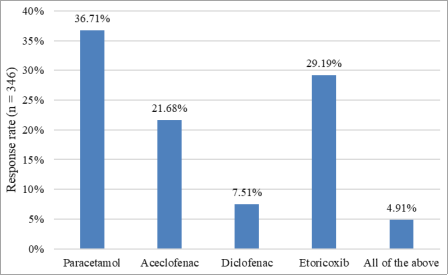
Figure 1. Distribution of responses on the most commonly preferred NSAIDs.
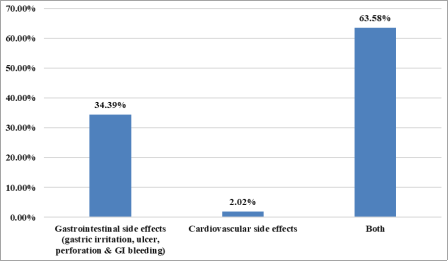
Figure 2. Distribution of responses on the drawbacks of traditional NSAIDs.
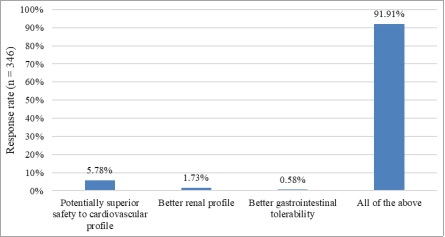
Figure 3. Distribution of responses on the clinician perspectives on the advantages of polmacoxib’s dual COX-2 and carbonic anhydrase binding properties compared with traditional NSAIDs and COX-2 inhibitors.
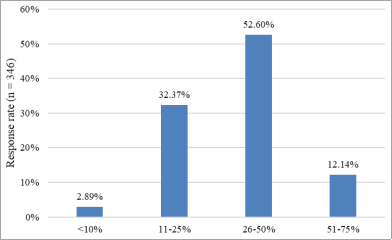
Figure 4. Distribution of responses on the proportion of patients receiving polmacoxib + paracetamol in OA management.

Information



 Share This Article
 Twitter
 Linked In
 Facebook
 Copy
Copy Download