1. Introduction
Hofstede
| [1] | Hofstede, G. Culture's Consequences: International Differences in Work-Related Values. Beverly Hills, CA: Sage; 1980. |
[1]
defined
individualism as a tendency to place one's own needs above the needs of one's in-group and
collectivism (COL) as a tendency to place the needs of one's in-group above one's own needs.
Gaines et al. define individualism as an orientation toward the welfare of oneself and collectivism as an orientation toward the welfare of one's larger community to allow for the possibility that the two constructs are uncorrelated rather than negatively correlated (see
| [2] | Gaines, S. O., Jr., Marelich, W. D., Bledsoe, K. L., Steers, W. N., Henderson, M. C., Granrose, C. S., Barajas, L., Hicks, D., Lyde, M., Takahashi, Y., Yum, N., Rios, D. I., Garcia, B. R., Farris, K. R., Page, M. S. Links Between Race/Ethnicity and Cultural Values as Mediated by Racial/Ethnic Identity and Moderated by Gender. Journal of Personality and Social Psychology. 1997, 72 (6), 1460-1476.
https://doi.org/10.1037/0022-3514.72.6.1460 |
[2]
, p. 1461). In this definition collectivism does not automatically subsume a third cultural value orientation, familism, which an orientation toward the welfare of one's immediate and extended family. “
Although Triandis and his colleagues | [3] | Gelfand, M. J., Triandis, H. C., Chan, D. K.-S. Individualism Versus Collectivism or Versus Authoritarianism? European Journal of Social Psychology. 1996, 26(3), 397-410.
https://doi.org/10.1002/(SICI)1099-0992(199605)26:3<397::AID-EJSP763>3.0.CO;2-J |
| [4] | Singelis, T. M., Triandis, H. C., Bhawuk, D. P. S., Gelfand, M. J. Horizontal and Vertical Dimensions of Individualism and Collectivism: A Theoretical and Measurement Refinement. Cross-Cultural Research. 1995, 29 (3), 240-275.
https://doi.org/10.1177/106939719502900302 |
| [5] | Triandis, H. C., McCusker, C., Betancourt, H., Iwao, S., Leung, K., Salazar, J. M., Setiadi, B., Sinha, J. B. P., Touzard, H., Zaleski, Z. An Etic-Emic Analysis of Individualism and Collectivism. Journal of Cross-Cultural Psychology. 1993, 24 (3), 366-383. https://doi.org/10.1177/0022022193243006 |
| [6] | Triandis, H. C., McCusker, C., Hui, C. H. Multimethod Probes of Individualism and Collectivism. Journal of Personality and Social Psychology. 1990, 59 (5), 1006-1020.
https://doi.org/10.1037/0022-3514.59.5.1006 |
| [7] | Freeberg, A. L., Stein, C. H. Felt Obligation Towards Parents in Mexican-American and Anglo-American Young Adults. Journal of Social and Personal Relationships. 1996, 13 (3), 457-471. https://doi.org/10.1177/0265407596133009 |
| [8] | Gaines, S. O., Jr. Relationships Between Members of Cultural Minorities. In Wood, J. T., Duck, S. (Eds.), Under-Studied Relationships: Off the Beaten Track. Thousand Oaks, CA: Sage; 1995, pp. 51-88. |
| [9] | Gurin, P., Hurtado, A., Peng, T. Group Contacts and Ethnicity in the Social Identities of Mexicanos and Chicanos. Personality and Social Psychology Bulletin. 1994, 20 (5), 521-532.
https://doi.org/10.1177/0146167294205009 |
| [10] | Marin, G., Marin, B. V. Research with Hispanic Populations. Newbury Park, CA: Sage; 1991,
https://doi.org/10.4135/9781412985734 |
| [11] | Oyserman, D. The Lens of Personhood: Viewing the Self and Others in a Multicultural Society. Journal of Personality and Social Psychology. 1993, 65 (5), 993-1009.
https://doi.org/10.1037/0022-3514.65.5.993 |
| [2] | Gaines, S. O., Jr., Marelich, W. D., Bledsoe, K. L., Steers, W. N., Henderson, M. C., Granrose, C. S., Barajas, L., Hicks, D., Lyde, M., Takahashi, Y., Yum, N., Rios, D. I., Garcia, B. R., Farris, K. R., Page, M. S. Links Between Race/Ethnicity and Cultural Values as Mediated by Racial/Ethnic Identity and Moderated by Gender. Journal of Personality and Social Psychology. 1997, 72 (6), 1460-1476.
https://doi.org/10.1037/0022-3514.72.6.1460 |
“Authors disagree as to whether
familialism—defined as relatedness to family, seeking harmony with family members, or supporting and seeking advice from family—is separate from COL
| [2] | Gaines, S. O., Jr., Marelich, W. D., Bledsoe, K. L., Steers, W. N., Henderson, M. C., Granrose, C. S., Barajas, L., Hicks, D., Lyde, M., Takahashi, Y., Yum, N., Rios, D. I., Garcia, B. R., Farris, K. R., Page, M. S. Links Between Race/Ethnicity and Cultural Values as Mediated by Racial/Ethnic Identity and Moderated by Gender. Journal of Personality and Social Psychology. 1997, 72 (6), 1460-1476.
https://doi.org/10.1037/0022-3514.72.6.1460 |
[2]
, the essential core of COL
| [12] | Lay, C., Fairlie, P., Jackson, S., Ricci, T., Eisenberg, J., Sato, T., Teeaar, A., Melamud, A. Domain-Specific Allocentrism-Idiocentrism: A Measure of Family Connectedness. Journal of Cross-Cultural Psychology. 1998, 29(3), 434-460.
https://doi.org/10.1177/0022022198293004 |
[12]
, or an important element of COL distinct from a non-kin-focused type of COL
| [13] | Rhee, E., Uleman, J. S., Lee, H. K. Variations in Collectivism and Individualism by Ingroup and Culture: Confirmatory Factor Analyses. Journal of Personality and Social Psychology. 1996, 71 (5), 1037-1054.
https://doi.org/10.1037/0022-3514.71.5.1037 |
[13]
.” (see
| [14] | Oyserman, D., Coon, H. M., Kemmelmeier, M. Rethinking Individualism and Collectivism: Evaluation of Theoretical Assumptions and Meta-Analyses. Psychological Bulletin. 2002, 128 (1), 3-72. https://doi.org/10.1037/0033-2909.128.1.3 |
[14]
, p. 10).
Oyserman et al.
| [14] | Oyserman, D., Coon, H. M., Kemmelmeier, M. Rethinking Individualism and Collectivism: Evaluation of Theoretical Assumptions and Meta-Analyses. Psychological Bulletin. 2002, 128 (1), 3-72. https://doi.org/10.1037/0033-2909.128.1.3 |
[14]
conducted a thorough review and content analysis of scales used in this area to clarify what IND (individualism) and COL refer to. According to this research, the domain names of individualism are as follows: independent, goals, compete, unique, private, self-know, direct communicate; the domain names of collectivism are as follows: Related, belong, duty, harmony, advice, context, hierarchy, group.
“Theorized facets of individualism—freedom (vs. conformity), tolerance of differences (vs. exclusion), and equality (vs. discrimination)—form a coherent and stable dimension at the cultural level of analysis. Individualism is higher in societies with better existential security (e.g., socioeconomic development, stable institutions) and is not associated with greater selfishness, anomie, or competitive beliefs and values.” (see
| [15] | Akaliyski, P., Vignoles, V. L., Welzel, C., Minkov, M. Individualism-Collectivism: Reconstructing Hofstede's Dimension of Cultural Differences. Journal of Personality and Social Psychology. 2026, 130 (2), 308-356.
https://doi.org/10.1037/pspp0000580 |
[15]
, p. 308).
According to Oyserman et al.
| [14] | Oyserman, D., Coon, H. M., Kemmelmeier, M. Rethinking Individualism and Collectivism: Evaluation of Theoretical Assumptions and Meta-Analyses. Psychological Bulletin. 2002, 128 (1), 3-72. https://doi.org/10.1037/0033-2909.128.1.3 |
[14]
, European Americans are to be both more individualistic-valuing personal independence more-and less collectivistic-feeling duty to in-groups less-than others. However, European Americans are not more individualistic than African Americans, or Latinos, and not less collectivistic than Japanese or Koreans. Among Asians, only Chinese are being both less individualistic and more collectivistic. Türkiye was included in the Middle East category along with Bahrain and Egypt. The dominant religion in these countries is Islam. According to Hofstede
| [1] | Hofstede, G. Culture's Consequences: International Differences in Work-Related Values. Beverly Hills, CA: Sage; 1980. |
[1]
, Northern and Southern European countries, Australia, Canada, Germany, and Finland have individualistic culture whereas Asian, Arab, Latin American, Southern European countries and Türkiye have “collectivist” cultures.
Some variables examined in the literature in relation to culture, particularly individualism-collectivism (IND-COL): well-being, relationality, personality traits, self-concept, self-esteem, emotions and emotional expression, attribution style, persuasion, obligations, close relationships, interactions with others, conflict resolution styles, communication styles, working in groups and job satisfaction, negotiation styles, self-model, family model, attribution, cognition or cognitive style, stress and coping, and health.
Since the focus of the current study is on cultural value orientations and self-models, Family Change Theory and Self-Models are briefly explained below.
1.1. Cigdem Kagitcibasi’s Family Change Theory and Self-Models
Kagitcibasi
| [16] | Kagitcibasi, C. The Autonomous-Relational Self: A New Synthesis. European Psychologist. 1996, 1 (3), 180-186.
https://doi.org/10.1027/1016-9040.1.3.180 |
| [17] | Kagitcibasi, C. Autonomy and Relatedness in Cultural Context: Implications for Self and Family. Journal of Cross-Cultural Psychology. 2005, 36 (4), 403-422.
https://doi.org/10.1177/0022022105275959 |
| [18] | Kagitcibasi, C. Self, Family and Human Development: Cultural Psychology. 1st ed. Istanbul, Türkiye: Koc University Press; 2010. (In Turkish). |
[16-18]
proposed a theory of family that analyzes the development of different types of self within different family interaction patterns. The theory aims to discover the societal and familial antecedents of the separated and the related selves. It also examines the implications of family change, through socioeconomic development, for the emergence of the self that integrates both autonomy and relatedness. These interaction patterns are studied at the intergenerational level. Four different family and self models are briefly described below.
The family model of interdependence and the heteronomous-related self model: Childrearing in the interdependent family model is oriented towards obedience because it is believed that an obedient child is more likely to grow up to be loyal. The self-developing in this family model is related and is characterized by relatedness and heteronomy. Authoritarian and obedience-oriented parenting contributes to the development of the relatedness self
. In this family model the autonomy need is not met adequately
| [18] | Kagitcibasi, C. Self, Family and Human Development: Cultural Psychology. 1st ed. Istanbul, Türkiye: Koc University Press; 2010. (In Turkish). |
[18]
.
The family model of independence and the autonomous-separated self model: Autonomy and separateness of the child from parents are encouraged in the independence family model since these characteristics contribute to greater self-reliance and self-sufficiency. Relatively permissive and self-reliant oriented parenting engenders the separated self
. Thus, the relatedness need is not met sufficiently in this family model
| [18] | Kagitcibasi, C. Self, Family and Human Development: Cultural Psychology. 1st ed. Istanbul, Türkiye: Koc University Press; 2010. (In Turkish). |
[18]
.
The family model of psychological interdependence and the autonomous-related self model: A dialectic synthesis of the previous two models is seen in a childrearing orientation of the psychological interdependence family model, integrating autonomy with relatedness. Autonomy and control are combined in parenting orientation, which may be akin to authoritative parenting that leads to the development of the autonomous-related self. The psychological interdependence family model is the healthiest model because it satisfies the needs of both autonomy and relatedness
| [16] | Kagitcibasi, C. The Autonomous-Relational Self: A New Synthesis. European Psychologist. 1996, 1 (3), 180-186.
https://doi.org/10.1027/1016-9040.1.3.180 |
| [18] | Kagitcibasi, C. Self, Family and Human Development: Cultural Psychology. 1st ed. Istanbul, Türkiye: Koc University Press; 2010. (In Turkish). |
[16, 18]
.
The hierarchical family model and the heteronomous-separated self model: The hierarchical family model involves autocratic parenting (rejecting, obedience-orientation). Autocratic parenting may contribute to the development of the heteronomous-separated self. The heteronomous-separated self has neither of the two basic needs (of agency and relatedness) satisfied. It may characterize abusive family relations that lack the person of both autonomy and relatedness
. Since both autonomy and relatedness needs are not met, it is a psychopathological self
| [18] | Kagitcibasi, C. Self, Family and Human Development: Cultural Psychology. 1st ed. Istanbul, Türkiye: Koc University Press; 2010. (In Turkish). |
[18]
.
1.2. Emerging Adulthood
It is a term introduced to the literature by Jeffrey Jensen Arnett
. According to Arnett
, emerging adulthood is a new conception of development for the period from the late teens through the twenties, with a focus on ages 18-25. This period is distinct in terms of demographics, subjectivity, and identity explorations. Emerging adulthood differs from adolescence and young adulthood. The cultural context is important for emerging adulthood, and this period exists only in cultures that allow young people a prolonged period of independent role exploration during their late teens and twenties. The sample in this study was defined as "emerging adults" based on their age.
Readers can consult the following publications to learn more about important variables: Hofstede
| [1] | Hofstede, G. Culture's Consequences: International Differences in Work-Related Values. Beverly Hills, CA: Sage; 1980. |
[1]
, Kagitcibasi
| [16] | Kagitcibasi, C. The Autonomous-Relational Self: A New Synthesis. European Psychologist. 1996, 1 (3), 180-186.
https://doi.org/10.1027/1016-9040.1.3.180 |
| [17] | Kagitcibasi, C. Autonomy and Relatedness in Cultural Context: Implications for Self and Family. Journal of Cross-Cultural Psychology. 2005, 36 (4), 403-422.
https://doi.org/10.1177/0022022105275959 |
| [18] | Kagitcibasi, C. Self, Family and Human Development: Cultural Psychology. 1st ed. Istanbul, Türkiye: Koc University Press; 2010. (In Turkish). |
[16-18]
, Gaines et al.
| [2] | Gaines, S. O., Jr., Marelich, W. D., Bledsoe, K. L., Steers, W. N., Henderson, M. C., Granrose, C. S., Barajas, L., Hicks, D., Lyde, M., Takahashi, Y., Yum, N., Rios, D. I., Garcia, B. R., Farris, K. R., Page, M. S. Links Between Race/Ethnicity and Cultural Values as Mediated by Racial/Ethnic Identity and Moderated by Gender. Journal of Personality and Social Psychology. 1997, 72 (6), 1460-1476.
https://doi.org/10.1037/0022-3514.72.6.1460 |
[2]
, Arnett
, Aydin
| [20] | Aydin, K. B. Model of Autonomous-Related Singles Counseling (MARSC) in Collectivist Cultures: The Türkiye Model. In Safdar, S., Kwantes, C., Friedlmeier, W. (Eds.), Wiser World with Multiculturalism: Proceedings from the 24th Congress of the International Association for Cross-Cultural Psychology, Guelph, Canada, 2020.
https://scholarworks.gvsu.edu/iaccp_papers/280 |
[20]
, Hill and Aydin
| [21] | Hill, C. T., Aydin, K. B. Well-Being Across Relationships, Time, and Cultures: Comparing Romantic Partners and Singles. Cham, Switzerland: Palgrave Macmillan; 2026.
https://doi.org/10.1007/978-3-032-06431-8 |
[21]
, Oztan
| [22] | Oztan, E. Familism, Biopolitics and Gender Regime in Türkiye. Toplum ve Bilim. 2014, 130, 176-188. (In Turkish). |
[22]
, Kongar
| [23] | Kongar, E. Türkiye in the 21st Century: Social Structure of Türkiye in the 2000s. 23rd ed. Istanbul, Türkiye: Remzi Publishing; 1999. (In Turkish). |
[23]
, and Akaliyski et al.
| [15] | Akaliyski, P., Vignoles, V. L., Welzel, C., Minkov, M. Individualism-Collectivism: Reconstructing Hofstede's Dimension of Cultural Differences. Journal of Personality and Social Psychology. 2026, 130 (2), 308-356.
https://doi.org/10.1037/pspp0000580 |
[15]
.
1.3. Research Objectives
To perform descriptive statistics for the variables and sample.
To examine the validity and reliability of the Cultural Value Orientations Scale (CVOS): To examine exploratory and confirmatory factor analyses for structural validity, the relationship with the ARSS-R dimensions of Autonomy and Relatedness for convergent validity, and Cronbach's alpha for reliability.
To examine, using regression analysis, the effects of the subscales of the CVOS (Familism, Collectivism, and Individualism), as independent variables, on the self-models obtained from the ARSS-R (Autonomous-separated, Autonomous-related, Heteronomous-separated, and Heteronomous-related self-models), as dependent variables.
To examine the changes in the subscales of the CVOS and ARSS-R according to the years 2021, 2022, and 2024.
Examining the change in cultural value orientations over time, the averages over the years, and the differences between the averages using ANOVA.
Examining the change in self-models over time, the percentages over the years, and whether there are significant differences between the years using a chi-square test.
2. Method
Below are the population, sample, sampling method, data collection, data collection tools, and data analysis.
2.1. Population, Sample, and Sampling Method
The sample consists of 1310 emerging adults, 193 (14.7%) men and 1117 (85.3%) women, with at least a high school education, 1261 (96.2%) single, and 9 (3.8%) married. Since the data was largely collected from university students, and these students come to university from all regions of Türkiye, it can be considered relatively representative of the whole of Türkiye. In short, the research universe is the whole of Türkiye.
In this study, validity and reliability analyses and hypothesis testing of the scale were performed using different datasets. In the first stage, Exploratory Factor Analysis (EFA) was applied to determine the factor structure of the scale using a dataset obtained from 304 participants. In the second stage, Confirmatory Factor Analysis (CFA) was performed on an independent dataset of 400 participants, and the convergent validity of the scale was tested. In this way, the generalizability of the measurement model was increased by testing it on different samples.
The number of participants is based on the "participant-item ratio" rule, which recommends a minimum of 10 participants per item (10: 1) for factor analysis
| [24] | Boateng, G. O., Neilands, T. B., Frongillo, E. A., Melgar-Quinonez, H. R., Young, S. L. Best Practices for Developing and Validating Scales for Health, Social, and Behavioral Research: A Primer. Frontiers in Public Health. 2018, 6, 149.
https://doi.org/10.3389/fpubh.2018.00149 |
| [25] | Osborne, J. W. Best Practices in Exploratory Factor Analysis. Scotts Valley, CA: CreateSpace Independent Publishing Platform; 2014. |
| [26] | Gorsuch, R. L. Factor Analysis: Classic Edition. 2nd ed. New York: Routledge; 2014.
https://doi.org/10.4324/9781315735740 |
[24-26]
. Gorsuch
suggested a ratio range between 5: 1 and 10: 1, with 10: 1 preferred for creating stable factor structures. Similarly, Boateng et al.
| [24] | Boateng, G. O., Neilands, T. B., Frongillo, E. A., Melgar-Quinonez, H. R., Young, S. L. Best Practices for Developing and Validating Scales for Health, Social, and Behavioral Research: A Primer. Frontiers in Public Health. 2018, 6, 149.
https://doi.org/10.3389/fpubh.2018.00149 |
[24]
stated that while absolute sample sizes of 200-300 are generally acceptable, higher participant-item ratios yield more reliable and generalizable results, especially when performing CFA.
To support the adequacy of the sample size, calculations performed with G*Power 3.1 Software, under the assumption of three predictor variables and a moderate effect size (f
2 ≈ 0.19), determined that the statistical power of the sample size is above 0.90 (1−β ≈ 0.99). This finding indicates that the study has a low probability of Type II error and possesses sufficient statistical power
| [27] | Faul, F., Erdfelder, E., Lang, A.-G., Buchner, A. GPower 3: A Flexible Statistical Power Analysis Program for the Social, Behavioral, and Biomedical Sciences. Behavior Research Methods*. 2007, 39 (2), 175-191.
https://doi.org/10.3758/BF03193146 |
[27]
.
Following successful validation of the scale structure, the second phase of the study examined the relationships between self-models and cultural values, and how these two variables change over time. For this purpose, a larger sample of 1,310 participants was created. This expanded dataset was used for regression analysis, chi-square tests, and intergroup comparisons to determine the relationship between the self-models and cultural values. The expanded sample size accounted for potential subgroup analyses and missing data assessments, consistent with best practices in large-scale survey-based research
| [25] | Osborne, J. W. Best Practices in Exploratory Factor Analysis. Scotts Valley, CA: CreateSpace Independent Publishing Platform; 2014. |
[25]
.
2.2. Data Collection
Data was collected online using a random snowball sampling method from different samples in 2021, 2022, and 2024, over a four-year period between 2021 and 2024. Autonomous-Related Self Scale-Revised (ARSS-R) and the Cultural Value Orientations Scale (CVOS) were used for psychological variables, and a questionnaire was used for demographic variables.
2.3. Data Collection Tools
2.3.1. Autonomous-Relatedness Self Scale-Revised (ARSS-R)
The Autonomous-Relatedness Self Scales were developed by Kagitcibasi, Baydar, and Cemalcilar
| [28] | Kagitcibasi, C., Baydar, N., Cemalcilar, Z. Autonomy and Relatedness Scales (Progress Report). Istanbul, Türkiye: Koc University; 2006. |
[28]
based on Kagitcibasi's Family Change Theory and the Self Model
| [16] | Kagitcibasi, C. The Autonomous-Relational Self: A New Synthesis. European Psychologist. 1996, 1 (3), 180-186.
https://doi.org/10.1027/1016-9040.1.3.180 |
| [18] | Kagitcibasi, C. Self, Family and Human Development: Cultural Psychology. 1st ed. Istanbul, Türkiye: Koc University Press; 2010. (In Turkish). |
[16, 18]
, and are used on adult individuals with at least a high school education, living in cities, and university students. The scale contains 27 items rated between 1 (Strongly Disagree) and 5 (Strongly Agree). There are three scales: Autonomous, Relatedness, and Autonomous-Related. Each scale contains 9 items. Cronbach’s alpha values for the internal consistency of the scale are 0.74 for the Autonomous Scale, 0.78 for the Relatedness Scale, and 0.84 for the Autonomous-Related Scale, respectively
| [18] | Kagitcibasi, C. Self, Family and Human Development: Cultural Psychology. 1st ed. Istanbul, Türkiye: Koc University Press; 2010. (In Turkish). |
[18]
.
Aydin
| [29] | Aydin, K. B. The Validity and Reliability of the Autonomous-Relational Self Scale and Its Relationship with Inner Wellbeing Questionnaire. International Journal of Education Technology and Scientific Researches. 2019a, 4 (8), 46-64. (In Turkish) https://ijetsar.com/index.php/pub/article/download/39/39 |
[29]
re-examined the psychometric properties of the Autonomous-Relatedness Self Scales. In this re-examination, at Kagitcibasi's suggestion, only the Autonomous and Relatedness scales were used, excluding the Autonomous-Related Scale. The scale obtained from this re-examination was named the Autonomous-Relatedness Self Scale-Revised (ARSS-R). The ARSS-R consists of two subscales: Autonomous Self and Related Self. Each subscale contains nine items, for a total of 18 items, including reverse items as well.
According to Kagitcibasi
| [18] | Kagitcibasi, C. Self, Family and Human Development: Cultural Psychology. 1st ed. Istanbul, Türkiye: Koc University Press; 2010. (In Turkish). |
[18]
, four different self-models are obtained by using the averages from the two scales as criteria. Those who score above the averages of the autonomous and relatedness scales have an Autonomous-Related Self, those who score below have a Heteronomous-Separated Self, those who score high on the Relatedness Scale but low on the Autonomous Scale have a Heteronomous-Related Self, and those who score low on the Relatedness Scale but high on the Autonomous Scale have an Autonomous-Separated Self. According to Kagitcibasi
| [18] | Kagitcibasi, C. Self, Family and Human Development: Cultural Psychology. 1st ed. Istanbul, Türkiye: Koc University Press; 2010. (In Turkish). |
[18]
, the healthiest of these is the Autonomous-Related, while the unhealthiest is the Heteronomous-Separated. In this research, the scale Autonomous-Relatedness Self Scale-Revised (ARSS-R) obtained through Aydin's
| [29] | Aydin, K. B. The Validity and Reliability of the Autonomous-Relational Self Scale and Its Relationship with Inner Wellbeing Questionnaire. International Journal of Education Technology and Scientific Researches. 2019a, 4 (8), 46-64. (In Turkish) https://ijetsar.com/index.php/pub/article/download/39/39 |
[29]
revision studies was used. The Cronbach's reliability coefficient of the Autonomous subscale of the ARSS-R is.76, and the reliability coefficient of the Relatedness subscale is.66. In the same study, Aydin
| [29] | Aydin, K. B. The Validity and Reliability of the Autonomous-Relational Self Scale and Its Relationship with Inner Wellbeing Questionnaire. International Journal of Education Technology and Scientific Researches. 2019a, 4 (8), 46-64. (In Turkish) https://ijetsar.com/index.php/pub/article/download/39/39 |
[29]
, when examining the autonomous self and relatedness self scores with the ARSS-R according to gender and marital status, found that women and married individuals were more relational, while men and single individuals were more autonomous.
2.3.2. Cultural Value Orientations Scale (CVOS)
The Cultural Value Orientations Scale (CVOS) was developed by Gaines, Marelich, Bledsoe, Steers, Henderson, Granrose, Barajas, Hicks, Lyde, Takahashi, Yum, Rios, Garcia, Farris, and Page
| [2] | Gaines, S. O., Jr., Marelich, W. D., Bledsoe, K. L., Steers, W. N., Henderson, M. C., Granrose, C. S., Barajas, L., Hicks, D., Lyde, M., Takahashi, Y., Yum, N., Rios, D. I., Garcia, B. R., Farris, K. R., Page, M. S. Links Between Race/Ethnicity and Cultural Values as Mediated by Racial/Ethnic Identity and Moderated by Gender. Journal of Personality and Social Psychology. 1997, 72 (6), 1460-1476.
https://doi.org/10.1037/0022-3514.72.6.1460 |
[2]
. The scale includes three subscales: Individualism, which measures the individual's welfare; Collectivism, which measures the welfare of a wider community; and Familism, which measures the welfare of the family. There are a total of 30 items, 10 in each subscale. Items are rated with 5 options: “Strongly Disagree = 1; Disagree =2; Undecided = 3; Agree = 4; Strongly Agree = 5. The CVOS allows for scores between 10 and 50 for each subscale, and between 30 and 150 for the entire scale. It has internal consistency of.57 for Individualism,.76 for Collectivism, and.88 for Familism.
The Turkish adaptation of the CVOS was done by Aydin
| [30] | Aydin, K. B. Psychological Scales: Cross-Cultural. 4th ed. Ankara, Türkiye: Ani Publishing; 2023. (In Turkish). |
[30]
. Data was collected randomly from a sample of 344 adults (175 women, 169 men) over the age of 20 with at least a high school education living in Türkiye. The item-total reliability of each item in the CVOS ranges between.80 and.82. Three subscales were obtained from this study. The first factor is individualism. Items 4 and 10, which were originally included in this factor, were included in another factor, leaving 8 items. In the collectivism factor, 9 items from the original remained, except for item 19. The 3 items (items 4, 10, and 19) that separated from individualism and collectivism formed a separate factor. This was named marginal individualistic values. These three items are:
4. These days, the only person you can depend upon is yourself. 10. I see nothing wrong with self-promotion. 19. I have an important role to play in bringing together the peoples of the world. In this study, Aydin
| [30] | Aydin, K. B. Psychological Scales: Cross-Cultural. 4th ed. Ankara, Türkiye: Ani Publishing; 2023. (In Turkish). |
[30]
, based on Hofstede's "individualism and collectivism" approach, examined only the "individualism and collectivism" dimensions of the scale consisting of individualism, collectivism, and familism factors developed by Gaines et al.
| [2] | Gaines, S. O., Jr., Marelich, W. D., Bledsoe, K. L., Steers, W. N., Henderson, M. C., Granrose, C. S., Barajas, L., Hicks, D., Lyde, M., Takahashi, Y., Yum, N., Rios, D. I., Garcia, B. R., Farris, K. R., Page, M. S. Links Between Race/Ethnicity and Cultural Values as Mediated by Racial/Ethnic Identity and Moderated by Gender. Journal of Personality and Social Psychology. 1997, 72 (6), 1460-1476.
https://doi.org/10.1037/0022-3514.72.6.1460 |
[2]
. In the current study, the validity and reliability of the original scale, consisting of three subscales and 30 items, developed by Gaines et al.
| [2] | Gaines, S. O., Jr., Marelich, W. D., Bledsoe, K. L., Steers, W. N., Henderson, M. C., Granrose, C. S., Barajas, L., Hicks, D., Lyde, M., Takahashi, Y., Yum, N., Rios, D. I., Garcia, B. R., Farris, K. R., Page, M. S. Links Between Race/Ethnicity and Cultural Values as Mediated by Racial/Ethnic Identity and Moderated by Gender. Journal of Personality and Social Psychology. 1997, 72 (6), 1460-1476.
https://doi.org/10.1037/0022-3514.72.6.1460 |
[2]
and translated into Turkish by Aydin
| [30] | Aydin, K. B. Psychological Scales: Cross-Cultural. 4th ed. Ankara, Türkiye: Ani Publishing; 2023. (In Turkish). |
[30]
, were examined. In other words, the validity and reliability of the entire scale, including the familism subscale which was not examined in the previous study, were examined.
2.3.3. Demographic Information Form
Data on demographic variables such as gender, age, education level, marital status, and family type were collected using a questionnaire developed for this research.
2.4. Data Analysis
First, to determine the analysis techniques, the skewness and kurtosis values of the data were examined. According to Gravetter and Wallnau
| [31] | Gravetter, F. J., Wallnau, L. B. Essentials of Statistics for the Behavioral Sciences. 8th ed. Belmont, CA: Wadsworth, Cengage Learning; 2014. |
[31]
, skewness and kurtosis values between +2.0 and -2.0 are consistent with a normal distribution. Since the obtained data were within the threshold values specified in the literature and consistent with a normal distribution, parametric tests were used when performing analyses for hypothesis testing. The analyses specific to the research objectives are explained below in order:
Objective 1. Descriptive statistics for demographic and psychological variables were analyzed using percentages, means (averages), the standard deviation, skewness, and kurtosis techniques.
Objective 2. Validity and reliability analyses of the Cultural Value Orientations Scale (CVOS): Exploratory Factor Analysis (EFA) and Confirmatory Factor Analysis (CFA) were conducted to evaluate the construct validity of CVOS. Item-Total Score Correlations were examined before EFA and CFA. EFA was conducted to examine the underlying factor structure of the subscales. The main objective was to investigate whether the items were grouped in a way that reflected the theoretical structures they were designed to measure
. Following EFA, CFA was conducted to test whether the items were grouped under the theoretically expected dimensions and the adequacy of the factor structures. Fit indices such as CFI, TLI, RMSEA, and SRMR were used as criteria in CFA. These fit indices are used to support construct validity by ensuring that the subscales meet acceptable thresholds
| [33] | Hu, L., Bentler, P. M. Cutoff Criteria for Fit Indexes in Covariance Structure Analysis: Conventional Criteria Versus New Alternatives. Structural Equation Modeling: A Multidisciplinary Journal. 1999, 6 (1), 1-55.
https://doi.org/10.1080/10705519909540118 |
[33]
. After CFA, Cronbach's alpha analysis was performed again on the same data set.
To determine the convergent validity of the CVOS, the relationships between the Autonomous and Relatedness subscales of the ARSS-R and the CVOS’subscales were tested using the Pearson correlation. The presence of significant and positive correlations between scales that are theoretically expected to measure similar constructs indicates that these dimensions exhibit similar response patterns and supports convergent validity
| [34] | Hair, J. F., Black, W. C., Babin, B. J., Anderson, R. E. Multivariate Data Analysis. 7th ed. Upper Saddle River, NJ: Pearson Prentice Hall; 2010. |
[34]
.
The magnitude of the correlation is also very important. “
Hence, whether correlations are large or small is important, not just whether they are statistically significant. A correlation above.50 is gen erally considered high,.30-.50 moderate, and below.30 low, while below.10 is considered trivial in this book.” (see
| [21] | Hill, C. T., Aydin, K. B. Well-Being Across Relationships, Time, and Cultures: Comparing Romantic Partners and Singles. Cham, Switzerland: Palgrave Macmillan; 2026.
https://doi.org/10.1007/978-3-032-06431-8 |
[21]
, p. 111).
Objective 3. K-Means Clustering Analysis was performed on data obtained from the Autonomous-Relatedness Self Scale-R to identify self-models
| [16] | Kagitcibasi, C. The Autonomous-Relational Self: A New Synthesis. European Psychologist. 1996, 1 (3), 180-186.
https://doi.org/10.1027/1016-9040.1.3.180 |
| [17] | Kagitcibasi, C. Autonomy and Relatedness in Cultural Context: Implications for Self and Family. Journal of Cross-Cultural Psychology. 2005, 36 (4), 403-422.
https://doi.org/10.1177/0022022105275959 |
| [18] | Kagitcibasi, C. Self, Family and Human Development: Cultural Psychology. 1st ed. Istanbul, Türkiye: Koc University Press; 2010. (In Turkish). |
| [28] | Kagitcibasi, C., Baydar, N., Cemalcilar, Z. Autonomy and Relatedness Scales (Progress Report). Istanbul, Türkiye: Koc University; 2006. |
[16-18, 28]
. Next, the relationships between self-models and cultural value orientations were examined using logistic regression analysis, in accordance with relational research methodology. This method was chosen because the dependent variable, self-models, is a categorical variable with multiple categories, and the independent variables (cultural value orientations) are continuous. Multinomial Logistic Regression is suitable when the aim is to predict a categorical outcome variable with more than two levels based on one or more predictors. This method allows us to compare each category of the self-model with a reference group and determine how cultural value orientations affect the probability of identification with different self-models
| [35] | Long, J. S. Regression Models for Categorical and Limited Dependent Variables. Advanced Quantitative Techniques in the Social Sciences, Vol. 7. Thousand Oaks, CA: Sage; 1997. |
| [36] | Nasledov, A. D. IBM SPSS Statistics 20 and AMOS: Professional Statistical Data Analysis. St. Petersburg, Russia: Piter; 2013, pp. 318-350. (In Russian). |
| [37] | Field, A. Discovering Statistics Using IBM SPSS Statistics. 5th ed. London: SAGE Publications; 2018. |
[35-37]
.
Objective 4. To examine whether cultural value orientations and self-models change over time: Data for the years 2021, 2022, and 2024 were collected from different groups. Frequency analysis was performed year-by-year to determine the annual distributions of participants' self-models. Since self-models are categorical variables, a chi-square (χ2) test was performed to assess whether there was a significant change over the years. Additionally, a one-way ANOVA was conducted to examine whether the continuously variable dimensions of CVOS—Familism, Collectivism, and Individualism—showed significant changes over the years.
3. Results
This section includes: 1. Descriptive statistics regarding the research sample and variables, 2. Item-total score correlations analysis, exploratory and confirmatory factor analysis, Cronbach’s alpha reliability and convergent validity of CVOS, 3. Regression analysis of the ARSS-R with CVOS, 4. Examination of whether there is a change over time (3-year measurement in a 4-year period on different participants) in self-models and cultural values.
3.1. Descriptive Statistics of the Research Sample and Variables
Table 1. Frequency Distribution of Socio-Demographic Specifications of Respondents After Dropout.
| | N | Frequency% |
Gender | Male | 193 | 14.7% |
Female | 1117 | 85.3% |
Age | 18-19 | 642 | 49.0% |
20-29 | 668 | 51.0% |
Education Level | High school | 178 | 13.6% |
Bachelor’s degree | 1129 | 86.2% |
Master’s degree | 2 | 0.2% |
Doctorate | 1 | 0.1% |
Marital status | Single (never married) | 1261 | 96.2% |
Married | 9 | 3.8% |
Family Type | Nuclear | 1002 | 76.5% |
Extended | 308 | 23.5% |
Self-Model | Heteronomous-Separated | 462 | 35.3% |
Autonomous-Related | 377 | 28.8% |
Heteronomous-Related | 318 | 24.3% |
Autonomous-Separated | 153 | 11.7% |
Total Respondents | 1310 | 100% |
As shown in
Table 1, the majority of the Turkish sample consists of single women aged 18-29 from nuclear families, exhibiting Heteronomous-separated self-model and having at least a high school degree. The findings can only be generalized to a population with such a profile.
Table 2. Descriptive Statistics of Dimensions of the CVOS.
Descriptive Statistics |
| N | Mean | Std. Deviation | Skewness | Kurtosis |
Statistic | Std. Error | Statistic | Std. Error |
Individualism | 1310 | 4,2545 | ,48713 | -,378 | ,068 | -,209 | 137 |
Collectivism | 3,9481 | ,58822 | -,263 | ,068 | -,099 |
Familism | 3,7255 | ,72146 | -,634 | ,068 | ,222 |
Total | 1310 | | | | | |
According to
Table 2, the CVOS data showed an approximately normal distribution. To gain further insight into the composition of the group, cultural value orientations were examined according to age groups. Based on
Table 2, the individuals comprising the sample were grouped according to their ages (18-19 and 20-29), and their averages on cultural values were examined using a t-test. It was observed that individuals aged 20-29 had slightly higher levels of Individualism and collectivism; however, there was no difference between these two groups in terms of familism. Accordingly, it was concluded that the sample is characterized by familism cultural values.
3.2. Psychometric Properties of the Cultural Value Orientations Scale (CVOS)
3.2.1. Item-Total Score Correlation Analysis of the CVOS
Item-Total Score Correlation Analysis (ITCA) was performed to determine the reliability of the model structure of the CVOS. ITCA explains the relationship between the scores obtained from the items and the total score of the test. A high and positive correlation indicates that the items exemplify similar behaviors and that the internal consistency of the test is high
| [38] | Buyukozturk, S. A Handbook of Data Analysis for the Social Sciences. 4th ed. Ankara, Türkiye: Pegem Academy Publishing; 2004. (In Turkish). |
[38]
. The results of the ITCA are in
Table 3.
Table 3. Item-Total Score Correlation Analysis of the CVOS.
Factor | Items | Corrected Item -Total Correlations |
Individualism | 1I. Başkalarının talihsizliklerinin suçlusu ben değilim. | 0,107 |
2I. Kaderimin efendisi benimdir. | 0,052 |
3I. “Kendini, sadece kendi çabaların ile kaldır.” felsefesinin, gerçekten de çok anlam ifade ettiğini düşünüyorum. | 0,151 |
4I. Bu günlerde güvenebileceğin ve bel bağlayabileceğin tek kişi, yine kendinsin. | 0,086 |
5I. Başkalarının başaramadığı şeyleri başarmaktan büyük gurur duyarım. | 0,191 |
6I. Başkalarının beni değiştirme çabalarına, aktif bir şekilde direnirim. | 0,095 |
7I. Kendimi, başkaları ile rahat hissetmeden önce kendim ile rahat hissedebilmeliyim. | 0,247 |
8I. Kişisel özgürlüğüm, diğer bütün değerlerin önünde gelir. | 0,129 |
9I. Kendimi bir başkasının tanıyabileceğinden, daha iyi tanırım. | 0,251 |
10I. Kişinin kendi reklamını yapmasının, yanlış bir tarafı yoktur. | 0,043 |
Collectivism | 1C. Başkasının da başarısına yardımım dokunmadığı sürece, kendimi başarılı saymam. | 0,201 |
2C. Toplumun bana vermiş olduklarını geri ödeyebilmek için fırsat kolluyorum. | 0,443 |
3C. Mümkün olduğunca yardım eli uzatmak için fırsat kollayan bir insanım. | 0,522 |
4C. Kendimi, takım veya grup oyuncusu olarak görüyorum. (Bu cümlede, grup içinde yaşamaya değer vermek kastedilmektedir.) | 0,335 |
5C. Hayattaki en önemli görevim, herkes için sosyal adaleti sağlama yolunda mücadele etmektir. | 0,430 |
6C. Kalbim, benden daha şanssız insanlara uzanır. | 0,290 |
7C. Eğer bir insan benim hatalarımdan ders çıkarabilecekse, kendisi için daha iyisini yapabilmesi adına hayatımdaki iniş çıkışları o insanla paylaşırım. | 0,285 |
8C. Başkalarının bana güvenebildiğini bilmek, muhteşem bir histir. | 0,361 |
9C. Dünya insanlarını bir araya getirmek gibi oynadığım, çok önemli bir rolüm var. | 0,383 |
10C. “Birleşirsek ayakta kalırız, ayrılırsak dağılırız.” veya “Birlikten kuvvet doğar.” sözüne inanırım. | 0,413 |
Familism | 1F. Konu, sosyal sorumluluğa geldiğinde benim için kan bağı ağır basar. | 0,193 |
2F. İhtiyaç duyduğumda, ailem mutlaka oradadır. | 0,459 |
3F. Hayatta iyi şeyler yapmayı, anababama borçluyum. | 0,563 |
4F. Ailem, benim çıkarlarımı gözetir. | 0,336 |
5F. Akrabalarım ile geçirdiğim zaman, benim için değerlidir. | 0,314 |
6F. Büyük anababam ve anababam tarafından bana geçmiş olan gelenek ve görenekleri yaşatabilmek için elimden gelen her şeyi yaparım. | 0,496 |
7F. Evimden çok uzak olduğum zamanlarda bile aile bağlarım, kendimi güven ve emniyet altında hissetmemi sağlar. | 0,529 |
8F. Davranışlarımdaki en büyük rehberim, bugüne kadar anababamın bana öğrettikleridir. | 0,550 |
9F. Bana göre toplumdaki en önemli sosyal kurum, ailedir. | 0,478 |
10F. Ailem olmasaydı ne yapardım, düşünemiyorum bile. | 0,455 |
The items in
Table 3 have been translated into Turkish in the order they appear in the original scale. The literature (e.g.,
| [38] | Buyukozturk, S. A Handbook of Data Analysis for the Social Sciences. 4th ed. Ankara, Türkiye: Pegem Academy Publishing; 2004. (In Turkish). |
[38]
, p. 165)) emphasizes that
"items with item-total score correlation of.30 and higher discriminate well, items between.20 and.30 may be included in the test if deemed necessary or require correction, and items below.20 should not be included in the test." The 9 items in
Table 3 are below .20.
3.2.2. Exploratory Factor Analysis of the CVOS
According to the results of the Kaiser-Meyer-Olkin (KMO) and Bartlett’s test conducted to evaluate the adequacy of the sample, the KMO value of 0.819 indicates that the sample is suitable for factor analysis. Bartlett's Sphericity Test, χ
2 (435)-2700.923;
p <.001, shows that the correlation matrix contains significant differences consistent with the factor analysis. Factor loadings were rotated using the Varimax technique according to their values explaining the total variance. Varimax is an orthogonal rotation and assumes that the basic factors are uncorrelated. This assumption was deemed appropriate due to the theoretical expectation that the dimensions are different from each other. As a result of the rotation, a three-factor structure was obtained. These three factors explain 37.77% of the total variance
.
Table 4. Exploratory Factor Analysis of the CVOS.
Factor Number | Factor Name | Item | Factor Loading |
F1 | Familism | 3F | 0,805 |
8F | 0,801 |
2F | 0,777 |
7F | 0,763 |
10F | 0,724 |
9F | 0,682 |
6F | 0,563 |
4F | 0,558 |
5F | 0,485 |
1F | 0,363 |
F2 | Collectivism | 5C | 0,736 |
3C | 0,663 |
9C | 0,659 |
2C | 0,594 |
1C | 0,569 |
6C | 0,559 |
4C | 0,552 |
7C | 0,407 |
10C | 0,402 |
8C | 0,343 |
F3 | Individualism | 5I | 0,578 |
1I | 0,542 |
7I | 0,541 |
3I | 0,540 |
6I | 0,519 |
4I | 0,518 |
9I | 0,470 |
8I | 0,464 |
2I | 0,455 |
10I | 0,064 |
The equivalents of the items in
Table 4 can be obtained from
Table 3. As shown in
Table 4, with the exception of "10I.
Kişinin kendi reklamını yapmasının, yanlış bir tarafı yoktur.” the remaining 29 items are above the threshold value of 0.30
| [38] | Buyukozturk, S. A Handbook of Data Analysis for the Social Sciences. 4th ed. Ankara, Türkiye: Pegem Academy Publishing; 2004. (In Turkish). |
[38]
. This item was also included in the first hypothetical model, in other words, the EFA analysis, during the model control phase.
3.2.3. Confirmatory Factor Analysis of the CVOS
During the Confirmatory Factor Analysis (CFA) of the CVOS, a stepwise item removal process was performed to improve model fit and ensure theoretical consistency. The initial model, including all proposed items, did not meet acceptable thresholds in key fit indices such as CMIN/df, RMSEA, CFI, and TLI. To address this issue, items with low standardized factor loadings, high residuals, or cross-loadings were identified through diagnostic statistics. Subsequently, the model was retested after each item removal. At each step, changes in model fit were assessed, focusing on improvements in CMIN/df (target <3), RMSEA (target <.08), and CFI/TLI (targets >.90). This procedure was followed to ensure a balance between statistical fit and theoretical integrity.
In the CFA application, we observed that some items caused the model to become inconsistent. Before removing items with standardized regression coefficients lower than 0.40, the reliability coefficients were examined, and it was decided to remove items 2I, 3I, 4I, 6I, 8I, and 10I from the Individualism factor
| [39] | Hair, J. F., Black, W. C., Babin, B. J., Anderson, R. E. Multivariate Data Analysis. 8th ed. Andover, Hampshire: Cengage Learning; 2010. |
[39]
. Then, after evaluating the model's fit indices, items 1C, 2C, 4C, 8C, 9C, and 10C from the Collectivism sub-factor, and items F1, F2, and F4 from the Familism sub-factor, which had very high residual variance (>.75), were removed
| [40] | Brown, T. A. Confirmatory Factor Analysis for Applied Research. 2nd ed. New York: The Guilford Press; 2015. |
[40]
.
Table 5. Confirmatory Factor Analysis of the CVOS.
X2 | 216 |
DF | 87 |
X2/DF | 2,483 |
RMSEA | 0.061 |
CFI | 0.925 |
TLI | 0.909 |
When we evaluate the indicators in
Table 5, the CFA results show an acceptable model fit. The chi-square test is χ
2 (87) =216, and the CMIN (χ
2/df) ratio is 2.483, meaning it is acceptable as it does not exceed the threshold value (≤3). The Root Mean Square Error of Approximation (RMSEA) was found to be 0.061, and it shows an acceptable fit as it is less than ≤0.08. In addition, the Comparative Fit Index (CFI = 0.925) and Tucker-Lewis Index (TLI =0.909) are both above the 0.90 threshold, indicating that there is generally a good model fit
| [33] | Hu, L., Bentler, P. M. Cutoff Criteria for Fit Indexes in Covariance Structure Analysis: Conventional Criteria Versus New Alternatives. Structural Equation Modeling: A Multidisciplinary Journal. 1999, 6 (1), 1-55.
https://doi.org/10.1080/10705519909540118 |
| [36] | Nasledov, A. D. IBM SPSS Statistics 20 and AMOS: Professional Statistical Data Analysis. St. Petersburg, Russia: Piter; 2013, pp. 318-350. (In Russian). |
[33, 36]
.
Table 6. Standardized Regression Coefficients (std.β) of the CVOS’s CFA Analysis.
Factor Item | Estimate (std.β) |
Individualism |
1I | 0.49 |
5I | 0.64 |
7I | 0.44 |
9I | 0.41 |
Collectivism |
3C | 0.68 |
5C | 0.54 |
6C | 0.62 |
7C | 0.49 |
Familism |
3F | 0.78 |
5F | 0.58 |
6F | 0.63 |
7F | 0.72 |
8F | 0.80 |
9F | 0.77 |
10F | 0.70 |
Figure 1. Confirmatory factor analysis model of the Cultural Value Orientations Scale-CVOS.
“Ind” - Individualism subscale.
“Col” - Collectivism subscale.
“Fam” - Familism subscale.
3.2.4. Item-Total Score Correlation Analysis of the Validated CVOS
Since the model fit indices were at an acceptable level, the item-total correlation analysis (ITCA) of the items were re-examined. The ITCA results of the model resulting from the CFA changed, as shown in
Table 7.
Table 7. Item-Total Score Correlations of the Confirmed Model of the CVOS.
Individualism | 1 | 1I | 0,364 |
2 | 5I | 0,394 |
3 | 7I | 0,345 |
4 | 9I | 0,297 |
Collectivism | 5 | 3C | 0,502 |
6 | 5C | 0,423 |
7 | 6C | 0,507 |
8 | 7C | 0,385 |
Familism | 9 | 3F | 0,705 |
10 | 5F | 0,570 |
11 | 6F | 0,611 |
12 | 7F | 0,660 |
13 | 8F | 0,734 |
14 | 9F | 0,706 |
15 | 10F | 0,619 |
See
Table 3 for the equivalents of the items in
Table 7.
Table 7 shows that there are no ITCA values below 0.20. However, item 9I is very close to 0.30, and its presence in the scale does not pose a problem
. The Cronbach reliability values obtained from this analysis are given in
Table 8.
Table 8. Cronbach’s Alpha Analysis After CFA of the CVOS.
| Cronbach’s Alpha | Decision |
Total | 0.805 | Good |
Individualism | 0.567 | Questionable |
Collectivism | 0.668 | Acceptable |
Familism | 0.873 | Good |
As shown in
Table 8, the Cronbach's alpha analysis conducted to determine the reliability of the CVOS revealed satisfactory internal consistency (α >0.60)
| [42] | George, D., Mallery, P. SPSS for Windows Step by Step: A Simple Guide and Reference, 11.0 Update. 4th ed. Boston: Allyn and Bacon; 2003. |
[42]
. The very low values for the individualism dimension may be due to the very low individualism values in the sample or a possible problem in the conceptual structuring of individualism. The original scale also has a low Cronbach's alpha value for individualism.
3.2.5. Convergent Validity of the CVOS
The convergent validity of the CVOS was determined using the Autonomous-Relatedness Self-Scale-R. The findings are presented in
Table 9.
Table 9. Pearson Correlation Analysis Between Self Construals and Cultural Values.
| Mean |
Relatedness | Autonomous |
Individualism | Pearson correlation coefficient | .037 | ,239** |
Sig. | .458 | P ≤0.001 |
Collectivism | Pearson correlation coefficient | .211** | -,156** |
Sig. | P ≤0.001 | P ≤0.001 |
Familism | Pearson correlation coefficient | .394** | -,332** |
Sig. | P ≤0.001 | P ≤0.001 |
N =400.
**p.01.
As shown in
Table 9, individualism has a low and positive correlation with autonomous, whereas the correlation with relatedness is trivial. Collectivism shows a low, positive, and significant correlation with relatedness, but a low, negative, and significant relationship with autonomy. Familism, on the other hand, exhibits a moderate, positive, and significant correlation with relatedness, but a moderate, negative, and significant relationship with autonomy. The positive and significant correlation between similar constructs provides evidence for the convergent validity of the CVOS. Familism increases relatedness and decreases autonomy in Türkiye. The findings also confirm the theories of Kagitcibasi
| [18] | Kagitcibasi, C. Self, Family and Human Development: Cultural Psychology. 1st ed. Istanbul, Türkiye: Koc University Press; 2010. (In Turkish). |
[18]
and Hofstede
| [1] | Hofstede, G. Culture's Consequences: International Differences in Work-Related Values. Beverly Hills, CA: Sage; 1980. |
[1]
.
3.3. Examining of the Relationship Between Cultural Value Orientations and Self-Models
Before examining the relationship between cultural value orientations and self-models, K-Means Cluster Analysis was performed to identify four different self-models.
3.3.1. K-Means Cluster Analysis for Identifying Self-Models
The results of the clustering analysis performed on the data collected with the Autonomous-Relatedness Self-Scale-R are presented in
Table 10.
Table 10. Clusters and Cut-Off Scores Determined From K-Means Cluster Analysis.
Self-Models Self Construals | Clusters |
1. Autonomous-Separated | 2. Heteronomous- Related | 3. Heteronomous Separated | 4. Autonomous-Related |
Autonomous | 34.08 | 20.63 | 24.29 | 29.89 |
Relatedness | 24.29 | 37.60 | 30.93 | 32.13 |
As a result of the K-Means Clustering Analysis conducted to categorize participants into different self-models based on their scores in the autonomous and relatedness dimensions, four different self-models emerged. These are defined below as expressed in Family Change Theory and Self-Models
| [18] | Kagitcibasi, C. Self, Family and Human Development: Cultural Psychology. 1st ed. Istanbul, Türkiye: Koc University Press; 2010. (In Turkish). |
[18]
:
Autonomous-separated: An inadequately adaptive model due to high autonomy but low relatedness.
Heteronomous-related: An inadequately adaptive model due to high relatedness but low autonomy.
Heteronomous-separated: An maladaptive or unhealthy model due to low autonomy and relatedness.
Autonomous-related: A healthy model due to high autonomy and relatedness.
As can be seen from
Table 10, individuals with an autonomous-related self-model possess both characteristics in a balanced way. Individuals with such a healthy self-model place a balanced value on the needs, well-being, and welfare of themselves, other people and family. They achieve this balance through high cognitive competence, as expressed in Kagitcibasi's theory.
3.3.2. Multinomial Logistic Regression Analysis Between Cultural Value Orientations and Self-Models
The results of the Multinomial Logistic Regression Analysis, conducted to determine the relationship between self-models obtained from clustering analysis and CVOS subscales, are given in
Table 11.
Table 11. Multinomial Logistic Regression Analysis Between Cultural Value Orientations and Self-Models.
Self Model | Predictor-Cultural Values | B | SE | Wald | p | OR (Exp (B)) |
Autonomous- separated | Individualism | 1.293 | 0.211 | 37.51 | <.001 | 3.64 |
Collectivism | 0.186 | 0.167 | 1.25 | 0.264 | 1.2 |
Familism | -0.885 | 0.128 | 47.52 | <.001 | 0.41 |
Heteronomous- related | Individualism | 0.086 | 0.169 | 0.26 | 0.609 | 1.09 |
Collectivism | 0.626 | 0.147 | 18.28 | <.001 | 1.87 |
Familism | 0.508 | 0.125 | 16.6 | <.001 | 1.66 |
Autonomous-related | Individualism | 0.927 | 0.164 | 32.08 | <.001 | 2.53 |
Collectivism | 0.092 | 0.135 | 0.47 | 0.494 | 1.1 |
Familism | -0.054 | 0.111 | 0.24 | 0.624 | 0.95 |
N =1310.
Table 11 shows the effect of cultural values, the independent variable, on self-models. The dependent variable is self-models with four nominal categories; the Heteronomous-separated self-model was used as the reference category. The overall model is statistically significant compared with the intercept-only model (χ2 (9) = 202.41, p <.001), which shows that cultural value variables reliably predict self-models. However, the R 2 values (Nagelkerke R 2 =.157) indicate a modest effect size.
Relative to the Heteronomous-separated self-model, Individualism was a strong and significant positive predictor of both the Autonomous-related (OR = 2.53, p <.001) and the Autonomous-separated self-models (OR = 3.64, p <.001), whereas it did not distinguish the Heteronomous-related self-model from the Heteronomous-separated self-model (OR = 1.09, p = .609).
Collectivism significantly increased the odds of the Heteronomous-related self-model (OR = 1.87, p <.001). but did not distinguish the autonomous self-models from the Heteronomous-separated self-model.
Familism increased the odds of the Heteronomous-related self-model (OR = 1.66, p <.001) and decreased the odds of the Autonomous-separated self-model (OR = 0.41, p <.001), whereas it did not distinguish the Autonomous-related self-model from the Heteronomous-separated self-model (OR = 0.95, p =.624).
These findings suggest that individualism is associated with autonomous self-models, while collectivism and familism are associated with the Heteronomous-related self-model, which combines high relatedness with low autonomy. When the findings regarding familism are interpreted together with the "changing over time" findings of this research, it might be concluded that Turkish culture is based on familism values and that the prevalent family model fosters the dependency.
3.4. Examining the Changes in Cultural Value Orientations and Self-Models over Time
3.4.1. Examining the Changes in Self-Models over Time
Percentage calculations of the changes in self-models over time can be seen in
Figure 2.
Figure 2. Examination of The Change in Self-Models Over Time.
Figure 2 shows the distribution of self-models in three measurements on different samples over a four-year period between 2021 and 2024. In 2021, Heteronomous-separated was highest, while Autonomous-separated was lowest. In 2022, Autonomous-related was highest, followed by the maladaptive Heteronomous-separated, and as in 2021, Autonomous-separated was at the lowest level. By 2024, the maladaptive model, Heteronomous-separated, was at the highest level and had increased significantly, while Autonomous-separated had decreased even further.
Since self-models are nominal variables, a chi-square (χ
2) test was conducted to assess whether they changed significantly over the years. The chi-square results are presented in
Table 12.
Table 12. Chi-Square of Self-Models by Year.
| Value | DF | Asymptotic Significance (2-sided) |
Pearson chi-square | 14,130a | 6 | 0,028 |
Phi | .105 | 0,028 |
Cramer's V | .074 | 0,028 |
Chi-square analysis revealed a statistically significant relationship between the year of data collection and the distribution of self-models [χ
2 (6, N =1277) =14.13, p =.028]. This indicates that the proportions of individuals with different self-models changed significantly between 2021, 2022, and 2024. Although the relationship is statistically significant, the effect size is small (Cramer's V =.074), and Phi =.105 was found, indicating that the strength of the relationship is small
. When the distributions are examined in more detail, it is seen that there are directional and striking changes in certain self-models between the years. Specifically, the Heteronomous-separated self model, which was 31.6% in 2021, showed a slight decrease to 28.6% in 2022, but rose to 34.7% in 2024, becoming the most dominant self model. In contrast, the Autonomous-separated self model showed a continuous downward trend, decreasing from 18.5% in 2021 to 13.6% in 2022 and 8.0% in 2024. The Autonomous-related self model increased from 26.9% in 2021 to 30.7% in 2022, and maintained a relatively high level of 32.0% in 2024. The Heteronomous-related self model, on the other hand, increased from 23.0% in 2021 to 27.0% in 2022, but showed a fluctuating trend, decreasing to 25.3% in 2024. These findings indicate that a systematic trend of change, particularly an increase in the Heteronomous-separated self model and a decrease in the Autonomous-separated self model, although the overall correlation is weak.
This trend may indicate that less adaptive self-patterns are becoming more common over time among young individuals. This situation may be related to factors such as the increase in the rate of low-socioeconomic status, socio-cultural transformations, changes in family structure, limitations on areas of individual autonomy, increased social uncertainty, political repression, ethnic gang formation in public institutions and all areas of life, ethnic polarization against Turkish national identity, the disruption of constitutional and public order.
3.4.2. Examining the Change in Cultural Value Orientations over Time
The change in cultural value orientations over the years was examined according to means, and the findings are presented in
Figure 3.
Figure 3. Mean Distribution in The Cultural Value Orientations Over the Years.
When comparing the average scores for 2021, 2022, and 2024, individualism is seen to have the highest average in all three years compared to the other values. While the average for individualism was highest in 2021 at 4.24, this value decreased slightly to 4.22 in 2022 and 4.20 in 2024. In terms of collectivism, the average was 4.06 in 2021, but this value decreased to 3.85 in 2022 and 3.66 in 2024, showing a declining trend over time. Familism, on the other hand, had the lowest average in 2021 at 3.65, but increased to 3.70 in 2022 and 3.83 in 2024. These results show that the level of individualism has remained relatively constant over time, collectivism has decreased, and familism has increased.
ANOVA Analysis of Cultural Value Orientations by Year
In this study, since the data for different years were not obtained from the same individuals, the groups were considered independent of each other. Therefore, it was deemed appropriate to use one-way Analysis of Variance (One-Way ANOVA) to examine the mean differences by year. The results of the ANOVA analysis are presented in
Table 13.
Table 13. ANOVA Analysis of Cultural Values by Year.
| F | Sig. (p) |
Individualism | 0.491 | 0.612 |
Collectivism | 31.862 | 0.00 ** |
Familism | 3.566 | 0.029 * |
N =1315
Year: 2021, 2022, 2024
*P.05
**p.01
As shown in
Table 13, while statistically significant changes were observed in cultural values such as collectivism and familism over the years, no significant difference was observed in individualism levels during the same period. The homogeneity of variances test yielded a result of p ≥.05 for all three variables. This means that the assumption of equal variances is met; therefore, it was decided to use the Tukey test when conducting Post Hoc tests
| [37] | Field, A. Discovering Statistics Using IBM SPSS Statistics. 5th ed. London: SAGE Publications; 2018. |
| [44] | George, D., Mallery, P. IBM SPSS Statistics 26 Step by Step: A Simple Guide and Reference. 16th ed. New York: Routledge; 2020. https://doi.org/10.4324/9780429056765 |
[37, 44]
. The results are presented in
Table 14.
Table 14. Post-Hoc Test of One-Way ANOVA (Türkiye Criterion).
| Mean Difference |
Collectivism |
2021-2022 | 0,218* |
2021-2024 | 0,401* |
2022-2024 | 0,183* |
Familism |
2021-2024 | -0,186* |
N =1315
*P.05
According to
Table 14, there is no significant change in individualism values in the 3-year distribution (p >.05). This indicates a relatively stable trend in individualism among participants over time. Significant decreases in collectivism were observed over time. Participants in 2024 showed significantly lower collectivism scores than participants in 2021 and 2022. Specifically, collectivism values in 2024 were 0.40 units lower than in 2021 (p =.000) and 0.18 units lower than in 2022 (p =.004). In contrast, a significant increase in familism values was observed between 2021 and 2024 (p =.022), indicating that participants in 2024 expressed stronger family-oriented values than those in 2021
| [37] | Field, A. Discovering Statistics Using IBM SPSS Statistics. 5th ed. London: SAGE Publications; 2018. |
[37]
. The one-way ANOVA results for the individualism were not statistically significant (p >.05). Therefore, post-hoc analyses to determine which years the differences between groups emerged were not used.
4. Discussion and Conclusion
4.1. In Terms of Descriptive Statistics of the Research Sample
Considering the descriptive statistical findings, it is necessary to use a scale to define the sample as emerging adult. The findings show that autocracy, dependent/heteronomous self, and low-socioeconomic status are prevalent in Turkish culture. According to Arnett
, emerging adulthood develops in the teens and twenties in a culture where independence and independent roles are dominant, not in such a context. According to Erik Erikson
| [45] | Gerrig, R. J., Zimbardo, P. G. Psychology and Life: Introduction to Psychology (Sart, G., Trans. Ed.; translated from the 19th ed., 2010). Ankara, Türkiye: Nobel Academic Publishing; 2013. (In Turkish). |
[45]
, autonomy is a characteristic that begins to develop in infancy (between 1.5 and 3 years of age). In its competent or healthy form, it dominates the personality as "having control, perceiving oneself as the subject." In its unhealthy or incompetent form, it dominates the personality as "feelings of inadequacy in controlling events, doubt, and shame." In fact, "dependence" is defined in the DSM-5 as "Dependent Personality Disorder: 301.6 (F60.7)"
| [46] | American Psychiatric Association. Desk Reference to the Diagnostic Criteria from DSM-5. Arlington, VA: American Psychiatric Publishing; 2013. |
[46]
within the scope of Personality Disorder. All this constitutes evidence that culture affects health
| [47] | Wong, P. T. P., Wong, L. C. J. (Eds.). Handbook of Multicultural Perspectives on Stress and Coping. International and Cultural Psychology Series. New York: Springer; 2006.
https://doi.org/10.1007/0-387-26238-5 |
[47]
and that Turkish culture may be unhealthy.
4.2. In Terms of Validity and Reliability of the Cultural Value Orientations Scale (CVOS)
The construct validity of the CVOS was examined using exploratory and confirmatory factor analysis techniques. The validity and reliability analysis conducted on a Turkish emerging adult sample revealed that the original 30-item CVOS was reduced to 15 items. Four items were related to individualism, four to collectivism, and seven to familism. The CFA results showed that the highest Standardized Regression Coefficients (std.β) were in familism [8F: Davranışlarımdaki en büyük rehberim, bugüne kadar anababamın bana öğrettikleridir. (To this day, my parents' teachings serve as my best guide to behavior.) = 0.80] and the lowest were in individualism.
In the Cronbach’s alpha analysis performed after CFA, the item-total score correlation value was highest in familism (8F = 0.73), and lowest in individualism. Cronbach reliability coefficients were good (.87) in familism, questionable (.57) in individualism, acceptable (.67) in collectivism, and good overall reliability (.87). The low alpha values for individualism are also consistent with the literature:
“For example, Freeberg and Stein | [7] | Freeberg, A. L., Stein, C. H. Felt Obligation Towards Parents in Mexican-American and Anglo-American Young Adults. Journal of Social and Personal Relationships. 1996, 13 (3), 457-471. https://doi.org/10.1177/0265407596133009 |
The fact that the internal consistencies of individualism scales have been rather low in several previous studies
| [7] | Freeberg, A. L., Stein, C. H. Felt Obligation Towards Parents in Mexican-American and Anglo-American Young Adults. Journal of Social and Personal Relationships. 1996, 13 (3), 457-471. https://doi.org/10.1177/0265407596133009 |
| [48] | Cross, S. E. Self-Construals, Coping, and Stress in Cross-Cultural Adaptation. Journal of Cross-Cultural Psychology. 1995, 26 (6), 673-697.
https://doi.org/10.1177/002202219502600610 |
| [49] | Kagan, S., Zahn, G. L. Cultural Differences in Individualism? Just Artifact. Hispanic Journal of Behavioral Sciences. 1983, 5 (2), 219-232.
https://doi.org/10.1177/07399863830052007 |
| [50] | Oyserman, D., Gant, L., Ager, J. A Socially Contextualized Model of African American Identity: Possible Selves and School Persistence. Journal of Personality and Social Psychology. 1995, 69 (6), 1216-1232.
https://doi.org/10.1037/0022-3514.69.6.1216 |
[7, 48-50]
suggests that the construct itself is in need of refinement. Even among studies in which relatively high individualism alphas have been reported
| [4] | Singelis, T. M., Triandis, H. C., Bhawuk, D. P. S., Gelfand, M. J. Horizontal and Vertical Dimensions of Individualism and Collectivism: A Theoretical and Measurement Refinement. Cross-Cultural Research. 1995, 29 (3), 240-275.
https://doi.org/10.1177/106939719502900302 |
| [51] | Gudykunst, W. B., Matsumoto, Y., Ting-Toomey, S., Nishida, T., Kim, K., Heyman, S. The Influence of Cultural Individualism-Collectivism, Self Construals, and Individual Values on Communication Styles Across Cultures. Human Communication Research. 1996, 22(4), 510-543.
https://doi.org/10.1111/j.1468-2958.1996.tb00377.x |
| [52] | Kim, M.-S., Hunter, J. E., Miyahara, A., Horvath, A.-M., Bresnahan, M., Yoon, H.-J. Individual- vs. Culture-Level Dimensions of Individualism and Collectivism: Effects on Preferred Conversational Styles. Communication Monographs. 1996, 63 (1), 29-49. https://doi.org/10.1080/03637759609376373 |
| [53] | Singelis, T. M., Sharkey, W. F. Culture, Self-Construal, and Embarrassability. Journal of Cross-Cultural Psychology. 1995, 26 (6), 622-644. https://doi.org/10.1177/002202219502600607 |
[4, 51-53]
, measurement problems have surfaced. For instance, in terms of relative fit, a four-factor model reported by Singelis et al.
| [4] | Singelis, T. M., Triandis, H. C., Bhawuk, D. P. S., Gelfand, M. J. Horizontal and Vertical Dimensions of Individualism and Collectivism: A Theoretical and Measurement Refinement. Cross-Cultural Research. 1995, 29 (3), 240-275.
https://doi.org/10.1177/106939719502900302 |
[4]
that specifies horizontal and vertical dimensions of individualism and collectivism fit the correlational data significantly better than did either a one-factor or a two-factor model; yet in terms of absolute fit, the chi-square associated with the four-factor model was sufficiently high that we had to reject the model [2, p. 1472].
Convergent validity of the CVOS was determined by examining the relationships between the sub-factors of the CVOS and the Autonomy and Relatedness subfactors of Autonomous-Relatedness Self Scale-Revised (ARSS-R). In this analysis, Individualism has a positive correlation with Autonomy, but does not correlate with Relatedness. Collectivism and Familism have a positive correlation with Relatednes, but a negative correlation with Autonomy. The findings confirm the theories of Hofstede
| [1] | Hofstede, G. Culture's Consequences: International Differences in Work-Related Values. Beverly Hills, CA: Sage; 1980. |
[1]
and Kagitcibasi
| [18] | Kagitcibasi, C. Self, Family and Human Development: Cultural Psychology. 1st ed. Istanbul, Türkiye: Koc University Press; 2010. (In Turkish). |
[18]
.
4.3. In Terms of the Regression Analysis on the CVOS and the ARSS-R
Before the regression analysis, four self-models were determined using K-Means Cluster Analysis on ARSS-R data. The findings are consistent with those obtained in Aydin’s
| [29] | Aydin, K. B. The Validity and Reliability of the Autonomous-Relational Self Scale and Its Relationship with Inner Wellbeing Questionnaire. International Journal of Education Technology and Scientific Researches. 2019a, 4 (8), 46-64. (In Turkish) https://ijetsar.com/index.php/pub/article/download/39/39 |
[29]
study entitled
“The validity and reliability of the autonomous-related self scale and its relationship with Inner Wellbeing Questionnaire” and confirm Kagitcibasi’s
| [18] | Kagitcibasi, C. Self, Family and Human Development: Cultural Psychology. 1st ed. Istanbul, Türkiye: Koc University Press; 2010. (In Turkish). |
[18]
Family Change Theory and Self Models.
The regression analysis findings are as follows: Relative to the heteronomous-separated self-model, individualism increased the odds of both the autonomous-separated and autonomous-related self-models (adaptive), but it did not distinguish the heteronomous-related from the heteronomous-separated. Collectivism and familism positively predict the heteronomous-related, and familism also decreases the likelihood of the autonomous-separated self-model. The findings are confirm Kagitcibasi’s
| [18] | Kagitcibasi, C. Self, Family and Human Development: Cultural Psychology. 1st ed. Istanbul, Türkiye: Koc University Press; 2010. (In Turkish). |
[18]
Family Change Theory and Self Models.
As emphasized in E. Erikson's Psychosocial Development Theory, autonomy is a fundamental developmental task and need for healthy personality development. Autonomy develops in healthy relationships with parents during the early years of life. Therefore, individualism is a fundamental healthy characteristic that should be present in every individual and culture. However, in the study by Oyserman et al.
| [14] | Oyserman, D., Coon, H. M., Kemmelmeier, M. Rethinking Individualism and Collectivism: Evaluation of Theoretical Assumptions and Meta-Analyses. Psychological Bulletin. 2002, 128 (1), 3-72. https://doi.org/10.1037/0033-2909.128.1.3 |
[14]
, Türkiye is categorized as a Middle Eastern country. Since the policies applied to war-torn Middle East countries such as Iran, Iraq, and Syria are also applied to Türkiye, the need for autonomy is not adequately met. Thus, heteronomy on the self prevails in Türkiye. If one were to give a name to the culture in Türkiye, "culture of silent war" would be entirely descriptive. It is also understood from the studies of Akaliyski et al.
| [15] | Akaliyski, P., Vignoles, V. L., Welzel, C., Minkov, M. Individualism-Collectivism: Reconstructing Hofstede's Dimension of Cultural Differences. Journal of Personality and Social Psychology. 2026, 130 (2), 308-356.
https://doi.org/10.1037/pspp0000580 |
[15]
that individualism is a healthy trait and thrives in high socioeconomic status and better public order. A well-developed individual can consider the interests, well-being, and safety of themselves, their family, and their country. The clearest evidence of this is the establishment of a solidarity network by well-developed European countries as the European Union (EU). It may be concluded that those who established the EU solidarity network possess an autonomous-related self model that is an adaptive form.
4.4. In Terms of the Changes in Cultural Value Orientations and Self-Models over Time
Changes in self-models over the years: The findings indicate a systematic trend of change, specifically an increase in the heteronomous-separated self-model and a decrease in the autonomous-separate self-model. Overall, it is evident that dependency-based models are more dominant than autonomy-based models in self. These findings might be explained by the fact that Turkish culture is grounded in familistic values, as well as by other environmental conditions.
Changes in cultural value orientations over the years: Between 2021, 2022, and 2024, individualism remained constant, collectivism decreased, and familism continuously increased. The findings indicate that Turkish culture is based on family values. The fact that individualism did not increase and remained constant may stem from the lack of development of autonomy and other characteristics inherent in individualism, the prevalence of the heteronomous-separate self model, the political emphasis on familism, (especially tradictional) and Türkiye's socioeconomic and public order problems. All of these are shaped by the practices and policies established by managers at every level.
As Akaliyski et al.
| [15] | Akaliyski, P., Vignoles, V. L., Welzel, C., Minkov, M. Individualism-Collectivism: Reconstructing Hofstede's Dimension of Cultural Differences. Journal of Personality and Social Psychology. 2026, 130 (2), 308-356.
https://doi.org/10.1037/pspp0000580 |
[15]
also state, individualism flourishes in well-developed countries or contexts characterized by high levels of SES and public order. Cigdem Kagitcibasi also emphasizes the necessity of high socioeconomic conditions for the development of autonomy and the autonomous-related self-model, which are at the core of individualism. Furthermore, with the Early Support Project (ESP; 1982-2004), Kagitcibasi
| [18] | Kagitcibasi, C. Self, Family and Human Development: Cultural Psychology. 1st ed. Istanbul, Türkiye: Koc University Press; 2010. (In Turkish). |
[18]
focuses on the mother's education and her relationship with the child to enable the child to acquire a healthy self-model and to optimize mental or cognitive development, which forms the basis of autonomy. Many scientists, such as Sigmund Freud and Erik Erikson, emphasize that healthy personality development should begin at an early ages. The mother plays a major role in laying the foundations of development in every area (physical, cognitive, emotional, social, sexual, etc.) during infancy and early childhood. The majority of our research sample consists of young women. Considering that the prevalent self-model among these women is heteronomous-separate and that their cultural values are based on familism, it can be predicted that Türkiye's future is at great risk.
5. Recommendations
Defining individuals raised under these conditions in Türkiye as "emerging adults" solely based on age may be misleading. If this characteristic is to be used, it is recommended to determine it using a scale and to define the sample and its developmental stage according to the findings.
The findings of this research may offer cultural researchers information and different perspectives on defining, measuring, and understanding the effects of culture. The study obtained a Turkish version of the Cultural Value Orientations Scale (CVOS) with established validity and reliability. The CVOS-Turkish version contains four items in each of the individualism and collectivism subscales. These four items may not accurately represent the true scope of individualism and collectivism. Individualism and collectivism should first be correctly defined and their scope determined. Then, their accuracy should be tested through scale development studies. Scientists from every country focusing on measuring culture could come together to create a pool of scales that measure culture. By evaluating these scales and adding new items with conceptual and empirical basis, a more robust scale may be obtained.
Educators and therapists may develop effective educational and therapeutic programs by considering the interaction between cultural values, family models, and self-models.
In the context of Türkiye, emerging adults, especially women, should gain awareness and motivation to develop individualistic values/characteristics and an autonomous-related self-model as they prepare for life.
Results of statistical analyses of self-models and cultural values over time might contribute to researchers' studies on change, stability, causes, and consequences of these variables.
Instead of focusing solely on individualism and collectivism, cultural researchers could develop country-level scales. This would identify the dominant culture within a country, revealing concrete implications for politicians, teachers, therapists, researchers, administrators, citizens, and many other systems that play a role in shaping culture. For example, in Türkiye, there is not only a family-oriented culture but also an ethnicist culture, a festering wound in the country. Ethnic groups in Türkiye are polarized against Turkish national identity. Ethnic groups, both internally and in cooperation with other ethnic groups, are illegally plundering the resources of Türkiye and its lonely people. The "lonely individual" refers to a highly competent person who embraces the values of individualism and contributes to the country's public order and socioeconomic level. Such individuals are subjected to intense workplace mobbing within public institutions by administrators and their supporters who harbor ethnic-sectarian agendas and predatory tendencies: they are dismissed from their professions and jobs, prevented from advancing in their careers or utilizing their expertise, subjected to slander and constant investigations, and socially isolated. This same persecution extends to other areas of social life and the residential buildings where they live. Finally, ethnicity could be added to the scope of CVOS-Tur. A more reasonable approach would be to develop a new cultural values scale that takes into account not only theory but also the practical realities of life in Türkiye.
State policies and practices play the greatest role in the formation of culture. Policies and practices are based on familism values in Türkiye. In fact, the government has declared 2025 as the Year of the Family. The findings of this research provide evidence of the effects of this trend. Policies and practices should aim to raise the socioeconomic level and ensure public order in Türkiye.
It is recommended that the authorities governing Türkiye take immediate action to transform Turkish culture into a healthier form.
It is suggested that, starting with the death of Mustafa Kemal Atatürk, a commission composed of representatives from all countries worldwide should conduct an objective legal assessment to identify culpable administrators (from village headmen, apartment/site managers), confiscate their assets (including those of the deceased's heirs), make arrests, and publicize their names, including their ethnic origins, as examples of mismanagement worldwide.
By providing Singles Counseling
| [20] | Aydin, K. B. Model of Autonomous-Related Singles Counseling (MARSC) in Collectivist Cultures: The Türkiye Model. In Safdar, S., Kwantes, C., Friedlmeier, W. (Eds.), Wiser World with Multiculturalism: Proceedings from the 24th Congress of the International Association for Cross-Cultural Psychology, Guelph, Canada, 2020.
https://scholarworks.gvsu.edu/iaccp_papers/280 |
| [21] | Hill, C. T., Aydin, K. B. Well-Being Across Relationships, Time, and Cultures: Comparing Romantic Partners and Singles. Cham, Switzerland: Palgrave Macmillan; 2026.
https://doi.org/10.1007/978-3-032-06431-8 |
| [54] | Aydin, K. B. Single Counseling (SC) and Autonomous-Relational Single Counseling Model (ARSCM): A New Concept, Research, Specialization and Work Field in Türkiye. TURAN-SAM. 2017, 9(36), 707-715. (In Turkish)
https://www.turansam.org/TURAN-SAM_36.pdf |
| [55] | Aydin, K. B. Singles Counselling: Prepares for Life. Ankara, Türkiye: Nobel Academic Publishing; 2019b. (In Turkish). |
[20, 21, 54, 55]
to young women and men who have reached the age of 18 the negative effects of the past may be corrected and they may be better prepared for life.





 Share This Article
 Twitter
 Linked In
 Facebook

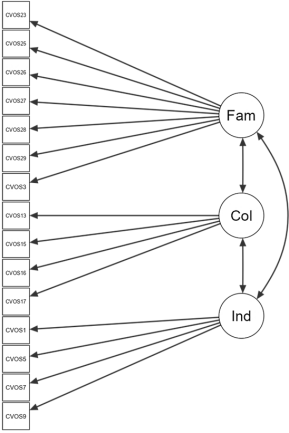
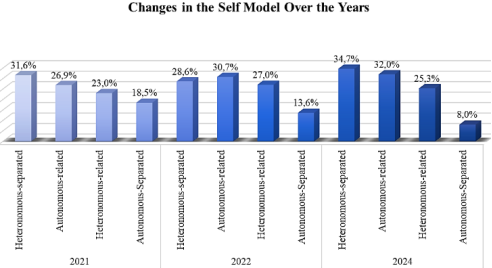
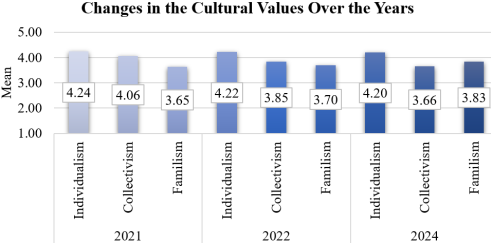
 Copy
 Download