Abstract
This research explores the marriage ceremonies of the Oromo, the largest ethnic group in the Horn of Africa, who have inhabited northeastern Africa since ancient times. Their current spatial distribution has been shaped by various environmental, socio-economic, and political factors. The Oromo people possess a distinct culture, with unique customs, morals, religion, language, philosophy, administrative systems, and civilization. This study employs qualitative research methods, including interviews, focus group discussions, observations, and the analysis of primary and secondary sources. An ethnographic approach was utilized, involving participation in the visual and auditory aspects of marriage processes. The main focus is on the Hawwadii and Kadhaa ceremonies, aiming to analyze their impact and educate the global community about the Guji Oromo’s rich cultural heritage.
Keywords
Culture, Marriage Ceremonies, Kadhaa, Hawwadii, Guji Oromo
1. Introduction
1.1. Background of the Study
The Oromo people are the largest people in the Horn of Africa and have lived in northeastern Africa since ancient times
| [1] | Alemayehu, H. et al. History of the Oromo to the sixteenth century. third and second impression ed. s.l.:Oromia culture and tourism bureau. 2014. |
[1]
. According to linguistic evidence, the peoples of Africa generally speak languages that belong to four super-families or proto-languages: Afro-Asiatic, Nilo-Saharan, Niger-Congo, and Khoisan. Of these proto-languages, Afro-Asiatic and Nilo-Saharan are spoken in the Ethiopian region and the Horn of Africa. The Afro-Asiatic language family is significant in terms of geo-graphical distribution that includes Cushitic, Omotic, and Semitic languages in Ethiopia. The Oromo people are categorized under the Cushitic superfamily and speak
Afaan Oromo.
They are mostly the traditional religion followers known as
Waaqeeffanna, a belief in one supernatural power
Waaqa/Waaqayoo (God) before the introduction of different religion such as Christianity in 4th century and Islamic in 7th century
| [2] | Tesema Ta’a. The Gadaa System and Some of Its Institutions among the Booranaa: A Historical Perspective. EJOSSAH Vol. XII, No.2. 2016.82. |
[2]
.
The Oromo also had the indigenous mechanisms to protect peace of their country by organizing their social, political, religion and economic under gada systems
| [3] | Moti Mosisa. The Analysis of the Gadaa System in Comparison to Western Democracy. Leuven University Press. 2020.80. |
[3]
.
The Oromo also have their own traditions,
Safuu (ethical code), culture, laws (at general assemblies), philosophy, and civilization (calendar, numerical systems, democracy)
| [4] | Wake, J. Theorizing Namummaa: Oromo relational philosophy (Oromos’ Gift to the World). African Journal of History and Culture. 2018. 79. |
[4]
.
The Guji people belong to the Oromo ethnic group and inhabit the southern part of Ethiopia, practicing the original Oromo culture
| [5] | Taddesse, J. Guji Oromo Ways of Life, Gadaa System and Waaqefanna. 2011. |
| [6] | Negessa Mokona and P.D. Satya Pal Kumar. Gadaa System Among Guji In Southern Ethiopia. Journal of Critical Reviews. 2021. 554. |
[5, 6]
. They have their own religion called
Mandooyyuu, a version of Waaqeffataa, in which they believe in Waaqa (God)
| [7] | Negessa Mokona. Guji Girja Gada System and Contemporary Challenges. International Journal of Innovative Research & Development.2018.43-44. |
[7]
. The Guji people have a respectable, proud, and beloved tradition full of
Safuu (moral and ethical values). The Guji oromo stands as a bastion where the Oromo Gadaa system has withstood both internal and external pressures, remaining intact even as the Oromos of Macha-Tulama, Ittu-Humbana, Sikko-Mando, and Raya-Asebo faced significant challenges. Guji is endowed with a wealth of natural resources, including gold, tantalum, gemstones, precious stones, and dense natural forests that are home to important wildlife and endemic bird species such as the Turakko. In addition, Guji boasts a substantial population of cattle, camels, goats, and sheep. Consequently, the economic activities of the community are predominantly centered on pastoralism, complemented by small-scale agriculture, apiculture, mining, and trade.
Within the Guji community, various
Ardaa Jilaa (sacred lands) exist, with
Me’ee Bokkoo being the most renowned among them. This sacred site is deeply embedded in the cultural consciousness of those familiar with the Guji Oromo. As a revered pilgrimage destination,
Me’ee Bokkoo holds immense cultural significance. Within its bounds, stringent regulations are upheld: the felling of trees, tilling of the soil, or construction of dwellings is strictly prohibited, although cattle grazing is allowed. Should anyone defy these rules, the
Jadhaabaa administers corporal punishment as a consequence, with the law stipulating that the offender compensate with a bull offered to the
Hagana. During migrations to this hallowed site, the Guji strictly observe prohibitions against taking fallen possessions, lying, engaging in conflicts, and inappropriate conduct towards women. The connection between the Guji and
Me’ee Bokkoo is profound, as it is the venue for the ballii (power) handover ceremony, a symbol of justice, truth, and purity. It is advised that one should refrain from entering
Me’ee Bokkoo harboring animosity towards others, and a murderer is expressly forbidden from setting foot on its sacred grounds.
| [8] | Siifsiin. Yaa’ii Gumii Ardaa Jilaa Me’ee Bookkoo Fi Tumaata Seeraa. 2008 [Online]. |
[8]
. The Guji Oromo are distinguished by their steadfast moral values and a civilization that is intricately intertwined with the ancient Oromo culture. Among their extensive cultural traditions, marriage ceremonies are of paramount importance, with the
Kadhaa and
Hawwadii being particularly noteworthy as some of the oldest customs. In Guji culture, the
Kadhaa ceremony can be initiated either through a mutual agreement between the bride and groom or through an arrangement orchestrated by their families. This tradition involves the establishment of a mutually agreed-upon date by both families, as well as securing the assent of the bride’s kin and clan
| [9] | Ramadan Nuuro.etal. Qorii sona Aadaa. Zak print. 2016. 60-63. |
[9]
.
1.2. Statement of the Problem
Despite being the largest ethnic group in Ethiopia, the marriage traditions of the Guji Oromo are insufficiently explored in aca-demic research. Existing studies primarily focus on the Macha Oromo, often restricting their analysis to the social and eco-nomic aspects without delving into the cultural specifics of the Guji. Notably, there is a lack of detailed investigation into the Kadhaa and hawaddii ceremonies and the roles and responsibilities of the bridegroom. Additionally, these studies fail to address the economic and social impacts of extravagance in these marriage practices. This research aims to fill these gaps by examin-ing the evolution of these traditions over time, their economic and social implications due to extravagance, and the cultural significance of the hawaddii and Kadhaa ceremonies within the Guji Oromo community.
1.3. Objective of the Study
1.3.1. General Objective
The general objective of this research is to examine and analyze the marriage ceremonies of Hawwadii and Kadhaa among the Guji Oromo. This includes understanding the cultural significance, procedural steps over time. Additionally, the research aims to assess the economic and social impacts, particularly focusing on the effects of extravagance, thereby contributing to a broader understanding of the cultural identity of the Guji Oromo community.
1.3.2. Specific Objective of the Study Area
1. To understand the cultural significance of Hawwadii and Kadhaa in Guji Oromo marriage practices.
2. To identify the procedural steps involved in these marriage ceremonies.
3. To explore the impact of social and economic factors on these practices.
4. To assess the evolution of these marriage practices over time.
2. Research Methodology
2.1. Data Collection Procedure
To gather data for this study, I employed systematic data collection methods including group discussions, interviews, audio recordings, and observations. Both primary and secondary sources were utilized to obtain comprehensive information. Relevant literature on the culture and customs of the Guji Oromo was sourced from various primary and secondary materials. Additionally, oral information was gathered through interviews with diverse experts on Guji culture and knowledgeable in-formants of different genders, religions, and age groups residing in Guji land and its surroundings. These interviews were conducted face to face in Seba Boru Woreda, specifically in Darme and Utulu Kebele. During marriage ceremonies, I conducted participant interviews, focusing on collecting data through active engagement in both visual and auditory elements, particular-ly in Darme town and Utulu Kebele, utilizing an ethnographic approach. This method enabled the thorough collection of nec-essary information.
2.2. Methods of Data Analysis
In this study, the collected data was organized and analyzed using qualitative research methods. The data underwent a rigorous process of editing, paraphrasing, and cross-checking to ensure accuracy and reliability. It was then systematically organized, examined, and thoroughly analyzed to interpret the marriage ceremonies of Hawwadii and Kadhaa among the Guji Oromo. This approach enabled a comprehensive understanding of the cultural practices involved.
3. Kadhaa (Betrothal) Marriage Ceremony Among Guji Oromo
In Guji Oromo culture, there are two forms of the
Kadhaa marriage ceremony. The preferred form occurs when the girl has reached 18 years of age. The second form takes place if the boy’s father approves of the girl’s parents based on ethnicity and race, even if the girl is under 18. In such cases, the girl is held until she turns 18, at which point she is married according to Guji Oromo customs. The boy’s parents play a significant role in the
Kadhaa ceremony, with the boy’s father leading the proposal alongside the bridegroom. This type of marriage is typically arranged by the parents of both the groom and bride, facilitated by the mediation of elders. A crucial aspect of the process is the boy’s parents inquiring about the Abba torba (seven generations) of the bride’s family to ensure no blood relations within this span, as any closer relation is considered haraamuu (an incest taboo)
| [10] | Kebede Lemu and Aregash Eticha. The Role of Customary Conflict Resolution Mechanisms among the Oromo: In Case of Dawo District of South West Shewa Zone. Science publishing group. 2019.32-35. |
[10]
.
Culturally, they carry tobacco (Tamboo) and coffee (Buna) as daraaraa when they go to propose. Among these daraaraa, the Guji Oromo hold tobacco and coffee because tobacco and coffee is an ancient plant. Therefore, tobacco and coffee play important roles in the Guji Oromo marriage ceremony. The Kadhaa ritual is not performed at any time. The best time for Kadhaa is during November, May, and spring. These months are ideal because the rainfall and temperature are moderate, neither too rainy nor too dry.
In the Kadhaa ceremony among the Guji Oromo, the initial proposal is made by the bridegroom, followed by the boy’s father. Before the Kadhaa begins, the boy observes the kaayyoo and milkii, assessing the girl’s condition and expressing his interest in marrying her, often before her parents are aware of him. When the boy’s father arrives at the girl’s home to propose, he expresses his wish for a familial bond by saying, “I seek your relationship. My son loves your daughter. Let my friends and I become your children, and you will be our father.” If the girl’s family is open to the marriage, they respond with, “Sit down, and let us discuss the matter together.” Once seated, the girl’s parents acknowledge the proposal, saying, “You have come for our love. Since your son loves our daughter, we are pleased. However, she belongs not only to us but also to her clan and relatives. I will confer with my daughter and her relatives. Please return on the specified day for further discussion.” An appointment is then scheduled for the follow-up meeting. The Guji Oromo rely on the concepts of kaayyoo and faroo to guide their actions and decisions in various aspects of life. These principles help to determine the potential success or failure of any undertaking right from the start. Within their cultural mythology, the kaayyoo, especially in the context of marriage, is deemed favorable when certain positive indicators or conditions are present, signaling a successful and harmonious union.
Yoo abbaan intalaa barcuma irra taa’ee jirate……….If the girl’s father is sitting on the seat
Yoo haati gulantaa teettee jiratte………...If the mother is sitting on the Gulantaa
Yoo intalli qoraan baattee itti dhufte………. If a girl comes to him with a fire wood
Yoo intalli buna qalaa jirattee…. If a girl is slaughtering coffee etc., it is believed that they will live a good and honorable life together for a long time.
But, in their mythology, milkii of marriage is said to be bad if:-
Yoo intalli mana hin jire……….If the girl they want to marry is not at home
Yoo intalli bishaan baattee itti dhufne …….If a girl comes to him with water
Yoo intalli marga baattee itti dhufte…….. If a girl comes to him carrying grass etc. they say it is a bad intention and they will prefer to leave the girl to pray for.
In Guji Oromo mythology, water symbolizes tears, and grass is associated with the dye used during funeral ceremonies, hence regarded as the grass of the day of death. Consequently, if a girl approaches someone carrying grass or water, it is considered a sign of bad
milkii, or misfortune. To prevent such an ill omen from affecting his daughter, a Guji Oromo father rises early to arrange favorable conditions, known as
kayyoo gaarii. He instructs his daughter to shake milk or prepare coffee while he sits, signifying the family’s role in her success. Additionally, the girl’s mother prepares Qutto, indicating that she is ready for marriage.
Quttoo is a decorative item worn on the foreheads of Guji girls when they are ready for marriage. It symbolizes their identity, honor, and virginity. Made from materials like beads and threads,
Quttoo is prepared by the girl’s mother once she is over 14 years old, indicating she is eligible for marriage. In Guji culture, touching a girl with
Quttoo without permission is prohibited and punishable by culture, emphasizing her protected status
| [11] | Gemechu Kenea. Gadaa: An Indigenous Democracy of Oromo people on Promoting Gender Equality, Guji Oromo in focus, Oromiya. Palarch’s Journal of Archaeology of Egypt/ Egyptology.2020.4920-23. |
[11]
.
This relates to the law concerning virginity. The regulations pertaining to the daughter of Bantii (a virgin), are outlined as follows:
Intallii durbaa kabaja qabdii...seeraa The virgin girl has respect........ Law
namni dhiiraa ishii woaliin hi taphatuu…seeraa No man plays with her ..... Law
Intallii bantii bakka maatiin hin beekne hin deemtuu ......seeraa a virgin girl is prohibited from visiting locations unknown to her family, in accordance with established law.
manaa baatee ala hin bultuu.....seera She is not permitted to stay outside the house..... Law
yoo karaa deemtu maatii waliin deemti...seera If she goes on the road, she goes with the family...the law
nama firooma hin qabne waliin hin deemtuu ....seera She is not allowed to accompany anyone with whom she does not Have an established relationship ....law
Orma waliin yoo deemte isaaf kennamte jedhamtiif dhorguu ....seera if she goes without her kin she is considered to be given to him forbidding ....law
Intalli geessuun obbolessaa dhiiraa waliin hin raftu;seerri ishii jalaabadaaf dhoowuu...seera …A mature girl is prohibited byLaw from sleeping with her brother; such an act is eternally forbidden...the law
Intallii bantii kabaja qabdii....aadaa….the virgin girl is respectful....culture
Hin qayyatuu...aadaa ….She does not adorn herself with fragrance and beauty enhancements that are considered intimidating or excessive, as per the cultural norms....culture
Intala durbaa Quttoon beekanii...seera….the virgin girl know by Quttoo...the law
On the day of the Kadhaa the boy (bridegroom) will walks with dararaas. because, it used to identify the person who being praying the girl and beyond that, the future is good for two people who breed together and live together
There is no looking faroo at the daraaraa, but they look at the kayyoo. If they count and get an even number to slaughter the coffee, they say it is good by counting the gumaa of coffee. If the number is even, the purpose is very nice for the bride and bridegroom. The process of going to Kadhaa has different names from beginning to end. The first day is called laallata, the second day is called himaa/himoo, and the third day is called Kadhaata. From Ilaalata to Kadhaa, it has its own activities to do. In the Gadaa system, different laws are declared and enacted for society, such as the law of Ilma-Intalaa. This demonstrates the quality of Gadaa as an extraordinary governance system. In different Ardaa Jilaa of the Oromo, various proclamations like the law of Waaqaa and Lafaa, the law of father and mother, the law of Hayyuu and Wayyuu, the law of son and daughter (Ilmaa and Intalaa), environmental law, and wildlife were passed for all nations. In the context of the Guji Oromo, the law of Ilma and Intala was declared for society at different sacred places, especially at Me’ee Bokko. For instance, consider the following lalabaa (proclamation) concerning marriage:
Intala fuudhuun seera (aadaa) …. Having a wife is lawful, it is culture
kadhatanii fuudhaanii seeraa…… marry by betrothal , it is culture
hawwadatanii fuudhanii seeraa…………marry by Hawwadii, it is culture
Addibaanaan /aseenaan/ fuudhaanii seera………They married in the addibaanaa, it is culture
Aadi malee fuudhuun seera malee……Having a wife contrary to culture is out of law
Intala gandaa fuudhuun aadaa………Taking girl for wife from the other village is right
Oboleetii fuudhuun aadi-malee.…… Marring ones kinship is not culture
Intala gurgurachuun aadi malee …… Taking money for a girl is not lawful
Haati shaashii nyaatinsi seera malee … Mothers’ getting the cloth is not lawful
Hiyyessi fuudhuu hin dandenyee aadi malee….The poor is not marring now a days, asking for price (dowry) is not lawful
Gujiin intalaasaa hin gurguratu,yoo gurguree aadi malee…The Guji do not sell their daughter it is not lawful
Gujiin Goromsa fudhataa santu seera … Guji takes heifer it is lawful
Gumii goromsaa lama murteesse santu seera…….The Gumi has approved two heifer, it is lawful
Raadni kan abbaa… the heifer be for the father, it is lawful
Mallaqa fuudhachuun aadi malee….taking money is not lawful
Hiyyessi fuudhuu hin dandenyee aadi malee….The poor is unable to get married, this is out of law
Murtii gumii diduun aada malee, aadaan Gujii kana…Transgressing the Gumi’s decision is not lawful, this is Guji culture
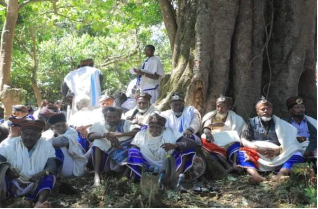
Figure 1. Time when Guji discuss on different issues to proclaim law for society.
In the traditional legislative process, sessions are held once every eight years, as noted in source. During these sessions, there is no formal procedure for proclaiming and reviewing laws; instead, the session is guided by four specific communicative phrases: ‘
Toggise’, ‘Qophise’, ‘Qoxise’, and ‘
Waabese’. These phrases help maintain order and prevent interruptions. When a
Hayyuu orally recites and proclaims laws from memory, they conclude with
‘Toggise’, which means “I have shared what I remember, and if I recall more, I will continue.” At this point, another
Hayyuu prepared to speak signals their readiness by saying ‘
Qophise’, which translates to “I have something to present.” If two
Hayyuu simultaneously indicate their readiness with ‘
Qophise’, the one who wishes to go first says ‘
Qoxise’, meaning “I object to being first.” If any
Hayyuu exceeds the agreed-upon scope of laws, another
Hayyuu will interrupt by saying ‘Waabese’, which means “he is exceeding,” thereby transferring the turn to someone else. Once the proclamation and recitation of laws are completed, the Abba Gadaa of Uraaga issues a command
(Jaldhaaba) for participants of the
Gumii session to return to their temporary residences or ‘
Qachaa’ | [12] | Endalkachew Lelisa. Oromo Indigenous Philosophy (Gadaa System): The Case of 74thGujii Oromo Gadaa Power Transition. Historical Research Letter. 2018. 44-45. |
[12]
4. Hawwadii Ceremony among Guji Oromo
Hawaddii is one of the Guji Oromo marriage ceremonies and follows a specific process. The ceremony occurs when a boy likes a girl, approaches her with good appearance and manners, and they agree to marry. The boy then takes the girl in. Afterward, he informs her parents to prevent them from worrying or searching for her. A mediator acts as a bridge between the families of the bridegroom and the bride to communicate this information. The messenger takes messages from the boy and tells the in-laws or family of the bride. This person goes to the girl's father and informs them that their daughter is there. After conveying this message, they follow the customs and traditions of the Guji Oromo to make an appointment for the day to perform the reconciliation. The girl's father often asks the boy's father to come and sit for reconciliation because he trusts him to take responsible care of his daughter. If the Boy’s father does not appear during reconciliation of the ceremony, the father bride consider as he not summarizing the responsibility for his daughter and he seeks the Boy’s father.
When the date of appointment comes they go to the girl’s father's house for reconciliation, the father of the boy or the brother of the bridegroom or his elder brother or his younger father goes in front of them, the bridegrooms goes next to them by wearing cultural clothes and holds his spear in his left hand and the dararaa (Tambo fi buna) in his right hand. When they reach the door of the bride parents, the person who acts as the father calls the bride's parents by saying Yaa Warra Kana slightly translate to English ”Oh this Parents”. The bride’s parent give response by saying yaa (yes), after he calls three times
Then they took off their shoes and the boy leaned his army (spear) on the left side of the door and entered the house and put dararaa* behind themselves…the person replaced as father or the father of the bridegroom call continuously the bride’s father, he don't stop calling until four and on the 4th top the girl’s father will give response to him or start conservation with the bridegroom father or agent…The boy’s father or agent saying your daughter is with me and don't look forward and bother to search her. Then they continues their conservation as follows:
Daughter’s father: asks what kind of person, who is she?
Boy’s father:-says your girls, your daughter.
Daughter’s father: - I knows that all of my families were at home no one is escaped from me, probably she is not my daughter (mock speech)
Boy’s father: - try to explains the girl's name with full of respect and dignity
Daughter’s father:-how did you marry my daughter?
Boy’s father:-my Boy married your daughter through Hawwadii
Daughter’s father:- If he married here through Hawwadii , where did he marry her, did he accept her from the cattle(shepherd), did he accept her from market, did he accept her from river when she watering water? , did he accept her from the school? He rains hard questions on the bridegroom father or agent
Boy’s father:-try to give response where his son accept the girl. If the boy is accept her from the school he tells him that he is accept from school. Lying is forbidden, he speaks only the truth. There is a proverb that Oromo says” dhuugaa dubatanii lafa namatti dhiitee buluu wayyaa” roughly translated it is better to tell the truth and staying in a sunken place. Because Oromo say that” dhugaan ilmoo waaqati” (“Truth is the son of God”)
Daughter’s father:-the person I sent to school to study for me and you interrupted her studies and took her away from school, is it right?
Boy’s father:-no it is not legal to expel her from school, it is not even culture and customary, what my son have done is uncultured, please my in-laws this is uncultured please excuse for me my in-laws, this is what he done. Because of that, it is thought that there are seven doors in Guji community (Gujiin balabala torbaa akkas jedhee wal gaafata, soddaan nan balleesse mucuca jedhee maal jetta jedhani wal gaafatu), the in-laws says to each other, did you hear what he saying, he accepted his error and asking apologize, and what do you think, in reverse they ask themselves?
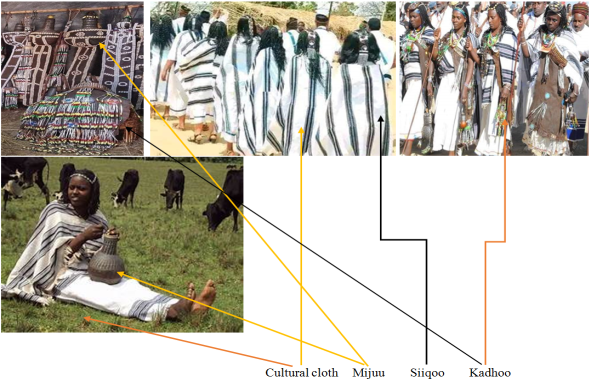
Guji balbala Torbaa: Upon recognizing his mistake, the groom seeks mucucaa (apology), and they engage in a dialogue, praying for calmness to address the groom’s wrongdoing. They discuss how to appropriately apologize to the bride’s family. According to Guji Balbala Torba customs, the father-in-law or the bridegroom’s father ensures that the bride receives cultural items like mijuu, kadhoo, siiqoo, Quttoo, and traditional clothing. If the bride accepts these and marries the groom, it is not considered abduction unless there are suspicions. Marrying without traditional items does not automatically imply abduction. When a girl hides from her family to marry, her haste or fear does not necessarily indicate kidnapping if she lacks traditional objects. Look the traditional object for marriage in the following figure.
Figure 2. The traditional Guji Oromo objects.
Boy’s father: In the middle of the conversation, he begs the bride's family as they take the darara he holds according to the culture. He says, "I have darara; take it from me."
Before accepting the dararaa, the girl's parents will clarify any remaining matters. After the Guji balbala Torbaa and the in-laws have cleared everything, the in-laws mentioned that because the boy's father and his friend repeatedly requested them to accept the dararaa, and then the bride's kinship and family agreed by saying to bring their dararaas, the boy (bridegroom) and his father together presented the dararaa to the girl's father, bowed their heads, and said, "Take it, my in-law." The girl's father says, "Daraari, daraari, sa’aa namaan daraari," which means to be prosperous and have rich livestock. In the second round, the bridegroom says, "Hoodhu mi’ooftuu soddaa," and the sodaa (father-in-law) replies, "Mi’awii" (be sweet). Then they take the blessing and sit down. After they sit down, the girl's father says to the Guji Balbala Torbaa, "The father-in-law brought me Dararaas, and I don't know if the girl is mine or someone else's." Then Balabala Torba asks each other, "What will you say if the girl comes? Is this true, or can she be someone else's or our daughter? Let us confirm her and talk more about the rest later."
Boy’s father: - I will bring the bride, and please give me the door, he asks them politely
Girl’s father: - balbala siif kenneera kunoo asiin bahii /I gave you the door get out of there/
Boy’s father: - says okay! The bridegroom and his friends bring her from the place where she was hiding. They hid the girl because they suspected someone might come and take her away from them by force. After they brought the girl, she went in and sat in the place prepared for her. Once seated, the boy’s father prayed for forgiveness, saying, "I have brought what you told me to bring; have mercy on me."
Daughter’s father: - Stay, I'm going to investigate how my daughter marries a bridegroom.
Boy’s father: - became silent in the middle as the bride's father investigated his daughter.
Daughter’s father: - My daughter, where did you stay?
Girl: - She will tell him where she is from.
Girl’s father: - What took you out? How did you get out of there? Were you kidnapped, beaten, and taken away, or did you leave of your own free will?
Girl: - He did not abduct me; it was based on my free will.
The girl's father responds that if his daughter is wearing cultural attire and claims she was not abducted and married of her own free will, what will the tribe say? However, if she doesn't wear the customary items, he questions whether she truly married willingly or left in a hurry without them. Even his daughter retorts. Then, the girl's father informs his tribe that his daughter has no cultural objects with her. Consequently, the tribe takes matters into their own hands and kidnaps her because she doesn't adhere to the rules. The action is buttaa (abduction). According to the book titled “Qorii Sana Aadaa,” if a bridegroom abducts a child against her will, he faces a punishment of 14 cattle. Seven of these cattle are returned to him, while the remaining seven are given to the girl’s parents.
Father of bridegrooms: - Saying that my in-laws, the fact is not as you say. My son married your daughter of her own free will, but she did not accept the traditional object. Due to a shortage of time, she left the house without taking it. Thus, forgive me, my in-laws, for saying "mucucaa soddolii kiyya" again and again.
The Tribe (Gujii balbala torbaa):- The tribes of Guji beg each other, saying that our daughter may have left home in a hurry and made an error by coming to us without taking any cultural objects. It may not be the bridegroom’s fault. They return to discussion with one another.
The bride’s tribe: erga akkana jettee Guji balbala torbaa namnii illee torbaa gumaan intalaa illee torbaa waan aadaa (jifuu) intalaa fidiree jedhanii isa gaafatu. Roughly translate to English “After you say this, they ask him, "Did you bring the punishment for the girl, which is seven cattle and seven thousand birr?"
The Boy’s father: - replied, "Yes, I brought seven cattle. One of them has returned, and another is coming from behind. I'll show you what I brought." The daughter's parents agreed and referred to the father, who looked at the cattle that had come and confirmed it.
The boy’s father formally requests permission to leave through the door. In response, the girl’s father grants this permission by saying, “I give you the door; you may exit this way.” The boy’s father then presents the dowry, typically one or two heifer cattle. It is imperative that these cattle have healthy ears and are not adorned with a neck band. The girl’s family may raise objections if the cattle have a rope around their necks, as it is considered inauspicious for the future of the bride and groom’s union.
If by chance they bring the cattle with a band, the boy’s father realizes his guilt and says, "Forgive me, my in-laws, and make me mucuca (apologize)." After this, if there is any promise they have made to each other, once they have agreed and fulfilled it, the father of the boy gives a double drink to the father of the girl. This means that, in Oromo views, the bride and groom do not separate from one another until death. Next, the bride's father blesses and gives gifts to the father of the groom and the bridegroom as a pair. After these are given, a cultural drink is distributed to all attendees and special guests at the wedding.
Then the coffee is ordered to enter the in-laws' home and be prepared. This is followed by food and drink at the wedding reception, where blessings are exchanged. After the coffee is served and enjoyed, and after necessary conversations and games, the bride's father and the groom's clan bless him and allow him to enter with the bride. In general, the Oromo people are gracious, having been in harmony with God since birth and upholding divine morality on earth.
According to Guji Oromo tradition, after the wedding ceremony, there is a special message from the father of the bride to the father of the groom about how he should protect the married girl. Here is how he conveys his message.
Ilmoo siniif kenne kana akka ija hin balleessinee……Don't lose sight/eye/ of the child I gave you
Akka lafee hin cabsine……you don’t breaking here bone
Akka ilkaan hin cabsine………you don't break her teeth
Akka seeraan buulchuu dhaamaa…….He tells them to rule by law, respect etc.
Dubartiin waayoma qabdii waayoma ishee eegi….. A woman has a respecting and keep her respect
In Oromo society, the dignity and respect of women are upheld through cultural traditions and the gada system. A key symbol of this respect is the
qanafaa, an esteemed object made from the resilient bark of a tree. When an Oromo woman dons the
qanafaa across her forehead, it signifies to the community that she has recently given birth, prompting everyone to offer her special protection and fulfill her needs. This cultural practice ensures that women, particularly during pregnancy and childbirth, receive exceptional care. If a woman wearing the
qanafaa is unjustly harmed, the siiqee institution comes into play. The law of siiqee calls upon women to unite in defense of their rights. They convene and chant in solidarity, using phrases like “intala aayyaa dhageessee oduun si geessee, deessuu adda
qanafaa dhaananii dhageessee oduun si geessee,” which translates to “Girl of the aayyaa, have you heard the news? Has the news reached you? A special woman with the
qanafaa was beaten.” Through this collective action, they assert their rights and demand justice, reinforcing the cultural norms that protect women’s dignity
| [13] | Temam Hajiadem. Atete: A Multi-Functional Deity of Oromo Women with Particular Emphasis on Human Rights and Conflict Resolution Management. Current Research Journal of Social Sciences.2019.22-23. |
[13]
.The institution of
siqqee enabled women, who departed from their families and communities to join their husbands’, to protect themselves and each other from abuse. It also empowered them to control key economic assets within the household sphere
| [14] | Assafa Jalata.The Oromo, gadaa/siqqee democracy and the liberation of Ethiopian colonial subjects. University of Tennessee, Knoxville, Tennessee, USA.2013.282-83. |
[14]
| [15] | Yisak Gebrekirstos. Role of Gada System in Peace Building among the Youth of Arsi Oromo, West Arsi Zone, Ethiopia. Global scientific journal.2021.3463-64. |
[15]
| [16] | Lenin Kuto, Ayehu Bacha,and Gemechu Tay. Indigenous Institutions of Women: The Case of Wijjoo among Arsii Oromoo, Ethiopia. Journal of Gender Studies .2018.2-6. |
[16]
.
According to Guji custom, it is forbidden to touch the girl who tied Quttoo, she has something traditional, and anyone who touches her without her permission will pays a heifer of cattle.
Qutto is traditional object that is tied on the fore head of the Guji girls before getting the marriage or holding siiqee. Quttoo show the identity, honor and virginity of girls, no one touches her clothes or body without her permission, the girls that tied Qutto on her head is considered as the horse with saddle. Touch the girl with Qutto has the punishment of a heifer of cattle. Furthermore holding a married woman by the hand, walking ahead, beating her, insulting her is a crime. It shows us that the Oromo have different things to do with caring for and respecting women. In general, when a Guji girl gets married, after the relatives of the girl's parents complete the traditional cultural requirements, they eat, drink, and bless her. As the girl departs from her home, her friends accompany her with song, chanting, “Hiriyooyee, hiriyoyeeyee sin gageessa mani kee eessaa,” as they guide her to her new home with her husband.
5. Conclusion
The Oromo, the largest ethnic group in the Horn of Africa, have been guided by the Gada system for many years. This system is deeply integrated into the Oromo way of life, ensuring equality, non-discrimination, and adherence to its rules. Since the 19th century, the Gada system has faced weakening due to external and internal pressures, affecting various Oromo clans. However, the Guji Oromo have resisted these pressures, maintaining the strength of this governance system. They conduct all aspects of life, including marriage, according to Gada principles. The Guji Oromo practice various marriage customs such as Kadhaa (betrothal), Hawaddii (marriage by convincing the bride without involving parents), Addibaanaa(Asenna) (a girl entering a man’s home without his permission), Dhaala (inheritance), and Sabbata Mari/irra dhaabaa (urgent marriage without prior arrangement). While Butii (abduction) is rarely practiced and viewed as a crime, it occurs when a boy is rejected by the girl or her parents, or due to economic difficulties. According to the traditional law of Oromo, a person who abducts a girl will face physical punishment. The abductor is required to bring 14 cattle along with the girl he has taken. Out of these, seven cattle are returned to the abductor, while the remaining seven are given to the girl’s parents. Ultimately, the girl is entrusted to the man she loves, as mandated by the law.
Kadhaa and Hawwadii are considered the most democratic and preferred marriage customs. According to Guji Oromo beliefs, neither the bride nor groom can exchange gifts outside the Gada system’s provisions. The heifer is for the bride’s father, and qaraxa is for the bride’s brother, maintaining economic fairness. Hawwadii begins with mutual agreement, while Kadhaa involves family consent. In some parts of Oromia, practices like sonee among the Macha Oromo and gabbaraa among the Siiko-Mandoo Oromo harm societies economically by making marriage ceremonies unaffordable, challenging impoverished families who wish to marry for love. There is a call to return to traditional Oromo customs to address these issues.
6. Recommendation
I will express my opinion on this research as follows:
1. Promote Kadhaa and Hawwadi as the most democratic Oromo marriage ceremonies, and reduce the emphasis on Butta culture among the Oromo.
2. Ensure that all Oromo tribes and clans adhere to the Gada system during marriage ceremonies to preserve cultural integrity.
3. Advocate for a return to traditional Oromo laws and customs in marriage practices, steering away from gabara norms and Western influences.
4. Address economic and social challenges by proposing strategies to limit excessive spending on weddings.
5. Conduct detailed studies on the laws regarding son-daughter responsibilities in Me’ee Bokko, ensuring these are effectively communicated and applied to address socio-economic issues.
6. Educate communities on Guji customs concerning sons and daughters in public assemblies, and encourage their adoption by the Oromo people. Furthermore, promote these cultural practices among ethnic groups in the Horn of Africa and worldwide to manage marriage expenses more effectively.
Definition of Local Terms
Dararaa: Things like coffee and tobacco used for pray the girl in Guji culture
Faroo: Looking at success
Gabbaraa: Delivering money or cattle to the girl's parents for marriage
Gumii: assembly of Oromo
Haaganaa: members of congress who have political powers and represent three Administrative division of Gujii Gadaa(Uraaga, Maattii and Hookku
Jaldhaaba: policy of Abba gadaa
Kadhoo: A cowhide device used to carry a baby on its back at birth
Mijuu: The traditional object that a girl carries when she gets married
mucuca: Apologize/excuse/
Qachaa: temporary residence
Qanafa: A traditional object tied by an Oromo woman on her head during childbirth
siiqee: It is a thin stick that Oromo women hold after marriage and assert their rights
sonee: Money given to the girl's parents, for making ceremonies
Author Contributions
Getu Gonfa Ararso is the sole author. The author read and approved the final manuscript.
Conflicts of Interest
The author declares no conflicts of interest.
References
| [1] |
Alemayehu, H. et al. History of the Oromo to the sixteenth century. third and second impression ed. s.l.:Oromia culture and tourism bureau. 2014.
|
| [2] |
Tesema Ta’a. The Gadaa System and Some of Its Institutions among the Booranaa: A Historical Perspective. EJOSSAH Vol. XII, No.2. 2016.82.
|
| [3] |
Moti Mosisa. The Analysis of the Gadaa System in Comparison to Western Democracy. Leuven University Press. 2020.80.
|
| [4] |
Wake, J. Theorizing Namummaa: Oromo relational philosophy (Oromos’ Gift to the World). African Journal of History and Culture. 2018. 79.
|
| [5] |
Taddesse, J. Guji Oromo Ways of Life, Gadaa System and Waaqefanna. 2011.
|
| [6] |
Negessa Mokona and P.D. Satya Pal Kumar. Gadaa System Among Guji In Southern Ethiopia. Journal of Critical Reviews. 2021. 554.
|
| [7] |
Negessa Mokona. Guji Girja Gada System and Contemporary Challenges. International Journal of Innovative Research & Development.2018.43-44.
|
| [8] |
Siifsiin. Yaa’ii Gumii Ardaa Jilaa Me’ee Bookkoo Fi Tumaata Seeraa. 2008 [Online].
|
| [9] |
Ramadan Nuuro.etal. Qorii sona Aadaa. Zak print. 2016. 60-63.
|
| [10] |
Kebede Lemu and Aregash Eticha. The Role of Customary Conflict Resolution Mechanisms among the Oromo: In Case of Dawo District of South West Shewa Zone. Science publishing group. 2019.32-35.
|
| [11] |
Gemechu Kenea. Gadaa: An Indigenous Democracy of Oromo people on Promoting Gender Equality, Guji Oromo in focus, Oromiya. Palarch’s Journal of Archaeology of Egypt/ Egyptology.2020.4920-23.
|
| [12] |
Endalkachew Lelisa. Oromo Indigenous Philosophy (Gadaa System): The Case of 74thGujii Oromo Gadaa Power Transition. Historical Research Letter. 2018. 44-45.
|
| [13] |
Temam Hajiadem. Atete: A Multi-Functional Deity of Oromo Women with Particular Emphasis on Human Rights and Conflict Resolution Management. Current Research Journal of Social Sciences.2019.22-23.
|
| [14] |
Assafa Jalata.The Oromo, gadaa/siqqee democracy and the liberation of Ethiopian colonial subjects. University of Tennessee, Knoxville, Tennessee, USA.2013.282-83.
|
| [15] |
Yisak Gebrekirstos. Role of Gada System in Peace Building among the Youth of Arsi Oromo, West Arsi Zone, Ethiopia. Global scientific journal.2021.3463-64.
|
| [16] |
Lenin Kuto, Ayehu Bacha,and Gemechu Tay. Indigenous Institutions of Women: The Case of Wijjoo among Arsii Oromoo, Ethiopia. Journal of Gender Studies .2018.2-6.
|
Cite This Article
-
-
@article{10.11648/j.ipa.20250901.13,
  author = {Getu Gonfa Ararso},
  title = {Marriage Ceremonies Practiced Through Hawwadii and Kadhaa among Guji Oromo
},
  journal = {International and Public Affairs},
  volume = {9},
  number = {1},
  pages = {29-37},
  doi = {10.11648/j.ipa.20250901.13},
  url = {https://doi.org/10.11648/j.ipa.20250901.13},
  eprint = {https://article.sciencepublishinggroup.com/pdf/10.11648.j.ipa.20250901.13},
  abstract = {This research explores the marriage ceremonies of the Oromo, the largest ethnic group in the Horn of Africa, who have inhabited northeastern Africa since ancient times. Their current spatial distribution has been shaped by various environmental, socio-economic, and political factors. The Oromo people possess a distinct culture, with unique customs, morals, religion, language, philosophy, administrative systems, and civilization. This study employs qualitative research methods, including interviews, focus group discussions, observations, and the analysis of primary and secondary sources. An ethnographic approach was utilized, involving participation in the visual and auditory aspects of marriage processes. The main focus is on the Hawwadii and Kadhaa ceremonies, aiming to analyze their impact and educate the global community about the Guji Oromo’s rich cultural heritage.
},
 year = {2025}
}
 Copy
|
Copy
|
 Download
-
TY  - JOUR
T1  - Marriage Ceremonies Practiced Through Hawwadii and Kadhaa among Guji Oromo

AU  - Getu Gonfa Ararso
Y1  - 2025/04/10
PY  - 2025
N1  - https://doi.org/10.11648/j.ipa.20250901.13
DO  - 10.11648/j.ipa.20250901.13
T2  - International and Public Affairs
JF  - International and Public Affairs
JO  - International and Public Affairs
SP  - 29
EP  - 37
PB  - Science Publishing Group
SN  - 2640-4192
UR  - https://doi.org/10.11648/j.ipa.20250901.13
AB  - This research explores the marriage ceremonies of the Oromo, the largest ethnic group in the Horn of Africa, who have inhabited northeastern Africa since ancient times. Their current spatial distribution has been shaped by various environmental, socio-economic, and political factors. The Oromo people possess a distinct culture, with unique customs, morals, religion, language, philosophy, administrative systems, and civilization. This study employs qualitative research methods, including interviews, focus group discussions, observations, and the analysis of primary and secondary sources. An ethnographic approach was utilized, involving participation in the visual and auditory aspects of marriage processes. The main focus is on the Hawwadii and Kadhaa ceremonies, aiming to analyze their impact and educate the global community about the Guji Oromo’s rich cultural heritage.

VL  - 9
IS  - 1
ER  -
Copy
|
Download





 Share This Article
 Twitter
 Linked In
 Facebook