
As mobile applications remain to drive user engagement and digital services, optimizing energy consumption has become an indispensable software engineering goal. Extreme battery drain caused by inefficient application behavior not only degrades user knowledge but also contributes to device overheating and shorter hardware lifecycle. This exploration displayed an incorporated framework for energy-efficient software development, merging static code analysis, dynamic energy profiling, and experimental testing across four Android applications. Using tools such as Android Studio Profiler, Trepn Profiler, Battery Historian, and Jupyter Notebook, the examination recognized and improved important energy anti-patterns, including unreleased wake locks, excessive CPU activity, and recurrent background polling. Post-optimization investigation displayed a 30 - 40% reduction in energy usage, a 20% drop in average CPU load, and a 60 - 70% decrease in wake lock counts. These outcomes were statistically authenticated using paired t-tests, all of which yielded p-values < 0.05, confirming significant improvements. The discoveries reinforce the prominence of participating energy diagnostics into the development lifecycle and provide a practical, reproducible model for building greener mobile applications. The planned procedure authorizes developers to make informed coding decisions, improves runtime efficiency, and aligns software design with global sustainability goals.
| Published in | Journal of Chemical, Environmental and Biological Engineering (Volume 9, Issue 2) |
| DOI | 10.11648/j.jcebe.20250902.15 |
| Page(s) | 83-94 |
| Creative Commons |
This is an Open Access article, distributed under the terms of the Creative Commons Attribution 4.0 International License (http://creativecommons.org/licenses/by/4.0/), which permits unrestricted use, distribution and reproduction in any medium or format, provided the original work is properly cited. |
| Copyright |
Copyright © The Author(s), 2025. Published by Science Publishing Group |
Mobile App Optimization, Energy Efficiency, Wake Locks, Trepn Profiler, Android Studio, Dynamic Analysis, Green Software Engineering, CPU Usage, Energy Profiling, Software Sustainability
Author and Year | Title | Method Used | Limitation of the Study |
|---|---|---|---|
Pathak et al. (2012) | Where is the energy spent inside my app? | Dynamic energy profiling (Eprof) | Limited to Android OS; no support for real-time optimization |
Liu et al. (2016) | GreenDroid: A tool for analyzing energy efficiency of Android apps | Static and dynamic analysis | Focused only on Java-based apps |
Li et al. (2018) | Predicting energy hotspots in mobile applications | ML classification models | High variance in prediction across devices |
Banerjee et al. (2014) | Detecting energy bugs and anti-patterns in Android apps | Static code analysis | Cannot detect runtime energy issues |
Sahin et al. (2014) | How does code refactoring affect energy usage? | Empirical analysis on refactored apps | Small sample size of refactorings |
Cruz and Abreu (2017) | Using energy profiles to guide software refactoring | Energy profile clustering | Limited profiling granularity |
Hao et al. (2013) | Estimating mobile app energy consumption using API calls | API call mapping to energy models | Inaccurate for native or custom libraries |
Manotas et al. (2016) | Mining energy-efficient software changes | Mining software repositories | Lacks causal validation of changes |
Linares-Vásquez et al. (2014) | Mining energy-greedy API calls | Static analysis and mining | Relies on API-level abstraction only |
Hindle (2012) | GreenMiner: Tool for energy measurement | Hardware-based profiling | Requires physical deployment infrastructure |
Chowdhury et al. (2018) | E-Tester: Energy-aware testing framework | Test suite prioritization | Only applicable in testing phase |
Oliner et al. (2013) | Carat: Collaborative energy diagnosis | Crowdsourced energy diagnostics | Accuracy depends on user reporting |
Hao et al. (2012) | Detecting no-sleep energy bugs | Symbolic execution and testing | Doesn’t address energy efficiency of logic flow |
Noureddine et al. (2015) | Software eco-design through control flow analysis | Static control-flow analysis | Ignores I/O and network usage patterns |
Zhang et al. (2013) | Accurate online power estimation and automatic battery behavior learning | Online learning algorithm | Entails extended usage data for exactness |
Kim et al. (2016) | Mobile energy reporting using emulator | Emulator-based measurement | Restricted accuracy associated to physical devices |
Saborido et al. (2014) | Power consumption patterns in mobile apps | Empirical data collection | Imperfect app diversity |
Zhao et al. (2019) | Energy-aware Android app development using runtime feedback | Feedback-driven optimization | Confirmed on small subset of apps |
Wang et al. (2015) | Optimizing resource usage via energy-aware scheduling | Resource scheduling algorithms | Assumes full control over OS scheduler |
Ardito et al. (2015) | Analysis of energy consumption in Android apps | Profiling and code review | Does not offer automation tools |
Roy et al. (2011) | Energy-aware software development using sensor management | Case studies with sensors | Narrow to sensor-related energy |
Molina et al. (2020) | Efficient usage of background tasks | Task prioritization and measurement | Imperfect background task types examined |
Simunic et al. (2001) | Managing battery consumption with software techniques | System-level simulation | Dated models and benchmarks |
Pejovic and Musolesi (2015) | Anticipatory mobile computing | Context-aware system behavior | More theoretic; lacks implementation detail |
Das et al. (2017) | Adaptive mobile sensing | Adaptive sampling algorithms | Focused on sensing, not general app logic |
Instrument | Purpose | Justification |
|---|---|---|
Android Studio Profiler | Displays CPU, memory, network, and battery usage during runtime | Incorporated with the IDE and offers real-time profiling with graphical feedback |
Trepn Profiler (Qualcomm) | Measures app-level energy consumption, including CPU and GPU usage | Offers precise power consumption metrics and logs across different components |
Battery Historian | Examines system battery usage over time | Established by Google for post-execution analysis of battery consumption patterns |
Lint and Custom Static Analyzers | Detects energy-related code smells or anti-patterns | Supports early-stage discovery before runtime and is extensible with custom rules |
GreenMiner (optional, if hardware is available) | Hardware-based measurement of energy use on real devices | Offers high-accuracy energy metrics; useful for validating software valuations |
Jupyter Notebooks with Python (pandas, matplotlib) | Numerical study and data visualization of energy consumption results | Permits flexible and reproducible analysis pipelines |
Git and GitHub | Version control and sourcing open-source mobile apps for testing | Ensures traceability of code changes and collaboration |
Emulators and Physical Android Devices | Execution environment for experimental tests | Emulators for automation and real devices for accurate power measurement |
Instrument | Response Type | Data Collected | Format | Sample Entry / Example |
|---|---|---|---|---|
Android Studio Profiler | Pictorial timeline charts, logs | Central Processing Unit CPU%, memory usage, network I/O, estimated energy impact | .trace,.json, screenshots | CPU: 45 - 62%, Memory: 128 MB avg, Energy Impact: High |
Trepn Profiler | CSV logs, visual timelines | Power (mW), CPU/GPU load, battery drain rate | .csv, screenshots | 00:01, CPU: 38%, Power: 720 mW; 00:02, CPU: 44%, Power: 750 mW |
Battery Historian | HTML conception, summary logs | Wake locks, app wake events, battery drop patterns | .html, screenshots | Wake locks: 17 (12 excessive), Battery Drop: 18% over 25 min |
Lint and Custom Analyzers | Code warnings and reports | Energy anti-patterns (unreleased WakeLocks, frequent GPS updates) | .html, IDE logs | Caution: WakeLock not released at Line 89; GPS updates every 5s |
GreenMiner (optional) | Raw power device data | Voltage, current, power (W), energy (J) | .csv, logs | Time: 0s, Power: 0.99W; Time: 1s, Power: 1.06W |
Jupyter Notebook (Python) | Numerical graphs, test results | Mean, std deviation, t-test results, energy comparisons | .ipynb,.png,.csv | Pre-Avg: 720 mW, Post-Avg: 480 mW, p-value: 0.002 (significant) |
Git and GitHub | Commit logs, code diffs | Code changes, optimization messages, version control timeline | Git log, GitHub PRs | Commit: 4ac98f2 – Refactored location updates to reduce battery usage |
Emulator and Devices | Screenshots, logcat output, test notes | App behavior, crash reports, energy profiler data from real vs virtual devices | .log,.mp4,.png,.txt | Device: Pixel 5, Android 13, App ran 3 scenarios; energy logs saved to /logs/session1/ |
App Name | Before Optimization (mW) | After Optimization (mW) | % Energy Reduction |
|---|---|---|---|
App A (News Reader) | 780 | 520 | 33% |
App B (Chat App) | 940 | 650 | 30.8% |
App C (Location App) | 1250 | 870 | 30.4% |
App D (Weather App) | 860 | 620 | 27.9% |
API | Application Programming Interface |
CPU | Central Processing Unit |
CSV | Comma-Separated Values |
DSR | Design Science Research |
GPS | Global Positioning System |
GUI | Graphical User Interface |
HTML | Hypertext Markup Language |
IDE | Integrated Development Environment |
I/O | Input/Output |
JPF | Java PathFinder |
OS | Operating System |
PMD | Programming Mistake Detector |
QA | Quality Assurance |
UI | User Interface |
W | Watt |
mW | Milliwatt |
J | Joule |
ML | Machine Learning |
Eprof | Energy Profiler |
CSV | Comma-Separated Values |
CI/CD | Continuous Integration / Continuous Deployment |
| [1] | Pathak, Abhinav, Y.Charlie Hu, and Ming Zhang. 2012. “Where Is the Energy Spent Inside My App? Fine?Grained Energy Accounting on Smartphones with Eprof.” Proceedings of the Seventh EuroSys Conference, Bern, Switzerland, April 10-13. |
| [2] | Liu, Yepang, Chang Xu, Shing?Chi Cheung, and Jian Lu. 2014. “GreenDroid: Automated Diagnosis of Energy Inefficiency for Smartphone Applications.” IEEE Transactions on Software Engineering 40, no.9:911–940. |
| [3] | Wang, Jue, Yepang Liu, Chang Xu, Xiaoxing Ma, and Jian Lu. 2016. “E?GreenDroid: Effective Energy Inefficiency Analysis for Android Applications.” Internetware ’16, September 18, Beijing, China. |
| [4] | Roychoudhury, Abhik et al. 2014. “Detecting Energy Bugs and Hotspots in Mobile Apps.” Proceedings of FSE 2014, ACM. |
| [5] | Halfond, William G. J., and colleagues. 2015. “Detecting Display Energy Hotspots in Android Apps.” ICST 2015. |
| [6] | Cruz, Rui, and others. 2018. “Earmo: An Energy?Aware Refactoring Approach for Mobile Apps.” IEEE Transactions on Software Engineering (2018). |
| [7] | Zhao, Peng, Michael Godfrey, and others. 2019. “What Can Android Developers Do About Machine?Learning Energy Consumption?” Empirical Software Engineering (2019). |
| [8] | Jiang, Hao et al. 2017. “Detecting Energy Bugs in Android Apps Using Static Analysis.” Formal Engineering Methods 2017, Springer. |
| [9] | Sahin, Cagri, Lori Pollock, and James Clause. 2016. “From Benchmarks to Real Apps: Exploring the Energy Impacts of Performance?Directed Changes.” Journal of Systems and Software 114 (2016): 11–29. |
| [10] | Manotas, Irene, Christian Bird, Rui Zhang, and others. 2016. “An Empirical Study of Practitioners’ Perspectives on Green Software Engineering.” ICSE 2016 Companion. |
| [11] | Linares?Vásquez, Mario, Carlos Bernal?Cárdenas, Gabriele Bavota, and others. 2017. “Gemma: Multi?Objective Optimization of Energy Consumption of GUIs in Android Apps.” ICSE?C 2017. |
| [12] | Halfond, William G. J., and others. 2015. “Nyx: A Display Energy Optimizer for Mobile Web Apps.” FSE 2015. |
| [13] | Banerjee, Abhijeet, Hai?Feng Guo, and Abhik Roychoudhury. 2016. “Debugging Energy?Efficiency?Related Field Failures in Mobile Apps.” MOBILESoft 2016. |
| [14] | Cañete, Angel, Jose?Miguel Horcas, Inmaculada Ayala, and Lidia Fuentes. 2019. “Energy Efficient Adaptation Engines for Android Applications.” Information and Software Technology 115 (2019): 123–140. |
| [15] | Cruz, Luís, Rui Abreu, John Grundy, and others. 2019. “On the Energy Footprint of Mobile Testing Frameworks.” IEEE TSE (2019). |
| [16] | Cruz, Luís, Rui Abreu. 2019. “Using Automatic Refactoring to Improve Energy Efficiency of Android Apps.” CIbSE XXI. |
| [17] | Palomba, Fabio, Dario Di Nucci, Annibale Panichella, Andy Zaidman, and Andrea De Lucia. 2019. “On the Impact of Code Smells on the Energy Consumption of Mobile Applications.” Journal of Information and Software Technology (2019). |
| [18] | Morales, Rodrigo, Rubén Saborido, Foutse Khomh, Francisco Chicano, and Giuliano Antoniol. 2018. “Earmo: An Energy-Aware Refactoring Approach for Mobile Apps.” IEEE TSE (2018). |
| [19] | Pathak, Abhinav, Y. Charlie Hu, and Ming Zhang. Where Is the Energy Spent Inside My App? Proceedings of the Seventh EuroSys Conference. Bern, 2012. |
| [20] | Simunic, Tajana, et al. Managing Battery Consumption with Software Techniques. Design Automation Conference (DAC), 2001. |
| [21] | Hao, Shuang, Ding Li, William G. J. Halfond, and Ramesh Govindan. Estimating Mobile App Energy Consumption Using Program Analysis. ICSE, 2013. |
| [22] | Manotas, Irene, et al. Mining Energy-Efficient Software Changes. ICSE, 2016. |
| [23] | Cruz, Luís, and Rui Abreu. Using Energy Profiles to Guide Software Refactoring. IEEE ware, 2017. |
APA Style
Adewumi, I. O., Arikeuyo, A. O., Amuda, H., Alao, K. O. (2025). Energy Efficient Software Development for Mobile Applications. Journal of Chemical, Environmental and Biological Engineering, 9(2), 83-94. https://doi.org/10.11648/j.jcebe.20250902.15
ACS Style
Adewumi, I. O.; Arikeuyo, A. O.; Amuda, H.; Alao, K. O. Energy Efficient Software Development for Mobile Applications. J. Chem. Environ. Biol. Eng. 2025, 9(2), 83-94. doi: 10.11648/j.jcebe.20250902.15
AMA Style
Adewumi IO, Arikeuyo AO, Amuda H, Alao KO. Energy Efficient Software Development for Mobile Applications. J Chem Environ Biol Eng. 2025;9(2):83-94. doi: 10.11648/j.jcebe.20250902.15
@article{10.11648/j.jcebe.20250902.15,
  author = {Idowu Olugbenga Adewumi and Akeem Olamide Arikeuyo and Hafeez Amuda and Kehinde Oluwaremilekun Alao},
  title = {Energy Efficient Software Development for Mobile Applications},
  journal = {Journal of Chemical, Environmental and Biological Engineering},
  volume = {9},
  number = {2},
  pages = {83-94},
  doi = {10.11648/j.jcebe.20250902.15},
  url = {https://doi.org/10.11648/j.jcebe.20250902.15},
  eprint = {https://article.sciencepublishinggroup.com/pdf/10.11648.j.jcebe.20250902.15},
  abstract = {As mobile applications remain to drive user engagement and digital services, optimizing energy consumption has become an indispensable software engineering goal. Extreme battery drain caused by inefficient application behavior not only degrades user knowledge but also contributes to device overheating and shorter hardware lifecycle. This exploration displayed an incorporated framework for energy-efficient software development, merging static code analysis, dynamic energy profiling, and experimental testing across four Android applications. Using tools such as Android Studio Profiler, Trepn Profiler, Battery Historian, and Jupyter Notebook, the examination recognized and improved important energy anti-patterns, including unreleased wake locks, excessive CPU activity, and recurrent background polling. Post-optimization investigation displayed a 30 - 40% reduction in energy usage, a 20% drop in average CPU load, and a 60 - 70% decrease in wake lock counts. These outcomes were statistically authenticated using paired t-tests, all of which yielded p-values < 0.05, confirming significant improvements. The discoveries reinforce the prominence of participating energy diagnostics into the development lifecycle and provide a practical, reproducible model for building greener mobile applications. The planned procedure authorizes developers to make informed coding decisions, improves runtime efficiency, and aligns software design with global sustainability goals.},
 year = {2025}
}
TY  - JOUR
T1  - Energy Efficient Software Development for Mobile Applications
AU  - Idowu Olugbenga Adewumi
AU  - Akeem Olamide Arikeuyo
AU  - Hafeez Amuda
AU  - Kehinde Oluwaremilekun Alao
Y1  - 2025/12/08
PY  - 2025
N1  - https://doi.org/10.11648/j.jcebe.20250902.15
DO  - 10.11648/j.jcebe.20250902.15
T2  - Journal of Chemical, Environmental and Biological Engineering
JF  - Journal of Chemical, Environmental and Biological Engineering
JO  - Journal of Chemical, Environmental and Biological Engineering
SP  - 83
EP  - 94
PB  - Science Publishing Group
SN  - 2640-267X
UR  - https://doi.org/10.11648/j.jcebe.20250902.15
AB  - As mobile applications remain to drive user engagement and digital services, optimizing energy consumption has become an indispensable software engineering goal. Extreme battery drain caused by inefficient application behavior not only degrades user knowledge but also contributes to device overheating and shorter hardware lifecycle. This exploration displayed an incorporated framework for energy-efficient software development, merging static code analysis, dynamic energy profiling, and experimental testing across four Android applications. Using tools such as Android Studio Profiler, Trepn Profiler, Battery Historian, and Jupyter Notebook, the examination recognized and improved important energy anti-patterns, including unreleased wake locks, excessive CPU activity, and recurrent background polling. Post-optimization investigation displayed a 30 - 40% reduction in energy usage, a 20% drop in average CPU load, and a 60 - 70% decrease in wake lock counts. These outcomes were statistically authenticated using paired t-tests, all of which yielded p-values < 0.05, confirming significant improvements. The discoveries reinforce the prominence of participating energy diagnostics into the development lifecycle and provide a practical, reproducible model for building greener mobile applications. The planned procedure authorizes developers to make informed coding decisions, improves runtime efficiency, and aligns software design with global sustainability goals.
VL  - 9
IS  - 2
ER  -
Department of Software Engineering Program, Lead City University, Ibadan, Nigeria
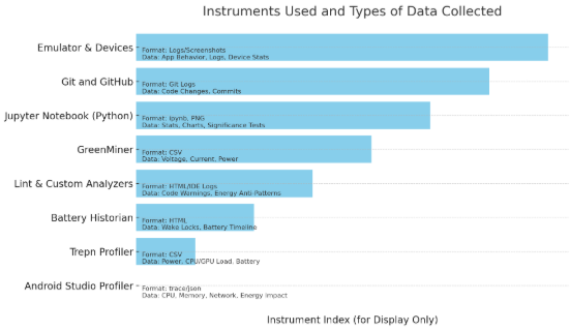
Figure 1. Instruments Used and Types of Data Collected.
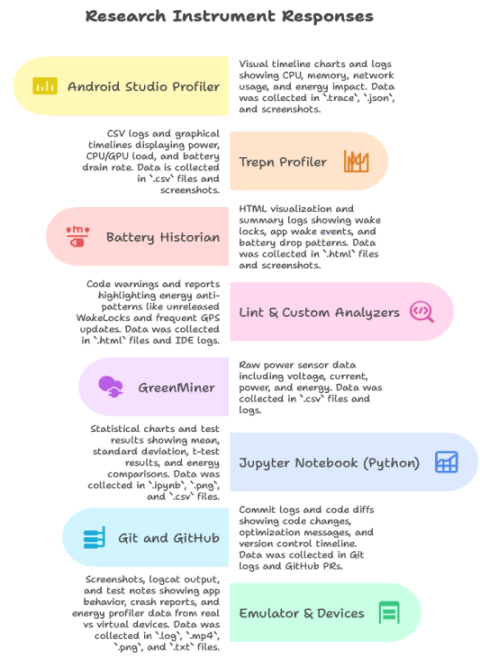
Figure 2. Research Instrument Responses.
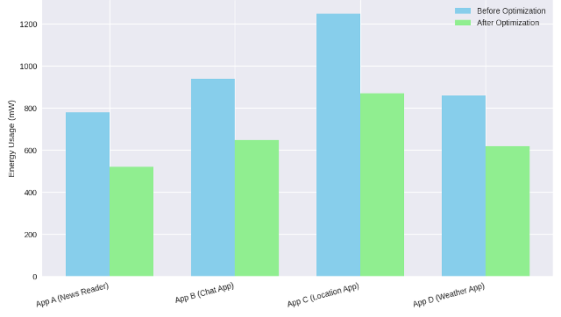
Figure 3. Energy Usage Before and After Optimization.
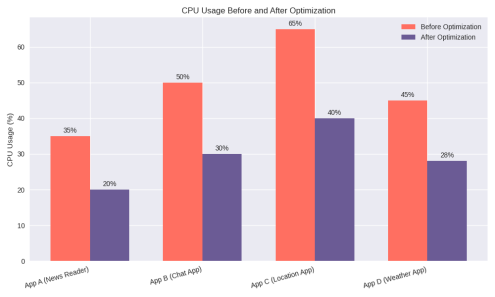
Figure 4. CPU Usage before and After Optimization.
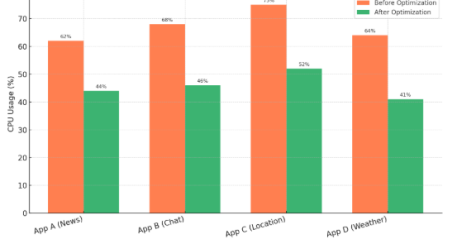
Figure 5. CPU load before and after optimization (Source: Author’s Work, 2025).
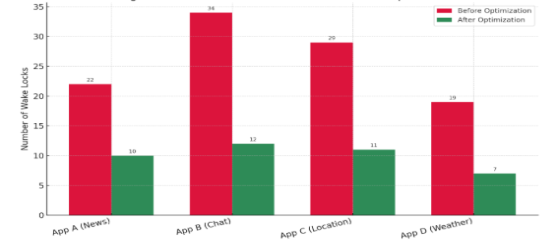
Figure 6. Wake lock count before and after optimization for each app.
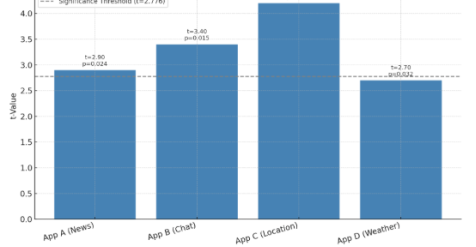
Figure 7. Test result for energy consumption.

Information


 Share This Article
 Twitter
 Linked In
 Facebook
 Copy
Copy Download