
Purification is though a cost implicative aspect in production and application of enzymes. Lipase, urease and peroxidase were produced from strains of Pseudomonas isolated from a crude oil polluted soil using standard microbiology and biochemical techniques. The stress responsive enzymes were produced through submerged fermentation technique. Crude extracts were precipitated at physiologic pH show the crude extract precipitation of lipase with maximum protein precipitation at 70% saturation of the ammonium salt, precipitation of the crude extracts of urease with maximum protein precipitation at 60% saturationof the ammonium salt while precipitation of the crude extracts of peroxidase with maximum protein precipitation at 50% saturation of the ammonium salt. Crude protein of lipase was purified upto 2.32 folds after gel filtration (sephadex G-100) with percentage yield of 2.00%.The specific activity of lipase increased from 211.81 to 490.55 U/m g after gel filtration. Crude urease was purified up to 3.20 folds after gel filtration (sephadex G-100) with percentage yield of 2.30%. The specific activity of urease increased from 170.56 to 546.88U/mg after gel filtration. Crude protein extract of peroxidase was purified upto 2.8 folds after gel filtration (sephadex G-100) with percentage yield of 2.20%. The specific activity of peroxidase increased from 215.38 to 602.20U/mg after gel filtration. lipase, urease and peroxidase activity showed optimum activity at pH of 6.0; 7.0 and 4.5 respectively while 50°C;60°C and 40°C were optimum activity of lipase, urease and peroxidase respectively. Michaelis-menten constant (KM) and maximal velocity of catalysis (Vmax) of 0.32mM and 200 μmol/min were obtained at different concentrations of p-NPP for lipase; whereas KM of 0.370mM and velocity maximal of 197.27μmol/min were obtainedat different concentrations of standard urea for urease and Michaelis-Menten constant (Km)and maximal velocity(Vmax) of 3.45mM and 270μmol/min were obtained at different concentrations of o-dianisidine hydrogen peroxide standard substrates for peroxidases. The purification and kinetic properties of enzymes defines their much physiologic stability and efficient catalytic profile for wide application.
| Published in | Journal of Chemical, Environmental and Biological Engineering (Volume 10, Issue 2) |
| DOI | 10.11648/j.jcebe.20261002.15 |
| Page(s) | 76-89 |
| Creative Commons |
This is an Open Access article, distributed under the terms of the Creative Commons Attribution 4.0 International License (http://creativecommons.org/licenses/by/4.0/), which permits unrestricted use, distribution and reproduction in any medium or format, provided the original work is properly cited. |
| Copyright |
Copyright © The Author(s), 2026. Published by Science Publishing Group |
Purification, Kinetic Properties, Specific Activities, Precipitation
Coliform counts | ControlAtali | H-C Bacteria |
|---|---|---|
Total Viable Counts (10-2) | 2.7X10⁵ 4.5x10⁷ | 2.65x10³ |
Total Coliform Counts (10-2) | 0.6x10² 1.2x10³ |
Lipase | Volume(ml) | Protein(Mg) | Total protein | Activityμmol/min | Total activityU/ml | Specific activityU/mg | Purification folds | Percentage yield |
|---|---|---|---|---|---|---|---|---|
Crude enzyme | 1000 | 0.64 | 640 | 109.16 | 109160 | 170.56 | 1.00 | 100 |
Ammonium sulphate precipitation | 250 | 0.401 | 100.25 | 81.49 | 20372.5 | 203.22 | 1.19 | 18.66 |
Gel filtration(G-100) | 45 | 0.104 | 4.68 | 56.46 | 2540.7 | 546.88 | 3.20 | 2.3 |
Urease | Volume(ml) | Protein(Mg) | Total protein | Activityμmol/min | Total activityU/ml | Specific activityU/mg | Purification folds | Percentage yield |
|---|---|---|---|---|---|---|---|---|
Crude enzyme | 1000 | 0.52 | 520 | 110.14 | 110140 | 211.81 | 1 | 100 |
Ammonium sulphate precipitation | 200 | 0.398 | 79.6 | 86.49 | 17298 | 217.31 | 1.03 | 15.71 |
Gel filtration(G-100) | 40 | 0.110 | 4.56 | 53.96 | 2098.4 | 490.55 | 2.32 | 2.00 |
Peroxidase | Volume(ml) | Protein(Mg) | Total protein | Activityμmol/min | Total activity U/ml | Specific activityU/mg | Purification folds | Percentage yield |
|---|---|---|---|---|---|---|---|---|
Crude enzyme | 1000 | 0.52 | 520 | 112 | 112000 | 215.38 | 1 | 100 |
Ammonium sulphate precipitation | 300 | 0.298 | 89.4 | 96.54 | 28962 | 323.41 | 1.50 | 25.85 |
Gel filtration(G-100) | 30 | 0.131 | 4.53 | 78.86 | 2365.80 | 602.00 | 2.80 | 2.11 |
mM | Mili Mole |
μmol/min | Micro Mole Per Min |
CFU/ml | Coliform Unit Per MiliLitre |
Km | MichealisMenten Constant |
Vmax | Velocity Maximal |
| [1] | Abdel-Shafy H. and Mansour, M. (2018). Solid waste issue: Sources, composition, disposal, recycling, and valorization. Egyptian Journal of Petroleum, 27(4): 1275-1290. |
| [2] | Abdullah, A., Salamatinia, B., Mootabadi, H. and Bhatia, S. (2019). Current status and policies on biodiesel industry in Malaysia as the world’s leading producer of palm oil. Energy Policy, 37(12): 5440-5448. |
| [3] | Abolemonaen, M., Hatem, B. and Jeannette, B. (2011). Three dimensional structure of Aradposis Thaliana lipase predicted by homology modeling method. Evolutionary Bioinformatics, 7: 99-105. |
| [4] | Agency of Toxic Substances and Disease Registry (ATSDR) (2010). Public Health Statements: Used mineral based crankcase oil. ATSDR. Atlanta Georgia. |
| [5] | Ajanaku, L. (2007). Battling with Darkness. TELL (Special Edition). May 21, pp: 31-33. |
| [6] | Ajiboye, O., Yakubu, F. and Adams, E. (2011).A Review of Polycyclic Aromatic Hydrocarbons and Heavy Metal Contamination of Fish from Fish Farms. Journal of Applied Sciences and Environmental Management, 15(1): 235 – 238. |
| [7] | Alobaidy, A., Abid, H. and Maulood B. (2010). Application of water quality index for assessment of Dokan lake ecosystem, Kurdistan region, Iraq. Journal of Water Resources, 2: 792. |
| [8] | Al-sayed, H., Mahasneh, A. and Al-Saad, J. (1994). Variations of Trace Metal Ions Concentrations in Sea Water and Pearl Oyster Pinctada radiate Frombahrain (Arabian Gulf). Marine pollution bulletin, 28: 370-374. |
| [9] | Amin, N., Allobaidy, E. and Ahmad, T. (2015). Contamination of soil with heavy metals from industrial effluent and their translocation in green vegetables of Peshawar, Pakistan. RSC Advance, 5: 14322–14329. |
| [10] | Callot, H. and Ocampo, R. (2009). Wetland and water pollution. Boston Collection on Environmental Affairs and Law Reviews, 23: 885-919. |
| [11] | Chen, Z., Ngo, H. and Guo, W. (2013). A critical review on the end uses of recycled water. Critical Review on Environmental Science and Technology, 43: 1446–1516. |
| [12] | Chijioke O Ezenwelu, Kingsley Agu, Rita O Ngwu, Joy Ogana, Emeka H Oparaji.(2024). Studies on Kinetic Properties of Aspergillus Producing Peroxidase from Petroleum Hydrocarbon Spilled Soil. Rafidan Journal of Science, 33(1): 47-69. |
| [13] | EH Oparaji, CG Eze, PC Okwuenu, I Onosakponome, SOO Eze, FC Chilaka. (2022). Purification and enzymatic properties of β-galactosidase from L.bacillus acidophilus from dairy industrial waste water. Journal of Enzyme Engineering, Vol. 1: 16-38. |
| [14] | Chukwu, M. and Adams, E. (2016). Effect of Generator (Exhaust) Fumes on the Growth and Development of Lycopersicumesculentus (Tomato). Journal of Applied Environmental Science and Management, 20(2): 335–340. |
| [15] | Douglas, D. and Bremner, E. (1971). A rapid method of evaluating different compounds as inhibitors of urease activity in soil. Soil Biology and Biochemistry, 3: 309-315. |
| [16] | Ejedegba O., Onyeneke, E. and Oviasogie, P. (2007). Characterisation of lipase isolated from coconut seed under different nutrient conditions. African Journal of Biotechnology, 6: 723-727. |
| [17] | EPA Method 8270D (2010) (SW-846) Semivolatile Organic Compounds by Gas Chromatography/mass Spectrometry (GC/MS), Revision 4. |
| [18] | Evanko, C. and Dzombak, A. (1997). "Remediation of Metals-Contaminated Soils and Groundwater". Technology Evaluation Report (Pittsburgh PA: Ground-water Remediation Technologies Center). TE 97-0-1. |
| [19] | Evanko, C. andDzombak, A. (2017). Remediation of Metals-Contaminated Soils and Groundwater. Technology Evaluation Report (Pittsburgh PA: Ground-water Remediation Technologies Center). TE 97-0-1. |
| [20] | Eze, S.O.O., Chilaka, F.C., Nwanguma, B.C. (2012) Studies on Thermodynamics and Kinetics of Thermo-Inactivation of Some Quality-Related Enzymes in White Yam (Dioscorearotundata). Journal of Thermodynamic and Catalysis, 1: 104. |
| [21] | Ezemoye, N and Ezemoye E. (2005). Polychlorinated biphenyls (PCBs) levels and distributions in Ethiope and Benin Rivers of the Niger Delta, Nigeria: surface water and sediment. International Journal of Environmental Studies, 62(5): 491-504. |
| [22] | Ezenwelu, C., Aribodor, O., Ezeonyejiaku, C., Okafor, S. and Oparaji, E.(2022). Assessment of physicochemical properties and microbial loading index of soil samples from mgbuka market, Anambra state. Journal of Environmental Pollution and Management, 12: 134-176. |
| [23] | Ezeonu, M., Okafor, J. and Ogbonna, J. (2013).Laboratory Exercises in Microbiology. 1st Edn. Ephrata Publishing and Printing Company, Nsukka. Pp 100-117. |
| [24] | Gertler, C., Gerdts, G., Timmis, K., Yakimov, M. and Golyshin, P. (2009). Populations of heavy fuel oil-degrading marine microbial community in presence of sorbent materials. Journal of Applied Microbiology, 107: 590–605. |
| [25] | Haluk, E., Khawar. S.S., Julia. M., Tim. C., Ricardo, C. (2012). Kinetic and thermodynamic characterization of the functional properties of a hybrid versatile peroxidase using isothermal titration calorimetry: Insight into manganese peroxidase activation and lignin peroxidase inhibition. Biochimie, 94: 1221-1231. |
| [26] | Harvey, J., Handley, K. and Taylor, P. (2017). "Identification of the Sources of Metal (Lead) Contamination in Drinking Waters in North-Eastern Tasmania Using Lead Isotopic Compositions". Environmental Science and Pollution Research, 22: 12276–12288. |
| [27] | Karak T., Bhagat, R. and Bhattacharyya, P. (2012). Municipal solid waste generation, composition, and management: The world scenario. Critical Reviews in Environmental Science and Technology. 42: 1509-1630. |
| [28] | Kiyouta, H., Higashi, E., Koitke, T and Oritani, T. (2011). Lipase catalysed preparation of both enantiomers of methyl jasmonate tetrahedron. Asymmetry, 12: 1035-1038. |
| [29] | Ladero, M., Ruiz, G., Pessela, B., Vian, A., Santos, A. and Garcia-Ochoa, F. (2006). Thermal and pH inactivation of an immobilized thermostable β galactosidase from Thermus sp. strain T2: Comparison to the free enzyme. Biochemical Engineering Journal, 31: 14–24. |
| [30] | Lee, K. (2018). Earthworms. Their Ecology and Relationships with Soils and Land Use; Academic Press: Orlando, FL, USA. |
| [31] | Lowry, O., Roseburg, N., Farr, A. and Randall, R. (1951). Protein measurement with Folin- Phenol reagents. Journal of Biological Chemistry, 93: 265-275. |
| [32] | Markou, G., Chatzipavlidis, I. and Georgakakis, D. (2016). Cultivation of arthrospira (Spirulina) platensis in olive-oil mill wastewater treated with sodium hypochlorite. Bioresources Technology, 112: 234-241. |
| [33] | Miao, K., Cortazar, E., Bartolome, L. and Arrasate, S. (2001). Distribution and bioaccumulation of PAHs in the UNESCO protected natural reserve of Urdaibai, Bay of Biscay. Chemosphere, 72(10): 1467-1474. |
| [34] | Morris, R. (1952). Determination of Iron in water in presence of heavy metals. Analytical Chemistry, 24(8): 1376-1378. |
| [35] | Narodoslawsky, M. and Krotscheck, C. (2015). The sustainable process index (SPI): Evaluating processes according to environmental compatibility. Journal of Hazardous Materials. 41: 383-397. |
| [36] | Oparaji EH, Nweze EJ, Agbo KU, Arinzechukwu EO, Anosike JC and Arazu AV. (2017). |
| [37] | Estimations of Polycyclic Aliphatic Hydrocarbon and Total Petroleum Hydrocarbon in Aquatic Faunas Found in Foccardos Terminal River in Port Harcourt, Rivers State. Journal of Environmental & Analytical Toxicology, 7: 6. |
| [38] | Nogale, B., Lanfranconi, M., Pina-Villalonga, J. and Bosch, R. (2011). Anthropogenic Perturbation in Marine Microbial Communities. FEMS microbial rev., 35: 275-298. |
| [39] | Nweke, C. andOkpokwasili, G., 2004. Effects of bioremediation treatments on bacterial populations of soil at different depths. Nigeria Journal of Microbiology, 18: 363–372. |
| [40] | EH Oparaji, CG Eze, PC Okwuenu, I Onosakponome, SOO Eze, and FC Chilaka (2022). Purification and Enzymatic Properties of β-galactosidase Produced from Lactobacillus acidophilus isolated from Dairy Waste-Water. Journal of Enzyme Engineering, 1, 16-38. |
| [41] | Predicpt, L., de Cassia Pereira e Silva, M., van Elsas J. and Seldin, L. (2011). EPA Method 8270D (SW-846) Semivolatile Organic Compounds by Gas Chromatography/mass Spectrometry (GC/MS), Revision 4. |
| [42] | Shoemaker, G., Juers, D., Coombs, J., Matthews, B. and Craig, D. (2013). Crystallization of β-galactosidase does not reduce the range of activity of individual molecules. Biochemistry, 42: 1707–1710. |
APA Style
Obinna, E. C., Chukwudi, A. A., Izuchukwu, U. O., Chinasaram, A. P. M., Henry, O. E. (2026). Purification Profiling and Kinetic Properties of Tri –Responsive Enzymes from Hydrocarbonoclastic Bacteria. Journal of Chemical, Environmental and Biological Engineering, 10(2), 76-89. https://doi.org/10.11648/j.jcebe.20261002.15
ACS Style
Obinna, E. C.; Chukwudi, A. A.; Izuchukwu, U. O.; Chinasaram, A. P. M.; Henry, O. E. Purification Profiling and Kinetic Properties of Tri –Responsive Enzymes from Hydrocarbonoclastic Bacteria. J. Chem. Environ. Biol. Eng. 2026, 10(2), 76-89. doi: 10.11648/j.jcebe.20261002.15
@article{10.11648/j.jcebe.20261002.15,
  author = {Ezenwelu Chijioke Obinna and AzubuikeUmeh Aninachukwu Chukwudi and Udemezue Onyeka Izuchukwu and Akwuaka Prisca Mary Chinasaram and Oparaji Emeka Henry},
  title = {Purification Profiling and Kinetic Properties of
Tri –Responsive Enzymes from Hydrocarbonoclastic Bacteria},
  journal = {Journal of Chemical, Environmental and Biological Engineering},
  volume = {10},
  number = {2},
  pages = {76-89},
  doi = {10.11648/j.jcebe.20261002.15},
  url = {https://doi.org/10.11648/j.jcebe.20261002.15},
  eprint = {https://article.sciencepublishinggroup.com/pdf/10.11648.j.jcebe.20261002.15},
  abstract = {Purification is though a cost implicative aspect in production and application of enzymes. Lipase, urease and peroxidase were produced from strains of Pseudomonas isolated from a crude oil polluted soil using standard microbiology and biochemical techniques. The stress responsive enzymes were produced through submerged fermentation technique. Crude extracts were precipitated at physiologic pH show the crude extract precipitation of lipase with maximum protein precipitation at 70% saturation of the ammonium salt, precipitation of the crude extracts of urease with maximum protein precipitation at 60% saturationof the ammonium salt while precipitation of the crude extracts of peroxidase with maximum protein precipitation at 50% saturation of the ammonium salt. Crude protein of lipase was purified upto 2.32 folds after gel filtration (sephadex G-100) with percentage yield of 2.00%.The specific activity of lipase increased from 211.81 to 490.55 U/m g after gel filtration. Crude urease was purified up to 3.20 folds after gel filtration (sephadex G-100) with percentage yield of 2.30%. The specific activity of urease increased from 170.56 to 546.88U/mg after gel filtration. Crude protein extract of peroxidase was purified upto 2.8 folds after gel filtration (sephadex G-100) with percentage yield of 2.20%. The specific activity of peroxidase increased from 215.38 to 602.20U/mg after gel filtration. lipase, urease and peroxidase activity showed optimum activity at pH of 6.0; 7.0 and 4.5 respectively while 50°C;60°C and 40°C were optimum activity of lipase, urease and peroxidase respectively. Michaelis-menten constant (KM) and maximal velocity of catalysis (Vmax) of 0.32mM and 200 μmol/min were obtained at different concentrations of p-NPP for lipase; whereas KM of 0.370mM and velocity maximal of 197.27μmol/min were obtainedat different concentrations of standard urea for urease and Michaelis-Menten constant (Km)and maximal velocity(Vmax) of 3.45mM and 270μmol/min were obtained at different concentrations of o-dianisidine hydrogen peroxide standard substrates for peroxidases. The purification and kinetic properties of enzymes defines their much physiologic stability and efficient catalytic profile for wide application.},
 year = {2026}
}
TY  - JOUR
T1  - Purification Profiling and Kinetic Properties of
Tri –Responsive Enzymes from Hydrocarbonoclastic Bacteria
AU  - Ezenwelu Chijioke Obinna
AU  - AzubuikeUmeh Aninachukwu Chukwudi
AU  - Udemezue Onyeka Izuchukwu
AU  - Akwuaka Prisca Mary Chinasaram
AU  - Oparaji Emeka Henry
Y1  - 2026/11/06
PY  - 2026
N1  - https://doi.org/10.11648/j.jcebe.20261002.15
DO  - 10.11648/j.jcebe.20261002.15
T2  - Journal of Chemical, Environmental and Biological Engineering
JF  - Journal of Chemical, Environmental and Biological Engineering
JO  - Journal of Chemical, Environmental and Biological Engineering
SP  - 76
EP  - 89
PB  - Science Publishing Group
SN  - 2640-267X
UR  - https://doi.org/10.11648/j.jcebe.20261002.15
AB  - Purification is though a cost implicative aspect in production and application of enzymes. Lipase, urease and peroxidase were produced from strains of Pseudomonas isolated from a crude oil polluted soil using standard microbiology and biochemical techniques. The stress responsive enzymes were produced through submerged fermentation technique. Crude extracts were precipitated at physiologic pH show the crude extract precipitation of lipase with maximum protein precipitation at 70% saturation of the ammonium salt, precipitation of the crude extracts of urease with maximum protein precipitation at 60% saturationof the ammonium salt while precipitation of the crude extracts of peroxidase with maximum protein precipitation at 50% saturation of the ammonium salt. Crude protein of lipase was purified upto 2.32 folds after gel filtration (sephadex G-100) with percentage yield of 2.00%.The specific activity of lipase increased from 211.81 to 490.55 U/m g after gel filtration. Crude urease was purified up to 3.20 folds after gel filtration (sephadex G-100) with percentage yield of 2.30%. The specific activity of urease increased from 170.56 to 546.88U/mg after gel filtration. Crude protein extract of peroxidase was purified upto 2.8 folds after gel filtration (sephadex G-100) with percentage yield of 2.20%. The specific activity of peroxidase increased from 215.38 to 602.20U/mg after gel filtration. lipase, urease and peroxidase activity showed optimum activity at pH of 6.0; 7.0 and 4.5 respectively while 50°C;60°C and 40°C were optimum activity of lipase, urease and peroxidase respectively. Michaelis-menten constant (KM) and maximal velocity of catalysis (Vmax) of 0.32mM and 200 μmol/min were obtained at different concentrations of p-NPP for lipase; whereas KM of 0.370mM and velocity maximal of 197.27μmol/min were obtainedat different concentrations of standard urea for urease and Michaelis-Menten constant (Km)and maximal velocity(Vmax) of 3.45mM and 270μmol/min were obtained at different concentrations of o-dianisidine hydrogen peroxide standard substrates for peroxidases. The purification and kinetic properties of enzymes defines their much physiologic stability and efficient catalytic profile for wide application.
VL  - 10
IS  - 2
ER  -
Department of Applied Biochemistry, Nnamdi Azikiwe University, Awka, Nigeria
Department of Applied Biochemistry, State University of Medical and Applied Sciences, Igbo-Eno, Nigeria
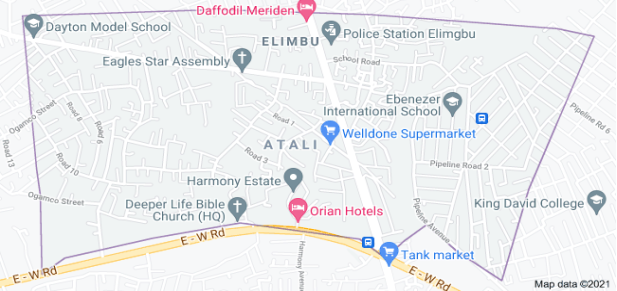
Figure 1. Map of Atali oil bunkering site in Rivers state, Nigeria.
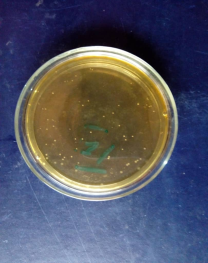
Figure 2. Pure colony of strains of Pseudomonas sp. on nutrient media plate.
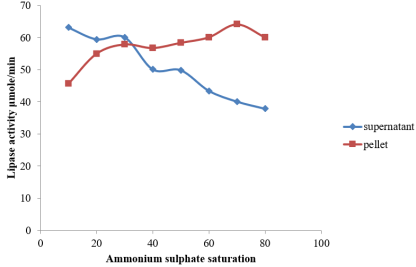
Figure 3. Ammonium sulphate precipitation profile of lipolytic enzyme from strain of Pseudomonas sp.
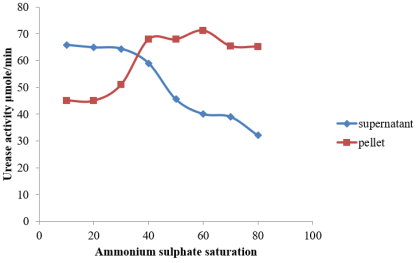
Figure 4. Ammonium sulphate precipitation profile of crude extracts of Urease from strain of Pseudomonas sp.
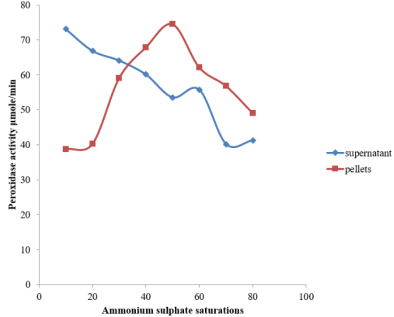
Figure 5. Ammonium sulphate precipitation profile of crude extracts of peroxidase from strain of Pseudomonas sp.
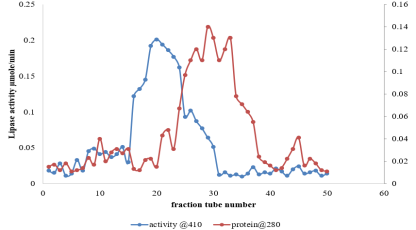
Figure 6. Chromatogram of Lipase produced from strain of Pseudomonas on sephadex G-100.
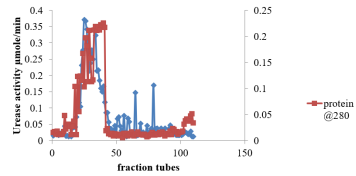
Figure 7. Chromatogram of Urease produced from strain of Pseudomonas on sephadex G-100.
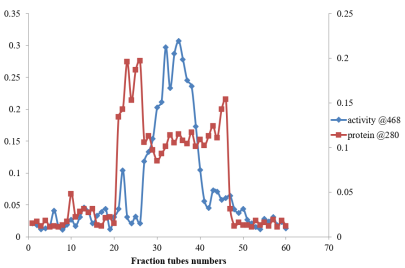
Figure 8. Chromatogram of Peroxidase produced from strain of Pseudomonas on sephadex G-100.
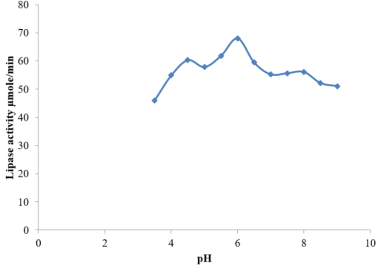
Figure 9. Effect of pH on Lipase produced from Strain of Pseudomonas.
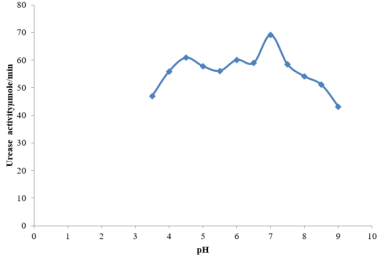
Figure 10. Effect of pH on Urease produced from Strain of Pseudomonas.
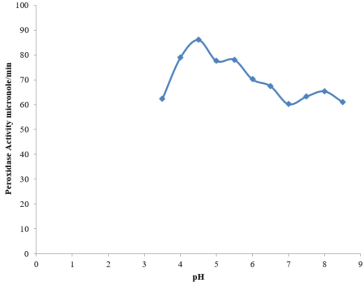
Figure 11. Effect of pH on peroxidase produced from Strain of Pseudomonas.
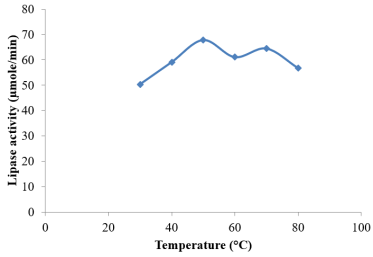
Figure 12. Effect of temperature on lipase produced from Strain of Pseudomonas.
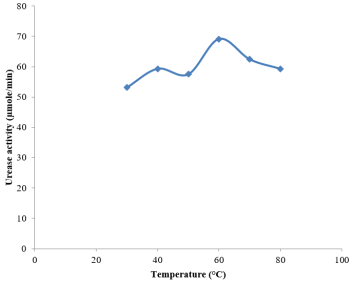
Figure 13. Effect of temperature on urease produced from Strain of Pseudomonas.
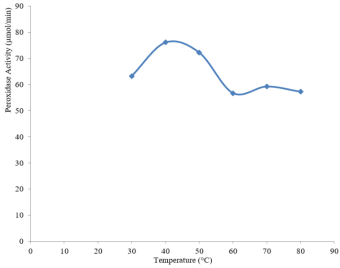
Figure 14. Effect of temperature on peroxidase produced from Strain of Pseudomonas.
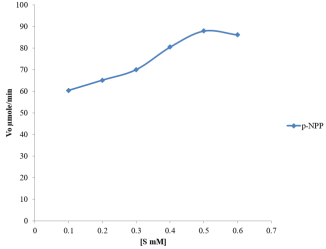
Figure 15. Michaelis-mentenplotofinitialcatalyticactivityoflipasefromstrainofPseudomonas.
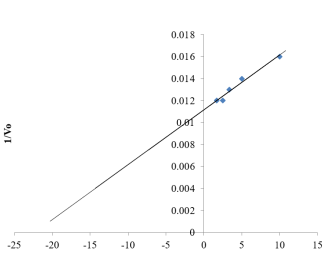
Figure 16. Linear weaver-burke plots of Lipase activity produced from strain of Pseudomonas.
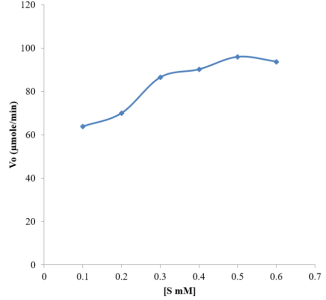
Figure 17. Michaelis-menten plot of urease in corresponding urea [1Mm] from strains of Pseudomonas.
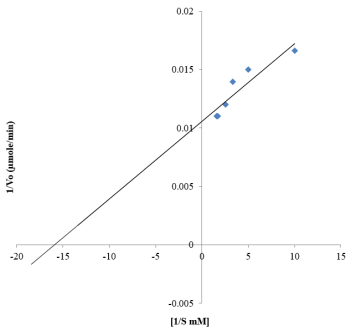
Figure 18. Line weaver burke plot of urease from strains of Pseudomonas.
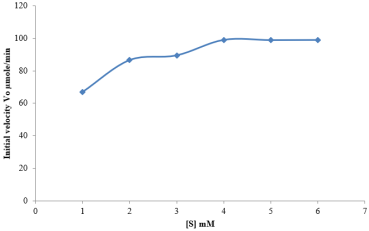
Figure 19. Michaelis-Menten plot of peroxidase activity at various concentrations of o-dianisidine.
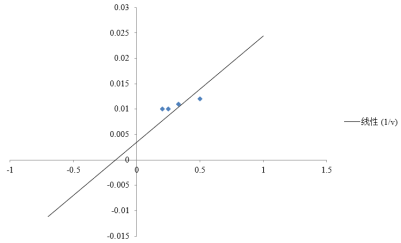
Figure 20. Lineweaver burke plot of peroxidase activity at various concentrations of o-dianisidine.

Information



 Share This Article
 Twitter
 Linked In
 Facebook

 Copy
 Download