
Road Traffic Accidents (RTA) have been a major cause of death and life-threatening injuries globally. The delay in Emergency Response Services (ERS) has heightened the number of death casualties in the event of motorcycle accidents. To address these life-threatening issues, the Smart Helmet for Accident Detection and Res communication device (SHADR) was developed to automatically detect accident, notify the registered emergency contact about the incident and disclose the location of the incident. This concept is designed for rural communities where motocycling activities are predominant. The design was actualized by deploying an accelerometer to detect accident, a load sensor to define when the helmet is being worn, GPS module to ascertain the exact location of the incident, GSM module for call activation and delivering short message service (SMS) of the emergency immediately after the incident has occurred. It leverages the user the opportunity to register the emergency contact by sending information as a coded text to the SHADR. This therefore eliminates the need for interface components and reduces the power consumption level of the device. The outcome of the design implementation demonstrated an efficient operation, with a fast response time for the GPS and GSM communication. Its major contribution stems from the fact that the response time was adequate since it was not affected by network delays and failures associated with communication systems in rural communities. It is a cost effective device which operates with minimum power consumption, the SMS delivery time was adequate and the call functionality was good, at minimum network connectivity. The implementation of SHADR on motorcyclists will greatly reduce casualties from road traffic accidents, provide more data for road traffic studies and give more confidence to road users. Future improvements will require the implementation of this device using 5G technology to improve communication speed and reduce latency for emergency services in urban communities.
| Published in | Journal of Electrical and Electronic Engineering (Volume 14, Issue 2) |
| DOI | 10.11648/j.jeee.20261402.12 |
| Page(s) | 79-90 |
| Creative Commons |
This is an Open Access article, distributed under the terms of the Creative Commons Attribution 4.0 International License (http://creativecommons.org/licenses/by/4.0/), which permits unrestricted use, distribution and reproduction in any medium or format, provided the original work is properly cited. |
| Copyright |
Copyright © The Author(s), 2026. Published by Science Publishing Group |
Accelerometer, Accident Detection, Emergency Response, GPS Module, Load Sensor, Microcontroller, Smart Helmet
Test No. | Peak Acceleration (g) | Detected Accident? | Detection Time (1ms) |
|---|---|---|---|
1 | 0.89 | No | 1 |
2 | 1.24 | No | 1 |
3 | 1.62 | Yes | 1 |
4 | 3.42 | Yes | 1 |
Test No. | Applied Force (N) | Switch Activation? |
|---|---|---|
1 | 5 | No |
2 | 18 | Yes |
3 | 12 | Yes |
4 | 8 | No |
Test No. | Latitude | Longitude | Accuracy (m) |
|---|---|---|---|
1 | 4.887079 | 6.917638 | 3 |
2 | 4.887058 | 6.917585 | 4 |
3 | 4.887079 | 6.917638 | 2 |
4 | 4.886987 | 6.917644 | 3 |
Test No. | GSM Signal (dB) | SMS Delivery Time (s) | SMS Delivery Success | Call Connection Success |
|---|---|---|---|---|
1 | -60 | 4 | Yes | Yes |
2 | -80 | 3 | Yes | Yes |
3 | -90 | 5 | Yes | Yes |
4 | -100 | 6 | No | No |
ESR | Emergency System Response |
SHADR | Smart Helmet for Accident Detection and Response |
GPS | Global Positioning System |
GSM | Global System for Mobile Communication |
RTA | Road Traffic Accident |
RF | Radio Frequency |
SMS | Short Message Services |
IoT | Internet of Things |
SVM | Support Vector Machine |
UI | User Interface |
SPDT | Single Pole Double Throw |
EEPROM | Electrically Erasable Programmable Read-Only Memory |
RFID | Radio Frequency Identification |
| [1] | Shabbeer S. A and Meleet M., Smart Helmet for Accident Detection and Notification, 2017 2nd International Conference on Computational Systems and Information Technology for Sustainable Solution (CSITSS), Bengaluru, India, 2017, pp. 1-5, |
| [2] | Asianuba I. B. and Kpegara N. S. Development of a smart Rescue communication system for Drowning Personnel. Modern Applied Science. 2022; Vol. 16(2): 41-48. |
| [3] | Jose, S. T. J., Rahul, A. S., & Sajin, S. Safety and alerting system of vehicles using a smart helmet. I-Manager’s Journal on Wireless Communication Networks, (2017); Vol 6(2), 28-35. |
| [4] | Magno, M., D’Aloia, A., Polonelli, T., Spadaro, L., & Benini, L.. Shelmet: An intelligent self-sustaining multi sensors smart helmet for bikers. Lecture Notes of the institute for Computer Sciences, Social Informatics and Telecommunications Engineering. (2017); Vol. 205: 55-67. |
| [5] | Tapadar, S., Ray, S., Saha, H. N., Saha, A. K., & Karlose, R. Accident and alcohol detection in Bluetooth enabled smart helmets for motorbikes. 2018 IEEE 8th Annual Computing and Communication Workshop and Conference (CCWC), 2018, 584-590. |
| [6] | Ranjan S, Gupta M, Roshan R, Revanth KVNM, Bharat M, Pruthviraj B. Advanced accident prevention helmet with smart vehicle protection system. Int J Adv Res Ideas Innov Technol. 2018; Vol. 4(2): 2604-2609. |
| [7] | Diksha S, Ambika K., Deepika, Gaddamidi Chaitanya Smart Helmet for Accident Detection and Alert System, Advancement of Signal Processing and its Applications Volume 8 Issue 3, Sep-Dec 2025 pp 16-26. |
| [8] | Budiman A. R., Sudiharto D. W., and Brotoharsono T. The prototype of smart helmet with safety riding notification for motorcycle rider. International Conference on Information Technology, Information System and Electrical Engineering (ICITISEE). 2018; Vol. 3: 362-367. |
| [9] | Nanda S., Joshi H., and Khairnar S. An IoT-based smart system for accident prevention and detection. Fourth International Conference on Computing Communication Control and Automation (ICCUBEA). 2018; 1-6. |
| [10] | Alim ME, Ahmad S, Dorabati MN, and Hassoun I. Design and implementation of IoT-based smart helmet for road accident detection. 2020 IEEE 11th Annual Information Technology, Electronics and Mobile Communication Conference (IEMCON). 2020; 576-581. |
| [11] | Impana H. C., Hamsaveni M., and Chethana H. T. A review on smart helmet for accident detection using IoT. EAI Endorsed Transactions on Internet of Things. 2018; Vol. 5(20): e5. |
| [12] | Vashisth R., Gupta S., Jain A., Gupta S., Rana P. Implementation and analysis of smart helmet. 2017 4th International Conference on Signal Processing, Computing and Control (ISPCC). 2017; Vol. 4: 111-117. |
| [13] | Khan E. R., Mia M. H. Design and Implementation of a Smart Helmet. Safety and Security in Vehicle Travelling. 2021; Vol. 9: 102-108. |
| [14] | Sneha D. Dhere, Shravani Aher, Revati Agalme and Mayuri Kachake Smart helmet for accident detection and prevention using IoT. International journal of science and research achives, 2025, 15(01), 1537-1543 |
| [15] | Pangestu A., Mohammed M. N., Al-Zubaidi S., Kamarul Bahrain S. H., Jaenul A. An Internet of Things Toward a Novel Smart Helmet for Motorcycle. AIP Conference Proceedings. 2021; Vol. 2320(1): 1-6. |
| [16] | Das, S., Santra, S., & Sinha, S. Smart Helmet with Quick Ambulance Response System. International Journal of Engineering Research and Technology 2021; Vol. 10(8): Paper ID IJERTV10IS080210. |
| [17] | Choi Y., Kim Y. Applications of smart helmet in applied sciences: a systematic review. Applied Sciences. 2021; Vol. 11(11): Article 5039. |
| [18] | S. Sobhana, S. R. Sowmeeya, M. Srinathji, S. Tamilselvan. Smart Helmet. IOP Conference Series: Materials Science and Engineering. 2021; Vol. 1084(1): 012116. |
| [19] | Sinha, S., Teli, E., & Tasnin, W. An IoT-based automated smart helmet. Sustainable Communication Networks and Application, 2022, Vol. 93, 371-384. |
| [20] | Kulkarni, A., Baroorkar, A., & Lele, S. Smart solutions for enhancing road safety and better riding experience using IoT. International Journal of Advanced Research, 2021, Vol. 9(2), 824-830. |
| [21] | Ambrosino, L. (2022). Smart Motorcycle Helmet Device. Worcester Polytechnic Institute. |
| [22] | Torad, M. A., & Salam, M. A. (2021). Smart helmet using Internet of Things. International Journal of Reconfigurable & Embedded Systems, Vol. 4864 (2021), 4864. |
| [23] | Gamage, T., Dabarera, N., Ekanayake, E., Jayasinghe, P., Shehan, D., Jayawardhana, R., & Kalansooriya, P. An Approach to Design a Smart Helmet Using Kansei Engineering. International Journal of Scientific & Engineering Research 2021. |
| [24] | V. R. Khule, P. S. Nalkar, D. R. Chandar, A. R. Thete, S. K. Agrawal and D. B. Pardeshi, "Smart Helmet System Using IoT for Alcohol Detection and Accident Identification System with Location Tracking," 2023 5th International Conference on Inventive Research in Computing Applications (ICIRCA), Coimbatore, India, 2023, pp. 1452-1456, |
| [25] | Fahrurrasyid F., Hapsari G. I., Meisaroh L., and Mutiara G. A., “Smart Helmet GPS-Based for Heartbeat Drowsiness Detection and Location Tracking,” J. Biomim. Biomater. Biomed. Eng. 2022; Vol. 55, pp. 226–235. |
| [26] | Islam, A., Hossain, M. N., Tamim, I. K., Shakil, M. M. R., & Ahmed, A. (2023). A power efficient smart helmet for safe driving and drowsiness detection. Faculty of Engineering, American International University Bangladesh. |
| [27] | Maganti, S. R., Doddapaneni, S. C., Abburi, R., Raju, N. S. K., Suraj, G. V., & Samanta, S. Design and Implementation of Smart Helmet Based on IoT for Road Accident Detection. International Conference on Computing, Communication, and Intelligent Systems (ICCCIS). 2022; 467-473. |
| [28] | Valpadasu H, Allam S, Soleti Navya, and Ch. Nimisha Chowdary. "Smart Helmet and Accident Identification System." In Proceedings of the 2022 International Conference on Advancements in Smart, Secure and Intelligent Computing (ASSIC), pp. 1-9. IEEE, 2022. |
| [29] | Johnpaul, S., Selvan, C. T., & Raguraman, P. J. IoT-based smart helmet system for accident prevention. 2022 IEEE International Conference on Edge Computing and Applications (ICECAA), 2022, Vol. 93(2), pp. 599-602. |
| [30] | Kumar, K. A., Ravikumar, S., Lydia, A., & Yadav, R Smart helmet with crash detection. International Conference on Computing and Communication Networks, 2023 713-723. |
| [31] | Mohd Hakimi Zohari, Muhammad Lokman Mohamad Elias, Najib Mohammed Ahmed Al-Fadhali. Safety Helmet with Collision Detection System. Journal of Advanced Industrial Technology and Application 2024 Vol. 5 No. 1, 76-82. |
| [32] | Ravi D Kiran Babu, Thirupathi P Reddy, Inderjeet S. Singh, Sahith V. Kumar, Mahibabu G, Amani M. An Iot Based Smart Helmet With Real Time Communication For Accident Detection And Prevention. International Journal of Creative Research Thoughts, Volume 13, Issue 1 January 2025 pp 259-270. |
APA Style
Asianuba, I. B., Chukwudalu, U. A., Michael, O. (2026). A Smart Helmet for Accident Detection and Response for Emergency Communication. Journal of Electrical and Electronic Engineering, 14(2), 79-90. https://doi.org/10.11648/j.jeee.20261402.12
ACS Style
Asianuba, I. B.; Chukwudalu, U. A.; Michael, O. A Smart Helmet for Accident Detection and Response for Emergency Communication. J. Electr. Electron. Eng. 2026, 14(2), 79-90. doi: 10.11648/j.jeee.20261402.12
@article{10.11648/j.jeee.20261402.12,
  author = {Ifeoma Benardine Asianuba and Udeolisa Augustine Chukwudalu and Ofagbor Michael},
  title = {A Smart Helmet for Accident Detection and Response for Emergency Communication},
  journal = {Journal of Electrical and Electronic Engineering},
  volume = {14},
  number = {2},
  pages = {79-90},
  doi = {10.11648/j.jeee.20261402.12},
  url = {https://doi.org/10.11648/j.jeee.20261402.12},
  eprint = {https://article.sciencepublishinggroup.com/pdf/10.11648.j.jeee.20261402.12},
  abstract = {Road Traffic Accidents (RTA) have been a major cause of death and life-threatening injuries globally. The delay in Emergency Response Services (ERS) has heightened the number of death casualties in the event of motorcycle accidents. To address these life-threatening issues, the Smart Helmet for Accident Detection and Res communication device (SHADR) was developed to automatically detect accident, notify the registered emergency contact about the incident and disclose the location of the incident. This concept is designed for rural communities where motocycling activities are predominant. The design was actualized by deploying an accelerometer to detect accident, a load sensor to define when the helmet is being worn, GPS module to ascertain the exact location of the incident, GSM module for call activation and delivering short message service (SMS) of the emergency immediately after the incident has occurred. It leverages the user the opportunity to register the emergency contact by sending information as a coded text to the SHADR. This therefore eliminates the need for interface components and reduces the power consumption level of the device. The outcome of the design implementation demonstrated an efficient operation, with a fast response time for the GPS and GSM communication. Its major contribution stems from the fact that the response time was adequate since it was not affected by network delays and failures associated with communication systems in rural communities. It is a cost effective device which operates with minimum power consumption, the SMS delivery time was adequate and the call functionality was good, at minimum network connectivity. The implementation of SHADR on motorcyclists will greatly reduce casualties from road traffic accidents, provide more data for road traffic studies and give more confidence to road users. Future improvements will require the implementation of this device using 5G technology to improve communication speed and reduce latency for emergency services in urban communities.},
 year = {2026}
}
TY  - JOUR
T1  - A Smart Helmet for Accident Detection and Response for Emergency Communication
AU  - Ifeoma Benardine Asianuba
AU  - Udeolisa Augustine Chukwudalu
AU  - Ofagbor Michael
Y1  - 2026/03/26
PY  - 2026
N1  - https://doi.org/10.11648/j.jeee.20261402.12
DO  - 10.11648/j.jeee.20261402.12
T2  - Journal of Electrical and Electronic Engineering
JF  - Journal of Electrical and Electronic Engineering
JO  - Journal of Electrical and Electronic Engineering
SP  - 79
EP  - 90
PB  - Science Publishing Group
SN  - 2329-1605
UR  - https://doi.org/10.11648/j.jeee.20261402.12
AB  - Road Traffic Accidents (RTA) have been a major cause of death and life-threatening injuries globally. The delay in Emergency Response Services (ERS) has heightened the number of death casualties in the event of motorcycle accidents. To address these life-threatening issues, the Smart Helmet for Accident Detection and Res communication device (SHADR) was developed to automatically detect accident, notify the registered emergency contact about the incident and disclose the location of the incident. This concept is designed for rural communities where motocycling activities are predominant. The design was actualized by deploying an accelerometer to detect accident, a load sensor to define when the helmet is being worn, GPS module to ascertain the exact location of the incident, GSM module for call activation and delivering short message service (SMS) of the emergency immediately after the incident has occurred. It leverages the user the opportunity to register the emergency contact by sending information as a coded text to the SHADR. This therefore eliminates the need for interface components and reduces the power consumption level of the device. The outcome of the design implementation demonstrated an efficient operation, with a fast response time for the GPS and GSM communication. Its major contribution stems from the fact that the response time was adequate since it was not affected by network delays and failures associated with communication systems in rural communities. It is a cost effective device which operates with minimum power consumption, the SMS delivery time was adequate and the call functionality was good, at minimum network connectivity. The implementation of SHADR on motorcyclists will greatly reduce casualties from road traffic accidents, provide more data for road traffic studies and give more confidence to road users. Future improvements will require the implementation of this device using 5G technology to improve communication speed and reduce latency for emergency services in urban communities.
VL  - 14
IS  - 2
ER  -
Electrical/Electronic Engineering Department, University of Port Harcourt, Port Harcourt, Nigeria
Biography: Ifeoma Benardine Asianuba is an Associate professor in the Department of Electrical/Electronic Engineering, Faculty of Engineering University of Port Harcourt Rivers State Nigeria. She received her bachelor’s degree in Electrical/Electronic Engineering, Master’s degree in Electronic/Telecommunication Engineering and obtained a Doctorate degree in Communication Engineering. She has over 60 Research publications in peer reviewed National and International Journals including conference publications. Her research interest spans through 5th/6th Generation Networks, Internet of Things Technology/Applications, Antennas, Mobile wireless communication and Fiber optics networks. Her research has recorded significant input in her area of specialization as reflected in her publications. She belongs to the following professional bodies; member of the Nigerian Society of Engineers (NSE), a member of the Institute of Electrical Electronic Engineers (IEEE), a member of the Association of professional women Engineers in Nigeria and a COREN registered Engineer.

Electrical/Electronic Engineering Department, University of Port Harcourt, Port Harcourt, Nigeria
Electrical/Electronic Engineering Department, University of Port Harcourt, Port Harcourt, Nigeria
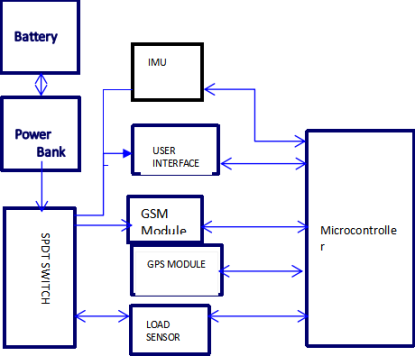
Figure 1. System Block Diagram.
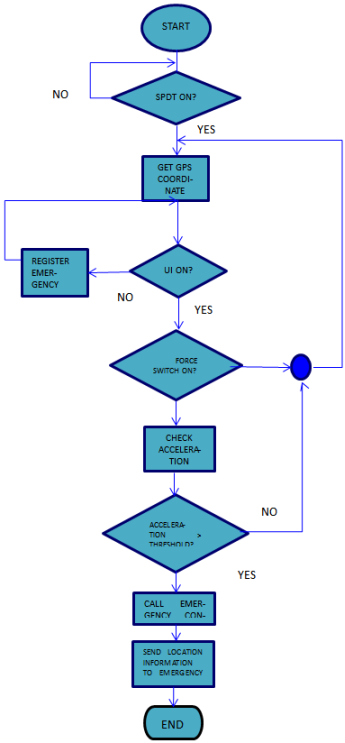
Figure 2. Flow chat of smart helmet for accident detection and response device.
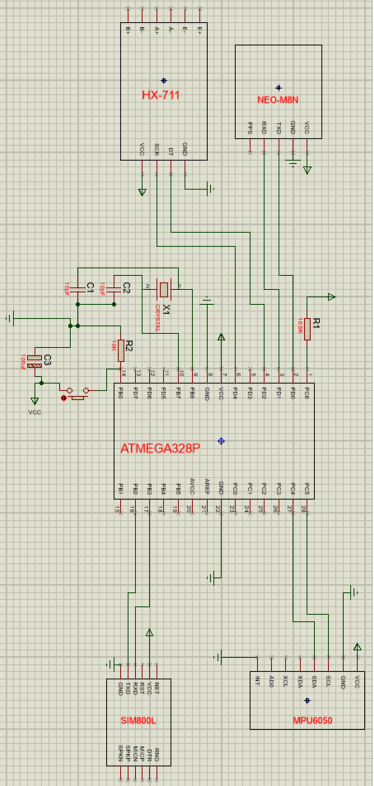
Figure 3. Circuit diagram of the Smart helmet for accident detection and response.
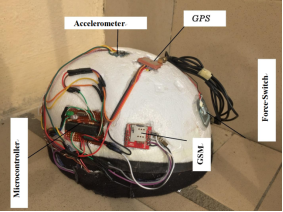
Figure 4. Internal architecture of the SHADR.
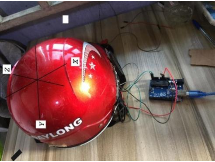
Figure 5. Acceleration Test.
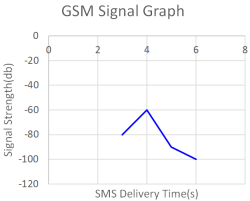
Figure 6. Graph of signal strength against SMS delivery time.

Information



 Share This Article
 Twitter
 Linked In
 Facebook
 Copy
Copy Download