Abstract
Reliable and uninterrupted electrical power is essential for modern radio telescope facilities employing Very Long Baseline Interferometry (VLBI), where power interruptions can compromise observation continuity and data acquisition. At the Centre for Geodesy and Geodynamics (CGGT), Toro, Nigeria, unreliable utility grid supply and the high operating costs associated with diesel generator dependence present significant challenges to sustainable VLBI operations. This study investigates the design, optimal sizing, and techno-economic performance of a hybrid photovoltaic (PV)/utility-grid/diesel-generator/battery energy system to improve power supply reliability and reduce operating costs at the facility. The hybrid system was modelled and optimized using HOMER Pro, while MATLAB/Simulink was employed to analyze the PV array’s current-voltage (I-V) and the power-voltage (P-V) characteristics. The optimization results identified a configuration comprising a 345 kW PV array, a 150 kVA diesel generator, a utility-grid connection with a maximum available capacity of 300 kW, and a lithium-ion battery energy storage system. The optimized configuration achieved a net present cost (NPC) of approximately ₦507.482 million and an annual PV energy generation of 592,002 kWh, representing 75.29% of the total annual electricity generation. The estimated annual diesel fuel consumption was approximately 7,446.9 litres. Compared with the existing utility-grid/diesel-generator/battery configuration, the proposed hybrid system reduced the NPC from ₦669.918 million to ₦507.482 million and the reported operating cost from ₦49.218 million to ₦29.376 million, despite requiring a higher initial capital investment. These findings indicate that integrating PV generation and battery storage with the utility grid and diesel generator can improve the economic performance and diversify the energy supply of the CGGT facility. Further field validation is required to establish the system’s operational reliability under actual load and meteorological conditions and to verify its suitability for the stringent continuity requirements of VLBI operations.
Keywords
CGGT, Power, Hybrid, Photovoltaic, Utility Grid, Diesel Generator, Battery, Radio Telescope
1. Introduction
Reliable and uninterrupted electrical power is essential for the operation of modern radio telescopes employing the VLBI technique, particularly at the CGGT, Nigeria. Continuous power availability is critical for sustained, precise, and reliable geodetic and astronomical observations. The VLBI operations require the coordinated functioning of several power-sensitive subsystems, including the antenna drive system, signal acquisition and processing units, hydrogen maser, GNSS timing receiver, GNSS positioning receiver, high-speed data recording systems, and communication devices. Consequently, power interruptions, voltage fluctuations, and frequency instability can degrade measurement quality, interrupt observation sessions, and potentially compromise the continuity of long-term observational datasets.
However, the Nigeria’s national electricity grid is characterized by frequent power outages, voltage fluctuations, load shedding, and supply interruptions, which pose significant challenges to the reliable and continuous operation of modern radio telescope facilities
| [1] | O. I. Adeniji, B. O. Ajisafe, J. Kimbugwe and F. Jingo, "Mitigating Nigeria’s Power Grid Collapse through Advanced Automation and Control," vol. 06, no. 02, 2025.
https://doi.org/10.54660/.JFMR.2025.6.2.242-258 |
| [2] | P. T. Adzua, "Resolving the incredible Nigerian National Power Grid Collapse Frequency through Reliable SCADA/EMS Deployment," vol. 9, no. 5, 2021. |
| [3] | H. Edeh, "Grid Collapse Costs to Businesses, Power Generating Plants," International Centre for Investigative Reporting, 2024. |
| [4] | M. Dada, "Why Nigeria’s national grid keeps collapsing – power expert," ThisDay Live, 2025. |
[1-4]
. Dependence on an unreliable utility grid can increase operational costs through frequent reliance on diesel generators and raise concerns regarding equipment availability, maintenance requirements, and generator downtime. These challenges highlight the need for a reliable and economically optimized hybrid energy system capable of maintaining a continuous power supply to critical loads at CGGT.
Accordingly, the integrating of PV generation, energy storage, the utility grid, and diesel generator backup offers a promising approach to improving power reliability at CGGT. The optimal system sizing and coordinated energy management can minimize the NPC, LCOE, and diesel fuel consumption, while maintaining the power availability required for critical radio telescope operations. In this study, HOMER Pro is employed to model, simulate, and optimize the proposed hybrid power system at CGGT, Nigeria.
A PV EHS provides an attractive option for supplementing conventional power sources at locations with high solar energy potential. CGGT is situated at approximately 10005.6’ N, 9010.2’ E in northeastern Nigeria, where solar energy can serve as a valuable component of the site’s power supply. However, variations in solar irradiance mean that PV generation alone cannot guarantee continuous power availability, particularly at night and during periods reduced irradiance. Energy storage can mitigate this limitation by storing electrical energy generated during periods of sufficient solar irradiance and supplying power when PV output is insufficient. Integrating PV generation and energy storage with the existing utility grid and diesel generator can therefore provide a more flexible and resilient power supply architecture.
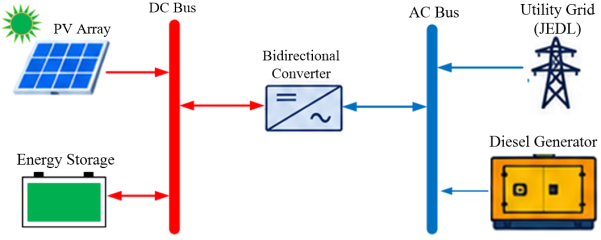
As illustrated in
Figure 1, a hybrid PV/utility-grid/diesel-generator/battery energy system offers various potential advantages and minimize operating costs of robust and reliable electrical loads
| [5] | M. R. Gharib and A. Mohammadbeigi, "Optimizing stand-alone hybrid PV/Diesel Generator system with a focus on reliability, cost, and environmental considerations," Energy Conversion and Management: X, vol. 30, no. 2026, p. 18, 2026. https://doi.org/10.1016/j.ecmx.2026.101562 |
| [6] | G. A. Ajenikoko, R. O. Aremu, A. O. Ajenikoko, A. O. Oke, M. K. Yahaya, P. K. Agbleze and A. S. Jimoh, "Optimal Sizing and Operation of PV–Diesel–Battery Hybrid Energy Systems for Electric Vehicle Charging Using Homer Grid," International Journal of Engineering and Modern Technology, vol. 12, no. 5, pp. 219-230, 2026.
https://doi.org/10.56201/ijemt.vol.12.no5.2026.pg219.230 |
| [7] | Y. Tibebu, E. Addis, A. H. Lenin and S. J. Sujin Arul, "Optimal design of a photovoltaic–diesel–battery hybrid renewable energy system for sustainable off-grid electrification of a village in Ethiopia," Energy Informatics, vol. 9, no. 1, p. 18, 2026. https://doi.org/10.1186/s42162-026-00625-w |
[5-7]
, like modern radio telescope and its associated facilities. The utility grid can serve as the primary or supplementary power source when available, while the diesel generator provide dispatchable backup power during prolonged grid interruptions or periods of insufficient renewable energy generation. The PV EHS supplies part of the electrical demand using solar energy, while the battery bank provides short-term energy balancing, reduces dependence on diesel generation, and improves the utilization of available solar energy. Effective coordination among these sources is essential because inappropriate system sizing or energy management strategies may result in excessive capital expenditure, unnecessary battery cycling, increased generator operation, or inadequate power availability for critical loads.
Figure 1. Schematic Diagram of the Proposed hybrid PV/Utility-Grid/Diesel-Generator/Battery Energy System.
The optimization of a hybrid energy system requires consideration of both technical and economic parameters. From an economic perspective, the optimal system configuration should minimize the overall lifecycle cost while accounting for capital costs, component replacement costs, operation and maintenance costs, diesel fuel expenditure, and electricity purchased from the utility grid. In this study, HOMER Pro employed to model, simulate, and optimize the proposed PV/utility-grid/diesel-generator/battery energy system at CGGT, subject to specified technical and economical constraints, to identify a suitable system configuration.
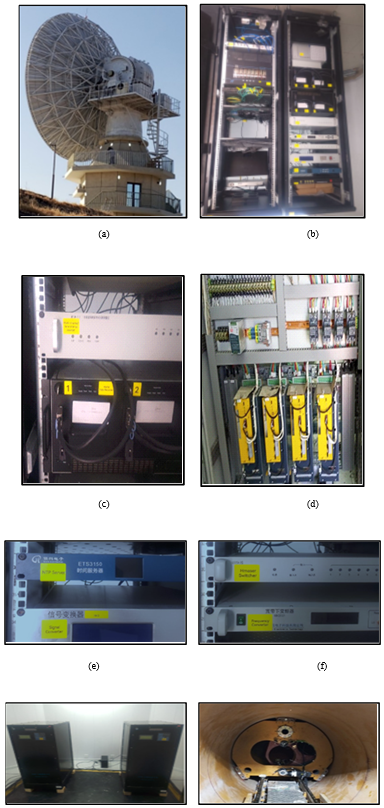
An important consideration in this study is that the electrical loads associated with a modern radio telescope do not have identical operational priorities. Critical and backend subsystems, particularly those responsible for telescope control, timing and frequency references, radio frequency signal reception, and data acquisition
| [8] | D. A. Marshalov, A. S. Berdnikov, A. S. Grenkov and L. V. Fedotov, "Modern Digital Backend Systems for the Radio Telescope of the Quasar VLBI Network," Solar-Terrestrial Physics, vol. 12, no. 2, pp. 119-124, 2026.
https://doi.org/10.12737/stp-122202614 |
| [9] | J. Li, R. Zhu, S. Guo, P. Rui and Z. Xu, "Development and Performance Validation of a Versatile VLBI Digital," Astronomical Society of the Pacific, vol. 2025, no. 2025, p. 11, 2025. https://doi.org/10.48550/arXiv.2502.15446 |
[8, 9]
, as illustrated in
Figure 2, require a highly reliable and continuous power supply. Other loads may be classified as deferrable, where operationally permissible, and scheduled for periods of higher renewable energy availability or more economical utility grid electricity supply. Therefore, the optimization problem extends beyond determining the appropriate capacities of the PV array and battery bank; it also involves evaluating how electrical energy can be allocated among different telescope subsystems while maintaining the operational requirements of critical loads.
Figure 2. Electric Loads installed at CGGT (a) 13-m Dish Radio Telescope (b) Rack-mounted Digital Backend/Recorder (c) Mult-Channel Time Interval Counter (d) Drive System for Azimuth and Elevation Rotations (e) NTP Server and Signal Converter (f) H-Maser Switcher and Frequency Converter (g) Active Hydro Maser, and (h) Feed Horn Support Structure.
The electrical characteristics of modern radio telescope facilities differ from those of conventional electronic systems because their instrumentation and control subsystems require high power supply availability, voltage stability, and reliable operating conditions to support continuous observations amd precise measurements.
The specific objectives are to:
1) Assess the electrical load requirements of the major radio telescope subsystems at CGG, Toro, Nigeria, and classify them according to their operational priorities.
2) Develop a representative electrical load profile for the radio telescope facility for use in HOMER Pro simulations.
3) Model and evaluate the existing Utility-Grid/Diesel-Generator/Battery energy system and the proposed PV/utility-grid/ diesel-generator/battery hybrid energy system.
4) Determine the optimal capacities of the PV array, battery bank, power converter, and other system components required to meet the facility's electrical energy demand.
5) Evaluate the technical performance of the alternative hybrid system configurations in terms power supply reliability, renewable energy contribution.
6) Evaluate the economic performance of the alternative configurations using NPC, COE, initial capital cost, replacement costs, operation and maintenance cost, and diesel fuel expenditure.
The methodology and findings of the study may also be applicable to other remote scientific facilities, telecommunications stations, monitoring centres, and critical infrastructure in Nigeria where utility grid reliability is a significant concern and PV EHS can complement conventional power generation.
To optimally size the energy sources required to supply the electrical loads at CGGT as illustrated in
Figure 1, it is essential to profile the current flow and voltage across the connected electric loads over a representative 24-hour operating period, as presented
Table 1. The electrical load inventory was developed by identifying the key electrical subsystems associated with the modern radio telescope and its supporting facility buildings, documenting their rated power requirements and estimated daily operating durations, as presented in
Table 1.
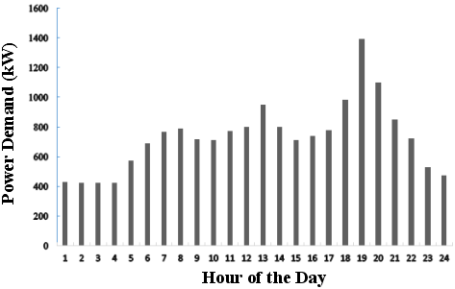
Figure 3 illustrates the daily electrical load profile of CGGT in kilowatts (kW). The profile indicates a gradual increase in electrical demand between 05:00 and 17:00, corresponding to increased daytime operational activities, followed by a gradual reduction in demand during the evening. The estimated daily electrical energy consumption of the facility is 1,612.427 kWh/day.
To ensure that the electrical profile adequately represents the operating conditions at CGGT, relevant operating assumptions and and system constraints were incorporated into the load profiling and simulation processes. The proposed hybrid system consists of PV modules, a battery energy storage system, a diesel generator, and the utility grid. The PV array convert ambient irradiance into electrical energy, however, its output varies with the time of day, atmospheric conditions, and seasonal changes
| [10] | A. Ahmad, A. Aziz, M. Zia, M. U. Khan, K. Ullah and M. Asim, "Optimizing Solar Energy Harvesting through Advanced Solar Tracking Systems," in 4th International Conference on Scientific and Academic Research, Konya, 2024.
https://doi.org/10.1109/ICSPE62629.2024.10924363 |
| [11] | K. Malek, E. O. Rodríguez, Y. Lee, J. Murillo, A. Mohammadkhorasani, L. Vigil, S. Zhang and F. Moreu, "Design and implementation of sustainable solar energy harvesting for low-cost remote sensors equipped with real-time monitoring systems," Journal of Infrastructure Intelligence and Resilience, vol. 2, no. 3, 2023.
https://doi.org/10.1016/j.iintel.2023.100051 |
[10, 11]
. This inherent variability in PV EHS, combined with the unreliability of the utility grid, presents a significant challenge for energizing electrical loads that require continuous power.
In Nigeria, diesel generator operation can be more expensive than purchasing electricity from the utility grid, particularly when fuel consumption, transportation, maintenance, and generator operating hours are considered
| [12] | A. V. Adebayo, I. O. Oladejo, H. K. Adebayo and A. O. Samuel, "Comparative Analysis of Electricity Grid Tariffs Versus Generator Costs in Nigeria," International Journal of Latest Technology in Engineering Management & Applied Science, vol. XIII, no. VII, pp. 59-68, 2024.
https://doi.org/10.51583/IJLTEMAS.2024.130708 |
| [13] | A. Salihijo, "Displacing Petrol & Diesel Generators with Solar in Nigeria," Sustainable Energy for All, 2022. |
| [14] | T. O. Adebobola, A. O. Adetunbi and O. Omoniyi, "Cost Challenges Facing Nigeria Manufacturing Industries Using Generating Sets as Main Source of Power Supply," ABUAD Journal of Engineering Research and Development, vol. 6, no. 1, pp. 22-30, 2023.
https://doi.org/10.53982/ajerd.2023.0601.03-j |
[12-14]
. Accordingly, the proposed hybrid system coordinates the contributions of the PV array, utility grid, and diesel generator, and battery bank to meet the electrical load demand. The utility grid serves as the primary power source when available, while the battery bank provides supplementary power during periods of insufficient PV generation or utility grid interruptions. The diesel generator provides backup power during prolonged grid outages or when renewable generation and available battery bank are insufficient to meet the electrical demand. The battery bank operates within its specified state of charge and power limits, enabling improved utilization of solar energy and potentially reducing diesel generator operating hours and fuel consumption, thereby lowering the overall operating cost of the hybrid energy system.
Table 1. Estimated Electrical Load Profile of CGGT over a 24-hour Period.
Device | Device Tag | Power Rating (W) | Number of Device | Total Power (W) | Hours per Day (h) | Total Energy |
Rack-Mounted Server | R-M Server | 1000 | 8 | 8000 | 24 | 192 |
Hydrogen Maser Switcher | H-MS | 500 | 1 | 500 | 24 | 12 |
Antenna Drive Motor | AD-Motor | 5000 | 2 | 10000 | 20 | 200 |
Cryogenic Compressor | C-Compressor | 7000 | 1 | 8000 | 24 | 192 |
Rack-mounted NTP Server | R-M NTP Server | 30 | 2 | 60 | 24 | 1.44 |
Multi-Channel Time Interval Counter | M-TIC Counter | 50 | 1 | 50 | 24 | 1.2 |
Signal Converter | S-Converter | 500 | 1 | 500 | 20 | 10 |
Frequency Converter | F-Converter | 20 | 1 | 20 | 20 | 0.4 |
Mark6 Data Recorder | M-D Recorder | 800 | 1 | 800 | 20 | 16 |
Antenna Feed | A-Feed | 200 | 1 | 200 | 20 | 4 |
Multi-Channel Broadband Equalization Filtering System | M-BEFS | 100 | 1 | 100 | 20 | 2 |
Input Switching Unit (8-to-4 IF Input Converter Switch) | I-SU | 50 | 1 | 50 | 20 | 1 |
Digital Base Band Converter 3 | D-BBC3 | 600 | 1 | 600 | 20 | 12 |
Calibration Personal Computer | C-PC | 300 | 1 | 300 | 24 | 7.2 |
Split System Air-conditioner | S-AC | 1118.55 | 8 | 8948.4 | 10 | 89.484 |
Floor-Standing Air-conditioner | F-AC | 2237.1 | 6 | 13422.6 | 24 | 322.142 |
Industrial Air Conditioner | I-AC | 9561.48 | 1 | 9561.48 | 24 | 229.475 |
Exhaust Blower | E-Blower | 5884 | 1 | 5884 | 24 | 141.216 |
Electric Pressing Iron | EP-Iron | 1600 | 1 | 1600 | 5 | 8 |
Energy Efficient Bulb | EE-B | 10 | 50 | 500 | 8 | 4 |
Washing Machine | W-Machine | 300 | 1 | 300 | 5 | 1.5 |
Microwave Oven | M-Oven | 1200 | 1 | 1200 | 1 | 1.2 |
Electric Storage Tank Water | EST-Water | 1600 | 2 | 3200 | 5 | 16 |
Refrigerator | Fridge | 600 | 2 | 1200 | 14 | 16.8 |
Interactive Screen | I-Screen | 800 | 1 | 800 | 5 | 4 |
Laptop Computer | Laptop-C | 900 | 10 | 9000 | 12 | 108 |
Computer Printer | Printer-C | 1000 | 1 | 1000 | 5 | 5 |
CCTV | CCTV | 10 | 30 | 300 | 24 | 7.2 |
Electrical Tools | E-Tools | 249 | 1 | 249 | 10 | 2.49 |
Wireless Ceiling Mount Access Point | Access_Point | 13 | 15 | 195 | 24 | 4.680 |
Total Energy ) at CGGT | 1,612.427 |
Figure 3. Hourly Electrical Load Profile of CGGT.
The key contributions of this study are as follows:
Demonstration of the integration of a PV EHS into the existing power infrastructure to mitigate the effects unreliable utility grid and high diesel fuel costs.
Development of a reliable automatic transfer switching arrangement to facilitate the transfer of electrical loads between available power sources, subject to their availability and operating constraints.
Evaluation of the proposed hybrid energy system’s potential to improve power supply reliability and continuity for the modern radio telescope and its associated facilities.
The remainder of this paper is organized as follows. Section 2 describes the electrical load profile of CGGT and presents the theoretical background, system configuration, and design considerations for the proposed hybrid power system. Section 3 presents and discusses the simulation results, highlighting the optimal system configuration and performance parameters required to meet the electrical energy demands of the modern radio telescope and other critical loads within CGGT and associated buildings. Finally, Section 4 presents conclusions and summarizes the key findings of the study.
2. Materials and Methods
This study adopts a techno-economic modelling, simulation, and optimization approach to investigate the integration of a PV EHS into the existing electrical power infrastructure at the CGGT, Nigeria. The proposed hybrid power system is designed to complement the existing utility grid and diesel generator supplies while improving the reliability, continuity, and economic sustainability of the electrical power supply to the modern radio telescope facility and its associated subsystems.
2.1. Electrical Load Assessment and Characterization
An electrical load assessment was conducted to establish the demand profile required for modelling and optimizing the proposed hybrid energy system. The electrical loads were identified based on the rated power requirements of the major subsystems their operating schedules, and their estimated daily operating durations.
The estimated daily electrical energy consumption of the facility,
is 1,612.427 kWh/day as summarized in
Table 1 and
Figure 3. This corresponds to an average electrical load,
of approximately 67.18 kW. The average load is defined in Equation (
1).
2.2. Existing Power System Configuration
The existing power infrastructure was modelled to establish a baseline against which the proposed hybrid energy system could be evaluated. The baseline configuration comprises the available utility grid supply, a diesel generator, and a battery bank. Utility grid interruptions are represented in the HOMER Pro model through the specified grid availability and operating constraints. The diesel generator serves as a dispatchable backup source and can be operated when the grid is unavailable or when the available power sources are insufficient to satisfy the facility’s electrical demand. The battery bank provides energy storage and and power support during periods of inadequate generation, subject to its capacity, state of charge, and power conversion limits. This baseline model provides a reference for evaluating the technical and economic benefits of integrating PV generation into the existing power infrastructure.
2.3. Proposed PV/Utility-Grid/Diesel-Generator/Battery Hybrid Energy System
The proposed configuration integrates a PV EHS into the existing power infrastructure. The hybrid system comprises the PV array, utility grid, diesel generator, battery bank, and power electronic converter which conditions electrical power facilitates power transfer between the DC and AC buses to supply the connected loads.
The proposed operating strategy priorities the utilization of available of available PV energy to meet the facility electrical demand. When PV generation exceeds the instantaneous load demand, the excess energy can be used to charge the battery bank, subject to the battery’s charging power limit and state of charge constraints. The stored energy can subsequently be discharged to support the load during periods of reduced or zero PV generation, provided sufficient energy is available.
The utility grid remains an important power source whenever it is available and economically suitable. The diesel generator provides dispatchable backup power when the grid is unavailable or when the combined contribution of PV generation and battery bank is insufficient to meet the electrical demand. Coordinating these energy sources is intended to improve energy utilization, reduce unnecessary diesel generator operation and fuel consumption, and enhance the overall reliability of the power supply at CGGT.
2.3.1. Photovoltaic Energy Harvesting System
The PV EHS is incorporated into the proposed hybrid cofigurattion to harness ambient irradiance at CGGT and reduce dependance on conventional energy sources. The electrical power output of the PV array is a function of the ambient irradiance, PV array rated capacity, temperature coefficients, derating factors, and overall conversion efficiency, and power losses. The irradiance and temperature levels are the primary inputs for modelling the PV performance, although the actual cell temperature also depends on module properties and operating conditions.
The relationship between PV output and the relevant environmental and system parameters is mathematically expressed in Equation (
2). The formulation is used to estimate the electrical power output of the PV system in the HOMER Pro model
| [15] | F. K. Alhousni, F. B. I. Alnaimi, P. C. Okonkwo, I. B. Belgacem, H. Mohamed and E. M. Barhoumi, "Photovoltaic Power Prediction Using Analytical Models and Homer-Pro: Investigation of Results Reliability," Sustainability, vol. 15, no. 8904, p. 13, 2023. https://doi.org/10.3390/su15118904 |
| [16] | M. Alam and S. Bhattacharyya, "Decentralized renewable hybrid mini-grids for sustainable electrification of the off-grid coastal areas of Bangladesh," Energies, vol. 9, no. 268, p. 9, 2016. https://doi.org/10.3390/en9040268 |
| [17] | M. M. Hamidu, A. M. El-jummah and M. Shuwa, "Modeling And Simulation of a Solar Farm Using Homer Pro Software for University of Maiduguri Senate Complex," Arid Zone Journal of Engineering, Technology & Environment, vol. 21, no. 3, pp. 811-819, 2025.
https://doi.org/10.63958/AZOJETE/2025/21/03/012 |
| [18] | D. Duncan, A. M. Zungeru, M. Mangwala, B. Diarra, B. Mtengi, T. Semong and J. M. Chuma, "Power-Efficient Hybrid Energy Storage System for Seismic Nodes," Journal of Engineering, vol. 2020, no. 2020, p. 21, 2020.
https://doi.org/10.1155/2020/3652848 |
[15-18]
.
(2)
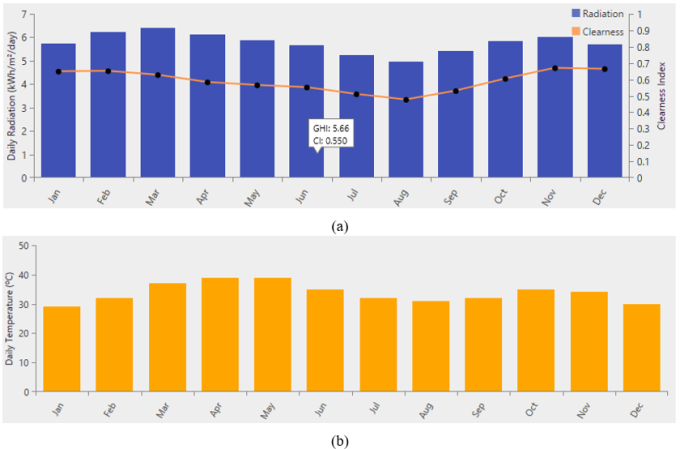
Figure 4 illustrates the annual variation in ambient irradiance and temperature at CGGT, based on measurements obtained from CGGT station’s weather station. The reported average daily irradiance is 5.784 kWh/m
2/day, while the average temperature is 33.750°C. These values indicate promising solar energy potential at the site and provide a basis for evaluating the feasibility of integrating a PV EHS into the existing power infrastructure to supplement the facility’s electricity supply.
Figure 4. Annual Solar Irradiance and Ambient Temperature Profiles at the CGGT Site: (a) Solar Irradiance and (b) Temperature.
Using Equation (
1), the data presented in
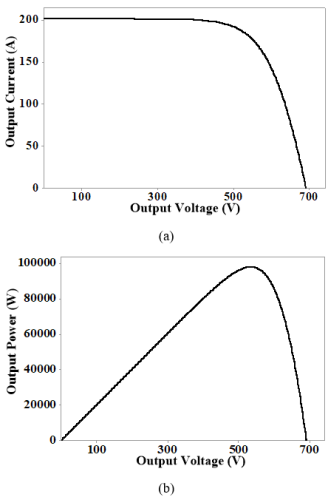
Table 2, and the ambient solar irradiance and temperature measurements obtained from the CGGT weather station, the electrical load profile and environmental input data were used to develop the simulation models. The PV array was modelled in MATLAB/Simuink to evaluate its I-V and P-V characteristics, as illustrated in
Figure 5. These characteristics describe the variation in PV array current and output power with terminal voltage under different solar irradiance and temperature conditions, as represented by the PV mathematical model in Equation (
1). For the annual hybrid energy system analysis, the electrical load profile was assumed to remain constant throughout the simulation period, while the ambient irradiance and temperature varied according to the measured weather data. This approach enabled the assessment of PV performance under changing environmental conditions and its potential contribution to meeting the electrical energy demand at CGGT.
Table 2. Electrical Characteristics of the Selected PV Module.
Name | Value |
Vendor | Vertex |
Model | DEG20C20 |
Solar Cells | Monocrystalline |
No. of Cells | 120 Cells |
PMAX | 600 W |
VOC | 41.7 V |
ISC | 18.42 A |
VMAX, Voltage at PMAX | 34.6 V |
IMAX, Current at PMAX | 17.34 A |
Temperature Coefficient of VOC | -0.25%W/°C |
Temperature Coefficient ISC | 0.04%/°C |
Temperature Coefficient PMAX | -0.34%/°C |
Generated Maximum Power (WP) | 454 W |
Figure 5. Simulated I-V and P-V Characteristics of the 85.45 kW PV Array at CGGT: (a) I-V Character (b) P-V Characteristics.
In HOMER Pro, the PV system is modelled using the specified PV module and system parameters, together with the solar resource profile for the study location. The estimated electrical load requirement is calculated using Equation (
3).
== 429.(3)
The calculation yield a required power capacity of 429.981 kW, which is approximately 430 kW and represents the selected PV array’s rated capacity.
2.3.2. Sizing Battery Bank System
Energy storage is integrated into PV EHS to mitigate the intermittency of solar power generation and enhance the operational flexibility and reliability of the hybrid power system. The battery bank stores excess electrical energy generated by the PV array and supplies power when PV generation is insufficient to meet the electrical load or when the utility grid is unavailable, subject to the battery state of charge and power converter operating limits.
The required nominal energy capacity of the battery bank,
is estimated using Equation (
4).
== 2,879.334 kWh(4)
Thus, the calculated nominal battery capacity is approximately 2.880 MWh. Using lithium-ion battery units rated at 25 kWh each, the required number of battery units, N
TBat is defined using Equation (
5):
===115.173(5)
, approximately 116 battery units.
With a nominal battery bank energy capacity of approximately 2,900 kWh, the proposed system uses a nominal DC bus voltage,
of 512 VDC. Each lithium-ion battery unit has a nominal energy capacity of 25 kWh and nominal voltage,
, of 51.2 VDC. Accordingly, the number of battery units connected in series,
is computed using Equation (
6).
=== 10 batteries in series(6)
The number of parallel battery strings, N
BP, is computed using Equation (
7).
=== 11.6(7)
, approximately 12 batteries in parallel strings.
Therefore, a practical battery bank configuration comprising 10 battery units connected in series per string and 12 parallel strings is required, giving a total of = 10 * 12 = 120 lithium-ion battery units.
2.3.3. Photovoltaic Array Sizing
The PV array is designed to harvest ambient solar energy and supply the daily electrical energy demand of the CGGT facility, estimated at 1,612.427 kWh/day. In the study, the required rated power of the PV array,
estimated to meet the electrical load demand and, where applicable, provide additional energy for charging the lithium-ion battery units of 2.9 MWh. The PV array sizing is expressed in Equation (
8), using the electrical characteristics of the selected PV module presented in
Table 2.
=== 725 kW(8)
The number of PV modules connected in series,
, is calculated using Equation (
9).
=== 14.80(9)
, approximately 15 modules connected in series per string.
The number of parallel PV strings,
, is computed using Equation (
10), based on the required PV array capacity, (600 W * 15 PV modules = 9 kW), and the rated power of each PV string,
=== 80.556(10)
Therefore, approximately 81 strings connected in parallel.
Hence, the proposed PV array comprises, (15 * 81) 1,215 modules, giving a rated capacity of 729 kW, as installed PV module based array capacity.
2.3.4. Power Converter Sizing
The outputs PV array and battery bank are voltage and current of DC levels. A bidirectional power converter is integrated into the hybrid energy system to convert DC power into AC power to supply the CGGT electrical loads and when operating in rectifier mode, convert AC power into DC power for charging the battery bank. Equation (
11) expresses the estimated required power converter rating,
in kW, considering a converter efficiency,
as 95%.
≥≥ 763.158 kW(11)
Therefore, the estimated converter rating is approximately 764 kW.
2.3.5. Diesel Generator Modelling and Sizing
In Nigeria, diesel generators are commonly used as backup power sources in locations where utility grid electricity is unreliable or where PV EHS require supplementary generation
| [19] | M. S. Okundamiya and O. Omorogiuwa, "Viability of a Photovoltaic-Diesel-Battery Hybrid Power System in Nigeria," Iranica Journal of Energy & Environment, vol. 6, no. 1, pp. 5-12, 2015. https://doi.org/10.1155/2020/3652848 |
[19]
. However, fluctuations in diesel fuel prices can significantly affect the operating costs of the systems
. Integrating a diesel generator with a PV EHS, battery bank, and utility grid can improve power supply reliability and reduce dependence on any single energy source.
In HOMER Pro, the diesel generator’s fuel consumption and operating costs are estimated using the specified generator characteristics, fuel consumption curve, fuel price, and operation and maintenance parameters. The generator fuel consumption rate,
in L/h is represented by Equation (
12)
| [21] | S. A. A. Dawsari, F. Anayi and M. Packianather, "Novel Techno-economic Feasibility Study of an Off-grid PV/wind/diesel/battery hybrid energy system using MATLAB-HOMER link," Energy Conversion and Management: X, vol. 28, no. 101386, 2025.
https://doi.org/10.1016/j.ecmx.2025.101386 |
| [22] | I. Çetinbaşa, B. Tamyüreka and M. Demirtaş, "Design, Analysis and Optimization of a Hybrid Microgrid System Using HOMER Software: Eskişehir Osmangazi University Example," International Journal of Renewable Energy Development, vol. 8, no. 1, pp. 65-79, 2019.
https://doi.org/10.14710/ijred.8.1.65-79 |
[21, 22]
.
(12)
The generator’s operating costs can be divided into fixed and marginal components. The fixed cost represents the cost incurred per operating hour, independent of the generator’s electrical output, while the marginal cost represents the additional cost associated with generating an extra unit of electrical energy. These costs, the fixed energy cost, F
EC can be expressed by employing Equation (
13) and while the marginal energy cost,
is Equation (
14).
(13)
(14)
where is the operating and maintenance cost per hour, is the replacement cost, is the diesel generator lifetime and is the effective fuel cost.
The maximum AC load at CGGT,
is estimated to be 85.796 kW. Assuming a generator sizing factor
SF, of 1.25 and a generator efficiency, of 90%, the preliminary generator power rating is estimated using Equation (
15) and the suitable diesel generator power,
in kW, with power factor as 0.8. The generator rating in kVA,
is defined in Equation (
16).
=== 119.160 kW(15)
=== 134.056(16)
Based on this calculation, a standard 150 kVA diesel generator was selected as the preliminary backup power source for the CGGT facility, with a power factor of 0.8, which corresponds to a rated active power of 120 kW as specified in
Table 3. Its rated capacity is intended to meet the required electrical load and maintain power supply continuity during periods of utility grid failure or insufficient PV EHS and battery storage.
Table 3. Technical Specifications of the Selected 150 kVA Diesel Generator.
Available Detail | Characteristic |
Vendor | Yorc |
Model | MKY150P |
Power Rating (kVA) | 150 |
Frequency (Hz) | 50 |
Voltage Rating (V) | 230/380 |
Current Rating (A) | 184 |
Number of Phase | 3 |
Engine Type | 4 Cycle Diesel |
Fuel Tank Capacity (L) | 220 |
Fuel Consumption (L/h) | 20 |
Power Factor | 0.8 |
3. Results and Discussions
3.1. Simulation and Optimization
This section presents and analyses the simulation and optimization results for the evaluated hybrid power system configurations. The configurations are compared to identify the optimal system based technical performance, operating costs, NPC, and overall economic feasibility. The analysis considers the performance of different combinations of energy sources to determine the most suitable configuration for meeting the electrical energy demand of the CGGT facility reliably and cost-effectively.
3.2. Simulation of the Utility-Grid/ Diesel-Generator/Battery Energy System
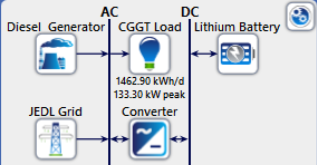
Figure 6 illustrates the simulation model of the existing CGGT power supply system, comprising the utility grid, diesel generator, and battery bank supplying the electrical load. The system was modelled and simulated using the HOMER Pro to evaluate its energy performance and establish a baseline for comparison with the proposed hybrid power system incorporating PV generation.
The MATLAB/Simulink was used to simulate the electrical characteristics of the PV array presented in
Figure 5, including its I-V and P-V characteristics under specified operating conditions. These simulations provide information on PV array performance under varying solar irradiance and temperature conditions and support the assessment of its potential contribution to the proposed hybrid power system.
Figure 6. Existing hybrid Utility-Grid/Diesel-Generator/Battery Energy System at CGGT.
3.3. Simulation of the Proposed Photovoltaic/Utility-Grid/ Diesel-Generator/Battery Energy System
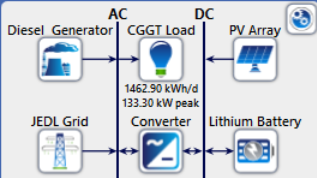
Figure 7 illustrates the proposed hybrid energy system for the CGGT, Nigeria. The system comprises two electrical buses; a DC bus connecting the PV array and battery bank, an AC bus interfacing with the Jos Electricity Distribution Limited (JEDL) grid, the local electricity distribution network, and the diesel generator to supply the facility’s AC loads. A bidirectional power converter links the two buses, operating in inverter mode to convert DC power into AC power and in rectifier mode to convert AC power into DC power for battery charging. This arrangement enables bidirectional power transfer between the AC and DC sides, subject to the converter’s operating limits.
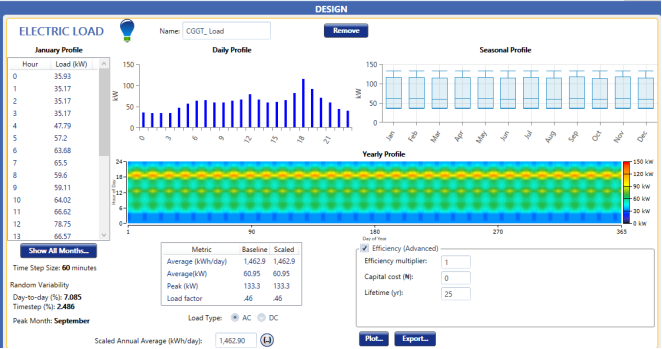
The simulated electrical load profile indicates an average daily energy demand of 1,462.90 kWh/day and a peak load of 133.30 kW. The utility grid supplies electricity to the CGGT facility through JEDL grid.
Figure 8 presents the electrical load profile and the associated energy demand characteristics used in the simulation. The load profile provides the basis for assessing the energy contributions of different sources and determining the appropriate component capacities.
The HOMER Pro optimization results indicate a selected PV array capacity of 345 kW and a diesel generator rated at 120 kW, with the utility grid connection modelled to 300 kW as the maximum grid power capacity. The optimized configuration has a NPC of approximately ₦507,482,000. The PV array contributes 75.290% of the annual electricity generation, while the estimated annual diesel fuel consumption is approximately 7,446.9 litres. These results provide a basis for evaluating the technical performance and economic feasibility of the proposed hybrid energy system.
Figure 7. Proposed Optimized hybrid Photovoltaic/Utility-Grid/Diesel-Generator/Battery Power System.
Table 4 summarizes the input configuration parameters, and associated costs utilized in HOMER Pro to simulate the proposed hybrid power system.
Table 5 compares the economic performance of the existing and proposed power system configurations. Although the proposed system requires a higher initial capital investment, it achieves lower NPC and lower operating costs, indicating improved long-term economic performance and potential for more sustainable power supply.
Figure 8. Simulated Electrical Load Profile of the CGGT Facility.
Table 4. Electrical Components and Optimal Design Parameters of the Proposed Hybrid Power System.
Electrical Component | Optimal Parameters |
Diesel Generator | Vendor | Yorc |
Power Rating | 150 kVA |
Initial Capital | ₦14,000,000 |
Replacement Cost | ₦11,200,000 |
O&M | ₦1,500/operating hour |
Diesel fuel Price,^# | ₦2,000/l |
Lifecycle | 30,000 Operating Hours |
Utility Grid | Vendor | JEDL |
Grid Power Price | ₦250/kWh |
PV | Vendor | Vertex |
PV Array Power | 345 kW |
Efficiency | 23% |
Initial Capital | ₦250 M |
Replacement Cost | ₦175 M |
O&M | ₦3 M |
Lifetime | 30 years |
Battery | Vendor | Felicity |
Technology | Lithium-ion |
Nominal Capacity | 25 kW, 51.2 V |
Efficiency | 95% |
Initial Capital | ₦10,000,000 |
Replacement Cost | ₦7,500,000 |
O&M | ₦150,000/year |
Lifetime | 15 years |
Converter (Inverter and Rectifier) | Vendor | Schneider |
Efficiency | 95% |
Initial Capital | ₦12,000,000 |
Replacement Cost | ₦8,400,000 |
O&M | 120,000/year |
Lifetime | 15 years |
Table 5. Estimation Economic Metrics of the Hybrid Power System at CGGT.
Electrical Energy Source | Initial Cost (M₦) | Power Generated at CGGT (kW) | NPC (M₦) | Operating Cost (M₦) |
Utility-Grid/Diesel-Generator/Battery (Existing) | 225 | 86,540.48 | 669.918 | 49.218 |
PV/Grid/Diesel-Generator/Battery (Proposed) | 471 | 86,540.48 | 507.482 | 29.376 |
Table 6 presents the annual energy contribution of each energy source in the optimized hybrid power system supplying the electrical load at the CGGT, Nigeria. The results indicate that the PV array generates approximately 592,002 kWh/year, accounting for 75.29% of the total annual electricity generation. Although this contribution demonstrates the significant potential of PV generation, the annual energy yield alone does not establish that the PV array can independently meet the facility’s load under varying operating conditions. Continuous standalone operation would depend on the ambient solar irradiance, battery bank, converter rating, and load demand. Therefore, integrating the PV energy system with the utility grid and diesel generator is recommended to improve power supply reliability and continuity, particularly during periods of low solar irradiance, unfavourable operating temperatures, and insufficient battery state of charge.
Table 6. Energy Generated Contribution per individual Energy source at CGGT.
Energy Source | Energy Generated kWh/year | Energy Contribution (%) |
PV Array | 592,002 | 75.29 |
Diesel | 94,000 | 11.954 |
Grid Purchases | 100,291 | 12.754 |
Total | 786,293 | 100 |
4. Conclusions
The study investigated the optimal sizing and techno-economic performance of a PV/utility-grid/diesel-generator/battery hybrid energy system for supplying electrical power to the modern radio telescope for VLBI applications at CGGT, Nigeria. The study was motivated by the unreliability of the utility grid, frequent power interruptions, and the high cost operating costs associated with dependence on diesel generators which may adversely affect the long-term, continuous and sustenance of VLBI operations.
The HOMER Pro optimization results identified an optimal system configuration comprising a 345 kW PV array, 150 kVA diesel generator, an utility grid connection with a maximum available capacity of 300 kW, and a lithium-ion battery bank as optimal configuration. The optimized system achieved an annual PV energy generation of approximately 592,002 kWh/year, representing 75.29% of the total annual electricity generation. The results demonstrate the potential of the PV EHS to serve as the primary energy source for the CGGT. However, because PV EHS depends on solar irradiance and operating temperature, integrating the PV array with the utility grid, diesel generator, battery bank provides complementary energy sources to enhance power supply reliability and continuity.
First, future studies should investigate battery degradation, depth of discharge limits, charging and discharging efficiency, and temperature dependent performance to determine the effects of battery ageing on system reliability, replacement costs, and lifetime economics. Alternative battery technologies and storage capacities could also be evaluated to identify configurations that provide adequate autonomy during prolonged grid outages and periods of low solar irradiance.
Second, advanced energy management and control strategies should be developed to coordinate power flow among the PV array, battery bank, utility grid, and diesel generator. These strategies should priorities critical telescope loads, optimize battery charging and discharging, minimize diesel fuel consumption, and reduce dependence on the utility grid while maintaining the required power quality.
Finally, future work should involve the pilot practical implementation and field validation of the optimized hybrid power system at CGGT. Continuous monitoring of energy generation, battery state of charge, diesel fuel consumption, utility grid availability, power quality, and unmet electrical load would enable the simulated results to be validated against actual operating data. The system’s reliability should also be assessed to determine whether it meets the stringent power supply continuity requirements of VLBI operations. The findings would provide a basis for refining the system design and facilitating the deployment of similar reliable hybrid power systems at other geodetic, geophysical, and radio astronomy facilities in Nigeria.
Abbreviations
VLBI | Very Long Baseline Interferometry |
CGGT | Centre for Geodesy and Geodynamics, Toro |
PV EHS | Photovoltaic Energy Harvesting System |
HOMER | Hybrid Optimization Model for Electric Renewable |
PAve | Average Electrical Load |
PPV | Power Output of PV Module |
PPVReq | PV Power Required |
EDaily | Daily Estimated Average Energy Consumption in kW/Day |
PSH | Peak Sun Hours in H/Day |
ղSys | Overall PV EHS Efficiency |
DoD | Allowable Depth of Discharge (Expressed as a Fraction) |
NAut | Battery Autonomy Period in Days |
ղBat | Efficiency of Battery Bank |
ղINV | Inverter Efficiency |
ղConv | Efficiency of Power Converter |
ղDG | Efficiency of Diesel Generator |
PConv | Power of Power Converter |
VDC | System DC Bus Voltage |
PMax | Maximum Power |
VMax | Voltage at PMax |
VTMax | Voltage at PMax of Combined |
VOC | Open Circuit Voltage |
PDG | Power Output Diesel Generator |
| Generator Fuel Consumption Rate in L/h |
F0 | Fuel Curve Intercept Coefficient (L/h per kW of Rated Generator Capacity) |
YGen | Rated Electrical Power Capacity of the Generator in kW |
F1 | Fuel Curve Slope Coefficient in L/kWh |
PDG | Actual Electrical Power Output of the Generator in kW |
| Fixed Generator Energy Cost in kWh |
RLife | Diesel Generator Lifetime |
COM | O&M Cost per Hour |
CRepl | Replacement Cost |
C(Eff fc) | Effective Fuel Cost |
| Sizing Factor |
PF | Power Factor |
| Maximum AC Load |
Min | Minimize |
O&M | Operating and Maintenance |
NPC | Net Present Cost |
GNSS | Global Navigation Satellite System |
LCOE | Levelized Cost of Energy |
AC | Alternating Current |
DC | Direct Current |
I-V | Current and Voltage Relationship |
P-V | Power and Voltage Relationship |
Acknowledgments
The authors would like to express their sincere acknowledgment to the following: National Space Research and Development Agency, Centre for Geodesy and Geodynamics, Toro, Nigeria, Shanghai Astronomical Observatory and HOMER Pro.
Author Contributions
Dauda Duncan: Conceptualization, Data curation, Formal Analysis, Funding acquisition, Investigation, Methodology, Project administration, Resources, Software, Supervision, Validation, Visualization, Writing – original draft, writing– review & editing
Joseph Danasabe Dodo: Methodology, Supervision, writing– review & editing
Umar Afegbua Kadiri: Data curation, Formal Analysis, Funding acquisition, Investigation, Methodology, Validation, Writing – review & editing
Mohammed Shuaibu Tsalha: Funding acquisition, Investigation, Methodology, Resources, Supervision, Validation, Writing – review & editing
Yusuf Abubakar Abukakar: Data curation, Formal Analysis, Methodology, Validation, Writing – review & editing, Fund acquisition
Musa Gwani Samaila: Funding acquisition, Validation –review & writing
Maikiyari Saidu: Funding acquisition, Methodology, Validation, Writing – review & editing
Omega John Unogwu: Funding acquisition, Methodology, Validation, Writing – review & editing
Abiodun Daomi: Funding acquisition, Methodology, Validation, Writing – review & editing
Yekini Amobi: Funding acquisition, Methodology, Validation, Writing – review & editing
Ishaku Abdul Dalyop: Funding acquisition, Methodology, Validation – review & writing
Muhammad Babayo Abdullahi: Funding acquisition, Methodology, Validation, Writing – review & editing
Okpanachi Omatule Joktan: Methodology, Validation, Writing – review & editing
Data Availability Statement
The data used in this research were obtained from Centre for Geodesy and Geodynamics, Toro, Nigeria, Weather Station.
Conflicts of Interest
The authors declare no conflicts of interest.
References
| [1] |
O. I. Adeniji, B. O. Ajisafe, J. Kimbugwe and F. Jingo, "Mitigating Nigeria’s Power Grid Collapse through Advanced Automation and Control," vol. 06, no. 02, 2025.
https://doi.org/10.54660/.JFMR.2025.6.2.242-258
|
| [2] |
P. T. Adzua, "Resolving the incredible Nigerian National Power Grid Collapse Frequency through Reliable SCADA/EMS Deployment," vol. 9, no. 5, 2021.
|
| [3] |
H. Edeh, "Grid Collapse Costs to Businesses, Power Generating Plants," International Centre for Investigative Reporting, 2024.
|
| [4] |
M. Dada, "Why Nigeria’s national grid keeps collapsing – power expert," ThisDay Live, 2025.
|
| [5] |
M. R. Gharib and A. Mohammadbeigi, "Optimizing stand-alone hybrid PV/Diesel Generator system with a focus on reliability, cost, and environmental considerations," Energy Conversion and Management: X, vol. 30, no. 2026, p. 18, 2026.
https://doi.org/10.1016/j.ecmx.2026.101562
|
| [6] |
G. A. Ajenikoko, R. O. Aremu, A. O. Ajenikoko, A. O. Oke, M. K. Yahaya, P. K. Agbleze and A. S. Jimoh, "Optimal Sizing and Operation of PV–Diesel–Battery Hybrid Energy Systems for Electric Vehicle Charging Using Homer Grid," International Journal of Engineering and Modern Technology, vol. 12, no. 5, pp. 219-230, 2026.
https://doi.org/10.56201/ijemt.vol.12.no5.2026.pg219.230
|
| [7] |
Y. Tibebu, E. Addis, A. H. Lenin and S. J. Sujin Arul, "Optimal design of a photovoltaic–diesel–battery hybrid renewable energy system for sustainable off-grid electrification of a village in Ethiopia," Energy Informatics, vol. 9, no. 1, p. 18, 2026.
https://doi.org/10.1186/s42162-026-00625-w
|
| [8] |
D. A. Marshalov, A. S. Berdnikov, A. S. Grenkov and L. V. Fedotov, "Modern Digital Backend Systems for the Radio Telescope of the Quasar VLBI Network," Solar-Terrestrial Physics, vol. 12, no. 2, pp. 119-124, 2026.
https://doi.org/10.12737/stp-122202614
|
| [9] |
J. Li, R. Zhu, S. Guo, P. Rui and Z. Xu, "Development and Performance Validation of a Versatile VLBI Digital," Astronomical Society of the Pacific, vol. 2025, no. 2025, p. 11, 2025.
https://doi.org/10.48550/arXiv.2502.15446
|
| [10] |
A. Ahmad, A. Aziz, M. Zia, M. U. Khan, K. Ullah and M. Asim, "Optimizing Solar Energy Harvesting through Advanced Solar Tracking Systems," in 4th International Conference on Scientific and Academic Research, Konya, 2024.
https://doi.org/10.1109/ICSPE62629.2024.10924363
|
| [11] |
K. Malek, E. O. Rodríguez, Y. Lee, J. Murillo, A. Mohammadkhorasani, L. Vigil, S. Zhang and F. Moreu, "Design and implementation of sustainable solar energy harvesting for low-cost remote sensors equipped with real-time monitoring systems," Journal of Infrastructure Intelligence and Resilience, vol. 2, no. 3, 2023.
https://doi.org/10.1016/j.iintel.2023.100051
|
| [12] |
A. V. Adebayo, I. O. Oladejo, H. K. Adebayo and A. O. Samuel, "Comparative Analysis of Electricity Grid Tariffs Versus Generator Costs in Nigeria," International Journal of Latest Technology in Engineering Management & Applied Science, vol. XIII, no. VII, pp. 59-68, 2024.
https://doi.org/10.51583/IJLTEMAS.2024.130708
|
| [13] |
A. Salihijo, "Displacing Petrol & Diesel Generators with Solar in Nigeria," Sustainable Energy for All, 2022.
|
| [14] |
T. O. Adebobola, A. O. Adetunbi and O. Omoniyi, "Cost Challenges Facing Nigeria Manufacturing Industries Using Generating Sets as Main Source of Power Supply," ABUAD Journal of Engineering Research and Development, vol. 6, no. 1, pp. 22-30, 2023.
https://doi.org/10.53982/ajerd.2023.0601.03-j
|
| [15] |
F. K. Alhousni, F. B. I. Alnaimi, P. C. Okonkwo, I. B. Belgacem, H. Mohamed and E. M. Barhoumi, "Photovoltaic Power Prediction Using Analytical Models and Homer-Pro: Investigation of Results Reliability," Sustainability, vol. 15, no. 8904, p. 13, 2023.
https://doi.org/10.3390/su15118904
|
| [16] |
M. Alam and S. Bhattacharyya, "Decentralized renewable hybrid mini-grids for sustainable electrification of the off-grid coastal areas of Bangladesh," Energies, vol. 9, no. 268, p. 9, 2016.
https://doi.org/10.3390/en9040268
|
| [17] |
M. M. Hamidu, A. M. El-jummah and M. Shuwa, "Modeling And Simulation of a Solar Farm Using Homer Pro Software for University of Maiduguri Senate Complex," Arid Zone Journal of Engineering, Technology & Environment, vol. 21, no. 3, pp. 811-819, 2025.
https://doi.org/10.63958/AZOJETE/2025/21/03/012
|
| [18] |
D. Duncan, A. M. Zungeru, M. Mangwala, B. Diarra, B. Mtengi, T. Semong and J. M. Chuma, "Power-Efficient Hybrid Energy Storage System for Seismic Nodes," Journal of Engineering, vol. 2020, no. 2020, p. 21, 2020.
https://doi.org/10.1155/2020/3652848
|
| [19] |
M. S. Okundamiya and O. Omorogiuwa, "Viability of a Photovoltaic-Diesel-Battery Hybrid Power System in Nigeria," Iranica Journal of Energy & Environment, vol. 6, no. 1, pp. 5-12, 2015.
https://doi.org/10.1155/2020/3652848
|
| [20] |
A. Maheri, "Multi-objective Design Optimisation of Standalone Hybrid Wind-PV-Diesel Systems under Uncertainties," Renewable Energy, vol. 66, no. 2014, p. 650–661, 2014.
https://doi.org/10.1016/j.renene.2014.01.009
|
| [21] |
S. A. A. Dawsari, F. Anayi and M. Packianather, "Novel Techno-economic Feasibility Study of an Off-grid PV/wind/diesel/battery hybrid energy system using MATLAB-HOMER link," Energy Conversion and Management: X, vol. 28, no. 101386, 2025.
https://doi.org/10.1016/j.ecmx.2025.101386
|
| [22] |
I. Çetinbaşa, B. Tamyüreka and M. Demirtaş, "Design, Analysis and Optimization of a Hybrid Microgrid System Using HOMER Software: Eskişehir Osmangazi University Example," International Journal of Renewable Energy Development, vol. 8, no. 1, pp. 65-79, 2019.
https://doi.org/10.14710/ijred.8.1.65-79
|
Cite This Article
-
APA Style
Duncan, D., Dodo, J. D., Kadiri, U. A., Tsalha, M. S., Abukakar, Y. A., et al. (2026). Towards Optimizing Hybrid Photovoltaic/Utility-Grid/
Diesel-Generator/Battery Power Management across Radio Telescope at CGG, Toro, Nigeria, for VLBI Applications. Journal of Electrical and Electronic Engineering, 14(6), 245-259. https://doi.org/10.11648/j.jeee.20261406.11
 Copy
|
 Download
ACS Style
Duncan, D.; Dodo, J. D.; Kadiri, U. A.; Tsalha, M. S.; Abukakar, Y. A., et al. Towards Optimizing Hybrid Photovoltaic/Utility-Grid/
Diesel-Generator/Battery Power Management across Radio Telescope at CGG, Toro, Nigeria, for VLBI Applications. J. Electr. Electron. Eng. 2026, 14(6), 245-259. doi: 10.11648/j.jeee.20261406.11
Copy
|
Download
AMA Style
Duncan D, Dodo JD, Kadiri UA, Tsalha MS, Abukakar YA, et al. Towards Optimizing Hybrid Photovoltaic/Utility-Grid/
Diesel-Generator/Battery Power Management across Radio Telescope at CGG, Toro, Nigeria, for VLBI Applications. J Electr Electron Eng. 2026;14(6):245-259. doi: 10.11648/j.jeee.20261406.11
Copy
|
Download
-
@article{10.11648/j.jeee.20261406.11,
  author = {Dauda Duncan and Joseph Danasabe Dodo and Umar Afegbua Kadiri and Mohammed Shuaibu Tsalha and Yusuf Abubakar Abukakar and Musa Gwani Samaila and Maikiyari Saidu and Omega John Unogwu and Abiodun Daomi and Yekini Amobi and Ishaku Abdul Dalyop and Muhammad Babayo Abdullahi and Okpanachi Omatule Joktan},
  title = {Towards Optimizing Hybrid Photovoltaic/Utility-Grid/
Diesel-Generator/Battery Power Management across Radio Telescope at CGG, Toro, Nigeria, for VLBI Applications},
  journal = {Journal of Electrical and Electronic Engineering},
  volume = {14},
  number = {6},
  pages = {245-259},
  doi = {10.11648/j.jeee.20261406.11},
  url = {https://doi.org/10.11648/j.jeee.20261406.11},
  eprint = {https://article.sciencepublishinggroup.com/pdf/10.11648.j.jeee.20261406.11},
  abstract = {Reliable and uninterrupted electrical power is essential for modern radio telescope facilities employing Very Long Baseline Interferometry (VLBI), where power interruptions can compromise observation continuity and data acquisition. At the Centre for Geodesy and Geodynamics (CGGT), Toro, Nigeria, unreliable utility grid supply and the high operating costs associated with diesel generator dependence present significant challenges to sustainable VLBI operations. This study investigates the design, optimal sizing, and techno-economic performance of a hybrid photovoltaic (PV)/utility-grid/diesel-generator/battery energy system to improve power supply reliability and reduce operating costs at the facility. The hybrid system was modelled and optimized using HOMER Pro, while MATLAB/Simulink was employed to analyze the PV array’s current-voltage (I-V) and the power-voltage (P-V) characteristics. The optimization results identified a configuration comprising a 345 kW PV array, a 150 kVA diesel generator, a utility-grid connection with a maximum available capacity of 300 kW, and a lithium-ion battery energy storage system. The optimized configuration achieved a net present cost (NPC) of approximately ₦507.482 million and an annual PV energy generation of 592,002 kWh, representing 75.29% of the total annual electricity generation. The estimated annual diesel fuel consumption was approximately 7,446.9 litres. Compared with the existing utility-grid/diesel-generator/battery configuration, the proposed hybrid system reduced the NPC from ₦669.918 million to ₦507.482 million and the reported operating cost from ₦49.218 million to ₦29.376 million, despite requiring a higher initial capital investment. These findings indicate that integrating PV generation and battery storage with the utility grid and diesel generator can improve the economic performance and diversify the energy supply of the CGGT facility. Further field validation is required to establish the system’s operational reliability under actual load and meteorological conditions and to verify its suitability for the stringent continuity requirements of VLBI operations.},
 year = {2026}
}
Copy
|
Download
-
TY  - JOUR
T1  - Towards Optimizing Hybrid Photovoltaic/Utility-Grid/
Diesel-Generator/Battery Power Management across Radio Telescope at CGG, Toro, Nigeria, for VLBI Applications
AU  - Dauda Duncan
AU  - Joseph Danasabe Dodo
AU  - Umar Afegbua Kadiri
AU  - Mohammed Shuaibu Tsalha
AU  - Yusuf Abubakar Abukakar
AU  - Musa Gwani Samaila
AU  - Maikiyari Saidu
AU  - Omega John Unogwu
AU  - Abiodun Daomi
AU  - Yekini Amobi
AU  - Ishaku Abdul Dalyop
AU  - Muhammad Babayo Abdullahi
AU  - Okpanachi Omatule Joktan
Y1  - 2026/11/06
PY  - 2026
N1  - https://doi.org/10.11648/j.jeee.20261406.11
DO  - 10.11648/j.jeee.20261406.11
T2  - Journal of Electrical and Electronic Engineering
JF  - Journal of Electrical and Electronic Engineering
JO  - Journal of Electrical and Electronic Engineering
SP  - 245
EP  - 259
PB  - Science Publishing Group
SN  - 2329-1605
UR  - https://doi.org/10.11648/j.jeee.20261406.11
AB  - Reliable and uninterrupted electrical power is essential for modern radio telescope facilities employing Very Long Baseline Interferometry (VLBI), where power interruptions can compromise observation continuity and data acquisition. At the Centre for Geodesy and Geodynamics (CGGT), Toro, Nigeria, unreliable utility grid supply and the high operating costs associated with diesel generator dependence present significant challenges to sustainable VLBI operations. This study investigates the design, optimal sizing, and techno-economic performance of a hybrid photovoltaic (PV)/utility-grid/diesel-generator/battery energy system to improve power supply reliability and reduce operating costs at the facility. The hybrid system was modelled and optimized using HOMER Pro, while MATLAB/Simulink was employed to analyze the PV array’s current-voltage (I-V) and the power-voltage (P-V) characteristics. The optimization results identified a configuration comprising a 345 kW PV array, a 150 kVA diesel generator, a utility-grid connection with a maximum available capacity of 300 kW, and a lithium-ion battery energy storage system. The optimized configuration achieved a net present cost (NPC) of approximately ₦507.482 million and an annual PV energy generation of 592,002 kWh, representing 75.29% of the total annual electricity generation. The estimated annual diesel fuel consumption was approximately 7,446.9 litres. Compared with the existing utility-grid/diesel-generator/battery configuration, the proposed hybrid system reduced the NPC from ₦669.918 million to ₦507.482 million and the reported operating cost from ₦49.218 million to ₦29.376 million, despite requiring a higher initial capital investment. These findings indicate that integrating PV generation and battery storage with the utility grid and diesel generator can improve the economic performance and diversify the energy supply of the CGGT facility. Further field validation is required to establish the system’s operational reliability under actual load and meteorological conditions and to verify its suitability for the stringent continuity requirements of VLBI operations.
VL  - 14
IS  - 6
ER  -
Copy
|
Download





 Share This Article
 Twitter
 Linked In
 Facebook
