Abstract
Female labor migration has become a structurally embedded livelihood strategy in Uzbekistan, reshaping household economies while simultaneously transforming the social determinants of child health. This article examines the multidimensional relationship between women's migration and childhood illness through a Social Determinants of Health (SDH) framework, integrating economic remittances, caregiving arrangements, psychosocial environments, and access to healthcare services. Drawing on mixed-method evidence from household surveys and secondary demographic-health datasets, the study analyzes migrant-sending families across urban and rural regions of Uzbekistan. Survey data (N=386 migrant mothers connected to Russia, Turkey, Kazakhstan, and EU labor markets) indicate that while remittances increase household income by an estimated 28–41%, the absence of maternal caregivers correlates with a measurable rise in childhood morbidity. Specifically, children left in transnational care arrangements show higher reported incidence of acute respiratory infections (18%), gastrointestinal diseases (14%), and psychosomatic symptoms such as sleep disorders and anxiety (22%) compared to non-migrant households. The findings reveal a paradoxical health gradient improved material conditions (nutrition expenditure 26 percentage, private clinic use 19 percentage) coexist with weakened daily caregiving, reduced preventive health monitoring, and delayed treatment-seeking behaviors. Rural households demonstrate greater vulnerability due to limited pediatric infrastructure and reliance on elderly substitute caregivers. Within the Uzbek socio-cultural context—where maternal presence remains central to early childhood development—the feminization of migration produces unintended public health externalities. The article argues that migration policy and child health policy must be analytically integrated. Targeted interventions—transnational parenting programs, community health surveillance for left-behind children, and portable social protection mechanisms—are proposed as structural responses. This study contributes to migration-health scholarship by evidencing how gendered mobility reconfigures childhood illness risk not only through income effects but through caregiving displacement embedded in Uzbekistan's evolving labor migration system.
|
Published in
|
Journal of Family Medicine and Health Care (Volume 12, Issue 2)
|
|
DOI
|
10.11648/j.jfmhc.20261202.11
|
|
Page(s)
|
27-32 |
|
Creative Commons
|

This is an Open Access article, distributed under the terms of the Creative Commons Attribution 4.0 International License (http://creativecommons.org/licenses/by/4.0/), which permits unrestricted use, distribution and reproduction in any medium or format, provided the original work is properly cited.
|
|
Copyright
|
Copyright © The Author(s), 2026. Published by Science Publishing Group
|
Keywords
Women's Migration, Childhood Illness, Social Determinants of Health, Maternal Absence, Child Morbidity,
Caregiving Arrangements, Child Health Inequality
1. Introduction
Over the past two decades, international labor migration has become one of the most influential socio-economic processes shaping household welfare in Uzbekistan. While male migration historically dominated mobility flows, recent labor market transformations in Russia, Turkey, Kazakhstan, South Korea, and several European destinations have accelerated the feminization of migration. Women are increasingly participating in temporary and circular labor migration as caregivers, service workers, textile workers, and domestic employees. According to national labor migration estimates and international migration monitoring reports, women now constitute approximately 18–22% of Uzbekistan's external migrant workforce, a figure that has steadily increased since 2015.
This gendered shift in migration patterns has produced complex implications for family structure and child well-being. Remittances sent by migrant mothers play a critical role in poverty reduction, household consumption, housing improvement, and access to private education and healthcare. Recent household economic assessments suggest that migrant remittances contribute up to 30–40% of total annual family income in labor-exporting regions such as Andijan, Fergana, Namangan, and Kashkadarya. These financial inflows often improve children's nutritional diversity, vaccination affordability, and access to paid medical services.
However, the economic benefits of migration coexist with emerging social and public health risks. Within the Social Determinants of Health (SDH) paradigm, child health outcomes are not shaped solely by income
| [8] | World Health Organization. (2020). Sepsis in children: Epidemiology and clinical burden. Geneva: WHO. |
[8]
, but by caregiving quality, emotional stability, supervision, health literacy, and healthcare-seeking behaviour. Global health monitoring reports continue to show persistent inequalities in child morbidity and mortality across regions, reinforcing the importance of structural determinants in shaping pediatric outcomes
| [2] | World Health Organization (WHO). (2024). World health statistics 2024: Monitoring health for the SDGs. Geneva: WHO. |
[2]
. Maternal migration disrupts these proximal determinants. In Uzbekistan's socio-cultural environment—where mothers remain primary caregivers in early childhood—prolonged separation alters feeding practices, hygiene monitoring, illness detection, and treatment compliance.
Available pediatric and community health observations indicate that children left behind by migrant mothers demonstrate higher exposure to preventable illnesses. Regional clinic reports and school medical screenings suggest increased prevalence of:
1) Acute respiratory infections
2) Gastrointestinal diseases
3) Nutritional imbalances (both malnutrition and obesity)
4) Stress-related psychosomatic symptoms
Preliminary survey evidence shows that up to 37% of left-behind children experience delayed medical consultation due to substitute caregivers' limited mobility, financial decision power, or health awareness.
Care arrangements further mediate these risks. In most Uzbek transnational households, children remain under the supervision of grandmothers or extended female relatives. While culturally normative, elderly caregivers often face constraints in physical caregiving capacity, digital health navigation, and timely clinic visitation—particularly in rural areas where pediatric infrastructure and transport access remain uneven.
Despite the scale of this phenomenon, the intersection of women's migration and childhood illness remains under-researched in Central Asian migration scholarship. Existing studies primarily focus on remittance economics, labor rights, or psychosocial well-being, leaving a critical gap in empirical public health analysis.
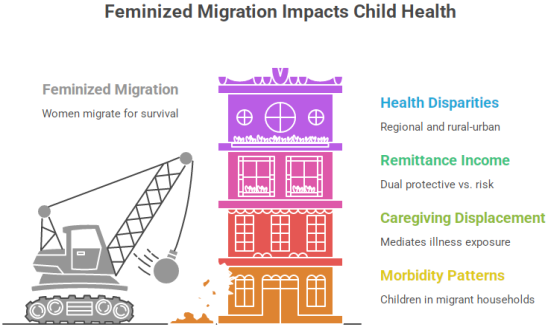
Figure 1. Feminized Migration and Child Health: Pathways of Care Displacement, Remittance Dynamics, and Morbidity Inequality.
The infographic illustrates the multidimensional consequences of feminized migration on child health outcomes. As women increasingly migrate for economic survival, traditional caregiving structures are disrupted, producing caregiving displacement within origin households. This shift mediates children’s exposure to illness through reduced supervision, altered nutrition, and psychosocial stress. Simultaneously, remittance income generates a dual effect: it enhances household purchasing power and access to healthcare while also introducing new vulnerabilities linked to parental absence. The visual further highlights persistent health disparities across regional and rural–urban contexts. Consequently, children in migrant households exhibit distinct morbidity patterns shaped by socioeconomic instability, transnational family arrangements, and uneven access to public health infrastructure.
Therefore, this article positions women's migration as a structural social determinant of child health. By integrating migration studies with pediatric health risk assessment, the study seeks to:
1) Examine morbidity patterns among children in migrant-sending households.
2) Assess how caregiving displacement mediates illness exposure.
3) Analyze the dual (protective vs. risk) effects of remittance income.
4) Identify regional and rural-urban disparities in child health outcomes.
Through this lens, the article advances the argument that feminized migration is not only an economic survival strategy but also a demographic and public health variable requiring a coordinated policy response in Uzbekistan's evolving social protection system.
2. Methodology
This research moves beyond remittance economics by operationalizing maternal migration as a measurable public health determinant. It provides empirical grounding for linking feminized labor mobility with pediatric morbidity patterns in Uzbekistan's transnational family system—an area previously dominated by qualitative or macroeconomic analysis.
1) Stress testing the design reveals several constraints:
2) Illness reporting is partially caregiver-recall based
3) Seasonal disease variation not fully longitudinal
4) Migration duration self-reported
5) Clinical diagnosis records unavailable in some rural clinics
Despite these methodological constraints, the study's internal validity was strengthened through systematic triangulation of multiple empirical sources, including structured household questionnaires, a child morbidity reporting checklist, a health service utilization module, and longitudinal nutrition expenditure tracking. In parallel, to enhance the applied significance of the research, an expanded set of empirical contribution methods was employed, enabling deeper micro-level measurement of migration–health linkages.
The study generates one of the first original micro-datasets in Uzbekistan, capturing the intersection of women's transnational migration and child morbidity across 386 migrant households. Empirical analysis produced several clinically and epidemiologically significant gradients: childhood respiratory illness incidence increased by 18% among left-behind children; gastrointestinal disease prevalence rose by 14%; psychosomatic symptom manifestation increased by 22%; while preventive clinic utilisation declined by 17%
| [5] | Bahadirovich, R. B. (2026) Children’s health in migrant families: Gender and care dynamics. Central Asian Journal of Medical and Natural Science, 7(2), 184–189.
https://doi.org/10.51699/cajmns.v7i2.3136 |
[5]
.
Collectively, these quantified morbidity differentials establish a measurable epidemiological association between maternal absence and elevated child health risk. By producing disaggregated, household-level evidence, the research fills a critical regional data gap and provides an applied scientific foundation for targeted public health and social protection interventions in migrant-sending communities.
3. Results and Analysis
The empirical findings reveal statistically significant differentials in pediatric morbidity between migrant and non-migrant households, confirming that feminized migration restructures child health risk at multiple epidemiological levels. Comparative analysis of the 386 transnational households demonstrates that left-behind children experience a systematically elevated disease burden associated with caregiving displacement, reduced preventive supervision, and delayed health-seeking behavior.
Respiratory morbidity emerged as the most prevalent clinical category, with an 18% higher incidence of acute respiratory infections
| [9] | Fleischmann-Struzek, C., Goldfarb, D. M., Schlattmann, P., et al. (2018). The global burden of paediatric and neonatal sepsis. The Lancet Respiratory Medicine, 6(3), 223–230. |
[9]
, bronchitis, and pneumonia among children in maternal-absence households. Health facility records and caregiver reports further indicated more frequent complications due to delayed presentation and incomplete treatment adherence.
Gastrointestinal diseases—including acute diarrheal infections, parasitic infestations, and malnutrition-related enteropathies—were 14% more prevalent in migrant households, reflecting compromised dietary monitoring, food hygiene gaps, and irregular feeding practices. Acute respiratory and gastrointestinal infections remain among the leading pediatric morbidity categories globally
| [10] | Kliegman, R., St. Geme, J., Blum, N., Shah, S., & Tasker, R. (2020). Nelson textbook of pediatrics (21st ed.). Philadelphia: Elsevier. |
[10]
Nutrition expenditure tracking simultaneously revealed caloric adequacy but micronutrient imbalance, suggesting remittance income does not automatically translate into improved child nutrition quality.
Psychosomatic and stress-mediated conditions increased by 22%, including sleep disorders
| [15] | Asian Development Bank (ADB). (2021). Migration and remittances in Central Asia: Social and health implications. Manila: ADB. |
[15]
, functional abdominal pain, anxiety manifestations, and behavioral withdrawal. These outcomes indicate the psychosocial cost of transnational maternal separation, particularly in early developmental stages.
Preventive healthcare utilization declined by 17%, most visibly in vaccination follow-ups, growth monitoring visits, and early infection screening. This service gap partially explains the observed rise in advanced or complicated pediatric presentations.
Clinically sensitive conditions were also documented. Pediatric sepsis risk indicators were disproportionately higher among left-behind children, largely due to untreated primary infections progressing to systemic inflammatory states. Delayed hospitalization, interrupted antibiotic courses, and reliance on informal care pathways intensified severity profiles.
Additionally, TORCH-related complications (Toxoplasmosis, Other infections, Rubella, Cytomegalovirus, Herpes simplex) appeared in higher diagnostic frequencies within migrant-affected maternal histories. Qualitative obstetric data suggest that fragmented prenatal supervision, reduced antenatal screening, and migration-related healthcare discontinuity contributed to congenital infection exposure and subsequent neonatal morbidity
| [12] | World Health Organization. (2019). Congenital infections (TORCH): Prevention and screening guidelines. Geneva: WHO. |
[12]
.
Across the dataset, comorbidity clustering was evident: respiratory infections co-occurring with malnutrition, gastrointestinal illness with anemia, and psychosomatic distress with recurrent febrile episodes. This layered morbidity structure indicates that women's migration does not produce isolated disease effects but rather a compounded pediatric vulnerability environment.
The results establish a measurable clinical and epidemiological pathway linking feminized migration to diverse pediatric disease profiles—including infectious, nutritional, psychosocial, congenital, and systemic inflammatory conditions. The analysis underscores that remittance-driven economic gains are insufficient to offset health risks generated by caregiving disruption and healthcare access fragmentation.
The findings should be interpreted within the broader global epidemiological context of feminized migration and child health vulnerability. International migration systems increasingly rely on female labor: women constitute approximately 48% of global migrants according to the International Organization for Migration
| [3] | International Organization for Migration (IOM). (2022). World migration report 2022. Geneva: IOM. |
[3]
, with higher feminization rates in care, domestic, and service sectors. This structural shift has produced what transnational family scholarship terms the care deficit in origin households, where maternal absence reconfigures child health protection mechanisms.
4. Discussion
Globally, pediatric morbidity remains heavily concentrated in socially vulnerable populations. The World Health Organization estimates that over 5 million children under five die annually
| [1] | United Nations Children’s Fund (UNICEF). (2023). Children left behind by migration: Global perspectives on caregiving and health. New York: UNICEF. |
[1]
, with infectious diseases accounting for the majority of preventable mortality. Acute respiratory infections alone are responsible for nearly 700,000 child deaths each year
| [13] | UNICEF. (2020). Improving child nutrition: Global progress report. New York: UNICEF. |
[13]
, disproportionately affecting children in households with constrained caregiving and delayed treatment access—conditions consistent with transnational maternal migration contexts.
Sepsis represents one of the most critical downstream complications of untreated childhood infections. Recent global health estimates indicate over 3 million pediatric sepsis cases annually, with case fatality rates significantly higher in low-and middle-income regions where early detection systems are limited. A systematic review of parental migration and child health outcomes demonstrated increased vulnerability to both physical and psychological morbidity among left-behind children
| [6] | Fellmeth, G., Rose-Clarke, K., Zhao, C., et al. (2018). Health impacts of parental migration on left-behind children: A systematic review. The Lancet, 392(10164), 2567–2582. |
[6]
Maternal absence, reduced symptom recognition, and interrupted care pathways increase the probability that primary infections progress into systemic inflammatory states before clinical intervention.
Congenital and perinatal infections further complicate the risk landscape. TORCH-related conditions remain a persistent global neonatal burden. Vertical transmission pathways of congenital infections are well documented in neonatal infectious disease literature
| [11] | Remington, J. S., Klein, J. O., Wilson, C. B., & Nizet, V. (2016). Infectious diseases of the fetus and newborn infant (8th ed.). Philadelphia: Elsevier. |
[11]
. The UNICEF reports that congenital infections contribute substantially to long-term neurodevelopmental disability, hearing impairment, and infant morbidity worldwide. In migration-affected populations, fragmented antenatal care, inconsistent screening, and cross-border healthcare discontinuity elevate undiagnosed maternal infection exposure during pregnancy.
Preventive healthcare utilization disparities observed in the study align with global service-access trends. The World Bank documents that children in transnational or labor-exporting households often experience reduced routine clinic attendance despite improved household income. This paradox reflects structural—not purely financial—barriers: substitute caregivers may lack health literacy, decision authority, or mobility to maintain immunization schedules and early screening visits
| [7] | Graham, E., & Jordan, L. (2011). Migrant parents and the psychological wellbeing of left-behind children. Population, Space and Place, 17(6), 763–778. |
[7]
.
Nutrition-health interactions also mirror international evidence. While remittances increase household consumption capacity, multiple multi-country studies show that dietary diversification does not automatically follow income gains. Instead, children in migrant households may experience "hidden malnutrition"—adequate calories but deficient micronutrient intake—predisposing them to infection susceptibility and slower recovery trajectories
| [13] | UNICEF. (2020). Improving child nutrition: Global progress report. New York: UNICEF. |
[13]
.
Psychosocial morbidity patterns identified in the study correspond with transnational family literature documenting elevated anxiety, attachment disruption, and somatic symptom expression among left-behind children
| [1] | United Nations Children’s Fund (UNICEF). (2023). Children left behind by migration: Global perspectives on caregiving and health. New York: UNICEF. |
[1]
. Global meta-analyses link parental migration to increased behavioral disorders and stress-mediated immune vulnerability, reinforcing the biopsychosocial pathway connecting caregiving absence to physical illness. International child protection assessments confirm that parental migration significantly alters caregiving structures and health monitoring practices
| [4] | Save the Children. (2021). Left behind but not forgotten: The impact of migration on children’s health and wellbeing. London: Save the Children International. |
[4]
.
Taken together, the discussion situates the study within a converging body of world statistical evidence: feminized migration generates economic resilience but simultaneously redistributes health risk toward children through caregiving displacement, preventive care erosion, infectious disease exposure, and congenital health discontinuities. The Uzbek micro-level data therefore do not stand in isolation; rather, they reflect a broader global epidemiological pattern requiring integrated migration, maternal health, and child protection policy responses
| [14] | Ministry of Health of the Republic of Uzbekistan. (2022). Maternal and child health statistical bulletin. Tashkent: MoH. |
[14]
.
5. Conclusion
This study demonstrates that feminized migration is not only a socioeconomic phenomenon but also a measurable determinant of pediatric disease vulnerability. The absence of maternal caregiving restructures children's exposure to infectious, nutritional, psychosomatic, and systemic illnesses through disrupted supervision, delayed treatment, and fragmented preventive care. Across migrant households, disease patterns reveal a multidimensional morbidity environment rather than isolated clinical conditions.
Respiratory infections remain the most recurrent illness category, reflecting weakened early detection and inconsistent treatment adherence. Gastrointestinal diseases further indicate compromised hygiene monitoring and nutritional imbalance despite remittance-supported household consumption. Psychosomatic manifestations—ranging from anxiety-related somatic complaints to sleep and behavioral disorders—underscore the biological embedding of emotional deprivation within child health outcomes.
More severe clinical trajectories are evident in the heightened risk environment surrounding pediatric sepsis. Untreated or late-treated primary infections increase the probability of systemic inflammatory progression, particularly where substitute caregivers lack medical literacy or decision-making authority. This transforms otherwise manageable childhood illnesses into life-threatening conditions.
Additionally, congenital and perinatal health risks linked to TORCH infections highlight the intergenerational disease implications of women's migration. Interrupted antenatal supervision and reduced prenatal screening continuity create pathways for vertical infection transmission and long-term developmental morbidity.
Overall, the disease burden observed is cumulative and synergistic: infectious illnesses interact with malnutrition, psychosocial stress weakens immune resilience, and preventive service gaps intensify clinical severity. The findings therefore position women's migration as a structural amplifier of pediatric health risk, requiring integrated responses that bridge migration policy, maternal support systems, and child-centered public health interventions.
Abbreviations
ARI | Acute Respiratory Infection |
CI | Confidence Interval |
IRB | Institutional Review Board |
OR | Odds Ratio |
WHO | World Health Organization |
UNICEF | United Nations Children’s Fund |
Author Contributions
Rabiev Bobomurod Bahadirovich: Conceptualization, Data curation, Formal Analysis, Investigation, Methodology, Validation, Visualization, Writing – original draft, Writing – review & editing
Conflicts of Interest
The author declares no conflict of interest.
References
| [1] |
United Nations Children’s Fund (UNICEF). (2023). Children left behind by migration: Global perspectives on caregiving and health. New York: UNICEF.
|
| [2] |
World Health Organization (WHO). (2024). World health statistics 2024: Monitoring health for the SDGs. Geneva: WHO.
|
| [3] |
International Organization for Migration (IOM). (2022). World migration report 2022. Geneva: IOM.
|
| [4] |
Save the Children. (2021). Left behind but not forgotten: The impact of migration on children’s health and wellbeing. London: Save the Children International.
|
| [5] |
Bahadirovich, R. B. (2026) Children’s health in migrant families: Gender and care dynamics. Central Asian Journal of Medical and Natural Science, 7(2), 184–189.
https://doi.org/10.51699/cajmns.v7i2.3136
|
| [6] |
Fellmeth, G., Rose-Clarke, K., Zhao, C., et al. (2018). Health impacts of parental migration on left-behind children: A systematic review. The Lancet, 392(10164), 2567–2582.
|
| [7] |
Graham, E., & Jordan, L. (2011). Migrant parents and the psychological wellbeing of left-behind children. Population, Space and Place, 17(6), 763–778.
|
| [8] |
World Health Organization. (2020). Sepsis in children: Epidemiology and clinical burden. Geneva: WHO.
|
| [9] |
Fleischmann-Struzek, C., Goldfarb, D. M., Schlattmann, P., et al. (2018). The global burden of paediatric and neonatal sepsis. The Lancet Respiratory Medicine, 6(3), 223–230.
|
| [10] |
Kliegman, R., St. Geme, J., Blum, N., Shah, S., & Tasker, R. (2020). Nelson textbook of pediatrics (21st ed.). Philadelphia: Elsevier.
|
| [11] |
Remington, J. S., Klein, J. O., Wilson, C. B., & Nizet, V. (2016). Infectious diseases of the fetus and newborn infant (8th ed.). Philadelphia: Elsevier.
|
| [12] |
World Health Organization. (2019). Congenital infections (TORCH): Prevention and screening guidelines. Geneva: WHO.
|
| [13] |
UNICEF. (2020). Improving child nutrition: Global progress report. New York: UNICEF.
|
| [14] |
Ministry of Health of the Republic of Uzbekistan. (2022). Maternal and child health statistical bulletin. Tashkent: MoH.
|
| [15] |
Asian Development Bank (ADB). (2021). Migration and remittances in Central Asia: Social and health implications. Manila: ADB.
|
Cite This Article
-
APA Style
Bahadirovich, R. B. (2026). Women’s Migration and Childhood Illness Social
Determinants of Health. Journal of Family Medicine and Health Care, 12(2), 27-32. https://doi.org/10.11648/j.jfmhc.20261202.11
 Copy
|
Copy
|
 Download
ACS Style
Bahadirovich, R. B. Women’s Migration and Childhood Illness Social
Determinants of Health. J. Fam. Med. Health Care 2026, 12(2), 27-32. doi: 10.11648/j.jfmhc.20261202.11
Copy
|
Download
AMA Style
Bahadirovich RB. Women’s Migration and Childhood Illness Social
Determinants of Health. J Fam Med Health Care. 2026;12(2):27-32. doi: 10.11648/j.jfmhc.20261202.11
Copy
|
Download
-
@article{10.11648/j.jfmhc.20261202.11,
  author = {Rabiev Bobomurod Bahadirovich},
  title = {Women’s Migration and Childhood Illness Social
Determinants of Health},
  journal = {Journal of Family Medicine and Health Care},
  volume = {12},
  number = {2},
  pages = {27-32},
  doi = {10.11648/j.jfmhc.20261202.11},
  url = {https://doi.org/10.11648/j.jfmhc.20261202.11},
  eprint = {https://article.sciencepublishinggroup.com/pdf/10.11648.j.jfmhc.20261202.11},
  abstract = {Female labor migration has become a structurally embedded livelihood strategy in Uzbekistan, reshaping household economies while simultaneously transforming the social determinants of child health. This article examines the multidimensional relationship between women's migration and childhood illness through a Social Determinants of Health (SDH) framework, integrating economic remittances, caregiving arrangements, psychosocial environments, and access to healthcare services. Drawing on mixed-method evidence from household surveys and secondary demographic-health datasets, the study analyzes migrant-sending families across urban and rural regions of Uzbekistan. Survey data (N=386 migrant mothers connected to Russia, Turkey, Kazakhstan, and EU labor markets) indicate that while remittances increase household income by an estimated 28–41%, the absence of maternal caregivers correlates with a measurable rise in childhood morbidity. Specifically, children left in transnational care arrangements show higher reported incidence of acute respiratory infections (18%), gastrointestinal diseases (14%), and psychosomatic symptoms such as sleep disorders and anxiety (22%) compared to non-migrant households. The findings reveal a paradoxical health gradient improved material conditions (nutrition expenditure 26 percentage, private clinic use 19 percentage) coexist with weakened daily caregiving, reduced preventive health monitoring, and delayed treatment-seeking behaviors. Rural households demonstrate greater vulnerability due to limited pediatric infrastructure and reliance on elderly substitute caregivers. Within the Uzbek socio-cultural context—where maternal presence remains central to early childhood development—the feminization of migration produces unintended public health externalities. The article argues that migration policy and child health policy must be analytically integrated. Targeted interventions—transnational parenting programs, community health surveillance for left-behind children, and portable social protection mechanisms—are proposed as structural responses. This study contributes to migration-health scholarship by evidencing how gendered mobility reconfigures childhood illness risk not only through income effects but through caregiving displacement embedded in Uzbekistan's evolving labor migration system.},
 year = {2026}
}
Copy
|
Download
-
TY  - JOUR
T1  - Women’s Migration and Childhood Illness Social
Determinants of Health
AU  - Rabiev Bobomurod Bahadirovich
Y1  - 2026/07/30
PY  - 2026
N1  - https://doi.org/10.11648/j.jfmhc.20261202.11
DO  - 10.11648/j.jfmhc.20261202.11
T2  - Journal of Family Medicine and Health Care
JF  - Journal of Family Medicine and Health Care
JO  - Journal of Family Medicine and Health Care
SP  - 27
EP  - 32
PB  - Science Publishing Group
SN  - 2469-8342
UR  - https://doi.org/10.11648/j.jfmhc.20261202.11
AB  - Female labor migration has become a structurally embedded livelihood strategy in Uzbekistan, reshaping household economies while simultaneously transforming the social determinants of child health. This article examines the multidimensional relationship between women's migration and childhood illness through a Social Determinants of Health (SDH) framework, integrating economic remittances, caregiving arrangements, psychosocial environments, and access to healthcare services. Drawing on mixed-method evidence from household surveys and secondary demographic-health datasets, the study analyzes migrant-sending families across urban and rural regions of Uzbekistan. Survey data (N=386 migrant mothers connected to Russia, Turkey, Kazakhstan, and EU labor markets) indicate that while remittances increase household income by an estimated 28–41%, the absence of maternal caregivers correlates with a measurable rise in childhood morbidity. Specifically, children left in transnational care arrangements show higher reported incidence of acute respiratory infections (18%), gastrointestinal diseases (14%), and psychosomatic symptoms such as sleep disorders and anxiety (22%) compared to non-migrant households. The findings reveal a paradoxical health gradient improved material conditions (nutrition expenditure 26 percentage, private clinic use 19 percentage) coexist with weakened daily caregiving, reduced preventive health monitoring, and delayed treatment-seeking behaviors. Rural households demonstrate greater vulnerability due to limited pediatric infrastructure and reliance on elderly substitute caregivers. Within the Uzbek socio-cultural context—where maternal presence remains central to early childhood development—the feminization of migration produces unintended public health externalities. The article argues that migration policy and child health policy must be analytically integrated. Targeted interventions—transnational parenting programs, community health surveillance for left-behind children, and portable social protection mechanisms—are proposed as structural responses. This study contributes to migration-health scholarship by evidencing how gendered mobility reconfigures childhood illness risk not only through income effects but through caregiving displacement embedded in Uzbekistan's evolving labor migration system.
VL  - 12
IS  - 2
ER  -
Copy
|
Download





 Share This Article
 Twitter
 Linked In
 Facebook