Research Article | | Peer-Reviewed

Development and Quality Assessment of Sorghum-enriched Vermicelli: Nutritional, Sensory and Microbiological Evaluation

Received: 11 September 2026     Accepted: 22 September 2026     Published: 9 October 2026
Views:       Downloads:
Abstract

West Africa imports most of its wheat. Local grains such as sorghum could reduce this dependence on cereal products, but only if the resulting food still tastes acceptable. This study made wheat-sorghum composite vermicelli with sorghum flour grown in Togo and tested three incorporation levels for sensory acceptance, nutritional composition, mineral content, contaminant levels, and microbiological safety to identify the best incorporation level. Vermicelli was produced at 20%, 30%, and 40% sorghum flour, and compared against a 100% wheat control. Thirty untrained consumers scored the samples on a five-point hedonic scale. Moisture, protein, fat, fibre, carbohydrate, and energy content were measured alongside mineral profile, heavy metal levels, and microbiological quality, using standard analytical procedures. Among the sorghum blends, the 20% formulation scored highest with consumers: 3.50 for appearance, 3.67 for texture, 3.50 for taste, 3.68 for aroma. Nutritional value rose with sorghum content. The 40% formulation reached the highest protein (14.92%), fibre (1.45%), fat (13.07%), and energy (419.05 kcal/100 g). Iron more than doubled across the series, from 17.99 mg/kg in the wheat control to 38.05 mg/kg at 40% sorghum, while lead and cadmium stayed below detection limits and within Codex thresholds throughout. The 20% formulation — the one consumer preferred — also cleared microbiological screening: 50,633 CFU/g total mesophilic aerobic flora, 3,033 CFU/g moulds, and no Salmonella spp., E. coli, S. aureus, or sulphite-reducing anaerobes. Sorghum can replace up to 20% of the wheat in vermicelli without consumers noticing, while adding measurable nutritional value and staying within safety limits. That is a tested, practical route for reducing wheat imports in West African food systems.

Published in Journal of Food and Nutrition Sciences (Volume 14, Issue 5)
DOI 10.11648/j.jfns.20261405.18
Page(s) 341-348
Creative Commons

This is an Open Access article, distributed under the terms of the Creative Commons Attribution 4.0 International License (http://creativecommons.org/licenses/by/4.0/), which permits unrestricted use, distribution and reproduction in any medium or format, provided the original work is properly cited.

Copyright

Copyright © The Author(s), 2026. Published by Science Publishing Group

Keywords

Sorghum Flour, Composite Vermicelli, Nutritional Enhancement, Food Safety, West African Food Systems

1. Introduction
The food systems of sub-Saharan Africa are subject to mounting pressures due to population growth, urbanisation, climate variability, and reliance on imported staples. Despite the limited production of wheat in the region, wheat products, including pasta, noodles and vermicelli, have witnessed a surge in demand within the West African market. The majority of Togolese imports are sourced from international markets, leaving the nation's food system vulnerable to external market fluctuations and posing significant concerns regarding the country's long-term food security. . Replacing wheat with another cereal is harder than it sounds. Gluten gives dough its structure, its cooking behaviour, and much of what consumers expect from the finished product, so getting a composite cereal food right means balancing nutrition, processing performance, sensory quality, and safety all at once, not optimising one at the expense of the others .
Sorghum (Sorghum bicolor L. Moench) fits well here. It tolerates drought, heat, and poor soils better than most cereals and brings carbohydrates, fibre, protein, minerals, and bioactive compounds with it . It has already gone into bread, biscuits, gluten-free products, and pasta, with generally good nutritional and sensory results under the right conditions .
Most of that work, though, looks at one quality attribute at a time: composition in one study, sensory scores in another, rarely nutrition, processing performance, microbiological safety, and contamination risk together. And most of it comes from outside African processing conditions, so it says little about how local sorghum varieties actually behave once you try to turn them into something like vermicelli.
In Togo, sorghum is a staple crop, but it is largely confined to traditional foods and fermented drinks . Although sorghum pasta has been studied elsewhere, these studies have never involved Togolese sorghum flour. Furthermore, according to the literature, no study has yet established an optimal incorporation rate that maintains acceptable levels of nutritional value, sensory quality, food safety, and overall product quality simultaneously.
This study considers the wheat-to-sorghum substitution to be more than just a simple swap. It evaluates wheat-sorghum vermicelli made with locally produced sorghum flour in terms of sensory acceptance, nutritional composition, mineral profile, contaminant levels and microbiological quality, in order to identify the substitution level that meets all of these criteria simultaneously.
2. Materials and Methods
2.1. Materials
Various raw materials, such as sorghum (a local dark brown variety) and durum wheat semolina, were acquired from various markets in Lome, Togo, and used in the production process. The ingredients were then ground and processed into flour via a food processor specifically designed for dry ingredients.
2.2. Methods
2.2.1. Manufacturing Process
Three formulations were developed with sorghum flour substitution rates of 20%, 30% and 40%. The addition of other ingredients, including but not limited to eggs, water, oil and salt, is integral to each formulation, with the objective of achieving a total weight of 1 kg. The production method used is founded upon the conventional technological processes for pasta production that have been delineated by . The raw materials were initially sieved to remove any physical impurities and then weighed out in the proportions specified for each recipe. The flours were subsequently thoroughly amalgamated prior to the incorporation of the eggs, oil, salt and water at ambient temperature. The process of hydration and mixing resulted in a homogeneous dough. The mixture was then subjected to a kneading process for a period of approximately 10 minutes until a smooth, cohesive dough was obtained . Following a process of kneading, the dough was left to rest for a period of between 45 and 60 minutes at room temperature. It was then rolled out by hand into thin sheets and finally cut into vermicelli. The resulting products were subjected to desiccation at ambient temperature for a period of approximately 11 hours . A further heat treatment was conducted in an oven at temperatures ranging from 80 to 95°C for seven to ten minutes. This process was undertaken to ensure complete drying of the material and to reduce the microbial load. After a cooling period, the vermicelli was meticulously packaged in labelled plastic bags for subsequent analysis.
2.2.2. Sensory Evaluation of Products Developed
The culinary quality of the vermicelli paste was assessed to evaluate its technological suitability and consumer acceptability. The pastes were prepared via the method described by . To achieve this goal, approximately 10 g of dry vermicelli was cooked in 250 ml of boiling water, with no salt or oil added. At 30-second intervals, a piece of vermicelli was removed and squeezed between two fingers to observe the disappearance of the white center. The complete disappearance of this opaque area indicated the optimal cooking time, indicating that the starch had been sufficiently hydrated and gelatinised . The vermicelli was then subjected to a sensory evaluation via an acceptability test designed to compare different formulations with a control sample consisting solely of wheat flour. This approach enabled us to appreciate the effect of incorporating sorghum flour on the organoleptic characteristics of the pasta to be assessed. The sensory panel comprised 30 untrained tasters of various genders and ages who were selected on the basis of their availability and motivation. Prior to the tests, the participants were provided with instructions on good sensory evaluation practices, which included avoiding the use of scented products and abstaining from food, drink or tobacco consumption for at least 30 minutes prior to tasting . Samples of cooked pasta were presented on plates labelled with three-digit codes. The tasters rated each sample on a hedonic scale from 1 to 5, where 1 corresponded to 'very poor' and 5 to 'very good'. The sensory criteria considered were the appearance, texture, taste and smell of the vermicelli.
2.2.3. Compositional Analysis of the Developed Products
Physicochemical analyses were performed to determine the proximate compositions of various wheat- and sorghum-based vermicelli formulations and the control product. All the analytical determinations were carried out in duplicate. The parameters studied included moisture content in accordance with ISO 24557: 2009, ash content (ISO 2171: 2023), protein content (ISO 20483: 2013), fat content (ISO 734: 2023), and total carbohydrate content, which was calculated by difference. The energy values of the products were estimated via Atwater coefficients. The contents of heavy metals, notably cadmium and lead, were determined via atomic absorption spectrometry following dry ashing (NF EN 14082).
2.2.4. Microbiological Evaluation of the Products Developed
Microbiological analyses of vermicelli pasta were carried out in accordance with ISO standards and AFNOR routine methods. The selected microbiological criteria mainly concerned spoilage flora and the most common pathogenic microorganisms implicated in the contamination of cereal products. These bacteria included moulds, Escherichia coli, Staphylococcus aureus, sulfite-reducing anaerobes (SRAs), Salmonella` spp. and total mesophilic aerobic flora .
2.2.5. Statistical Analysis
Statistical analyses were performed via analysis of variance (ANOVA) at the 5% significance level (p < 0.05) with SPSS software. The results are expressed as the mean ± standard deviation of two replicate analyses.
3. Results and Discussion
3.1. Assessment of the Sensory Quality of the Vermicelli
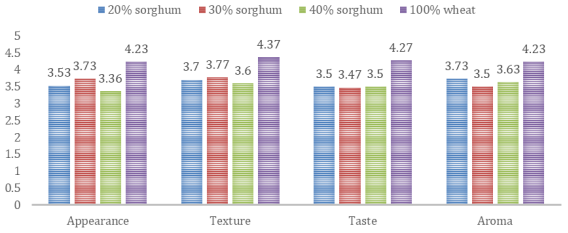
The sensory evaluation of different vermicelli formulations revealed the impact of varying sorghum incorporation rates on the organoleptic properties of the finished products. In general, pasta composed entirely of wheat was awarded the highest ratings across the full range of sensory criteria. This finding is consistent with the recognised technological properties of wheat gluten, which has been demonstrated to enhance the elasticity of pasta, improve its structural cohesion, and provide enhanced control during the cooking process . Among the sorghum-enriched formulations, the vermicelli containing 20% sorghum flour performed best in sensory tests, with scores approaching those of the wheat-based control. The formulation in question received relatively high scores for appearance (3.50), texture (3.67), taste (3.50) and smell (3.68) (Figure 1). These findings indicate that the incorporation of sorghum flour in a moderate manner has the potential to preserve the sensory characteristics that consumers typically desire while concurrently incorporating a local cereal into the final product. Chillo et al. made similar observations in their study, which showed that a small substitution of wheat with gluten-free cereals made it possible to maintain an acceptable sensory quality in pasta.
Figure 1. Consumers’ preferences for vermicelli formulations.
Conversely, the gradual increase in the rate at which wheat was replaced by sorghum led to an overall decline in sensory scores, particularly in terms of appearance and texture. The formulations containing 30% and 40% sorghum produced more compact and less elastic products. The absence of gluten in sorghum can potentially explain the observed trend, given that gluten is known to play a pivotal role in the formation of the viscoelastic network that is responsible for the structural integrity of pasta . The weakening of this protein network has been demonstrated to reduce water-holding capacity, thus affecting the firmness and texture of the vermicelli postcooking. Despite this reduction in sensory acceptability at high substitution levels, the results obtained highlight several technological advantages. The incorporation of sorghum into pasta constitutes a relevant strategy for the utilisation of local cereal resources and the reduction of reliance on wheat imports.
However, it is important to emphasise certain limitations. It has been demonstrated that increasing the proportion of sorghum results in a deterioration of pasta processing properties, with a concomitant reduction in elasticity and textural quality. This has had a significant effect on product acceptability, particularly among consumers who are accustomed to pasta made from 100% wheat. Additionally, the natural pigments present in sorghum have resulted in a change in the colour of the pasta, which may have a detrimental effect on its visual appeal. These technological constraints necessitate further optimisation of formulations. This can be achieved through the utilisation of processing aids or adapted processing methods, with the objective of enhancing the sensory quality of the products .
3.2. Nutritional Characteristics of the Formulated Vermicelli
The results of the nutritional analysis demonstrated that the gradual incorporation of sorghum flour into vermicelli significantly altered the nutritional composition of the finished products. Compared with those enriched with 100% sorghum, formulations enriched with sorghum presented increased nutritional parameters, particularly protein, fat, minerals and certain essential micronutrients (Table 1). These observations confirm the potential of sorghum as a local raw material with high nutritional value for dietary diversification.
Table 1. Proximate compositions of the various types of vermicelli.

Parameters

20% sorghum

30% sorghum

40% sorghum

100% wheat

P value (α = 0.05)

Moisture (%)

9.84 ± 0.18ᵇ

10.25 ± 0.10ᵃ

8.51 ± 0.14ᶜ

10.00 ± 0.09ᵃᵇ

<0.001

Fat (%)

6.62 ± 0.002ᵇ

6.21 ± 0.002ᶜ

13.07 ± 0.002ᵃ

4.95 ± 0.069ᵈ

<0.001

Protein (%)

13.34 ± 0.02ᶜ

14.77 ± 0.02ᵃ

14.92 ± 0.03ᵃ

14.01 ± 0.16ᵇ

<0.001

Fibre (%)

0.88 ± 0.02ᵇ

1.08 ± 0.03ᵃ

1.45 ± 0.10ᵃ

0.71 ± 0.08ᵇ

<0.001

Carbohydrates (%)

67.96 ± 0.16ᵇ

66.21 ± 0.12ᶜ

60.44 ± 0.08ᵈ

69.48 ± 0.06ᵃ

<0.001

Energy (kcal/100 g)

384.75 ± 0.72ᵇ

379.82 ± 0.56ᶜ

419.05 ± 0.21ᵃ

378.50 ± 0.93ᵈ

< 0.001

a, b, c, d Values within the same row indicate statistically significant differences among formulations (p ≤ 0.05). The values are the means ± standard deviations (n = 3).
The protein content of the samples ranged from 13.34% to 14.92%, depending on the level of sorghum incorporation. Compared with those of the control, the values of the 30% and 40% formulations marginally increased, whereas those of the 20% formulation decreased. This increase can be attributed to the protein content of sorghum, which is abundant in kafirins. These are the primary storage proteins of this cereal .
The results also revealed a significant increase in fat content with the addition of sorghum, reaching 13.07% in the 40% formulation. This increase is attributable to the relatively high content of unsaturated fatty acids in sorghum, with oleic and linoleic acids being of particular importance . However, the high fat content may also promote lipid oxidation during storage, thereby reducing the product's stability and potentially affecting its organoleptic qualities . It is imperative that appropriate storage conditions, especially protective packaging or technologies that limit exposure to oxygen, be employed. The levels of carbohydrates are consistently high in all formulations, confirming that pasta is a significant source of energy . The moisture levels observed are generally concordant with those of the control sample. Nevertheless, it is imperative to emphasise the necessity of both enhanced drying techniques and the employment of airtight packaging methodologies to ensure the microbiological stability of the product .
The enrichment of vermicelli in fibre provides a substantial nutritional benefit. Dietary fibre is recognised for its role in improving bowel function, preventing constipation and reducing the risk of cardiovascular and metabolic diseases . The ingestion of these substances can assist in the regulation of postprandial blood glucose levels, thereby promoting a prolonged sensation of satiety. This may, in turn, contribute to the prevention of obesity.
As demonstrated in Table 2, there was a gradual increase in ash content, thereby confirming the mineral enrichment of the vermicelli resulting from the incorporation of sorghum. The iron and zinc concentrations in the enriched formulations were considerably greater than those observed in the control group. This phenomenon is highly important in African contexts, where micronutrient deficiencies are prevalent, particularly among pregnant women and children . Iron facilitates the transportation of oxygen and the prevention of anaemia, whereas zinc contributes to immune and enzymatic functions. Moreover, the absence of gluten in this cereal renders it a suitable candidate for future development as a product intended for individuals with gluten intolerance or coeliac disease .
Table 2. Mineral composition of vermicelli.

Parameters

20% sorghum

30% sorghum

40% sorghum

100% wheat

P value (α = 0.05)

Ash (%)

1.367 ± 0.019ᶜ

1.485 ± 0.009ᵇ

1.614 ± 0.004ᵃ

0.846 ± 0.010ᵈ

<0.001

Iron (mg/kg)

31.13 ± 0.02ᶜ

32.79 ± 0.03ᵇ

38.05 ± 0.03ᵃ

17.99 ± 0.02ᵈ

<0.001

Zinc (mg/kg)

19.56 ± 0.03ᵇ

18.15 ± 0.04ᶜ

19.99 ± 0.03ᵃ

9.97 ± 0.03ᵈ

<0.001

Calcium (mg/kg)

496.26 ± 0.29ᵃ

373.38 ± 0.20ᵈ

463.21 ± 0.29ᵇ

438.86 ± 0.30ᶜ

<0.001

Potassium (mg/kg)

819.40 ± 1.21ᵈ

932.33 ± 0.85ᶜ

1439.73 ± 0.81ᵇ

1761.10 ± 0.79ᵃ

<0.001

Sodium (mg/kg)

121.07 ± 0.55ᶜ

179.91 ± 0.20ᵇ

239.49 ± 0.21ᵃ

58.80 ± 0.36ᵈ

<0.001

Magnesium (mg/kg)

212.53 ± 0.40ᵈ

238.70 ± 0.85ᶜ

280.71 ± 0.45ᵇ

324.58 ± 0.61ᵃ

<0.001

a, b, c, d Values within the same row indicate statistically significant differences among formulations (p ≤ 0.05)
With respect to the phosphorus, magnesium and sodium contents, these contents remained relatively satisfactory across all formulations. Consequently, sorghum is highly nutritious because of its high micronutrient content . An increase in sodium is observed, which could constitute a nutritional limitation, particularly for consumers suffering from high blood pressure or cardiovascular disease. This increase may be attributable to the incorporation of sodium chloride during the formulation process.
Table 3. Heavy metal contamination in vermicelli.

Parameters

20% sorghum

30% sorghum

40% sorghum

100% wheat

Codex CXS 193-1995

Lead (µg/kg)

< 0.06

< 0.06

< 0.06

< 0.06

0.2 mg/kg

Cadmium (µg/kg)

< 0.006

< 0.006

< 0.006

< 0.006

0.1 mg/kg

Contaminant analyses demonstrated the presence of lead and cadmium, although at levels below the limits of detection and well below the thresholds stipulated by Codex Alimentarius CXS 193-1995 (Table 3). These results are indicative of the stringent hygiene standards that are adhered to during the procurement of the raw materials and the manufacturing process. The absence of significant contamination represents a major advantage in terms of food safety and product acceptability.
3.3. Food Safety of Vermicelli
The results of the microbiological assessment of the formulation containing 20% sorghum flour, which was the most appreciated formulation, show that, overall, the microbiological quality of the product under study is satisfactory, as shown in Table 4.
The total mesophilic aerobic flora (TMAF) count was found to be 50,633 CFU/g, a value that falls below the acceptable microbiological threshold set by the criteria of 105 CFU/g. This moderate microbial load indicates an acceptable hygienic quality of the vermicelli and suggests relatively good control of the processing operations, particularly during kneading, drying and packaging . A value falling below the regulatory threshold indicates that the vermicelli remains stable and fit for consumption under normal storage conditions. The mould count, estimated at 3,033 CFU/g, also remains below the recommended limit. This outcome is particularly important in the context of processed cereal products, as mould is frequently associated with food spoilage in humid tropical environments . The low fungal load observed indicates that the drying process applied to the vermicelli resulted in a sufficient reduction in residual moisture, thereby limiting the growth of microscopic fungi. However, even at low levels, the presence of mould warrants particular attention, as certain toxin-producing species, notably Aspergillus flavus, have been shown to produce mycotoxins that are hazardous to human health .
The absence of other bacteria, including those that are pathogenic, is a good indication of adequate hygiene standards. This is indicative of the utilisation of high-quality water and the implementation of adequate hygiene practices during production .
However, it is important to emphasise certain limitations. Despite the microbial counts remaining below regulatory thresholds, the significant presence of TMAF and mould indicates that improvements in drying, storage and packaging conditions are still necessary to increase the product's microbiological stability during storage. Tropical climates, marked by elevated levels of humidity, have been shown to encourage moisture reabsorption in noodles, thereby increasing the risk of fungal growth during storage. Therefore, consideration should be given to the use of airtight packaging and improved storage practices with the goal of extending the shelf life of sorghum-enriched vermicelli.
Table 4. Microbiological quality of the vermicelli formulation containing 20% sorghum.

Parameters microbiological

20% sorghum (CFU/g)

100% wheat (CFU/g)

Microbiological criteria (CFU/g) *

Total Mesophilic Aerobic Flora (TMAF)

50633±642.91

< 10

105

Escherichia coli

< 10

< 10

10

Staphylococcus aureus

< 100

< 100

102

Sulfite-Reducing Anaerobic Bacteria (SRB)

< 10

< 10

102

Mould

3033±115.47

< 10

104

Salmonella spp.

NS

NS

Absent

* Division de la securite alimentaire du Luxembourg, 2015 , NS=Not specified
4. Conclusion
The present study demonstrated the technological feasibility of producing vermicelli made from wheat flour partially substituted with sorghum flour. The gradual incorporation of sorghum had a significant effect on the nutritional and sensory characteristics of the resulting paste. The physicochemical results revealed an increase in multiple nutritional parameters, most notably the levels of protein, fat, ash, and specific essential minerals such as iron and zinc. These observations confirm the potential of sorghum as a local raw material capable of enriching the nutritional value of processed cereal products. Sensory evaluation revealed that the formulation containing 20% sorghum flour offered an optimal balance between organoleptic quality and nutritional enrichment. It was demonstrated that formulations with higher substitution rates led to an increase in certain nutrients. However, these same formulations also resulted in a decrease in sensory acceptability. Microbiological analysis revealed the absence of the main pathogenic bacteria tested, indicating that hygiene standards during processing were generally satisfactory. The development of such products has the potential to contribute to food security, promote local agricultural resources, and improve the nutritional quality of the food consumed. To facilitate the potential industrial development of these sorghum-enriched vermicelli, further work is needed to optimise formulations, improve microbiological stability and assess shelf-life.
Abbreviations

ANOVA

Analysis of Variance

CFU

Colony-Forming Units

ISO

International Organization for Standardization

AFNOR

French Standardization Association

NF

French Standard

Acknowledgments
The authors are grateful to the people who facilitated this study. They also express their sincere thanks to all the members of IRTEG and ITRA for their cooperation and support.
Author Contributions
Raouf Tonyi Mensah: Conceptualization, Writing – original draft, Writing – review & editing
Banfitebiyi Gambogou: Data curation, Writing – review & editing
Messan Donatien Sena: Formal Analysis, Methodology
Akossiwa Mawusse Anonwodji: Methodology
Fode Salifou Soumah: Supervision
Abdoulaye Sankhon: Supervision
Data Availability Statement
The data is available from the corresponding author upon reasonable request.
Conflicts of Interest
The authors declare no conflicts of interest.
References
[1] Abis S. Le ble au cœur des enjeux geostrategiques mondiaux. Herodote. 4 juin 2015; 156(1), 125‑37.
[2] FAO, FIDA, OMS, PAM, UNICEF. L’Etat de la securite alimentaire et de la nutrition dans le monde 2019: Se premunir contre les ralentissements et les flechissements economiques. Vol. 2019. Rome. p. 229.
[3] FAO E, ECA, CUA. Vue d’ensemble regionale de la securite alimentaire et la nutrition. 2020.
[4] Hadjici L, Houche Z. Amelioration des qualites sensorielles et nutritionnelles des farines sans gluten, PhD Thesis, Universite Mouloud Mammeri, 2024, p. 78
[5] Aguiar EV, Santos FG, Queiroz VAV, Capriles VD. A Decade of Evidence of Sorghum Potential in the Development of Novel Food Products: Insights from a Bibliometric Analysis. Foods. 2023; 12(20), 3790.
[6] Macauley H, Ramadjita T. Les cultures cerealières: riz, maïs, millet, sorgho et ble. Africa Rice. 2015, p. 38.
[7] Taylor JRN, Schober TJ, Bean SR. Novel food and non-food uses for sorghum and millets. Journal of Cereal Science. 2006; 44(3), 252‑71.
[8] Kebbab S, Ogal D. Contribution à l’etude des Caracteristiques physico-chimiques et technologiques des pâtes alimentaires issues des differents passages. Moulins Industriels du Sebaou (MIS) Tizi-Ouzou, PhD Thesis, Universite Mouloud Mammeri, 2015.
[9] Scarton M, Clerici MTPS. Gluten-free pastas: ingredients and processing for technological and nutritional quality improvement. Food Sci Technol. 2022; 42: e65622.
[10] Schober TJ, Messerschmidt M, Bean SR, Park SH, Arendt EK. Gluten-Free Bread from Sorghum: Quality Differences Among Hybrids. Cereal Chemistry. 2005; 82(4), 394‑404.
[11] Agoura D, Mazabalo A, Gott’Liebe GM, Mamatchi M, Kokouvi AA, Tchadjobo T. Optimization of the Brewing of “Kable-Missine”, Togo Northern Local Sorghum Beer. International Journal of Scientific Research and Management (IJSRM). 2024; 12(09), 189‑94.
[12] Gambogou B, Koukpere S, Bakoumle MM, Paka E, Ameyapoh Y. Impact of Microorganisms and Physicochemical Factors on Consumer Preferences for Tchakpalo. Journal of Food Quality. 2026; 2026(1), 4327211.
[13] Kogno E, Soncy K, Taale E, Anani K, Karou SD, Ameyapoh Y. Molecular characterization of lactic acid bacteria involved in Togolese traditional fermented cereal foods. 2016, Vol. 04, Issue 02, pp. 2308-2312.
[14] Marie-France B, Batcha O, Marie-Estelle KN. Physico-chemical and microbiological characterization of local beers of the city of Kara in Togo. International Journal of Innovation and Applied Studies. 2023; 41(1), 137‑44.
[15] Novidzro KM, Melila M, Houndji BVS, Koudouvo K, Dotse K, Koumaglo KH. Etude de quelques caracteristiques physico-chimiques de «Tchoukoutou», un type de bières locales produit au Togo et evaluation de la performance de quatre methodes de determination du degre alcoolique. Int J Biol Chem Sci. 2018; 12(6), 2871‑84.
[16] Bresciani A, Pagani MA, Marti A. Pasta-making process: A narrative review on the relation between process variables and pasta quality. Foods. 2022; 11(3), 256.
[17] Cecchini C, Bresciani A, Menesatti P, Pagani MA, Marti A. Assessing the rheological properties of durum wheat semolina: A review. Foods. 2021; 10(12), 2947.
[18] Mercier S, Mondor M, Moresoli C, Villeneuve S, Marcos B. Drying of Durum Wheat Pasta and Enriched Pasta: A Review of Modeling Approaches. Critical Reviews in Food Science and Nutrition. 2016; 56(7), 1146‑68.
[19] Fakfare P. Influence of service attributes of food delivery application on customers’ satisfaction and their behavioural responses: The IPMA approach. International Journal of Gastronomy and Food Science. 2021; 25: 100392.
[20] Lawless HT, Heymann H. Sensory Evaluation of Food: Principles and Practices. New York, NY: Springer; 2010. (Food Science Text Series).
[21] Buchholz AL, Davidson GR, Ryser ET. Microbiology of Fresh and Processed Vegetables. In: Handbook of Vegetables and Vegetable Processing. John Wiley & Sons, 2024. pp. 159‑81.
[22] Chillo S, Laverse J, Falcone PM, Del Nobile MA. Quality of spaghetti in base amaranthus wholemeal flour added with quinoa, broad bean and chick pea. Journal of Food Engineering. 2008; 84(1), 101‑7.
[23] Mensah RT, Eklou-Lawson M, Gambogou B, Kangni-Dossou M, Ameyapoh Y. Acceptability of optimized fresh moringa oleifera and soymilk beverage. CyTA - Journal of Food. 31 dec 2025; 23(1), 2448491.
[24] Sene M, Berger A, Catalayud C, Rios M, Bonicel J, Morel MH, et al. Construction du grain de sorgho: une feuille de route transcriptomique ciblant la teneur et digestibilite des proteines. In: Colloque Graines, INRAE. 2023. p. 1.
[25] Tawaba JCB, Ba K, Destain J, Malumba P, Bera F, Thonart P. Vers une integration du sorgho comme matière première pour la brasserie moderne (synthèse bibliographique). Biotechnol Agron Soc Environ. 2013; 17(4), 622‑33.
[26] Shahidi F, Zhong Y. Lipid oxidation and improving the oxidative stability. Chem Soc Rev. 2010; 39(11), 4067‑79.
[27] Lúcio HG, Lopes R de CSO, Gomes MJC, da Silva A, Grancieri M, Della Lucia CM, et al. A Symbiotic Meal Containing Extruded Sorghum and Probiotic (Bifidobacterium longum) Ameliorated Intestinal Health Markers in Individuals with Chronic Kidney Disease: A Secondary Analysis of a Subsample from a Previous Randomized and Controlled Clinical Trial. Nutrients. 2024; 16(12), 1852.
[28] Davidson VJ, Stockwell D. Food safety risk management: Evidence-Informed policies and decisions, considering multiple factors. Food Safety and Quality Series (FAO) eng no 4. 2017, 91p.
[29] Dhingra D, Michael, M., Rajput, H., Patil R. T. Dietary fibre in foods: a review | Journal of Food Science and Technology. 2012.
[30] Akomo P, Bahwere P, Murakami H, Banda C, Maganga E, Kathumba S, et al. Soya, maize and sorghum ready-to-use therapeutic foods are more effective in correcting anaemia and iron deficiency than the standard ready-to-use therapeutic food: randomized controlled trial. BMC Public Health. 2019; 19(1), 806.
[31] Bonaventura P, Benedetti G, Albarède F, Miossec P. Zinc and its role in immunity and inflammation. Autoimmunity Reviews. 2015; 14(4), 277‑85.
[32] Modern Food Microbiology. Food Protection with Chemicals, and by Biocontrol. In: Modern Food Microbiology. Boston, MA: Springer US; 2005. pp. 301‑50. (Food Science Text Series).
[33] Pitt JI, Hocking AD. Fungi and Food Spoilage. Boston, MA: Springer US; 2009.
[34] Eskola M, Kos G, Elliott CT, Hajšlová J, Mayar S, Krska R. Worldwide contamination of food-crops with mycotoxins: Validity of the widely cited ‘FAO estimate’ of 25%. Critical Reviews in Food Science and Nutrition. 2020; 60(16), 2773‑89.
[35] Argudín MÁ, Mendoza MC, Rodicio MR. Food Poisoning and Staphylococcus aureus Enterotoxins. Toxins. 2010; 2(7), 1751‑73.
[36] Eng SK, Pusparajah P, Ab Mutalib NS, Ser HL, Chan KG, Lee LH. Salmonella: A review on pathogenesis, epidemiology and antibiotic resistance. Frontiers in Life Science. 2015; 8(3), 284‑93.
[37] Bintsis T. Foodborne pathogens. AIMSMICRO. 2017; 3(3), 529‑63.
[38] Division de la securite alimentaire du Luxembourg. Critères microbiologiques applicables aux denrees alimentaires : lignes directrices pour l’interpretation. Direction de la Sante. 2015, p. 59.
Cite This Article
  • APA Style

    Mensah, R. T., Gambogou, B., Sena, M. D., Anonwodji, A. M., Soumah, F. S., et al. (2026). Development and Quality Assessment of Sorghum-enriched Vermicelli: Nutritional, Sensory and Microbiological Evaluation. Journal of Food and Nutrition Sciences, 14(5), 341-348. https://doi.org/10.11648/j.jfns.20261405.18

    Copy | Download

    ACS Style

    Mensah, R. T.; Gambogou, B.; Sena, M. D.; Anonwodji, A. M.; Soumah, F. S., et al. Development and Quality Assessment of Sorghum-enriched Vermicelli: Nutritional, Sensory and Microbiological Evaluation. J. Food Nutr. Sci. 2026, 14(5), 341-348. doi: 10.11648/j.jfns.20261405.18

    Copy | Download

    AMA Style

    Mensah RT, Gambogou B, Sena MD, Anonwodji AM, Soumah FS, et al. Development and Quality Assessment of Sorghum-enriched Vermicelli: Nutritional, Sensory and Microbiological Evaluation. J Food Nutr Sci. 2026;14(5):341-348. doi: 10.11648/j.jfns.20261405.18

    Copy | Download

  • @article{10.11648/j.jfns.20261405.18,
      author = {Raouf Tonyi Mensah and Banfitebiyi Gambogou and Messan Donatien Sena and Akossiwa Mawusse Anonwodji and Fode Salifou Soumah and Abdoulaye Sankhon},
      title = {Development and Quality Assessment of 
    Sorghum-enriched Vermicelli: Nutritional, Sensory and Microbiological Evaluation},
      journal = {Journal of Food and Nutrition Sciences},
      volume = {14},
      number = {5},
      pages = {341-348},
      doi = {10.11648/j.jfns.20261405.18},
      url = {https://doi.org/10.11648/j.jfns.20261405.18},
      eprint = {https://article.sciencepublishinggroup.com/pdf/10.11648.j.jfns.20261405.18},
      abstract = {West Africa imports most of its wheat. Local grains such as sorghum could reduce this dependence on cereal products, but only if the resulting food still tastes acceptable. This study made wheat-sorghum composite vermicelli with sorghum flour grown in Togo and tested three incorporation levels for sensory acceptance, nutritional composition, mineral content, contaminant levels, and microbiological safety to identify the best incorporation level. Vermicelli was produced at 20%, 30%, and 40% sorghum flour, and compared against a 100% wheat control. Thirty untrained consumers scored the samples on a five-point hedonic scale. Moisture, protein, fat, fibre, carbohydrate, and energy content were measured alongside mineral profile, heavy metal levels, and microbiological quality, using standard analytical procedures. Among the sorghum blends, the 20% formulation scored highest with consumers: 3.50 for appearance, 3.67 for texture, 3.50 for taste, 3.68 for aroma. Nutritional value rose with sorghum content. The 40% formulation reached the highest protein (14.92%), fibre (1.45%), fat (13.07%), and energy (419.05 kcal/100 g). Iron more than doubled across the series, from 17.99 mg/kg in the wheat control to 38.05 mg/kg at 40% sorghum, while lead and cadmium stayed below detection limits and within Codex thresholds throughout. The 20% formulation — the one consumer preferred — also cleared microbiological screening: 50,633 CFU/g total mesophilic aerobic flora, 3,033 CFU/g moulds, and no Salmonella spp., E. coli, S. aureus, or sulphite-reducing anaerobes. Sorghum can replace up to 20% of the wheat in vermicelli without consumers noticing, while adding measurable nutritional value and staying within safety limits. That is a tested, practical route for reducing wheat imports in West African food systems.},
     year = {2026}
    }
    

    Copy | Download

  • TY  - JOUR
    T1  - Development and Quality Assessment of 
    Sorghum-enriched Vermicelli: Nutritional, Sensory and Microbiological Evaluation
    AU  - Raouf Tonyi Mensah
    AU  - Banfitebiyi Gambogou
    AU  - Messan Donatien Sena
    AU  - Akossiwa Mawusse Anonwodji
    AU  - Fode Salifou Soumah
    AU  - Abdoulaye Sankhon
    Y1  - 2026/10/09
    PY  - 2026
    N1  - https://doi.org/10.11648/j.jfns.20261405.18
    DO  - 10.11648/j.jfns.20261405.18
    T2  - Journal of Food and Nutrition Sciences
    JF  - Journal of Food and Nutrition Sciences
    JO  - Journal of Food and Nutrition Sciences
    SP  - 341
    EP  - 348
    PB  - Science Publishing Group
    SN  - 2330-7293
    UR  - https://doi.org/10.11648/j.jfns.20261405.18
    AB  - West Africa imports most of its wheat. Local grains such as sorghum could reduce this dependence on cereal products, but only if the resulting food still tastes acceptable. This study made wheat-sorghum composite vermicelli with sorghum flour grown in Togo and tested three incorporation levels for sensory acceptance, nutritional composition, mineral content, contaminant levels, and microbiological safety to identify the best incorporation level. Vermicelli was produced at 20%, 30%, and 40% sorghum flour, and compared against a 100% wheat control. Thirty untrained consumers scored the samples on a five-point hedonic scale. Moisture, protein, fat, fibre, carbohydrate, and energy content were measured alongside mineral profile, heavy metal levels, and microbiological quality, using standard analytical procedures. Among the sorghum blends, the 20% formulation scored highest with consumers: 3.50 for appearance, 3.67 for texture, 3.50 for taste, 3.68 for aroma. Nutritional value rose with sorghum content. The 40% formulation reached the highest protein (14.92%), fibre (1.45%), fat (13.07%), and energy (419.05 kcal/100 g). Iron more than doubled across the series, from 17.99 mg/kg in the wheat control to 38.05 mg/kg at 40% sorghum, while lead and cadmium stayed below detection limits and within Codex thresholds throughout. The 20% formulation — the one consumer preferred — also cleared microbiological screening: 50,633 CFU/g total mesophilic aerobic flora, 3,033 CFU/g moulds, and no Salmonella spp., E. coli, S. aureus, or sulphite-reducing anaerobes. Sorghum can replace up to 20% of the wheat in vermicelli without consumers noticing, while adding measurable nutritional value and staying within safety limits. That is a tested, practical route for reducing wheat imports in West African food systems.
    VL  - 14
    IS  - 5
    ER  - 

    Copy | Download

Author Information
  • Agrifood department, Institute for Research into Endogenous Technologies of Guinea (IRTEG), Kindia, Guinea;Scientific Directorate, Togolese Institute for Agricultural Research (ITRA), Lome, Togo

  • Food Quality Control Department, National Laboratory for Food Safety and Plant Health (LaNSA), Lome, Togo

  • Agri-Food Department, National Institute of Agricultural Training (INFA) in Tove, Kpalime, Togo

  • Department of Biochemistry, University of Lome (FDS-UL), Lome, Togo

  • Agrifood department, Institute for Research into Endogenous Technologies of Guinea (IRTEG), Kindia, Guinea

  • Agrifood department, Institute for Research into Endogenous Technologies of Guinea (IRTEG), Kindia, Guinea