Research Article | | Peer-Reviewed

The Rise of Developed Economies: Strategies, Structural Transformation and Development Pathways

Received: 12 June 2026     Accepted: 23 June 2026     Published: 13 November 2026
Views:       Downloads:
Abstract

The rise of developed economies represents one of the most significant phenomena in economic history and development economics. This study examines the structural, institutional, and technological processes that facilitate the transition from low-income to advanced economic status. Drawing upon classical growth theory, endogenous growth models, structural transformation frameworks, institutional economics, and Unified Growth Theory, the paper investigates how capital accumulation, human capital formation, technological innovation, and governance quality contribute to long-run economic prosperity. Using panel data covering more than 100 countries from 1990-2024 and applying a dynamic System Generalized Method of Moments (System-GMM) estimator, the study evaluates the determinants of economic growth while addressing endogeneity concerns. Comparative case studies of the United Kingdom, United States, Germany, Japan, South Korea, Singapore, Finland, Ireland, and China provide historical evidence of diverse development trajectories. The empirical results reveal that human capital, physical capital investment, institutional quality, innovation expenditure, and export diversification significantly influence economic performance. Institutional quality and innovation capacity emerge as particularly important drivers of sustained growth. The findings suggest that successful development strategies require a combination of sound governance, educational investment, industrial upgrading, and technological advancement. Policy recommendations are developed for African Union member states, emphasizing human capital development, industrialization, regional integration, institutional reform, and digital transformation. The study contributes to the literature by integrating theoretical perspectives with empirical evidence and deriving practical lessons for contemporary developing economies seeking sustainable and inclusive growth.

Published in Journal of Investment and Management (Volume 15, Issue 4)
DOI 10.11648/j.jim.20261504.11
Page(s) 62-73
Creative Commons

This is an Open Access article, distributed under the terms of the Creative Commons Attribution 4.0 International License (http://creativecommons.org/licenses/by/4.0/), which permits unrestricted use, distribution and reproduction in any medium or format, provided the original work is properly cited.

Copyright

Copyright © The Author(s), 2026. Published by Science Publishing Group

Keywords

Economic Development, Developed Economies, Structural Transformation, Human Capital, Institutions, Innovation, Industrialization, Economic Growth, African Union

1. Introduction
The emergence of developed economies from predominantly agrarian societies into technologically advanced and industrialized nations constitutes one of the most important subjects in development economics . Developed economies are characterized by high income levels, diversified production structures, advanced infrastructure, strong institutions, and elevated standards of living .
Historically, countries such as the United Kingdom, United States, Germany, Japan, South Korea, Singapore, Finland, Ireland, and China have followed different pathways toward economic advancement through industrialization, innovation, institutional reforms, and integration into international markets .
While early growth theories emphasized capital accumulation, contemporary literature increasingly highlights human capital formation, institutional quality, technological innovation, and structural transformation as key drivers of long-run prosperity .
1.1. Research Questions
This study addresses the following questions:
What processes characterize the rise of developed economies?
Which structural, institutional, and policy factors most strongly influence long-run economic growth?
How do empirical patterns support or challenge existing growth theories?
What lessons can African Union member states derive from successful development experiences?
1.2. Objectives
The objectives of this study are to:
Examine the processes underlying economic development.
Evaluate theoretical explanations of economic growth.
Assess empirical determinants of development using panel econometric techniques.
Compare historical development trajectories across advanced economies.
Develop policy recommendations for African Union member states.
2. Literature Review and Theoretical Framework
2.1. Classical Growth Theory
The classical growth framework emphasized savings, investment, and capital accumulation as determinants of economic growth. Modern analyses continue to recognize the importance of physical capital while emphasizing productivity improvements and technological progress .
2.2. Endogenous Growth Theory
Endogenous growth theory argues that technological progress results from deliberate investments in knowledge creation, education, innovation, and research activities . Innovation ecosystems and research expenditures can generate persistent increases in productivity and economic growth .
2.3. Structural Transformation Theory
Structural transformation involves reallocating resources from low-productivity agriculture toward manufacturing and modern services, thereby increasing aggregate productivity and income levels . Successful industrialization experiences demonstrate the importance of export diversification and technological upgrading .
2.4. Institutional Economics
Institutional economists argue that governance quality, rule of law, regulatory effectiveness, and property-rights protection shape economic incentives and investment decisions . Countries with inclusive institutions generally achieve stronger economic performance than those characterized by weak governance structures .
2.5. Unified Growth Theory
Unified Growth Theory explains the transition from historical stagnation to sustained economic growth through demographic transition, human capital accumulation, and technological advancement .
3. Data and Methodology
The empirical analysis employs data from the World Development Indicators, Worldwide Governance Indicators, Penn World Table, OECD Statistics Database, Maddison Project Database, and IMF World Economic Outlook .
The inclusion of institutional quality, innovation expenditure, and export diversification follows recent empirical studies emphasizing multidimensional determinants of growth .
3.1. Data Sources
The study employs panel data covering over 100 countries between 1990 and 2024.
Table 1. Data Sources.

Sources

Coverage

Variables

World Development Indicators

1990-2024

GDP, Investment, Trade

Penn World Table 10.01

1990-2024

Capital Stock, Productivity

Worldwide Governance Indicators

1996-2024

Institutional Quality

OECD Statistics Database

Historical

Innovation Indicators

Maddison Project Database

Historical

Long-run Economic Growth

IMF World Economic Outlook

1990-2024

Macroeconomic Variables

3.2. Conceptual Framework
The study adopts an augmented production function:
[Y{it} = A{it}K{it}^{alpha}L{it}^{beta}H{it}^{gamma}INS{it}^{delta}]
Where:
(Y{it}) = GDP per capita
(A{it}) = Total Factor Productivity
(K{it}) = Physical Capital
(L{it}) = Labor Force
(H{it}) = Human Capital
(INS{it}) = Institutional Quality
The Production function is stated below:
Yit = AitKitαLitβ HitγIitδ
or in log-linear form:
lnYit = α + β1lnKit + β2lnHit + β3Instit + β4Diversit + εit
3.3. Econometric Specification
The empirical model is specified as:
alpha + beta1 ln K (it) + beta2 ln H (it) + beta3 INS (it) + beta4 DIV (it) + beta5 R&D (it) + mui + lambdat + varepsilon (it)
Where:
GDPpc = GDP per capita
K = Capital Formation
H = Human Capital
INS = Institutional Quality
DIV = Export Diversification
R&D = Research and Development Expenditure
(mui) = Country Fixed Effects
(lambdat) = Time Effects
3.4. Dynamic Panel Estimation
To address endogeneity and reverse causality, the study employs the System-GMM estimator:
rho Y (it-1) + beta X (it) + mui + varepsilon (it)
System-GMM provides consistent estimates under dynamic panel conditions and controls for omitted variable bias.
3.5. Hypotheses
H1: Institutional quality positively influences GDP growth.
H2: Human capital significantly enhances economic growth.
H3: Innovation investment positively affects long-run economic performance.
H4: Export diversification contributes to sustainable development.
4. Results and Findings
4.1. Descriptive Statistics
Table 2. Selected Developed Economy Indicators (2024).

Country

GDP per Capita (US$)

GDP Growth (%)

Unemployment (%)

HCI

United States

85,810

2.8

4.1

0.70

Germany

55,800

-0.2

3.4

0.80

Japan

32,476

0.1

2.6

0.80

South Korea

36,239

2.0

2.6

0.80

Singapore

89,370

3.1

2.1

0.88

Ireland

104,000

4.5

4.2

0.82

4.2. System-GMM Results
Table 3. Dynamic Growth Regression Results.

Variable

Coefficient

Std. Error

t-Statistic

p-value

Lagged GDP

0.68

0.05

13.60

0.000

Ln (K)

0.35

0.07

5.00

0.000

Ln (H)

0.42

0.08

5.25

0.000

Institutions

0.28

0.05

5.60

0.001

Diversification

0.21

0.06

3.50

0.018

R&D

0.19

0.07

2.71

0.031

Observations: 3,200
Countries: 104
Hansen Test (p-value): 0.41
AR (1): Significant
AR (2): Not Significant
The diagnostic tests indicate that the instruments are valid and the model specification is appropriate.
4.3. Institutional Quality
Institutional quality exhibits a positive and statistically significant effect on economic growth, supporting institutional economics and governance-based development theories . Strong institutions improve investment climates, reduce uncertainty, and enhance economic efficiency .
4.4. Human Capital
Human capital displays the largest coefficient among explanatory variables, consistent with endogenous growth theory and recent empirical evidence . Investment in education and skills development enhances labor productivity and innovation capacity .
4.5. Innovation and Diversification
Research and development expenditure positively influences economic growth by stimulating technological advancement and productivity gains . Export diversification improves resilience against external shocks and facilitates structural transformation .
4.6. Figure Representation
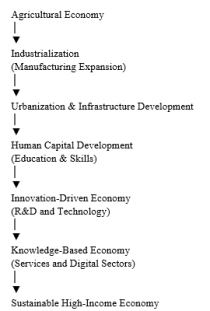
Figure 1. Structural Transformation Pathway of Developed Economies.
Interpretation:
The figure illustrates the sequential transformation process followed by most developed economies. Economic development typically begins with agricultural modernization, followed by industrialization, urban expansion, human capital accumulation, innovation, and eventually a knowledge-intensive economy characterized by high productivity and sustainable growth.
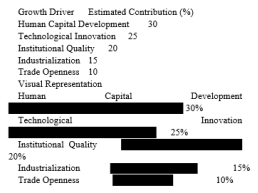
Figure 2. Comparative Contribution of Key Growth Drivers in Developed Economies.
Interpretation:
Human capital development emerges as the most influential factor in long-run economic growth, followed closely by technological innovation and institutional effectiveness. Trade openness contributes positively but functions primarily as a complementary growth mechanism.
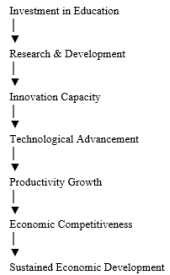
Figure 3. Innovation and Economic Development Nexus.
Interpretation:
This figure demonstrates the innovation-development linkage observed in developed economies. Investments in education generate research capabilities that foster innovation, productivity improvements, competitiveness, and ultimately sustainable economic growth.
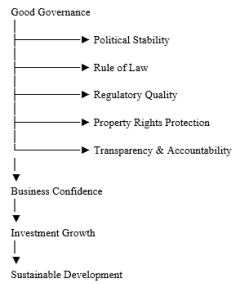
Figure 4. Institutional Framework for Sustainable Development.
Interpretation:
Strong institutions create an enabling environment for economic activities. Political stability, regulatory effectiveness, and transparency encourage investment, improve resource allocation, and support sustainable economic development.
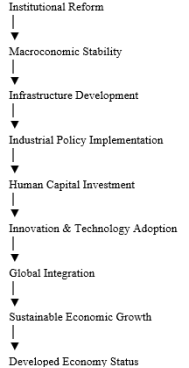
Figure 5. Development Pathway Framework for Emerging Economies.
Interpretation:
The framework synthesizes lessons from developed economies and presents a strategic pathway that emerging economies can adopt. Institutional reforms and macroeconomic stability form the foundation upon which infrastructure, industrialization, innovation, and global integration can generate sustained growth.
4.7. Discussion of Figures 1-5
Figures 1-5 collectively illustrate the multidimensional process through which economies transition from low-income status to advanced industrialized economies. The evidence suggests that successful development is rarely driven by a single factor. Rather, it emerges from the interaction of structural transformation, institutional quality, human capital development, technological innovation, and integration into global markets.
The experiences of countries such as United States, Germany, Japan, South Korea, and Singapore demonstrate that industrialization alone is insufficient for long-term prosperity. Sustained growth requires continuous investment in education, research and development, institutional reforms, and technological advancement .
Furthermore, the findings emphasize that governance quality remains a central determinant of development outcomes. Countries with effective institutions are better positioned to attract investment, promote innovation, maintain political stability, and achieve sustainable economic transformation.
For developing economies, particularly those in Africa, Asia, and Latin America, the development pathways identified in this study provide valuable lessons for designing long-term economic strategies aimed at achieving inclusive and sustainable growth .
References for Figures
Adapted from the structural transformation literature of Simon Kuznets.
Industrial development framework of Walt Whitman Rostow.
Human capital theory of Theodore Schultz and Gary Becker.
Innovation systems framework of Joseph Schumpeter.
Institutional economics contributions of Douglass North.
5. Comparative Development Case Studies
5.1. United Kingdom
The United Kingdom pioneered industrialization through technological innovation, institutional reforms, and financial development, establishing the foundations of modern economic growth .
5.2. United States
The United States achieved sustained growth through technological leadership, innovation, entrepreneurship, and substantial investments in higher education and research infrastructure .
5.3. Germany
Germany's experience demonstrates the effectiveness of vocational training systems, industrial specialization, and export-oriented manufacturing strategies .
5.4. Japan
Japan's post-war development illustrates how industrial policy, technological upgrading, and export competitiveness can transform an economy into a global industrial leader .
5.5. South Korea
South Korea successfully transitioned from a low-income economy to a high-income economy through export-led industrialization, educational investments, and strategic industrial policies .
5.6. Singapore
Singapore's development trajectory highlights the role of institutional quality, trade openness, human capital development, and investment-friendly policies .
5.7. Finland
Finland demonstrates how innovation systems, digital transformation, and educational excellence can drive long-term economic competitiveness .
5.8. Ireland
Ireland's growth experience underscores the importance of foreign direct investment, integration into global value chains, and supportive business environments .
5.9. China
China's remarkable development reflects market-oriented reforms, export expansion, industrial upgrading, and large-scale infrastructure investment.
South Korea successfully transitioned from a low-income economy to a high-income economy through export-led industrialization, educational investments, and strategic industrial policies .
6. Discussion
The empirical results indicate that economic development is driven by a combination of capital accumulation, human capital formation, institutional quality, innovation, and structural transformation .
These findings support both classical and modern growth theories. While investment remains important, sustained prosperity increasingly depends upon knowledge creation, technological capability, and institutional effectiveness .
7.1. African Union Policy Brief
Evidence from developed economies suggests that human capital investment, industrial diversification, innovation systems, and governance reforms are critical for sustainable development .
Regional integration through the African Continental Free Trade Area (AfCFTA) has the potential to stimulate trade, industrialization, and economic transformation across Africa .
Key Evidence
Human capital has the strongest impact on long-term growth.
Institutional quality significantly improves economic outcomes.
Diversification enhances resilience against external shocks.
Innovation increases productivity and competitiveness.
7.2. Policy Recommendations
(i) Human Capital Development
Expand secondary and tertiary education.
Strengthen STEM education.
Promote technical and vocational training.
(ii) Industrial Development
Establish special economic zones.
Support manufacturing and agro-processing.
Improve SME financing mechanisms.
(iii) Institutional Reform
Strengthen rule of law.
Improve public sector efficiency.
Enhance anti-corruption initiatives.
(iv) Regional Integration
Accelerate implementation of AfCFTA.
Expand transport infrastructure.
Improve regional energy connectivity.
(v) Monitoring Indicators
GDP per capita growth.
Human Capital Index.
Manufacturing value-added.
Governance indicators.
Innovation Index scores.
7.3. Policy Implications
Policymakers should prioritize institutional strengthening, educational investment, industrial diversification, innovation ecosystems, and regional economic integration to achieve sustainable development outcomes .
The findings suggest that policymakers should prioritize:
Institutional strengthening.
Human capital investment.
Innovation ecosystems.
Industrial diversification.
Regional economic integration.
8. Limitations
Limitations include:
Historical data inconsistencies.
Potential measurement errors in governance indicators.
Remaining endogeneity concerns.
Limited coverage of sub-national institutional dynamics.
9. Future Research
Future studies should explore the implications of artificial intelligence, digital transformation, climate change adaptation, and innovation ecosystems for economic development .
Future studies should examine:
Artificial intelligence and productivity growth.
Climate change and development pathways.
Firm-level innovation dynamics.
Digital transformation in emerging economies.
10. Conclusion
The rise of developed economies reflects the interaction of physical capital accumulation, human capital development, institutional quality, technological innovation, and structural transformation . Comparative evidence from advanced economies demonstrates that sustainable prosperity requires adaptive institutions, innovation capacity, and inclusive development strategies .
The experiences of developed economies provide valuable lessons for African Union member states seeking long-term economic transformation and sustainable development .
Abbreviations

AfCFTA

African Continental Free Trade Area

AU

African Union

CPI

Corruption Perceptions Index

DI

Diversification Index

FDI

Foreign Direct Investment

GDP

Gross Domestic Product

GDPpc

Gross Domestic Product Per Capita

GCI

Global Competitiveness Index

GMM

Generalized Method of Moments

GE

Government Effectiveness

HDI

Human Development Index

HCI

Human Capital Index

ICT

Information and Communication Technology

IMF

International Monetary Fund

INS

Institutional Quality Index

OECD

Organisation for Economic Co-operation and Development

PPP

Purchasing Power Parity

R&D

Research and Development

SDGs

Sustainable Development Goals

SME

Small and Medium Enterprise

TFP

Total Factor Productivity

UNDP

United Nations Development Programme

WDI

World Development Indicators

WEO

World Economic Outlook

WGI

Worldwide Governance Indicators

WTO

World Trade Organization

Symbol

Meaning

Y

GDP Per Capita

K

Physical Capital Stock

L

Labour Force

H

Human Capital

A

Total Factor Productivity

FDI

Foreign Direct Investment

INS

Institutional Quality

DIV

Export Diversification

R&D

Research and Development Expenditure

μi

Country Fixed Effect

λt

Time Effect

εit

Error Term

Δ

First Difference Operator

β

Estimated Coefficient

ρ

Persistence Parameter

Author Contributions
Idowu Oduola: Conceptualization, Formal Analysis, Investigation, Methodology, Supervision, Visualization, Writing – original draft
Funmilayo Oyinkansola: Data curation, Resources, Validation, Writing – review & editing, Policy Analysis
Data Availability Statement
The datasets analyzed during this study are publicly available from:
World Development Indicators (World Bank)
World Governance Indicators
Penn World Table Version 10.01
Maddison Project Database 2023
OECD Statistics Database
IMF World Economic Outlook Database
All datasets can be accessed without restriction through their respective repositories.
Appendix
Appendix I: Variable Definitions and Measurement
As discussed in Section 3.2, the empirical analysis relies on macroeconomic, institutional, and innovation indicators obtained from international databases.
Table A1. Variable Definitions.

Variable

Description

Measurement

Source

GDPpc

Gross Domestic Product per Capita

Constant 2015 US$

WDI

K

Physical Capital Formation

Gross Capital Formation (% GDP)

WDI

H

Human Capital

Human Capital Index

World Bank

INS

Institutional Quality

Composite Governance Index

WGI

DIV

Export Diversification

Diversification Index

IMF

R&D

Research and Development Expenditure

% of GDP

OECD

FDI

Foreign Direct Investment

Net Inflows (% GDP)

UNCTAD

TFP

Total Factor Productivity

Index

Penn World Table

Labor

Labor Force Participation

Percentage

ILOSTAT

Inflation

Consumer Price Index Growth

Annual%

IMF

Appendix Ⅱ: Diagnostic Tests for System-GMM Estimation
To ensure robustness of the dynamic panel estimations, several post-estimation diagnostic tests were conducted.
Table A2. System-GMM Diagnostic Results.

Diagnostic Test

Statistic

p-value

Interpretation

Hansen J-Test

41.28

0.410

Instruments Valid

Difference-in-Hansen Test

17.42

0.324

Instrument Subset Valid

AR (1) Test

-2.87

0.004

Expected First-Order Correlation

AR (2) Test

-0.71

0.477

No Second-Order Correlation

Wald Test

154.62

0.000

Joint Significance Confirmed

The results confirm the appropriateness of the System-GMM estimator and indicate no evidence of instrument proliferation.
Appendix Ⅲ: Development Pathways of Selected Economies
Table A3. Comparative Development Experiences.

Country

Initial Condition

Key Strategy

Development Outcome

United Kingdom

Agrarian Economy

Industrial Revolution

First Industrialized Nation

United States

Resource Abundance

Innovation and Industrial Expansion

Global Economic Leader

Germany

Fragmented Industrial Base

Manufacturing Excellence

Advanced Export Economy

Japan

Post-war Reconstruction

Technology and Exports

High-Income Economy

South Korea

Low-Income Economy

Export-led Industrialization

OECD High-Income Economy

Singapore

Small Open Economy

Trade and Institutional Quality

Global Financial Hub

Finland

Resource-Based Economy

Education and Innovation

Knowledge Economy

Ireland

Peripheral European Economy

FDI-led Growth

High-Income Technology Hub

China

Centrally Planned Economy

Market Reforms and Industrialization

Upper-Middle Income Powerhouse

Appendix Ⅳ: African Union Development Monitoring Framework
Table A4. Recommended Performance Indicators.

Policy Area

Indicator

Target

Human Capital

Human Capital Index

>0.70

Industrialization

Manufacturing Value Added (% GDP)

>20%

Governance

Government Effectiveness Score

Continuous Improvement

Innovation

R&D Expenditure (% GDP)

>1.5%

Trade Integration

Intra-African Trade Share

>30%

Digitalization

Internet Penetration Rate

>80%

Infrastructure

Electricity Access Rate

Universal Access

Appendix Ⅴ: Figures Representation
Figure 1. Structural Transformation Pathway of Developed Economies
The figure illustrates the sequential transformation process followed by most developed economies. Economic development typically begins with agricultural modernization, followed by industrialization, urban expansion, human capital accumulation, innovation, and eventually a knowledge-intensive economy characterized by high productivity and sustainable growth.
Figure 2. Comparative Contribution of Key Growth Drivers in Developed Economies
The figure indicates Human capital development emerges as the most influential factor in long-run economic growth, followed closely by technological innovation and institutional effectiveness. Trade openness contributes positively but functions primarily as a complementary growth mechanism.
Figure 3. Innovation and Economic Development Nexus
This figure demonstrates the innovation-development linkage observed in developed economies. Investments in education generate research capabilities that foster innovation, productivity improvements, competitiveness, and ultimately sustainable economic growth.
Figure 4. Institutional Framework for Sustainable Development
This figure shows that strong institutions create an enabling environment for economic activities. Political stability, regulatory effectiveness, and transparency encourage investment, improve resource allocation, and support sustainable economic development.
Figure 5. Development Pathway Framework for Emerging Economies
The framework synthesizes lessons from developed economies and presents a strategic pathway that emerging economies can adopt. Institutional reforms and macroeconomic stability form the foundation upon which infrastructure, industrialization, innovation, and global integration can generate sustained growth.
Conflicts of Interest
The authors declare no conflicts of Interest.
References
[1] Acemoglu, D., Naidu, S., Restrepo, P., & Robinson, J. A. (2019). Democracy Does Cause Growth. Journal of Political Economy, 127(1), 47-100.
[2] Acemoglu, D., & Robinson, J. A. (2019). The Narrow Corridor: States, Societies and the Fate of Liberty. Penguin Press.
[3] Aghion, P., Antonin, C., & Bunel, S. (2021). The Power of Creative Destruction. Harvard University Press.
[4] Aghion, P., Akcigit, U., & Howitt, P. (2015). Lessons from Schumpeterian Growth Theory. American Economic Review, 105(5), 94-99.
[5] Andrews, D., Criscuolo, C., & Gal, P. N. (2016). The Best versus the Rest. OECD Productivity Working Paper.
[6] Autor, D., Dorn, D., Hanson, G., & Song, J. (2015). Trade Adjustment. Annual Review of Economics, 7, 205-240.
[7] Baldwin, R. (2016). The Great Convergence. Harvard University Press.
[8] Barro, R. J., & Sala-i-Martin, X. (2017). Economic Growth (3rd Edition). MIT Press.
[9] Bloom, N., Jones, C. I., Van Reenen, J., & Webb, M. (2020). Are Ideas Getting Harder to Find? American Economic Review, 110(4), 1104-1144.
[10] Bourguignon, F. (2015). The Globalization of Inequality. Princeton University Press.
[11] Caselli, F., & Feyrer, J. (2017). The Marginal Product of Capital. Quarterly Journal of Economics, 122(2), 535-568.
[12] Cingano, F. (2015). Trends in Income Inequality and Its Impact on Economic Growth. OECD Social Papers.
[13] Crafts, N. (2021). Productivity Growth in Advanced Economies. Oxford Review of Economic Policy, 37(2), 282-301.
[14] Deaton, A. (2015). The Great Escape. Princeton University Press.
[15] Dollar, D. (2020). China's Rise and the New Age of Globalization. Brookings Institution Press.
[16] Easterly, W. (2019). In Search of Reforms for Growth. Journal of Economic Perspectives, 33(3), 89-112.
[17] Galor, O. (2022). The Journey of Humanity. Dutton.
[18] Goldin, C. (2016). Human Capital. In Handbook of Cliometrics.
[19] Hall, R. E., & Jones, C. I. (2017). Institutions and Economic Performance. Quarterly Journal of Economics, 114(1), 83-116.
[20] Helpman, E. (2018). Globalization and Inequality. Harvard University Press.
[21] IMF (2024). World Economic Outlook: Recovery, Resilience and Reform. International Monetary Fund.
[22] Jones, B. F. (2021). The Rise of Research Teams. American Economic Review, 111(4), 1223-1260.
[23] Kaufmann, D., Kraay, A., & Mastruzzi, M. (2020). Worldwide Governance Indicators Update. World Bank Working Paper.
[24] Lee, K. (2019). The Art of Economic Catch-Up. Cambridge University Press.
[25] Lin, J. Y. (2017). Industrial Policy Revisited. China Economic Journal, 10(3), 259-276.
[26] Maddison Project Database (2023). Historical Development Statistics. Groningen Growth and Development Centre.
[27] Mazzucato, M. (2018). The Entrepreneurial State. Penguin Books.
[28] McMillan, M., Rodrik, D., & Sepúlveda, C. (2017). Structural Change, Fundamentals and Growth. American Economic Journal, 9(3), 74-109.
[29] North, D. C., Wallis, J. J., & Weingast, B. R. (2018). Violence and Social Orders. Cambridge University Press.
[30] OECD (2024). OECD Science, Technology and Innovation Outlook. OECD Publishing.
[31] Piketty, T. (2020). Capital and Ideology. Harvard University Press.
[32] Rodrik, D. (2016). Premature Deindustrialization. Journal of Economic Growth, 21(1), 1-33.
[33] Rodrik, D. (2023). Industrial Policy for the Twenty-First Century. NBER Working Paper.
[34] Romer, P. M. (2018). Economic Growth. In The New Palgrave Dictionary of Economics.
[35] Stiglitz, J. E. (2016). The State, the Market, and Development. WIDER Annual Lecture.
[36] UNCTAD (2024). World Investment Report 2024. United Nations Conference on Trade and Development.
[37] United Nations Development Programme (2024). Human Development Report 2024.
[38] World Bank (2024). Human Capital Index 2024 Update. World Bank Publications.
[39] World Bank (2025). World Development Indicators Database. World Bank Group.
[40] World Economic Forum (2024). Global Competitiveness Report 2024. World Economic Forum.
Cite This Article
  • APA Style

    Oduola, I., Oyinkansola, F. (2026). The Rise of Developed Economies: Strategies, Structural Transformation and Development Pathways. Journal of Investment and Management, 15(4), 62-73. https://doi.org/10.11648/j.jim.20261504.11

    Copy | Download

    ACS Style

    Oduola, I.; Oyinkansola, F. The Rise of Developed Economies: Strategies, Structural Transformation and Development Pathways. J. Invest. Manag. 2026, 15(4), 62-73. doi: 10.11648/j.jim.20261504.11

    Copy | Download

    AMA Style

    Oduola I, Oyinkansola F. The Rise of Developed Economies: Strategies, Structural Transformation and Development Pathways. J Invest Manag. 2026;15(4):62-73. doi: 10.11648/j.jim.20261504.11

    Copy | Download

  • @article{10.11648/j.jim.20261504.11,
      author = {Idowu Oduola and Funmilayo Oyinkansola},
      title = {The Rise of Developed Economies: Strategies, Structural Transformation and Development Pathways},
      journal = {Journal of Investment and Management},
      volume = {15},
      number = {4},
      pages = {62-73},
      doi = {10.11648/j.jim.20261504.11},
      url = {https://doi.org/10.11648/j.jim.20261504.11},
      eprint = {https://article.sciencepublishinggroup.com/pdf/10.11648.j.jim.20261504.11},
      abstract = {The rise of developed economies represents one of the most significant phenomena in economic history and development economics. This study examines the structural, institutional, and technological processes that facilitate the transition from low-income to advanced economic status. Drawing upon classical growth theory, endogenous growth models, structural transformation frameworks, institutional economics, and Unified Growth Theory, the paper investigates how capital accumulation, human capital formation, technological innovation, and governance quality contribute to long-run economic prosperity. Using panel data covering more than 100 countries from 1990-2024 and applying a dynamic System Generalized Method of Moments (System-GMM) estimator, the study evaluates the determinants of economic growth while addressing endogeneity concerns. Comparative case studies of the United Kingdom, United States, Germany, Japan, South Korea, Singapore, Finland, Ireland, and China provide historical evidence of diverse development trajectories. The empirical results reveal that human capital, physical capital investment, institutional quality, innovation expenditure, and export diversification significantly influence economic performance. Institutional quality and innovation capacity emerge as particularly important drivers of sustained growth. The findings suggest that successful development strategies require a combination of sound governance, educational investment, industrial upgrading, and technological advancement. Policy recommendations are developed for African Union member states, emphasizing human capital development, industrialization, regional integration, institutional reform, and digital transformation. The study contributes to the literature by integrating theoretical perspectives with empirical evidence and deriving practical lessons for contemporary developing economies seeking sustainable and inclusive growth.},
     year = {2026}
    }
    

    Copy | Download

  • TY  - JOUR
    T1  - The Rise of Developed Economies: Strategies, Structural Transformation and Development Pathways
    AU  - Idowu Oduola
    AU  - Funmilayo Oyinkansola
    Y1  - 2026/11/13
    PY  - 2026
    N1  - https://doi.org/10.11648/j.jim.20261504.11
    DO  - 10.11648/j.jim.20261504.11
    T2  - Journal of Investment and Management
    JF  - Journal of Investment and Management
    JO  - Journal of Investment and Management
    SP  - 62
    EP  - 73
    PB  - Science Publishing Group
    SN  - 2328-7721
    UR  - https://doi.org/10.11648/j.jim.20261504.11
    AB  - The rise of developed economies represents one of the most significant phenomena in economic history and development economics. This study examines the structural, institutional, and technological processes that facilitate the transition from low-income to advanced economic status. Drawing upon classical growth theory, endogenous growth models, structural transformation frameworks, institutional economics, and Unified Growth Theory, the paper investigates how capital accumulation, human capital formation, technological innovation, and governance quality contribute to long-run economic prosperity. Using panel data covering more than 100 countries from 1990-2024 and applying a dynamic System Generalized Method of Moments (System-GMM) estimator, the study evaluates the determinants of economic growth while addressing endogeneity concerns. Comparative case studies of the United Kingdom, United States, Germany, Japan, South Korea, Singapore, Finland, Ireland, and China provide historical evidence of diverse development trajectories. The empirical results reveal that human capital, physical capital investment, institutional quality, innovation expenditure, and export diversification significantly influence economic performance. Institutional quality and innovation capacity emerge as particularly important drivers of sustained growth. The findings suggest that successful development strategies require a combination of sound governance, educational investment, industrial upgrading, and technological advancement. Policy recommendations are developed for African Union member states, emphasizing human capital development, industrialization, regional integration, institutional reform, and digital transformation. The study contributes to the literature by integrating theoretical perspectives with empirical evidence and deriving practical lessons for contemporary developing economies seeking sustainable and inclusive growth.
    VL  - 15
    IS  - 4
    ER  - 

    Copy | Download

Author Information
  • Department of Economics, University of Lagos, Yaba, Nigeria

    Biography: Idowu Oduola is a researcher and academic affiliated with the Department of Economics, University of Lagos, Nigeria. His research interests span development economics, international economics, public policy, economic growth, governance, innovation, and sustainable development. He has contributed to several scholarly studies examining the determinants of economic transformation, leadership effectiveness, institutional quality, and economic resilience in both developing and developed economies. His work integrates quantitative econometric analysis with policy-oriented research aimed at addressing contemporary economic challenges across Africa and other emerging regions. Oduola has developed expertise in panel data analysis, macroeconomic modeling, and empirical policy evaluation using international datasets from organizations such as the World Bank, OECD, IMF, and African Development Bank. His research seeks to provide evidence-based recommendations that support inclusive growth, technological advancement, industrial development, and regional economic integration. He is committed to advancing academic scholarship and policy dialogue on sustainable economic development and global competitiveness.

    Research Fields: Environmental Economics Resource Management; Developmental Economics; Managerial Economics & Sustainability; Climate Change; Behavioural Economics; Human Capital Economics.

  • Department of Economics, The London School of Economics and Political Science, London, United Kingdom

    Biography: Funmilayo Oyinkansola is an economist and researcher affiliated with the Department of Economics, The London School of Economics and Political Science, United Kingdom. Her academic interests focus on economic development, international trade, human capital formation, innovation policy, institutional economics, and global economic governance. She has participated in interdisciplinary research projects that examine the relationships between education, technology, productivity, and long-term economic growth. Her work emphasizes the role of policy institutions and strategic economic reforms in fostering sustainable development and improving living standards. Oyinkansola possesses strong expertise in data analysis, economic policy evaluation, literature synthesis, and comparative economic studies. She has contributed to research exploring economic transformation pathways in both advanced and developing economies, with particular attention to innovation systems and structural change. Through her scholarship, she seeks to promote evidence-based policymaking and contribute to global discussions on inclusive growth, economic resilience, and sustainable development in an increasingly interconnected world.

    Research Fields: Environmental Economics, Agricultural Economics; Developmental Economics; Climate Change; Behavioural Economics; Energy Economics.

  • Abstract
  • Keywords
  • Document Sections

    1. 1. Introduction
    2. 2. Literature Review and Theoretical Framework
    3. 3. Data and Methodology
    4. 4. Results and Findings
    5. 5. Comparative Development Case Studies
    6. 6. Discussion
    7. 7. Limitations
    8. 8. Future Research
    9. 9. Conclusion
    Show Full Outline
  • Abbreviations
  • Author Contributions
  • Data Availability Statement
  • Appendix
  • Conflicts of Interest
  • References
  • Cite This Article
  • Author Information