Abstract
Precipitation and deposition of paraffin wax in subsea pipelines remain a critical flow assurance challenge in the Niger Delta petroleum industry. As crude oil temperatures drop below the Wax Appearance Temperature (WAT) during transport, high-molecular-weight alkanes crystallize to form an interlocking gel network, leading to increased viscosity, pressure drops, and potential pipeline blocking. Conventional remediation using synthetic Pour Point Depressants (PPDs) like Ethylene Vinyl Acetate (EVA) is economically demanding due to importation costs and poses environmental toxicity risks. This study evaluates the technical feasibility of Avocado Seed Oil (ASO), derived from agricultural waste, as an eco-friendly wax inhibitor. Bio-oil was extracted via Soxhlet extraction using n-hexane and characterized using Gas Chromatography (GC). Its rheological performance was tested on a medium waxy crude sample (API: 32.08°, Wax Content: 33.28%) and benchmarked against commercial EVA. Results indicate that ASO contains 52.23% Oleic acid, a potent crystal modifier. At an optimum concentration of 3% w/v, ASO depressed the pour point from 38°C to 31°C (T = 7°C), matching the efficiency of the synthetic EVA. Furthermore, rheological analysis revealed a significant reduction in plastic viscosity and yield stress at temperatures approaching the pour point (C). The study establishes Avocado Seed Oil as a viable, cost-effective, and sustainable alternative for flow assurance in the Niger Delta waxy crude oil.
Keywords
Flow Assurance, Avocado Seed Oil, Rheological Performance, Waxy Crude-Oil
1. Introduction
The global energy landscape relies heavily on the continuous and efficient transportation of crude oil from reservoir to surface facilities. In the Niger Delta region of Nigeria, which serves as the hub of the nation’s petroleum economy, production activities are increasingly moving from onshore to offshore and deepwater environments
| [1] | Fadairo, A. A., Gbadegesin, E. S., Obia, S., Oni, O., Oladepo, A. and Richmond N. (2023). Improving the Flowability of Waxy Crude Oil Using Orange Seed Oil Derived Additive. Paper presented at the SPE Nigeria Annual International Conference and Exhibition, Lagos, Nigeria, 2023.
https://doi.org/10.2118/217254-MS |
[1]
. While this shift unlocks vast hydrocarbon reserves, it introduces severe flow assurance challenges. Among the myriad of issues such as hydrate formation, scale deposition, and corrosion, the precipitation and deposition of paraffin wax remains one of the most persistent and economically damaging operational problems facing the industry
| [2] | Shruti A. and Padma B. (2015). Extraction and characterization of avocado seed oil. International Journal of Science and Research, 4(12), 123-126. |
[2]
.
Crude oils, particularly those found in the Niger Delta, are complex mixtures of hydrocarbons that often contain a significant percentage of high-molecular-weight n-paraffins (waxes)
| [3] | Azevedo, L. F. A., and Teixeira, A. M. (2003). A critical review of the modeling of wax deposition mechanisms. Petroleum Science and Technology, 21(3-4), 393-408. |
| [4] | Anisuzzaman, S., Fong, Y. W., and Madsah, M. (2018). A review on various techniques and recent advances in polymeric additives to mitigate wax problems in crude oil. Journal of Advanced Research in Fluid Mechanics and Thermal Sciences, 48(1), 53-64. https://api.semanticscholar.org/CorpusID:139084571 |
[3, 4]
. Under reservoir conditions, high temperatures and pressures keep these paraffins dissolved in the bulk fluid. However, during transportation through subsea pipelines where the ambient seabed temperature can drop to as low as 4°C, the crude oil experiences a steep radial thermal gradient. Once the fluid temperature falls below a critical thermodynamic threshold known as the Wax Appearance Temperature (WAT) or Cloud Point, the solubility of the paraffin decreases, leading to the nucleation and precipitation of solid wax crystals
| [5] | Hao, L. Z., Al-Salim, H. S., and Ridzuan, N. (2019). A review of the mechanism and role of wax inhibitors in the wax deposition and precipitation. Pertanika Journal of Science & Technology, 27(1). https://api.semanticscholar.org/CorpusID:204872104 |
| [6] | Gabayan, R. C. M., Sulaimon, A. A. and Jufar, S. R. (2023). Application of Bio-Derived Alternatives for the Assured Flow of Waxy Crude Oil: A Review. Energies, 16(9), 3652.
https://doi.org/10.3390/en16093652 |
[5, 6]
.
The mechanism of wax deposition is driven primarily by molecular diffusion and shear dispersion. As the temperature drops further below the WAT, the precipitated wax crystals grow and agglomerate, forming an interlocking three-dimensional crystalline network
| [5] | Hao, L. Z., Al-Salim, H. S., and Ridzuan, N. (2019). A review of the mechanism and role of wax inhibitors in the wax deposition and precipitation. Pertanika Journal of Science & Technology, 27(1). https://api.semanticscholar.org/CorpusID:204872104 |
[5]
. This network traps the liquid oil phase, transforming the fluid from a Newtonian liquid into a complex non-Newtonian gel with high yield stress. The operational consequences of this phase transition are severe: the effective internal diameter of the pipeline is reduced, creating a constriction that drastically increases frictional pressure drops. This necessitates excessive pumping power to maintain flow rates and, in extreme cases, can lead to total pipeline occlusion. Remediation of such blockages often requires costly mechanical pigging operations, thermal heating, or production shutdowns, resulting in significant revenue loss and operational expenditure (OPEX).
To mitigate these challenges, the petroleum industry has traditionally relied on the continuous injection of chemical additives known as Pour Point Depressants (PPDs) or Flow Improvers
| [7] | Ferworn K. A., Hammami A., and Herb E. (1997). Control of Wax Deposition: An Experimental Investigation of Crystal Morphology and an Evaluation of Various Chemical Solvents. Paper presented at the International Symposium on Oilfield Chemistry, Houston, Texas.
https://doi.org/10.2118/37240-MS |
| [8] | Machado, A. L., Lucas, E. F., & González, G. Poly (ethylene-co-vinyl acetate) (EVA) as wax inhibitor of a Brazilian crude oil: oil viscosity, pour point and phase behaviour. Journal of Petroleum Science and Engineering. 2001, 32(2-4), 159-165.
https://doi.org/10.1016/S0920-4105(01)00158-9 |
[7, 8]
. Synthetic polymers, such as Ethylene Vinyl Acetate (EVA) copolymers, polyacrylate esters, and olefin-maleic anhydride copolymers, are the industry standard. These chemicals function via a co-crystallization mechanism, where the polymer backbone integrates into the wax crystal lattice while pendant groups provide steric hindrance, preventing the crystals from aggregating into large, rigid structures.
Despite their technical efficacy, the reliance on synthetic PPDs presents two major drawbacks. Firstly, economic sustainability is a concern; the majority of these chemicals are proprietary blends imported from foreign markets, subjecting local operators to high procurement costs and foreign exchange volatility. Secondly, and perhaps more critically, are the environmental implications. Many synthetic inhibitors are non-biodegradable and toxic to aquatic life. In the event of an oil spill or the discharge of produced water—a frequent occurrence in the sensitive marine ecosystem of the Niger Delta—these persistent chemicals pose a threat to biodiversity.
Consequently, there is a growing paradigm shift in oilfield chemistry towards "Green" solutions. This involves the development of biodegradable, non-toxic, and renewable additives derived from natural sources. Recent literature
| [1] | Fadairo, A. A., Gbadegesin, E. S., Obia, S., Oni, O., Oladepo, A. and Richmond N. (2023). Improving the Flowability of Waxy Crude Oil Using Orange Seed Oil Derived Additive. Paper presented at the SPE Nigeria Annual International Conference and Exhibition, Lagos, Nigeria, 2023.
https://doi.org/10.2118/217254-MS |
| [9] | Popoola, C. A., Ayo, J. A., Adedeji, O. E., & Akinleye, O. (2015). Triethanolamine (TEA) as flow improver for heavy crude oils. IOSR Journal of Applied Chemistry, 8(3), 34-38.
https://api.semanticscholar.org/CorpusID:55124713 |
| [10] | Akinyemi, O. P., Udonne, J. D., Efeovbokhan, V. E., & Ayoola, A. A. (2016). A study on the use of plant seed oils, triethanolamine and xylene as flow improvers of Nigerian waxy crude oil. Journal of Applied Research and Technology, 14, 195-205.
https://doi.org/10.1016/j.jart.2016.04.006 |
| [11] | Ragunathan, T., Husin, H. and Wood, C. D. (2020). Wax formation mechanisms, wax chemical inhibitors and factors affecting chemical inhibition. Applied Sciences, 10(2), 479.
https://doi.org/10.3390/app10020479 |
| [12] | Sérgio, H. F. M., Karen, V. P., Cristina, T. F., Gislaine, F. N., Rosana, F. and Farayde, M. F. (2025). Development and characterization of starch films extracted from avocado (Persea americana mill) seeds incorporated with avocado (Persea Gratissima) essential oil, International Journal of Biological Macromolecules, 322 (1), 146624.
https://doi.org/10.1016/j.ijbiomac.2025.146624 |
| [13] | David F., Prajona M., Agustina A., Murti B. H. and Abdul R. (2025). Current trends and future directions in avocado oil research: An overview and a bibliometric analysis across two time points, Oil Crop Science, 10(1), 25-43.
https://doi.org/10.1016/j.ocsci.2025.02.003 |
[1, 9-13]
has highlighted the potential of plant seed oils as sustainable wax inhibitors. Plant oils are rich in fatty acids, particularly unsaturated fatty acids like oleic and linoleic acid, which possess amphiphilic properties similar to synthetic surfactants. Previous studies have successfully evaluated oils such as Jatropha, Castor, Rubber seed, and Palm oil for their ability to depress pour points and improve rheology. The mechanism is attributed to the interaction between the fatty acid chains and the paraffin wax, which disrupts the crystal lattice structure
| [14] | Adebiyi, F. M. (2020). Paraffin wax precipitation/deposition and mitigating measures in oil and gas industry: a review. Petroleum Science and Technology, 38(21), 962-971.
https://doi/10.1080/10916466.2020.1804400 |
[14]
.
However, a critical gap remains in the utilization of agricultural waste products. While oils like Palm Oil compete with the food supply chain ("Food vs. Fuel"), Avocado Seeds (
Persea americana) represent a massive, underutilized waste stream. Avocado fruit is consumed globally
| [15] | World Population Review Avocado production by country (2024).
https://worldpopulationreview.com/country-rankings/avocado-production-by-country |
| [16] | Lorenzo, N. D., da Rocha, R. A., Papaioannou, E. H., Mutz, Y. S., Tessaro, L. L. G., & Nunes, C. A. (2024). Feasibility of Using a Cheap Colour Sensor to Detect Blends of Vegetable Oils in Avocado Oil. Foods, 13(4), 572.
https://doi.org/10.3390/foods13040572 |
[15, 16]
, but the large seed, which constitutes approximately 13–18% of the fruit weight, is typically discarded. Phytochemical analysis suggests that avocado seeds contain extractable oils rich in bioactive compounds and mono-unsaturated fatty acids, making them a prime candidate for "Waste-to-Wealth" valorization.
Despite this potential, there is a paucity of comprehensive research comparing the performance of Avocado Seed Oil (ASO) directly against standard synthetic inhibitors like EVA on waxy crude oils specific to the Niger Delta geologic formation. Most existing studies focus solely on the bio-oil without a rigorous industrial benchmark.
Therefore, this study aims to evaluate the performance of Avocado Seed Oil as a local, eco-friendly wax inhibitor. By extracting oil from waste avocado seeds and subjecting it to comparative rheological testing against commercial Ethylene Vinyl Acetate, this research seeks to establish a cost-effective and sustainable alternative for flow assurance in the Nigerian oil and gas industry. The study investigates not only the pour point depression capabilities but also the dynamic viscosity reduction at temperatures relevant to subsea transportation.
2. Materials and Methods
This section outlines the materials, equipment, and experimental procedures employed in the execution of this study. The methodology was designed to ensure reproducibility and adherence to standard industry practices, specifically American Society for Testing and Materials (ASTM) standards for crude oil analysis.
2.1. Materials and Reagents
The primary materials utilised in this research were selected to represent the local operational context of the Niger Delta oil and gas industry.
1) Avocado Seeds: Waste avocado seeds (
Persea americana) were sourced from local fruit vendors at Choba Market, Port Harcourt. These seeds (
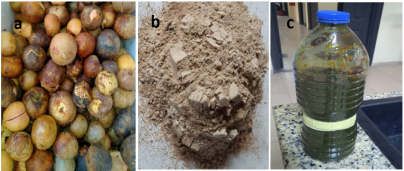
Figure 1a) were selected based on their availability as agricultural waste.
2) Crude Oil Sample: A fresh sample of waxy crude oil (
Figure 1c) was obtained from a marginal field located in Rivers State, Nigeria. The sample was collected in a 5-litre opaque plastic container, sealed air-tight immediately after collection to prevent the loss of light hydrocarbon fractions and photo-oxidation.
3) Chemical Additives:
a) Ethylene Vinyl Acetate (EVA): An analytical grade EVA copolymer was procured from a chemical vendor to serve as the industry benchmark (control) for performance comparison.
b) Solvents: High-purity n-Hexane (99%) was used as the solvent for the extraction of the bio-oil. Acetone and Xylene were employed for cleaning the viscometer cups and glassware to prevent cross-contamination between test runs.
2.2. Preparation of Avocado Seed Oil (ASO)
The preparation of the plant-based additive involved a multi-step process to transform the raw agro-waste into a usable chemical inhibitor.
1) Pre-treatment: The collected avocado seeds (
Figure 1a) were thoroughly washed with distilled water to remove fruit pulp residue and impurities. They were subsequently sliced into smaller pieces to maximise the surface area for drying.
2) Drying: The sliced seeds were placed in a laboratory electric oven and dried at a controlled temperature of for approximately one hour. This thermal treatment was necessary to reduce moisture content, which could otherwise interfere with the efficiency of the solvent extraction process.
3) Comminution: Upon cooling to ambient temperature, the dried seeds were pulverised using a high-speed electric mechanical grinder. The resulting material was sieved to obtain a fine, uniform powder (
Figure 1b), which was stored in an air-tight desiccator prior to extraction.
Figure 1. a Fresh Avocado Seeds; b Powdered Avocado seed; c Crude oil Sample.
Extraction Procedure
The oil extraction was carried out using the Soxhlet extraction technique, a standard method for lipid recovery from solid matrices.
1) Setup: Approximately 100 g of the pulverised avocado seed powder was weighed and encased in a porous filter paper thimble. This thimble was inserted into the extraction chamber of the Soxhlet apparatus.
2) Solvent Cycle: 400 mL of n-hexane was introduced into the round-bottom flask, which was mounted on a heating mantle. The temperature was maintained at the boiling point of n-hexane (). As the solvent vaporised, it condensed into the thimble, dissolving the lipids present in the seed matrix. The solvent-oil mixture then siphoned back into the flask. This cycle was maintained for six hours until the solvent in the extraction chamber ran clear.
3) Recovery: The resulting miscella (mixture of oil and solvent) was subjected to rotary evaporation to separate the volatile n-hexane from the non-volatile oil. The final product, Avocado Seed Oil (ASO), appeared as a viscous, dark-yellow liquid.
2.3. Physiochemical Characterisation
To understand the underlying mechanisms of inhibition, both the extracted bio-oil and the crude oil sample were characterised.
1) Fatty Acid Profiling: The chemical composition of the extracted ASO was analysed using Gas Chromatography (GC) to identify the specific fatty acids present. This was crucial to confirm the presence of oleic and linoleic acids, which are hypothesised to act as crystal modifiers.
2) Crude Oil Properties: The baseline properties of the untreated crude oil were determined. Specific Gravity was measured using the hydrometer method (ASTM D1298), and the API gravity was calculated accordingly. Wax content was determined via the acetone precipitation method.
2.4. Thermal Conditioning of Crude Oil
Waxy crude oils exhibit a "thermal memory," where their flow history affects their current rheological behaviour. To ensure accurate and repeatable results, all crude oil samples underwent thermal conditioning before testing. The samples were heated to in a digital water bath and held at this temperature for 30 minutes. This process ensured that all pre-existing wax nuclei were fully re-dissolved into the liquid phase, providing a standardised starting point for all comparative analyses.
2.5. Pour Point Determination
The pour point test was conducted in strict accordance with the ASTM D97 standard test method.
1) Procedure: Approximately 50 mL of the thermally conditioned crude oil was placed in a test jar fitted with a high-precision thermometer. The sample was cooled in a stepwise manner inside a cooling bath. At every interval, the jar was removed and tilted horizontally for 5 seconds to check for fluid movement.
2) Measurement: The temperature at which the oil ceased to flow (no movement observed when tilted) was noted. The Pour Point was recorded as above this no-flow temperature.
3) Doping: This procedure was repeated for the crude oil treated with ASO and EVA at concentrations of 1%, 2%, 3%, and 4% (weight/volume) to determine the depression () achieved by each additive.
2.6. Rheological Measurements
The dynamic flow behaviour of the crude oil was evaluated using an Ofite Model 900 Rotational Viscometer. This instrument measures the shear stress of the fluid at defined shear rates, allowing for the characterisation of non-Newtonian behaviour.
1) Test Matrix: Viscosity measurements were taken at four distinct temperatures: , , , and , simulating the cooling profile of a subsea pipeline environment.
2) Shear Rates: For each temperature, dial readings were recorded at rotational speeds of 600, 300, 200, 100, 6, and 3 revolutions per minute (rpm).
3) Calculations: The Plastic Viscosity (PV) and Yield Point (YP) were calculated using the Bingham Plastic model equations derived from the 600 rpm () and 300 rpm () readings:
(2)
The Gel Strength was determined directly from the 3 rpm reading after the fluid remained static for 10 seconds (initial gel) and 10 minutes (10-minute gel).
3. Results and Discussion
3.1. Characterisation of Experimental Materials
The first stage of the analysis involved determining the chemical composition of the extracted bio-oil to validate its potential as a wax inhibitor. The extracted bio-oil from the waste avocado seeds was subjected to compositional analysis to identify the active functional groups responsible for wax inhibition. The distribution of fatty acids in the avocado seed oil is presented in
Table 1. The Experimental design matrix is shown in
Table 2. As shown in
Table 1, the extracted oil is a heterogeneous mixture of fatty acids. The most dominant component is Oleic Acid, which constitutes 52.23% of the total composition. This is followed by Palmitic Acid (26.93%) and Linoleic Acid (13.84%). The high concentration of mono-unsaturated oleic acid is the critical factor for wax inhibition. The double bond in the oleic acid structure creates a molecular "kink" that, when adsorbed onto paraffin wax, disrupts the orderly packing of the wax crystal lattice
.
Table 1. Fatty acid composition of avocado seed oil.
Chemical properties | Quantity (%) |
Palmitic acid (C16: 0) | 26.93 |
Palmitoleic acid (C16: 1) | 5.75 |
Stearic acid (C18: 0) | 0.67 |
Oleic acid (C18: 1) | 52.23 |
Linoleic acid (C18: 2) | 13.84 |
Linolenic acid (C18: 3) | 0.57 |
Table 2. Experimental Design Matrix.
Sample | Additive Type | Concentration (% w/v) | Test Temp. (°C) |
Original Crude | None | 0 | 40, 35, 30, 25 |
ASO-1 to ASO-4 | Avocado Oil | 1, 2, 3, 4 | 40, 35, 30, 25 |
EVA-1 to EVA-4 | EVA | 1, 2, 3, 4 | 40, 35, 30, 25 |
Following the bio-oil analysis, the crude oil sample was characterised to establish its baseline flow assurance risk profile. These physicochemical properties are summarised in
Table 3. The data in
Table 3 classifies the sample as a medium crude oil with an API gravity of 32.08°. However, the Wax Content of 33.28% and Pour Point of 38°C indicate a severe tendency for gelation. Since the pour point (38°C) is significantly higher than typical subsea ambient temperatures (
), this crude oil requires chemical treatment to maintain flowability.
Table 3. Physicochemical properties of crude oil sample.
Parameters | Results |
Specific gravity | 0.865 |
API gravity | 32.08 |
Wax content | 33.28% |
Asphaltene content | 3.26% |
Cloud point | 47.25°C |
Pour point | 38°C |
Plastic viscosity @ 40°C | 8cp |
Yield point @ 40°C | 13lb/100ft2 |
Gel strength @40°C | 5lb/100ft2 |
3.2. Additives Effect on Pour Point Depression
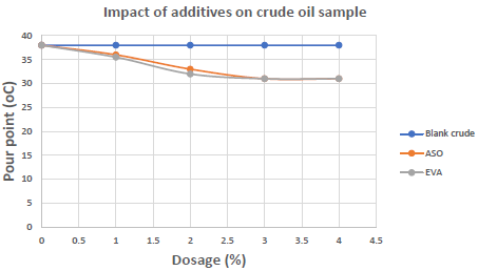
The performance of Avocado Seed Oil (ASO) was evaluated by measuring the reduction in the pour point of the crude oil at varying dosage concentrations (1% – 4% w/v). To determine its industrial viability, these results were compared directly against the commercial synthetic inhibitor, Ethylene Vinyl Acetate (EVA). The comparative performance is illustrated in
Figure 2 which reveals a strong correlation between additive concentration and pour point depression.
Figure 2. Effect of additives on pour point.
The untreated crude oil ceased to flow at 38°C. Upon the addition of 1% ASO, a marginal reduction was observed. However, as the concentration increased to 3% w/v, the pour point dropped significantly to 31°C, achieving a total depression () of 7°C. The performance of the local ASO mirrored that of the imported EVA almost identically. Both additives achieved their maximum efficiency at 3% concentration. This suggests that the natural surfactant properties of the oleic acid in ASO are as effective as the engineered co-polymer chains in EVA for this specific crude oil type. The plateau observed after 3% indicates that the wax crystals were fully saturated, and adding further chemicals yielded no additional benefit.
3.3. Rheological Impacts and Viscosity Reduction
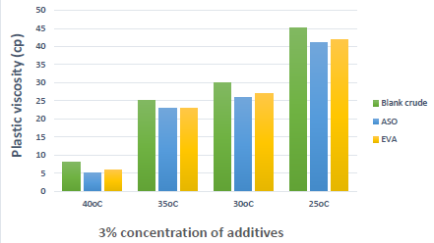
While the pour point defines the static limit of flow, the plastic viscosity (PV) determines the pump pressure required during dynamic flow. The effect of the additives on the plastic viscosity of the crude oil across a cooling temperature gradient (40°C to 25°C) is presented in
Figure 3.
Figure 3. Plastic viscosity of crude oil sample.
Figure 3 highlights the distinct advantage of using the bio-additive at lower temperatures. As expected, the viscosity of the untreated "Blank" crude spiked dramatically as the temperature dropped to 25°C, indicating the onset of rapid wax gelation. In contrast, the sample treated with 3% ASO maintained a significantly lower plastic viscosity. Specifically, at 25°C, the ASO treatment prevented the sharp rise in viscosity associated with the formation of the macro-crystalline wax network. By coating the wax crystals, the ASO molecules introduced steric repulsion, keeping the particles small and suspended. This reduction in viscosity directly translates to lower frictional pressure losses in pipelines, confirming that ASO functions effectively as a Flow Improver.
4. Conclusions
In this study, a local agro-waste material, Avocado Seed Oil (ASO), was extracted, characterised, and evaluated as a sustainable flow assurance additive for Niger Delta waxy crude oil. The performance of this bio-additive was benchmarked against a standard synthetic inhibitor, Ethylene Vinyl Acetate (EVA), using factorial assessments of pour point depression and plastic viscosity. Based on the experimental results, the following conclusions are drawn:
1) Successful Valorisation of Waste: The solvent extraction process yielded a significant quantity of bio-oil from waste avocado seeds. Gas Chromatography analysis confirmed that the oil is rich in mono-unsaturated fatty acids, specifically Oleic Acid (52.23%), which serves as the primary active agent for wax crystal modification.
2) Effective Pour Point Depression: ASO demonstrated a strong capacity to inhibit wax crystallisation. The addition of 3% w/v ASO depressed the pour point of the waxy crude oil from a baseline of to . This depression of is critical for preventing pipeline blockage during subsea transportation.
3) Competitive Performance: The comparative analysis revealed that the locally sourced ASO performed identically to the imported commercial EVA copolymer at the optimum concentration. This indicates that the bio-additive is a technically viable substitute for synthetic inhibitors, offering the same level of flow assurance without the associated environmental toxicity or high importation costs.
4) Rheological Improvement: In addition to static pour point reduction, ASO significantly improved the dynamic flow properties of the crude oil. At temperatures approaching the wax appearance point (), the bio-additive prevented the rapid spike in plastic viscosity and yield stress observed in the untreated crude, thereby reducing the pumping energy requirements for pipeline transport.
5) Optimum Dosage: The study established a critical concentration of 3% weight/volume for the bio-additive. Increasing the dosage beyond this point yielded negligible improvements, suggesting surface saturation of the wax crystals.
Abbreviations
API | American Petroleum Institute |
ASO | Avocado Seed Oil |
ASTM | American Society for Testing and Materials |
EVA | Ethylene Vinyl Acetate |
GC | Gas Chromatography |
OPEX | Operational Expenditure |
PPD | Pour Point Depressant |
PV | Plastic Viscosity |
RPM | Revolutions Per Minute |
TEA | Triethanolamine |
WAT | Wax Appearance Temperature |
YP | Yield Point |
Acknowledgments
The authors acknowledge Dr. S.A Akintola and Dr Oluwaseun for their invaluable contribution to the study.
Author Contributions
Mayowa Flourish Adeiya: Conceptualization, Data curation, Methodology, Visualization, Writing – original draft
Oluwatoyin Olakunle Akinsete: Project administration, Supervision, Validation, Writing – review & editing
Favour Omoyoma Ehwarieme: Funding acquisition, Resources
Data Availability Statement
The data supporting the outcome of this research work has been reported in this manuscript.
Conflicts of Interest
The authors declare no conflicts of interest.
References
| [1] |
Fadairo, A. A., Gbadegesin, E. S., Obia, S., Oni, O., Oladepo, A. and Richmond N. (2023). Improving the Flowability of Waxy Crude Oil Using Orange Seed Oil Derived Additive. Paper presented at the SPE Nigeria Annual International Conference and Exhibition, Lagos, Nigeria, 2023.
https://doi.org/10.2118/217254-MS
|
| [2] |
Shruti A. and Padma B. (2015). Extraction and characterization of avocado seed oil. International Journal of Science and Research, 4(12), 123-126.
|
| [3] |
Azevedo, L. F. A., and Teixeira, A. M. (2003). A critical review of the modeling of wax deposition mechanisms. Petroleum Science and Technology, 21(3-4), 393-408.
|
| [4] |
Anisuzzaman, S., Fong, Y. W., and Madsah, M. (2018). A review on various techniques and recent advances in polymeric additives to mitigate wax problems in crude oil. Journal of Advanced Research in Fluid Mechanics and Thermal Sciences, 48(1), 53-64.
https://api.semanticscholar.org/CorpusID:139084571
|
| [5] |
Hao, L. Z., Al-Salim, H. S., and Ridzuan, N. (2019). A review of the mechanism and role of wax inhibitors in the wax deposition and precipitation. Pertanika Journal of Science & Technology, 27(1).
https://api.semanticscholar.org/CorpusID:204872104
|
| [6] |
Gabayan, R. C. M., Sulaimon, A. A. and Jufar, S. R. (2023). Application of Bio-Derived Alternatives for the Assured Flow of Waxy Crude Oil: A Review. Energies, 16(9), 3652.
https://doi.org/10.3390/en16093652
|
| [7] |
Ferworn K. A., Hammami A., and Herb E. (1997). Control of Wax Deposition: An Experimental Investigation of Crystal Morphology and an Evaluation of Various Chemical Solvents. Paper presented at the International Symposium on Oilfield Chemistry, Houston, Texas.
https://doi.org/10.2118/37240-MS
|
| [8] |
Machado, A. L., Lucas, E. F., & González, G. Poly (ethylene-co-vinyl acetate) (EVA) as wax inhibitor of a Brazilian crude oil: oil viscosity, pour point and phase behaviour. Journal of Petroleum Science and Engineering. 2001, 32(2-4), 159-165.
https://doi.org/10.1016/S0920-4105(01)00158-9
|
| [9] |
Popoola, C. A., Ayo, J. A., Adedeji, O. E., & Akinleye, O. (2015). Triethanolamine (TEA) as flow improver for heavy crude oils. IOSR Journal of Applied Chemistry, 8(3), 34-38.
https://api.semanticscholar.org/CorpusID:55124713
|
| [10] |
Akinyemi, O. P., Udonne, J. D., Efeovbokhan, V. E., & Ayoola, A. A. (2016). A study on the use of plant seed oils, triethanolamine and xylene as flow improvers of Nigerian waxy crude oil. Journal of Applied Research and Technology, 14, 195-205.
https://doi.org/10.1016/j.jart.2016.04.006
|
| [11] |
Ragunathan, T., Husin, H. and Wood, C. D. (2020). Wax formation mechanisms, wax chemical inhibitors and factors affecting chemical inhibition. Applied Sciences, 10(2), 479.
https://doi.org/10.3390/app10020479
|
| [12] |
Sérgio, H. F. M., Karen, V. P., Cristina, T. F., Gislaine, F. N., Rosana, F. and Farayde, M. F. (2025). Development and characterization of starch films extracted from avocado (Persea americana mill) seeds incorporated with avocado (Persea Gratissima) essential oil, International Journal of Biological Macromolecules, 322 (1), 146624.
https://doi.org/10.1016/j.ijbiomac.2025.146624
|
| [13] |
David F., Prajona M., Agustina A., Murti B. H. and Abdul R. (2025). Current trends and future directions in avocado oil research: An overview and a bibliometric analysis across two time points, Oil Crop Science, 10(1), 25-43.
https://doi.org/10.1016/j.ocsci.2025.02.003
|
| [14] |
Adebiyi, F. M. (2020). Paraffin wax precipitation/deposition and mitigating measures in oil and gas industry: a review. Petroleum Science and Technology, 38(21), 962-971.
https://doi/10.1080/10916466.2020.1804400
|
| [15] |
World Population Review Avocado production by country (2024).
https://worldpopulationreview.com/country-rankings/avocado-production-by-country
|
| [16] |
Lorenzo, N. D., da Rocha, R. A., Papaioannou, E. H., Mutz, Y. S., Tessaro, L. L. G., & Nunes, C. A. (2024). Feasibility of Using a Cheap Colour Sensor to Detect Blends of Vegetable Oils in Avocado Oil. Foods, 13(4), 572.
https://doi.org/10.3390/foods13040572
|
| [17] |
Chen, G., Lin, J., Hu, W., & Cheng, C. (2020). Characteristics of a crude oil composition and its in situ waxing inhibition behaviour. Fuel, 218, 213-217.
https://doi.org/10.1016/j.fuel.2017.12.116
|
Cite This Article
-
APA Style
Adeiya, M. F., Akinsete, O. O., Ehwarieme, F. O. (2026). Performance Evaluation and Comparative Analysis of Avocado Seed Oil as a Sustainable Flow Improver for Waxy Crude-Oil in the Niger Delta Region. International Journal of Oil, Gas and Coal Engineering, 14(1), 10-16. https://doi.org/10.11648/j.ogce.20261401.12
 Copy
|
Copy
|
 Download
ACS Style
Adeiya, M. F.; Akinsete, O. O.; Ehwarieme, F. O. Performance Evaluation and Comparative Analysis of Avocado Seed Oil as a Sustainable Flow Improver for Waxy Crude-Oil in the Niger Delta Region. Int. J. Oil Gas Coal Eng. 2026, 14(1), 10-16. doi: 10.11648/j.ogce.20261401.12
Copy
|
Download
AMA Style
Adeiya MF, Akinsete OO, Ehwarieme FO. Performance Evaluation and Comparative Analysis of Avocado Seed Oil as a Sustainable Flow Improver for Waxy Crude-Oil in the Niger Delta Region. Int J Oil Gas Coal Eng. 2026;14(1):10-16. doi: 10.11648/j.ogce.20261401.12
Copy
|
Download
-
@article{10.11648/j.ogce.20261401.12,
  author = {Mayowa Flourish Adeiya and Oluwatoyin Olakunle Akinsete and Favour Omoyoma Ehwarieme},
  title = {Performance Evaluation and Comparative Analysis of Avocado Seed Oil as a Sustainable Flow Improver for Waxy Crude-Oil in the Niger Delta Region},
  journal = {International Journal of Oil, Gas and Coal Engineering},
  volume = {14},
  number = {1},
  pages = {10-16},
  doi = {10.11648/j.ogce.20261401.12},
  url = {https://doi.org/10.11648/j.ogce.20261401.12},
  eprint = {https://article.sciencepublishinggroup.com/pdf/10.11648.j.ogce.20261401.12},
  abstract = {Precipitation and deposition of paraffin wax in subsea pipelines remain a critical flow assurance challenge in the Niger Delta petroleum industry. As crude oil temperatures drop below the Wax Appearance Temperature (WAT) during transport, high-molecular-weight alkanes crystallize to form an interlocking gel network, leading to increased viscosity, pressure drops, and potential pipeline blocking. Conventional remediation using synthetic Pour Point Depressants (PPDs) like Ethylene Vinyl Acetate (EVA) is economically demanding due to importation costs and poses environmental toxicity risks. This study evaluates the technical feasibility of Avocado Seed Oil (ASO), derived from agricultural waste, as an eco-friendly wax inhibitor. Bio-oil was extracted via Soxhlet extraction using n-hexane and characterized using Gas Chromatography (GC). Its rheological performance was tested on a medium waxy crude sample (API: 32.08°, Wax Content: 33.28%) and benchmarked against commercial EVA. Results indicate that ASO contains 52.23% Oleic acid, a potent crystal modifier. At an optimum concentration of 3% w/v, ASO depressed the pour point from 38°C to 31°C (T = 7°C), matching the efficiency of the synthetic EVA. Furthermore, rheological analysis revealed a significant reduction in plastic viscosity and yield stress at temperatures approaching the pour point (C). The study establishes Avocado Seed Oil as a viable, cost-effective, and sustainable alternative for flow assurance in the Niger Delta waxy crude oil.},
 year = {2026}
}
Copy
|
Download
-
TY  - JOUR
T1  - Performance Evaluation and Comparative Analysis of Avocado Seed Oil as a Sustainable Flow Improver for Waxy Crude-Oil in the Niger Delta Region
AU  - Mayowa Flourish Adeiya
AU  - Oluwatoyin Olakunle Akinsete
AU  - Favour Omoyoma Ehwarieme
Y1  - 2026/04/02
PY  - 2026
N1  - https://doi.org/10.11648/j.ogce.20261401.12
DO  - 10.11648/j.ogce.20261401.12
T2  - International Journal of Oil, Gas and Coal Engineering
JF  - International Journal of Oil, Gas and Coal Engineering
JO  - International Journal of Oil, Gas and Coal Engineering
SP  - 10
EP  - 16
PB  - Science Publishing Group
SN  - 2376-7677
UR  - https://doi.org/10.11648/j.ogce.20261401.12
AB  - Precipitation and deposition of paraffin wax in subsea pipelines remain a critical flow assurance challenge in the Niger Delta petroleum industry. As crude oil temperatures drop below the Wax Appearance Temperature (WAT) during transport, high-molecular-weight alkanes crystallize to form an interlocking gel network, leading to increased viscosity, pressure drops, and potential pipeline blocking. Conventional remediation using synthetic Pour Point Depressants (PPDs) like Ethylene Vinyl Acetate (EVA) is economically demanding due to importation costs and poses environmental toxicity risks. This study evaluates the technical feasibility of Avocado Seed Oil (ASO), derived from agricultural waste, as an eco-friendly wax inhibitor. Bio-oil was extracted via Soxhlet extraction using n-hexane and characterized using Gas Chromatography (GC). Its rheological performance was tested on a medium waxy crude sample (API: 32.08°, Wax Content: 33.28%) and benchmarked against commercial EVA. Results indicate that ASO contains 52.23% Oleic acid, a potent crystal modifier. At an optimum concentration of 3% w/v, ASO depressed the pour point from 38°C to 31°C (T = 7°C), matching the efficiency of the synthetic EVA. Furthermore, rheological analysis revealed a significant reduction in plastic viscosity and yield stress at temperatures approaching the pour point (C). The study establishes Avocado Seed Oil as a viable, cost-effective, and sustainable alternative for flow assurance in the Niger Delta waxy crude oil.
VL  - 14
IS  - 1
ER  -
Copy
|
Download








 Share This Article
 Twitter
 Linked In
 Facebook