
 ,
Carel Verlaine Ekanga,
Beaulys Fotso,
Celeste Melvis Vilanculos Cossa
,
Carel Verlaine Ekanga,
Beaulys Fotso,
Celeste Melvis Vilanculos Cossa
Cassava (Manihot esculenta crantz) plays a crucial role in global food security, serving as a staple crop for nearly one billion people worldwide. Despite its importance, cassava production remains suboptimal, largely due to inefficient use of stem cuttings by farmers. Producing seedlings through mini-cuttings offers a promising method to optimize stem utilization and accelerate cassava multiplication. The aim of this study was to evaluate the effect of substrate and fertilization on cassava seedlings production from mini-set cuttings taken from various parts of the stem, and to assess their performance in the field. A factorial experiment was conducted using three stem parts (upper, middle, and lower) from three cassava genotypes (LMR, I010040-27, and 8034). These were combined with three substrate types (soil/sawdust, soil/sawdust/poultry manure, and soil/sawdust/NPK) in a completely randomized block design with three replications to produce seedlings in propagators. Subsequently, the field performance of the seedlings from each stem part was monitored. Results revealed that all stem sections across the genotypes were capable of regenerating seedlings in the tested substrates. The most effective substrate for rapid and vigorous seedling regeneration was a mix of soil, sawdust, and poultry manure, especially when using cuttings from the middle stem section. Cuttings from the upper stem section produced the lowest seedling regeneration rates across all genotypes. In field conditions, plants derived from the middle stem cuttings of the I010040-27 variety produced the highest number of tubers and the longest tuber lengths per plant compared to other genotypes. These findings are highly valuable for promoting the adoption of mini-cuttings as efficient planting material, thereby contributing to optimized and intensified cassava production.
| Published in | Plant (Volume 14, Issue 2) |
| DOI | 10.11648/j.plant.20261402.11 |
| Page(s) | 33-41 |
| Creative Commons |
This is an Open Access article, distributed under the terms of the Creative Commons Attribution 4.0 International License (http://creativecommons.org/licenses/by/4.0/), which permits unrestricted use, distribution and reproduction in any medium or format, provided the original work is properly cited. |
| Copyright |
Copyright © The Author(s), 2026. Published by Science Publishing Group |
Cassava, Growth, Stem Part, Substrate, Fertilization, Variety, Yield
Soil property | Value | Soil property | Value |
|---|---|---|---|
pH (H2O) | 5.53 | Potassium (meq/100g) | 1.14 |
pH KCl | 4.7 | Sodium (meq/100g) | 0.07 |
Clay% | 28.06 | Calcium (meq/100g) | 1.94 |
Sand% | 54.36 | Magnesium (meq/100g) | 0.71 |
Silt% | 13.16 | Organic matter (%) | 3.77 |
Total nitrogen (%) | 0.06 | Cationic exchange capacity (meq/100g) | 11.95 |
Phosphorus (mg/kg) | 26.02 | Saturation% | 27.96 |
Varieties | Stem sections | Regeneration rate (%) | ||
|---|---|---|---|---|
T0 | T1 | T2 | ||
8034 | Upper | 16.66 ± 0.28 | 38.88 ± 0.27 | 50 ± 0.57 |
Lower | 63.88 ± 1 | 69.44 ± 0.40 | 66.66 ± 0.46 | |
Middle | 52.77 ± 0.50 | 83.33 ± 0.45 | 66.66 ± 0.46 | |
LMR | Upper | 47.22 ± 0.45 | 80.55 ± 0.39 | 44.44 ± 4.44 |
Lower | 44.44 ± 0.22 | 86.11 ± 0.47 | 55.55 ± 0.36 | |
Middle | 80.55 ± 0.54 | 86.11 ± 0.47 | 83.33 ± 0.63 | |
I010040-27 | Upper | 61.11 ± 0.37 | 66.66 ±0.59 | 72.22 ± 0.34 |
Lower | 63.88 ± 0.27 | 77.77 ± 0.39 | 80.33 ± 0.43 | |
Middle | 69.44 ± 0 | 94.44 ± 0.43 | 88.88 ± 0.45 | |
Treatments | Number of leaves | Height (cm) | collar diameter (cm) | Number of roots | Number of internodes |
|---|---|---|---|---|---|
Varieties | |||||
8034 | 5.57±1.54c | 16.02±2.39b | 3.50±0.63c | 12.55±3.58c | 8.43±2.45c |
LMR | 9.06±1.41a | 24.19±1.31a | 4.45±0.86a | 23.40±5.33a | 12.59±2.18a |
I010040-27 | 6.68±1.34b | 15.83±1.98b | 4.16±0.74b | 17.26±3.91b | 9.27±1.86b |
LSD (0.05) | 2.2e-16 | 2.2e-16 | 2.2e-16 | 2.2e-16 | 2.2e-16 |
Substrates | |||||
T0 | 6.38±2.25c | 17.65±4.46c | 4.08±0.86a | 18.53±6.72a | 10.82±2.59a |
T1 | 7.64±1.55a | 19.78±4.21a | 3.93±0.88b | 17.95±6.42a | 9.71±2.47b |
T2 | 7.28±2.04b | 18.61±4.14b | 4.10±0.79a | 16.67±5.26a | 9.73±3.21b |
LSD (0.05) | 1.566e-15 | 2.587e-09 | 0.01 | 0.11 | 0.009 |
Stem section | |||||
Upper | 6.74±2.19b | 17.13±4.70c | 3.82±0.79b | 16.06±5.34b | 9.84±2.67b |
Middle | 7.34±2.11a | 19.06±4.74b | 4.17±0.85a | 20.38±6.92a | 10.78±2.57a |
Lower | 7.22±1.74a | 19.86±2.92a | 4.11±0.86a | 16.67±5.31b | 9.63±3.08b |
LSD (0.05) | 0.0004 | 8.88e-16 | 2.11e-07 | 1.37e-06 | 0.01 |
LMR | Local Manihot Red |
IITA | International Institute of Tropical Agriculture |
N | Nitrogen |
P | Phosphorous |
K | Potassium |
| [1] | Stapleton, G. Global starch market outlook and completing starch raw materials for starches by product segment and region. Cassava Starch World. 2012, 22-24. |
| [2] | Ceballos, H., Rojanaridpiched, C., Phumichai, C. A., Becerra, L., Kittipadakul, P., Iglesias, C., and Gracen, V. E. Excellence in cassava breeding: perspectives for the future. Crop Breeding. Genetics and Genomics. 2020, 2(2). |
| [3] | Rahman, S. and Awerije, B. O. Exploring the potential of cassava in promoting agricultural growth in Nigeria. J. Agr. Rural Dev. Trop. 2016, 117: 149–163. nbn-resolving.de/urn:nbn:de:hebis:34-2016050350174 |
| [4] | FAO. FAOSTAT Database. Food and Agriculture Organization. 2023, Roma, Italy. Available online at URL: |
| [5] | Mahungu, N. M., Tata-Hangy, K. W., Bidiaka, S. M., and Frangoie, A. Cassava planting material multiplication and disease and pest management: A training manual for field agents: International Institute of Tropical Agriculture (IITA). 2014, pp. 44. |
| [6] | Sukmadjaja, D., and Widhiastuti, H. Effects of plant growth regulators on shoot multiplication and root induction of cassava variety cultivation in vitro. Biotropia-The Southeast Asian Journal of Tropical Biology. 2011, 18(1). |
| [7] | FAO. Save and Grow: Cassava – A guide to sustainable production intensification. Food and Agriculture Organization of the United Nations. 2016, Rome. |
| [8] | Da Silveira, H. S., Rocha, V. S., Santos, A. S., and Souza, J. R. F. The cassava farmer’s manual: Pratical guidelines for cassava seed production in Rapid Multiplication Units (RMU). In: A. V Trindade, C. M. P. Barbosa, H. F. da Silveira and H. S. Rocha (Technical editors). Multiplication and transfer network for propagating cassava materiel of genetic and phytosanitary quality. Reniva logo. Embrapa. 2017, Brasilia, DF, 25p. |
| [9] | George, J., and Nedunchezhiyan, M. Rapid production techniques in tuber crops. In: Nedunchezhiyan, M. (ed.), Advance Techniques in Quality Planting Material Production and Commercial Cultivation of Tropical Tuber Crops, Regional Centre, Central Tuber Crops Research Institute. 2008, Bhubaneswar, Orissa, pp. 70-78. |
| [10] | Adiele, J. G., Antonius, G. T., Schut, R. P. M., Van Den Beuken K. S., Ezui P., Pypers, A. O. A., Chiedozie, N. E., and Kenneth, E. G. Towards closing cassava yield gap in West Africa: Agronomic efficiency and storage root yield responses to NPK fertilizers. Field Crops Research. 2020, 253, 107820. |
| [11] | Ikuemonisan, E. S., Mafimisebi, T. E., Ajibefun, I. and Kemisola, A. Cassava production in Nigeria: Trends, instability and decomposition analysis (1970-2018). Heliyon. 2020, 6(10). |
| [12] | Nyam, F. M. E. A., Mbarga, N. T., Nouck, N. P., Assembe, S., and Dicoum, M. E. Exploration des eaux souterraines par investigation géoélectrique dans la région de Bafia, Cameroun. Journal des sciences de la Terre et de la géotechnique. 2014, 4(3), 61-75. |
| [13] | Gwan, M. E., Djeuani, A. C., Tene, T. P. M., Boudjeko, T., and Omokolo, N. D. Field performance of Xanthosoma sagittifolium (L). Schott minitubers grown under the influence of poultry manure and NPK fertilizers: changes in the content of some secondary metabolites. Journal of Biology Agriculture and Healthcare. 2020, 9(20): 30-42. |
| [14] | Mbise, V. E., Sibuga, K. P. and Mtui, H. D. Impact of planting techniques and cutting sizes on cassava (Manihot esculenta Crantz) sprouting and subsequent vegetative growth in various nursery environments. J. Current Opinion Crop Sci. 2024, 5(2): 113-124. |
| [15] | Ekanayake, I. J., Osiru, D. S. O., Porto, M. C. M., and Midya, A. Influence of physiological age and position of cuttings on sprouting and yield of cassava (Manihot esculenta Crantz). Experimental Agriculture. 1997, 33(4), 421–430. |
| [16] | NurulNahar, E., and Tan, S. L. Cassava mini-cuttings as a source of planting material. J. Trop. Agric. and Fd. Sc. 2012, 40(1): 145-151. |
| [17] | Okpara, D. A., Udeh, D. C., Akinbo, O. K., Eke-Okoro, O. N., and Olojede, A. O. Stem portion and number of stakes influence on growth and yield of cassava variety in the south east, nigeria. Journal of Tropical Agriculture, Food, Environment and Extension. 2022, 21(1) pp. 39 – 44. |
| [18] | Mulualem, T. Cassava (Manihot esculenta Crantz) Cultivars and Harvesting Stages Influenced Yield and Yield Related Components. Journal of Natural Sciences Research. 2012, (2) 122-129. |
| [19] | Tize, I., Fotso, K. A., Nukenine, N. E., Masso, C., Ngome, A. F., Suh, C., Lendzemo, W. V., Nchoutnji, I., Manga, G., Parkes, E., Kulakow, P., Kouebou, C., Fiaboe, K. M. K., and Hanna, R. (2021). New cassava germplasm for food and nutritional security in Central Africa. Scientific Reports. 2021, 11(1), 73-94. |
| [20] | Djabou, A. S. M., Ewane, H. P. K., Eyamo, V. J. E, Ketchiemo, F. T., Figueiredo, P. G., Niemenak, N., and Tonfack, L. B. Influence of Harvest Periods on Cassava (Manihot esculenta Crantz) Agronomic Traits and Physiological Response to Post-Harvest Physiological Deterioration. American Journal of Plant Sciences. 2023 (14), 89-103. |
| [21] | Eke-Okoro, O. N., Okereke, O. U., and Okeke, J. E. Effect of weather change and planting set on growth and productivity of cassava in Southeastern Nigeria. African Journal of Root and Tuber Crops. 1999, 3(2), 34–38. |
| [22] | Chan, S. K., Hussein, K. M., Lian, G. S., and Pians, L. N. Planting for Maximum Yield: A Special Report on Cassava in Pennisular Malaysia with Particular Reference to Production Technique. Kuala Lumper: Malaysian Agricultural Research and Development Institute Report. 1983, No. PTM-02-83, pp. 1-20. |
| [23] | Onwueme, I. C. and Sinha, T. D. Field Crop Production in Tropical Africa. Netherlands: CTA. 1991, pp. 232-233. |
| [24] | Amarullah, A., Indradewa, D., Yudono, P. and Sunarminto, B. Correlation of growth parameters with yield of two cassava varieties. Agricultural Science. 2016, 1(3), 100-104p. |
| [25] | Misganaw, D., Bayou, W. D. Tuber Yield and Yield Component Performance of Cassava (Manihot esculenta) Varieties in Fafen District, Ethiopia Chanie. International Journal of Agronomy. 2020, ID 5836452, 6p. |
| [26] | Oliveira, E. C., Strapasson, E., Valle, T. L., Miglioranza, E., Almeida, L. H. C., Biz, G., and Prado J. R. Influence of harvest time in accumulation of biomass between cassava cultivars. African Journal of Agricultural Research. 2015, 10(51): 675-4680. |
APA Style
Djabou, A. S. M., Ekanga, C. V., Fotso, B., Cossa, C. M. V. (2026). Effect of Stem Cutting Sections, Substrate and Fertilization on Cassava (Manihot esculenta Crantz) Seedlings Production and Analysis of Yield Performance in the Field. Plant, 14(2), 33-41. https://doi.org/10.11648/j.plant.20261402.11
ACS Style
Djabou, A. S. M.; Ekanga, C. V.; Fotso, B.; Cossa, C. M. V. Effect of Stem Cutting Sections, Substrate and Fertilization on Cassava (Manihot esculenta Crantz) Seedlings Production and Analysis of Yield Performance in the Field. Plant. 2026, 14(2), 33-41. doi: 10.11648/j.plant.20261402.11
@article{10.11648/j.plant.20261402.11,
  author = {Astride Stephanie Mouafi Djabou and Carel Verlaine Ekanga and Beaulys Fotso and Celeste Melvis Vilanculos Cossa},
  title = {Effect of Stem Cutting Sections, Substrate and Fertilization on Cassava (Manihot esculenta Crantz) Seedlings Production and Analysis of Yield Performance in the Field},
  journal = {Plant},
  volume = {14},
  number = {2},
  pages = {33-41},
  doi = {10.11648/j.plant.20261402.11},
  url = {https://doi.org/10.11648/j.plant.20261402.11},
  eprint = {https://article.sciencepublishinggroup.com/pdf/10.11648.j.plant.20261402.11},
  abstract = {Cassava (Manihot esculenta crantz) plays a crucial role in global food security, serving as a staple crop for nearly one billion people worldwide. Despite its importance, cassava production remains suboptimal, largely due to inefficient use of stem cuttings by farmers. Producing seedlings through mini-cuttings offers a promising method to optimize stem utilization and accelerate cassava multiplication. The aim of this study was to evaluate the effect of substrate and fertilization on cassava seedlings production from mini-set cuttings taken from various parts of the stem, and to assess their performance in the field. A factorial experiment was conducted using three stem parts (upper, middle, and lower) from three cassava genotypes (LMR, I010040-27, and 8034). These were combined with three substrate types (soil/sawdust, soil/sawdust/poultry manure, and soil/sawdust/NPK) in a completely randomized block design with three replications to produce seedlings in propagators. Subsequently, the field performance of the seedlings from each stem part was monitored. Results revealed that all stem sections across the genotypes were capable of regenerating seedlings in the tested substrates. The most effective substrate for rapid and vigorous seedling regeneration was a mix of soil, sawdust, and poultry manure, especially when using cuttings from the middle stem section. Cuttings from the upper stem section produced the lowest seedling regeneration rates across all genotypes. In field conditions, plants derived from the middle stem cuttings of the I010040-27 variety produced the highest number of tubers and the longest tuber lengths per plant compared to other genotypes. These findings are highly valuable for promoting the adoption of mini-cuttings as efficient planting material, thereby contributing to optimized and intensified cassava production.},
 year = {2026}
}
TY  - JOUR
T1  - Effect of Stem Cutting Sections, Substrate and Fertilization on Cassava (Manihot esculenta Crantz) Seedlings Production and Analysis of Yield Performance in the Field
AU  - Astride Stephanie Mouafi Djabou
AU  - Carel Verlaine Ekanga
AU  - Beaulys Fotso
AU  - Celeste Melvis Vilanculos Cossa
Y1  - 2026/04/24
PY  - 2026
N1  - https://doi.org/10.11648/j.plant.20261402.11
DO  - 10.11648/j.plant.20261402.11
T2  - Plant
JF  - Plant
JO  - Plant
SP  - 33
EP  - 41
PB  - Science Publishing Group
SN  - 2331-0677
UR  - https://doi.org/10.11648/j.plant.20261402.11
AB  - Cassava (Manihot esculenta crantz) plays a crucial role in global food security, serving as a staple crop for nearly one billion people worldwide. Despite its importance, cassava production remains suboptimal, largely due to inefficient use of stem cuttings by farmers. Producing seedlings through mini-cuttings offers a promising method to optimize stem utilization and accelerate cassava multiplication. The aim of this study was to evaluate the effect of substrate and fertilization on cassava seedlings production from mini-set cuttings taken from various parts of the stem, and to assess their performance in the field. A factorial experiment was conducted using three stem parts (upper, middle, and lower) from three cassava genotypes (LMR, I010040-27, and 8034). These were combined with three substrate types (soil/sawdust, soil/sawdust/poultry manure, and soil/sawdust/NPK) in a completely randomized block design with three replications to produce seedlings in propagators. Subsequently, the field performance of the seedlings from each stem part was monitored. Results revealed that all stem sections across the genotypes were capable of regenerating seedlings in the tested substrates. The most effective substrate for rapid and vigorous seedling regeneration was a mix of soil, sawdust, and poultry manure, especially when using cuttings from the middle stem section. Cuttings from the upper stem section produced the lowest seedling regeneration rates across all genotypes. In field conditions, plants derived from the middle stem cuttings of the I010040-27 variety produced the highest number of tubers and the longest tuber lengths per plant compared to other genotypes. These findings are highly valuable for promoting the adoption of mini-cuttings as efficient planting material, thereby contributing to optimized and intensified cassava production.
VL  - 14
IS  - 2
ER  -
Faculty of Agronomy and Agricultural Sciences – Bafia Annex, University of Dschang, Dschang, Cameroon
Plant Production Division, Bertoua Agricultural Research Station, Institute of Agricultural Research for Development (IRAD), Bertoua, Cameroon
Faculty of Agronomy and Agricultural Sciences – Bafia Annex, University of Dschang, Dschang, Cameroon
Agricultural and Natural Resources Department, Agricultural and Research Institute of Mozambique, Maputo, Mozambique
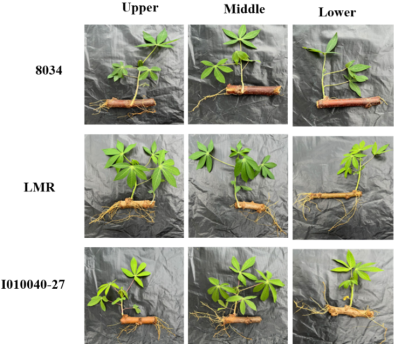
Figure 1. Plant regeneration in propagator from different stem sections and genotypes at one month.
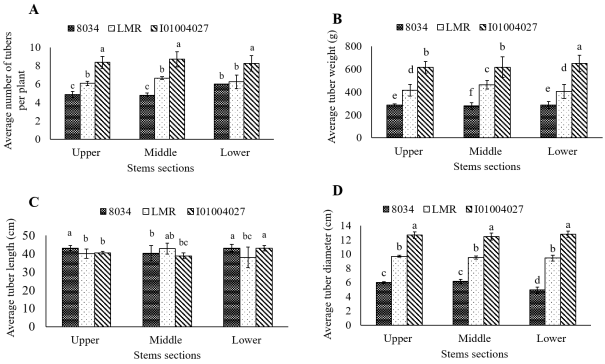
Figure 2. Yield variables assessed at 9 months after planting from the different cassava sections and genotypes in the field.
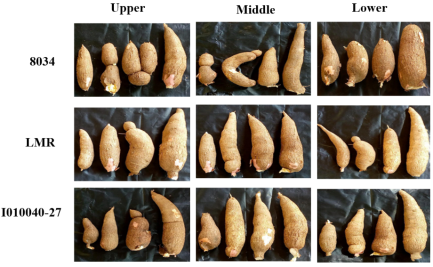
Figure 3. Tuber aspect at harvest in the field from the different cassava sections and genotypes. Bar = 10 cm.

Information


 Share This Article
 Twitter
 Linked In
 Facebook
 Copy
Copy Download