Review Article | | Peer-Reviewed

Micropropagation and Genetic Fidelity in Strawberry (Fragaria × ananassa Duch.): Current Status and Future Directions

Published in Plant (Volume 14, Issue 4)
Received: 3 August 2026     Accepted: 22 August 2026     Published: 6 November 2026
Views:       Downloads:
Abstract

Morden strawberry (Fragaria × ananassa Duch.) is an economically important octoploid fruit crop, prized for its nutritional value, commercial returns and antioxidant-rich fruit. Its conventional propagation through runners, however, is limited by a low multiplication rate and a high risk of systemic pathogen transmission, creating a clear need for alternative methods capable of producing uniform, disease-free planting material at scale. In vitro micropropagation has become the technique of choice for rapid clonal multiplication, though prolonged culture duration and callus-mediated regeneration can induce somaclonal variation and compromise clonal fidelity. This review critically examines recent progress in explant selection, surface sterilization protocols, culture media optimization, plant growth regulator combinations, direct versus indirect regeneration pathways, rooting strategies and acclimatization techniques for strawberry micropropagation, with particular attention to the assessment of genetic stability through molecular markers such as RAPD, ISSR, SSR and EST-SSR. Evidence drawn from multiple studies shows that direct organogenesis from nodal or shoot-tip explants, combined with optimized cytokinin concentrations, substantially reduces the risk of genetic instability relative to indirect, callus-based regeneration. Molecular marker analyses have repeatedly confirmed high genetic uniformity among micropropagated plantlets raised under controlled, standardized protocols. Despite this progress, challenges remain in standardizing protocols across cultivars, achieving cost-effective scale-up and detecting the subtle epigenetic or somaclonal changes that conventional markers can miss. Future work should focus on integrating high-throughput and epigenetic screening tools, automating micropropagation systems and developing cultivar-specific protocols to further improve efficiency and reliability. Taken together, pairing optimized micropropagation systems with robust molecular validation offers a sustainable pathway for commercial nursery production, germplasm conservation and genetic improvement programs in strawberry.

Published in Plant (Volume 14, Issue 4)
DOI 10.11648/j.plant.20261404.12
Page(s) 84-93
Creative Commons

This is an Open Access article, distributed under the terms of the Creative Commons Attribution 4.0 International License (http://creativecommons.org/licenses/by/4.0/), which permits unrestricted use, distribution and reproduction in any medium or format, provided the original work is properly cited.

Copyright

Copyright © The Author(s), 2026. Published by Science Publishing Group

Keywords

Fragaria × ananassa Duch., Micropropagation, Genetic Fidelity, Molecular Markers, Plant Growth Regulators

1. Introduction
The modern cultivated strawberry (Fragaria × ananassa Duch.), a member of the family Rosaceae and subfamily Rosoideae, is among the most widely grown and economically important soft fruits in the world, owing to its genotypic diversity, high heterozygosity and broad adaptability to varied environments . It emerged during the eighteenth century through natural hybridization between Fragaria virginiana and Fragaria chiloensis, giving rise to an allo-octoploid species (2n = 8x = 56) marked by considerable genomic complexity . This polyploid ancestry accounts for the crop's remarkable adaptability, phenotypic diversity and superior fruit quality, though it also renders conventional genetic improvement particularly challenging . While strawberries are traditionally cultivated in temperate regions, they can also thrive under tropical and subtropical conditions when day temperatures range between 22–25°C and night temperatures between 7–13°C . Globally, China leads production with around 3.4 million tonnes (MT), followed by the United States (1.31 MT), Turkey (0.73 MT), Egypt (0.64 MT) and Mexico . In India, strawberry cultivation spans nearly 3,030 hectares, yielding an annual production of about 21,000 MT, with cultivation in northern India expanding rapidly due to proximity to lucrative markets such as Delhi and the crop's strong economic returns . This regional expansion has, in turn, spurred growing interest in space-efficient production systems: strawberry cv. 'Sweet Charlie' grown hydroponically in vertical PVC columns, for instance, has shown that a density of roughly 20 plants/m² in 90-mm columns offers the best combination of early flowering, flower number and overall yield relative to conventional field spacing .
Despite this commercial significance, strawberry production continues to be constrained by limited availability of high-quality, disease-free planting material. Conventional vegetative propagation via runners preserves clonal uniformity but suffers from a low multiplication rate, strong seasonal dependency and more critically facilitates the accumulation and transmission of systemic pathogens, particularly viruses, that progressively reduce plant vigour, yield and fruit quality . This gradual "stock degeneration" remains a persistent bottleneck for nursery producers across major strawberry-growing regions, compounded by the fact that fungal diseases such as gray mould (Botrytis cinerea) and anthracnose (Colletotrichum spp.) can independently cause substantial pre- and post-harvest losses even in otherwise healthy planting stock .
Plant tissue culture technology offers a robust alternative for rapid, large-scale clonal multiplication. Micropropagation allows continuous, year-round production of genetically uniform and pathogen-free planting stock under controlled conditions, exploiting the principle of cellular totipotency, whereby differentiated somatic cells retain the capacity to regenerate whole plants . The Murashige and Skoog basal medium remains the most widely adopted formulation for strawberry micropropagation owing to its balanced nutrient composition . Cytokinins such as 6-benzylaminopurine (BAP), kinetin and thidiazuron (TDZ) are routinely employed to stimulate axillary shoot proliferation, while auxins such as indole-3-acetic acid (IAA), indole-3-butyric acid (IBA) and α-naphthaleneacetic acid (NAA) support rooting and, where required, callus induction . This hormonal balance has been demonstrated repeatedly at the protocol level: in cv. Ofra, nodal segments cultured on MS medium supplemented with 2.5 mg/l kinetin and 0.1 mg/l IAA gave the highest shoot-regeneration response (85% of explants, 9.22 shoots per explant), while half-strength MS medium with 1.0 mg/l IBA produced the best rooting outcome, with 95% rooting and the longest root length. A follow-up study focused specifically on rooting corroborated this, finding IBA superior to NAA and IAA for root initiation, root length and rooting percentage in directly regenerated shoots of the same cultivar . Careful optimization of plant growth regulator concentrations is essential, since excessive cytokinin levels can trigger physiological abnormalities or compromise genetic stability.
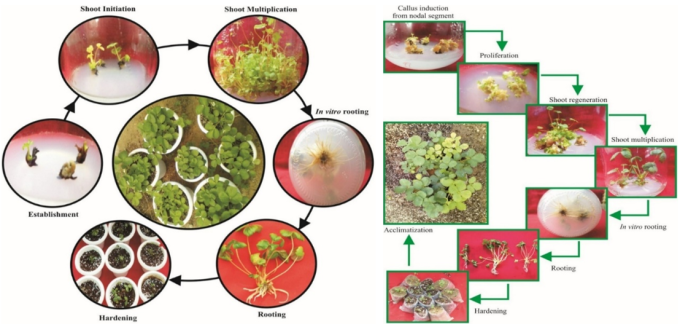
Regeneration in strawberry proceeds either through direct organogenesis from shoot tips, nodal segments, or runner-tip explants, or indirectly via a callus-mediated pathway (Figure 1). Direct regeneration is generally favoured for commercial propagation because it substantially lowers the risk of somaclonal variation . Indirect regeneration through callus culture, while valuable for genetic transformation and somatic embryogenesis studies, is more prone to genetic instability arising from chromosomal rearrangements, point mutations and epigenetic modifications accumulated during dedifferentiation . Working with nodal-segment-derived callus of cv. Ofra, found that MS medium with 4.0 mg/l NAA and 2.0 mg/l BAP gave the highest callus induction (87.33%), while shoot regeneration from that callus was optimal on medium containing 2.0 mg/l kinetin with 0.5 mg/l IAA though, notably, some callus-derived plantlets displayed minor morphological deviations from the mother plant not seen among directly regenerated shoots .
Somaclonal variation remains one of the principal limitations of micropropagation systems, often linked to prolonged culture duration, elevated growth regulator concentrations, oxidative stress, or repeated subculturing . In strawberry, such variation has been reported predominantly in callus-derived regenerants and under high BAP regimes . A complementary route to inducing deliberate variability chemical mutagenesis has also been explored in this species: treating runner-tip, shoot-tip and leaf-disc explants of cv. Camarosa with ethyl methane sulphonate (EMS) showed that 0.1% EMS for 1.5 hours gave the best balance of runner initiation speed and runner number, while concentrations of 0.4% proved lethal, illustrating both the potential and the dose-sensitivity of induced variation as a breeding tool . While such variability can be harnessed as a source of novel genetic diversity in breeding programs, it is undesirable in commercial clonal propagation, where true-to-type genetic uniformity is a fundamental quality requirement.
Consequently, genetic fidelity assessment has become an indispensable component of quality control in tissue culture-derived planting material. Morphological screening alone is inadequate, as phenotypic expression can be strongly influenced by environmental factors. Molecular marker systems, by contrast, detect DNA-level polymorphisms independent of environmental variation, offering a more reliable basis for fidelity testing . Random Amplified Polymorphic DNA (RAPD) markers have been extensively used to assess clonal fidelity in strawberry owing to their simplicity and low cost, though concerns over reproducibility have driven wider adoption of more robust systems such as Inter Simple Sequence Repeats (ISSR) and Simple Sequence Repeats (SSR), which provide superior reliability and polymorphism detection . In one direct application of this approach, screened 21 RAPD primers against callus-derived strawberry plantlets of cv. Ofra and their field-grown mother plants; six primers amplified consistently and all resulting profiles were monomorphic, confirming that the regenerants were genetically identical to the parent stock despite the minor morphological variation observed during culture .
Figure 1. Schematic representation of the sequential stages involved in in vitro propagation of strawberry (Fragaria × ananassa Duch.), from explant collection and surface sterilization through culture initiation, shoot multiplication, rooting, acclimatization and field transplanting, illustrating the cyclical nature of clonal micropropagation for continuous planting material production .
Recent progress in strawberry genomics including whole-genome sequencing, high-density marker development and CRISPR/Cas-based genome editing has further strengthened the toolkit available for molecular validation and precision breeding . These genomic resources not only refine genetic stability assessment but also open new avenues for integrating micropropagation with modern molecular breeding strategies.
Given the expanding global demand for strawberry cultivation and the parallel need for genetically stable, pathogen-free planting material, integrating optimized in vitro propagation protocols with reliable molecular marker systems has become essential. A clear understanding of regeneration pathways, hormonal regulation and the factors driving somaclonal variation is central to developing standardized, reproducible and commercially viable propagation systems.
This review synthesizes recent advances in strawberry in vitro propagation and critically evaluates current methodologies for genetic fidelity assessment, with particular emphasis on minimizing somaclonal variation through direct regeneration approaches and applying molecular diagnostics to ensure clonal uniformity in commercial nursery production.
2. Conventional Propagation and Its Limitations
Strawberry is traditionally propagated through runners horizontal stolons that emerge from the crown of the mother plant and give rise to daughter plants genetically identical to the parent genotype. While this method preserves varietal uniformity, it is constrained by several practical and pathological limitations.
The most immediate constraint is the relatively low multiplication rate of runner-based propagation, which restricts the pace at which elite cultivars can be scaled up for commercial distribution. Runner production is also strongly seasonal, being governed by photoperiod, temperature and nutrient status, which limits the year-round availability of planting material and complicates production scheduling . Emerging propagation systems such as plug-plant and tray-plant technologies have partly addressed these seasonal constraints by rooting runner tips in protected, soilless substrates, but they remain fundamentally dependent on runner output from field-grown mother stock . Vertical soilless systems represent a further evolution of this approach: growing cv. 'Sweet Charlie' in 75- and 90-mm PVC columns at densities between 12 and 32 plants/m² showed that wider columns and moderate density (around 20 plants/m²) significantly increased both flower number and marketable yield, while narrower columns instead favoured better fruit quality traits such as ascorbic acid content indicating that even non-tissue-culture propagation and cultivation strategies can meaningfully influence the volume and quality of planting material and fruit produced from a given mother-stock base .
A more serious limitation is the progressive accumulation and vegetative transmission of systemic pathogens. Strawberry is host to more than twenty known viral pathogens, which frequently occur as mixed infections and are readily carried over through successive rounds of runner propagation, resulting in reduced vigour, poor fruit quality and substantial yield losses . Once infected, mother plants act as a continuous reservoir of inoculum, undermining nursery certification standards and threatening the disease status of entire production blocks. Fungal threats compound this vulnerability: anthracnose alone can cause yield losses of up to 70%, while Botrytis cinerea affects strawberry foliage and fruit at both pre- and post-harvest stages across nearly all producing regions worldwide . Runner-derived propagules are additionally prone to such fungal contamination, further compromising propagule quality. Chemical fungicides remain the default response, but their intensive and repeated use raises both environmental and economic concerns, prompting a shift toward biological alternatives. Antagonistic rhizospheric bacterial strains have shown particular promise in this regard: inoculation with specific Bacillus and Pseudomonas isolates significantly reduced both gray mould and anthracnose incidence in strawberry cv. Chandler relative to fertilizer-only controls across two field seasons, with strains such as ABS5:RCA7 and ABS4:HCA61 consistently outperforming conventional treatments . Related work on plant growth-promoting rhizobacteria (PGPR) has extended this line of evidence further, showing that root inoculation with Bacillus and Pseudomonas strains singly or in combination not only suppresses gray mould but simultaneously improves plant growth, fruit yield and physico-chemical quality parameters such as TSS, ascorbic acid and anthocyanin content .
Beyond disease pressure, continuous field propagation over successive generations can lead to genetic drift, cumulative physiological aging of clonal lines and gradual decline in productivity and vigour. The perishability of the resulting fruit compounds this economic burden: strawberry fruit and pulp are highly susceptible to microbial spoilage and quality loss during storage, with even chemically preserved pulp deteriorating within days at room temperature unless held under low-temperature conditions with appropriate preservatives . Collectively, these constraints spanning propagation rate, disease transmission, genetic drift and post-harvest handling have driven the search for alternative propagation systems capable of delivering disease-free, genetically stable planting material at a scale that runner propagation alone cannot achieve.
3. Plant Tissue Culture: Historical Perspective and Significance
Plant tissue culture, which paved the way for the development of modern plant biotechnology, has emerged as a powerful tool for investigating and resolving diverse problems in plant science. As traditional genetic resources continue to erode at an alarming rate, tissue culture techniques have gained considerable momentum for commercial application in plant propagation and are now widely adopted as an alternative means of vegetative multiplication across numerous plant species.
The term "tissue culture" broadly encompasses the in vitro culture of organs (shoot tips, root tips, runner tips, stem segments, flowers, anthers, ovaries, ovules and embryos), as well as tissues, cells and protoplasts all of which serve as valuable tools for the rapid, clonal multiplication of plants. The conceptual foundation for these techniques dates back to 1902, when Gottlieb Haberland first proposed the theory of cellular totipotency, a principle that has since underpinned decades of progress in plant regeneration research.
The field expanded phenomenally, when Murashige and Skoog formulated their revised medium for rapid growth and bioassay of tobacco tissue cultures a formulation that remains the most widely used basal medium in plant tissue culture to this day . Subsequent advances in the discipline have enabled the development of high-yielding, uniform, virus-free cultivars, representing some of its most significant achievements. Beyond offering higher multiplication rates than conventional vegetative propagation, modern tissue culture techniques now make it possible to generate plants with improved tolerance to both abiotic stresses (such as drought and salinity) and biotic stresses, while also serving as a foundation for generating the wide genetic variation essential to effective crop improvement programs.
4. In Vitro Studies in Strawberry: Progress over the Decades
In vitro investigation in strawberry (Fragaria × ananassa Duch.) have been conducted extensively over the past several decades, building on foundational work that established the feasibility of clonal micropropagation in the crop. Among the first to determine the optimal concentration of 6-benzylaminopurine (BAP) required to induce prolific shoot multiplication from meristem-tip explants in strawberry, a finding that subsequently enabled the industrial-scale multiplication of strawberry plants . Earlier still, pioneering work had explored fruit formation through the culture of pollinated flowers and the recovery of healthy, virus-free plants via meristem culture, laying the groundwork for the micropropagation systems used commercially today .
Building on these early foundations, more recent work has continued to refine strawberry micropropagation protocols, optimize plant growth regulator regimes and strengthen genetic fidelity assessment using increasingly sophisticated molecular tools .
5. Factors Governing Micropropagation Efficiency
The overall efficiency of micropropagation is governed by a complex interplay of multiple factors, which can be broadly classified into the following categories:
1) Explant-related factors - including the source, physiological age and type of explant, as well as the pre-treatment procedures applied prior to in vitro inoculation.
2) Culture-related factors - encompassing the composition of the culture medium (basal salts, carbon source, plant growth regulators) and the physical culture conditions (temperature, light intensity and photoperiod).
3) Regeneration pathway - the specific micropropagation route followed, whether direct organogenesis or indirect, callus-mediated regeneration.
4) Performance of regenerated plantlets - assessed in terms of the number of plantlets successfully transferred to pots, the number surviving ex vitro and the overall survival percentage during acclimatization.
6. Review of Literature
6.1. Disinfection of Explants
Disinfection of strawberry explants remains a critical first step in micropropagation, and effective protocols continue to be developed for different explant types. Working with shoot-tip explants, described a multi-step sequence involving a 5-minute wash in 3% Teepol, 10 minutes under running tap water, a 10-minute fungicide treatment (12% carbendazim + 63% mancozeb), 7–8 minutes in 0.5% sodium hypochlorite, 1 minute in 0.05% mercuric chloride, and three final rinses in sterile RO water, with explants trimmed to 0.4–0.5 cm before inoculation . For seed and achene explants, found that 30% and 40% Clorox® gave identical, contamination-free outcomes in Cameron Highlands White Strawberry, with 30% Clorox adopted as standard and yielding 78.77% germination under LED culture, while addressed seed dormancy directly through sulfuric-acid chemical scarification across three genotypes, achieving germination rates near 100% on MS medium, peat, or filter paper . Working with runner-tip and crown tissue of cv. Benihope for CRISPR/Cas9-based regeneration, obtained effective disinfection using a 5-minute immersion in a 100% commercial disinfectant (LIRCON, chlorine content 4.3 ± 0.6%) followed by five rinses in sterile distilled water . Most recently, evaluating runner tips, nodal segments, shoot apices, stems, and leaves for direct organogenesis in cv. Chandler, found that surface-sterilized runner tips cultured on MS medium with 1.5 mg/L BAP and 0.1 mg/L NAA gave the highest shoot-multiplication response (89.8%, 4.3 shoots per explant), with genetic fidelity of the regenerated plantlets subsequently confirmed via 12 ISSR primers producing monomorphic bands underscoring that disinfection efficacy remains strongly dependent on explant type, cultivar, and physiological condition of the source material at the time of collection .
6.2. Culture Media and Composition
While intact plants synthesize their own nutritional requirements, plant parts or cells cultured in vitro depend on an externally supplied combination of nutrients and defined physical conditions to sustain growth, with the precise composition of the medium largely dictated by the tissue or cell type being cultured. Sucrose remains the carbon source of choice in most systems, and plant growth regulators continue to be the key determinants of culture response; recent work illustrates this well, finding that MS medium supplemented with 1.0 mg/L BAP, 0.25 mg/L kinetin, and 50 mg/L adenine sulfate gave the highest shoot-multiplication response (89.8%) in strawberry cv. Chandler, while rooting was optimized separately on half-strength MS with 1.0 mg/L IBA, achieving a 90.8% rooting rate . Cytokinin–auxin combinations remain central to regeneration outcomes more broadly: in a callus-based regeneration system developed for CRISPR/Cas9 gene editing in cv. Benihope, found that thidiazuron (TDZ) combined with 2,4-dichlorophenoxyacetic acid (2,4-D) was particularly effective for inducing callus formation and subsequent plant regeneration from runner-tip and crown explants . Reviewing progress in strawberry biotechnology over the past decade, similarly emphasize that MS-based formulations remain the dominant platform for strawberry tissue culture, with fine-tuning of cytokinin and auxin concentrations continuing to be the principal lever for optimizing shoot multiplication, rooting, and overall regeneration efficiency across cultivars . As with agar in most other systems, gelling agent choice and concentration (commonly around 0.6% in current protocols) remain a routine, cultivar-independent parameter of medium preparation, though cost and sustainability concerns continue to motivate interest in lower-cost alternatives across plant tissue culture more broadly.
6.3. Direct Regeneration
Direct organogenesis continues to be favoured for commercial strawberry propagation, and recent studies have refined the growth-regulator combinations used across explant types. Working with cv. Chandler, evaluated runner tips, nodal segments, shoot apices, stems, and leaves for direct organogenesis and found that runner tips gave the strongest response, achieving 89.8% shoot multiplication and 4.3 shoots per explant on MS medium supplemented with 1.5 mg/L BAP and 0.1 mg/L NAA, under standardized conditions of pH 5.8, 0.6% agar, 3000 lux light intensity, a 16-hour photoperiod, and 25 ± 2°C; regenerated shoots subsequently rooted best (90.8%) on half-strength MS medium with 1.0 mg/L IBA .
Investigating direct organogenesis in Mexican-grown strawberry, tested 21 combinations of auxins (IBA, 2,4-D) and cytokinins (BAP, kinetin) and found the highest regeneration rate (68.3%) with IBA and BAP each at 0.4 mg/L, with plantlets from this treatment also showing improved development and antioxidant response; notably, the highest proline concentration (1.7 μg/mL) was instead recorded in the hormone-free control, suggesting that PGR supplementation reduced stress-related proline accumulation relative to untreated explants .
At the molecular level, examined a narrower TDZ concentration range (0, 0.025, 0.05, 0.1, and 0.4 mg/L) for strawberry shoot multiplication and identified 0.05 mg/L TDZ as optimal, significantly increasing leaf number; however, TDZ treatment also inhibited plant height and reduced chlorophyll, carotenoid, and soluble sugar content. Transcriptomic analysis revealed that TDZ suppressed cytokinin biosynthesis while up-regulating cytokinin oxidase expression and elevating endogenous auxin levels, offering a mechanistic explanation for the growth-regulator trade-offs long observed empirically in TDZ-based strawberry regeneration protocols .
6.4. Regeneration Via Callusing
The observed that soft, friable, non-morphogenic callus formed on medium containing NAA without 2,4-D, whereas compact, organized callus developed when receptacle explants were cultured on medium containing both 2,4-D and BA . Testing leaf lamina and petiole explants from non-runnering Baron Solemacher plants across five media, found that 5 μM BA combined with either 5 μM 2,4-D or NAA produced the strongest callus response, with petioles outperforming leaf lamina in callus formation frequency; IAA-containing media produced lower and more variable callus induction and only media combining 10 μM IAA with BA induced direct shoot formation. Demonstrated that callusing ability is strongly genotype-dependent: cv. Aiko showed high callus-forming potential from both explant types tested, cultivars Dana and Premial responded best from leaf explants only and cv. Gorella showed the strongest response from petiole explants . As well as comparing runner segments, nodal segments and leaf blades, observed distinct callus morphologies for each explant type and found that runner segments produced the highest callusing frequency (60.0–61.6%), followed by nodal segments (50.0–58.8%) and leaf segments (38.7–39.9%). Among 32 media combinations tested, 4.0 mg/l NAA combined with 1.5 mg/l BA yielded the highest callus induction across all explant types, while the highest rate of adventitious shoot regeneration was observed from leaf-derived callus of clone Rabi-01 on medium containing 3 mg/l BA . found that MS medium with 3 mg/l 2,4-D and 0.5 mg/l BAP was most effective for callus induction and development, while 1.5 mg/l BA combined with 0.75 mg/l NAA gave the highest shoot induction (55.6%); a three-way combination of BA, NAA and kinetin proved most efficient overall, achieving 60.7% shoot induction and a multiplication rate of 16.7 ± 0.48 . Reported that callus induction was strongly dependent on both explant type and growth regulator combination, with mature leaf discs producing the highest callus frequency on MS medium with 1.0 mg/l 2,4-D and 0.1 mg/l BAP, followed by internode-derived callus and BAP alone proving broadly effective for callus induction across explant types .
6.5. Root Development and Acclimatization
Root initiation percentage responded strongly and consistently to auxin concentration across studies involving IBA, NAA and IAA, with half-strength MS medium supplemented with low concentrations (0.1–0.2 mg/l) of any of these auxins generally producing the best rooting response. Rooted shoots derived from nodal segments on half-strength, agar-gelled medium with 1.0 μM NAA, achieving approximately 70% survival following acclimatization of plantlets with fully expanded leaves . As well as similarly found that low IBA concentrations maximized both root number and rooting frequency . Testing IBA and IAA across a range of 0.1–1.5 mg/l, identified IBA as the more effective auxin for root induction, producing 5.0 ± 0.23 roots per explant with a mean root length of 3.68 cm . Reported that the highest percentage of rooted explants and the greatest mean root length were achieved with 1 μM NAA and 1 μM IBA, respectively, with plantlets transplanted into a perlite–vermiculite–coco peat mixture (2:1:2 v/v/v) achieving 90% survival . Obtained the maximum root number on MS medium fortified with 0.1 mg/l BAP and 0.2 mg/l IBA, with 100% survival following transfer to greenhouse conditions . Found that 0.5 mg/l IBA produced the best rooting performance (6 roots, 3.05 cm root length), while half-strength MS medium without growth regulators showed no rooting response . As well as similarly identified 1.0 mg/l IBA as optimal for rooting . Found that 1 mg/l IBA produced the highest rooting frequency and root number (5) in Sweet Charlie after five weeks of culture, with root initiation occurring within 8–10 days; among potting mixtures tested for hardening, coco peat and perlite (3:1) achieved 80% survival, markedly outperforming soil and cocopeat (3:1), which gave only 10% success . Likewise reported the highest root length and root number at 1.0 mg/l IBA, with plantlets successfully hardened and established in a coco peat–vermiculite–perlite mixture (3:1:1), subsequently exhibiting normal vegetative growth and fruit setting .
6.6. Somaclonal Variation
Somaclonal variation refers to the genetic variability that can arise spontaneously among cells during tissue culture, producing regenerated plants or their offspring that differ genetically from the parent a concept first introduced . Depending on which tissue it originates from, this variation is termed gametoclonal when it stems from gametic culture, protoclonal when derived from protoplast culture, or calliclonal when it arises through callus culture. Such variation tends to originate most readily at wounded or exposed tissue surfaces that come into direct contact with the culture medium or with plant growth regulators like BAP, 2,4-D and other auxins, and its frequency generally increases alongside higher hormone concentrations. Several additional factors shape how much variation occurs, including the cultivar used, the age of the source plant, ploidy level, the type of explant and how long the tissue remains in culture . In line with this, found that lowering BAP levels from 1 mg/l down to 0.5 or 0.2 mg/l depending on the genotype helped preserve genetic stability, and similarly established that elevated BAP concentrations were a direct driver of somaclonal variation . More recent work has extended these findings using molecular approaches: characterized somatic mutations and DNA methylation changes occurring during the vegetative propagation of strawberries, noting that some tissue-culture-induced epigenetic marks can persist through asexual propagation but tend to be lost after several rounds of clonal reproduction. Similarly, a 2023 study used integrated metabolomic and gene expression analysis to compare the 'Sachinoka' strawberry cultivar with its somaclonal mutant, examining the metabolic and genetic basis of the color and aroma differences that arose through tissue culture. At the transcriptional level, applied transcriptome and hormone analysis to investigate an elongated-fruit somaclonal mutant identified in the 'Akihime' strawberry cultivar. Taken together, these newer molecular studies reinforce the earlier hormone-concentration-based findings while adding a mechanistic, genomic dimension to understanding how and why somaclonal variation arises in strawberry tissue culture .
6.7. Clonal Fidelity and Molecular Analysis (RAPD and Related Markers)
Clonal fidelity remains a central concern in strawberry micropropagation, with true-to-type propagation and genetic stability serving as essential prerequisites for commercial application. Loss of genetic fidelity in tissue culture-derived plants can originate from alterations in nuclear DNA, cytoplasmic DNA, or across the genome as a whole, and may manifest as either heritable or epigenetic variation. DNA-based markers are particularly well suited to detecting such changes, as they enable direct comparison of genetic material independent of environmental influence.
RAPD analysis, a PCR-based molecular marker technique first developed, generates DNA fingerprints through PCR amplification of random genomic segments using short (typically 10-nucleotide), arbitrary-sequence primers . Given the relatively high genetic diversity observed within the narrow breeding base of cultivated strawberry, RAPD and related markers have proven especially valuable for verifying cultivar identity, detecting somaclonal variation, and constructing genetic maps of the octoploid genome.
Recent case studies continue to confirm the utility of these markers as quality-control tools in commercial micropropagation. Working with cv. 'My Da', applied RAPD analysis to assess somaclonal variation arising during meristem-based micropropagation and found that the extent of polymorphism was cultivar-dependent, with the primer OPK03 revealing the highest level of variation among the markers tested underscoring that even standardized RAPD protocols can detect genotype-specific instability, reinforcing the need for routine genetic monitoring alongside large-scale propagation. By contrast, applying ISSR markers to assess fidelity in direct-organogenesis-derived plantlets of cv. Chandler, screened 12 ISSR primers and obtained exclusively monomorphic banding patterns between micropropagated plantlets and their donor mother plants, confirming that direct regeneration from runner tips and related explants preserved genetic uniformity under their optimized culture conditions. Taken together, these findings echo the broader pattern established in earlier work that direct organogenesis pathways tend to maintain higher clonal fidelity than callus-mediated or high-cytokinin regimes, while also demonstrating that molecular screening remains indispensable even under carefully controlled, modern protocols, since fidelity outcomes can still vary by cultivar and marker system.
7. Conclusion
The present review underscores the value of in vitro propagation as an efficient and reliable strategy for the large-scale multiplication of strawberry (Fragaria × ananassa Duch.), offering a practical solution to the key limitations of conventional runner propagation, namely low multiplication rates and the transmission of systemic pathogens. Micropropagation on Murashige and Skoog (MS) medium, supplemented with appropriate combinations of cytokinins and auxins, has proven consistently effective for shoot induction, multiplication and rooting, while direct organogenesis from nodal explants offers markedly better genetic stability than callus-mediated regeneration pathways. Well-optimized rooting and acclimatization protocols further improve plantlet survival under greenhouse and polyhouse conditions, translating laboratory success into field-ready planting material. Genetic fidelity assessment using RAPD and related molecular markers has consistently confirmed that in vitro-raised strawberry plants remain true-to-type, with no detectable somaclonal variation when regeneration protocols are appropriately optimized. Taken together, these findings indicate that the integration of efficient micropropagation techniques with robust molecular validation provides a dependable, scalable strategy for producing uniform, disease-free strawberry planting material one with direct relevance to commercial nursery production, germplasm conservation and future breeding programs, particularly in regions where the availability of quality planting stock remains a persistent constraint.
Abbreviations

RAPD

Randomly Amplified Polymorphic DNA

PCR

Polymerase Chain Reaction

ISSR

Inter-Simple Sequence Repeat

SSR

Simple Sequence Repeat

DNA

Deoxyribonucleic Acid

BAP

6-Benzylaminopurine

BA

Benzyladenine

IBA

Indole-3-Butyric Acid

IAA

Indole-3-Acetic Acid

NAA

Naphthaleneacetic Acid

Acknowledgments
The authors express sincere gratitude to Chaudhary Charan Singh Haryana Agricultural University, Hisar, Haryana, India, for providing the necessary access to conduct this research.
Author Contributions
Anuradha Bishnoi: Conceptualization, Data curation, Methodology, Resources, Supervision, Writing – review & editing
Krishan Kant Meena: Writing – original draft, Writing – review & editing
Piyush Verma: Validation, Writing – review & editing
Sumit: Writing – review & editing
Raushan Raj: Writing – review & editing
Vikash Verma: Funding acquisition, Writing – review & editing
Solanki Shakti Vikrambhai: Writing – review & editing
Conflicts of Interest
The authors declare no conflict of interest.
References
[1] Akter, F., Wu, S., Islam, M. S., Kyaw, H., Yang, J., Li, M., Fu, Y., & Wu, J. (2024). An efficient Agrobacterium-mediated genetic transformation system for gene editing in strawberry (Fragaria × ananassa). Plants, 13(5), 563.
[2] Aljawasim, B. D., Samtani, J. B., & Rahman, M. (2023). New insights in the detection and management of anthracnose diseases in strawberries. Plants, 12(21), 3704.
[3] Anonymous (2024).
[4] Anonymous (2025).
[5] Anuradha, Bishnoi, S., Goyal, R. K., & Sindhu, S. S. (2020). Effect of rhizobacterium on growth, yield and quality of strawberry. Indian Journal of Ecology, 47(1), 92–95.
[6] Anuradha, Goyal, R. K., & Sindhu, S. S. (2022a). Microbial biofertilization to improve yield and quality of strawberry. Indian Journal of Ecology, 49(6), 2189–2193.
[7] Anuradha, Goyal, R. K., Bishnoi, S., & Sindhu, S. S. (2022b). Bio-inoculation of strawberry plants with Bacillus strains having promoting effect on growth, yield and quality. Journal of Applied Horticulture, 24(3), 278–281.
[8] Anuradha, Goyal, R. K., Sindhu, S. S., & Godara, A. K. (2019). Effect of PGPR on strawberry cultivation under greenhouse conditions. Indian Journal of Horticulture, 76(3), 400–404.
[9] Anuradha, Sehrawat, S. K., & Dahiya, D. S. (2017). Assessment of genetic integrity of plants regenerated by organogenesis from callus culture of strawberry. Indian Journal of Horticulture, 74(1), 119–122.
[10] Anuradha, Sehrawat, S. K., Poonia, A. K., Kajla, S., & Bhat, S. (2016). Production of strawberry plant by in vitro propagation. Research on Crops, 17(3), 545–549.
[11] Ara, T., Karim, M. R., Aziz, M. A., Karim, R., Islam, R., & Hossain, M. (2012). Callus induction and shoot regeneration in strawberry (Fragaria × ananassa Duch.). International Journal of Biosciences, 2(1), 30–36.
[12] Ara, T., Karim, M. R., Aziz, M. A., Karim, R., Islam, R., & Hossain, M. (2013). Micropropagation of strawberry (Fragaria × ananassa Duch.) through runner culture. [Journal details require source verification].
[13] Ashrafuzzaman, M., Faisal, S., Yadav, D., Khanam, D., & Raihan, F. (2013). Micropropagation of strawberry (Fragaria × ananassa) through runner culture. [Journal details require source verification].
[14] Bairu, M. W., Aremu, A. O., & Van Staden, J. (2011). Somaclonal variation in plants: Causes and detection methods. Plant Growth Regulation, 63(2), 147–173.
[15] Bajaj, Y. P. S., & Collins, W. B. (1968). Some factors affecting the in vitro development of strawberry fruits. Proceedings of the American Society for Horticultural Science, 93, 326–333.
[16] Banerjee, D., Singh, V., & Thakur, R. (2023). Micro propagation on strawberry: A review. E3S Web of Conferences, 453, 01019.
[17] Berrie, A. M., Harris, D. C., Xu, X., & Burgess, C. M. (2000). A system for managing Botrytis and powdery mildew of strawberry: First results. Acta Horticulturae, 567, 545–548.
[18] Bhat, S., Sharma, S., Sharma, V. K., & Bishnoi, A. (2015). Effect of induced mutation by EMS on in vivo runner production in different explants of tissue cultured strawberry, Fragaria × ananassa cv. Camarosa.
[19] Bhatt, I. D., & Dhar, U. (2000). Micropropagation of Indian wild strawberry. Plant Cell, Tissue and Organ Culture, 60(2), 83–88.
[20] Bishnoi, A., Saini, P., Kumar, R., & Nagora, M. (2025). Biocontrol of strawberry diseases using antagonistic bacteria. International Journal of Farm Sciences, 15(4), 7–12.
[21] Biswas, M. K., Dutt, M., Roy, U. K., Islam, R., & Hossain, M. (2009). Development and evaluation of in vitro somaclonal variation in strawberry for improved horticultural traits. Scientia Horticulturae, 122(3), 409–416.
[22] Biswas, M. K., Hossain, M., & Islam, R. (2007). Virus free plantlets production of strawberry through meristem culture. World Journal of Agricultural Sciences, 3, 757–763.
[23] Biswas, M. K., Roy, U. K., Islam, R., & Hossain, M. (2010). Callus culture from leaf blade, nodal, and runner segments of three strawberry (Fragaria sp.) clones. Turkish Journal of Biology, 34, 75–80.
[24] Boxus, P. (1974). The production of strawberry plants by in vitro micro-propagation. Journal of Horticultural Science, 49(3), 209–210.
[25] Bridgen, M. P. (1994). A review of plant embryo culture. HortScience, 29(11), 1243–1246.
[26] Collard, B. C. Y., & Mackill, D. J. (2008). Marker-assisted selection: An approach for precision plant breeding in the twenty-first century. Philosophical Transactions of the Royal Society B: Biological Sciences, 363(1491), 557–572.
[27] Debnath, S. C. (2018). Thidiazuron in micropropagation of small fruits. In D. P. Bartholomew (Ed.), Thidiazuron: From urea derivative to plant growth regulator (pp. 139–158). Springer.
[28] Debnath, S. C., & Teixeira da Silva, J. A. (2007). Strawberry culture in vitro: Applications in genetic transformation and biotechnology. Fruit, Vegetable and Cereal Science and Biotechnology, 1, 1–12.
[29] Diengngan, S., Murthy, B. N. S., & Mahadevamma, M. (2014). Effective decontamination and regeneration protocol for in vitro culture of strawberry cv. Chandler. Journal of Horticultural Sciences, 9(2), 126–130.
[30] Edger, P. P., Poorten, T. J., VanBuren, R., Hardigan, M. A., Colle, M., McKain, M. R., Smith, R. D., Teresi, S. J., Nelson, A. D. L., Wai, C. M., Alger, E. I., Bird, K. A., Yocca, A. E., Pumplin, N., Ou, S., Ben-Zvi, G., Brodt, A., Baruch, K., Swale, T., Shiue, L., Acharya, C. B., Cole, G. S., Mower, J. P., Childs, K. L., Jiang, N., Lyons, E., Freeling, M., Puzey, J. R., & Knapp, S. J. (2019). Origin and evolution of the octoploid strawberry genome. Nature Genetics, 51(3), 541–547.
[31] Gantait, S., Mandal, N., Bhattacharyya, S., & Das, P. K. (2010). Sustainable in vitro propagation and clonal fidelity in strawberry. [Journal/volume/pages require verification from the original source].
[32] Giovanetti, G., Marcellini, M., Pergolotti, V., Mecozzi, F., Mezzetti, B., Capocasa, F., & Sabbadini, S. (2024). Standardization of an effective scarification and germination protocol for strawberry seeds that is useful for gamic propagation. Horticulturae, 10(12), 1345.
[33] Haddadi, F., Aziz, M. A., Saleh, G., Rashid, A. A., & Kamaladini, H. (2010). Micropropagation of strawberry cv. Camarosa: Prolific shoot regeneration from in vitro shoot tips using thidiazuron with N6-benzylamino-purine. HortScience, 45(3), 453–456.
[34] Hancock, J. F. (1999). Strawberries. CABI Publishing.
[35] Harugade, S., Tabe, R. H., & Chaphalkar, S. (2014). Micropropagation of strawberry (Fragaria × ananassa Duch.). International Journal of Current Microbiology and Applied Sciences, 3(3), 344–347.
[36] Hernández-Ruiz, J., Rangel-Castillo, A. E., Laguna-Estrada, M. I., Alejandro-Rojas, G. J., Mireles-Arriaga, A. I., & Ruiz-Nieto, J. E. (2025). Strawberry plants regenerated in vitro by direct organogenesis at different concentrations of auxins and cytokinins. Bioagro, 37(1), 123–134.
[37] Hu, S., Zeng, X., Liu, Y., Li, Y., et al. (2024). Global characterization of somatic mutations and DNA methylation changes during vegetative propagation in strawberries. Genome Research, 34(10), 1582–1594.
[38] Isac, V., Popescu, A. N., & Coman, M. (1993). Studies on plant regeneration from tissue-derived callus in Fragaria × ananassa Duch. In Progress in Temperate Fruit Breeding: Proceedings of the Eucarpia Fruit Breeding Section Meeting, Wädenswil/Einsiedeln, Switzerland, 30 (3): 395–398.
[39] Kaeppler, S. M., Kaeppler, H. F., & Rhee, Y. (2000). Epigenetic aspects of somaclonal variation in plants. Plant Molecular Biology, 43, 179–188.
[40] Karim, M. R., Aziz, M. A., Roy, U. K., Hoque, M. A., & Hossain, M. M. (2011). In vitro response of strawberry (Fragaria × ananassa Duch.) for callus induction and shoot regeneration. International Journal of Agronomy and Agricultural Research, 1(1), 29–36.
[41] Larkin, P. J., & Scowcroft, W. R. (1981). Somaclonal variation—A novel source of variability from cell cultures for plant improvement. Theoretical and Applied Genetics, 60(4), 197–214.
[42] Li, Z., Song, X., Li, H., Zhang, Z., & Zhang, J. (2023). Transcriptome and hormones analysis provide insights into elongated fruit somaclonal mutant in ‘Akihime’ strawberry. Scientia Horticulturae, 309, 111608.
[43] Madhavrai, K., Goyal, R. K., & Godara, R. K. (2014). In vitro multiplication of strawberry (Fragaria × ananassa) cultivars Ofra and Chandler. International Journal of Basic and Applied Agricultural Research, 12, 208–211.
[44] Martin, R. R., & Tzanetakis, I. E. (2018). High risk strawberry viruses by region in the United States and Canada: Implications for certification, production, and management. Plant Disease, 102(12), 2195–2201.
[45] Meena, K. K., Bishnoi, A., Verma, P., Singh, S., Sharma, V. K., et al. (2026). Advances in Propagation of Mulberry (Morus spp.): Role of Plant Growth Regulators, Rooting Substrates and Micropropagation Techniques. American Journal of Plant Biology, 11(3), 95-105.
[46] Moradi, K., Otroshy, M., & Azimi, M. R. (2011). Micropropagation of strawberry by multiple shoots regeneration tissue cultures. Journal of Agricultural Technology, 7(6), 1755–1763.
[47] Morresi, V., Capocasa, F., Balducci, F., Diamanti, J., & Mezzetti, B. (2025). Nursery propagation systems for high-quality strawberry (Fragaria × ananassa Duch.) plug plant production from micropropagated, soilless-grown mother plants. Horticulturae, 11.
[48] Mukherjee, E., & Gantait, S. (2024). Strawberry biotechnology: A review on progress over past 10 years. Scientia Horticulturae, 338, 113618.
[49] Murashige, T., & Skoog, F. (1962). A revised medium for rapid growth and bio assays with tobacco tissue cultures. Physiologia Plantarum, 15(3), 473–497.
[50] Neri, J. C., Meléndez-Mori, J. B., Tejada-Alvarado, J. J., Vilca-Valqui, N. C., Huaman-Huaman, E., Oliva, M., & Goñas, M. (2022). An optimized protocol for micropropagation and acclimatization of strawberry (Fragaria × ananassa Duch.) variety ‘Aroma’. Agronomy, 12(4), 968.
[51] Nitsch, J. P. (1950). Growth and morphogenesis of the strawberry as related to auxin. American Journal of Botany, 37(3), 211–215.
[52] Pang, W. Q., Tan, S. T., Mad’ Atari, M. F., Yoong, I. C. K., & Subramaniam, S. (2023). Establishment of an efficient micropropagation protocol for Cameron Highlands White Strawberry (Fragaria × ananassa) using a light emitting diode (LED) system. South African Journal of Botany, 157, 189–200.
[53] Sakila, S., Ahmed, M. B., Roy, U. K., Biswas, M. K., Karim, R., Razvy, M. A., Hossain, M., Islam, R., & Hoque, A. (2007). Micropropagation of strawberry (Fragaria × ananassa Duch.): A newly introduced crop in Bangladesh. American-Eurasian Journal of Scientific Research, 2(2), 151–154.
[54] Sharma VK, Godara AK, Malik A, Kumar A (2025) Impact of diverse substrate combinations and container types on strawberry quality in soilless cultivation. Int J Farm Sci 15(3):39–46.
[55] Sharma, V. K., Godara, A. K., Kaushik, D., Meena, K. K., Sharma, S., Kumar, A., Malik, A., & Prince. (2026). Response of strawberry (Fragaria × ananassa Duch.) to plant density and column size in a vertical soilless cultivation system. Applied Fruit Science, 68(2), 100.
[56] Suvalaxmi, P., Kabi, M., Rout, G. R., Dash, D. K., Das, A. K., Routray, S., Kesawat, M. S., Mohanty, A., Jena, S., & Swain, D. (2025). Optimization of in vitro regeneration protocol for Fragaria × ananassa Duch. cv. Chandler and assessment of genetic fidelity through ISSR markers. Plant Science Today.
[57] Trinh, N. A., & Nghi, K. N. (2025). Micropropagation and analysis of somaclonal variation in ‘My Da’ strawberry (Fragaria × ananassa Duch.) using RAPD marker. Academia Journal of Biology, 47(4), 87–102.
[58] Vondracek, K., Altpeter, F., Liu, T., & Lee, S. (2024). Advances in genomics and genome editing for improving strawberry (Fragaria × ananassa). Frontiers in Genetics, 15, 1382445.
[59] Wang, D., Wergin, W. P., & Zimmerman, R. H. (1984). Somatic embryogenesis and plant regeneration from immature embryos of strawberry. HortScience, 19(1), 71–72.
[60] Wang, F., Li, Y., Pang, Y., Hu, J., Kang, X., & Qian, C. (2025). Thidiazuron enhances strawberry shoot multiplication by regulating hormone signal transduction pathways. International Journal of Molecular Sciences, 26(9), 4060.
[61] Williams, J. G. K., Kubelik, A. R., Livak, K. J., Rafalski, J. A., & Tingey, S. V. (1990). DNA polymorphisms amplified by arbitrary primers are useful as genetic markers. Nucleic Acids Research, 18(22), 6531–6535.
[62] Zebrowska, J. I., & Tyrka, M. (2003). The use of RAPD markers for strawberry identification and genetic diversity studies. Journal of Food, Agriculture & Environment, 1(1), 115–118.
Cite This Article
  • APA Style

    Bishnoi, A., Meena, K. K., Verma, P., Sumit, Raj, R., et al. (2026). Micropropagation and Genetic Fidelity in Strawberry (Fragaria × ananassa Duch.): Current Status and Future Directions. Plant, 14(4), 84-93. https://doi.org/10.11648/j.plant.20261404.12

    Copy | Download

    ACS Style

    Bishnoi, A.; Meena, K. K.; Verma, P.; Sumit; Raj, R., et al. Micropropagation and Genetic Fidelity in Strawberry (Fragaria × ananassa Duch.): Current Status and Future Directions. Plant. 2026, 14(4), 84-93. doi: 10.11648/j.plant.20261404.12

    Copy | Download

    AMA Style

    Bishnoi A, Meena KK, Verma P, Sumit, Raj R, et al. Micropropagation and Genetic Fidelity in Strawberry (Fragaria × ananassa Duch.): Current Status and Future Directions. Plant. 2026;14(4):84-93. doi: 10.11648/j.plant.20261404.12

    Copy | Download

  • @article{10.11648/j.plant.20261404.12,
      author = {Anuradha Bishnoi and Krishan Kant Meena and Piyush Verma and Sumit and Raushan Raj and Vikash Verma and Solanki Shakti Vikrambhai},
      title = {Micropropagation and Genetic Fidelity in Strawberry (Fragaria × ananassa Duch.): Current Status and Future Directions},
      journal = {Plant},
      volume = {14},
      number = {4},
      pages = {84-93},
      doi = {10.11648/j.plant.20261404.12},
      url = {https://doi.org/10.11648/j.plant.20261404.12},
      eprint = {https://article.sciencepublishinggroup.com/pdf/10.11648.j.plant.20261404.12},
      abstract = {Morden strawberry (Fragaria × ananassa Duch.) is an economically important octoploid fruit crop, prized for its nutritional value, commercial returns and antioxidant-rich fruit. Its conventional propagation through runners, however, is limited by a low multiplication rate and a high risk of systemic pathogen transmission, creating a clear need for alternative methods capable of producing uniform, disease-free planting material at scale. In vitro micropropagation has become the technique of choice for rapid clonal multiplication, though prolonged culture duration and callus-mediated regeneration can induce somaclonal variation and compromise clonal fidelity. This review critically examines recent progress in explant selection, surface sterilization protocols, culture media optimization, plant growth regulator combinations, direct versus indirect regeneration pathways, rooting strategies and acclimatization techniques for strawberry micropropagation, with particular attention to the assessment of genetic stability through molecular markers such as RAPD, ISSR, SSR and EST-SSR. Evidence drawn from multiple studies shows that direct organogenesis from nodal or shoot-tip explants, combined with optimized cytokinin concentrations, substantially reduces the risk of genetic instability relative to indirect, callus-based regeneration. Molecular marker analyses have repeatedly confirmed high genetic uniformity among micropropagated plantlets raised under controlled, standardized protocols. Despite this progress, challenges remain in standardizing protocols across cultivars, achieving cost-effective scale-up and detecting the subtle epigenetic or somaclonal changes that conventional markers can miss. Future work should focus on integrating high-throughput and epigenetic screening tools, automating micropropagation systems and developing cultivar-specific protocols to further improve efficiency and reliability. Taken together, pairing optimized micropropagation systems with robust molecular validation offers a sustainable pathway for commercial nursery production, germplasm conservation and genetic improvement programs in strawberry.},
     year = {2026}
    }
    

    Copy | Download

  • TY  - JOUR
    T1  - Micropropagation and Genetic Fidelity in Strawberry (Fragaria × ananassa Duch.): Current Status and Future Directions
    AU  - Anuradha Bishnoi
    AU  - Krishan Kant Meena
    AU  - Piyush Verma
    AU  - Sumit
    AU  - Raushan Raj
    AU  - Vikash Verma
    AU  - Solanki Shakti Vikrambhai
    Y1  - 2026/11/06
    PY  - 2026
    N1  - https://doi.org/10.11648/j.plant.20261404.12
    DO  - 10.11648/j.plant.20261404.12
    T2  - Plant
    JF  - Plant
    JO  - Plant
    SP  - 84
    EP  - 93
    PB  - Science Publishing Group
    SN  - 2331-0677
    UR  - https://doi.org/10.11648/j.plant.20261404.12
    AB  - Morden strawberry (Fragaria × ananassa Duch.) is an economically important octoploid fruit crop, prized for its nutritional value, commercial returns and antioxidant-rich fruit. Its conventional propagation through runners, however, is limited by a low multiplication rate and a high risk of systemic pathogen transmission, creating a clear need for alternative methods capable of producing uniform, disease-free planting material at scale. In vitro micropropagation has become the technique of choice for rapid clonal multiplication, though prolonged culture duration and callus-mediated regeneration can induce somaclonal variation and compromise clonal fidelity. This review critically examines recent progress in explant selection, surface sterilization protocols, culture media optimization, plant growth regulator combinations, direct versus indirect regeneration pathways, rooting strategies and acclimatization techniques for strawberry micropropagation, with particular attention to the assessment of genetic stability through molecular markers such as RAPD, ISSR, SSR and EST-SSR. Evidence drawn from multiple studies shows that direct organogenesis from nodal or shoot-tip explants, combined with optimized cytokinin concentrations, substantially reduces the risk of genetic instability relative to indirect, callus-based regeneration. Molecular marker analyses have repeatedly confirmed high genetic uniformity among micropropagated plantlets raised under controlled, standardized protocols. Despite this progress, challenges remain in standardizing protocols across cultivars, achieving cost-effective scale-up and detecting the subtle epigenetic or somaclonal changes that conventional markers can miss. Future work should focus on integrating high-throughput and epigenetic screening tools, automating micropropagation systems and developing cultivar-specific protocols to further improve efficiency and reliability. Taken together, pairing optimized micropropagation systems with robust molecular validation offers a sustainable pathway for commercial nursery production, germplasm conservation and genetic improvement programs in strawberry.
    VL  - 14
    IS  - 4
    ER  - 

    Copy | Download

Author Information