Research Article | | Peer-Reviewed

Income Generation Activities as Pathways to Livelihood Resilience Among South Sudanese Refugees and Host Communities in White Nile State, Sudan

Received: 6 July 2026     Accepted: 23 July 2026     Published: 10 August 2026
Views:       Downloads:
Abstract

Food insecurity continues to define daily life for South Sudanese refugees and host communities in Sudan's White Nile State, where the two groups compete for scarce land, water, and labor. This study investigates how income-generation activities have shaped livelihoods and income diversification among South Sudanese Refugees (SSR) and host communities (HC) in White Nile State. It draws on a household survey (N = 447), key informant interviews (KII), and focus group discussions (FGD) carried out across nine refugee camps and host-community villages in the Al-Gabalain and Al-Salam localities, covering four linked income-generation pathways: crop agriculture supported by Farmer Field Schools (FFS), small-scale fishery production and processing, vocational skills training, and Village Saving and Loan Associations (VSLA). Survey results show that 34.9% of households received agricultural training, 42.5% received agricultural inputs, 28.4% reported higher income following increased production, and 42.5% reported more diverse diets after crop or vegetable production. Fishery-based livelihoods performed the worst of the four, constrained by inadequate inputs, weak market linkages, and a poor match with beneficiaries' pastoral backgrounds. Vocational training (VT) reached fewer than a third of the target population, and the inputs needed to convert new skills into enterprises were often unavailable: 27% of SSR households received VT, 16.9% received inputs afterward, and 10.2% went on to establish an independent enterprise. VSLA membership was linked to a reported income increase for 35.1% of participating households. The results are interpreted against the wider literature on Farmer Field Schools, small-scale fisheries development, and vocational education and training (VET). The paper closes with recommendations for strengthening market linkages, input supply chains, and locally appropriate livelihood diversification. It recommends that agricultural support prioritize resolving seed and input shortages and expand secure land access for camp-based refugees, including relocating Vertical Bucket Gardens; that the fishery production and processing component be replaced with an income-generation activity better suited to beneficiaries' agro-pastoral skills; and that vocational training be paired more consistently with post-training inputs, equipment maintenance, and market-linkage support.

Published in Science Development (Volume 7, Issue 3)
DOI 10.11648/j.scidev.20260703.11
Page(s) 116-125
Creative Commons

This is an Open Access article, distributed under the terms of the Creative Commons Attribution 4.0 International License (http://creativecommons.org/licenses/by/4.0/), which permits unrestricted use, distribution and reproduction in any medium or format, provided the original work is properly cited.

Copyright

Copyright © The Author(s), 2026. Published by Science Publishing Group

Keywords

Livelihoods, Food Security, Refugees, Farmer Field Schools, Small-scale Fisheries, Vocational Training, Income Generation, Sudan

1. Introduction
The protracted South Sudanese refugee crisis has placed lasting strain on the food security and livelihoods of both displaced people and the Sudanese communities hosting them. More than 330,000 South Sudanese refugees have sought asylum in Sudan since 2013, and White Nile State has received one of the country's largest and most sustained refugee caseloads . Reclassifying South Sudanese nationals from “brothers and sisters” to “foreigners” with refugee status has restricted movement between major towns, cutting off access to labor markets that once absorbed displaced workers and deepening reliance on humanitarian aid .
White Nile State is highly exposed to climate change: rising frequencies of drought, dust storms, and heat waves have reduced water availability and agricultural potential, while more intense rainfall has brought more frequent extreme flooding in both the rainy season and rainstorm events. These climate pressures are compounded by non-climate drivers, including loss of vegetation cover from overgrazing and deforestation and poor management of water resources, which together accelerate ecological zone shift and desertification. Localities on the western side of the White Nile River are especially exposed to drought and other climate impacts, which have already contributed to falling crop yields, loss of grazing land and valuable rangeland species, land degradation, more frequent disease among crops, livestock, and people, loss of livelihoods, and migration in search of jobs and alternative livelihoods.
Although it hosts the country's second-largest refugee population, White Nile remains among the most underserved and overlooked humanitarian responses in Sudan. Nearly 274,000 refugees, all of them South Sudanese, currently live in the state. Often mistaken for a static, long-settled crisis, White Nile has in fact seen a continuous inflow of asylum seekers since 2013. In 2021, 49,300 South Sudanese refugees crossed the border . This record influx made White Nile the site of the largest refugee emergency that year. The refugee population has kept growing since then, with more than 10,500 new arrivals between January and May 2022 alone, and food insecurity in the state has risen from 15 percent in 2021 to 23 percent in 2022. Despite these mounting needs, only four international non-governmental organizations (INGOs) and six UN agencies were operating in White Nile .
Sorghum and wheat are the main food-security crops in White Nile State, with millet playing a much smaller role. Average annual cereal production over the past five years totaled 464,000 tons, of which sorghum accounted for 57%, wheat for 39%, and millet for 4%. Per-capita cereal production has varied widely, from 134 to 389 kg over the same period, and production of sorghum and millet, the main staples, ranged from 43 to 295 kg , pointing to unstable food availability from local production. Even so, the state also grows cash crops that generate employment.
Against this backdrop, Plan International Sudan implemented the Enhancing Livelihoods and Food Security (ELFS) project from July 2017 to June 2020, funded by the German Federal Ministry for Economic Cooperation and Development (BMZ), to build agro-pastoral diversification, household economic resilience, and community-managed disaster-preparedness structures among refugees and host communities in the Al-Gabalain and Al-Salam localities . This paper focuses on the interventions most directly linked to household income generation: field-crop agriculture delivered through Farmer Field Schools, small-scale fishery production and processing, vocational skills training, and, more briefly, the Village Saving and Loan Association (VSLA) mechanism that channels savings into productive activity. Its aim is to synthesize the evidence on what worked, what did not, and why, situating these findings within the broader literature on livelihood interventions for displaced and host populations.
2. Material and Methods
2.1. Study Area
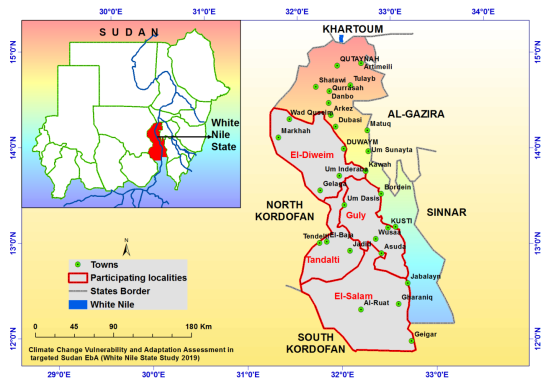
White Nile State occupies a strategic location in central Sudan, bordered by Khartoum State to the north, North Kordofan State to the west, South Kordofan and Upper Nile States to the southeast, and Al-Gazira and Sinnar States to the east (Figure 1). The state covers 39,701 square kilometers and has a climate of hot, humid rainy summers and warm, dry winters. Its total area is about 9,452,620 acres, of which roughly 66% is under vegetation cover. Rain-fed agriculture predominates in the savannah zone, where smallholder farms of 5-25 acres grow sorghum, maize, wheat, millet, sesame, peanuts, cowpeas, sunflower, guar, watermelon, and vegetables as cash crops.
Figure 1. Location of the study area.
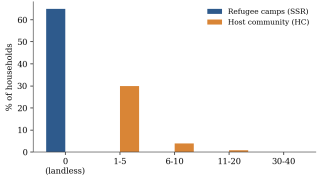
Table 1. Camp-based population of concern by location.

Camps

Households

Individuals

Total

Male

Female

Jourie

2,460

4,229

5,254

9,483

Alkashafa

2,980

5,219

6,959

12,178

Alagaya

4,318

7,114

8,174

15,288

Dabatbosin

815

1,455

1,546

3,001

Alredais1

2,914

4,878

6,408

11,286

Alredais2

4,454

8,010

10,567

18,577

Um sangour

1,632

2,591

2,428

5,019

Khoralwarel

1,898

3,311

4,639

7,950

Total

21,471

36,807

45,975

82,782

(Source: UNHCR registration database)
Data collection followed a quasi-experimental, mixed-methods outcome design . A structured Knowledge-Attitude-Practice (KAP) household survey was administered to 447 households, drawn from a sampling frame of 6,134 households across nine communities (five refugee camps and four host-community villages) in the two target localities, at a 95% confidence level and 5% confidence interval. The survey was supplemented by key informant interviews with government line-ministry staff and implementing-partner personnel, and by focus group discussions held separately for each livelihood stream: two sessions on Farmer Field Schools and Vertical Bucket Gardens, one on fishery production and processing, and several on vocational training and VSLA. Quantitative data were analyzed in SPSS version 22 and Microsoft Excel, while qualitative data were coded thematically to triangulate and contextualize the survey findings.
2.2. Sampling Framework
The assessment covered nine sample communities (five SSR camps and four HC villages): the DabatBosin, Alagaya, Redais 1, Redais 2, and Um Sangrur SSR camps, and the RedaisElmadrasa, DabatBosin, Kashafa, and Gorey host-community villages (Table 1). Sample size and sampling layout followed a standard approach, treating the household (HH) as the basic sampling unit for this community-based program. The sample size depended on the total number of targeted communities and on the probability and confidence level set during the review of program documents, with weights assigned according to the number of HHs at each location and within each livelihood group. A total of 6,134 HHs served as the reference population for determining sample size, at a 95% confidence level and 5% confidence interval. The resulting sampling frame comprised 4,480 HHs across nine villages in the two target WNS localities, allocated on a weighted basis; the number of HHs selected in each community was weighted against the total estimated number of beneficiaries, as shown in Table 2. In total, 447 HHs were surveyed and interviewed (Table 2).
Table 2. The sample size of the survived community.

SSR camps

Number of HH

HH %

DabatBosin

37

8.26

Alagaya

60

13.39

Redais1

52

11.61

Redais 2

74

16.52

Um Sangoor

68

15.18

Total

291

64.96

Host Communities villages

RedaisElmadrasa

42

9.38

DabatBosin

30

6.47

Kashafa

42

9.38

Gorey

43

9.6

SPSS version 22 and an updated version of Excel were used for analysis, with the choice of software guided by the level, scale, and accuracy of the data collected through the KAP survey and reported in the ELFS interim reports.
3. Results
3.1. Agriculture and Farmer Field Schools
Agriculture is the main livelihood activity in the study area: more than 80% of households name it as their principal income source, with sorghum (43.2%), sesame (33.3%), and millet (8.9%) as the leading field crops (Table 3). Access to land, however, differed sharply by community type. Nearly two-thirds of camp-based refugee households (64.9%) reported cultivating no land at all, while host-community households held most of the cultivated area, with 30% farming between one and five feddan (Table 4 and Figure 2). Among the 447 households surveyed, 95.7% cultivated between one and five feddan of field crops in the last rainy season, and 99.1% cultivated a similarly small vegetable plot, reflecting constraints on land rather than a shortage of labor or interest.
The pattern seen here for Farmer Field Schools, where participation raised productivity but translated only partly into household income, matches the broader FFS evidence base. Systematic reviews find that FFS participation is associated with yield gains of roughly 10% and profit gains of roughly 20% on average, alongside substantial variation across settings and persistent gaps between what participants learn and the income change that follows, particularly where inputs, credit, and output markets remain weak . Qualitative reviews similarly show that FFS effects are strongest for natural-capital outcomes such as field practices and production, while effects on financial capital and food security are documented less often and are harder to achieve without complementary market access . The present findings, in which 70.7% of households described their seed allocation as insufficient and 57.5% received no agricultural inputs at all, point to the same input-supply constraint that the FFS literature identifies as the main barrier to converting agronomic learning into income.
Table 3. Main Field Crops Cultivated in the Study Area.

Field crop

Share of cultivated area (%)

Sorghum

43.2

Sesame

33.3

Millet

8.9

Watermelon

5.2

Groundnut

4.8

Wheat

4.4

Roselle (karkaday)

0.2

Table 4. Farm Size by Community Type.

Farm size (feddan)

Refugee camps, SSR (%)

Host community, HC (%)

0 (landless)

64.9

0.0

1-5

0.0

30.0

6-10

0.0

4.0

11-20

0.0

0.9

30-40

0.0

0.2

Figure 2. Farm size by community type (feddan), Data source: household survey (N = 447).
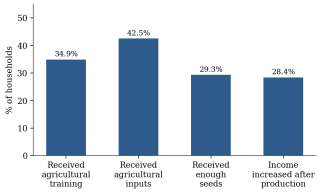
Farmer Field Schools, delivered jointly by Plan International Sudan and its partners, covered land preparation, sowing methods, seed handling, and crop rotation, and supported roughly six field schools plus one demonstration plot in Taksbon village. Focus group participants reported that field-crop yields rose from about five to seven sacks per feddan before training to ten to fifteen sacks per feddan afterward. Despite this productivity gain, only 34.9% of surveyed households reported receiving agricultural training, and only 28.4% reported a corresponding rise in household income, revealing a gap between improved yields and realized income gains (Table 5). Seed and input shortages widened this gap further: 70.7% of households judged their seed allocation insufficient for their landholding, and 57.5% received no agricultural inputs from the project at all. As a result, 80.5% of farming households said their harvest covered only about one month of family consumption. Reported constraints on crop production included seasonal flooding, weak crop genetic stock, limited access to improved seed, suboptimal cultivation practices, pest and disease outbreaks, encroachment of farming onto rangeland, and the lack of basic agricultural marketing infrastructure.
Table 5. Agricultural Training, Input Distribution, and Income Outcomes.

Indicator

Households reporting “yes” (%)

Received agricultural training

34.9

Received agricultural inputs

42.5

Received enough seed for their landholding

29.3

Household income increased after production increase

28.4

Diet diversified after crop/vegetable production

42.5

Figure 3. Agricultural support received and income outcomes.
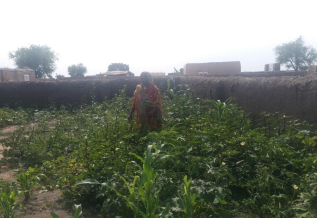
Figure 4. Vertical Bucket Garden (VBG) cultivation at DabatBosin host community.
Vertical Bucket Gardens (VBG) distributed okra, jute mallow (jew's mallow), and chili as the main vegetable crops. Beneficiaries in Al-Alagaya camp cited insecure land tenure, unreliable water supply, and limited monitoring by project partners as the main barriers to production, while beneficiaries elsewhere pointed to insufficient seed quantities, inadequate fertilizer, and pest outbreaks. Focus groups repeatedly recommended relocating VBG plots outside the cramped confines of the camps, either to host-community land or to dedicated agricultural blocks, to allow better spacing and access to irrigation water.
3.2. Fishery Production and Processing
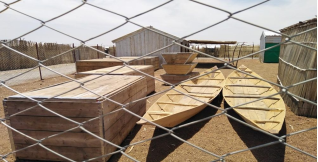
Fishery-based livelihoods were introduced mainly in Al-Kashafa village, where the project distributed fishing boats, fish preservation units, and sets of fishing nets and lines (Table 6 and Figure 6), together with training from the Ministry of Animal Resources on production and post-harvest processing. Despite this investment, fishery activities were the weakest-performing income-generation component evaluated. Beneficiaries reported that production inputs such as nets, fish feed, and fingerlings were insufficient, and that the activity had produced no clear income success story. Structural constraints included limited market outlets for catch, too small a volume of fish to sustain a viable enterprise, and no processing equipment; in Al-Gameya camp, distributed boats reportedly sat unused because of missing fishing materials and unresolved maintenance needs. Beneficiaries in Al-Kashafa unanimously recommended replacing fishery production and processing with an alternative livelihood activity, since most target households come from pastoralist or agro-pastoralist rather than fishing backgrounds, evidence of a mismatch between the intervention and beneficiaries' existing skills and livelihood identity.
This weaker performance of the fishery component echoes the small-scale fisheries development literature, which holds that successful interventions depend on secure access rights, functioning value chains, and alignment with beneficiaries' existing assets and skills . Reviews of coastal livelihood projects in similar settings find that narrowly designed interventions, such as training in a single production technique without matching investment in market access or enterprise development, tend to leave participants under-skilled and cut off from viable income opportunities . Beneficiaries' own call to discontinue fishery activities in favor of options better suited to their pastoral background directly illustrates the livelihoods-approach principle that interventions should build on existing community assets rather than replace them .
Table 6. Fishery Production Inputs Distributed in Al-Kashafa Village.

Input

Quantity distributed

Fishing boats

~10

Fish preservation units (fish savers)

~30

Sets of fishing nets and lines

~10

Other materials

Knives, salt, plastic buckets

Figure 5. Fishing boats prior to distribution to project beneficiaries, Al-Kashafa village.
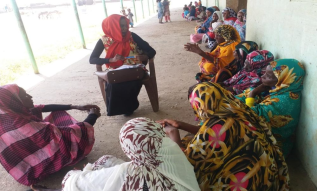
Figure 6. Focus group discussion on fishery production and processing, Al-Kashafa host community.
3.3. Vocational Training
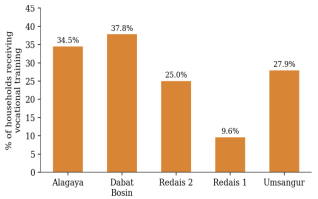
The project delivered vocational training in sewing, welding, fishery processing, Vertical Bucket Gardening, soap making, farming, and savings management to both refugee and host-community youth. Overall, 27.9% of surveyed refugee households reported that a member had received vocational training during the project's first half, ranging from 9.6% in Redais 1 camp to 37.8% in DabatBosin camp (Table 7, Figure 7). Sewing was the most commonly reported training type (Table 8). A site visit to the sewing training center in Al-Gameya camp found it in disrepair, with machines in storage rather than in use, and control of the space reportedly handed to other organizations after the implementing partner Eithar was suspended amid Sudan's political transition; a similar pattern was seen at the welding workshop.
Table 7. Vocational Training Received by SSR Households, by Camp.

Camp

No (%)

Yes (%)

Al-Alagaya

65.5

34.5

DabatBosin

62.2

37.8

Redais 2

75.0

25.0

Redais 1

90.4

9.6

Umsangur

72.1

27.9

Figure 7. Households reporting receipt of vocational training, by SSR camp.
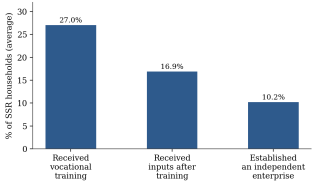
Table 8. Type of Vocational Training Received by SSR Households (%).

Camp

Not trained

Sewing

Other training type

Al-Alagaya

65.5

20.7

13.8

DabatBosin

62.2

18.9

18.9

Redais 2

75.0

6.3

18.8

Redais 1

90.4

1.9

7.7

Umsangur

72.1

8.8

19.1

The gap between training and enterprise establishment was substantial (Figure 7). Across SSR camps, the share of households receiving post-training inputs ranged from 8.3% in Al-Alagaya to 27.9% in Umsangur, while the share going on to establish an independent business ranged from 3.8% in Redais 1 to 18.9% in DabatBosin. Among households that did start a trade, self-reported income gains were modest and unevenly spread: 13.8% of DabatBosin households reported a 10% income increase and 11.9% of RedaisElmadrasa households reported a 50% increase, while more than 70% of host-community respondents overall reported no income increase linked to training.
These vocational training results echo the wider evidence on Technical and Vocational Education and Training (TVET) for displaced populations, which finds that training alone rarely leads to stable employment or enterprise income without complementary post-training support such as start-up capital, tools, mentoring, and market linkages . Evaluations of youth vocational programs in Kenyan refugee settings have likewise found gaps between the skills delivered and the local labor market's capacity to absorb them, alongside implementation problems such as inconsistent equipment maintenance and institutional discontinuity . The decline of the sewing and welding centers after the implementing partner's suspension shows how institutional and political instability in the operating environment can undermine livelihood infrastructure even where the original training investment was sound, a vulnerability increasingly recognized in multi-country TVET guidance for refugee settings .
Figure 9. The training-to-enterprise gap among refugee (SSR) households (camp averages).
3.4. Village Saving and Loan Associations and Overall Income Generation
As a cross-cutting financial mechanism supporting the agricultural, fishery, and vocational streams, VSLA groups were established with support from the implementing partner FPDO, with more than twenty groups reported across camps and host communities (Table 9). Among surveyed households, 42.1% reported practicing savings and 41.2% reported receiving VSLA-related training, though only 39.4% reported holding membership in an established group (Figure 9). Households that joined VSLA groups did so mainly to save for food and clothing (25.7%) rather than to fund productive enterprises, and only 22.6% reported receiving a loan, most often under 3,500 Sudanese pounds. Income gains linked to VSLA participation were reported by 35.1% of households, with most increases clustered at the lower end of the range. Loan repayment was reported by 22.1% of borrowing households. Across all four income-generation streams, more than 80% of surveyed households in most camps judged their current income insufficient to cover daily needs for food, clothing, and children's education, underscoring how far livelihood diversification still has to go relative to the scale of need.
Overall, these VSLA results broadly agree with evidence that savings groups reliably build savings behavior and provide a financial buffer against food insecurity, even where their effect on business profit and household income is more modest and context-dependent . Impact evaluations from Malawi and Uganda similarly find that VSLA membership improves financial inclusion and, in some settings, business profitability and employment, though these gains are neither universal nor large . That most households spent VSLA earnings on food and clothing rather than reinvesting them productively suggests that, as in other fragile and protracted-displacement settings, savings groups here function mainly as a food-security and consumption-smoothing tool rather than a source of enterprise capital, a pattern also documented among South Sudanese refugees in other displacement settings .
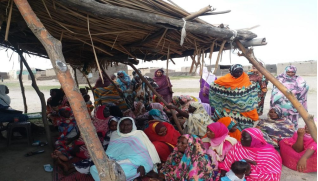
Figure 10. Focus group discussion with VSLA members, Al-Magabi host community.
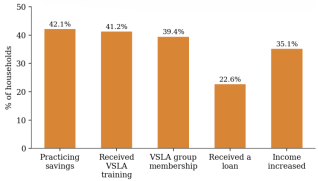
Figure 11. VSLA participation and reported outcomes.

Taken together, the four livelihood streams reviewed here point to a consistent pattern: training and skills transfer were delivered relatively well, but the complementary inputs, land tenure security, market linkages, and post-training capital needed to convert new knowledge into lasting income were often missing. This finding aligns with the broader refugee-livelihoods literature, which stresses that food security interventions work best when skills training is combined with secure access to productive assets and designed jointly with, rather than separately from, host communities .
Table 9. Number of Established VSLA Groups per Camp or Village.

Number of groups reported

Households reporting (%)

None

57.7

One

8.3

2 to 5

5.2

4 to 5

23.7

More than 5

4.9

4. Conclusion and Recommendations
These findings confirm that income-generation interventions in White Nile State delivered measurable gains in agricultural productivity, savings behavior, and vocational skills, but that these gains have not yet translated fully into household income sufficient to meet daily needs. Three recommendations follow. First, agricultural support should prioritize resolving seed and input shortfalls and, where possible, expand secure land access for camp-based refugees, including relocating Vertical Bucket Gardens away from congested camp spaces. Second, the fishery production and processing component should be replaced with an income-generation activity better suited to beneficiaries' agro-pastoral skills and assets, in line with beneficiaries' own recommendation. Third, vocational training should be paired more consistently with post-training inputs, equipment maintenance, and market-linkage support, and implementation arrangements should be made resilient to disruption from partner organizations. Continued programming is recommended to consolidate these gains and close the gap between skills acquisition and realized household income.
Abbreviations

SSR

South Sudanese Refuges

HC

Host Communities

FGD

Focus Group Discussion

TVET

Technical and Vocational Education and Training

VSLA

Village Saving and Loan Associations

VBG

Vertical Bucket Gardens

Author Contributions
Kamal Eldin Mohammed Fadul: Conceptualization, Writing – original draft
Eltighani Mirghani Elamin: Conceptualization, Supervision, Validation
Abdelrahman Ahmed Khatir: Conceptualization
Fadwa Hassan Ibrahim: Data curation, Supervision
Dirdiri Hassan Mahmoud: Data curation, Supervision
Sona Mohammed Fadul: Datacuration, Supervision
Conflicts of Interest
The authors declare no conflicts of interest.
References
[1] Abdul LatifJameel Poverty Action Lab. (n.d.-a), Evaluating Village Savings and Loans Associations in Malawi. J-PAL, available from:
[2] Abdul LatifJameel Poverty Action Lab. (n.d.-b). Evaluating Village Savings and Loan Associations in Uganda. J-PAL. Available from:
[3] Allison, E. H., & Ellis, F. (2001). The livelihoods approach and management of small-scale fisheries, Journal of Marine Policy, VOL 25(5), 377–388.
[4] Belhabib, D., Campredon, P., Ahoulou, S. B., &Amadhila, E. (2021). Small-scale fisheries development in Africa: Lessons learned and best practices for enhancing food security and livelihoods. Journal of Marine Policy, 129, Article 104536.
[5] ChidimbahMunthali, G. N., Wu, X., Dzimbiri, M. N. W., Zolo, A., Mushani, J. K. B., & Banda, L. O. L. (2022). An investigation of the sustainability of Village Savings and Loans Associations (VSLAs) amidst COVID-19 and its impact on household income levels: Lessons from Malawi, Sub-Saharan Africa. Journal of BMC Public Health, 22, Article 1077.
[6] Eriksson, H., Blythe, J., Bianchi, G., Kise, A., & Cohen, P. J. (2021). Developing sustainable small-scale fisheries livelihoods in Indonesia: Trends, enabling and constraining factors, and future opportunities. Journal of Marine Policy, 130, Article 104524.
[7] FAO, 2023. The Sudan: Escalating Conflict Food Security Analysis. Available from:
[8] Frontiers in Human Dynamics. (2022). evaluating the implementation quality of a vocational education intervention for youth in Dadaab refugee camp in Kenya: Evidence of discrimination. Journal of Frontiers in Human Dynamics, 4, Article 898081.
[9] Global Compact on Refugees (2023). Agricultural livelihoods as a pathway for durable solutions. UNHCR.
[10] Krishnan, V., & Alcorn, D. (2021). Where are the development actors in protracted crises? Refugee livelihood and food security outcomes in South Sudan demonstrate the potential for fragile settings. World Development Perspectives, 24, Article 100371.
[11] NRC (Norwegian Refugee Council) (2022). White Nile Camps, Multispectral Need Assessment. Refugee Camps in White Nile States: White Nile Localities, AL Jabalain and Elsalam, Published July 2022.
[12] Ntiamoah, E. B., Li, D., &Appiah-Otoo, I. (2024). The impact of Village Savings and Loan Associations as a financial and climate resilience strategy for mitigating food insecurity in northern Ghana. Sustainability, 16(4), Article 58.
[13] Plan International Sudan. (2020). Enhancing Livelihoods and Food Security (ELFS) among South Sudanese refugees and host communities in White Nile State [Unpublished project evaluation report].
[14] Tasli-Karabulut, N. (2024). Vocational education and training: A pathway for refugees' integration in the labour market? Lessons from Syrian refugees in Tarsus, Turkey. Industrial Relations Journal, 55(4), 355–374.
[15] UNHCR, International Labour Organization, GIZ, & Finn Church Aid. (2022). Nine lessons: Transforming Technical and Vocational Education and Training for refugees. Relief Web. Avilable from:
[16] Van den Berg, H., Phillips, S., Dicke, M., &Fredrix, M. (2020). Impacts of farmer field schools in the human, social, natural and financial domain: A qualitative review. Journal of Food Security, 12(6), 1443–1459.
[17] Waddington, H., Snilstveit, B., Hombrados, J., Vojtkova, M., Anderson, J., & White, H. (2014). Farmer field schools for improving farming practices and farmer outcomes in low- and middle-income countries: A systematic review. Journal of Campbell Systematic Reviews, 10(1), 1–335.
[18] Woodward, A., Sondorp, E., Odiit, M. C., Bornemisza, O., & Sharma, E. (2022). Food security interventions among refugees around the globe: A scoping review. Nutrients, 14(3), Article 522.
Cite This Article
  • APA Style

    Fadul, K. E. M., Elamin, E. M., Khatir, A. A., Ibrahim, F. H., Mahmoud, D. H., et al. (2026). Income Generation Activities as Pathways to Livelihood Resilience Among South Sudanese Refugees and Host Communities in White Nile State, Sudan. Science Development, 7(3), 116-125. https://doi.org/10.11648/j.scidev.20260703.11

    Copy | Download

    ACS Style

    Fadul, K. E. M.; Elamin, E. M.; Khatir, A. A.; Ibrahim, F. H.; Mahmoud, D. H., et al. Income Generation Activities as Pathways to Livelihood Resilience Among South Sudanese Refugees and Host Communities in White Nile State, Sudan. Sci. Dev. 2026, 7(3), 116-125. doi: 10.11648/j.scidev.20260703.11

    Copy | Download

    AMA Style

    Fadul KEM, Elamin EM, Khatir AA, Ibrahim FH, Mahmoud DH, et al. Income Generation Activities as Pathways to Livelihood Resilience Among South Sudanese Refugees and Host Communities in White Nile State, Sudan. Sci Dev. 2026;7(3):116-125. doi: 10.11648/j.scidev.20260703.11

    Copy | Download

  • @article{10.11648/j.scidev.20260703.11,
      author = {Kamal Eldin Mohammed Fadul and Eltighani Mirghani Elamin and Abdelrahman Ahmed Khatir and Fadwa Hassan Ibrahim and Dirdiri Hassan Mahmoud and Sona Mohammed Fadul},
      title = {Income Generation Activities as Pathways to Livelihood Resilience Among South Sudanese Refugees and Host Communities in White Nile State, Sudan},
      journal = {Science Development},
      volume = {7},
      number = {3},
      pages = {116-125},
      doi = {10.11648/j.scidev.20260703.11},
      url = {https://doi.org/10.11648/j.scidev.20260703.11},
      eprint = {https://article.sciencepublishinggroup.com/pdf/10.11648.j.scidev.20260703.11},
      abstract = {Food insecurity continues to define daily life for South Sudanese refugees and host communities in Sudan's White Nile State, where the two groups compete for scarce land, water, and labor. This study investigates how income-generation activities have shaped livelihoods and income diversification among South Sudanese Refugees (SSR) and host communities (HC) in White Nile State. It draws on a household survey (N = 447), key informant interviews (KII), and focus group discussions (FGD) carried out across nine refugee camps and host-community villages in the Al-Gabalain and Al-Salam localities, covering four linked income-generation pathways: crop agriculture supported by Farmer Field Schools (FFS), small-scale fishery production and processing, vocational skills training, and Village Saving and Loan Associations (VSLA). Survey results show that 34.9% of households received agricultural training, 42.5% received agricultural inputs, 28.4% reported higher income following increased production, and 42.5% reported more diverse diets after crop or vegetable production. Fishery-based livelihoods performed the worst of the four, constrained by inadequate inputs, weak market linkages, and a poor match with beneficiaries' pastoral backgrounds. Vocational training (VT) reached fewer than a third of the target population, and the inputs needed to convert new skills into enterprises were often unavailable: 27% of SSR households received VT, 16.9% received inputs afterward, and 10.2% went on to establish an independent enterprise. VSLA membership was linked to a reported income increase for 35.1% of participating households. The results are interpreted against the wider literature on Farmer Field Schools, small-scale fisheries development, and vocational education and training (VET). The paper closes with recommendations for strengthening market linkages, input supply chains, and locally appropriate livelihood diversification. It recommends that agricultural support prioritize resolving seed and input shortages and expand secure land access for camp-based refugees, including relocating Vertical Bucket Gardens; that the fishery production and processing component be replaced with an income-generation activity better suited to beneficiaries' agro-pastoral skills; and that vocational training be paired more consistently with post-training inputs, equipment maintenance, and market-linkage support.},
     year = {2026}
    }
    

    Copy | Download

  • TY  - JOUR
    T1  - Income Generation Activities as Pathways to Livelihood Resilience Among South Sudanese Refugees and Host Communities in White Nile State, Sudan
    AU  - Kamal Eldin Mohammed Fadul
    AU  - Eltighani Mirghani Elamin
    AU  - Abdelrahman Ahmed Khatir
    AU  - Fadwa Hassan Ibrahim
    AU  - Dirdiri Hassan Mahmoud
    AU  - Sona Mohammed Fadul
    Y1  - 2026/08/10
    PY  - 2026
    N1  - https://doi.org/10.11648/j.scidev.20260703.11
    DO  - 10.11648/j.scidev.20260703.11
    T2  - Science Development
    JF  - Science Development
    JO  - Science Development
    SP  - 116
    EP  - 125
    PB  - Science Publishing Group
    SN  - 2994-7154
    UR  - https://doi.org/10.11648/j.scidev.20260703.11
    AB  - Food insecurity continues to define daily life for South Sudanese refugees and host communities in Sudan's White Nile State, where the two groups compete for scarce land, water, and labor. This study investigates how income-generation activities have shaped livelihoods and income diversification among South Sudanese Refugees (SSR) and host communities (HC) in White Nile State. It draws on a household survey (N = 447), key informant interviews (KII), and focus group discussions (FGD) carried out across nine refugee camps and host-community villages in the Al-Gabalain and Al-Salam localities, covering four linked income-generation pathways: crop agriculture supported by Farmer Field Schools (FFS), small-scale fishery production and processing, vocational skills training, and Village Saving and Loan Associations (VSLA). Survey results show that 34.9% of households received agricultural training, 42.5% received agricultural inputs, 28.4% reported higher income following increased production, and 42.5% reported more diverse diets after crop or vegetable production. Fishery-based livelihoods performed the worst of the four, constrained by inadequate inputs, weak market linkages, and a poor match with beneficiaries' pastoral backgrounds. Vocational training (VT) reached fewer than a third of the target population, and the inputs needed to convert new skills into enterprises were often unavailable: 27% of SSR households received VT, 16.9% received inputs afterward, and 10.2% went on to establish an independent enterprise. VSLA membership was linked to a reported income increase for 35.1% of participating households. The results are interpreted against the wider literature on Farmer Field Schools, small-scale fisheries development, and vocational education and training (VET). The paper closes with recommendations for strengthening market linkages, input supply chains, and locally appropriate livelihood diversification. It recommends that agricultural support prioritize resolving seed and input shortages and expand secure land access for camp-based refugees, including relocating Vertical Bucket Gardens; that the fishery production and processing component be replaced with an income-generation activity better suited to beneficiaries' agro-pastoral skills; and that vocational training be paired more consistently with post-training inputs, equipment maintenance, and market-linkage support.
    VL  - 7
    IS  - 3
    ER  - 

    Copy | Download

Author Information