
 ,
Salia Keita,
Fanta Sangho,
Haïsseba Dansala,
Cheick Abou Coulibaly,
Ibrahim Fall,
Abou Sogodogo,
Borodjan Diarra,
Abdoul Salam Diarra,
Abdoul Karim Sylla,
Lancina Doumbia
,
Salia Keita,
Fanta Sangho,
Haïsseba Dansala,
Cheick Abou Coulibaly,
Ibrahim Fall,
Abou Sogodogo,
Borodjan Diarra,
Abdoul Salam Diarra,
Abdoul Karim Sylla,
Lancina Doumbia
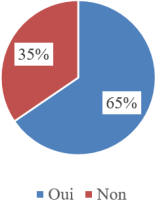
Introduction: Malaria remains a major public health problem in Mali. This study aimed to analyze the epidemiological and clinical aspects of uncomplicated malaria cases in adults treated at the general medicine department of the Reference Health Center in Commune III of Bamako in 2023. Methods: This was a cross-sectional study conducted from July 1 to December 31, 2023. All patients aged 18 years or older with either clinically suspected or confirmed uncomplicated malaria-diagnosed through thick blood film, thin blood smear, or rapid diagnostic test (RDT)-were included. Data were gathered through a questionnaire and subsequently entered and analyzed with SPSS version 25. The national malaria control protocol served as a reference for evaluating prescriptions. Results: A total of 317 uncomplicated malaria cases were recorded among 7,584 admissions, accounting for 4.9%. The mean age was 34 ± 15 years, with a female predominance (63%). The main clinical signs were headache (86.12%), chills (49.53%), and fever (52.7%). Thick blood smears were performed in 94% of cases and were positive in 86.44%. Antimalarial treatment was primarily based on artemether/lumefantrine (60.88%). The treatment protocol was appropriate in 65% of prescriptions. Conclusion: Uncomplicated malaria remains prevalent among adults in Commune III. Strengthening preventive measures and adhering to the protocol remain essential to reduce morbidity and prevent severe forms of malaria.
| Published in | Science Journal of Public Health (Volume 14, Issue 1) |
| DOI | 10.11648/j.sjph.20261401.15 |
| Page(s) | 45-52 |
| Creative Commons |
This is an Open Access article, distributed under the terms of the Creative Commons Attribution 4.0 International License (http://creativecommons.org/licenses/by/4.0/), which permits unrestricted use, distribution and reproduction in any medium or format, provided the original work is properly cited. |
| Copyright |
Copyright © The Author(s), 2026. Published by Science Publishing Group |
Epidemiological-clinical, Uncomplicated Malaria, Bamako, Mali
Sociodemographic characteristics | n | % |
|---|---|---|
Sex | ||
Male | 117 | 36.9 |
Female | 200 | 63.1 |
Age range (in years) | ||
≤ 19 | 46 | 14.5 |
20-30 | 125 | 39.4 |
31-40 | 67 | 21.1 |
41-50 | 35 | 11.1 |
≥ 51 | 44 | 13.9 |
Level of study | ||
Not enrolled in school | 31 | 9.8 |
Primary | 24 | 7.5 |
Secondary | 142 | 44.8 |
Superior | 120 | 37.9 |
Marital status | ||
Bachelor | 103 | 32.5 |
Bride | 200 | 63.1 |
Divorcee | 6 | 1.9 |
Widowed | 8 | 2.5 |
Reason for consultation | n | % |
|---|---|---|
Functional signs | ||
Headaches | 273 | 86.1 |
Thrill | 157 | 49.5 |
Muscle pain | 148 | 46.7 |
Fatigue | 124 | 39.1 |
Vertigo | 92 | 29.0 |
Weakening | 91 | 28.7 |
Diarrhea | 17 | 5.4 |
Anorexia | 16 | 5.0 |
Muscle soreness | 11 | 3.5 |
Vomiting | 10 | 3.2 |
Abdominal pain | 10 | 3.2 |
Nausea | 8 | 2.5 |
Lower back pain | 5 | 1.6 |
Cough | 4 | 1.3 |
Dysphagia | 3 | 0.9 |
physical signs | ||
Fever (38.2°C) | 167 | 52.7 |
Pale conjunctiva | 5 | 1.6 |
Biological test | n | % |
|---|---|---|
Test type | ||
GE | 298 | 94.0 |
TDR | 19 | 6.0 |
Result of the biological test | ||
Positive | 274 | 86.4 |
Negative | 43 | 13.6 |
Type of treatment | n | % |
|---|---|---|
Antimalarial | ||
Artemether/lumefantrine 80/480mg | 193 | 60.9 |
Artemether/lumefantrine 80/480mg, Artesuante 60mg | 100 | 31.5 |
Dihydroartemisinin 40mg + piperaquine 320mg | 7 | 2.2 |
Sulfamethoxypirazine 500mg + artesunate + 20mg +pyrimethamine 25mg | 7 | 2.2 |
Arterolane 150mg +piperaquine 750mg | 1 | 0.3 |
Artemether/luméfantrine 80/480mg, Artemether 80mg injectable | 1 | 0.3 |
Artemether/luméfantrine 80/480mg, Sulfamethoxypirazine 500mg + artesunate 200mg +pyrimethamine | 1 | 0.3 |
Adjuvant | 0.0 | |
Paracétamol | 184 | 58.0 |
Antibiotique | 168 | 53.0 |
Oméprazole | 23 | 7.3 |
Antihistamine | 13 | 4.1 |
Ringer's lactate | 13 | 4.1 |
Vitamin B | 12 | 3.8 |
Vitamin C | 1 | 0.3 |
°C | Degre Celsius |
CHW | Community Health Workers |
CNRST | National Center for Scientific and Technological Research |
CSComs | Community Health Centers |
CSREF | Reference Health Center |
DGSHP | Directorate General of Health and Public Hygiene |
DHS | Demographic and Health Survey |
FM | Thin Smear |
GE | Thick Drop |
i | Precision |
INSTAT | National Institute of Statistics of Mali |
IRS | Indoor Residual Spraying |
ITNs | Insecticide-treated Bed Nets |
MD | Medical Doctor |
mg | Milligram |
MPH | Master in Public Health |
n | Sample Size |
P | Plasmodium |
p | Prevalence |
PhD | Philosophiæ Doctor |
PNLP | National Malaria Control Program |
q | 1-p |
RDT | Rapid Diagnostic Test |
SPSS | Statistical Package for Social Sciences |
UCRC | University Clinical Research Center |
WHO | World Health Organization |
Zα | Normal Distribution Test |
| [1] | March K. Malaria disaster in Africa. Lancet, 1998; 352: 924. |
| [2] | World Health Organization. World Malaria Report 2022 [Internet]. [cited 21 Jan 2023]. Available from: |
| [3] | National Institute of Statistics (INSTAT), Planning and Statistics Unit, Health, Social Development and Family Promotion Sector (CPS/SS-DS-PF) and ICF. 2019. 2019. Demographic and Health Survey in Mali 2018: Synthesis Report. Bamako, Mali and Rockville, Maryland, USA: INSTAT, CPS/SSDS-PF and ICF. |
| [4] |
Maiga A. Mali/Malaria: 1480 deaths recorded in 2021 [Internet]. [cited 22 Oct 2023]. Available from:
https://www.aa.com.tr/fr/afrique/mali-paludisme-1480-décès-enregistrés-en-2021-/2568884 |
| [5] | PNLP. National Guidelines for the Management of Malaria Cases in Mali. June 2016. 32 p [Internet]. [cited 22 Oct 2023]. Available from: |
| [6] |
WHO. World Health Organization. Treatment of malaria [Internet]. [cited 22 Oct 2023]. Available from:
https://www.who.int/fr/teams/global-malaria-programme/case-management/treatment |
| [7] | Ndiaye YD, Diédhiou CK, Bei AK, Dieye B, Mbaye A, Mze NP, et al. High resolution melting: a useful field-deployable method to measure dhfr and dhps drug resistance in both highly and lowly endemic Plasmodium populations. Malar J. 2017 Apr 19; 16(1): 153. |
| [8] | Kayentao K, Kodio M, Newman RD, Maiga H, Doumtabe D, Ongoiba A, et al. Comparison of intermittent preventive treatment with chemoprophylaxis for the prevention of malaria during pregnancy in Mali. J Infect Dis. 1 janv 2005; 191(1): 109-16. |
| [9] | WHO, World Malaria Report, 2019. 2019, World Health Organization. Consulté le 03/11/2025. Disponible sur le site: |
| [10] | Pembet Singana B, Casimiro PN, Matondo Diassivi B, Kobawila SC, Youndouka JM, Basco LK, et al. Prevalence of malaria among febrile patients and assessment of efficacy of artemether-lumefantrine and artesunate-amodiaquine for uncomplicated malaria in Dolisie, Republic of the Congo. Malar J. 2 mai 2022; 21: 137. |
| [11] | Argaw MD, Mavundla TR, Gidebo KD. Management of uncomplicated malaria in private health facilities in North-West Ethiopia: a clinical audit of current practices. BMC Health Serv Res. 4 Dec 2019; 19: 932. |
| [12] | Touré M, Keita M, Kané F, Sanogo D, Kanté S, Konaté D, et al. Trends in malaria epidemiological factors following the implementation of current control strategies in Dangassa, Mali. Malar J. 23 Feb 2022; 21: 65. |
| [13] | Nimabélé Z. Epidemiological and clinical study of malaria in children under 5 years of age at the pediatric unit of the reference health center of Commune III of the Bamako district. Bamako. USTTB. FMOS. Medical Thesis. 2021. No. 98. 82 pages. |
| [14] | Forero-Peña DA, Carrión-Nessi FS, Chavero M, Gamardo Á, Figuera L, Camejo-Ávila NA, et al. The clinical–epidemiological profile of malaria patients from Southern Venezuela, a critical hotspot in Latin America. Malar J. Sep 20, 2021; 20: 375. |
| [15] | National Institute of Statistics of Mali | INSTAT; SCHOOLING, EDUCATION AND LITERACY. Accessed 03/11/2025. Available at |
| [16] | Cécile. FICKO C, CONAN PL. Malaria in 2022: clinical and therapeutic aspects. June 5, 2023; 3(2). |
| [17] | Zakoum Z. Contribution of the Parasitology Laboratory to the diagnosis and monitoring of malaria at the Avicenne Military Hospital in Marrakech, Morocco. Cadi Ayyad University. Faculty of Medicine and Pharmacy, Marrakech. Medical Thesis. 2023. No. 184. 164 pages. |
| [18] | Keita M et al. Severe Malaria in Children in the District of Bamako: Clinicobiological and Therapeutic Aspects. Vol 23(4) April 2022 pp 30-33. |
| [19] | Razzouk I. Therapeutic management of imported malaria: Experience of the internal medicine department of the Avicenne Military Hospital in Marrakech, Morocco. Cadi Ayyad University. Faculty of Medicine and Pharmacy, Marrakech. Medical Thesis. 2019. No. 108. 181 pages. |
| [20] | Badi H et al. Imported malaria: study of 554 cases. Casablanca, Morocco. 2018.04.266. |
| [21] | French-Language Infectious Disease Society (SPILF). Management and prevention of imported malaria. 2007. 27 pages. PDF. |
| [22] | National Policy for the Fight Against Malaria in Mali. Bamako. 18 pages. PDF. |
APA Style
Sangho, O., Keita, S., Sangho, F., Dansala, H., Coulibaly, C. A., et al. (2026). Epidemio-clinical Study of Simple Malaria in Adults in the General Medicine Department of the Reference Health Center of Bamako Municipality III in 2023. Science Journal of Public Health, 14(1), 45-52. https://doi.org/10.11648/j.sjph.20261401.15
ACS Style
Sangho, O.; Keita, S.; Sangho, F.; Dansala, H.; Coulibaly, C. A., et al. Epidemio-clinical Study of Simple Malaria in Adults in the General Medicine Department of the Reference Health Center of Bamako Municipality III in 2023. Sci. J. Public Health 2026, 14(1), 45-52. doi: 10.11648/j.sjph.20261401.15
AMA Style
Sangho O, Keita S, Sangho F, Dansala H, Coulibaly CA, et al. Epidemio-clinical Study of Simple Malaria in Adults in the General Medicine Department of the Reference Health Center of Bamako Municipality III in 2023. Sci J Public Health. 2026;14(1):45-52. doi: 10.11648/j.sjph.20261401.15
@article{10.11648/j.sjph.20261401.15,
  author = {Oumar Sangho and Salia Keita and Fanta Sangho and Haïsseba Dansala and Cheick Abou Coulibaly and Ibrahim Fall and Abou Sogodogo and Borodjan Diarra and Abdoul Salam Diarra and Abdoul Karim Sylla and Lancina Doumbia},
  title = {Epidemio-clinical Study of Simple Malaria in Adults in the General Medicine Department of the Reference Health Center of Bamako Municipality III in 2023},
  journal = {Science Journal of Public Health},
  volume = {14},
  number = {1},
  pages = {45-52},
  doi = {10.11648/j.sjph.20261401.15},
  url = {https://doi.org/10.11648/j.sjph.20261401.15},
  eprint = {https://article.sciencepublishinggroup.com/pdf/10.11648.j.sjph.20261401.15},
  abstract = {Introduction: Malaria remains a major public health problem in Mali. This study aimed to analyze the epidemiological and clinical aspects of uncomplicated malaria cases in adults treated at the general medicine department of the Reference Health Center in Commune III of Bamako in 2023. Methods: This was a cross-sectional study conducted from July 1 to December 31, 2023. All patients aged 18 years or older with either clinically suspected or confirmed uncomplicated malaria-diagnosed through thick blood film, thin blood smear, or rapid diagnostic test (RDT)-were included. Data were gathered through a questionnaire and subsequently entered and analyzed with SPSS version 25. The national malaria control protocol served as a reference for evaluating prescriptions. Results: A total of 317 uncomplicated malaria cases were recorded among 7,584 admissions, accounting for 4.9%. The mean age was 34 ± 15 years, with a female predominance (63%). The main clinical signs were headache (86.12%), chills (49.53%), and fever (52.7%). Thick blood smears were performed in 94% of cases and were positive in 86.44%. Antimalarial treatment was primarily based on artemether/lumefantrine (60.88%). The treatment protocol was appropriate in 65% of prescriptions. Conclusion: Uncomplicated malaria remains prevalent among adults in Commune III. Strengthening preventive measures and adhering to the protocol remain essential to reduce morbidity and prevent severe forms of malaria.},
 year = {2026}
}
TY  - JOUR
T1  - Epidemio-clinical Study of Simple Malaria in Adults in the General Medicine Department of the Reference Health Center of Bamako Municipality III in 2023
AU  - Oumar Sangho
AU  - Salia Keita
AU  - Fanta Sangho
AU  - Haïsseba Dansala
AU  - Cheick Abou Coulibaly
AU  - Ibrahim Fall
AU  - Abou Sogodogo
AU  - Borodjan Diarra
AU  - Abdoul Salam Diarra
AU  - Abdoul Karim Sylla
AU  - Lancina Doumbia
Y1  - 2026/02/25
PY  - 2026
N1  - https://doi.org/10.11648/j.sjph.20261401.15
DO  - 10.11648/j.sjph.20261401.15
T2  - Science Journal of Public Health
JF  - Science Journal of Public Health
JO  - Science Journal of Public Health
SP  - 45
EP  - 52
PB  - Science Publishing Group
SN  - 2328-7950
UR  - https://doi.org/10.11648/j.sjph.20261401.15
AB  - Introduction: Malaria remains a major public health problem in Mali. This study aimed to analyze the epidemiological and clinical aspects of uncomplicated malaria cases in adults treated at the general medicine department of the Reference Health Center in Commune III of Bamako in 2023. Methods: This was a cross-sectional study conducted from July 1 to December 31, 2023. All patients aged 18 years or older with either clinically suspected or confirmed uncomplicated malaria-diagnosed through thick blood film, thin blood smear, or rapid diagnostic test (RDT)-were included. Data were gathered through a questionnaire and subsequently entered and analyzed with SPSS version 25. The national malaria control protocol served as a reference for evaluating prescriptions. Results: A total of 317 uncomplicated malaria cases were recorded among 7,584 admissions, accounting for 4.9%. The mean age was 34 ± 15 years, with a female predominance (63%). The main clinical signs were headache (86.12%), chills (49.53%), and fever (52.7%). Thick blood smears were performed in 94% of cases and were positive in 86.44%. Antimalarial treatment was primarily based on artemether/lumefantrine (60.88%). The treatment protocol was appropriate in 65% of prescriptions. Conclusion: Uncomplicated malaria remains prevalent among adults in Commune III. Strengthening preventive measures and adhering to the protocol remain essential to reduce morbidity and prevent severe forms of malaria.
VL  - 14
IS  - 1
ER  -
Department of Teaching and Research in Public Health and Specialties, University of Sciences, Techniques and Technologies of Bamako, Bamako, Mali
Department of Teaching and Research in Public Health and Specialties, University of Sciences, Techniques and Technologies of Bamako, Bamako, Mali
Department of Teaching and Research in Public Health and Specialties, University of Sciences, Techniques and Technologies of Bamako, Bamako, Mali
Department of Teaching and Research in Public Health and Specialties, University of Sciences, Techniques and Technologies of Bamako, Bamako, Mali
Department of Teaching and Research in Public Health and Specialties, University of Sciences, Techniques and Technologies of Bamako, Bamako, Mali
General Medicine Unit of the Commune III Reference Health Center (CSREF CIII), Bamako, Mali
Directorate General of Health and Public Hygiene (DGSHP), Bamako, Mali
University Clinical Research Center (UCRC), University of Sciences, Techniques and Technologies of Bamako, Bamako, Mali
National Center for Scientific and Technological Research (CNRST), Bamako, Mali
Department of Teaching and Research in Public Health and Specialties, University of Sciences, Techniques and Technologies of Bamako, Bamako, Mali
Department of Teaching and Research in Public Health and Specialties, University of Sciences, Techniques and Technologies of Bamako, Bamako, Mali

Information


 Share This Article
 Twitter
 Linked In
 Facebook
 Copy
Copy Download