Abstract
Urban aquaculture is emerging as an increasingly important component of food and nutrition security, livelihoods, and sustainable city food systems in rapidly urbanising low- and middle-income countries. In Kenya, however, aquaculture development has largely been approached through sectoral production programmes rather than through urban governance and spatial planning systems. This has resulted in limited recognition of aquaculture as an urban land use, fragmented institutional mandates, weak public health and environmental safeguards, and an absence of structured investment guidance for urban and peri-urban aquaculture enterprises. This paper develops an evidence-based framework for integrating urban aquaculture into county spatial planning in Kenya, drawing on lessons from international practice and local stakeholder evidence. The study applies a qualitative design combining document review and key informant interviews with personnel drawn from county fisheries departments, physical and land-use planning, environment and NEMA-related functions, public health, water and sanitation utilities, and aquaculture enterprises. Evidence synthesis was organised around core planning domains: land-use recognition and zoning, water supply and effluent governance, food safety and biosecurity, infrastructure and value chain planning, and enterprise enabling systems. Findings indicate that while national and regional blue economy strategies increasingly acknowledge aquaculture as an economic priority, county planning instruments (including CIDPs and spatial plans) rarely provide explicit provisions to guide safe and investable urban aquaculture development. Stakeholders consistently identified planning deficits in zoning, licensing pathways, wastewater management protocols, and enforcement coordination as primary barriers to sustainable scaling. Based on these findings and global planning experiences, the paper proposes a six-pillar Urban Aquaculture Spatial Planning Framework for Kenya and outlines an early implementation roadmap that can be adopted by counties such as Nairobi, Kisumu, Mombasa, Nakuru, Eldoret, and the Kiambu urban corridor. The framework supports policy coherence, risk-sensitive siting, and structured growth of climate-smart urban aquaculture aligned to county development priorities.
|
Published in
|
Urban and Regional Planning (Volume 11, Issue 1)
|
|
DOI
|
10.11648/j.urp.20261101.15
|
|
Page(s)
|
82-95 |
|
Creative Commons
|

This is an Open Access article, distributed under the terms of the Creative Commons Attribution 4.0 International License (http://creativecommons.org/licenses/by/4.0/), which permits unrestricted use, distribution and reproduction in any medium or format, provided the original work is properly cited.
|
|
Copyright
|
Copyright © The Author(s), 2026. Published by Science Publishing Group
|
Keywords
Urban Aquaculture, Spatial Planning, County Governance, Urban Food Systems, Aquaculture Zoning, Devolved Planning,
Sustainable City Development
1. Introduction
Rapid urbanisation across sub-Saharan Africa is reshaping food demand, livelihood structures, and the spatial organisation of urban economies. As cities expand, food systems must increasingly deliver affordable and nutrient-dense foods in contexts where land, water, energy, and sanitation infrastructure are constrained. Urban and peri-urban agriculture has therefore gained renewed significance as a strategy for improving household nutrition, employment, and resilience, particularly in low- and middle-income countries where formal supply chains often fail to meet rising demand
| [1] | Zezza A., Tasciotti L. Urban agriculture, poverty, and food security: Empirical evidence from a sample of developing countries. Food Policy. 35(4): 265-273, 2010.
https://doi.org/10.1016/j.foodpol.2010.04.007 |
| [2] | Mok H.-F., Williamson V. G., Grove J. R., Burry K., Barker S. F., Hamilton A. J. Strawberry fields forever? Urban agriculture in developed countries: A review. Agronomy for Sustainable Development. 34: 21-43, 2014.
https://doi.org/10.1007/s13593-013-0156-7 |
[1, 2]
. Recent evidence further shows that urban food production when properly planned and regulated can reduce vulnerability to price shocks, diversify livelihoods, and strengthen local food availability, although risks related to public health, land tenure, and water quality can undermine these gains if governance systems are weak
| [3] | Specht K., Siebert R., Hartmann I., et al. Urban agriculture of the future: Sustainability of food production in and on buildings. Agriculture and Human Values. 31: 33-51, 2014.
https://doi.org/10.1007/s10460-013-9448-4 |
| [4] | Orsini F., Kahane R., Nono-Womdim R., Gianquinto G. Urban agriculture in the developing world: A review. Agronomy for Sustainable Development. 33: 695-720, 2013.
https://doi.org/10.1007/s13593-013-0143-z |
[3, 4]
.
Aquaculture increasingly occupies a central position within this emerging urban food systems agenda. Globally, aquaculture has become indispensable for meeting fish demand, particularly because capture fisheries are ecologically constrained and have plateaued in production over several decades
| [5] | FAO. The State of World Fisheries and Aquaculture 2024: Blue Transformation in Action. Rome: FAO, 2024. |
[5]
. Fish is widely recognised as a key “nutrient-dense” food supporting dietary quality, and aquaculture offers a scalable pathway for improving access to animal protein and essential micronutrients within growing urban markets
| [5] | FAO. The State of World Fisheries and Aquaculture 2024: Blue Transformation in Action. Rome: FAO, 2024. |
[5]
. Beyond food supply, aquaculture provides additional advantages that compare favourably with other urban economic activities—such as high productivity per unit land and water, rapid enterprise turnover, strong youth and women employment potential, and opportunities for value addition and service-sector linkages (feed, seed, processing, logistics), making it a competitive and inclusive urban livelihoods option under Blue Economy development pathways
| [5] | FAO. The State of World Fisheries and Aquaculture 2024: Blue Transformation in Action. Rome: FAO, 2024. |
| [6] | World Bank. Fish to 2030: Prospects for Fisheries and Aquaculture. Washington DC: World Bank, 2013. |
[5, 6]
. However, aquaculture development especially in cities raises complex planning issues linked to competition for land and water, potential pollution burdens, and food safety risks. The sustainability of aquaculture expansion is therefore increasingly understood not simply as a technical production question, but as a governance and spatial planning challenge requiring coordinated land-use management and risk controls across multiple institutions and stakeholders
| [7] | Aguilar-Manjarrez J., Soto D., Brummett R. Aquaculture zoning, site selection and area management under the ecosystem approach to aquaculture. Rome: FAO, 2017. |
| [8] | Soto D., Aguilar-Manjarrez J., Hishamunda N. Building an ecosystem approach to aquaculture. FAO Fisheries and Aquaculture Proceedings. 14: 1-221, 2008. |
[7, 8]
.
A key concern highlighted in the broader literature is that aquaculture growth often outpaces regulatory and planning systems, resulting in informal expansion, weak compliance, and intensified environmental and public health risks. In dense urban settings, aquaculture interacts directly with wastewater systems, industrial pollution corridors, and residential land uses, making siting and operational controls particularly important. Planning instruments such as zoning, site selection guidelines, and area management approaches have therefore been promoted internationally as practical governance tools for ensuring aquaculture development aligns with environmental protection and public health safeguards
| [7] | Aguilar-Manjarrez J., Soto D., Brummett R. Aquaculture zoning, site selection and area management under the ecosystem approach to aquaculture. Rome: FAO, 2017. |
| [8] | Soto D., Aguilar-Manjarrez J., Hishamunda N. Building an ecosystem approach to aquaculture. FAO Fisheries and Aquaculture Proceedings. 14: 1-221, 2008. |
[7, 8]
. These insights align with the “ecosystem approach to aquaculture”, which emphasises integration of aquaculture into broader land- and water-use systems, balancing socio-economic benefits with ecosystem integrity
| [8] | Soto D., Aguilar-Manjarrez J., Hishamunda N. Building an ecosystem approach to aquaculture. FAO Fisheries and Aquaculture Proceedings. 14: 1-221, 2008. |
[8]
. While much early scholarship on aquaculture planning focused on coastal and marine systems, the underlying governance logic applies equally if not more strongly to urban aquaculture, where spatial conflicts and exposure pathways are more concentrated.
Urban aquaculture itself is evolving as a distinct domain of innovation, often characterised by intensification and technology adoption to overcome land scarcity and improve water efficiency. A growing body of literature has documented the increasing relevance of systems such as tank-based farming, recirculating aquaculture systems (RAS), and integrated aquaponics in urban contexts due to their efficiency and ability to operate on small footprints
. These systems are frequently positioned within the circular economy discourse because they can support nutrient recycling and integrated food production, although they require careful governance of energy, water sourcing, and effluent treatment
. Importantly, studies caution that without supportive planning including licensing pathways, food safety protocols, and infrastructure investment high-tech urban aquaculture can remain marginal, benefiting only niche markets rather than contributing meaningfully to city-scale food security goals
.
Within Africa, urban and peri-urban aquaculture is increasingly recognised as a livelihood and food security strategy, particularly in rapidly growing cities where fish demand is rising and supply chains are strained. Evidence from African urban contexts suggests that urban aquaculture can generate employment and improve household consumption, but constraints such as land tenure insecurity, unreliable water supply, high feed costs, and weak extension services limit performance
| [11] | Brummett R. E., Lazard J., Moehl J. African aquaculture: Realizing the potential. Food Policy. 33(5): 371-385, 2008. |
| [12] | Hecht T. Regional review on aquaculture development: Sub-Saharan Africa. Rome: FAO, 2006. |
[11, 12]
. Moreover, governance gaps including limited coordination across environmental agencies, public health departments, and local authorities can create risk exposure and weaken legitimacy of aquaculture as an urban activity
| [11] | Brummett R. E., Lazard J., Moehl J. African aquaculture: Realizing the potential. Food Policy. 33(5): 371-385, 2008. |
[11]
. This is particularly relevant because public perception, nuisance concerns (odour, waste, noise), and enforcement capacity shape whether aquaculture is accepted and mainstreamed in cities or pushed into informal and vulnerable spaces.
Kenya offers a timely case for investigating these issues because the country is simultaneously experiencing rapid urban expansion and renewed national emphasis on fisheries and aquaculture development as part of a broader blue economy agenda. Urban corridors such as Nairobi–Kiambu, and secondary cities such as Kisumu, Mombasa, Nakuru and Eldoret, increasingly serve as demand centres and innovation hubs for aquaculture enterprises. Evidence from Kenya indicates that aquaculture technologies and innovations including tank systems, RAS prototypes and integrated aquaponics are emerging, particularly within Lake Victoria riparian counties and urban markets
| [13] | Ogello E. O., Obiero K. O., Munguti J. M., et al. Aquaculture in Kenya: Status, challenges and opportunities for sustainable development. Aquaculture Reports. 29: 101705, 2023.
https://doi.org/10.1016/j.aqrep.2023.101705 |
[13]
. At the same time, Kenya’s aquaculture development remains shaped largely by production-oriented interventions rather than by spatial planning systems that regulate siting, water access, effluent control, and food safety in cities. This disconnect is significant because urban aquaculture is inherently cross-sectoral: it intersects with land-use planning, water and sanitation governance, environmental regulation, public health, trade and market infrastructure, and enterprise development support.
Devolved governance further heightens the importance of county planning systems in Kenya. County governments are mandated to prepare integrated development plans and spatial plans that guide investment, zoning, and service infrastructure. Yet, in practice, aquaculture often remains weakly articulated in urban sections of these planning instruments. This reflects a broader pattern in which fisheries and aquaculture development is treated as a rural sector or “blue economy” domain, while urban planning frameworks prioritise housing, transport, industrial development, and commercial land uses. Consequently, urban aquaculture in Kenya tends to develop as small-scale and semi-formal activity often established in backyards, institutional spaces, or peri-urban margins without clear spatial recognition, coherent licensing pathways, or harmonised oversight across public health, environment, and fisheries authorities. The likely outcome is a development pathway that risks entrenching informality, limiting investment confidence and exposing enterprises and consumers to preventable environmental and food safety risks.
This paper responds to this policy and planning gap by developing an evidence-based framework for integrating urban aquaculture into county spatial planning systems in Kenya. Drawing on international lessons in aquaculture governance and planning, and informed by local stakeholder perspectives, the study shifts emphasis from “aquaculture promotion” to “aquaculture integration” within city governance structures. Specifically, the paper aims to: (i) synthesise peer-reviewed and policy evidence on urban aquaculture planning and governance; (ii) examine institutional and regulatory gaps shaping urban aquaculture development in Kenya based on document review and key informant interviews; and (iii) propose a practical planning framework and early implementation recommendations for mainstreaming urban aquaculture into county spatial plans, with applicability to Kenyan cities such as Nairobi, Kisumu, Mombasa, Nakuru, Eldoret, Machakos, and the Kiambu urban corridor. By positioning urban aquaculture as a spatial planning issue, the study contributes to the emerging scholarship on sustainable urban food systems while offering actionable guidance for counties seeking to align aquaculture development with safe, investable and climate-smart urban growth pathways.
2. Methodology
2.1. Study Design
This study adopted a qualitative, exploratory design aimed at developing an evidence-based framework for integrating urban aquaculture into county spatial planning in Kenya. A qualitative approach was considered suitable because the study sought to understand how urban aquaculture is represented in planning and governance instruments, how institutional actors coordinate across sectors, and how practical planning pathways can be designed within devolved governance systems
| [14] | Creswell J. W., Poth C. N. Qualitative inquiry and research design: Choosing among five approaches. Thousand Oaks CA: Sage, 2018. |
| [15] | Denzin N. K. Triangulation 2.0. Journal of Mixed Methods Research. 6(2): 80-88, 2012. |
[14, 15]
. The research applied methodological triangulation by combining document analysis with key informant interviews, thereby strengthening interpretive depth and allowing cross-validation between formal policy texts and stakeholder experiences of implementation
| [16] | Flick U. An introduction to qualitative research. London: Sage, 2018. |
| [17] | Patton M. Q. Qualitative research and evaluation methods. Thousand Oaks CA: Sage, 2015. |
[16, 17]
.
2.2. Study Context and Analytical Focus
The study was undertaken within the context of Kenya’s devolved governance system, where county governments hold mandates for county planning, investment prioritisation, and implementation of programmes in sectors that intersect directly with urban aquaculture, including public health, environment, water and sanitation infrastructure, local economic development, and aspects of agriculture and fisheries. Urban aquaculture was treated as a cross-cutting food system activity whose sustainability depends not only on technical performance but also on the extent to which it is recognised and regulated through land-use and spatial planning instruments. Accordingly, analysis focused on planning-relevant domains including land-use recognition and zoning, water supply governance and effluent control, food safety and biosecurity regulation, environmental compliance pathways, and enterprise enabling systems such as market infrastructure and investment support
| [7] | Aguilar-Manjarrez J., Soto D., Brummett R. Aquaculture zoning, site selection and area management under the ecosystem approach to aquaculture. Rome: FAO, 2017. |
| [8] | Soto D., Aguilar-Manjarrez J., Hishamunda N. Building an ecosystem approach to aquaculture. FAO Fisheries and Aquaculture Proceedings. 14: 1-221, 2008. |
[7, 8]
.
2.3. Selection of Urban Cases
To capture contextual diversity in aquaculture opportunities and planning constraints across Kenyan cities, the study purposively selected representative urban cases where aquaculture enterprises are emerging and where governance complexities associated with urban growth are prominent. The selected cities and urban corridors included Nairobi City County, Kisumu City, Mombasa City, Nakuru City, Eldoret in Uasin Gishu County, and the Kiambu urban corridor, particularly Thika and Ruiru. These cases were chosen to reflect variations in settlement density, water availability, infrastructure capacity, exposure to environmental risks, and market structure, thereby ensuring that the proposed planning framework would be relevant across diverse county contexts
| [17] | Patton M. Q. Qualitative research and evaluation methods. Thousand Oaks CA: Sage, 2015. |
| [18] | Yin R. K. Case study research and applications: Design and methods. Thousand Oaks CA: Sage, 2018. |
[17, 18]
. In addition, these cities represent high-demand consumer markets and innovation spaces in which high-efficiency systems such as tank farming, recirculating aquaculture systems, and aquaponics are increasingly feasible
.
2.4. Document Review Procedure
A structured document review was undertaken to assess how urban aquaculture is addressed, conceptualised, or omitted in national and county planning instruments in Kenya. Documents were identified through targeted searches of official government platforms, institutional repositories, and county planning offices, supplemented by publicly available strategy papers and legal-regulatory guidance relevant to land use, food systems, environment, and public health. Document analysis was applied because it enables systematic extraction of meanings, priorities and omissions from policy texts and planning artefacts, while supporting triangulation with interview evidence
| [19] | Bowen G. A. Document analysis as a qualitative research method. Qualitative Research Journal. 9(2): 27-40, 2009. |
| [20] | O’Leary Z. The essential guide to doing your research project. London: Sage, 2017. |
[19, 20]
. The review included national and county fisheries and aquaculture policy documents, sector strategies, county integrated development plans, county spatial plans and urban development plans where available, environmental compliance and impact assessment guidance, water-sector governance documents, and public health and food safety instruments that could inform aquaculture licensing and oversight in cities
| [19] | Bowen G. A. Document analysis as a qualitative research method. Qualitative Research Journal. 9(2): 27-40, 2009. |
[19]
. Documents were selected if they were official publications or in operational use by relevant institutions, contained content directly related to aquaculture, urban agriculture, land-use planning, public health regulation, environmental management, or enterprise development, and fell within the period 2010–2025 to capture contemporary practice under devolution
| [20] | O’Leary Z. The essential guide to doing your research project. London: Sage, 2017. |
| [21] | Scott J. A matter of record: Documentary sources in social research. Cambridge: Polity Press, 1990. |
[20, 21]
.
To support systematic synthesis, a document extraction matrix was used to record key attributes including document type, issuing institution, year of publication, explicit references to aquaculture or urban aquaculture, provisions for zoning or land-use allocation, permitting and compliance procedures, water and effluent governance requirements, and enterprise or investment planning priorities. Extracted content was then coded thematically to identify how aquaculture is positioned within urban governance and to detect recurring planning gaps, implicit assumptions, or institutional contradictions relevant to spatial mainstreaming
| [19] | Bowen G. A. Document analysis as a qualitative research method. Qualitative Research Journal. 9(2): 27-40, 2009. |
| [22] | Miles M. B., Huberman A. M., Saldaña J. Qualitative data analysis. Thousand Oaks CA: Sage, 2014. |
[19, 22]
.
2.5. Key Informant Interviews
Key informant interviews were conducted to obtain expert perspectives on how urban aquaculture is currently governed and what planning mechanisms would be necessary for its safe and investable growth within county systems. Participants were selected purposively based on their institutional roles and operational responsibilities related to aquaculture planning, regulation, infrastructure, or enterprise development, and snowball referral was used to identify additional respondents with specialised knowledge
| [17] | Patton M. Q. Qualitative research and evaluation methods. Thousand Oaks CA: Sage, 2015. |
| [23] | Bernard H. R. Research methods in anthropology. Lanham MD: Rowman & Littlefield, 2018. |
[17, 23]
. Informants were drawn from county fisheries and aquaculture extension departments, county physical planning and land-use planning units, environment offices and NEMA-linked regulatory functions, public health departments responsible for food safety inspection, and water and sanitation utilities involved in water supply and wastewater management. In addition, interviews included aquaculture entrepreneurs operating tank-based systems, RAS prototypes, aquaponics units, and peri-urban pond clusters, as well as actors from universities, TVET institutions, NGOs, and private sector agencies supporting enterprise development.
Interviews were guided by a semi-structured schedule designed to ensure thematic consistency while allowing flexibility to explore city-specific governance issues
| [24] | Kallio H., Pietilä A.-M., Johnson M., Kangasniemi M. Developing qualitative interview guides. Journal of Advanced Nursing. 72(12): 2954-2965, 2016. |
[24]
. Interview discussions focused on institutional mandates and coordination pathways, land access and siting challenges, the clarity or fragmentation of licensing processes, water sourcing constraints and effluent governance, food safety and biosecurity concerns, infrastructure and market bottlenecks, and feasible planning interventions for integrating aquaculture into county spatial plans. Interviews were conducted in English and Kiswahili depending on respondent preference, and where consent was provided, audio recording was used to enable accurate transcription. Field notes were also taken to capture contextual observations and strengthen interpretive validity
| [25] | Emerson R. M., Fretz R. I., Shaw L. L. Writing ethnographic fieldnotes. Chicago: University of Chicago Press, 2011. |
| [26] | Guest G., Namey E. E., Mitchell M. L. Collecting qualitative data. Thousand Oaks CA: Sage, 2013. |
[25, 26]
.
2.6. Data Analysis and Framework Development
Data analysis followed a thematic synthesis approach, integrating evidence from documents and interviews to support framework development. Interview recordings were transcribed verbatim and analysed together with relevant document extracts using thematic analysis procedures that combined deductive and inductive coding
| [27] | Braun V., Clarke V. Using thematic analysis in psychology. Qualitative Research in Psychology. 3(2): 77-101, 2006. |
| [28] | Nowell L. S., Norris J. M., White D. E., Moules N. J. Thematic analysis and trustworthiness. International Journal of Qualitative Methods. 16: 1-13, 2017. |
[27, 28]
. Deductive codes were generated from planning and governance domains central to aquaculture integration, including zoning and land use, water and effluent governance, food safety regulation, environmental compliance, and enterprise enabling systems. Inductive codes were developed from recurring themes emerging in stakeholder narratives, including institutional fragmentation, compliance burdens, political and resource constraints, perceived risk profiles in different urban contexts, and innovation opportunities for sustainable intensification
| [22] | Miles M. B., Huberman A. M., Saldaña J. Qualitative data analysis. Thousand Oaks CA: Sage, 2014. |
| [27] | Braun V., Clarke V. Using thematic analysis in psychology. Qualitative Research in Psychology. 3(2): 77-101, 2006. |
[22, 27]
. The coding process progressed through iterative familiarisation, coding, category refinement, and cross-case comparison across the selected cities
| [22] | Miles M. B., Huberman A. M., Saldaña J. Qualitative data analysis. Thousand Oaks CA: Sage, 2014. |
[22]
. Findings were then translated into a structured Urban Aquaculture Spatial Planning Framework through synthesis that linked identified constraints and opportunities to county planning instruments and implementation pathways, consistent with qualitative framework development procedures used in policy and systems research
| [29] | Gale N. K., Heath G., Cameron E., Rashid S., Redwood S. Framework method for qualitative analysis. BMC Medical Research Methodology. 13: 117, 2013. |
| [30] | Ritchie J., Spencer L. Qualitative data analysis for applied policy research. In: Bryman A., Burgess R., editors. Analyzing qualitative data. London: Routledge, 1994. p. 173-194. |
[29, 30]
.
2.7. Trustworthiness and Rigour
Methodological rigour was strengthened through triangulation, cross-case comparison, and systematic documentation of analytic steps. Triangulation was achieved by comparing evidence from official planning documents with stakeholder narratives from multiple institutions, thereby strengthening credibility and reducing reliance on single-source interpretation
| [16] | Flick U. An introduction to qualitative research. London: Sage, 2018. |
| [17] | Patton M. Q. Qualitative research and evaluation methods. Thousand Oaks CA: Sage, 2015. |
[16, 17]
. Transferability was enhanced through detailed contextualisation of Kenya’s devolved planning environment and urban case characteristics, allowing insights to inform comparable county settings
| [31] | Lincoln Y. S., Guba E. G. Naturalistic inquiry. Newbury Park CA: Sage, 1985. |
[31]
. Dependability was supported through consistent application of the extraction matrix and a documented coding framework, ensuring transparency in analytical procedures
| [28] | Nowell L. S., Norris J. M., White D. E., Moules N. J. Thematic analysis and trustworthiness. International Journal of Qualitative Methods. 16: 1-13, 2017. |
[28]
. Confirmability was strengthened through reflexive memo-writing during analysis and the inclusion of role-based participant identifiers, enabling interpretation to be grounded in the data rather than researcher assumptions
| [31] | Lincoln Y. S., Guba E. G. Naturalistic inquiry. Newbury Park CA: Sage, 1985. |
[31]
.
2.8. Ethical Considerations
Ethical procedures were observed throughout the study to protect participants and ensure responsible handling of qualitative evidence. Institutional and county-level authorisations were sought where required, and all respondents provided informed consent prior to participation. Participation was voluntary and respondents retained the right to withdraw at any stage. To protect confidentiality, personal identifiers were removed from transcripts and reporting, and participants were anonymised using role-based codes such as county planner, fisheries officer, or public health officer. Audio files, transcripts and coded datasets were stored securely with restricted access, and all reporting adhered to standard ethical principles for qualitative social research, including confidentiality and non-maleficence
| [32] | British Sociological Association. Statement of ethical practice. Durham: BSA, 2017. |
| [33] | World Medical Association. Declaration of Helsinki. JAMA. 310(20): 2191-2194, 2013. |
[32, 33]
.
3. Results
3.1. Overview of Evidence Sources
The results presented in this section are based on evidence from two complementary sources: document analysis and key informant interviews (KIIs). The document review examined national and county planning instruments relevant to aquaculture, urban food systems, land-use governance, and public health regulation. The KIIs captured perspectives from fisheries departments, physical planning and land administration offices, environmental regulatory functions, public health, water and sanitation utilities, enterprise development agencies, and urban aquaculture operators. Evidence triangulation demonstrated strong convergence between documentary evidence and stakeholder narratives, particularly with respect to the limited visibility of urban aquaculture in county planning frameworks, unclear licensing pathways, water access constraints, weak institutional coordination, and limited investment/infrastructure planning. These findings provided the basis for synthesising an early framework and implementation roadmap for mainstreaming urban aquaculture into county spatial planning.
3.2. Document Review Findings: Visibility of Urban Aquaculture in Planning Instruments
Document analysis indicated that aquaculture is widely recognised in Kenya’s development discourse as an emerging food security and livelihood activity, yet it is rarely framed explicitly as an urban land use requiring spatial allocation and governance controls. Across the reviewed instruments, aquaculture commonly appeared in sectoral planning language particularly within agriculture or blue economy framing through commitments to increase production, expand training, or support youth enterprises. However, explicit planning provisions were weak. County planning documents rarely articulated zoning guidance, siting restrictions, or enforcement pathways tailored to urban aquaculture, despite increasing evidence that urban systems (tanks, RAS and aquaponics) require structured governance due to limited space and proximity to residential settlements.
The most consistent pattern across documents was therefore a policy–planning disconnect: aquaculture is promoted as an economic activity, but planning instruments provide limited operational guidance on where it should occur and how county authorities should regulate water use, effluent discharge, food safety, and nuisance concerns. The absence of explicit planning provisions suggests that urban aquaculture growth is likely to continue through semi-formal and informal pathways, particularly in high-demand cities where entrepreneurship rapidly responds to market opportunities.
Table 1 summarises the categories of documents reviewed and highlights how different planning instruments currently address (or omit) the spatial governance requirements relevant to urban aquaculture.
Table 1. Planning instruments reviewed and their treatment of urban aquaculture integration in Kenya.
Document category | Typical examples | Main planning relevance | Evidence pattern for urban aquaculture |
National aquaculture/fisheries strategies | Fisheries/Aquaculture strategies | Sets sector priorities; capacity building | Strong production focus; limited spatial planning mechanisms |
County Integrated Development Plans (CIDPs) | CIDPs (selected counties) | Investment priorities; budgeting | Aquaculture mentioned but weak urban integration and zoning |
County spatial plans / urban plans | County spatial plans; integrated urban development plans | Land-use allocation; zoning | Rare explicit aquaculture provisions; aquaculture largely absent |
Environmental instruments | EIA/EA guidelines; compliance instruments | Risk screening and safeguards | Environmental provisions exist but not tailored to urban aquaculture |
Public health/food safety instruments | Food safety/inspection guidance | Licensing and inspection | Weak linkage to aquaculture siting and certification in cities |
3.3. Cross-City Results: Urban Aquaculture Pathways, Constraints and Opportunities
Stakeholder evidence confirmed that urban aquaculture is already expanding across Kenya’s major cities, predominantly through tank-based production systems, emerging RAS prototypes, and aquaponics initiatives. Respondents frequently noted that this expansion is driven by strong urban market demand and increasing pressure to diversify livelihood pathways. However, growth was described as occurring “ahead of planning”, meaning enterprises are often established in ways that are not formally guided by spatial zoning or harmonised compliance systems.
A strong cross-case finding was that Kenyan cities exhibit different urban aquaculture opportunities and constraint profiles. In Nairobi and the Kiambu urban corridor, urban aquaculture is strongly market-driven and innovation-oriented but constrained by land scarcity, high water costs, and complex compliance pathways. Kisumu was consistently described as offering high potential due to the Lake Victoria interface and established fish value chains, but stakeholders highlighted lake pollution risks and unclear governance of lake-adjacent aquaculture spaces. Mombasa’s prospects were framed around high fish demand and tourism markets but were limited primarily by freshwater availability and energy costs, therefore favouring water-smart high-efficiency systems. Nakuru and Eldoret were widely viewed as suitable for peri-urban clustered systems due to better land availability and lower residential conflict, though planning visibility remained weak and investment support was viewed as underdeveloped.
Table 2. presents the cross-city synthesis of dominant aquaculture pathways, core planning constraints, and enabling conditions based on triangulated interview and document evidence.
City/corridor | Dominant aquaculture pathway | Main planning constraint | Key enabling condition/opportunity |
Nairobi | Tanks, RAS, rooftop/aquaponics | Land scarcity; high water cost; fragmented compliance | Large demand; innovation ecosystem; institutional markets |
Kiambu corridor (Thika/Ruiru) | Commercial RAS/tanks | Pollution hotspots; zoning conflicts | High investment potential; proximity to Nairobi |
Kisumu | Tanks, peri-urban ponds, controlled cages | Lake pollution risk; unclear lake-interface governance | Strong fish culture and value chain; market stability |
Mombasa | RAS/tanks; aquaponics | Freshwater scarcity; energy cost constraints | Tourism market; strong demand for quality fish |
Nakuru | Peri-urban pond clusters; tanks | Environmental sensitivity; enforcement limitations | Expanding market; peri-urban land availability |
Eldoret | Institutional pilots; peri-urban clusters | Low planning visibility; weak investment structuring | Youth enterprise base; strong learning and training institutions |
3.4. Institutional and Regulatory Results: Fragmentation and Unclear Compliance Pathways
Institutional fragmentation emerged as one of the most consistent constraints shaping the governance of urban aquaculture. Although fisheries departments are formally mandated to guide aquaculture development, establishment and operation of enterprises involve multiple agencies and departments, including physical planning (land use and siting), public health (food inspection and sanitation), environment (effluent control and EIA/EA compliance), and water utilities (water sourcing and wastewater management). Stakeholders described this as a fragmented compliance environment in which aquaculture enterprises navigate multiple offices without a clear procedural sequence or a single integrated licensing window. This fragmentation was repeatedly linked to informal siting decisions, inconsistent enforcement, and reduced investor confidence.
The document review supported these observations, demonstrating that while counties often acknowledge food security goals, planning instruments rarely define operational coordination mechanisms linking fisheries to county planning. Spatial plans were particularly weak in specifying aquaculture land-use categories, siting restrictions, and enforcement references. Stakeholders further noted that this regulatory ambiguity intensifies conflict when nuisance concerns arise, because authorities lack explicit planning benchmarks to guide dispute resolution and compliance enforcement.
Table 3. summarises the dominant institutional governance gaps and the integration mechanisms proposed by stakeholders across the selected cities.
Governance gap identified | Evidence from interviews/documents | Planning implication | Stakeholder-proposed solution |
Aquaculture absent in zoning and land-use categories | Spatial plans/CIDPs weak or silent | Informal siting; land conflict; nuisance disputes | Create explicit aquaculture land-use category and zones |
Fragmented licensing and permitting pathway | Multiple offices; unclear sequence | Compliance burden; enterprise informality | One-stop licensing mechanism (inter-departmental) |
Weak aquaculture-specific effluent controls | Limited tailored guidelines | Pollution risk; reputational damage | County effluent and waste guideline for aquaculture |
Food safety oversight not linked to aquaculture systems | Minimal public health integration | Consumer safety concerns | Inspection protocols, certification, traceability pathways |
Poor infrastructure and value chain planning | CIDPs focus on training only | Low profitability; unstable scaling | Market hubs, cold chain, hatchery/feed nodes |
3.5. Evidence-to-Framework Synthesis: Development Domains for Spatial Integration
Results synthesis revealed that planning deficits cluster around a consistent set of domains that can be operationalised as a county-level integration framework. These domains include (i) recognition of aquaculture as an urban land use, (ii) zoning and risk-sensitive siting controls, (iii) water sourcing governance and effluent management, (iv) food safety and biosecurity regulation, (v) market and infrastructure planning, and (vi) enterprise enabling mechanisms including training and finance. These findings were used to develop a structured Urban Aquaculture Spatial Planning Framework and a county implementation roadmap. The evidence-to-framework pathway is summarised in
Figure 1, which shows how document gaps and stakeholder perspectives were integrated to produce planning pillars and early recommendations.
Figure 1. Evidence synthesis pathway for framework development. (Document review → planning gaps → KIIs → institutional constraints/opportunities → synthesis → framework pillars + implementation roadmap).
3.6. Early Implementation Roadmap for Counties: Priority Actions and Planning Instruments
Stakeholders consistently emphasised that counties do not require complete technical reinvention to begin mainstreaming urban aquaculture; rather, the most urgent step is to integrate aquaculture into existing planning instruments using practical guidance and coordinated implementation mechanisms. Evidence suggested that early mainstreaming actions should focus on creating institutional coordination platforms, developing county aquaculture siting and licensing guidelines, piloting demonstration systems, and embedding zoning provisions into county spatial plans. These actions align with the logic that urban aquaculture requires predictable governance rules in order to attract investment, assure public health compliance, and avoid land-use conflicts.
Table 4 outlines the proposed phased implementation roadmap, specifying priority actions, responsible county units, and the planning instruments through which implementation can be institutionalised.
Table 4. Evidence-based implementation roadmap for integrating urban aquaculture into county spatial planning.
Time horizon | Priority action | Responsible county units | Planning instrument/output |
0–2 years | Establish Urban Aquaculture Taskforce | Fisheries, Physical Planning, Public Health, Environment, Water | Inter-departmental committee and terms of reference |
0–2 years | Develop siting, licensing and compliance guideline | Fisheries + Planning + Environment/Public Health | County guideline/by-law for urban aquaculture |
0–2 years | Pilot demonstration units in priority cities | Fisheries + TVETs/Universities + Enterprise units | Demonstration farms and training curriculum |
3–5 years | Integrate aquaculture zoning into County Spatial Plans | Physical planning department | Updated zoning maps and land-use categories |
3–5 years | Establish market hubs and inspection routes | Trade + Public Health + Fisheries | Aquaculture market nodes and inspection schedule |
5+ years | Develop traceability and compliance dashboard | County ICT + Fisheries + Public health | Digital monitoring platform for compliance and markets |
3.7. Proposed Urban Aquaculture Spatial Planning Framework for Kenya
The integrated evidence base supported development of a conceptual planning framework designed to guide counties in mainstreaming urban aquaculture into spatial and development planning instruments. The proposed framework organises integration into six planning pillars: policy recognition and coordination, zoning and land-use mainstreaming, water and effluent governance, food safety and biosecurity regulation, value chain and infrastructure planning, and enterprise enabling systems. This framework is presented in
Figure 2.
Figure 2. Proposed Urban Aquaculture Spatial Planning Framework for Kenya. (Six pillars and supporting county instruments: CIDP, County Spatial Plan, by-laws/guidelines, monitoring indicators).
4. Discussion
4.1. Interpretation of the Evidence Base and Significance of Findings
This study set out to develop an evidence-based framework for integrating urban aquaculture into county spatial planning in Kenya, drawing on document review and stakeholder evidence. The triangulated results (Section 3.1) show strong convergence between formal planning instruments and institutional experiences, indicating that the most critical constraint to sustainable urban aquaculture development is not merely technical production capacity but the absence of an enabling spatial governance architecture. Document analysis demonstrated that aquaculture is increasingly framed in Kenya as a livelihood and food security sector, yet its treatment remains largely “sectoral” rather than “spatial” (Section 3.2). This is consistent with broader urban food systems scholarship, which finds that agriculture and food production in cities often expands faster than governance systems can accommodate, resulting in informality, uneven enforcement, and heightened public health and environmental risks
| [3] | Specht K., Siebert R., Hartmann I., et al. Urban agriculture of the future: Sustainability of food production in and on buildings. Agriculture and Human Values. 31: 33-51, 2014.
https://doi.org/10.1007/s10460-013-9448-4 |
| [4] | Orsini F., Kahane R., Nono-Womdim R., Gianquinto G. Urban agriculture in the developing world: A review. Agronomy for Sustainable Development. 33: 695-720, 2013.
https://doi.org/10.1007/s13593-013-0143-z |
| [34] | Hamilton A. J., et al. Urban agriculture in developing countries: A review. Agronomy for Sustainable Development. 34: 45-73, 2014. |
[3, 4, 34]
.
A key implication is that Kenyan counties may continue to invest in training and production inputs but still fail to scale sustainable urban aquaculture if spatial planning provisions are not clarified. In this respect, the policy–planning disconnect observed in county instruments aligns with international evidence showing that aquaculture development in densely populated areas requires zoning, site selection governance, and coordinated area management to reduce land-use conflict and strengthen compliance
| [7] | Aguilar-Manjarrez J., Soto D., Brummett R. Aquaculture zoning, site selection and area management under the ecosystem approach to aquaculture. Rome: FAO, 2017. |
| [8] | Soto D., Aguilar-Manjarrez J., Hishamunda N. Building an ecosystem approach to aquaculture. FAO Fisheries and Aquaculture Proceedings. 14: 1-221, 2008. |
| [35] | Aguilar-Manjarrez J., Soto D., Brummett R. Aquaculture zoning under the ecosystem approach to aquaculture. FAO Technical Paper 584. Rome: FAO, 2017. |
[7, 8, 35]
. The results therefore reposition urban aquaculture from being a fisheries-only concern to a governance and spatial planning priority
| [36] | UN-Habitat. International guidelines on urban and territorial planning. Nairobi: UN-Habitat, 2015. |
[36]
.
4.2. Urban Aquaculture as a Spatial Planning Issue Rather than a Sectoral Production Issue
The document review results (
Table 1) reveal that most planning instruments acknowledge aquaculture mainly through production-oriented goals, such as increasing fish farming uptake, supporting youth enterprise, or strengthening extension services. However, county spatial plans and urban plans rarely define aquaculture as a legitimate urban land use or provide zoning categories for it. This finding strongly supports the argument that aquaculture planning requires mainstreaming into spatial development instruments rather than remaining embedded only in fisheries strategies
| [36] | UN-Habitat. International guidelines on urban and territorial planning. Nairobi: UN-Habitat, 2015. |
[36]
.
International practice increasingly frames the sustainability of aquaculture in terms of its integration into land and water governance systems, particularly through the ecosystem approach to aquaculture. Under this approach, aquaculture development is planned within broader ecosystem, watershed, and land-use contexts to balance production goals with environmental protection and social acceptability
| [8] | Soto D., Aguilar-Manjarrez J., Hishamunda N. Building an ecosystem approach to aquaculture. FAO Fisheries and Aquaculture Proceedings. 14: 1-221, 2008. |
| [35] | Aguilar-Manjarrez J., Soto D., Brummett R. Aquaculture zoning under the ecosystem approach to aquaculture. FAO Technical Paper 584. Rome: FAO, 2017. |
[8, 35]
. The absence of spatial planning visibility noted in Kenya therefore creates a governance vacuum in which urban aquaculture enterprises develop in semi-formal pathways. Similar patterns have been observed in several developing-country urban contexts where lack of zoning and tenure clarity increases exposure to disputes and reduces investment confidence
| [1] | Zezza A., Tasciotti L. Urban agriculture, poverty, and food security: Empirical evidence from a sample of developing countries. Food Policy. 35(4): 265-273, 2010.
https://doi.org/10.1016/j.foodpol.2010.04.007 |
| [34] | Hamilton A. J., et al. Urban agriculture in developing countries: A review. Agronomy for Sustainable Development. 34: 45-73, 2014. |
[1, 34]
.
In Kenya, this planning gap is most consequential in metropolitan settings such as Nairobi and the Kiambu corridor where land is highly contested and the compliance environment is complex. Without a clear urban planning identity, aquaculture risks being treated as an “informal backyard activity” rather than a legitimate micro-enterprise sector worthy of structured regulation and investment facilitation. As a result, spatial planning can be seen as a prerequisite for shifting urban aquaculture from opportunistic emergence to systematic development
| [37] | FAO. The state of food and agriculture 2017. Rome: FAO, 2017. |
[37]
.
4.3. Cross-City Differences and the Need for Context-Sensitive Planning Models
The cross-city synthesis (
Table 2) underscores that urban aquaculture cannot be governed through a one-size-fits-all model. Cities differ in land availability, water supply reliability, pollution exposure, energy costs, market demand profiles, and institutional enforcement capacity. These differences shape both the dominant aquaculture pathways and the governance risks involved.
In Nairobi and the Kiambu corridor, aquaculture is shaped by urban densification, rising middle-class demand, and entrepreneurial innovation, supporting growth of tank-based and RAS systems. However, water cost and land scarcity create high operational barriers, suggesting that counties must explicitly support water-efficient systems and define investment zones rather than allowing dispersed siting. In Kisumu, the Lake Victoria interface offers strong value chain advantage, yet stakeholder concerns around pollution risk and governance at the lake–urban boundary highlight the importance of risk-sensitive siting and environmental monitoring. These dynamics reflect international research that links aquaculture sustainability to spatial risk assessment, including pollution exposure and cumulative impacts within aquatic ecosystems
| [7] | Aguilar-Manjarrez J., Soto D., Brummett R. Aquaculture zoning, site selection and area management under the ecosystem approach to aquaculture. Rome: FAO, 2017. |
| [35] | Aguilar-Manjarrez J., Soto D., Brummett R. Aquaculture zoning under the ecosystem approach to aquaculture. FAO Technical Paper 584. Rome: FAO, 2017. |
[7, 35]
.
Coastal cities such as Mombasa face additional constraints due to freshwater scarcity and high energy costs, implying that planning frameworks should emphasise recirculating and aquaponics models with integrated water-saving and effluent control. In secondary cities such as Nakuru and Eldoret, stakeholders viewed peri-urban clusters as more feasible, reflecting the availability of land and lower residential conflicts. This suggests that counties need dual planning categories, combining “urban enterprise systems” in dense zones with “peri-urban cluster development” in transitional urban fringes. These findings closely align with the urban agriculture literature which argues that spatial integration must consider the gradient from dense urban core to peri-urban production landscapes
| [2] | Mok H.-F., Williamson V. G., Grove J. R., Burry K., Barker S. F., Hamilton A. J. Strawberry fields forever? Urban agriculture in developed countries: A review. Agronomy for Sustainable Development. 34: 21-43, 2014.
https://doi.org/10.1007/s13593-013-0156-7 |
| [4] | Orsini F., Kahane R., Nono-Womdim R., Gianquinto G. Urban agriculture in the developing world: A review. Agronomy for Sustainable Development. 33: 695-720, 2013.
https://doi.org/10.1007/s13593-013-0143-z |
| [34] | Hamilton A. J., et al. Urban agriculture in developing countries: A review. Agronomy for Sustainable Development. 34: 45-73, 2014. |
[2, 4, 34]
.
4.4. Institutional Fragmentation and Compliance Burden as Drivers of Informality
Institutional fragmentation emerged as a dominant governance constraint (Section 3.4;
Table 3). Although fisheries departments are formally mandated to guide aquaculture development, establishment and operation of enterprises involve multiple agencies and departments, including physical planning (land use and siting), public health (food inspection and sanitation), environment (effluent control and EIA/EA compliance), and water services. This produces a fragmented compliance environment where entrepreneurs must navigate multiple offices without clarity on sequence or requirements. Such fragmentation is widely recognised in governance scholarship as a barrier to implementation, often producing inconsistent enforcement and incentivising informality
| [16] | Flick U. An introduction to qualitative research. London: Sage, 2018. |
| [17] | Patton M. Q. Qualitative research and evaluation methods. Thousand Oaks CA: Sage, 2015. |
| [39] | Ostrom E. Governing the commons. Cambridge: Cambridge University Press, 1990. |
| [40] | Pierre J., Peters B. G. Governance politics and the state. London: Macmillan, 2000. |
[16, 17, 39, 40]
.
More importantly, the results imply that Kenya’s challenge is not a lack of regulation per se but the absence of integrated regulatory pathways that recognise urban aquaculture as inherently cross-sectoral. The “orphan responsibility” problem described by stakeholders echoes experiences in other countries where aquaculture expansion outpaced institutional coordination, leading to disputes over effluent management, siting, and nuisance concerns. Within urban settings, fragmented compliance systems can also undermine public trust, particularly where food safety and environmental concerns are politically sensitive
| [41] | Ansell C., Gash A. Collaborative governance in theory and practice. Journal of Public Administration Research and Theory. 18(4): 543-571, 2008. |
[41]
.
The institutional gap is magnified by the limited linkage between fisheries planning and spatial planning departments. Spatial plans seldom provide clear land-use categories or siting references for aquaculture, which weakens the authority of regulators to manage conflicts consistently. In this context, creating a one-stop licensing mechanism, as proposed in
Table 3, becomes not only an administrative reform but also a planning intervention that enhances predictability, reduces compliance burden, and supports enterprise legitimacy
| [41] | Ansell C., Gash A. Collaborative governance in theory and practice. Journal of Public Administration Research and Theory. 18(4): 543-571, 2008. |
[41]
.
4.5. Water Governance, Effluent Management, and Urban Public Health Safeguards
Across interviews, water access constraints and effluent governance were consistently identified as major determinants of feasibility and risk. In dense cities, aquaculture competes for water with domestic and industrial uses, and water pricing influences profitability. Effluent management also becomes a public health concern, given the potential for nutrient loading and microbial contamination where wastewater systems are strained. International public health guidance emphasises that wastewater exposure pathways in food production systems require explicit risk controls, monitoring, and clear standards
| [42] | WHO. Guidelines for the safe use of wastewater, excreta and greywater. Geneva: World Health Organization, 2006. |
[42]
.
International evidence suggests that water governance is central to sustainability of urban aquaculture systems. High-efficiency technologies such as RAS and aquaponics are often adopted in land- and water-constrained cities specifically because they minimise water use and enable waste recycling
. However, even these systems require planned governance, including standards for discharge, biosecurity, and monitoring. Without spatial planning integration, enterprises may be established in inappropriate locations, including near polluted waterways or within sensitive riparian buffers. This reinforces the need for counties to provide clear siting restrictions and wastewater governance guidelines as part of aquaculture mainstreaming
| [35] | Aguilar-Manjarrez J., Soto D., Brummett R. Aquaculture zoning under the ecosystem approach to aquaculture. FAO Technical Paper 584. Rome: FAO, 2017. |
| [42] | WHO. Guidelines for the safe use of wastewater, excreta and greywater. Geneva: World Health Organization, 2006. |
[35, 42]
.
Food safety and biosecurity concerns are equally central. Urban aquaculture can face reputational damage if fish quality is questioned, especially where systems operate near industrial pollution corridors. Thus, linking aquaculture licensing with public health inspection protocols and certification systems is critical for long-term market trust. These findings align with the broader literature on urban food production risks, where food safety compliance is necessary for scaling beyond household-level consumption
| [3] | Specht K., Siebert R., Hartmann I., et al. Urban agriculture of the future: Sustainability of food production in and on buildings. Agriculture and Human Values. 31: 33-51, 2014.
https://doi.org/10.1007/s10460-013-9448-4 |
| [34] | Hamilton A. J., et al. Urban agriculture in developing countries: A review. Agronomy for Sustainable Development. 34: 45-73, 2014. |
| [42] | WHO. Guidelines for the safe use of wastewater, excreta and greywater. Geneva: World Health Organization, 2006. |
[3, 34, 42]
.
4.6. Implications of the Evidence-to-Framework Pathway and Implementation Logic
The evidence-to-framework pathway (
Figure 1) clarifies that the proposed framework is not purely conceptual but grounded in synthesis of documentary omissions and stakeholder-identified bottlenecks. The results indicate that counties already possess planning instruments capable of supporting integration—particularly CIDPs, county spatial plans, and urban by-laws—but these instruments require explicit recognition of aquaculture as a land use and enterprise category
| [36] | UN-Habitat. International guidelines on urban and territorial planning. Nairobi: UN-Habitat, 2015. |
[36]
. International planning practice emphasises that urban and territorial planning guidelines are central to coordinating land use, infrastructure provision, environmental safeguards, and economic activities in rapidly urbanising contexts
| [38] | McClintock N. Why farm the city? Cambridge Journal of Regions Economy and Society. 3(2): 191-207, 2010. |
[38]
.
The phased roadmap (
Table 4) operationalises this logic by emphasising “early integration actions” rather than waiting for complete policy overhaul. Stakeholders suggested that counties can begin mainstreaming through inter-departmental taskforces and guidelines, followed by zoning incorporation and infrastructure planning over a medium-term horizon. Such staged implementation aligns with planning practice in other domains where pilot interventions and guideline development precede full institutionalisation into spatial plans
| [36] | UN-Habitat. International guidelines on urban and territorial planning. Nairobi: UN-Habitat, 2015. |
[36]
.
In this respect, the Urban Aquaculture Spatial Planning Framework (
Figure 2) offers a structured policy tool organised around six pillars. Its central value lies in linking planning instruments to practical governance requirements, including zoning and siting controls, compliance pathways, food safety oversight, and value chain planning. This directly addresses the policy–planning disconnect identified in Section 3.2 and provides counties with actionable steps for systematic integration
| [35] | Aguilar-Manjarrez J., Soto D., Brummett R. Aquaculture zoning under the ecosystem approach to aquaculture. FAO Technical Paper 584. Rome: FAO, 2017. |
| [36] | UN-Habitat. International guidelines on urban and territorial planning. Nairobi: UN-Habitat, 2015. |
[35, 36]
.
4.7. Towards Mainstreaming: Positioning Aquaculture within County Planning Instruments
A major contribution of this study is its explicit positioning of urban aquaculture within county planning and governance instruments. In Kenya, CIDPs often define sector priorities and budgets but do not specify spatial allocation mechanisms. County spatial plans define land-use categories but rarely capture aquaculture in urban sections. By linking CIDPs and spatial plans as complementary instruments, the proposed framework encourages counties to align investment priorities (CIDP) with spatial legitimacy (zoning), thereby enabling predictable investment and regulation
| [36] | UN-Habitat. International guidelines on urban and territorial planning. Nairobi: UN-Habitat, 2015. |
[36]
.
Mainstreaming therefore requires counties to establish aquaculture enterprise zones, define peri-urban cluster development areas, and establish restricted zones based on pollution risk, wetlands protection, and riparian safeguards. The cross-city patterns (
Table 2) suggest that this zoning approach must be context-sensitive, recognising Nairobi’s land pressure, Kisumu’s lake-interface risks, Mombasa’s freshwater scarcity, and the cluster suitability of Nakuru and Eldoret. When such planning provisions are absent, aquaculture remains vulnerable to land conflict and inconsistent enforcement, limiting its contribution to sustainable urban food systems
| [35] | Aguilar-Manjarrez J., Soto D., Brummett R. Aquaculture zoning under the ecosystem approach to aquaculture. FAO Technical Paper 584. Rome: FAO, 2017. |
| [36] | UN-Habitat. International guidelines on urban and territorial planning. Nairobi: UN-Habitat, 2015. |
[35, 36]
.
5. Conclusions and Recommendations
5.1. Conclusions
Based on triangulated evidence from policy documents and stakeholder interviews, the study draws five main conclusions. First, urban aquaculture in Kenya is expanding in major cities, largely through tank-based systems and emerging RAS/aquaponics initiatives, but growth is occurring ahead of formal planning. Second, document review results show a persistent policy–planning disconnect: aquaculture is promoted in development discourse, yet county planning instruments rarely recognise it as an urban land use requiring zoning, siting guidance, and structured compliance pathways. Third, cross-city synthesis confirms that planning needs are context-specific, shaped by differences in land availability, water access, pollution risks, market demand, and infrastructure capacity. Fourth, institutional fragmentation across fisheries, planning, public health, environment, and water services creates compliance burdens and reinforces informality, limiting investment confidence and enforcement consistency. Fifth, evidence synthesis supports a structured Urban Aquaculture Spatial Planning Framework and phased implementation roadmap that can enable counties to mainstream aquaculture within existing planning instruments, thereby improving legitimacy, safety, and investment readiness of urban aquaculture enterprises.
5.2. Recommendations
Recommendations are organised into policy, planning, governance, and investment actions aligned with the framework pillars and the phased roadmap (
Table 4). Counties should begin by formally recognising urban aquaculture as a legitimate land-use and enterprise category within county spatial planning systems, supported through explicit zoning provisions in county spatial plans and integrated urban plans. Counties should establish inter-departmental Urban Aquaculture Taskforces involving fisheries, physical planning, public health, environment, and water utilities to harmonise licensing and compliance procedures, thereby creating a one-stop institutional pathway for enterprise establishment and inspection.
To reduce land-use conflicts and improve safety, counties should develop practical siting guidelines specifying aquaculture enterprise zones, peri-urban clusters, and restricted zones based on riparian buffers, wetlands sensitivity, and pollution risk corridors. Water governance should be strengthened through clear guidance on water sourcing, minimum water efficiency requirements for dense urban settings, and effluent management standards tailored to aquaculture systems. Counties should integrate food safety inspection and certification into public health systems, including traceability pathways for urban aquaculture products to enhance consumer trust and market competitiveness.
Investment and market recommendations should prioritise establishment of aquaculture market hubs, inspection routes, and cold chain infrastructure in high-demand cities to stabilise profitability and improve food safety compliance. Counties should also partner with universities, TVETs, and the private sector to pilot demonstration farms for RAS and aquaponics, providing technical training and enterprise incubation for youth groups. Over the medium-to-long term, counties should develop digital monitoring tools for compliance, traceability, and market information, and integrate urban aquaculture into broader circular economy strategies including waste-to-feed innovations and nutrient recovery.
5.3. Implications for Planning Practice and Policy
The framework developed in this study offers counties a structured approach to integrating urban aquaculture into spatial planning, enabling a shift from ad hoc enterprise emergence to planned and investable development. If adopted, the framework can support policy coherence, reduce regulatory ambiguity, and improve public health and environmental safeguards. In the broader context of rapid urbanisation and changing food demand, mainstreaming urban aquaculture into county planning systems provides a practical pathway for building resilient city food systems while supporting inclusive livelihoods and innovation.
5.4. Recommendations for Future Research
Future studies should complement this governance-focused framework with spatial analysis to identify suitability zones for urban and peri-urban aquaculture in selected Kenyan cities. Further research is also needed to quantify water use efficiency, energy requirements, and profitability of urban RAS and aquaponics systems under Kenyan conditions, including cost–benefit comparisons with peri-urban pond clusters. Additional interdisciplinary work should examine public perception of urban aquaculture, consumer trust and willingness to pay for certified urban aquaculture products, and the effectiveness of integrated licensing models in reducing informality. Finally, there is need for applied research on circular economy innovations, including use of organic waste streams for feed production and nutrient recycling strategies that could enhance sustainability of urban aquaculture within Kenyan cities.
Abbreviations
CIDP | County Integrated Development Plan |
EIA/EA | Environmental Impact Assessment/Environmental Audit |
FAO | Food and Agriculture Organization of the United Nations |
GIS | Geographic Information System |
GPS | Global Positioning System |
KII | Key Informant Interview |
NEMA | National Environment Management Authority |
NGO | Non-Governmental Organization |
ORCID | Open Researcher and Contributor ID |
RAS | Recirculating Aquaculture System |
TVET | Technical and Vocational Education and Training |
WMA | World Medical Association |
Acknowledgments
The author acknowledges county government personnel drawn from fisheries departments, physical and land-use planning units, environment and NEMA-linked functions, public health departments, and water and sanitation utilities across the selected urban areas for providing institutional perspectives that informed the study. Appreciation is also extended to urban aquaculture practitioners and enterprise operators who shared practical experiences regarding siting, licensing pathways, compliance challenges, and investment constraints. The author further acknowledges the support of individuals and offices that facilitated access to planning instruments and coordinated key informant interviews.
Author Contributions
Anne Mokoro is the sole author. The author read and approved the final manuscript.
Data Availability Statement
Data supporting the findings of this study are available from the corresponding author upon reasonable request. Interview-based data will be shared in anonymised form where appropriate to protect confidentiality of respondents and institutions.
Conflicts of Interest
The author declares no conflicts of interest.
References
| [1] |
Zezza A., Tasciotti L. Urban agriculture, poverty, and food security: Empirical evidence from a sample of developing countries. Food Policy. 35(4): 265-273, 2010.
https://doi.org/10.1016/j.foodpol.2010.04.007
|
| [2] |
Mok H.-F., Williamson V. G., Grove J. R., Burry K., Barker S. F., Hamilton A. J. Strawberry fields forever? Urban agriculture in developed countries: A review. Agronomy for Sustainable Development. 34: 21-43, 2014.
https://doi.org/10.1007/s13593-013-0156-7
|
| [3] |
Specht K., Siebert R., Hartmann I., et al. Urban agriculture of the future: Sustainability of food production in and on buildings. Agriculture and Human Values. 31: 33-51, 2014.
https://doi.org/10.1007/s10460-013-9448-4
|
| [4] |
Orsini F., Kahane R., Nono-Womdim R., Gianquinto G. Urban agriculture in the developing world: A review. Agronomy for Sustainable Development. 33: 695-720, 2013.
https://doi.org/10.1007/s13593-013-0143-z
|
| [5] |
FAO. The State of World Fisheries and Aquaculture 2024: Blue Transformation in Action. Rome: FAO, 2024.
|
| [6] |
World Bank. Fish to 2030: Prospects for Fisheries and Aquaculture. Washington DC: World Bank, 2013.
|
| [7] |
Aguilar-Manjarrez J., Soto D., Brummett R. Aquaculture zoning, site selection and area management under the ecosystem approach to aquaculture. Rome: FAO, 2017.
|
| [8] |
Soto D., Aguilar-Manjarrez J., Hishamunda N. Building an ecosystem approach to aquaculture. FAO Fisheries and Aquaculture Proceedings. 14: 1-221, 2008.
|
| [9] |
Goddek S., Delaide B., Mankasingh U., et al. Challenges of sustainable and commercial aquaponics. Sustainability. 7(4): 4199-4224, 2015.
https://doi.org/10.3390/su7044199
|
| [10] |
Love D. C., Fry J. P., Li X., et al. Commercial aquaponics production and practices: A survey of U.S. enterprises. PLoS ONE. 10(7): e0132667, 2015.
https://doi.org/10.1371/journal.pone.0132667
|
| [11] |
Brummett R. E., Lazard J., Moehl J. African aquaculture: Realizing the potential. Food Policy. 33(5): 371-385, 2008.
|
| [12] |
Hecht T. Regional review on aquaculture development: Sub-Saharan Africa. Rome: FAO, 2006.
|
| [13] |
Ogello E. O., Obiero K. O., Munguti J. M., et al. Aquaculture in Kenya: Status, challenges and opportunities for sustainable development. Aquaculture Reports. 29: 101705, 2023.
https://doi.org/10.1016/j.aqrep.2023.101705
|
| [14] |
Creswell J. W., Poth C. N. Qualitative inquiry and research design: Choosing among five approaches. Thousand Oaks CA: Sage, 2018.
|
| [15] |
Denzin N. K. Triangulation 2.0. Journal of Mixed Methods Research. 6(2): 80-88, 2012.
|
| [16] |
Flick U. An introduction to qualitative research. London: Sage, 2018.
|
| [17] |
Patton M. Q. Qualitative research and evaluation methods. Thousand Oaks CA: Sage, 2015.
|
| [18] |
Yin R. K. Case study research and applications: Design and methods. Thousand Oaks CA: Sage, 2018.
|
| [19] |
Bowen G. A. Document analysis as a qualitative research method. Qualitative Research Journal. 9(2): 27-40, 2009.
|
| [20] |
O’Leary Z. The essential guide to doing your research project. London: Sage, 2017.
|
| [21] |
Scott J. A matter of record: Documentary sources in social research. Cambridge: Polity Press, 1990.
|
| [22] |
Miles M. B., Huberman A. M., Saldaña J. Qualitative data analysis. Thousand Oaks CA: Sage, 2014.
|
| [23] |
Bernard H. R. Research methods in anthropology. Lanham MD: Rowman & Littlefield, 2018.
|
| [24] |
Kallio H., Pietilä A.-M., Johnson M., Kangasniemi M. Developing qualitative interview guides. Journal of Advanced Nursing. 72(12): 2954-2965, 2016.
|
| [25] |
Emerson R. M., Fretz R. I., Shaw L. L. Writing ethnographic fieldnotes. Chicago: University of Chicago Press, 2011.
|
| [26] |
Guest G., Namey E. E., Mitchell M. L. Collecting qualitative data. Thousand Oaks CA: Sage, 2013.
|
| [27] |
Braun V., Clarke V. Using thematic analysis in psychology. Qualitative Research in Psychology. 3(2): 77-101, 2006.
|
| [28] |
Nowell L. S., Norris J. M., White D. E., Moules N. J. Thematic analysis and trustworthiness. International Journal of Qualitative Methods. 16: 1-13, 2017.
|
| [29] |
Gale N. K., Heath G., Cameron E., Rashid S., Redwood S. Framework method for qualitative analysis. BMC Medical Research Methodology. 13: 117, 2013.
|
| [30] |
Ritchie J., Spencer L. Qualitative data analysis for applied policy research. In: Bryman A., Burgess R., editors. Analyzing qualitative data. London: Routledge, 1994. p. 173-194.
|
| [31] |
Lincoln Y. S., Guba E. G. Naturalistic inquiry. Newbury Park CA: Sage, 1985.
|
| [32] |
British Sociological Association. Statement of ethical practice. Durham: BSA, 2017.
|
| [33] |
World Medical Association. Declaration of Helsinki. JAMA. 310(20): 2191-2194, 2013.
|
| [34] |
Hamilton A. J., et al. Urban agriculture in developing countries: A review. Agronomy for Sustainable Development. 34: 45-73, 2014.
|
| [35] |
Aguilar-Manjarrez J., Soto D., Brummett R. Aquaculture zoning under the ecosystem approach to aquaculture. FAO Technical Paper 584. Rome: FAO, 2017.
|
| [36] |
UN-Habitat. International guidelines on urban and territorial planning. Nairobi: UN-Habitat, 2015.
|
| [37] |
FAO. The state of food and agriculture 2017. Rome: FAO, 2017.
|
| [38] |
McClintock N. Why farm the city? Cambridge Journal of Regions Economy and Society. 3(2): 191-207, 2010.
|
| [39] |
Ostrom E. Governing the commons. Cambridge: Cambridge University Press, 1990.
|
| [40] |
Pierre J., Peters B. G. Governance politics and the state. London: Macmillan, 2000.
|
| [41] |
Ansell C., Gash A. Collaborative governance in theory and practice. Journal of Public Administration Research and Theory. 18(4): 543-571, 2008.
|
| [42] |
WHO. Guidelines for the safe use of wastewater, excreta and greywater. Geneva: World Health Organization, 2006.
|
Cite This Article
-
APA Style
Mokoro, A. (2026). Developing a Framework for Integrating Urban Aquaculture into County Spatial Planning in Kenya: Lessons from Global Practice and Local Stakeholder Evidence. Urban and Regional Planning, 11(1), 82-95. https://doi.org/10.11648/j.urp.20261101.15
 Copy
|
Copy
|
 Download
ACS Style
Mokoro, A. Developing a Framework for Integrating Urban Aquaculture into County Spatial Planning in Kenya: Lessons from Global Practice and Local Stakeholder Evidence. Urban Reg. Plan. 2026, 11(1), 82-95. doi: 10.11648/j.urp.20261101.15
Copy
|
Download
AMA Style
Mokoro A. Developing a Framework for Integrating Urban Aquaculture into County Spatial Planning in Kenya: Lessons from Global Practice and Local Stakeholder Evidence. Urban Reg Plan. 2026;11(1):82-95. doi: 10.11648/j.urp.20261101.15
Copy
|
Download
-
@article{10.11648/j.urp.20261101.15,
  author = {Anne Mokoro},
  title = {Developing a Framework for Integrating Urban Aquaculture into County Spatial Planning in Kenya: Lessons from Global Practice and Local Stakeholder Evidence},
  journal = {Urban and Regional Planning},
  volume = {11},
  number = {1},
  pages = {82-95},
  doi = {10.11648/j.urp.20261101.15},
  url = {https://doi.org/10.11648/j.urp.20261101.15},
  eprint = {https://article.sciencepublishinggroup.com/pdf/10.11648.j.urp.20261101.15},
  abstract = {Urban aquaculture is emerging as an increasingly important component of food and nutrition security, livelihoods, and sustainable city food systems in rapidly urbanising low- and middle-income countries. In Kenya, however, aquaculture development has largely been approached through sectoral production programmes rather than through urban governance and spatial planning systems. This has resulted in limited recognition of aquaculture as an urban land use, fragmented institutional mandates, weak public health and environmental safeguards, and an absence of structured investment guidance for urban and peri-urban aquaculture enterprises. This paper develops an evidence-based framework for integrating urban aquaculture into county spatial planning in Kenya, drawing on lessons from international practice and local stakeholder evidence. The study applies a qualitative design combining document review and key informant interviews with personnel drawn from county fisheries departments, physical and land-use planning, environment and NEMA-related functions, public health, water and sanitation utilities, and aquaculture enterprises. Evidence synthesis was organised around core planning domains: land-use recognition and zoning, water supply and effluent governance, food safety and biosecurity, infrastructure and value chain planning, and enterprise enabling systems. Findings indicate that while national and regional blue economy strategies increasingly acknowledge aquaculture as an economic priority, county planning instruments (including CIDPs and spatial plans) rarely provide explicit provisions to guide safe and investable urban aquaculture development. Stakeholders consistently identified planning deficits in zoning, licensing pathways, wastewater management protocols, and enforcement coordination as primary barriers to sustainable scaling. Based on these findings and global planning experiences, the paper proposes a six-pillar Urban Aquaculture Spatial Planning Framework for Kenya and outlines an early implementation roadmap that can be adopted by counties such as Nairobi, Kisumu, Mombasa, Nakuru, Eldoret, and the Kiambu urban corridor. The framework supports policy coherence, risk-sensitive siting, and structured growth of climate-smart urban aquaculture aligned to county development priorities.},
 year = {2026}
}
Copy
|
Download
-
TY  - JOUR
T1  - Developing a Framework for Integrating Urban Aquaculture into County Spatial Planning in Kenya: Lessons from Global Practice and Local Stakeholder Evidence
AU  - Anne Mokoro
Y1  - 2026/03/17
PY  - 2026
N1  - https://doi.org/10.11648/j.urp.20261101.15
DO  - 10.11648/j.urp.20261101.15
T2  - Urban and Regional Planning
JF  - Urban and Regional Planning
JO  - Urban and Regional Planning
SP  - 82
EP  - 95
PB  - Science Publishing Group
SN  - 2575-1697
UR  - https://doi.org/10.11648/j.urp.20261101.15
AB  - Urban aquaculture is emerging as an increasingly important component of food and nutrition security, livelihoods, and sustainable city food systems in rapidly urbanising low- and middle-income countries. In Kenya, however, aquaculture development has largely been approached through sectoral production programmes rather than through urban governance and spatial planning systems. This has resulted in limited recognition of aquaculture as an urban land use, fragmented institutional mandates, weak public health and environmental safeguards, and an absence of structured investment guidance for urban and peri-urban aquaculture enterprises. This paper develops an evidence-based framework for integrating urban aquaculture into county spatial planning in Kenya, drawing on lessons from international practice and local stakeholder evidence. The study applies a qualitative design combining document review and key informant interviews with personnel drawn from county fisheries departments, physical and land-use planning, environment and NEMA-related functions, public health, water and sanitation utilities, and aquaculture enterprises. Evidence synthesis was organised around core planning domains: land-use recognition and zoning, water supply and effluent governance, food safety and biosecurity, infrastructure and value chain planning, and enterprise enabling systems. Findings indicate that while national and regional blue economy strategies increasingly acknowledge aquaculture as an economic priority, county planning instruments (including CIDPs and spatial plans) rarely provide explicit provisions to guide safe and investable urban aquaculture development. Stakeholders consistently identified planning deficits in zoning, licensing pathways, wastewater management protocols, and enforcement coordination as primary barriers to sustainable scaling. Based on these findings and global planning experiences, the paper proposes a six-pillar Urban Aquaculture Spatial Planning Framework for Kenya and outlines an early implementation roadmap that can be adopted by counties such as Nairobi, Kisumu, Mombasa, Nakuru, Eldoret, and the Kiambu urban corridor. The framework supports policy coherence, risk-sensitive siting, and structured growth of climate-smart urban aquaculture aligned to county development priorities.
VL  - 11
IS  - 1
ER  -
Copy
|
Download


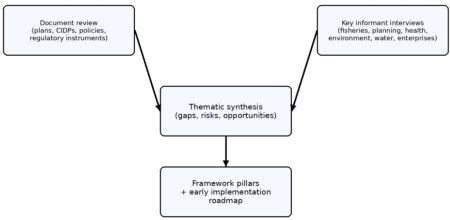
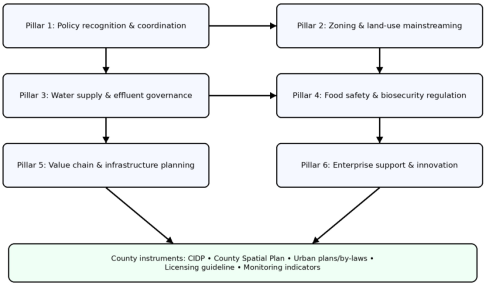




 Share This Article
 Twitter
 Linked In
 Facebook