
 ,
Alejandro Valero Inerarity,
Ricardo Leonardo Perea Rodriguez,
Monica Paola Murcia Doncel,
Luis Fernando Cruz Quiroga,
Eder Jair Sepulveda Molina,
Marjorie Gissella Galofre Vasquez,
Juan Pablo Garzon Sanchez,
Jhoan David Romana Martinez
,
Alejandro Valero Inerarity,
Ricardo Leonardo Perea Rodriguez,
Monica Paola Murcia Doncel,
Luis Fernando Cruz Quiroga,
Eder Jair Sepulveda Molina,
Marjorie Gissella Galofre Vasquez,
Juan Pablo Garzon Sanchez,
Jhoan David Romana Martinez
Background: Cardiovascular disease remains the leading cause of death among women, with cardiometabolic risk increasing during the menopausal transition due to adverse changes in lipid metabolism, body fat distribution, vascular function, and systemic inflammation. Although combined exercise is recommended for cardiovascular prevention, evidence on individualized periodized exercise regulated through internal monitoring of training load remains scarce in sedentary Latin American women. Objective: To evaluate the effects of a 20-week individualized periodized combined training program on body mass index, waist circumference, lipid profile, and atherogenic cardiovascular risk assessed by the Castelli Risk Indices in sedentary Colombian women aged 50 to 60 years. Methods: A single-group, pretest-posttest quasi-experimental study was conducted with 15 sedentary Colombian women (55.4 ± 3.2 years). Participants completed a supervised, individualized, 20-week periodized combined training program that included three weekly aerobic and strength training sessions (60 min/session) and two weekly unsupervised walking sessions. Exercise intensity was individualized using the TRIMP (Banister Training Impulse) model and the sRPE scale. Body mass index, waist circumference, lipid profile, and Castelli risk indices I and II were assessed before and after the intervention. Wilcoxon signed-rank tests, Rosenthal effect sizes, Hodges-Lehmann estimators, and Spearman correlation analysis were used to analyze the effects of the intervention. Results: Program adherence was 88.3%, and no exercise-related adverse events were reported. Significant improvements were observed in total cholesterol (−8.2%, p < 0.001), LDL cholesterol (−11.6%, p < 0.001), HDL cholesterol (+4.1%, p < 0.001), waist circumference (−3.8%, p < 0.001), Castelli risk index I (−11.7%, p < 0.001), and Castelli risk index II (−14.6%, p < 0.001). Triglycerides decreased, although the absolute magnitude of the change was small (−0.3%, p = 0.005). Large Rosenthal effect sizes (r = 0.55–0.94) were observed for all clinically significant outcomes. Greater reductions in waist circumference were associated with greater decreases in LDL cholesterol (ρ = 0.672, p = 0.006) and the Castelli Risk Index II (ρ = 0.650, p = 0.009). Conclusions: Individualized, periodized combined training regulated by internal monitoring of objective (TRIMP) and subjective (sRPE) training load resulted in clinically significant improvements in body mass index, waist circumference, lipid profile, and atherogenic cardiovascular risk in previously sedentary middle-aged Colombian women. These findings support individualized, periodized combined training with internal monitoring of training load as an effective community-based strategy for precision exercise medicine to improve cardiometabolic health and reduce cardiovascular risk in sedentary middle-aged women.
| Published in | World Journal of Public Health (Volume 11, Issue 3) |
| DOI | 10.11648/j.wjph.20261103.24 |
| Page(s) | 351-373 |
| Creative Commons |
This is an Open Access article, distributed under the terms of the Creative Commons Attribution 4.0 International License (http://creativecommons.org/licenses/by/4.0/), which permits unrestricted use, distribution and reproduction in any medium or format, provided the original work is properly cited. |
| Copyright |
Copyright © The Author(s), 2026. Published by Science Publishing Group |
Combined Exercise, Exercise Periodization, Internal Training Load Monitoring, Training Impulse (TRIMP), Session Rating of Perceived Exertion (sRPE), Dyslipidemia, Castelli Risk Index, Cardiovascular Diseases Prevention
Variable | Mean | SD | 95% CI | Minimum | Maximum |
|---|---|---|---|---|---|
Age (years) | 55.4 | 3.2 | 53.8–57.0 | 50 | 60 |
Anthropometric Variables | |||||
Body weight (kg) | 76.0 | 7.4 | 71.9–80.1 | 66.0 | 92.0 |
Height (m) | 1.61 | 0.05 | 1.58–1.64 | 1.53 | 1.70 |
Body Mass Index (kg/m2) | 29.3 | 1.2 | 28.6–30.0 | 27.0 | 31.8 |
Waist circumference (cm) | 94.5 | 7.1 | 90.6–98.5 | 85.0 | 112.0 |
Cardiometabolic Variables | |||||
Total Cholesterol (mg/dL) | 218.4 | 26.4 | 203.8–233.0 | 170.0 | 275.0 |
LDL Cholesterol (mg/dL) | 138.7 | 21.5 | 126.8–150.6 | 100.0 | 181.0 |
HDL Cholesterol (mg/dL) | 44.2 | 7.5 | 40.0–48.4 | 34.0 | 65.0 |
Triglycerides (mg/dL) | 156.3 | 30.5 | 139.5–173.2 | 80.0 | 236.0 |
Variable | W | p-value | Distribution | Statistical approach |
|---|---|---|---|---|
Age (years) | 0.974 | 0.918 | Normal | Descriptive analysis |
Body weight (kg) | 0.937 | 0.346 | Normal | Wilcoxon signed-rank test* |
Height (m) | 0.982 | 0.982 | Normal | Descriptive analysis |
Body Mass Index (kg/m2) | 0.936 | 0.331 | Normal | Wilcoxon signed-rank test* |
Waist circumference (cm) | 0.937 | 0.342 | Normal | Wilcoxon signed-rank test* |
Total Cholesterol (mg/dL) | 0.992 | 1.000 | Normal | Wilcoxon signed-rank test* |
LDL Cholesterol (mg/dL) | 0.994 | 1.000 | Normal | Wilcoxon signed-rank test* |
HDL Cholesterol (mg/dL) | 0.847 | 0.016 | Non-normal | Wilcoxon signed-rank test |
Triglycerides (mg/dL) | 0.758 | 0.001 | Non-normal | Wilcoxon signed-rank test |
FITT Component | Exercise Prescription | Individualization and Monitoring | Progression Strategy |
|---|---|---|---|
Frequency | Three supervised sessions per week (Monday, Wednesday, Friday), complemented by two unsupervised walking sessions (Tuesday and Thursday). | Attendance was recorded at every supervised session. Overall adherence reached 88.3% throughout the intervention | Maintained throughout the intervention |
Intensity | Aerobic exercise intensity progressed from 50–60% HRmax (40–50% HRR) during the adaptation phase to 60–70% HRmax (50–60% HRR) during the development phase and finally to 70–80% HRmax (60–70% HRR) during the optimization phase. | Exercise intensity was individualized using continuous heart-rate monitoring (TRIMP) together with session Rating of Perceived Exertion (sRPE) to integrate objective cardiovascular responses with participants' perceived effort. | Weekly individualized adjustment based on TRIMP, heart rate responses, and sRPE. |
Time | Each supervised session lasted 60 minutes (10-minute warm-up, 40-minute combined training, 10-minute cool-down). Walking sessions lasted approximately 45 minutes. | Exercise duration remained constant, whereas exercise intensity and physiological load were progressively individualized. | Constant session duration |
Type | Individualized periodized combined training including aerobic exercise (walking and rhythmic aerobic activities) together with progressive resistance exercises using elastic bands, body-weight exercises, and multi-joint functional movements. | Exercise selection and progression followed ACSM recommendations and were adapted to each participant's physiological response and tolerance throughout the intervention. | Progressive periodization across adaptation, development and optimization phases |
Phase | Weeks | Main objective | Aerobic training | Strength training progression | Monitoring |
|---|---|---|---|---|---|
Adaptation | 1 - 6 | Develop exercise tolerance and movement competency. | Duration: 20-30 min. Intensity: 50-60% HRmax (40-50% HRR) | Exercises: Basic exercises with body weight and elastic bands with low resistance Sets/Reps: 1-2 x 12-15 repetitions. Intensity: 40-50% of the estimated one-repetition maximum (1RM). | TRIMP and session Rating of Perceived Exertion (sRPE) were monitored after each supervised session in an effort to individualize progression and avoid excessive physiological stress. |
Development | 7 - 14 | Increase cardiovascular fitness, muscular strength and metabolic capacity. | Duration: 30-40 min. Intensity: 60-70% HRmax (50-60% HRR) | Exercises: Multi-joint exercises (squats, press, rows, deadlifts) with medium resistance bands Sets/Reps: 2-3 x 8-12 reps. Intensity: 50-65% of the estimated one-repetition maximum (1RM). | Weekly TRIMP adjustment |
Optimization | 15 - 20 | Maximize and consolidate metabolic and cardiovascular adaptations. | Duration: 40-50 min Intensity: 70-80% HRmax (60-70% HRR) | Exercises: The same multi-joint exercises with high-resistance bands. Sets/Reps: 3 x 8-10 reps. Intensity: 65-75% of the estimated one-repetition maximum (1RM). | TRIMP and sRPE stabilization with fatigue monitoring |
Variable | Pre-Mean (95% CI) | Post-Mean (95% CI) | Absolute Mean Difference (Post–Pre) (95% CI) | Hodges–Lehmann Median Difference (95% CI) | % Change | p-value |
|---|---|---|---|---|---|---|
Body Weight (kg) | 76.0 ± 7.4 (71.9–80.1) | 73.9 ± 6.6 (70.2–77.5) | −2.13 (−3.22 to −1.05) | −2.00 (−3.00 to −1.00) | −2.8 | <0.001 |
Height (m) | 1.61 ± 0.05 (1.58–1.64) | 1.61 ± 0.05 (1.58–1.64) | 0.00 (0.00 to 0.00) | 0.00 (0.00 to 0.00) | 0.0 | 1.000 |
Body Mass Index (kg/m2) | 29.3 ± 1.2 (28.6–30.0) | 28.5 ± 1.0 (28.0–29.1) | −0.79 (−1.15 to −0.43) | −0.80 (−1.20 to −0.40) | −2.7 | <0.001 |
Waist circumference (cm) | 94.5 ± 7.1 (90.6–98.5) | 90.9 ± 6.7 (87.1–94.6) | −3.67 (−4.07 to −3.27) | −4.00 (−4.00 to −3.00) | −3.8 | <0.001 |
Total Cholesterol (mg/dL) | 218.4 ± 26.4 (203.8–233.0) | 200.5 ± 22.1 (188.3–212.8) | −17.87 (−21.32 to −14.41) | −17.00 (−20.00 to −14.00) | −8.2 | <0.001 |
LDL Cholesterol (mg/dL) | 138.7 ± 21.5 (126.8–150.6) | 122.6 ± 12.3 (115.8–129.4) | −16.13 (−22.16 to −10.10) | −16.00 (−20.00 to −10.00) | −11.6 | <0.001 |
HDL Cholesterol (mg/dL) | 44.2 ± 7.5 (40.0–48.4) | 46.0 ± 7.2 (42.0–50.0) | +1.80 (+1.57 to +2.03) | +2.00 (+1.00 to +2.00) | +4.1 | <0.001 |
Triglycerides (mg/dL) | 156.3 ± 30.5 (139.5–173.2) | 155.8 ± 30.2 (139.1–172.6) | −0.53 (−0.82 to −0.25) | −1.00 (−1.00 to 0.00) | −0.3 | 0.005 |
Castelli Index I (TC/HDL) | 4.94 ± 0.82 (4.49–5.39) | 4.36 ± 0.70 (3.97–4.75) | −0.58 (−0.628 to −0.544) | -0.58 (−0.72 to −0.45) | −11.7 | <0.001 |
Castelli Index II (LDL/HDL) | 3.14 ± 0.61 (2.80–3.48) | 2.68 ± 0.49 (2.41–2.95) | −0.46 (−0.539 to −0.377) | −0.47 (−0.55 to −0.29) | −14.6 | <0.001 |
Outcome Variable | % Change | Rosenthal's r | Effect Magnitude | Clinical Relevance | Practical Implication |
|---|---|---|---|---|---|
Body weight (kg) | −2.8 | 0.91 | Large | Clinically meaningful reduction in body weight, consistent with improved energy balance and cardiometabolic health. | Individualized combined treatment is a powerful non-pharmacological approach for weight management in sedentary middle-aged women. |
Body Mass Index (kg/m2) | −2.7 | 0.85 | Large | Clinically significant reduction in total adiposity, improvement in body composition. | Confirms the effectiveness of periodized combined training for the prevention of obesity and healthy aging. |
Waist circumference (cm) | −3.8 | 0.94 | Large | Significant reduction in central adiposity, meaning lower levels of visceral fat accumulation and lower cardiometabolic risk. | Supports waist circumference as a primary clinical indicator for monitoring exercise-induced cardiometabolic adaptations. |
Total Cholesterol (mg/dL) | −8.2 | 0.88 | Large | Clinically relevant reduction in circulating cholesterol concentrations, reflecting improved lipid metabolism. | May improve management of cardiovascular risk through structured exercise. |
LDL Cholesterol (mg/dL) | −11.6 | 0.88 | Large | Significant reduction in atherogenic lipoproteins, consistent with a clinically relevant improvement in cardiovascular risk profile. | Recommends individualized exercise prescription as a useful strategy to improve lipid control in primary cardiovascular prevention. |
HDL Cholesterol (mg/dL) | +4.1 | 0.94 | Large | Clinically meaningful increase in HDL cholesterol, consistent with a more favorable lipid profile. | Supports the beneficial effect of regular combined exercise on protective lipid metabolism. |
Triglycerides (mg/dL) | −0.3 | 0.73 | Large | Despite the large statistical effect size, the absolute reduction (−0.3%) was clinically negligible. | Exercise may have only a limited effect on triglyceride concentrations, but additional nutritional interventions may enhance this response. |
Castelli Index I (TC/HDL) | −11.7 | 0.55* | Large | Improvement in total cholesterol/HDL ratio indicates lower global atherogenic burden. | Proposes the use of composite lipid index measures to monitor exercise-induced reductions in cardiovascular risk. |
Castelli Index II (LDL/HDL) | −14.6 | 0.61* | Large | Improvement in the LDL/HDL ratio reflects a clinically meaningful reduction in atherogenic cardiovascular risk. | Reinforces individualized periodized exercise as an effective community-based strategy for improving cardiometabolic health. |
Comparison | Spearman's ρ | Bootstrap 95% CI | p | Strength | Clinical Interpretation |
|---|---|---|---|---|---|
Δ Waist Circumference vs. Δ LDL Cholesterol | 0.672 | 0.29 to 0.88 | 0.006 | Strong | Greater reductions in central adiposity were associated with larger decreases in LDL cholesterol. |
Δ Waist Circumference vs. Δ Castelli Index I* | 0.207 | −0.35 to 0.66 | 0.459 | Weak | No statistically significant association was observed. |
Δ Waist Circumference vs. Δ Castelli Index II* | 0.650 | 0.25 to 0.87 | 0.009 | Strong | Greater reductions in waist circumference were associated with larger improvements in the LDL/HDL ratio. |
Phase | Weeks | TRIMP Initial | TRIMP Final | Increase (%) | Borg CR-10 | Aerobic Effect (AU) | Objective |
|---|---|---|---|---|---|---|---|
Adaptation | 1-6 | 360 | 600 | +66.7% | 3.2 ± 0.7 (Moderate) | 2.5 → 3.8 | Familiarization |
Development | 7-14 | 600 | 960 | +60.0% | 5.1 ± 0.6 (Hard) | 4.0 → 5.7 | Progressive overload |
Optimization | 15-20 | 960 | 1080 | +12.5% | 6.8 ± 0.8 (Very hard) | 6.0 → 7.2 | Performance consolidation |
STRAW+10 | Stages of Reproductive Aging Workshop |
ACWR | Acute-Chronic Workload Ratio |
CTL | Chronic training load |
ATL | Acute training load |
AU | Arbitrary Units |
BMI | Body Mass Index |
CVD | Cardiovascular diseases |
HDL | High-Density Lipoprotein Cholesterol |
HRmax | Maximum Heart Rate |
HRR | Heart Rate Reserve |
IPAQ | International Physical Activity Questionnaire |
LDL | Low-Density Lipoprotein Cholesterol |
RPE | Rating of Perceived Exertion |
SD | Standard Deviation |
sRPE | Session Rating of Perceived Exertion |
TC | Total Cholesterol |
TG | Triglycerides |
TRIMP | Training Impulse |
WC | Waist Circumference |
WHO | World Health Organization |
CI | Confidence interval |
TREND | Transparent Reporting of Evaluations with Nonrandomized Designs |
ACSM | American College of Sports Medicine |
FITT | Frequency, Intensity, Time, Type |
1RM | One-Repetition Maximum |
| [1] |
World Health Organization, “cardiovascular diseases (CVDs)”. [Internet]. Available from:
https://www.who.int/news-room/fact-sheets/detail/cardiovascular-diseases-(cvds) [Accessed 5 November 2025]. |
| [2] | Mensah, G. A., Fuster, V., Murray, C. J. L., Roth, G. A. Global Burden of Cardiovascular Diseases and Risks Collaborators. Global Burden of Cardiovascular Diseases and Risks, 1990-2022. Journal of the American College of Cardiology. 2023. 82(25), 2350–2473. |
| [3] |
WHO. Global status report on physical activity 2022. Geneva: World Health Organization; 2022. Available from:
https://iris.who.int/server/api/core/bitstreams/8804f1b0-dbae-4e58-a251-36fd14dc7e02/content [Accessed 13 July 2026]. |
| [4] | Visseren, F. L. J., Mach, F., Smulders, Y. M., Carballo, D., Koskinas, K. C., Bäck, M., Benetos, A., Biffi, A., Boavida, J. M., Capodanno, D., Cosyns, B., Crawford, C., Davos, C. H., Desormais, I., Di Angelantonio, E., Franco, O. H., Graham, I., Hall, M. S., Hobbs, F. D. R., Hollander, M., Jankowska, E. A., Michal, M., Sacco, S., Sattar, N., Tokgozoglu, L., Tonstad, S., Tsioufis, K. P., van Dis, I., van Gelder, I. C., Wanner, C., Williams, B., & Group, E. S. C. Scientific Document. 2021 ESC Guidelines on cardiovascular disease prevention in clinical practice. European Heart Journal. 2021. 42(34), 3227–3337. |
| [5] |
Departamento Administrativo Nacional de Estadistica (DANE), “Estadisticas Vitales – Defunciones no fetales”. [Internet]. Available from:
https://www.dane.gov.co/index.php/estadisticas-por-tema/salud/nacimientos-y-defunciones/defunciones-no-fetales/defunciones-no-fetales-2025 [Accessed 7 October 2025]. |
| [6] |
Departamento Administrativo Nacional de Estadistica (DANE), “Estadisticas vitales nacimientos y defunciones 2025”. [Internet]. Available from:
https://www.dane.gov.co/index.php/estadisticas-por-tema?id=34phpMyAdmin=3om27vamm65hhkhrtgc8rrn2g4 [Accessed 2 February 2026]. |
| [7] | Ramirez Vélez, R., Tordecilla-Sanders, A., Correa-Bautista, J. E., Peterson, M. D., Garcia-Hermoso, A., Gonzalez-Ruiz, K. Physical activity levels among Colombian adults: results from the National Nutrition Survey (ENSIN 2015). BMC Public Health. 2019, 19: 1386. |
| [8] | Hernandez Martinez, J., Gonzalez Castillo, C., Herrera Valenzuela, T., Munoz Vasquez, C., Magnani Branco, B. H., Valdés Badilla, P. Association between Physical Activity Habits with Cardiometabolic Variables, Body Composition, and Physical Performance in Chilean Older Women. International Journal of Environmental Research and Public Health. 2023. 17, 6688. |
| [9] | Ding, D., Kolbe-Alexander, T., Nguyen, B., Katzmarzyk, P. T., Pratt, M., Lawson, K. D. The economic burden of physical inactivity: a global analysis of major non-communicable diseases. The Lancet, 2016, 388(10051), 1311-1324. |
| [10] | Li, F., Wang, Z., Li, S., Liu, W., Li, Y., Jiang, C., Tian, Y., Cui, W., Zhang, Y. Association of body fat distribution with all-cause and cardiovascular mortality in US adults: a secondary analysis using NHANES. BMJ Open. 2023, 13(11), e072752. |
| [11] | Rodrigues de Oliveira, B. B., Gomes Coelho, C., Barreto, S, M., Giatti, L., Araújo, F. Body fat distribution and its risk for cardiovascular events in 10 years: Brazilian Longitudinal Study of Adult Health (ELSA-Brasil). Cadernos de Saúde Pública, 2022; 38(2), e00346520 |
| [12] | Vazquez, G., Duval, S., Jacobs, D. R., Silventoinen, K. Comparison of body mass index, waist circumference, and waist/hip ratio in predicting incident diabetes: A meta-analysis. Epidemiologic Reviews, 2007, 29(1), 115-128. |
| [13] | Fancher, A., Lopez Candales, A., Sawalha, K. LDL-C and Beyond: A Contemporary Review of Atherosclerotic Cardiovascular Risk Assessment and Management. Journal of Lipid and Atherosclerosis. 2026, 15(2), 216–239. |
| [14] | Mehta, J. M., Manson, J. E. The menopausal transition period and cardiovascular risk. Nature Reviews Cardiology. 2024, 21, 203–211. |
| [15] | D'Costa, Z., Spertus, E., Hingorany, S., Patil, R., Horwich, T., Press, M. C., Shah, J., Watson, K. E., Jafari L. Cardiovascular Risk Associated with Menopause and Menopause Hormone Therapy: A Review and Contemporary Approach to Risk Assessment. Current Atherosclerosis Reports. 2025, 27(1), 100. |
| [16] | Huynh, E., Wiley, E., Noguchi, K. S., Fang, H., Beauchamp, M. K., MacDonald, M. J., Tang, A. The effects of aerobic exercise on cardiometabolic health in postmenopausal females: A systematic review and meta-analysis of randomized controlled trials. Womens Health (Lond). 2024, 20, 17455057241290889. |
| [17] | Li, T., Zhang, L. Effect of exercise on cardiovascular risk in sedentary postmenopausal women: a systematic review and meta-analysis. Annals of Palliative Medicine. 2023, 12(1), 150-162. |
| [18] | Bernal, J. V. M., Sanchez Delgado, J. C., Jacome Hortua, A. M., Veiga, A. C., Andrade, G. V., Rodrigues, M. R., de Souzaet, H.C.D. Effects of physical exercise on the lipid profile of perimenopausal and postmenopausal women: a systematic review and meta-analysis. Brazilian Journal of Medical and Biological Research. 2025, 58, e14194. |
| [19] | Prado Nunes, P. R., Castro e-Souza, P., Alves de Oliveira, A., de Freitas Camilo, B., Cristina Souza, G., Vieira Souza, L. M., da Silva Carneiro, M. A. Effect of resistance training volume on body adiposity, metabolic risk, and inflammation in postmenopausal and older females: Systematic review and meta-analysis of randomized controlled trials. Journal of Sport and Health Science. 2024, 13(2), 145–159. |
| [20] | Blumenthal, R. S., Morris, P. B., Gaudino, M., Johnson, H. M., Anderson, T. S., Bittner, V. A., Blankstein, R., Brewer, L. C., Cho, L., de Ferranti, S. D., Gianos, E., Gluckman, T. J., Gradney, K. F., Isiadinso, I., Lloyd Jones, D. M., Marrs, J. C., Martin, S. S., McLain, K. H., Mehta, L. S., Mora, S., Mulugeta, W. M., Natarajan. P., Navar, A. M., Orringer, C. E., Polonsky, T. S., Reynolds, H. R., Saseen, J. J., Shapiro, M. D., Soffer, D. E., Tynes, S. A., Villavaso, C. D., Virani, S. S., Wilkins, J. T. ACC/AHA/AACVPR/ABC/ACPM/ADA/AGS/APhA/ASPC/NLA/PCNA Guideline on the Management of Dyslipidemia: A Report of the American College of Cardiology/American Heart Association Joint Committee on Clinical Practice Guidelines. Journal of the American College of Cardiology. 2026, 87(19), 2624-2757. |
| [21] | Yang, X., Chen, Q., Zhang, Q., Yu, Z. Lipoprotein cholesterol ratios and cardiovascular disease risk in US adults: a cross-sectional study. Front. Nutr. 2025, 12(1529223). |
| [22] | Millan, J., Pinto, X., Munoz, A., Zuniga, M., Rubies Prat, J., Pallardo, L. F., Masana, L., Mangas, A., Hernandez Mijares, A., Gonzalez Santos, P., Ascaso, J. F., Pedro Botet, J. Lipoprotein ratios: Physiological significance and clinical usefulness in cardiovascular prevention. Vasc Health Risk Manag. 2009; 5, 757-65. |
| [23] | Liu, T., Zhang, S., Zou, X., Wang, Y., Zhang, J., Shi, S., Zhao, Z., Zhao, Y., Kolberg, B., Shi, X., Li, J. Relationship between total cholesterol/high-density lipoprotein cholesterol and carotid artery plaque in ischemic stroke patients based on sex and age. Angiology. 2026, 77(7), 883-893. |
| [24] | Duarte Lau, F., Giugliano R. P. Lipoprotein(a) and its Significance in Cardiovascular Disease: A Review. JAMA Cardiol. 2022, 7(7), 760-769. |
| [25] | Vinci, P., Di Girolamo, F. G., Panizon, E., Tosoni, L. M., Cerrato, C., Pellicori, F., Altamura, N., Pirulli, A., Zaccari, M., Biasinutto, C., Roni, C., Fiotti, N., Schincariol, P., Mangogna, A., Biolo, G. Lipoprotein(a) as a Risk Factor for Cardiovascular Diseases: Pathophysiology and Treatment Perspectives. Int. J. Environ. Res. Public Health. 2023, 20, 6721. |
| [26] | Guo, L., Wang, C. The effect of exercise on cardiovascular disease risk factors in sedentary population: a systematic review and meta-analysis. Front Public Health. 2025, 13, 1470947. |
| [27] | Smart, N. A., Downes, D., van der Touw, T., Hada, S., Dieberg, G., Pearson, M. J., Wolden, M., King, N., Goodman, S. P. J. The Effect of Exercise Training on Blood Lipids: A Systematic Review and Meta-analysis. Sports Medicine. 2025, 55(1), 67-78. |
| [28] | Paluch, A. E., Boyer, W. R., Franklin, B. A., Laddu, D., Lobelo, F., Lee, D. C., McDermott, M. M., Swift, D. L., Webel, A. R., Lane, A. Resistance Exercise Training in Individuals with and Without Cardiovascular Disease: 2023 Update: A Scientific Statement From the American Heart Association. Circulation. 2024, 149(3). |
| [29] | Oh, D. H., Lee, J. K. Effect of Different Intensities of Aerobic Exercise Combined with Resistance Exercise on Body Fat, Lipid Profiles, and Adipokines in Middle-Aged Women with Obesity. International Journal of Environmental Research and Public Health. 2023, 20(5), 3991. |
| [30] | Amare, F., Alemu, Y., Enichalew, M., Demilie, Y., Adamu, S. Effects of aerobic, resistance, and combined exercise training on body fat and glucolipid metabolism in inactive middle-aged adults with overweight or obesity: a randomized trial. BMC Sports Science, Medicine and Rehabilitation. 2024, 16(1), 189. |
| [31] | Gholizadeh, A., Shoyoie, R. The effect of combined aerobic-resistance training on plasma estrogen and progesterone and its relationship with lipid profile in menopausal women. Journal of Physical Activity and Health. 2024, 28-33. |
| [32] | Morales Palomo, F., Moreno Cabanas, A., Alvarez Jimenez, L., Mora Gonzalez, D., Mora Rodriguez, R. Long-Term Effects of High-Intensity Aerobic Training on Metabolic Syndrome: An 8-Year Follow-Up Randomized Clinical Trial. Journal of Cachexia, Sarcopenia and Muscle. 2025. 16(2). |
| [33] | Leitão, L., Corrêa Figueira, A. C., Figueiredo, T., Pereira, A. Effects of multicomponent exercise program on hemodynamic and lipid profile over two years in older women: 3259. Medicine & Science in Sports & Exercise. 2024, 56(10S), 756-757. |
| [34] | Figueira, B., Bravo, J., Raimundo, A., Reis, A. Effects of a 26 week multicomponent exercise program on cardiovascular and lipid profiles in premenopausal and postmenopausal women. Scientific Reports. 2025, 15, 22485. |
| [35] | Lee, D. C., Brellenthin, A. G., Lanningham Foster, L. M., Kohut, M. L., Li, Y. Aerobic, resistance, or combined exercise training and cardiovascular risk profile in overweight or obese adults: the CardioRACE trial. European Heart Journal. 2024, 45(13), 1127–1142. |
| [36] | Xia, H., Du, K., Sang, D., Jung, H., Xi, S. Effects of a combined training program on lipid metabolism metabolic syndrome and physical fitness in perimenopausal Chinese female teachers. Scientific Reports. 2026, 16(1059). |
| [37] | Pourmontaseri, H., Farjam, M., Dehghan, A., Karimi, A., Akbari, M., Shahabi, S., Nowrouzi Sohrabi, P., Estakhr, M., Tabrizi, R., Ahmadizar, F. The effects of aerobic and resistant exercises on the lipid profile in healthy women: a systematic review and meta-analysis. Journal of Physiology and Biochemistry. 2024, 80, 713–725. |
| [38] | Bompa, T. O., Buzzichelli, C. Periodization: Theory and methodology of training (6th ed.). United States of America: Human Kinetics; 2018, pp. 32-95. |
| [39] | American College of Sports Medicine (ACSM’s). Guidelines for Exercise Testing and Prescription, 12th edition. Philadelphia, PA: Wolters Kluwer; 2026. |
| [40] | Komici, K., Bianco, A., Cuomo, A., Bianco, R., Illario, M., Guerra, G., Paoli, A., Schena, F., Iaccarino, G. Practical guidelines for exercise prescription in different clinical populations. Frontiers in Sports and Active Living. 2026. 2(8), 1649549. |
| [41] | Kritz, M., Riddell, H., Olsen, D., Harden, S. M., Burke, S. M., Ntoumanis, N., Thøgersen-Ntoumani, C. Individual versus group-based interventions: a systematic review and meta-analysis of physical activity, functional, psychosocial and health outcomes. Nature Human Behaviour. 2026, 10, 1109–1121. |
| [42] | Cornell, D. J., Ebersole, K. T. Exercise Prescription for Health and Sports Performance, 6th Edition. London, UK. Routledge, 2026. |
| [43] | Impellizzeri, F. M., Shrier, I., McLaren, S. J., Coutts, A. J., McCall, A., Slattery, K., Jeffries, A. C., & Kalkhoven, J. T. (2023). Understanding Training Load as Exposure and Dose. Sports Medicine, 53, 1667-1679. |
| [44] | Banister, E. W. Modeling Elite Athletic Performance. In Physiological Testing of the High-Performance Athlete, 2nd ed. MacDougall, J. D., Wenger, H. A., Green, H. J., Eds. Human Kinetics Books: Champaign, IL, USA, 1991; pp. 403-424. |
| [45] | Furrer R, Hawley JA, Handschin C. The molecular athlete: exercise physiology from mechanisms to medals. Physiol Rev. 2023. 103(3), 1693-1787. |
| [46] | Noone, J., Mucinski, J. M., DeLany, J. P., Sparks, L. M., Goodpaster, B. H. Understanding the variation in exercise responses to guide personalized physical activity prescriptions. Cell Metabolism. 2024, 36(4), 702–724. |
| [47] | Rao, P., Belanger, M. J., Robbins, J. M. Exercise, Physical Activity, and Cardiometabolic Health: Insights into the Prevention and Treatment of Cardiometabolic Diseases. Cardiol Rev. 2022, 30(4), 167-178. |
| [48] | Mellor, K., Albury, C., Dutton, S.J. et al. Recommendations for progression criteria during external randomised pilot trial design, conduct, analysis and reporting. Pilot and Feasibility Studies. 2023, 9, 59. |
| [49] | Armstrong, R. A. When to use the Bonferroni correction. Ophthalmic and Physiological Optics. 2014, 34(5), 502-508. |
| [50] | Mandl, M. M., Becker-Pennrich, A. S., Hinske, L. C., Hofmann, S., Boulesteix, A. L. Addressing researcher degrees of freedom through minP adjustment. BMC Medical Research Methodology. 2024, 24, 152. |
| [51] | Wasserstein, R. L., Lazar, N. A. The ASA Statement on p-Values: Context, Process, and Purpose. The American Statistician. 2016, 70(2), 129-133. |
| [52] | Hooper, R. To adjust, or not to adjust, for multiple comparisons. Journal of Clinical Epidemiology. 2025, 180, 111688. |
| [53] | Lancaster, G. A., Dodd, S., Williamson, P. R. Design and analysis of pilot studies: recommendations for good practice. Journal of Evaluation in Clinical Practice. 2004, 10(2), 307-312. |
| [54] | Desai, M. R., Rathod, M. M., Parekh, K., Dudhat, K. Role of High-Density Lipoprotein in Cardiovascular Risk: A Review, Journal of Clinical Case Studies and Review Reports. 2025, 2(2), 1-12, |
| [55] | Lichtenstein, A. H., Khera, A., Anderson, C. A. M., Appel, L. J., DeSilva, D. M., Gardner, C., Hu, F. B., Jones, D. W., Petersen, K. S., American Heart Association. 2026 Dietary Guidance to Improve Cardiovascular Health: A Scientific Statement from the American Heart Association. Circulation. 2026. |
| [56] | Sebastian, S. A., Padda, I., Johal, G. Long-term impact of Mediterranean diet on cardiovascular disease prevention: A systematic review and meta-analysis of randomized controlled trials. Current Problems in Cardiology. 2024, 49(5), 102509. |
| [57] | Martinez Gonzalez, M. A., Hernandez Hernandez, A. Effect of the Mediterranean diet in cardiovascular prevention. Rev Esp Cardiol. 2024, 77(7), 574-582. |
| [58] | Marques Vidal, P., Tsampasian, V., Cassidy, A., Biondi Zoccai, G., Chrysohoou, C., Koskinas, K., Verschuren, W. M. M. Czapla, M., Kavousi, M., Kouvari, M., Vassiliou, V. S., Panagiotakos, D. Diet and nutrition in cardiovascular disease prevention: a scientific statement of the European Association of Preventive Cardiology and the Association of Cardiovascular Nursing & Allied Professions of the European Society of Cardiology. European Journal of Preventive Cardiology. 2025, 32(16), 1540–1552. |
| [59] | Pagidipati, N. J., Taub, P. R., Ostfeld, R. J., Kirkpatrick, C. F. Dietary patterns to promote cardiometabolic health. Nature Reviews Cardiology. 2025, 22(1), 38-46. |
| [60] | Vrints, C., Andreotti, F., Koskinas, K. C., Rossello, X., Adamo, M., Ainslie, J., Banning, A. P., Budaj, A., Buechel, R. R., Chiariello, G. A., Chieffo, A., Christodorescu, R. M., Deaton, C., Doenst, T., Jones, H. W., Kunadian, V., Mehilli, J., Milojevic, M., Piek, J. J., Pugliese, F., Rubboli, A., Semb, A. G., Senior, R., ten Berg, J. M., Van Belle, E., Van Craenenbroeck, E. M., Vidal-Perez, R., Winther, S., ESC Scientific Document Group. ESC Guidelines for the management of chronic coronary syndromes: Developed by the task force for the management of chronic coronary syndromes of the European Society of Cardiology (ESC) Endorsed by the European Association for Cardio-Thoracic Surgery (EACTS). European Heart Journal. 2024, 45(36), 3415–3537, |
APA Style
Garay, A. H., Inerarity, A. V., Rodriguez, R. L. P., Doncel, M. P. M., Quiroga, L. F. C., et al. (2026). Effects of Individualized Periodized Combined Training on Lipid Profile and Atherogenic Cardiovascular Risk in Sedentary Middle-aged Colombian Women. World Journal of Public Health, 11(3), 351-373. https://doi.org/10.11648/j.wjph.20261103.24
ACS Style
Garay, A. H.; Inerarity, A. V.; Rodriguez, R. L. P.; Doncel, M. P. M.; Quiroga, L. F. C., et al. Effects of Individualized Periodized Combined Training on Lipid Profile and Atherogenic Cardiovascular Risk in Sedentary Middle-aged Colombian Women. World J. Public Health 2026, 11(3), 351-373. doi: 10.11648/j.wjph.20261103.24
AMA Style
Garay AH, Inerarity AV, Rodriguez RLP, Doncel MPM, Quiroga LFC, et al. Effects of Individualized Periodized Combined Training on Lipid Profile and Atherogenic Cardiovascular Risk in Sedentary Middle-aged Colombian Women. World J Public Health. 2026;11(3):351-373. doi: 10.11648/j.wjph.20261103.24
@article{10.11648/j.wjph.20261103.24,
  author = {Arays Hernandez Garay and Alejandro Valero Inerarity and Ricardo Leonardo Perea Rodriguez and Monica Paola Murcia Doncel and Luis Fernando Cruz Quiroga and Eder Jair Sepulveda Molina and Marjorie Gissella Galofre Vasquez and Juan Pablo Garzon Sanchez and Jhoan David Romana Martinez},
  title = {Effects of Individualized Periodized Combined Training on Lipid Profile and Atherogenic Cardiovascular Risk in Sedentary Middle-aged Colombian Women},
  journal = {World Journal of Public Health},
  volume = {11},
  number = {3},
  pages = {351-373},
  doi = {10.11648/j.wjph.20261103.24},
  url = {https://doi.org/10.11648/j.wjph.20261103.24},
  eprint = {https://article.sciencepublishinggroup.com/pdf/10.11648.j.wjph.20261103.24},
  abstract = {Background: Cardiovascular disease remains the leading cause of death among women, with cardiometabolic risk increasing during the menopausal transition due to adverse changes in lipid metabolism, body fat distribution, vascular function, and systemic inflammation. Although combined exercise is recommended for cardiovascular prevention, evidence on individualized periodized exercise regulated through internal monitoring of training load remains scarce in sedentary Latin American women. Objective: To evaluate the effects of a 20-week individualized periodized combined training program on body mass index, waist circumference, lipid profile, and atherogenic cardiovascular risk assessed by the Castelli Risk Indices in sedentary Colombian women aged 50 to 60 years. Methods: A single-group, pretest-posttest quasi-experimental study was conducted with 15 sedentary Colombian women (55.4 ± 3.2 years). Participants completed a supervised, individualized, 20-week periodized combined training program that included three weekly aerobic and strength training sessions (60 min/session) and two weekly unsupervised walking sessions. Exercise intensity was individualized using the TRIMP (Banister Training Impulse) model and the sRPE scale. Body mass index, waist circumference, lipid profile, and Castelli risk indices I and II were assessed before and after the intervention. Wilcoxon signed-rank tests, Rosenthal effect sizes, Hodges-Lehmann estimators, and Spearman correlation analysis were used to analyze the effects of the intervention. Results: Program adherence was 88.3%, and no exercise-related adverse events were reported. Significant improvements were observed in total cholesterol (−8.2%, p < 0.001), LDL cholesterol (−11.6%, p < 0.001), HDL cholesterol (+4.1%, p < 0.001), waist circumference (−3.8%, p < 0.001), Castelli risk index I (−11.7%, p < 0.001), and Castelli risk index II (−14.6%, p < 0.001). Triglycerides decreased, although the absolute magnitude of the change was small (−0.3%, p = 0.005). Large Rosenthal effect sizes (r = 0.55–0.94) were observed for all clinically significant outcomes. Greater reductions in waist circumference were associated with greater decreases in LDL cholesterol (ρ = 0.672, p = 0.006) and the Castelli Risk Index II (ρ = 0.650, p = 0.009). Conclusions: Individualized, periodized combined training regulated by internal monitoring of objective (TRIMP) and subjective (sRPE) training load resulted in clinically significant improvements in body mass index, waist circumference, lipid profile, and atherogenic cardiovascular risk in previously sedentary middle-aged Colombian women. These findings support individualized, periodized combined training with internal monitoring of training load as an effective community-based strategy for precision exercise medicine to improve cardiometabolic health and reduce cardiovascular risk in sedentary middle-aged women.},
 year = {2026}
}
TY  - JOUR
T1  - Effects of Individualized Periodized Combined Training on Lipid Profile and Atherogenic Cardiovascular Risk in Sedentary Middle-aged Colombian Women
AU  - Arays Hernandez Garay
AU  - Alejandro Valero Inerarity
AU  - Ricardo Leonardo Perea Rodriguez
AU  - Monica Paola Murcia Doncel
AU  - Luis Fernando Cruz Quiroga
AU  - Eder Jair Sepulveda Molina
AU  - Marjorie Gissella Galofre Vasquez
AU  - Juan Pablo Garzon Sanchez
AU  - Jhoan David Romana Martinez
Y1  - 2026/09/22
PY  - 2026
N1  - https://doi.org/10.11648/j.wjph.20261103.24
DO  - 10.11648/j.wjph.20261103.24
T2  - World Journal of Public Health
JF  - World Journal of Public Health
JO  - World Journal of Public Health
SP  - 351
EP  - 373
PB  - Science Publishing Group
SN  - 2637-6059
UR  - https://doi.org/10.11648/j.wjph.20261103.24
AB  - Background: Cardiovascular disease remains the leading cause of death among women, with cardiometabolic risk increasing during the menopausal transition due to adverse changes in lipid metabolism, body fat distribution, vascular function, and systemic inflammation. Although combined exercise is recommended for cardiovascular prevention, evidence on individualized periodized exercise regulated through internal monitoring of training load remains scarce in sedentary Latin American women. Objective: To evaluate the effects of a 20-week individualized periodized combined training program on body mass index, waist circumference, lipid profile, and atherogenic cardiovascular risk assessed by the Castelli Risk Indices in sedentary Colombian women aged 50 to 60 years. Methods: A single-group, pretest-posttest quasi-experimental study was conducted with 15 sedentary Colombian women (55.4 ± 3.2 years). Participants completed a supervised, individualized, 20-week periodized combined training program that included three weekly aerobic and strength training sessions (60 min/session) and two weekly unsupervised walking sessions. Exercise intensity was individualized using the TRIMP (Banister Training Impulse) model and the sRPE scale. Body mass index, waist circumference, lipid profile, and Castelli risk indices I and II were assessed before and after the intervention. Wilcoxon signed-rank tests, Rosenthal effect sizes, Hodges-Lehmann estimators, and Spearman correlation analysis were used to analyze the effects of the intervention. Results: Program adherence was 88.3%, and no exercise-related adverse events were reported. Significant improvements were observed in total cholesterol (−8.2%, p < 0.001), LDL cholesterol (−11.6%, p < 0.001), HDL cholesterol (+4.1%, p < 0.001), waist circumference (−3.8%, p < 0.001), Castelli risk index I (−11.7%, p < 0.001), and Castelli risk index II (−14.6%, p < 0.001). Triglycerides decreased, although the absolute magnitude of the change was small (−0.3%, p = 0.005). Large Rosenthal effect sizes (r = 0.55–0.94) were observed for all clinically significant outcomes. Greater reductions in waist circumference were associated with greater decreases in LDL cholesterol (ρ = 0.672, p = 0.006) and the Castelli Risk Index II (ρ = 0.650, p = 0.009). Conclusions: Individualized, periodized combined training regulated by internal monitoring of objective (TRIMP) and subjective (sRPE) training load resulted in clinically significant improvements in body mass index, waist circumference, lipid profile, and atherogenic cardiovascular risk in previously sedentary middle-aged Colombian women. These findings support individualized, periodized combined training with internal monitoring of training load as an effective community-based strategy for precision exercise medicine to improve cardiometabolic health and reduce cardiovascular risk in sedentary middle-aged women.
VL  - 11
IS  - 3
ER  -
Research Department, Manuela Beltran University, Bogota, Colombia
Research Department, Colombian School of Rehabilitation, Bogota, Colombia
Research Department, Colombian School of Rehabilitation, Bogota, Colombia
Research Department, Manuela Beltran University, Bogota, Colombia
Research Department, Mental Health IPS, Bogota, Colombia
Research Department, Autonomous University of the Caribbean, Barranquilla, Colombia
Research Department, Autonomous University of the Caribbean, Barranquilla, Colombia
Research Department, Manuela Beltran University, Bogota, Colombia
Research Department, Diego Luis Cordoba Technological University, Choco, Colombia
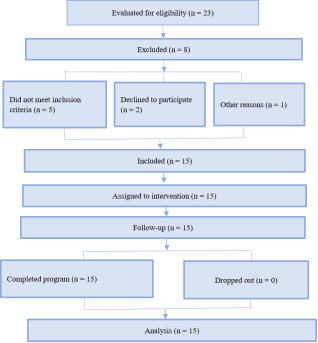
Figure 1. Participant recruitment, enrollment, and analysis flow diagram (adapted TREND for quasi-experimental studies).
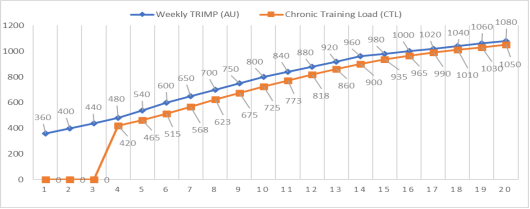
Figure 2. Weekly evolution of internal training load showing weekly Training Impulse (TRIMP) and chronic training load (CTL) throughout the 20-week periodized intervention.
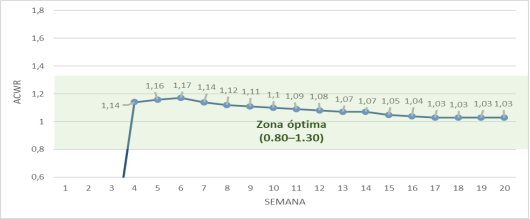
Figure 3. Weekly evolution of the acute: chronic workload ratio (ACWR) throughout the 20-week periodized intervention.

Information


 Share This Article
 Twitter
 Linked In
 Facebook
 Copy
Copy Download