
PH is a scale from 0-14 used to determine if substances or mediums are acidic, alkaline or neutral. Blood is a buffer solution with a PH of 7.4, and it resists change in PH as it contains week conjugate acid and base pair; carbonate HCO3- and carbonic acid H2CO3. Mediums and solutions can be either acidic, alkaline or neutral; acidic if their measured PH is less than 7, neutral if their measured PH is 7, and alkaline if their measured PH is greater than 7. An organ can be made of different types of tissues that combine to form an organ. An organ system or a biological system is when two or more organs work together in execution of a body function. Reproductive organs in men or women are organs involved in the producing of children and involved in sexual function. The series of hollow organs joined in a long tube from mouth to anus is the GI tract. Biological fluids are Liquids within living organisms; each has a distinct physiological role. These fluids can be either extracellular or intracellular. The objective is to determine and list the PH of some internal human organs and their biological fluids based on their acidity or alkalinity. The PH of some internal human organs is listed in Table 1 and the PH of some biological fluids are listed in Table 2.
| Published in | American Journal of BioScience (Volume 14, Issue 4) |
| DOI | 10.11648/j.ajbio.20261404.11 |
| Page(s) | 89-95 |
| Creative Commons |
This is an Open Access article, distributed under the terms of the Creative Commons Attribution 4.0 International License (http://creativecommons.org/licenses/by/4.0/), which permits unrestricted use, distribution and reproduction in any medium or format, provided the original work is properly cited. |
| Copyright |
Copyright © The Author(s), 2026. Published by Science Publishing Group |
Chemistry, PH gradient, Internal Organs’ PH
Organ Type | PH | Acidic / Basic / Neutral |
|---|---|---|
Bone 33 | 7.4 | Mildly Alkaline |
Skin 5 | 4-6.5 | Weakly Acidic to Mildly Acidic |
Stomach 40,41 | 1.5-3.5 | Strongly Acidic |
Large intestine (Colon) 35, 39,40 | 7.9-8.5 | Mildly Alkaline |
Small intestine 3,39,40 | 7.2-7.5 | Mildly Alkaline |
Rectum 3,39,40 | 6.6-7.5 | Mildly Acidic to Mildly Alkaline. |
Bladder-Gallbladder bile 33 | 6.8 to 7.65 | Mildly Acidic to Mildly Alkaline. |
Liver 33 | 7-7.2 | Neutral to Mildly Alkaline. |
Heart 33 | 7-7.4 | Neutral to Mildly Alkaline. |
Brain 33 | 7.1-7.2 | Mildly Alkaline |
Pancreas and Pancreatic Secretion 33 | 7.5-8 | Mildly Alkaline |
Thyroid Gland | ||
Intrafollicular pH-PH of storage area of thyroid hormone 36 | 7.6 | Mildly Alkaline |
Intracellular pH- Thyroid follicular cells 36 | 6.94-7.01 | Mildly Acidic to Mildly Alkaline. |
Male Reproductive System | ||
Seminal vesicle gland fluid 32,38 | 7.2-8.5 | Mildly Alkaline |
Prostate fluid 32, 38 | 6.6-7.3 | Mildly Acidic to Mildly Alkaline |
Sperm 32,38 | 6.5 to 6.9 | Mildly Acidic |
Liquified semen fluid 32,38 | 7.2-8 | Mildly Alkaline. |
Female Reproductive system | ||
Uterine Cavity 6, 30, 31,34,37 | 6.76 to 7.8 | Mildly Acidic to Mildly Alkaline. |
Upper Vagina 6, 30, 31,34,37 | 5.7 | Moderately Acidic |
Lower Vagina 6, 31,34,37 | 3.8 to 4.5 | Weakly Acidic |
Vaginal PH 6, 31,34,37 | 3.5- 4.5 | Weakly Acidic. |
Fluid Type | PH Value | Acidic/ Basic/ Neutral |
|---|---|---|
Cerebrospinal Fluid | 7.3-7.36 | Mildly Alkaline |
Blood | 7.35-7.45 | Mildly Alkaline |
Stool | 6.5- 7.5 | Mildly Acidic to Mildly Alkaline |
Urine | 4.5-8 | Weakly Acidic to Mildly Alkaline. |
Pancreatic Secretion | 7.5-8 | Mildly Alkaline |
Seminal vesicle gland fluid | 7.2-8.5 | Mildly Alkaline |
Prostate fluid | 6.6-7.3 | Mildly Acidic to Mildly Alkaline. |
Sperm | 6.5 to 6.9 | Mildly Acidic |
Liquified semen fluid | 7.2-8 | Mildly Alkaline |
Gallbladder bile | 6.8 to 7.65 | Mildly Acidic to Mildly Alkaline. |
Saliva | 6.5-7.5 | Mildly Acidic to Mildly Alkaline. |
| [1] | General Chemistry 11th edition, Ebbing and Gammon, Cengage Publishing, 2017, Boston, MA. |
| [2] | LibreTexts Chemistry, Supplemental Modulus (Physical and Theoretical Chemistry). Accessed December 9, 2024, |
| [3] | Malov YS, Kulikov AN. Bicarbonate deficiency and duodenal ulcer. Therapeutic Archive. 1998; 70(2): 28-32. |
| [4] | Abdel-Wahab, H., Gund, T., & Bozzelli, J. (2026). PH of Food Products and the Suitable Diet for Individuals with Blood PH Imbalances. American Journal of Food and Nutrition, 14(1), 30-37. |
| [5] | Ohman H, Vahlquist A. In vivo studies concerning a pH gradient in human stratum corneum and upper epidermis. Acta Dermato-Venereologica. 1994; 74(5): 375-379. |
| [6] | Ferris DG, Francis SL, Dickman ED, Miler-Miles K, Waller JL, McClendon N. Variability of vaginal pH determination by patients and clinicians. Journal of the American Board of Family Medicine. 2006; 19(4): 368-373. |
| [7] |
Daniels, Lowri, 2020, Medical News Today, “PH of Blood, What to know”, accessed on February 3, 2025 from,
https://www.medicalnewstoday.com/articles/ph-of-blood#normal-levels |
| [8] | Arora N, Jefferson J. Metabolic Acidosis. In: Papadakis MA, McPhee SJ, Rabow MW, et al., eds. Current Medical Diagnosis & Treatment 2022. McGraw Hill; 2022. |
| [9] | Bargman JM, Skorecki K. Chronic Kidney Disease. In: Loscalzo J, Fauci A, Kasper D, et al., eds. Harrison’s Principles of Internal Medicine. 21st Edition. McGraw Hill; 2022. |
| [10] |
Merck Manual Consumer Version. Acidosis
https://www.merckmanuals.com/home/hormonal-and-metabolic-disorders/acid-base-balance/acidosis (Accessed 11/23/2022). |
| [11] |
National Kidney Foundation. Metabolic Acidosis
https://www.kidney.org/atoz/content/metabolic-acidosis Accessed 11/23/2022. |
| [12] |
National Library of Medicine. Metabolic Acidosis
https://medlineplus.gov/ency/article/000335.htm (Accessed 11/23/2022). |
| [13] | Widmaier, E P; Raff, H; Strang, KT (2014). Vander's Human Physiology (12th ed.). McGraw-Hill Higher Education. |
| [14] | Kent, Michael (2000). Advanced biology. Oxford: Oxford University Press. p. 81. |
| [15] |
"Botany/Plant structure".
https://en.wikibooks.org/ Archived from the original on 2018-02-07. Retrieved 2018-02-06 - via Wikibooks, open books for an open world. |
| [16] | "New organ named in digestive system". BBC News. 2017. Archived from the original on 2018-03-24. Retrieved 2018-02-05. |
| [17] | Wikipedia, 2026, “Organ Biology”, Accessed on February 4, 2026 from, |
| [18] | National Cancer Institute, (n.d.), “Cervix”. Retrieved on February 11, 2026 from |
| [19] | Tietz, Katharina & Klein, Sandra. (2018). Simulated Genital Tract Fluids and Their Applicability in Drug Release/Dissolution Testing of Vaginal Dosage Forms. Dissolution Technologies. 25. 40-51. |
| [20] | Cryos, “The midwife explains: Hoe does the female reproductive system work?”, May 2024. Accessed on March 4th 2026 from |
| [21] | WebMD, “Do You Really Know About the Male Reproductive System?”, January 19, 2024. Accessed on May 4th 2026 from |
| [22] |
Cleveland Clinic, “Male Reproductive System”, May 2023. Accessed from
https://my.clevelandclinic.org/ (on March 4, 2026). |
| [23] |
McMillan Cancer Support, 2026, “The Prostate”. Retrieved from
https://www.macmillan.org.uk/ on February 18, 2026. |
| [24] | National Institute of Health, December 2017, “Your Digestive System & How it works”. Accessed on March 9, 2026 from |
| [25] | Shao, Dan, et al. "DeepSec: a deep learning framework for secreted protein discovery in human body fluids." Bioinformatics 38.1 (2022): 228-235. |
| [26] | Creative Proteomics, 2026, “Biological Fluids: Functions, Analysis and Significance”. Retrieved on March 9, 2026 from |
| [27] | Cleveland Clinic, May 2024, “Bile”. Retrieved on March 9, 2026 from |
| [28] |
Cleveland Clinic, July 2024, “Semen”. Retrieved from:
https://my.clevelandclinic.org/ (on February 18, 2026). |
| [29] |
Cleveland Clinic, August 2025, “Cerebrospinal Fluid”. Retrieved form
https://my.clevelandclinic.org/ on February 18, 2026. |
| [30] | Lykke MR, Becher N, Haahr T, Boedtkjer E, Jensen JS, Uldbjerg N. Vaginal, Cervical and Uterine pH in Women with Normal and Abnormal Vaginal Microbiota. Pathogens. 2021 Jan 20; 10(2): 90. |
| [31] | Mirmonsef, P., Hotton, A. L., Gilbert, D., Gioia, C. J., Maric, D., Hope, T. J., Landay, A. L., & Spear, G. T. (2016). Glycogen Levels in Undiluted Genital Fluid and Their Relationship to Vaginal pH, Estrogen, and Progesterone. PloS One, 11(4), e0153553. |
| [32] | Haugen, T. B., & Grotmol, T. (1998). pH of human semen. International Journal of Andrology, 21(2), 105-108. |
| [33] | Tringen, 2022, “PH of Human Body Organs” Accessed on February 4, 2026 from |
| [34] | Tarahomi, M., Zagers, M., Zafardous, S., Mohammadzadeh, A., Fathi, Z., Sareban, H., Fatemi, F., akhr., S., Hamer, G., Repping, S., Schrauwen, F., Straalen, P., Vaz, F., Wely, M., Mastenbroek, S., 2024,” In vivo human uterine temperature, PH, and uterine fluid composition analysis” Preprint, BioRxiv, |
| [35] | Caspi M., , Wittenstein A, Kazelnik M., Shor-Nareznoy Y. , Rosin-Arbesfeld A. ,”Therapeutic targeting of the oncogenic Wnt signaling pathway for treating colorectal cancer and other colonic disorders”, Advanced Drug Delivery Reviews, Volume 169, 2021, Pages 118-136, |
| [36] | Virreira M, Jin L, Djerbib S, De Deken X, Miot F, Massart C, Svoboda M, Van Sande J, Beauwens R, Dumont JE, Boom A. Expression, Localization, and Regulation of the Sodium Bicarbonate Cotransporter NBCe1 in the Thyroid. Thyroid. 2019 Feb; 29(2): 290-301. |
| [37] |
Esco Medical, February 2024, “ PH and Infertility”. Retrieved from
https://www.esco-medical.com/ (on February 18, 2026). |
| [38] | Blacklock, N., Beavis, J., The Response of Prostatic Fluid pH in Inflammation, BJUI, October 1974, 46(5): 537-542, |
| [39] | News Medical Life Sciences, 2022, “PH in the Human Body”. Accessed on February 11, 2026 from |
| [40] |
WebMD, August 2025, “What to Know about Urine PH Test”. Retrieved from
https://www.webmd.com/ on February 18, 2026. |
| [41] |
Michigan Medicine Laboratories, 2026, “PH Stool”. Retrieved from
https://mlabs.umich.edu/ on February 18, 2026. |
| [42] | Mitchell, R. A., Carman, C. T., Severinghaus, J. W., Richardson, B. W., Singer, M., Shnider, S., Stability of cerebrospinal fluid pH in chronic acid-base disturbances in blood, Journal of Applied Physiology, 20(3), 125-135, |
| [43] | Procházková, Nicola; Laursen, Martin F.; La Barbera, Giorgia; Tsekitsidi, Eirini; Jørgensen, Malte S.; Rasmussen, Morten A.; Raes, Jeroen; Licht, Tine R.; Dragsted, Lars O.; Roager, Henrik M. (December 2024). "Gut physiology and environment explain variations in human gut microbiome composition and metabolism". Nature Microbiology. 9 (12): 3210-3225. |
| [44] |
Health Matters, "What is Stool PH? High and low values | Lab results explained", February 2019. Retrieved from
https://blog.healthmatters.io/ (on March 18, 2026). |
APA Style
Abdel-Wahab, H., Gund, T., Bozzelli, J. (2026). The Chemistry of Some Internal Human Organs and Its Biological Fluids. American Journal of BioScience, 14(4), 89-95. https://doi.org/10.11648/j.ajbio.20261404.11
ACS Style
Abdel-Wahab, H.; Gund, T.; Bozzelli, J. The Chemistry of Some Internal Human Organs and Its Biological Fluids. Am. J. BioScience 2026, 14(4), 89-95. doi: 10.11648/j.ajbio.20261404.11
@article{10.11648/j.ajbio.20261404.11,
  author = {Hebah Abdel-Wahab and Tamara Gund and Joseph Bozzelli},
  title = {The Chemistry of Some Internal Human Organs and Its Biological Fluids},
  journal = {American Journal of BioScience},
  volume = {14},
  number = {4},
  pages = {89-95},
  doi = {10.11648/j.ajbio.20261404.11},
  url = {https://doi.org/10.11648/j.ajbio.20261404.11},
  eprint = {https://article.sciencepublishinggroup.com/pdf/10.11648.j.ajbio.20261404.11},
  abstract = {PH is a scale from 0-14 used to determine if substances or mediums are acidic, alkaline or neutral. Blood is a buffer solution with a PH of 7.4, and it resists change in PH as it contains week conjugate acid and base pair; carbonate HCO3- and carbonic acid H2CO3. Mediums and solutions can be either acidic, alkaline or neutral; acidic if their measured PH is less than 7, neutral if their measured PH is 7, and alkaline if their measured PH is greater than 7. An organ can be made of different types of tissues that combine to form an organ. An organ system or a biological system is when two or more organs work together in execution of a body function. Reproductive organs in men or women are organs involved in the producing of children and involved in sexual function. The series of hollow organs joined in a long tube from mouth to anus is the GI tract. Biological fluids are Liquids within living organisms; each has a distinct physiological role. These fluids can be either extracellular or intracellular. The objective is to determine and list the PH of some internal human organs and their biological fluids based on their acidity or alkalinity. The PH of some internal human organs is listed in Table 1 and the PH of some biological fluids are listed in Table 2.},
 year = {2026}
}
TY  - JOUR
T1  - The Chemistry of Some Internal Human Organs and Its Biological Fluids
AU  - Hebah Abdel-Wahab
AU  - Tamara Gund
AU  - Joseph Bozzelli
Y1  - 2026/08/18
PY  - 2026
N1  - https://doi.org/10.11648/j.ajbio.20261404.11
DO  - 10.11648/j.ajbio.20261404.11
T2  - American Journal of BioScience
JF  - American Journal of BioScience
JO  - American Journal of BioScience
SP  - 89
EP  - 95
PB  - Science Publishing Group
SN  - 2330-0167
UR  - https://doi.org/10.11648/j.ajbio.20261404.11
AB  - PH is a scale from 0-14 used to determine if substances or mediums are acidic, alkaline or neutral. Blood is a buffer solution with a PH of 7.4, and it resists change in PH as it contains week conjugate acid and base pair; carbonate HCO3- and carbonic acid H2CO3. Mediums and solutions can be either acidic, alkaline or neutral; acidic if their measured PH is less than 7, neutral if their measured PH is 7, and alkaline if their measured PH is greater than 7. An organ can be made of different types of tissues that combine to form an organ. An organ system or a biological system is when two or more organs work together in execution of a body function. Reproductive organs in men or women are organs involved in the producing of children and involved in sexual function. The series of hollow organs joined in a long tube from mouth to anus is the GI tract. Biological fluids are Liquids within living organisms; each has a distinct physiological role. These fluids can be either extracellular or intracellular. The objective is to determine and list the PH of some internal human organs and their biological fluids based on their acidity or alkalinity. The PH of some internal human organs is listed in Table 1 and the PH of some biological fluids are listed in Table 2.
VL  - 14
IS  - 4
ER  -
Department of Biology, Chemistry and Physics, Essex County College, Newark, United States; Department of Chemistry and Biochemistry, Saint Joseph University, Philadelphia, United States
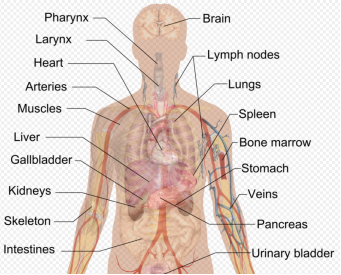
Figure 1. Some of the Human Internal Organs [17].
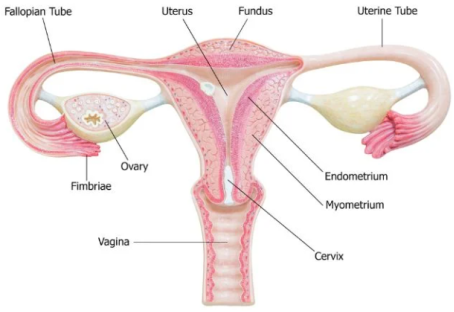
Figure 2. Anatomy of the Female Reproductive System. [18].
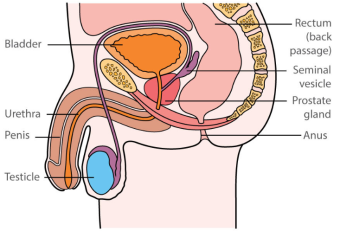
Figure 3. Anatomy of the Male Reproductive System. [23].
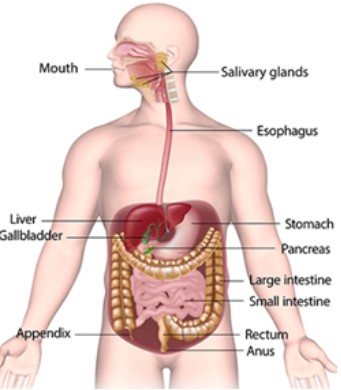
Figure 4. The Digestive System. [24].
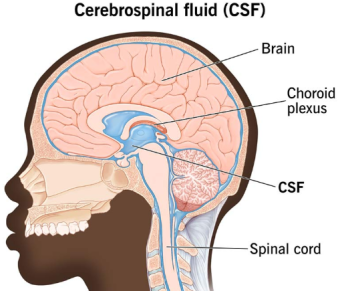
Figure 5. Brain and the Cerebrospinal Fluid [29].
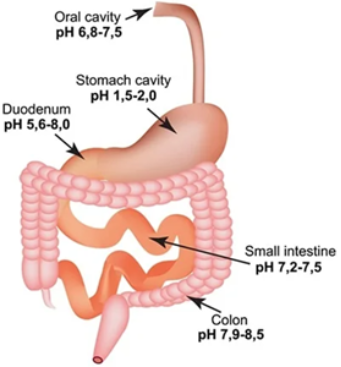
Figure 6. PH of the gastrointestinal tract; oral cavity, stomach cavity, duodenum, small intestine, and colon. [39].

Information



 Share This Article
 Twitter
 Linked In
 Facebook
 Copy
Copy Download