
Background: Psyllids mainly through their larvae which suck sap from their host plants can be harmful by causing the transmission of diseases through their saliva. Objective: The aim of this study was to describe the news species of psyllids genus Syntomoza pest insects associated with Flacourtia indica (Flacourtiaceae). Methods: Psyllids specimens were collected using an entomological net and a mouth aspirator. The specimens were preserved in 70% ethanol, mounted on slides. Identifications, measurements and illustrations were made using a Microscope. Results: Syntomoza biniae sp. nov., have vertex sub-rectangular without foveae; male proctiger in profile, with lateral lobe large, broadly rounded in the middle, narrowed apically, obliquely truncate at apex; paramere with apical region narrow curved forward bearing two short black thick spine oriented inwards; inner face with a conspicuous fold anteriorly extending obliquely toward apex; distal segment of aedeagus almost curved in basal half, dorsal margin weakly sinuate; female subgenital plate in lateral view subtriangular, very enlarged at the base with distinct hump; dorsal and ventral valvulae slightly curved dorsally. Fifth instar larvae, with antennal segments with following numbers of pointed setae: 1(0), 2(0), 3(2), 4(0), 5(1), 6(0), 7(2); dorsum of caudal plate bearing scarcely arranged small sharp cuticular teeth; anus ventral, surrounded by only outer circumanal pore ring. Syntomoza flacourtiae sp. nov., with male proctiger in profile medially with well-developed, broadly rounded posterior expansions, rather with two pits, one at base and other at apex, narrowed apically, apical margin rounded; paramere is rather with bulging posterior margin on one-third basally, anterior margin incurved, inner face covered with two row of eight stouter setae situated along anterior margin medially; circumanal ring oval to pear shaped. In fifth instar larvae: antenna segments 3 and 5 without numbers of pointed setae; forewing pad with a row of seven marginal long lanceolate; abdomen on all dorsum surface bearing lanceolate setae and additional like-scaly setae; anus terminal, without additional pore fields. Damage caused by Syntomoza spp. includes distortion and winding of the lateral edges of young leaves. Conclusion: Taxonomic studies indicated that, Syntomoza biniae sp. nov. and Syntomoza flacourtiae sp. nov. are the news species of Liviidae family described from Adamawa Region of Cameroon.
| Published in | American Journal of Zoology (Volume 9, Issue 1) |
| DOI | 10.11648/j.ajz.20260901.12 |
| Page(s) | 8-22 |
| Creative Commons |
This is an Open Access article, distributed under the terms of the Creative Commons Attribution 4.0 International License (http://creativecommons.org/licenses/by/4.0/), which permits unrestricted use, distribution and reproduction in any medium or format, provided the original work is properly cited. |
| Copyright |
Copyright © The Author(s), 2026. Published by Science Publishing Group |
Syntomoza Biniae sp. nov., Syntomoza Flacourtiae sp. nov., Psyllid Pest, Flacourtia Indica, Flacourtiaceae, Adamawa-Cameroon
Parameters | Syntomoza biniae sp. nov. Males | Syntomoza biniae sp. nov. Females | Syntomoza flacourtiae sp. nov. Males | Syntomoza flacourtiae sp. nov. Females | ||||||||||||
|---|---|---|---|---|---|---|---|---|---|---|---|---|---|---|---|---|
N | Min | Max | Average | N | Min | Max | Average | N | Min | Max | Average | N | Min | Max | Average | |
BL | 40 | 2.0 | 3.0 | 2.34 | 40 | 2.0 | 3.0 | 2.7 | 40 | 2.4 | 3.0 | 2.8 | 40 | 2.8 | 3.8 | 3.35 |
BW | 40 | 0.80 | 1.12 | 0.90 | 40 | 0.92 | 1,2 | 1.03 | 40 | 0.88 | 1.2 | 1.04 | 40 | 1.12 | 1.28 | 1.18 |
HW | 40 | 0.72 | 0.88 | 0.77 | 40 | 0.8 | 1.0 | 0.86 | 40 | 0.68 | 1.0 | 0.8 | 40 | 0.8 | 0.92 | 0.85 |
AL | 40 | 0.68 | 1.0 | 0.83 | 40 | 0.68 | 1.0 | 0.86 | 40 | 1.0 | 1.12 | 1.07 | 40 | 1.0 | 1.12 | 1.08 |
F1L | 40 | 0.2 | 0.24 | 0.22 | 40 | 0.2 | 0.24 | 0.22 | 40 | 0.2 | 0.2 | 0.2 | 40 | 0.2 | 0.24 | 0.22 |
WL | 40 | 1.6 | 2.0 | 1.82 | 40 | 1.8 | 2.8 | 2.25 | 40 | 2.2 | 2.2 | 2.2 | 40 | 2.4 | 2.8 | 2.6 |
WW | 40 | 0.8 | 0.92 | 0.84 | 40 | 0.88 | 1.2 | 1.04 | 40 | 0.88 | 1.0 | 0.96 | 40 | 1.0 | 1.28 | 1.17 |
wL | 40 | 1.4 | 2.0 | 1.60 | 40 | 1.6 | 2.4 | 1.92 | 40 | 1.6 | 2.0 | 1.8 | 40 | 2.0 | 2.2 | 2.18 |
wW | 40 | 0.52 | 0.8 | 0.60 | 40 | 0.6 | 0.8 | 0.71 | 40 | 0.6 | 0.8 | 0.69 | 40 | 0.8 | 0.88 | 0.82 |
MTL | 40 | 0.4 | 0.6 | 0.53 | 40 | 0.4 | 0.68 | 0.59 | 40 | 0.48 | 0.6 | 0.54 | 40 | 0.52 | 0.6 | 0.59 |
MFL | 40 | 0.36 | 0.48 | 0.40 | 40 | 0.4 | 0.52 | 0.42 | 40 | 0.4 | 0.52 | 0.48 | 40 | 0.4 | 0.6 | 0.49 |
MPL | 40 | 0.2 | 0.4 | 0.26 | / | / | / | / | 40 | 0.32 | 0.40 | 0.36 | / | / | / | / |
PL | 40 | 0.2 | 0.28 | 0.20 | / | / | / | / | 40 | 0.24 | 0.32 | 0.30 | / | / | / | / |
FPL | / | / | / | / | 40 | 0.68 | 1.0 | 0.79 | / | / | / | / | 40 | 0.68 | 0.8 | 0.75 |
PSPL | / | / | / | / | 40 | 0.4 | 0.6 | 0.47 | / | / | / | / | 40 | 0.4 | 0.6 | 0.47 |
DAL | 40 | 0.2 | 0.28 | 0.25 | / | / | / | / | 40 | 0.2 | 0.24 | 0.21 | / | / | / | / |
BL/HW | 40 | 2.78 | 3.40 | 3.03 | 40 | 2.5 | 3.0 | 3.13 | 40 | 3.52 | 3.0 | 3.5 | 40 | 3.5 | 4.13 | 3.94 |
BL/BW | 40 | 2.5 | 2.67 | 3.78 | 40 | 2.17 | 2.5 | 2.62 | 40 | 2.72 | 2.5 | 2.69 | 40 | 2.5 | 2.96 | 2.83 |
AL/HW | 40 | 1.11 | 1.13 | 1.07 | 40 | 0.85 | 1.0 | 1.0 | 40 | 1.47 | 1.12 | 1.33 | 40 | 1.25 | 1.21 | 1.27 |
F1/HW | 40 | 0.28 | 0.27 | 0.28 | 40 | 0.25 | 0.24 | 0.25 | 40 | 0.29 | 0.20 | 0.25 | 40 | 0.25 | 0.26 | 0.25 |
AL/F1 | 40 | 4.0 | 4.16 | 3.77 | 40 | 3.4 | 4.16 | 3.90 | 40 | 5.0 | 5.6 | 5.35 | 40 | 5.0 | 4.66 | 4.90 |
WL/HW | 40 | 2.22 | 2.27 | 2.36 | 40 | 2.25 | 2.8 | 2.61 | 40 | 3.23 | 2.2 | 2.75 | 40 | 3.0 | 3.04 | 3.05 |
WL/WW | 40 | 2.0 | 2.17 | 2.16 | 40 | 2.04 | 2.33 | 2.16 | 40 | 2.5 | 2.2 | 2.29 | 40 | 2.4 | 2.18 | 2.22 |
WL/wL | 40 | 1.14 | 1.00 | 1.13 | 40 | 1.12 | 1.16 | 1.17 | 40 | 1.37 | 1.1 | 1.22 | 40 | 1.2 | 1.27 | 1.19 |
MTL/HW | 40 | 0,55 | 0,68 | 0.68 | 40 | 0.55 | 0.68 | 0.68 | 40 | 0.70 | 0.60 | 0.67 | 40 | 0.65 | 0.65 | 0.69 |
PL/HW | 40 | 0.27 | 0.45 | 0.33 | / | / | / | / | 40 | 0.47 | 0.40 | 0.45 | / | / | / | / |
FPL/FSPL | / | / | / | / | 40 | 1.7 | 1.66 | 1.68 | / | / | / | / | 40 | 1.7 | 1.33 | 1.59 |
LR | 40 | 0.6 | 0.8 | 0.60 | 40 | 0.6 | 0.8 | 0.74 | 40 | 0.6 | 0.8 | 0.67 | 40 | 0.8 | 1.0 | 0.86 |
LM+Cu1 | 40 | 0.6 | 0.8 | 0.60 | 40 | 0.6 | 0.8 | 0.74 | 40 | 0.4 | 0.6 | 0.51 | 40 | 0.6 | 0,92 | 0,71 |
LM1+2 | 40 | 0.8 | 1.0 | 0.86 | 40 | 1.0 | 1.4 | 1.21 | 40 | 1.0 | 1.2 | 1.03 | 40 | 1.0 | 1.4 | 1.18 |
LM3+4 | 40 | 0.6 | 0.8 | 0.66 | 40 | 0.8 | 1.2 | 0.93 | 40 | 0.8 | 0.8 | 0.8 | 40 | 0.8 | 1.2 | 0.94 |
LPt | 40 | 1.2 | 1.6 | 1.25 | 40 | 1.2 | 2.0 | 1.8 | 40 | 1.2 | 1.6 | 1.36 | 40 | 1.2 | 2.0 | 1.63 |
m1 | 40 | 0.4 | 0.6 | 0.44 | 40 | 0.4 | 0.6 | 0.44 | 40 | 0.6 | 0.8 | 0.65 | 40 | 0.8 | 0.88 | 0.80 |
Parameters | Syntomoza biniae sp. nov. | Syntomoza flacourtiae sp. nov. | ||||||
|---|---|---|---|---|---|---|---|---|
N | Minimum | Maximum | Average | N | Minimum | Maximum | Average | |
BL | 05 | 1.63 | 1.81 | 1.70 | 04 | 2.09 | 2.36 | 2.22 |
BW | 05 | 0.81 | 0.81 | 0.81 | 04 | 0.81 | 0.90 | 0.86 |
AL | 05 | 0.4 | 0.45 | 0.42 | 04 | 0.58 | 0.63 | 0.62 |
MTL | 05 | 0.67 | 0.69 | 0.68 | 04 | 0.72 | 0.72 | 0.72 |
WL | 05 | 0.11 | 0.11 | 0.11 | 04 | 0.11 | 0.14 | 0.13 |
BL/BW | 05 | 2.12 | 2.62 | 2.40 | 04 | 2.58 | 2.62 | 2.58 |
LZUY | Laboratory of Zoology, Higher Teachers’ Training College, University of Yaounde I, Cameroon |
| [1] | Burckhardt D. Biology, ecology, and evolution of gall-inducing Psyllids (Hemiptera: Psylloidea). In: Raman R., Schaefer C. W. & Withers T. M. (eds.): Biology, ecology, and evolution of gallinducing arthropods. Science Publishers, Enfield, Plymouth, 2005, xxi, 143-157. |
| [2] | Hollis D. Australian Psylloidea: jumping plantlice and lerp insects. Australian Biological Ressources Study, Canberra. 2004, xvi + 216. |
| [3] | Hodkinson I. D. Life cycle variation and adaptation in jumping plant lice (Insecta: Hemiptera: Psylloidea): a global synthesis, Journal of Natural History. 2009, 43(1-2), 65-179. |
| [4] | Burckhardt D., Ouvrard D., Queiroz D and Percy D. Psyllid host-plants (Hemiptera: Psylloidea): resolving a semantic problem, Florida Entomologist. 2014, 97(1), 242-246. |
| [5] | Burckhardt D. Psylloid pests of temperate and subtropical crops and ornamental plants (Hemiptera, Psyllidea): a review, Trends in Agricultural Sciences, Entomology. 1994, 2, 173-186. |
| [6] | Percy D. M. Psyllids or «jumping plant lice» (Psylloidea, Hemiptera), University of British Columbia, Department of Botany, Beaty Biodiversity Museum. 2002. |
| [7] | Crawford, D. L. New genera and species of psyllidae from the Philippine Islands, The Philippin. Journal of Science. 1914, 8, 293-301, 1 plate. |
| [8] | Burckhardt, D., Ouvrard, D. and Percy, D. M. An updated classification of the jumping plant-lice (Hemiptera: Psylloidea) integrating molecular and morphological evidence, European Journal of Taxonomy. 2021, 736, 137-182. |
| [9] | Burckhardt D. & Misfud D. Jumping plant-lice of the Paurocephalinae (Insecta, Hemiptera, Psylloidea). Systematics and phylogeny, Contibutions to Natural History (Bern). 20032, 3-34. |
| [10] | Burckhardt, D., D. C. Alene, D. Ouvrard, J. L. Tamesse and J. Messi, 2006. Afrotropical members of the jumping plant-louse genus Diclidophlebia (Hemiptera: Psylloidea). Invert. Syst., 20: 367-393. |
| [11] | Vondracek, K. Jumping plant-lice (Psylloidea-Homoptera) of Central Africa: Part I (Congo), Sb. Entomol. Odd. Ndr. Mus. Praze. 1963, 35, 263-290. |
| [12] | Messi, J., D. C. Alene and J. L. Tamesse. Diclidophlebia xuani (Homoptera-Psylloidea) new species of psyllid associated with Ricinodendron heudelotii, Ann. Fac. Sci. Univ. Yaounde I. Ser. Sci. Vie Nat. 1998, 34, 233-237. |
| [13] | Tamesse J. L. and Dayang L. D. Newly described psyllid Diclidophlebia andjigae sp.n. (Hemiptera: Liviidae), on Grewia venusta (Tiliaceae) from Cameroon, Journal of Entomolology. 2018, 15, 19-17. |
| [14] | Yana, W., Dzokou V. J., Ndankeu Mveyo Y. P. and Tamesse J. L. Two species of psyllids genus Paurocephala (Hemiptera: Psyllidae) pest insects associated to Coronnaceae in Cameroon, Entomology Journals. 2019, 4(2), 13-19. |
| [15] | Dayang L. D., Dzokou V. J. and Tamesse J. L. Paurocephala famendongoeis sp. n. (Hemiptera: Psyllidae), Insect Pest of Psorospermum febrifugum (Hypericaceae) from Adamawa-Cameroon, American Journal of Zoology. 2023, 6(1), 1-8. |
| [16] | Mifsud D. & Burckhardt D. Taxonomy and phylogeny of the old world jumping plant-louse genus Paurocephala (Insecta, Hemiptera, Psylloidea), Journal of Natural History. 2002, 36, 1887-1986. |
| [17] | Bonnet P., Arbonnier M. and Grard P., “Woody plants of the Sahel. Graphic identification tool” V. 1.0 CIRAD. 2008. |
| [18] | Adjanohoun E. J., Ake Assi L., Floret J. J., Koumare M., Ahyi M. R. A., Raynal J. Contribution to ethnobotanical and floristic studies in Mali. Paris, Agency for Cultural and Technical Cooperation (Actc). 1985, 56. |
| [19] | Ouôba P, Lykke AM, Boussim J, Guinko S. The medicinal flora of the Niangoloko Classified Forest (Burkina Faso). Studies on the flora and vegetation of Burkina Faso and neighboring countries. 2006, Vol. 10. Editions Verlag Natur & Wissenschaft, Solingen: Francfort and Ouagadougou; 5-12. |
| [20] | Jin Hyung Kwon and Yong Jung Kwon. Insect Fauna of Korea, Psylloidea, Arthropoda: Insecta: Hemiptera: Sternorrhyncha, National Institute of Biological Resources, Ministry of Environment. 2020, 9(9), 405. |
| [21] | Klyver F. D. Anomoterga tatuata, new genus and new species and other chermidae from the Marquesas, Pacific Entomological Survey Publication I. 1932, 8, 1-3. |
| [22] | Martoni F. and Brown S. D. J. An annotated checklist of the Cook Islands psyllids with keys to the species and two new records (Hemiptera, Psylloidea), ZooKeys. 2018, 811, 91-108. |
| [23] | D. Burckhardt and P. Lauterer. The jumping plant-lice of Iran (Homoptera, Psylloidea), “Swiss Journal of Zoology”. 1993, 100(4), 829-898. |
APA Style
Dayang, L. D., Tamesse, J. L. (2026). Two News Species of Psyllids Genus Syntomoza (Hemiptera: Liviidae) Pest Insects Associated with Flacourtia Indica (Flacourtiaceae) in Cameroon. American Journal of Zoology, 9(1), 8-22. https://doi.org/10.11648/j.ajz.20260901.12
ACS Style
Dayang, L. D.; Tamesse, J. L. Two News Species of Psyllids Genus Syntomoza (Hemiptera: Liviidae) Pest Insects Associated with Flacourtia Indica (Flacourtiaceae) in Cameroon. Am. J. Zool. 2026, 9(1), 8-22. doi: 10.11648/j.ajz.20260901.12
@article{10.11648/j.ajz.20260901.12,
  author = {Louis Djakbe Dayang and Joseph Lebel Tamesse},
  title = {Two News Species of Psyllids Genus Syntomoza (Hemiptera: Liviidae) Pest Insects Associated with Flacourtia Indica (Flacourtiaceae) in Cameroon},
  journal = {American Journal of Zoology},
  volume = {9},
  number = {1},
  pages = {8-22},
  doi = {10.11648/j.ajz.20260901.12},
  url = {https://doi.org/10.11648/j.ajz.20260901.12},
  eprint = {https://article.sciencepublishinggroup.com/pdf/10.11648.j.ajz.20260901.12},
  abstract = {Background: Psyllids mainly through their larvae which suck sap from their host plants can be harmful by causing the transmission of diseases through their saliva. Objective: The aim of this study was to describe the news species of psyllids genus Syntomoza pest insects associated with Flacourtia indica (Flacourtiaceae). Methods: Psyllids specimens were collected using an entomological net and a mouth aspirator. The specimens were preserved in 70% ethanol, mounted on slides. Identifications, measurements and illustrations were made using a Microscope. Results: Syntomoza biniae sp. nov., have vertex sub-rectangular without foveae; male proctiger in profile, with lateral lobe large, broadly rounded in the middle, narrowed apically, obliquely truncate at apex; paramere with apical region narrow curved forward bearing two short black thick spine oriented inwards; inner face with a conspicuous fold anteriorly extending obliquely toward apex; distal segment of aedeagus almost curved in basal half, dorsal margin weakly sinuate; female subgenital plate in lateral view subtriangular, very enlarged at the base with distinct hump; dorsal and ventral valvulae slightly curved dorsally. Fifth instar larvae, with antennal segments with following numbers of pointed setae: 1(0), 2(0), 3(2), 4(0), 5(1), 6(0), 7(2); dorsum of caudal plate bearing scarcely arranged small sharp cuticular teeth; anus ventral, surrounded by only outer circumanal pore ring. Syntomoza flacourtiae sp. nov., with male proctiger in profile medially with well-developed, broadly rounded posterior expansions, rather with two pits, one at base and other at apex, narrowed apically, apical margin rounded; paramere is rather with bulging posterior margin on one-third basally, anterior margin incurved, inner face covered with two row of eight stouter setae situated along anterior margin medially; circumanal ring oval to pear shaped. In fifth instar larvae: antenna segments 3 and 5 without numbers of pointed setae; forewing pad with a row of seven marginal long lanceolate; abdomen on all dorsum surface bearing lanceolate setae and additional like-scaly setae; anus terminal, without additional pore fields. Damage caused by Syntomoza spp. includes distortion and winding of the lateral edges of young leaves. Conclusion: Taxonomic studies indicated that, Syntomoza biniae sp. nov. and Syntomoza flacourtiae sp. nov. are the news species of Liviidae family described from Adamawa Region of Cameroon.},
 year = {2026}
}
TY  - JOUR
T1  - Two News Species of Psyllids Genus Syntomoza (Hemiptera: Liviidae) Pest Insects Associated with Flacourtia Indica (Flacourtiaceae) in Cameroon
AU  - Louis Djakbe Dayang
AU  - Joseph Lebel Tamesse
Y1  - 2026/02/04
PY  - 2026
N1  - https://doi.org/10.11648/j.ajz.20260901.12
DO  - 10.11648/j.ajz.20260901.12
T2  - American Journal of Zoology
JF  - American Journal of Zoology
JO  - American Journal of Zoology
SP  - 8
EP  - 22
PB  - Science Publishing Group
SN  - 2994-7413
UR  - https://doi.org/10.11648/j.ajz.20260901.12
AB  - Background: Psyllids mainly through their larvae which suck sap from their host plants can be harmful by causing the transmission of diseases through their saliva. Objective: The aim of this study was to describe the news species of psyllids genus Syntomoza pest insects associated with Flacourtia indica (Flacourtiaceae). Methods: Psyllids specimens were collected using an entomological net and a mouth aspirator. The specimens were preserved in 70% ethanol, mounted on slides. Identifications, measurements and illustrations were made using a Microscope. Results: Syntomoza biniae sp. nov., have vertex sub-rectangular without foveae; male proctiger in profile, with lateral lobe large, broadly rounded in the middle, narrowed apically, obliquely truncate at apex; paramere with apical region narrow curved forward bearing two short black thick spine oriented inwards; inner face with a conspicuous fold anteriorly extending obliquely toward apex; distal segment of aedeagus almost curved in basal half, dorsal margin weakly sinuate; female subgenital plate in lateral view subtriangular, very enlarged at the base with distinct hump; dorsal and ventral valvulae slightly curved dorsally. Fifth instar larvae, with antennal segments with following numbers of pointed setae: 1(0), 2(0), 3(2), 4(0), 5(1), 6(0), 7(2); dorsum of caudal plate bearing scarcely arranged small sharp cuticular teeth; anus ventral, surrounded by only outer circumanal pore ring. Syntomoza flacourtiae sp. nov., with male proctiger in profile medially with well-developed, broadly rounded posterior expansions, rather with two pits, one at base and other at apex, narrowed apically, apical margin rounded; paramere is rather with bulging posterior margin on one-third basally, anterior margin incurved, inner face covered with two row of eight stouter setae situated along anterior margin medially; circumanal ring oval to pear shaped. In fifth instar larvae: antenna segments 3 and 5 without numbers of pointed setae; forewing pad with a row of seven marginal long lanceolate; abdomen on all dorsum surface bearing lanceolate setae and additional like-scaly setae; anus terminal, without additional pore fields. Damage caused by Syntomoza spp. includes distortion and winding of the lateral edges of young leaves. Conclusion: Taxonomic studies indicated that, Syntomoza biniae sp. nov. and Syntomoza flacourtiae sp. nov. are the news species of Liviidae family described from Adamawa Region of Cameroon.
VL  - 9
IS  - 1
ER  -
Faculty of Medicine and Pharmaceutical Sciences, University of Dschang, Dschang, Cameroon
Higher Teachers’ Training College, University of Yaounde I, Yaounde, Cameroon
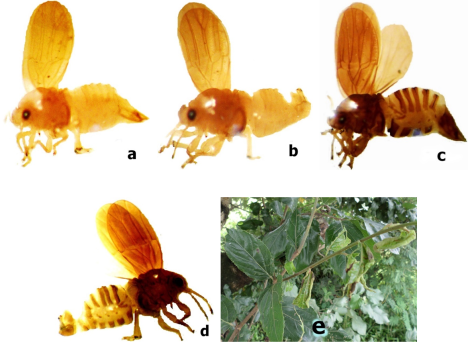
Figure 1. Species of Syntomoza spp. and host plant, a: female adult of Syntomoza biniae sp. nov. (x25), b: male adult of Syntomoza biniae sp. nov (x25), c: female adult of Syntomoza flacoutiae sp. nov. (x25), d: male adult of Syntomoza flacourtiae sp. nov (x25), e: Flacourtia indica (Flacourtiaceae).
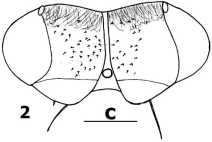
Figure 2. Head of S. biniae.
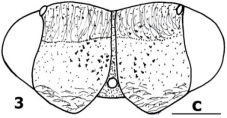
Figure 3. Head of S. flacourtiae.
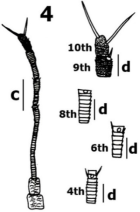
Figure 4. Antenna of S. biniae.
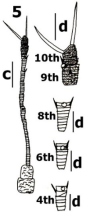
Figure 5. Antenna of S. flacourtiae.
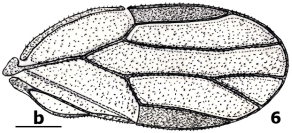
Figure 6. Forewing of S. biniae.
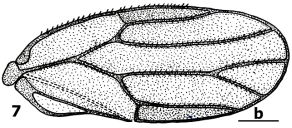
Figure 7. Forewing of S. flacourtiae.
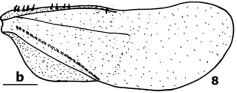
Figure 8. Hindwing of S. biniae.
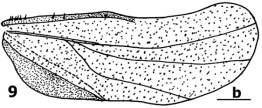
Figure 9. Hindwing of S. flacourtiae.
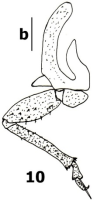
Figure 10. Metathoracic leg of S. biniae.
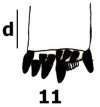
Figure 11. metatibial apical end of S. biniae.
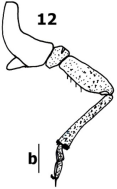
Figure 12. Metathoracic leg of S. flacourtiae.
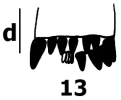
Figure 13. metatibial apical end of S. flacourtiae.
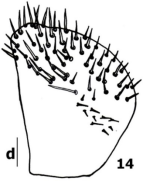
Figure 14. Male proctiger of S. biniae.
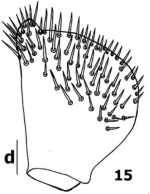
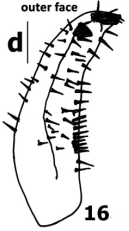
Figure 16. Paramere outer face of S. biniae.
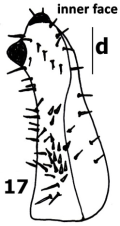
Figure 17. Paramere inner face of S. biniae.
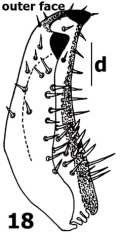
Figure 18. Paramere outer face of S. flacourtiae.
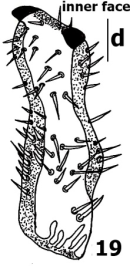
Figure 19. Paramere inner face of S. flacourtiae.
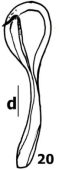
Figure 20. Aedeagus of S. biniae.
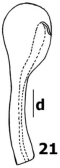
Figure 21. Aedeagus of S. flacourtiae.
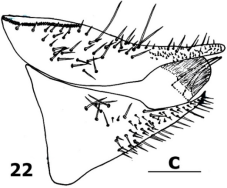
Figure 22. Female genitalia of S. biniae.
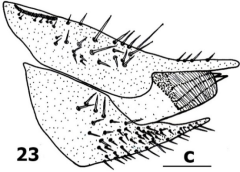
Figure 23. Female genitalia of S. flacourtiae.
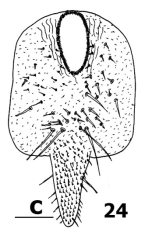
Figure 24. Female proctiger of S. biniae.
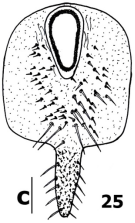
Figure 25. Female proctiger of S. flacourtiae.
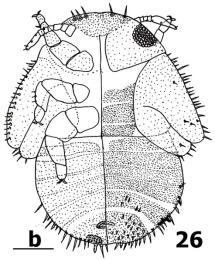
Figure 26. Fifth larval stage, left dorsal view and right ventral view of S. biniae.
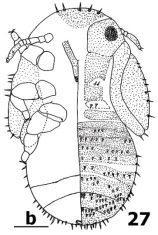
Figure 27. Fifth larval stage, left dorsal view and right ventral view of S. flacourtiae.
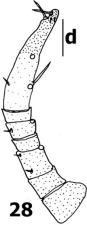
Figure 28. Antenna of S. biniae.
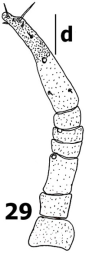
Figure 29. Antenna of S. flacourtiae.
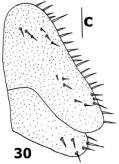
Figure 30. Forewing pad of S. biniae.
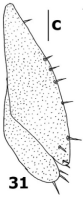
Figure 31. Forewing pad of S. flacourtiae.
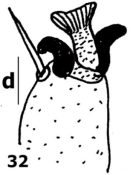
Figure 32. Tarsal arolium of S. biniae.
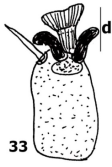
Figure 33. Tarsal arolium of S. flacourtiae.
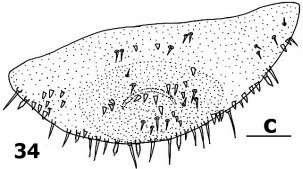
Figure 34. Caudal plate in dorsal view of S. biniae.
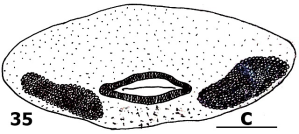
Figure 35.
Caudal plate in ventral view of S. biniae.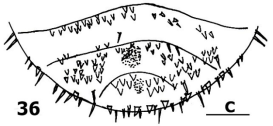
Figure 36. Caudal plate in dorsal view of S. flacourtiae.
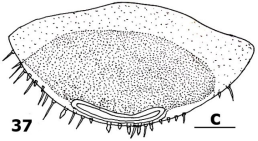
Figure 37. Caudal plate in ventral view of S. flacourtiae.

Information



 Share This Article
 Twitter
 Linked In
 Facebook
 Copy
Copy Download