Research Article | | Peer-Reviewed

Farmers’ Perceptions of Climate Change and Its Effects on Livestock Productivity in Luangwa District, Lusaka Province, Zambia: Setting the Stage for Urgent Action

Received: 25 April 2026     Accepted: 8 May 2026     Published: 30 May 2026
Views:       Downloads:
Abstract

Climate change poses a major threat to livestock livelihoods in sub-Saharan Africa, especially for smallholder farmers relying on climate-sensitive systems. This study examined farmers’ perceptions of climate change and its impact on livestock productivity in Luangwa District, Lusaka Province, Zambia. A cross-sectional survey involving 129 smallholder livestock farmers was conducted using structured questionnaires. Data analysis included descriptive statistics, ranking indices, and Likert-scale mean scores. Results showed universal awareness (100%) of climate change among respondents, with major indicators being reduced rainfall (93%), rising temperatures (93%), unpredictable weather (100%), and increased livestock diseases (80%). Deforestation (rank index=0.266) was seen as the main cause, followed by population pressure (0.223) and agricultural activities (0.174). Climate variability was believed to negatively affect livestock through less pasture (mean score 4.46), more diseases (4.48), water shortages (4.53), heat stress (4.48), decreased fertility (4.43), and higher feed costs (4.58). Farmers used several adaptation strategies, with vaccination (0.32), herd size reduction (0.25), and feed storage (0.22) ranked most important. Constraints included lack of funds (0.19), insufficient pasture (0.17), limited information (0.14), and weak institutional support (0.04). Despite challenges, most farmers rated their adaptation efforts as moderately effective and showed strong willingness (99.22%) to participate in future programs. This study offers empirical insights into perception-driven livestock adaptation in low-input systems, informing climate-smart livestock policies and extension in Zambia. It highlights the need for enhanced institutional support, targeted extension services, and climate-smart interventions to improve resilience and sustainability of smallholder livestock systems in Luangwa District.

Published in Animal and Veterinary Sciences (Volume 14, Issue 3)
DOI 10.11648/j.avs.20261403.13
Page(s) 61-74
Creative Commons

This is an Open Access article, distributed under the terms of the Creative Commons Attribution 4.0 International License (http://creativecommons.org/licenses/by/4.0/), which permits unrestricted use, distribution and reproduction in any medium or format, provided the original work is properly cited.

Copyright

Copyright © The Author(s), 2026. Published by Science Publishing Group

Keywords

Climate Change, Livestock Productivity, Smallholder Farmers, Adaptation Strategies, Farmer Perceptions, Zambia

1. Introduction
Climate change represents the greatest environmental challenge threatening global food systems and agricultural sustainability worldwide . Recent studies across regions consistently show that climate variability affects not only agricultural output but also broader socioeconomic systems, health outcomes, and livelihood security . These effects are especially significant in Sub-Saharan Africa, where climate risks intersect with persistent structural issues, including poverty, limited technological progress, weak infrastructure, and heavy reliance on rain-fed agriculture . Rather than operating independently, these factors interact, amplifying farmers’ vulnerability and reducing their capacity to adapt.
In this context, the livestock sector is vital for sustaining rural livelihoods, accounting for approximately 40% of global agricultural GDP and supporting nearly one billion people, many of whom live in poverty . However, growing research indicates that livestock production systems are highly sensitive to climate change. Unpredictable rainfall, prolonged droughts, flooding, and rising temperatures simultaneously affect feed supplies, water availability, and animal health . The overall impacts on both crops and livestock agriculture appear to be highly negative . When temperature limits are exceeded, heat stress directly affects livestock productivity and reproductive success , while indirectly worsening water scarcity, forage quality, and disease rates . Together, these biophysical stressors trigger cascading effects that undermine both crop–livestock integration and the overall resilience of farms.
Recent studies highlight the importance of understanding local vulnerability, given the multidimensional nature of these impacts, as a foundation for effective adaptation . Evidence indicates that farmers’ capacity to respond to climate risks depends not only on the technologies at their disposal but also on how they perceive and interpret climate change . Farmers need to identify shifts in climate patterns, evaluate the associated risks, and identify practical response options before they can adapt. Therefore, understanding farmers’ perceptions of climate hazards is essential for developing adaptation strategies that are suitable for the local context, socially acceptable, and effective at boosting resilience. Therefore, examining farmers’ perceptions of climate-related hazards is crucial, as this local awareness dictates adaptive behavior and decision-making, serving as a prerequisite for identifying effective and context-specific resilience strategies .
Although sophisticated scientific analysis of climate change exists, relatively little attention has focused on the perceptions and adaptation options of the local communities experiencing these changes firsthand. This gap highlights the need for in-depth studies examining farmers’ understanding of these extreme weather events and their consequences for livestock production.
To systematically examine these relationships, this study adopts a conceptual framework linking farmers’ perceptions of climate change, adaptation strategies, and livestock productivity outcomes.
Although there is increasing evidence that climate change is affecting livestock systems, little empirical research has explored how smallholder farmers’ perceptions influence their adaptation choices and their perceived outcomes for livestock productivity in Zambia. Specifically, district-level data from climate-vulnerable regions like Luangwa District are scarce, where extensive livestock systems are prevalent and adaptive capacity is limited.
This study seeks to evaluate how smallholder livestock farmers in Luangwa District perceive climate change, understand the impacts of climate variability on livestock productivity, and explore the adaptation strategies they use, as well as the challenges that hinder their effectiveness.
This study employs a perception–adaptation–outcome framework that views the impacts of climate change on livestock production as a connected process. Climate variability, such as shifts in rainfall and temperature, influences farmers’ perceptions and awareness, which in turn guide their adaptation strategies, including vaccination, herd size adjustments, feed storage, and water management. The success of these strategies in maintaining livestock productivity depends on farmers’ adaptive capacity, which includes access to financial resources, information, extension and veterinary services, and natural resources. Consequently, livestock productivity results from the interplay between perceived climate risks, adaptation actions, and existing institutional and resource limitations.
2. Methodology
2.1. Study Location
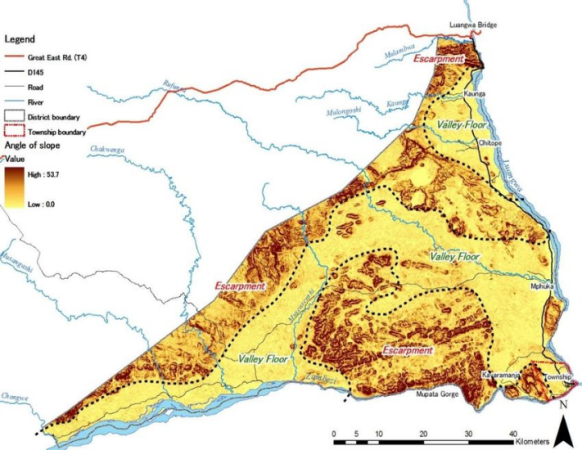
The study was carried out in Luangwa District, South-East of Lusaka province, Zambia. Specifically, the study was conducted in the two chiefdoms, namely Mburuma and Mphuka, which represent Luangwa District. The district is located in the Rift Valley, at the confluence of the Zambezi and Luangwa rivers at altitudes below 600 m above sea level. There are three main seasons: a cold season from May to August (temperature range 6-26°C), a hot season from September to October (17-35°C), and a rainy season from November to April (14-30°C). The main sources of livelihood in the district are fishing on the two rivers (the Luangwa and Zambezi rivers), the production of reed mats, and subsistence farming. The main cash crops are maize, groundnuts, sweet potatoes, baobab fruit, and pumpkins, and the common livestock kept are goats and chickens .
Figure 1. Map of Luangwa district.
2.2. Sampling Method
A 5% margin of error was applied in determining sample size in the Yamane formula for finite populations at a 95% confidence level:
n = N / [1 + N(e²)]
Where:
n = required sample size
N = total population size
e = level of precision (0.05)
Households were selected from official camp-level farmer registers using simple random sampling to ensure representativeness.
The total number of registered livestock farmers was 190, and the sample consisted of 129 registered farmers. Data were collected through face-to-face interviews using structured questionnaires. The questionnaire was pre-tested with a small group of farmers outside the study sample to ensure clarity, relevance, and consistency of questions.
The selected sample size was considered sufficient to adequately represent small-scale livestock farmers in the district and to produce reliable results, while remaining practical given the available time, logistical considerations, and resource limitations.
2.3. Data Collection and Management
A cross-sectional survey design was chosen because it effectively captures farmers lived experiences and adaptive responses, especially in data-scarce rural areas where long-term climate and productivity records are limited. Data collection was conducted by well-trained personnel due to their familiarity with the study area's geography and native language. It was collected using a structured questionnaire, which ensured that responses gathered sufficiently met the needs of all objectives within the study. The structured questionnaire was designed in English and pre-tested on 20 farmers in the study area to ensure it suited the local conditions, but to obtain reliable responses, the questionnaire administration was conducted using appropriate local terms in the common local language (Chikunda and Nsenga - luzi) spoken by the people in the study area. The structured questionnaire was designed to collect primary data on the socio-economic characteristics of the respondents, farmers' perception of climate change, perceived causes of climate change, impacts of climate change on livestock production, adaptation strategies in response to climate change, and barriers to adaptation measures.
After the data were collected, it was entered into a computer in an MS Excel sheet and made ready for analysis. All the collected data were double-checked for any errors that occurred during data collection and entry.
Primary data were collected from farmers to assess their perceptions of climate change.
2.4. Data Analysis
Data were analyzed using MiniTab Version 21. Frequencies were used to report qualitative results. Following, Farmers' adaptation strategies and adaptation barriers to CC were ranked using weighted average Indices using the formula: Index = sum of (7 × number of responses for 1st rank +6 × number of responses for 2nd rank +5 × number of responses for 3rd rank+ 4 × number of responses for 4th rank +3 × number of responses for 5th rank +2 × number of responses for 6th rank +1 × number of responses for 7th rank) given for an individual adaptation strategies or barriers to adaptations divided by the sum of (7 × total responses for 1st rank +6 × total responses for 2nd rank +5 × total responses for 3rd rank +4 × total responses for 4th rank +3 × total responses for 5th rank +2 × total responses for 6th rank +1 × total responses for 7th rank) summed for overall adaptation strategies and barrier to adaptation . In determining farmers' perceived adaptation practices and barriers, respondents were requested to rank their perceived strategies and barriers based on a 1–7 rank, where 1 is the most important rank for the causes of climate change, adaptation practices, and barriers, and 7 is the least important rank for practices and barriers.
Indices were constructed by normalizing ranked responses on a consistent scale, where higher index values indicate stronger perception or greater importance of the assessed factor.
Mean scores were calculated using the 5-point Likert weighted mean Formula:
X̄ = Σ(wᵢfᵢ) /Σfᵢ
Where:
X̄ = mean score of the Likert item
wᵢ = weight assigned to the iᵗʰ response category (5 = Strongly Agree, 4 = Agree, 3 = Not Sure, 2 = Disagree, 1 = Strongly Disagree)
fᵢ = frequency of responses in the iᵗʰ category
Σfᵢ = N = total number of respondents.
Given the exploratory nature of the study and the ordinal structure of perception data, analysis focused on descriptive statistics, including mean scores and indices, which are appropriate for summarizing farmers’ perceptions and experiences.
Participation in the study was voluntary, and informed consent was obtained from all respondents. Confidentiality of responses was ensured throughout the data collection and analysis process.
3. Results
Table 1. Socio-demographic characteristics of respondents (n = 129).

Variable (n = 129)

Percentage (%)

Sex of respondents

Male

61.7

Female

38.3

Age of farmers

Below 25 years

0.8

25–34 years

17.8

35–44 years

15.5

45–54 years

24.0

55 years and above

41.9

Household size

Less than 5 members

35.4

Between 5–10 members

60.8

More than 10 members

3.8

Level of education

None

3.9

Primary

61.2

Secondary

30.2

Tertiary

4.7

Experience in livestock farming

Less than 5 years

10.9

Between 5–10 years

39.5

More than 10 years

49.6

Monthly average household income

Less than K5,000

95.3

Between K5,000K10,000

4.7

Above K10,000

0

Production system

Extensive system

100

Semi-intensive

0

Intensive

0

Table 1 displays the socio-demographic details of the 129 livestock farmers. The study reveals significant variation in the socio-demographic profiles of individuals involved in livestock production in Luangwa. Most respondents were male (61.7%), with females comprising 38.3%, indicating a male dominance in livestock farming in the area.
Regarding age, the majority of farmers were 55 years or older (41.9%), followed by those aged 45–54 years (24.0%). Farmers aged 25–34 years (17.8%) and 35–44 years (15.5%) constituted a moderate proportion, while only 0.8% were under 25 years, indicating limited youth participation.
Household sizes mostly ranged from 5 to 10 members (60.8%), with 35.4% having fewer than 5 members and 3.8% having more than 10 members.
In terms of education, most respondents had primary education (61.2%), followed by secondary education (30.2%). A small percentage had tertiary education (4.7%), and 3.9% had no formal education.
Experience in livestock farming was generally extensive, with nearly half of the respondents having over 10 years (49.6%). About 39.5% had 5–10 years of experience, and 10.9% had less than 5 years.
Most households (95.3%) earned below K5,000 per month; only 4.7% earned between K5,000 and K10,000, and none earned above K10,000, indicating predominantly low incomes.
All respondents (100%) practiced the extensive production system, with no adoption of semi-intensive or intensive systems.
Table 2. Awareness and Perceptions of Climate Change among Respondents (n = 129).

Variable (n = 129)

Percentage (%)

Awareness of climate change

Yes

100

No

0

Meaning of Climate Change

The rains are changing

100

It’s getting hotter

100

The weather is unpredictable

100

More droughts

90

Livestock diseases

80

Do you believe weather patterns have changed in the last 10–20 years?

Yes

99.2

No

0.8

Change Observed

Less rainfall & High temperature

93

Less rainfall only

2.3

Less rainfall, More rainfall & High temperature

3

Less rainfall, More rainfall, High & Low temperature

1.

All respondents (100%) were aware of climate change and demonstrated a clear experiential understanding, citing changes in rainfall patterns, rising temperatures, unpredictable weather, droughts, and more livestock diseases. Nearly everyone (99.2%) reported changes in weather over the last 10–20 years, mainly reduced rainfall and higher temperatures (93%).
Table 3. Perception of the Causes of Climate Change among respondents (n = 129).

Causes

index

Deforestation

0.266

Population Increase

0.223

Agricultural Activities

0.174

Industrial Pollution

0.134

Natural Climate Variability

0.103

God’s Will/Anger

0.100

Table 3 shows farmers’ rankings of perceived causes of climate change using an index scale, with higher values indicating greater perceived importance. Deforestation and tree cutting had the highest index value (0.266), followed by population increase (0.223) and agricultural activities (0.174). Lower index values were seen for industrial pollution (0.134), natural climate variability (0.103), and God’s will or anger (0.100).
Table 4. Limiting factors to adaptability among respondents (n = 129).

Constraint

index

Lack Of Finance

0.19

inadequate pasture/forage

0.17

information

0.14

Breeds

0.12

Land

0.11

Water

0.1

Limited Technical Knowledge

0.08

Poor Access to Veterinary Services

0.05

Inadequate Extension Support

0.04

Table 4 outlines the primary constraints affecting farmers’ ability to adapt, ranked by an index score. The most significant factor is the lack of finance, with an index value of 0.19. This is followed by limited pasture or forage resources (0.17) and insufficient information (0.14). Moderate challenges include issues related to breeds (0.12), land availability (0.11), and water scarcity (0.10). Less critical constraints consist of limited technical knowledge (0.08), difficulty accessing veterinary services (0.05), and inadequate extension support (0.04).
Table 5. Adaptation responses and their perceived effectiveness (n = 129).

Category

index

Most effective adaptation strategies

Vaccination

0.32

Reducing herd size

0.25

Feed storage

0.22

Water harvesting

0.12

Changing breeds

0.09

Table 5 shows the adaptation strategies livestock farmers use to cope with climate variability, ranked by an index scale. Vaccination has the highest index value (0.32), with reducing herd size close behind at 0.25. Other measures are ranked lower according to their index scores.
Table 6. Adaptation perceived effectiveness among respondents (n = 129).

Category

%

Perceived effectiveness of strategies

Moderately effective

75.97

Very effective

22.48

Not effective

1.55

Effectiveness ratings (Table 6) reflect farmers’ subjective opinions rather than objective productivity measures. The majority of farmers (75.97%) considered their livestock adaptation strategies to be moderately effective, with fewer rating them as very effective (22.48%) or not effective (1.55%). This suggests mostly positive outcomes with some variation.
Table 7. Perceived impacts on livestock productivity among respondents (n = 129).

Statement

Strongly Agree (5) %

Agree (4) %

Not Sure (3) %

Disagree (2) %

Strongly Disagree (1) %

Mean score

1. Changes in rainfall have reduced pasture availability

50

47

2

1

0

4.46

2. Higher temperatures have increased disease incidence

55

40

3

2

0

4.48

3. Water shortages have increased livestock mortality

60

35

3

2

0

4.53

4. Heat stress has reduced animal growth

55

40

3

2

0

4.48

5. Climate variability has reduced fertility

50

45

3

2

0

4.43

6. Feed prices have increased because of drought/flood

65

30

3

2

0

4.58

7. Reproductive performance has been negatively affected

48

47

4

1

0

4.42

All statements recorded high mean scores (>4.0), indicating strong agreement among respondents that climate variability has negatively affected livestock productivity.
Table 7 outlines farmers’ views on how climate variability influences livestock productivity. Most respondents concur that climate change has adversely affected livestock, as indicated by high average scores across all statements (mean > 4.40). The foremost concern is rising feed prices, driven by droughts and floods (mean = 4.58), which highlight widespread fears of feed shortages linked to climate events. Water scarcity, which increases livestock mortality, also received high ratings (mean = 4.53), underscoring the urgent need for reliable water access for animals. Changes in rainfall patterns are believed to have substantially reduced pasture availability (mean = 4.46), further constraining productivity. Heat-related issues are also significant; many agree that higher temperatures have led to increased disease prevalence (mean = 4.48) and slower animal growth (mean = 4.48), indicating heat stress as a major challenge. Reproductive effects are similarly observed, with climate variability perceived to decrease fertility (mean = 4.43) and impair overall reproductive success (mean = 4.42).
4. Discussion
This discussion is based on the perception–adaptation–outcome framework used in this study. This framework helps interpret farmers’ perceptions of climate change as a major factor influencing their adaptation choices, with the success of these adaptations in maintaining livestock productivity affected by institutional, financial, and resource limitations. These results represent farmers’ perceptions rather than actual measurements of livestock productivity outcomes.
4.1. Socio-demographic Characteristics
The socio-demographic traits identified in this study match earlier research showing that agricultural producers usually have varied socioeconomic backgrounds . These differences significantly affect their perceptions of climate change and their ability to adapt. The higher percentage of male respondents (61.7%) indicates that men still hold a key role in livestock decision-making in the study area, influencing how climate risks are understood and which adaptation measures are chosen. Similar gender-based differences in livestock ownership and management have been observed in various African regions . However, evidence from different regions shows that women can play a significant role in livestock management. This varies based on local labor practices and cultural norms, emphasizing that gender roles in climate adaptation are context-dependent.
The respondents' age profile indicates an aging farming community, as many farmers are 55 years or older. While extensive experience may improve their capacity to recognize long-term climate shifts, older farmers tend to depend more on traditional knowledge and might be less willing to try new or resource-heavy adaptation strategies. Similar age-related adaptation challenges have been observed in smallholder livestock systems in other regions . The limited participation of younger farmers raises questions about the future sustainability of livestock production and its ability to adapt to rising climate pressures.
Respondents generally had low educational levels, mostly only primary education. This limitation could hinder their access to climate information, extension services, and knowledge-based adaptation strategies, which in turn could reduce their adaptive capacity. As previous studies have shown, low formal education often correlates with lower adoption of improved livestock management and climate-resilient technologies . Nevertheless, variations in literacy across regions highlight the need to customize adaptation efforts to suit local educational environments.
Respondents' extensive livestock farming experience reflects a strong dependence on indigenous knowledge and traditional practices. While this experience can enhance awareness of climate variability, it might also limit openness to new adaptation strategies, especially those needing external inputs or technical assistance.
Respondents with low incomes showed limited ability to adapt, especially regarding capital-intensive options like better livestock breeds, water infrastructure, and feed supplements. Similar to other smallholder livestock systems, financial limitations prevent farmers from investing in purchased feeds and supplements, even when these are acknowledged as effective solutions to climate-related feed shortages . The study area’s heavy dependence on extensive production systems indicates that adaptation results are greatly influenced by reliance on natural resources and the extent of institutional support. This pattern is commonly observed in climate-vulnerable livestock systems, where limited external inputs increase sensitivity to climate shocks.
4.2. Awareness and Perceptions of Climate Change Among Respondents
Within the perception–adaptation–outcome framework, farmers’ strong awareness of rising temperatures, unpredictable rainfall, and frequent droughts forms the initial step in the adaptation process, since recognizing risks accurately is essential for making well-informed and timely decisions about adaptation.
The findings show that climate change is widely acknowledged among the study participants, with farmers regularly noting long-term changes such as altered rainfall patterns, rising temperatures, more frequent droughts, and higher rates of livestock diseases over the last 10–20 years. This common experience highlights prolonged exposure to climate fluctuations and emphasizes how lived experiences influence adaptation strategies in large-scale livestock systems.
The prevalent view of increasing temperatures and decreasing rainfall is consistent with evidence from other smallholder livestock systems, where farmers’ observations match recorded climate trends . This convergence increases the reliability of perception-based assessments, especially where formal meteorological data is scarce. The results indicate that farmers mainly depend on direct environmental signs and production results to inform their adaptation choices.
However, the differing perceptions of rainfall trends among a few respondents underscore the subjective nature of climate perception. This perception is shaped more by personal exposure to extreme weather events than by consistent climate patterns. As previous research suggests, farmers’ views on climate change are influenced by how often, how severe, and how these climatic shocks affect their livelihoods . Importantly, perception-based evaluations are still crucial, even if they don't perfectly match meteorological data, because they ultimately influence how farmers perceive risk and decide on adaptation strategies.
4.3. Limiting Factors to Adaptability
Within the perception–adaptation–outcome framework, the success of adaptation heavily depends on farmers’ access to financial, informational, and institutional resources. While participants in this study showed a strong understanding of climate change, various interconnected challenges hindered their capacity to convert this awareness into consistent and effective adaptation measures. This reveals a significant gap between recognizing climate risks and taking adaptive action.
The main barriers recognized are limited financial resources, decreasing pasture and water availability, and restricted access to climate and livestock management data. These challenges align with findings from other smallholder livestock systems, where lack of capital, forage shortages, poor veterinary services, and limited climate information substantially weaken adaptive capacity . Financial constraints specifically limit farmers’ capacity to implement capital-intensive adaptation strategies like adopting improved breeds, providing feed supplementation, developing water infrastructure, and implementing disease-control measures.
Institutional limitations exacerbate these issues, as weak extension services and inconsistent veterinary support hinder the dissemination of technical knowledge, early warning data, and advisory services crucial for effective adaptation. Such institutional barriers have also been identified as a restriction to climate adaptation in livestock systems, as they limit farmers’ participation with formal support frameworks . Evidence from West African contexts also highlights insecure land tenure and limited access to agricultural inputs as fundamental structural barriers to adaptation . Overall, the findings suggest that financial and informational barriers, along with institutional weaknesses, primarily shape adaptive capacity in the study area. These combined challenges prevent farmers from converting their climate awareness and adaptation objectives into sustained improvements in livestock productivity.
4.4. Perception of the Causes of Climate Change
Farmers in the study primarily see climate change as caused by local environmental factors like deforestation, population growth, and farming activities. According to the perception–adaptation–outcome framework, these beliefs are based on their daily experiences with increasingly degraded land. Such perceptions influence the adaptation strategies farmers find suitable or achievable. Focusing on local environmental causes might lead to responses that target immediate land management issues, possibly overlooking wider, climate-focused solutions.
The recognition of climate change as a result of deforestation and human land-use activities shows a clear awareness of human-influenced environmental changes within local production systems. Likewise, many smallholder farmers across different African regions frequently associate climate change with land-use modifications and population pressures . Conversely, farmers viewed industrial pollution, natural climate variability, and supernatural explanations as less significant, suggesting they mainly link climate change to observable human-made environmental damage.
However, differences in perceived causes across various studies highlight the subjective and context-dependent nature of understanding climate change. Research from different regions indicates that natural processes or supernatural explanations can be more significant than human activities . Notably, attributing causes to divine or supernatural factors has been linked to lower perceived self-efficacy and less willingness to take proactive adaptation, while recognizing human-driven causes generally enhances adaptive responses and a sense of responsibility for change. These findings emphasize how causal attribution influences both climate perception and adaptive behaviors and outcomes .
4.5. Adaptation Responses and Their Perceived Effectiveness
According to the perception–adaptation–outcome framework, farmers in the study area mainly focus on coping with immediate climate-related issues, such as rising disease rates and feed shortages, rather than making long-term structural changes to their production methods. The common use of vaccination, herd-size adjustments, and feed storage indicates a preference for affordable, quick-to-implement solutions given their limited adaptive capacity.
Vaccination was the most commonly used adaptation method, followed by herd size reduction and feed storage. Water harvesting and breed change were less frequent. This indicates that farmers mainly see climate variability in terms of its impact on livestock health and disease. Other climate-stressed livestock systems also show a similar focus on disease control and herd management as immediate coping strategies . Destocking is a common response to decreasing pasture availability and water scarcity, as it helps farmers lessen pressure on limited natural resources.
Feed storage and supplementary feeding are additional measures to buffer seasonal feed shortages, aligning with research from integrated crop–livestock systems where stored crop residues and supplementary feeds help maintain nutritional stability in the short term . In contrast, strategies like breed change were used less often, probably because of financial limitations, restricted access to better genetic resources, and the longer time needed for productivity improvements to appear.
The farmer's strong preference for indigenous chickens, especially for traits like disease resistance, growth rate, and body size, demonstrates an adaptive response to producing chickens under variable and challenging environmental conditions, increasingly affected by climate change .
Mobility-based adaptation strategies, like changing grazing routes or increasing grazing distances, were not prominent despite their typical use in pastoral systems. This may be due to land-use pressures, land tenure issues, and governance limitations that restrict spatial mobility, forcing farmers to depend mainly on on-farm coping strategies .
Most respondents considered their adaptation strategies only moderately effective, with few viewing them as highly successful. This indicates that although short-term coping measures can offer temporary relief, they are not enough to fully address the growing impacts of climate variability over time. Other studies show that individual adaptation efforts are often limited unless backed by robust institutional support, extension services, and infrastructure .
The high prevalence of moderately effective ratings shows that most adaptation measures serve as short-term coping strategies instead of long-term transformative approaches. This aligns with literature emphasizing the importance of stronger extension services, better early warning systems, and increased institutional support to sustainably boost adaptive capacity in livestock systems .
4.6. Effectiveness of Adaptation Strategies
Within the perception–adaptation–outcome framework, the moderate success of adaptation strategies observed in this study highlights a continuing gap between adaptation actions and measurable productivity results. Significantly, this gap seems to be primarily due to structural and institutional barriers rather than farmers’ lack of awareness or willingness to adapt.
Similar patterns are observed in various African livestock systems, where adaptation strategies are seen as beneficial but often limited in impact. For instance, research from Namibia shows that farmers’ evaluations of coping strategies are internally consistent, yet their overall adoption remains low, indicating that perceived usefulness alone does not ensure widespread or lasting implementation .
In The Gambia, a perception index of 0.66 indicates a moderate—rather than high—perceived effectiveness, aligning with the frequent “moderately effective” ratings seen in this study .
In contrast, data from South Africa's Amathole District show that none of the adaptation strategies were viewed as notably effective, underscoring even greater challenges to achieving adaptive outcomes. Collectively, these findings show smallholder livestock systems exhibit moderate adaptation under climate stress. While farmers implement strategies, limited resources, support, and infrastructure hinder productivity gains. This underscores the need to combine farmer-led adaptation with broader policy initiatives to close the gap between efforts and outcomes.
4.7. Perceived Impacts on Livestock Productivity
In the perception–adaptation–outcome framework, reductions in livestock productivity are linked to farmers' perceptions of climate variability rather than actual measured data. Although these evaluations rely on perception, they provide important insights into how smallholder livestock farmers perceive and respond to climate-related stressors, shaping their adaptation approaches and management focuses.
Changes in rainfall have reduced pasture availability
Farmers widely believe that shifts in rainfall patterns have reduced pasture availability, resulting in feed shortages and decreased livestock performance. Similar connections between rainfall variability, shorter growing seasons, and reductions in forage quantity and quality have been noted in other livestock systems . These perceptions are particularly crucial in large systems that rely heavily on natural rangelands, where rainfall directly impacts forage availability.
Higher temperatures have increased disease incidence
Respondents associated higher temperatures with an increased occurrence of livestock diseases. Previous studies suggest that rising temperatures can raise disease risk through heat stress, changing pathogen behavior, and enhancing vector activity . This study suggests that the perceived threats of disease are probably why vaccination is seen as an essential adaptation strategy.
Water shortages have increased livestock mortality
Water shortages are believed to elevate livestock mortality rates, especially during extended dry spells. The decline in surface and groundwater due to drought has been frequently associated with higher livestock losses in rain-fed and pastoral systems . Farmers’ perceptions of mortality risk underscore the vulnerability of livestock systems, particularly those dependent on water sources impacted by climate variability.
Heat stress has reduced animal growth
Farmers’ observations of decreased animal growth align with existing research indicating that heat stress decreases feed intake, interferes with metabolic processes, and ultimately hampers growth across various livestock species , indicating that rising heat conditions are likely causing noticeable drops in productivity, even in areas without direct measurement.
Feed prices have increased because of drought/flood
Respondents’ views on increasing feed prices agree with the literature, which shows that droughts and floods interrupt pasture growth, reduce crop yields, and limit water resources. These effects constrain feed supplies and increase costs for livestock producers , which consequently hampers farmers’ capacity to sustain livestock productivity as climate stress intensifies.
Reproductive performance has been negatively affected, and reduced fertility
Farmers’ reports of decreased reproductive success align with existing evidence that heat stress and nutritional deficiencies impair fertility, disrupt reproductive processes, and reduce conception rates in livestock. This contributes to declining herd productivity during extended periods of high temperatures and feed shortages . Farmers in Luangwa district clearly recognize the impacts of climate change and implement short-term coping measures. Nevertheless, their actions are hindered by scarce resources and insufficient institutional backing. Given that these insights are based on perceptions, they underscore the need for better extension services, financial aid, and climate-resilient systems to maintain livestock productivity.
5. Conclusion
This study shows that smallholder livestock farmers in Luangwa District are very aware of climate variability and see it as a major threat to their livestock productivity. Their perceptions strongly shape their adaptation efforts, which mainly include immediate strategies such as vaccination, feed storage, and reducing herd sizes. However, ongoing financial, informational, and institutional obstacles limit how effective these responses can be. Although the findings are based on perceptions rather than direct measurements, they highlight the need to strengthen extension services, improve access to resources, and introduce locally appropriate climate-smart livestock practices to promote long-term resilience in Zambia.
Abbreviations

CC

Climate Change

CSA

Climate-Smart Agriculture

HH

Household

SSA

Sub-Saharan Africa

ZMW

Zambian Kwacha

Acknowledgments
The authors sincerely thank the District Livestock Development Office in Luangwa District for helping us access study communities. We also appreciate all livestock farmers who kindly shared their time and experiences. Additionally, we are grateful for the support of field enumerators during data collection.
Author Contributions
Mazuba Manyanga: Conceptualization, Formal Analysis, Investigation, Methodology, Project administration, Writing – original draft
Mwape Wilson Mweni: Investigation, Methodology, Validation, Writing – review & editing
Simushi Liswaniso: Investigation, Methodology, Validation, Writing – review & editing
Erick Mulope: Investigation, Methodology, Validation, Writing – review & editing
Ronald Zilombo: Investigation, Methodology, Validation, Writing – review & editing
Data Availability Statement
The data is available from the corresponding author upon reasonable request.
Conflicts of Interest
The authors declare no conflicts of interest.
References
[1] Bashiru, H. A. and S. O. Oseni, Simplified climate change adaptation strategies for livestock development in low- and middle-income countries. Frontiers in Sustainable Food Systems, 2025. 9: p. 1566194.
[2] Rojas-Downing, M. M., et al., Climate change and livestock: Impacts, adaptation, and mitigation. Climate Risk Management, 2017. 16: p. 145-163.
[3] Saleem, A., et al., Securing a sustainable future: the climate change threat to agriculture, food security, and sustainable development goals. Journal of Umm Al-Qura University for Applied Sciences, 2024. 11: p. 595-611.
[4] Verma, K., et al., Climate change adaptation: Challenges for agricultural sustainability. Plant, cell & environment, 2024.
[5] Abbass, K., et al., A review of the global climate change impacts, adaptation, and sustainable mitigation measures. Environmental Science and Pollution Research International, 2022. 29: p. 42539-42559.
[6] Myers, S., et al., Climate Change and Global Food Systems: Potential Impacts on Food Security and Undernutrition. Annual review of public health, 2017. 38: p. 259-277.
[7] Amjath-Babu, T., et al., Climate change and indicators of probable shifts in the consumption portfolios of dryland farmers in Sub-Saharan Africa: Implications for policy. Ecological Indicators, 2016. 67: p. 830-838.
[8] Clarke, C., S. Shackleton, and M. Powell, Climate change perceptions, drought responses and views on carbon farming amongst commercial livestock and game farmers in the semiarid Great Fish River Valley, Eastern Cape Province, South Africa. African Journal of Range & Forage Science, 2012. 29(1): p. 13-23.
[9] Roth, J. and J. Galyon, Food security: The ultimate one-health challenge. One Health, 2024. 19.
[10] Paudel, D., et al., COVID-19 Pandemic, Climate Change, and Conflicts on Agriculture: A Trio of Challenges to Global Food Security. Sustainability, 2023.
[11] Hussain, M., et al., Sustainable Food Security and Nutritional Challenges. Sustainability, 2025.
[12] Onyeaka, H., et al., The ripple effects of climate change on agricultural sustainability and food security in Africa. Food and Energy Security, 2024.
[13] Adger, W. N., et al., Adaptation to climate change in the developing world. Progress in Development Studies, 2003. 3(3): p. 179-195.
[14] Richardson, K., et al., Food security outcomes under a changing climate: impacts of mitigation and adaptation on vulnerability to food insecurity. Climatic Change, 2018. 147: p. 327-341.
[15] Adimassu, Z. and A. Kessler, Factors affecting farmers' coping and adaptation strategies to perceived trends of declining rainfall and crop productivity in the central Rift Valley of Ethiopia. Environmental Systems Research, 2016. 5(1): p. 1.
[16] Ericksen, P., et al., Mapping hotspots of climate change and food insecurity in the global tropics. 2011, CGIAR Research Program on Climate Change, Agriculture and Food Security (CCAFS): Rome, Italy.
[17] Lipper, L., et al., Climate-smart agriculture for food security. Nature Climate Change, 2014. 4(12): p. 1068-1072.
[18] Nelson, G. C., et al., Agriculture and climate change in global scenarios: Why don’t the models agree? Agricultural Economics, 2014. 45(1): p. 85-101.
[19] Riaz, M., Livestock Integrated Farming in Rural Area of Pakistan. Advances in Biological Sciences Research, 2022.
[20] Akalu, B., Review on Common Impact and Management of Transboundary Animal Diseases. 2017. 2.
[21] Nsengimana, S. and D. Uwimpuhwe, The Impact of Small Livestock Project Intervention on Household Welfare in Rwanda. A Case Study of the Prism Project in Burera District. East African Journal of Interdisciplinary Studies, 2025.
[22] Godde, C., et al., Impacts of climate change on the livestock food supply chain: A review of the evidence. Global Food Security, 2021. 28: p. 100488.
[23] Ali, M. Z., G. Carlile, and M. Giasuddin, Impact of global climate change on livestock health: Bangladesh perspective. Open Veterinary Journal, 2020. 10: p. 178-188.
[24] Cheng, M., B. McCarl, and C. Fei, Climate Change and Livestock Production: A Literature Review. Atmosphere, 2022.
[25] Ayanlade, A., M. Radeny, and J. F. Morton, Comparing smallholder farmers’ perception of climate change with meteorological data: A case study from southwestern Nigeria. Weather and Climate Extremes, 2017. 15: p. 24-33.
[26] Wang, J., et al., Heat stress on calves and heifers: a review. Journal of Animal Science and Biotechnology, 2020. 11.
[27] Thornton, P., et al., Impacts of heat stress on global cattle production during the 21st century: a modelling study. The Lancet. Planetary health, 2022. 6 3.
[28] Rahut, D. B. and A. Ali, Impact of climate-change risk-coping strategies on livestock productivity and household welfare: Empirical evidence from Pakistan. Heliyon, 2018. 4(10): p. e00797.
[29] Thornton, P. K., et al., The impacts of climate change on livestock and livestock systems in developing countries: A review of what we know and what we need to know. Agricultural Systems, 2009. 101(3): p. 113-127.
[30] Semeraro, T., et al., Impact of Climate Change on Agroecosystems and Potential Adaptation Strategies. Land, 2023.
[31] Srivastav, A., et al., Climate-resilient strategies for sustainable management of water resources and agriculture. Environmental Science and Pollution Research, 2021. 28: p. 41576-41595.
[32] Xu, X., et al., Climate change vulnerability assessment for smallholder farmers in China: An extended framework. Journal of environmental management, 2020. 276: p. 111315.
[33] Zaatra, A., et al., Assessment of Farm Vulnerability to Climate Change in Southern France. Land, 2025.
[34] Patel, S., et al., Passive adaptation to climate change among Indian farmers. Ecological Indicators, 2023.
[35] Nyang’au, J., et al., Smallholder farmers’ perception of climate change and adoption of climate smart agriculture practices in Masaba South Sub-county, Kisii, Kenya. Heliyon, 2021. 7.
[36] Elum, Z. and M. Snijder, Climate change perception and adaptation among farmers in coastal communities of Bayelsa State, Nigeria: a photovoice study. International Journal of Climate Change Strategies and Management, 2023.
[37] Guo, R., et al., Local farmer’s perception and adaptive behavior toward climate change. Journal of Cleaner Production, 2020: p. 125332.
[38] Datta, P., B. Behera, and D. Rahut, Climate Change and Indian Agriculture: A Systematic Review of Farmers’ Perception, Adaptation, and Transformation. Environmental Challenges, 2022.
[39] Abid, M., et al., Farmer Perceptions of Climate Change, Observed Trends and Adaptation of Agriculture in Pakistan. Environmental Management, 2018. 63: p. 110-123.
[40] Chipatu, L., Drought coping among the small-scale farmers of Luangwa District in Zambia. Multidisciplinary Journal of Law, Social Sciences and Education, 2021. 4(2): p. 68-75.
[41] Yamane, T., Statistics: An Introductory Analysis. 2 ed. 1967, New York: Harper and Row.
[42] Abazinab, H., B. Duguma, and E. Muleta, Livestock farmers' perception of climate change and adaptation strategies in the Gera district, Jimma zone, Oromia Regional state, southwest Ethiopia. Heliyon, 2022. 8(12).
[43] Kosgey, I., Breeding objectives and breeding strategies for small ruminants in the tropics. 2004.
[44] Ambrose-Oji, B., Urban food systems and African indigenous vegetables: Defining the spaces and places for African indigenous vegetables in urban and peri-urban agriculture, in African indigenous vegetables in urban agriculture, C. M. Shackleton, M. W. Pasquini, and A. W. Drescher, Editors. 2009, Earthscan: London. p. 1-33.
[45] Zoma-Traoré, B., et al., From farmers to livestock keepers: a typology of cattle production systems in south-western Burkina Faso. Tropical Animal Health and Production, 2020. 52: p. 2179-2189.
[46] Ofuoku, A. U., Rural farmers' perception of climate change in central agricultural zone of Delta State, Nigeria. Indonesian Journal of Agricultural Science, 2011. 12(2): p. 63-69.
[47] Silveira, R. M. F., et al., Typification, characterization, and differentiation of sheep production systems in the Brazilian semiarid region. NJAS: Impact in Agricultural and Life Sciences, 2021. 93: p. 48-73.
[48] De Glanville, W., et al., Classification and characterisation of livestock production systems in northern Tanzania. PLoS ONE, 2020. 15.
[49] Melketo, T., et al., Index-based livestock insurance schemes to manage climate risks in Ethiopia: Determinants of farmers’ willingness to pay and lessons learned from Dasenech District, South Omo. Frontiers in Climate, 2025. 6: p. 1476202.
[50] Sesay, A. and S. Kallon, Livestock farmers’ perception, perceived impacts, and adaptations to climate change in Koinadugu district, Sierra Leone. Journal of Applied and Advanced Research, 2022.
[51] Mugumaarhahama, Y., et al., Characterization of smallholder cattle production systems in South-Kivu province, eastern Democratic Republic of Congo. Pastoralism, 2021. 11: p. 1-15.
[52] Eeswaran, R., et al., Current and Future Challenges and Opportunities for Livestock Farming in West Africa: Perspectives from the Case of Senegal. Agronomy, 2022.
[53] Steinfeld, H., T. Wassenaar, and S. Jutzi, Livestock production systems in developing countries: status, drivers, trends. Revue scientifique et technique, 2006. 25 2: p. 505-516.
[54] Adeoti, A. I., A. S. Coster, and T. A. Akanni, Analysis of farmers’ vulnerability, perception and adaptation to climate change in Kwara State, Nigeria. International Journal of Climate Research, 2016. 1(1): p. 1–16.
[55] Bewuketu, M., Farmers’ perception and adaptation strategies to climate change: The case of Woreillu District of Amhara Region, Northeastern Ethiopia. 2017, Haramaya University: Haramaya, Ethiopia.
[56] Acquah, H. D. and E. Onumah, Farmers’ perceptions and adaptations to climate change: An estimation of willingness to pay. Agris, 2011. 3(4): p. 31–39.
[57] Chatrchyan, A. M., et al., United States agricultural stakeholder views and decisions on climate change. Wiley Interdisciplinary Reviews: Climate Change, 2017. 8(5): p. e469.
[58] Ateeq-Ur-Rehman, M., et al., Climate change impact on rural livelihoods of small landholders: a case of Rajanpur, Pakistan. International Journal of Applied Agricultural Sciences, 2018. 4(2): p. 28-34.
[59] Mertz, O., A. Reenberg, and A. Diouf, Farmers’ perceptions of climate change and agricultural adaptation strategies in rural Sahel. Environmental Management, 2009. 43(5): p. 804-816.
[60] Fadina, A. M. R. and D. Barjolle, Farmers’ adaptation strategies to climate change and their implications in the Zou Department of South Benin. Environments, 2018. 5(1): p. 15.
[61] FAO, Adaptation to climate change in agriculture, forestry and fisheries: perspective, framework and priorities. 2007: Rome.
[62] Assoumana, B. T., et al., Comparative assessment of local farmers’ perceptions of meteorological events and adaptation strategies: two case studies in Niger Republic. Journal of Sustainable Development, 2016. 9(3): p. 118-135.
[63] Lies, A., Dealing with climate change. LEISA Magazine, 2008. 24(4): p. 9-11.
[64] Debela, N., et al., Perception of climate change and its impact by smallholders in pastoral/agropastoral systems of Borana. SpringerPlus, 2015. 4: p. 236.
[65] Kuruppu, N. and D. Liverman, Mental preparation for climate adaptation: the role of cognition and culture in enhancing adaptive capacity of water management in Kiribati. Global Environmental Change, 2011. 21: p. 657-669.
[66] Faisal, M., et al., Assessing small livestock herders’ adaptation to climate variability and its impact on livestock losses and poverty. Climate Risk Management, 2021.
[67] Idrissou, Y., et al., Adapting cattle farming to climate change in the dry and sub-humid tropical zones in Benin: how adaptation strategies affect productivity. Revue d’élevage et de médecine vétérinaire des pays tropicaux, 2023.
[68] Turner, M. D., J. G. McPeak, and A. Ayantunde, The role of livestock mobility in the livelihood strategies of rural peoples in semi-arid West Africa. Human Ecology, 2014. 42(2): p. 231-247.
[69] Speranza, C. I., Drought coping and adaptation strategies: Understanding adaptations to climate change in agro-pastoral livestock production in Makueni District, Kenya. European Journal of Development Research, 2010. 22(5): p. 623-642.
[70] Dapilah, F., J. Nielsen, and C. Friis, The role of social networks in building adaptive capacity and resilience to climate change: a case study from northern Ghana. Climate and Development, 2020. 12: p. 42-56.
[71] Nanfuka, S., D. Mfitumukiza, and A. Egeru, Characterisation of ecosystem-based adaptations to drought in the central cattle corridor of Uganda. African Journal of Range & Forage Science, 2020. 37: p. 257-267.
[72] Popoola, O. O., N. Monde, and S. F. G. Yusuf, Perception and adaptation responses to climate change: An assessment of smallholder livestock farmers in Amathole District Municipality. South African Journal of Agricultural Extension, 2019. 47(2): p. 46-57.
[73] Khatam, A., S. Muhammad, and I. Ashraf, Role of individual contact methods in dissemination of agricultural technologies. Pakistan Journal of Agricultural Research 26, 2013(1): p. 40-45.
[74] Siririka, N. A. T., et al., Climate change adaptation strategies among smallholder livestock farmers in Namibia's Omaheke Region, Namibia. Discover Sustainability, 2025. 6.
[75] Ceesay, S., et al., Farmers’ Perceptions of the Efficacy of Current Climate Risk Adaptation and Mitigation Strategies on Agriculture in The Gambia. Land, 2025.
[76] Baruch, Z. and T. Mérida, Effects of drought and flooding on root anatomy in four tropical forage grasses. International Journal of Plant Sciences, 1995. 156: p. 514-521.
[77] Polley, H. W., et al., Climate change and North American rangelands: trends, projections, and implications. Rangeland Ecology & Management, 2013. 66: p. 493-511.
[78] Nardone, A., et al., Effects of climate change on animal production and sustainability of livestock systems. Livestock Science, 2010. 130: p. 57-69.
[79] Bogale, G. and Z. Erena, Drought vulnerability and impacts of climate change on livestock production and productivity in different agro-Ecological zones of Ethiopia. Journal of Applied Animal Research, 2022. 50: p. 471-489.
[80] Cammalleri, C., J. Vogt, and P. Salamon, Development of an operational low flow index for hydrological drought monitoring over Europe. Hydrological Sciences Journal, 2017. 62(3): p. 346–358.
[81] FAO, Farm structures in tropical climates: Animal environmental requirements. 1986, Food and Agriculture Organization of the United Nations.
[82] Hopkins, A. and A. D. Prado, Implications of climate change for grassland in Europe: Impacts, adaptations and mitigation options: A review. Grass and Forage Science, 2007. 62: p. 118–126.
[83] De Rensis, F. and R. J. Scaramuzzi, Heat stress and seasonal effects on reproduction in the dairy cow: a review. Theriogenology, 2003. 60: p. 1139-1151.
[84] Manyanga M, Mwila P, Chipolyonga F, Nankonde L, Thobela Louis Tyasi, Harrison S, Liswaniso S, “Breeding objectives, Mating practices, and Trait preferences of smallholder indigenous chicken farmers in Luangwa district of Zambia,” ix. international congress on domestic animal breeding, genetics and husbandry - 2025 (icabgeh-25) szeged - hungary, september 02 - 04, 2025, 195.
Cite This Article
  • APA Style

    Manyanga, M., Mweni, M. W., Liswaniso, S., Mulope, E., Zilombo, R. (2026). Farmers’ Perceptions of Climate Change and Its Effects on Livestock Productivity in Luangwa District, Lusaka Province, Zambia: Setting the Stage for Urgent Action. Animal and Veterinary Sciences, 14(3), 61-74. https://doi.org/10.11648/j.avs.20261403.13

    Copy | Download

    ACS Style

    Manyanga, M.; Mweni, M. W.; Liswaniso, S.; Mulope, E.; Zilombo, R. Farmers’ Perceptions of Climate Change and Its Effects on Livestock Productivity in Luangwa District, Lusaka Province, Zambia: Setting the Stage for Urgent Action. Anim. Vet. Sci. 2026, 14(3), 61-74. doi: 10.11648/j.avs.20261403.13

    Copy | Download

    AMA Style

    Manyanga M, Mweni MW, Liswaniso S, Mulope E, Zilombo R. Farmers’ Perceptions of Climate Change and Its Effects on Livestock Productivity in Luangwa District, Lusaka Province, Zambia: Setting the Stage for Urgent Action. Anim Vet Sci. 2026;14(3):61-74. doi: 10.11648/j.avs.20261403.13

    Copy | Download

  • @article{10.11648/j.avs.20261403.13,
      author = {Mazuba Manyanga and Mwape Wilson Mweni and Simushi Liswaniso and Erick Mulope and Ronald Zilombo},
      title = {Farmers’ Perceptions of Climate Change and Its Effects on Livestock Productivity in Luangwa District, Lusaka Province, Zambia: Setting the Stage for Urgent Action},
      journal = {Animal and Veterinary Sciences},
      volume = {14},
      number = {3},
      pages = {61-74},
      doi = {10.11648/j.avs.20261403.13},
      url = {https://doi.org/10.11648/j.avs.20261403.13},
      eprint = {https://article.sciencepublishinggroup.com/pdf/10.11648.j.avs.20261403.13},
      abstract = {Climate change poses a major threat to livestock livelihoods in sub-Saharan Africa, especially for smallholder farmers relying on climate-sensitive systems. This study examined farmers’ perceptions of climate change and its impact on livestock productivity in Luangwa District, Lusaka Province, Zambia. A cross-sectional survey involving 129 smallholder livestock farmers was conducted using structured questionnaires. Data analysis included descriptive statistics, ranking indices, and Likert-scale mean scores. Results showed universal awareness (100%) of climate change among respondents, with major indicators being reduced rainfall (93%), rising temperatures (93%), unpredictable weather (100%), and increased livestock diseases (80%). Deforestation (rank index=0.266) was seen as the main cause, followed by population pressure (0.223) and agricultural activities (0.174). Climate variability was believed to negatively affect livestock through less pasture (mean score 4.46), more diseases (4.48), water shortages (4.53), heat stress (4.48), decreased fertility (4.43), and higher feed costs (4.58). Farmers used several adaptation strategies, with vaccination (0.32), herd size reduction (0.25), and feed storage (0.22) ranked most important. Constraints included lack of funds (0.19), insufficient pasture (0.17), limited information (0.14), and weak institutional support (0.04). Despite challenges, most farmers rated their adaptation efforts as moderately effective and showed strong willingness (99.22%) to participate in future programs. This study offers empirical insights into perception-driven livestock adaptation in low-input systems, informing climate-smart livestock policies and extension in Zambia. It highlights the need for enhanced institutional support, targeted extension services, and climate-smart interventions to improve resilience and sustainability of smallholder livestock systems in Luangwa District.},
     year = {2026}
    }
    

    Copy | Download

  • TY  - JOUR
    T1  - Farmers’ Perceptions of Climate Change and Its Effects on Livestock Productivity in Luangwa District, Lusaka Province, Zambia: Setting the Stage for Urgent Action
    AU  - Mazuba Manyanga
    AU  - Mwape Wilson Mweni
    AU  - Simushi Liswaniso
    AU  - Erick Mulope
    AU  - Ronald Zilombo
    Y1  - 2026/05/30
    PY  - 2026
    N1  - https://doi.org/10.11648/j.avs.20261403.13
    DO  - 10.11648/j.avs.20261403.13
    T2  - Animal and Veterinary Sciences
    JF  - Animal and Veterinary Sciences
    JO  - Animal and Veterinary Sciences
    SP  - 61
    EP  - 74
    PB  - Science Publishing Group
    SN  - 2328-5850
    UR  - https://doi.org/10.11648/j.avs.20261403.13
    AB  - Climate change poses a major threat to livestock livelihoods in sub-Saharan Africa, especially for smallholder farmers relying on climate-sensitive systems. This study examined farmers’ perceptions of climate change and its impact on livestock productivity in Luangwa District, Lusaka Province, Zambia. A cross-sectional survey involving 129 smallholder livestock farmers was conducted using structured questionnaires. Data analysis included descriptive statistics, ranking indices, and Likert-scale mean scores. Results showed universal awareness (100%) of climate change among respondents, with major indicators being reduced rainfall (93%), rising temperatures (93%), unpredictable weather (100%), and increased livestock diseases (80%). Deforestation (rank index=0.266) was seen as the main cause, followed by population pressure (0.223) and agricultural activities (0.174). Climate variability was believed to negatively affect livestock through less pasture (mean score 4.46), more diseases (4.48), water shortages (4.53), heat stress (4.48), decreased fertility (4.43), and higher feed costs (4.58). Farmers used several adaptation strategies, with vaccination (0.32), herd size reduction (0.25), and feed storage (0.22) ranked most important. Constraints included lack of funds (0.19), insufficient pasture (0.17), limited information (0.14), and weak institutional support (0.04). Despite challenges, most farmers rated their adaptation efforts as moderately effective and showed strong willingness (99.22%) to participate in future programs. This study offers empirical insights into perception-driven livestock adaptation in low-input systems, informing climate-smart livestock policies and extension in Zambia. It highlights the need for enhanced institutional support, targeted extension services, and climate-smart interventions to improve resilience and sustainability of smallholder livestock systems in Luangwa District.
    VL  - 14
    IS  - 3
    ER  - 

    Copy | Download

Author Information
  • Department of Livestock Development, Ministry of Fisheries and Livestock, Lusaka, Zambia

    Biography: Mazuba Manyanga is a graduate with a Bachelor of Science in Animal Science from the University of Zambia. He also has a Diploma in Animal Science from the Natural Resources Development College and a Certificate in Teaching Methodology from the University of Zambia. As a livestock professional with the Ministry of Fisheries and Livestock, he brings over ten years of experience in livestock extension, farmer training, and community development projects. His academic and professional focus includes livestock production systems, animal breeding, animal health, climate change impacts on agriculture, and adaptation strategies for smallholder farmers in Zambia. His work aims to enhance village livestock productivity through applied research, sustainable methods, and extension programs, with a dedicated focus on climate resilience and smallholder livestock development.

    Research Fields: smallholder livestock production, indigenous chicken breeding, animal health, livestock trait preference analysis, climate change impacts on livestock, livestock systems sustainability

  • Department of Livestock Development, Ministry of Fisheries and Livestock, Lusaka, Zambia;Department of Animal Science, The University of Zambia, Lusaka, Zambia

    Biography: Mwape Wilson Mweni is a Zambian livestock development specialist and animal geneticist with over twelve years of experience in livestock production, climate change, and sustainable development. He works as a Stocking and Restocking Specialist under the **Enhanced Smallholder Livestock Investment Programme (E-SLIP), coordinating national livestock interventions. He is a PhD candidate in Animal Genetics at the University of Zambia, and holds degrees in Animal Science and Climate Change and Sustainable Development. His research interests include animal genetics, indigenous livestock improvement, and sustainable livestock production systems.

    Research Fields: Animal Genetics and Breeding, with a focus on indigenous livestock genetic resources and sustainable, climate-resilient production systems

  • Department of Animal Science, The University of Zambia, Lusaka, Zambia

    Biography: Simushi Liswaniso is an animal scientist and researcher at the University of Zambia, specialising in Animal Genetics, Breeding, and Reproduction. His research focuses on genetic and phenotypic characterization of indigenous poultry, particularly Zambian chickens, with the aim of informing selective breeding and improving productivity in smallholder systems. He has co-authored several peer-reviewed publications indexed on platforms such as ResearchGate and Google Scholar, covering areas including morphometric traits, body weight prediction, and phenotypic diversity, contributing valuable evidence for sustainable livestock genetic improvement in Zambia.

    Research Fields: Animal Genetics, Breeding, and Reproduction, with emphasis on genetic and phenotypic characterization of indigenous livestock (especially poultry) and applied breeding strategies for productivity improvement in smallholder systems

  • Department of Livestock Development, Ministry of Fisheries and Livestock, Lusaka, Zambia;Department of Animal Science, Palabana University of Agriculture, Chongwe, Zambia

    Biography: Erick Mulope, from Zambia, is passionate about personal growth and community development. From a young age, his curiosity and drive to learn have led him to develop his skills in communication, problem-solving, and teamwork through education and experience. Currently, he studies animal science at Palabana University for his BSc and holds certificates in general agriculture from Zambia College of Agriculture - Monze and social work from the University of Zambia. With over 10 years of experience in livestock extension, farmer training, and inventory preparation for Zambia's climate reports, he specializes in livestock production, particularly animal nutrition and climate-smart fodder for smallholders. His sustainable hydroponic fodder projects have increased rural livestock productivity by lowering feed costs and improving sector efficiency.

    Research Fields: poultry production systems, indigenous chicken traits, livestock production and food security, experimental animal science

  • Department of Agriculture Economics and Extension, The University of Zambia, Lusaka, Zambia

    Biography: Ronald Zilombo holds a BSc in Agricultural Economics from the University of Zambia. He holds professional certificates in Monitoring and Evaluation, Project Management and Planning, Graphic Designing, and Digital Marketing from the University of Zambia. His research interests focus on agricultural market systems, price volatility, and smallholder farmer decision-making. He has conducted research on the effects of tomato price volatility and access to market information on production and marketing decisions among smallholder farmers in Chongwe District, Zambia. His work integrates quantitative and qualitative approaches to analyze farmer behavior, market participation, and production responses. His broader interests include farm management, agricultural policy, and rural development, with an emphasis on improving smallholder productivity and market access through evidence-based interventions.

    Research Fields: Agricultural Economics concentrating on smallholder market systems, price fluctuations, farmer decisions, and evidence-based strategies to enhance productivity and market access


  • Abstract
  • Keywords
  • Document Sections

    1. 1. Introduction
    2. 2. Methodology
    3. 3. Results
    4. 4. Discussion
    5. 5. Conclusion
    Show Full Outline
  • Abbreviations
  • Acknowledgments
  • Author Contributions
  • Data Availability Statement
  • Conflicts of Interest
  • References
  • Cite This Article
  • Author Information