Research Article | | Peer-Reviewed

Diagnostic Survey of Honeybee Diseases, Pests, and Predators in East Hararghe Zone of Oromia, Ethiopia

Received: 17 June 2026     Accepted: 6 July 2026     Published: 30 September 2026
Views:       Downloads:
Abstract

The study was conducted in the East Hararghe Zone of the Oromia Regional State to determine the occurrence, prevalence, and effects associated with honeybee diseases, pests, and predators. Three districts were purposefully selected, representing three agro-ecological zones (highland, midland, and lowland). Within each district, three peasant associations (PAs) were selected. From each PA, at least three apiaries were randomly chosen for the assessment. For each apiary, colonies were inspected for the clinical symptoms of honeybee diseases and pests. A total of 162 honeybee colonies were randomly sampled from the apiaries of 90 beekeepers who participated in the questionnaire survey. The samples were examined in the laboratory to determine the presence or absence of diseases and pests. The results indicated that the occurrence of honeybee diseases and pests varied with hive type and agro-ecological zone. The use of pesticides and herbicides, as well as bee forages, was identified as the primary cause of the decrease in bee colonies and honey yields in the area. The diagnostic results revealed no clinical symptoms of AFB or EFB infection in any of the studied areas. However, a considerable number of honeybee colonies were infested with Varroa mites, Nosema, amoeba, and chalk brood diseases, and traditional beehives showed a higher prevalence of Nosema, amoeba, Varroa mites, and bee lice compared to modern beehives. The highland area had a higher prevalence of Nosema and amoeba, whereas the lowland area had the highest prevalence of Varroa mite and bee lice. The current results indicated that hive type and agroecology contributed to the varying levels of disease and pest prevalence in a given area. Thus, raising awareness of proper agrochemical use, encouraging adoption of modern beekeeping technologies, and implementing disease management strategies to safeguard the well-being of honeybee colonies are important.

Published in Animal and Veterinary Sciences (Volume 14, Issue 5)
DOI 10.11648/j.avs.20261405.13
Page(s) 144-153
Creative Commons

This is an Open Access article, distributed under the terms of the Creative Commons Attribution 4.0 International License (http://creativecommons.org/licenses/by/4.0/), which permits unrestricted use, distribution and reproduction in any medium or format, provided the original work is properly cited.

Copyright

Copyright © The Author(s), 2026. Published by Science Publishing Group

Keywords

Diseases, Honeybees, Pests, Predators, Prevalence

1. Introduction
Apiculture is a vibrant part of Ethiopia's agriculture, offering multiple benefits, including increased productivity of food and cash crops and natural resource conservation through pollination. It also provides income for landless and low-income individuals, supporting food security and poverty alleviation. Additionally, honeybee products contribute to Ethiopia's foreign currency earnings via exports. Globally, honeybees and their broods face threats from various diseases and parasitic mites. For instance, colony collapse disorder (CCD) has caused significant declines in honeybee populations in Europe and the USA, mainly linked to pests and diseases, impacting honey production, quality, safety, and marketability. In 2010, the USDA reported that 34% of losses were due to these causes . This issue concerns governments, conservationists, and private sectors worldwide, including Africa, where similar declines occur. In Africa, honeybee health is threatened by diseases, pests, predators, and the misuse of chemicals, though impacts vary by location and ecological conditions. Ethiopia's diverse agro- ecologies favor honeybees but also support various pests and diseases, influencing the industry's development . Common Ethiopian honeybee diseases include varroosis, nosemosis, amoeba, and chalkbrood, while pests such as small hive beetles, ants, and bee lice pose additional challenges . However, data on the distribution and severity of these issues remain limited, and their impact varies across colonies, apiaries, and weather conditions. The East Hararghe Zone, a promising area for beekeeping in Oromia, boasts favorable conditions and traditional practices but faces challenges from diseases, pests, and predators. There is an urgent need for research to determine the current status and distribution of these issues in the zone. This study aims to assess the prevalence of honeybee diseases, pests, and predators in East Hararghe, and to examine their effects on colonies and honeybee products.
2. Materials and Methods
2.1. Description of the Study Area
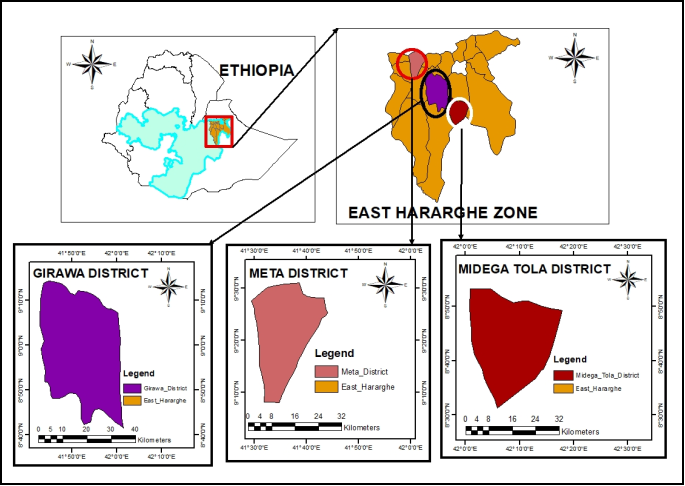
The study was conducted in the Gurawa, Meta, and Midegatola Districts in the East Hararghe Zone of the Oromia Regional State. East Hararghe Zone is located in the eastern part of the Oromia Regional State, approximately 525 km from the capital city, Finfine. The zone lies between 7° 03' 20" N and 9° 04' 41" N, and between 4° 10' 10" E and 4° 30' 16" E, and is bounded to the west by the West Hararge Zone, to the south by the Bale Zone, to the east and southeast by the Somali Regional State, and to the north by the Dire Dawa administrative council. The zone encompasses three main agro-ecologies: lowland, midland, and highland, with elevations ranging from 500 to 3405 meters above sea level. Annual rainfall in the zone ranges from 400 to 1010 mm, and the annual temperature is between 14°C and 25°C. Agriculture is the primary source of livelihood for residents. The agricultural system is characterized by smallholder mixed farming, combining crop production with livestock rearing , in which beekeeping is practiced as a secondary activity.
Figure 1. Shows the map of the study area.
2.2. Sources and Methods of Data Collection
For this study, three districts were selected, namely, Gurawa, Meta, and Midegatola. From each district, three representative PAs were selected based on their potential for beekeeping, agro-ecological representativeness (highland, midland, and lowland), and accessibility to transport facilities. From each PA, 3 apiaries were selected, and three to five bee colonies were randomly inspected both externally and internally for the occurrence and infestation of honeybee diseases and pests.
2.3. Socio-economic Study
A pre-structured questionnaire was developed and used to generate relevant information related to honeybee diseases and pests and their economic importance at the zone, district, and PA levels. From each of the PAs, 10 experienced beekeepers were purposively selected and interviewed. A total of 90 beekeepers were interviewed from three districts. The major points included in the questionnaire were to state the major honeybee pests and predators, any clinical symptoms of honeybee diseases and pests, the level of their economic importance, and indigenous practices to control honeybee diseases and pests.
2.4. Sampling Procedure
From each sampling locality, adult honeybee and sealed brood samples were collected from the sampled honeybee colonies. In the absence of sealed brood, empty, old brood combs were collected to observe residual signs of disease. In addition, field observations were conducted to assess pest presence, and the necessary records were kept. Each beehive was treated as a single sample unit, and the types of beehives and agroecology were treated as factor variables. From the three districts, a total of 162 honeybee colonies were randomly selected, and samples were collected for laboratory analysis to identify key clinical symptoms of honeybee diseases and pests. Then, the samples were taken to the laboratory of the district veterinary clinic for further examination. The prevalence of honeybee diseases and pests at the apiary and colony levels was calculated using equation (1) as described elsewhere .
Prevaence=Number of positive cases Total number of sampled population x 100(1)
2.5. Diagnosis for Major Honeybee Diseases
Field observation and diagnosis were conducted through colony inspections for major honeybee diseases, including nosema, amoeba, chalk brood, American foulbrood (AFB), and European foulbrood (EFB) (where there are suspected clinical symptoms). Besides the field observations, laboratory testing for each type of disease was conducted following the standard procedures for each honeybee disease.
2.5.1. Protozoa Diseases (Nosema Apis and Amoeba)
For suspected colonies, 20-30 adult bees' abdomens were removed and placed in a mortar dish with 1.0 ml of distilled water per sample. The abdomens were then ground into a paste, and a wet mount was prepared from this suspension on a microscopic slide. The suspension was examined under a microscope using 40X magnification for the presence of Nosema spores and Amoeba cysts. The presence of spores indicated the detection of N. apis, and the presence of cysts and spore balls indicated the detection of amoeba diseases in the honeybees.
2.5.2. Bacterial Diseases (AFB and EFB)
In the randomly selected apiaries, three or more colonies were inspected internally for major clinical signs of bacterial diseases, with an emphasis on AFB and EFB. Typical clinical symptoms, such as irregular brood arrangement, sunken and dark capping with puncture holes, dead and decayed larvae with dark “scales” and a slight to pronounced odour, were examined for the occurrence of AFB in the colonies. Similarly, twisted larvae with creamy-white guts visible through the body wall, melted and yellow-white larvae with an unpleasant sour odour, and loosely attached brown scales were directly observed in the infected colonies by EFB. Furthermore, a matchstick test (stretch test) was employed to observe the Robby thread stretching for the typical clinical symptoms of bacterial diseases.
2.5.3. Fungal Disease (Chalk Brood)
To examine the presence of chalk brood, both external and internal inspections for the presence of chalk brood clinical symptoms were conducted. Mummies were moistened with distilled water, and the supernatant was placed on a microscope slide, covered with a coverslip. Then, it was examined under a light microscope by following . procedures to check for the presence of Ascosphaera apis spores using a Zeiss AxioVert A. 1 light microscope under a magnification power of 40X.
2.6. Diagnosis for Honeybee Ecto-Parasites
2.6.1. Examination for Varroa Mites
To examine the presence and infestation level of Varroa mites in honeybees, the standard icing sugar rolling method of was followed. The collected samples of 250-300 adult bees from randomly selected colonies were brushed off directly into a wide-mouth jar with an 8-mesh lid. About one teaspoon of powdered icing sugar (at least 7g) was poured into the jar containing adult bees, and the jar was vigorously rolled for one minute to distribute the sugar evenly over all the bees. Then, allow the jar to sit for a few minutes before inverting it and shaking it over a piece of paper to recover the mites. The mites and sugar passed through the mesh onto the paper. Place the fallen mites and sugar in a sieve and rinse the mites with 1X phosphate-buffered saline (or another similar saline solution) to remove the icing sugar particles. This allowed the sugar to escape while keeping the mites on the sieve for dumping onto a clean sheet of paper. Brood examination was also conducted by cutting off 5 x 5 cm brood comb areas from drone and/or worker pupae. Finally, the presence of Varroa mites was checked.
2.6.2. Diagnosis for Other Hive Pests
The study assessed the occurrence and economic significance of key honeybee pests such as wax moth, small hive beetle, ants, spiders, bee-eater birds, honey badger, bee lice, lizards, and dead hawk moths through beekeeper interviews utilizing semi-structured questionnaires, along with internal and external hive inspections. During these inspections, clinical symptoms, infested combs, adults and larvae of small hive beetles and wax moths, and other decayed materials were observed, as described by . The presence of small hive beetle (Aethina tumida) was confirmed by identifying adult and larval stages or by examination, noting that SHB larvae have pairs of prominent brownish dorsal spines on each segment and only three pairs of anterior prolegs . Wax moth larvae, in contrast, lack spines but have setae (hairs) on each segment and possess 8 pairs of prolegs: three on the anterior, four on the abdominal, and one on the last segment, producing silken galleries unlike the small hive beetles.
2.7. Data Analysis
All collected data were organized in a Microsoft Excel spreadsheet, and different descriptive statistical analyses were used in the study depending on the type of variables. The analysis was conducted using SPSS (version 26). The pairwise rank index formula was used to determine the order of pests and predators according to their economic importance, as prescribed by.
3. Results and Discussions
3.1. Socio-Economic Characteristics of the Respondents
3.1.1. Sex, Marital, and Education Status of the Respondents
The majority of the respondents were males (97.78%), whereas females represent only 2.22%. The majority of households were married (94.44%), followed by single (4.44%) and divorced households (1.11%) (Table 1). The limited number of female participants in beekeeping activities agrees with the previous reports that socio-cultural factors impede females from engaging in beekeeping practice, such as beekeeping activities being mostly done at night, the need for tree climbing, and the aggressive behaviour of bees . The highest percentage of households falls under the category of illiterate, comprising 37.78%. The frequency of involvement in beekeeping activities decreased as the education ladder progressed (Table 1). This study result is similar in that the majority of the individuals engaged in beekeeping are illiterate , suggesting that the occupation needs a paradigm shift to develop the subsector.
Table 1. The proportion of sex, marital status, and educational status of the respondents (n=90).

Demographic Variables

Categories

Frequency

Percentage

Sex

Male

88

97.8

Female

2

2.2

Marital status

Single

4

4.4

Married

85

94.4

Divorced

1

1.1

Educational status

Illiterate

34

37.8

Read and write

11

12.2

Primary education

21

23.3

Junior

16

17.8

Secondary education

5

5.6

College

3

3.3

3.1.2. Perception of Beekeepers Toward Agrochemicals
According to the respondents, 66.7% used agrochemicals in their locality, while 33.3% did not. Among those who used agrochemicals, 52.2% applied them for crop pest control, followed by weed control (24.4%), storage pest control (13.3%), and livestock acarine control (10.0%). Regarding the influence of agrochemicals on honeybees, 67.8% believed they did, whereas 32.2% did not (Table 2). This indicates that the application of pesticides and herbicides ranked first in listing factors contributing to the decrease of honeybee colony population in the East Hararghe, followed by lack of bee forage, absconding, pests and predators, and honeybee diseases (Table 4). These results suggest that the application of agrochemicals and the lack of bee forage are the most important bottlenecks of beekeeping in East Hararghe compared to honeybee pests, predators, and diseases.
Table 2. The use of agrochemicals and perceptions of their impact on honeybees in the study area (n=90).

Variables

Categories

Frequency

Percentage

Use agrochemicals in your locality

Yes

60

66.7

No

30

33.3

Why apply agrochemicals

Crop pest control

47

52.2

Weed control

22

24.4

Storage pest control

12

13.3

Livestock acaricide control

9

10.0

Do agrochemicals affect honeybees

Yes

61

67.8

No

29

32.2

3.1.3. Absconding and Swarming of Honeybee Colony
The mean number of swarming bee colonies per year was 2.47, with a minimum of 0 and a maximum of 2. The mean number of bee colonies per beekeeper per year lost due to chemicals in the study area was 1.28, with a minimum of 0 and a maximum of 6 (Table 3). In the study area, the average number of bee colonies absconded from beehives was 1.52 per beekeeper per annum. The major cause for the absconding was attributed to the application of agrochemicals for different purposes (Table 2).
Table 3. The number of honeybee colonies absconded and swarmed each year per beekeeper (n=90).

Variables

Mean

S. D

Minimum

Maximum

The number of bee colonies absconded from the beehives

1.52

2.31

0.00

14.00

Number of swarms per colony per annum

2.47

1.60

0.00

2.00

Number of colonies lost due to chemicals

1.28

1.42

0.00

6.00

3.1.4. The Major Honeybee Constants in the Study Area
According to the respondents' ranked index, pesticides and herbicides were ranked first for their economic importance, followed by lack of bee forage, absconding, pests and predators, diseases, lack of skill, and credit (Table 4).
Table 4. The causes for honeybee colony and honey yield in the East Hararghe Zone.

Causes

Ranked according to respondents (n=90)

Index

Rank

1st

2nd

3rd

4th

5th

6th

7th

Lack of bee forage

31

29

9

10

7

3

1

0.80000

2

Absconding

36

25

3

12

9

4

1

0.79523

3

Pests and predators

32

17

21

8

6

4

2

0.77936

4

Diseases

25

22

18

13

7

2

3

0.75714

5

Pesticides and herbicides

35

26

11

9

4

2

3

0.81111

1

Lack of skill

28

24

15

6

8

4

5

0.75556

6

Lack of credit

23

19

20

16

6

5

1

0.74286

7

Index=sum of (7*1st rank count) +(6*2nd rank count) +(5*3rd rank count) +(4*4th rank count) +(3*5th rank count) +(2*6th rank count) +(1*7th rank count) divided by the (7* sum of each cause).
3.1.5. The Major Honeybee Pests and Predators and Their Impacts
As shown in Table 5, ants were recognised as the most common and important pest in East Hararghe, followed by spiders, bee lice, mites, beetles, wax moths, birds, and honey badgers (Mellivora capensis). Because of the damage caused by these pests, some beekeepers use pest management techniques such as using ash, maintaining cleanliness for ants, keeping the apiary clean, predator control, and fencing, all of which have been reported elsewhere in Ethiopia and support the earlier study .
Table 5. Ranked indexes of honeybee pests and predators based on their economic importance.

Pests/Predators

Index

Rank

Effects on honeybee colonies and their products

Local control method

Ants

0.76296

1

Absconding

Placed ash as a natural repellent and cleaned the apiary. Plastered hive stands with plastic, thin rubber, and metal sheets.

Wax moth

0.73333

5

Colony and honey loss

Keeping the apiary clean, removing old combs, and strengthening the colonies.

Bee lice/mites

0.74198

3

Colony dwindle and yield reduction

Beetle

0.73580

4

Yield reduction

Cleaning the apiary and narrowing the hive entrance for the large hive beetle.

Spiders

0.75802

2

Colony dwindle

Cleaning the apiary, removing spider webs, and killing the spiders.

Wasps

0.71604

7

Colony dwindle

Lizard

0.72840

6

Colony dwindle

Clean the apiary and kill the lizards.

Birds

0.68518

8

Colony dwindle

Make human dummies out of fabric or plastic and place them near the hive. Use traps and kill birds using stones or other materials.

Honey badger

0.68024

9

Honey loss

Fence the apiary and use traps and dogs

Index= sum of (9*1st rank count) +(8*2nd rank count) +(7*3rd rank count) +(6*4th rank count) +(5*5th rank count) +(4*6th rank count) + (3*7th rank count+2*8th rank count+1*9th rank count) divided by the (9* sum of each pest/predator).
3.2. Prevalence of Honeybee Diseases and Pests
3.2.1. Prevalence of Nosema, Amoeba, and Chalk Brood
In 2022, the prevalence of Nosema, Amoeba, and chalk brood (CB) in movable frame box hives was 23.5%, 5.9%, and 5.9%, respectively (Table 6). Traditional hives had a prevalence of 21.9% for Nosema, 15.6% for Amoeba, and 3.1% for CB. The prevalence of Nosema and Amoeba was relatively closer to each other between the movable frame box and traditional hives, while the prevalence of Amoeba was relatively higher in traditional hives. In the lowland, none of these diseases were prevalent in both hive types. In the midland, 14.8% had Nosema, 18.5% had Amoeba, and 3.7% had CB. In the highland, 48.1% had Nosema, 22.2% had Amoeba, and 7.4% had CB. In 2023, the prevalence of Nosema in movable frame box hives decreased to 11.8%; Amoeba was 11.8%; and none had CB. Of the assessed traditional hives, 18.8% had Nosema, 7.8% had Amoeba, and 6.3% had CB. The prevalence of Nosema and amoeba decreased in both hive types, while the prevalence of CB was somewhat increased in traditional hives. AFB and EFB, on the other hand, were not seen during the investigation. The absence of AFB and EFB in the zone could be explained by the biology of honeybees. The majority of honeybee colonies in the zone, like the majority of Sub-Saharan African nations, are wild or unmanaged populations with dispersed distribution, which may provide a low probability for horizontal transmission of the diseases . When we observe disease prevalence across the agro-ecologies, it follows a similar trend for the year 2022. Overall, considering both years, movable frame box hives seem to have a lower risk of infections compared to traditional hives. Likewise, highland areas are relatively prone to infections, which is in line with the previous studies .
Table 6. Prevalence of nosema, amoeba, and chalk brood diseases at the colony level in different hive types from various agro-ecological zones.

Year

Variables

Categories

No of hives examined (N=162)

Nosema (%)

Amoeba (%)

CB (%)

2022

Hive types

Modern

17

4(23.5)

1(5.9)

1(5.9)

Traditional

64

14(21.9)

10(15.6)

2(3.1)

Agro-ecology

Lowland

27

0(0.0)

0(0.0)

0(0.0)

Midland

27

4(14.8)

5(18.5)

1(3.7)

Highland

27

13(48.1)

6(22.2)

2(7.4)

2023

Hive types

Modern

17

2(11.8)

2(11.8)

0(0.0)

Traditional

64

12(18.8)

5(7.8)

4(6.3)

Agro-ecology

Lowland

27

0(0.0)

0(0.0)

0(0.0)

Midland

27

3(11.1)

0(0.0)

1(3.7)

Highland

27

8(29.6)

7(25.9)

3(11.1)

Overall

Hive types

Modern

34

6(17.6)

3(8.8)

1(2.9)

Traditional

128

26(20.3)

15(11.7)

6(4.7)

Agro-ecology

Lowland

54

0(0.0)

0(0.0)

0(0.0)

Midland

54

7(13.0)

5(9.3)

2(3.7)

Highland

54

25(46.3)

13(24.1)

5(9.3)

3.2.2. Prevalence of Bee Lice, Wax Moth, Small and Large Hive Beetle
The prevalence of bee lice, wax moth, small hive beetle (SHB), and large hive beetle (LHB) varied between hive types in 2022 and 2023. In 2022, movable frame box hives had 11.8% bee lice, 5.9% wax moth, and no SHB or LHB, while traditional hives had 3.1% bee lice, 1.6% wax moth, 1.6% SHB, and 1.6% LHB. In 2023, the prevalence of bee lice, wax moth, SHB, and LHB notably increased. The overall prevalence of bee lice was higher in traditional hives, and wax moth, SHB, and LHB were only observed in traditional hives. The prevalence of bee lice was highest in the lowland area, followed by the midland and highland. Wax moth was only observed in the lowland area, while SHB was more prevalent in the lowland compared to the midland and highland, suggesting that the prevalence of these pests has some connection with the warm weather conditions (Table 7).
Table 7. Prevalence of honeybee pests with hive types across the three agro-ecological zones during 2022 and 2023.

Year

Variables

Categories

No of hives examined (N=162)

Bee lice (%)

Wax moth (%)

SHB (%)

LHB (%)

2022

Hive types

Modern

17

2(11.8)

1(5.9)

0(0.0)

2(11.8)

Traditional

64

2(3.1)

1(1.6)

1(1.6)

1(1.6)

Agro-ecology

Lowland

27

1(3.7)

0(0.0)

1(3.7)

1(3.7)

Midland

27

3(11.1)

0(0.0)

0(0.0)

1(3.7)

Highland

27

0(0.0)

2(7.4)

0(0.0)

1(3.7)

2023

Hive types

Modern

17

3(17.6)

0(0.0)

0(0.0)

0(0.0)

Traditional

64

19(29.7)

7(10.9)

3(4.7)

11(17.2)

Agro-ecology

Lowland

27

15(55.6)

6(22.2)

2(7.4)

6(22.2)

Midland

27

4(14.8)

1(3.7)

1(3.7)

0(0.0)

Highland

27

2(7.4)

0(0.0)

0(0.0)

5(18.5)

Overall

Hive types

Modern

34

5(14.7)

1(2.9)

0(0.0)

2(5.9)

Traditional

128

21(16.4)

8(6.3)

4(3.1)

12(9.4)

Agro-ecology

Lowland

54

16(29.6)

6(11.1)

3(5.6)

7(13.0)

Midland

54

7(13.0)

1(1.9)

1(1.9)

1(1.9)

Highland

54

3(5.6)

2(3.7)

0(0.0)

6(10.7)

3.2.3. Prevalence of Varroa Mites at Adult and Brood Levels
The prevalence of Varroa mites in the study area varied by hive types and agro-ecology. The prevalence of Varroa mites decreased from 2022 to 2023 for both hive types, both at the adult and brood stages. This could be because the weather conditions of different years have a direct impact on ecological elements such as vegetation, temperature, and humidity, all of which affect nectar flow, brood development duration, and mite survival and reproduction rates. The overall Varroa mite prevalence was higher in traditional hives than in modern hives at both adult and brood stages (Table 8). The highest prevalence was observed in lowland agro-ecology, showing that the prevalence of Varroa was associated with agro-ecology .
Table 8. Prevalence of Varroa mite within different hive types at adult and brood stages across the three agro-ecologies during the years 2022 and 2023.

Year

Variables

Categories

No of hives examined (N=162)

Varroa mite at adult level (%)

Varroa mite at brood level (%)

2022

Hive types

Modern

17

7(41.2)

6(35.3)

Traditional

64

46(71.2)

17(26.6)

Agro-ecology

Lowland

27

23(85.2)

8(29.6)

Midland

27

14(55.9)

7(25.9)

Highland

27

9(33.3)

7(25.9)

2023

Hive types

Modern

17

5(29.4)

1(5.9)

Traditional

64

26(40.6)

15(23.4)

Agro-ecology

Lowland

27

18(66.7)

13(48.1)

Midland

27

16(59.3)

1(3.7)

Highland

27

5(18.5)

3(11.1)

Overall

Hive types

Modern

34

13(38.2)

7(20.6)

Traditional

128

72(56.3)

32(25.0)

Agro-ecology

Lowland

54

41(75.9)

21(38.9)

Midland

54

30(55.6)

10(18.5)

Highland

54

14(25.9)

8(14.9)

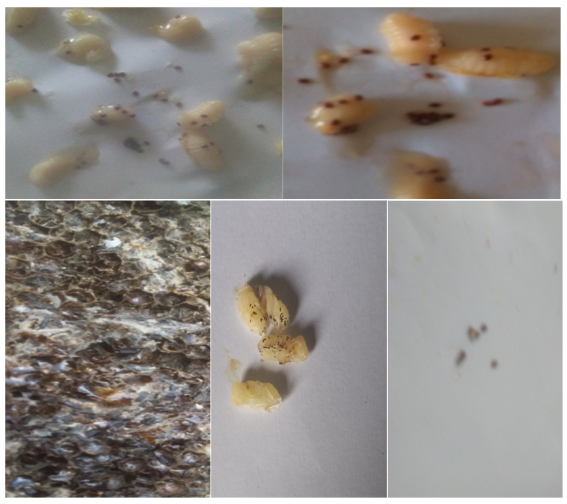
Figure 2. Pictures show the examination and identification of wax moth and varroa infestation (at adult and brood stages).
4. Conclusions and Recommendations
The study highlighted the impact of agrochemicals on honeybee colonies. The application of pesticides and herbicides, and bee forages, were identified as the main factors causing the decrease in bee colonies in the area. However, honeybee diseases, pests, and predators were the next bottlenecks to beekeeping in the area. The prevalence of diseases, pests, and predators varied depending on the type of beehives and agro-ecologies. Traditional beehives showed a higher prevalence of most of the diseases, pests, and predators. Similarly, agroecology is found to be an important factor that influences the occurrence of most diseases, pests, and predators. Most pests (Varroa, bee lice, wax moth, SHB, and LHB) are more prevalent in lowland areas, whereas Nosema and amoeba are more prevalent in highland areas. Thus, creating awareness about the proper use of agrochemicals, encouraging the adoption of modern beekeeping technology, and implementing disease management strategies to safeguard the well-being of honeybee colonies are crucial. Finally, further investigation using advanced tests to gain a comprehensive understanding of the level of devastation they inflict on honeybee colonies and economic loss is vital. Furthermore, an in-depth study of why some diseases and pests are prevalent in lowland agroecology and not in highland ecology is needed to devise an efficient and agroecology-specific control mechanism.
Abbreviations

CCD

Colony Collapse Disorder

CD

Chalk Brood

FAO

Food and Agriculture Organization

AFB

American Foul Brood

EFB

European Foul Brood

LHB

Large Hive Beetle

USDA

United States Department of Agriculture

SHB

Small Hive Beetle

Author Contributions
Belete Fikadu Gemeda: Conceptualization, Data curation, Formal Analysis, Methodology, Visualization, Writing – original draft, Writing – review & editing
Ifa Tesfaye: Data curation, Visualization
Conflicts of Interest
The authors declare no conflicts of interest.
References
[1] USDA. Colony Collapse Disorder Progress Report. 2010: 43.
[2] Morse RA, Calderone NW. The value of honey bees as pollinators of US crops in 2000. Bee Culture. 2000;128(3): 1-15.
[3] FAO. Honey bee diseases and pests: a practical guide. 2006: 33.
[4] Begna D. Honeybee diseases and Pests research progress in Ethiopia: A review. Afri J Inse. 2015;3(1): 093-6.
[5] Bezabeh A, Gela A, Legesse G, Wakjira K. Diagnostic survey of honeybee diseases and pests in Ethiopia. Livestock Research. 2013; 5: 183-5.
[6] Ketema K, Ayele S, Abro H, Teha A. Assessment of wheat production and marketing systems in East Hararghe Zone of Oromia Region, Ethiopia. American Journal of Engineering and Technology Management. 2023;8(2): 13-20.
[7] Van Engelsdorp D, Lengerich E, Spleen A, Dainat B, Cresswell J, Baylis K, et al. Standard epidemiological methods to understand and improve Apis mellifera health. Journal of Apicultural Research. 2013;52(4): 1-16.
[8] Jensen AB, Aronstein K, Flores JM, Vojvodic S, Palacio MA, Spivak M. Standard methods for fungal brood disease research. Journal of apicultural research. 2013;52(1): 1-20.
[9] Dietemann V, Nazzi F, Martin SJ, Anderson DL, Locke B, Delaplane KS, et al. Standard methods for varroa research. Journal of Apicultural Research. 2013;52(1): 1-54.
[10] Carreck N, Neumann P. Honey bee colony losses. J Apic Res. 2010;49(1): 1.
[11] Ellis JD, Graham JR, Mortensen A. Standard methods for wax moth research. Journal of Apicultural Research. 2013;52(1): 1-17.
[12] Musa L, Peters K, Ahmed M. On farm characterization of Butana and Kenana cattle breed production systems in Sudan. Livestock research for rural development. 2006;18(12): 1-15.
[13] Gizachew Gemechu GG, Sefinew Alemu SA, Amssalu Bezabeh AB, Malede Berhan MB. Prevalence and associated risk factors of bee lice in Holeta and its suroundings, Ethiopia. 2013.
[14] Shimelis S. Survey of honey production system and honey bee disease and pests in Ejere district, West Shewa zone, Oromia national regional state, Ethiopia. MVSc Thesis Addis Ababa University, College of Veterinary Medicine and Agriculture. 2017: 1-39.
[15] Gela A, Begna D, Bezabeh A. Diagnostic Survey on Honeybee Brood Diseases. Results of Livestock Research 2016. 2018.
Cite This Article
  • APA Style

    Gemeda, B. F., Tesfaye, I. (2026). Diagnostic Survey of Honeybee Diseases, Pests, and Predators in East Hararghe Zone of Oromia, Ethiopia. Animal and Veterinary Sciences, 14(5), 144-153. https://doi.org/10.11648/j.avs.20261405.13

    Copy | Download

    ACS Style

    Gemeda, B. F.; Tesfaye, I. Diagnostic Survey of Honeybee Diseases, Pests, and Predators in East Hararghe Zone of Oromia, Ethiopia. Anim. Vet. Sci. 2026, 14(5), 144-153. doi: 10.11648/j.avs.20261405.13

    Copy | Download

    AMA Style

    Gemeda BF, Tesfaye I. Diagnostic Survey of Honeybee Diseases, Pests, and Predators in East Hararghe Zone of Oromia, Ethiopia. Anim Vet Sci. 2026;14(5):144-153. doi: 10.11648/j.avs.20261405.13

    Copy | Download

  • @article{10.11648/j.avs.20261405.13,
      author = {Belete Fikadu Gemeda and Ifa Tesfaye},
      title = {Diagnostic Survey of Honeybee Diseases, Pests, and Predators in East Hararghe Zone of Oromia, Ethiopia},
      journal = {Animal and Veterinary Sciences},
      volume = {14},
      number = {5},
      pages = {144-153},
      doi = {10.11648/j.avs.20261405.13},
      url = {https://doi.org/10.11648/j.avs.20261405.13},
      eprint = {https://article.sciencepublishinggroup.com/pdf/10.11648.j.avs.20261405.13},
      abstract = {The study was conducted in the East Hararghe Zone of the Oromia Regional State to determine the occurrence, prevalence, and effects associated with honeybee diseases, pests, and predators. Three districts were purposefully selected, representing three agro-ecological zones (highland, midland, and lowland). Within each district, three peasant associations (PAs) were selected. From each PA, at least three apiaries were randomly chosen for the assessment. For each apiary, colonies were inspected for the clinical symptoms of honeybee diseases and pests. A total of 162 honeybee colonies were randomly sampled from the apiaries of 90 beekeepers who participated in the questionnaire survey. The samples were examined in the laboratory to determine the presence or absence of diseases and pests. The results indicated that the occurrence of honeybee diseases and pests varied with hive type and agro-ecological zone. The use of pesticides and herbicides, as well as bee forages, was identified as the primary cause of the decrease in bee colonies and honey yields in the area. The diagnostic results revealed no clinical symptoms of AFB or EFB infection in any of the studied areas. However, a considerable number of honeybee colonies were infested with Varroa mites, Nosema, amoeba, and chalk brood diseases, and traditional beehives showed a higher prevalence of Nosema, amoeba, Varroa mites, and bee lice compared to modern beehives. The highland area had a higher prevalence of Nosema and amoeba, whereas the lowland area had the highest prevalence of Varroa mite and bee lice. The current results indicated that hive type and agroecology contributed to the varying levels of disease and pest prevalence in a given area. Thus, raising awareness of proper agrochemical use, encouraging adoption of modern beekeeping technologies, and implementing disease management strategies to safeguard the well-being of honeybee colonies are important.},
     year = {2026}
    }
    

    Copy | Download

  • TY  - JOUR
    T1  - Diagnostic Survey of Honeybee Diseases, Pests, and Predators in East Hararghe Zone of Oromia, Ethiopia
    AU  - Belete Fikadu Gemeda
    AU  - Ifa Tesfaye
    Y1  - 2026/09/30
    PY  - 2026
    N1  - https://doi.org/10.11648/j.avs.20261405.13
    DO  - 10.11648/j.avs.20261405.13
    T2  - Animal and Veterinary Sciences
    JF  - Animal and Veterinary Sciences
    JO  - Animal and Veterinary Sciences
    SP  - 144
    EP  - 153
    PB  - Science Publishing Group
    SN  - 2328-5850
    UR  - https://doi.org/10.11648/j.avs.20261405.13
    AB  - The study was conducted in the East Hararghe Zone of the Oromia Regional State to determine the occurrence, prevalence, and effects associated with honeybee diseases, pests, and predators. Three districts were purposefully selected, representing three agro-ecological zones (highland, midland, and lowland). Within each district, three peasant associations (PAs) were selected. From each PA, at least three apiaries were randomly chosen for the assessment. For each apiary, colonies were inspected for the clinical symptoms of honeybee diseases and pests. A total of 162 honeybee colonies were randomly sampled from the apiaries of 90 beekeepers who participated in the questionnaire survey. The samples were examined in the laboratory to determine the presence or absence of diseases and pests. The results indicated that the occurrence of honeybee diseases and pests varied with hive type and agro-ecological zone. The use of pesticides and herbicides, as well as bee forages, was identified as the primary cause of the decrease in bee colonies and honey yields in the area. The diagnostic results revealed no clinical symptoms of AFB or EFB infection in any of the studied areas. However, a considerable number of honeybee colonies were infested with Varroa mites, Nosema, amoeba, and chalk brood diseases, and traditional beehives showed a higher prevalence of Nosema, amoeba, Varroa mites, and bee lice compared to modern beehives. The highland area had a higher prevalence of Nosema and amoeba, whereas the lowland area had the highest prevalence of Varroa mite and bee lice. The current results indicated that hive type and agroecology contributed to the varying levels of disease and pest prevalence in a given area. Thus, raising awareness of proper agrochemical use, encouraging adoption of modern beekeeping technologies, and implementing disease management strategies to safeguard the well-being of honeybee colonies are important.
    VL  - 14
    IS  - 5
    ER  - 

    Copy | Download

Author Information
  • Apiculture Research Team, Fedis Agricultural Research Center of Oromia Agricultural Research Institute, Harar, Ethiopia

  • Apiculture Research Team, Fedis Agricultural Research Center of Oromia Agricultural Research Institute, Harar, Ethiopia

  • Abstract
  • Keywords
  • Document Sections

    1. 1. Introduction
    2. 2. Materials and Methods
    3. 3. Results and Discussions
    4. 4. Conclusions and Recommendations
    Show Full Outline
  • Abbreviations
  • Author Contributions
  • Conflicts of Interest
  • References
  • Cite This Article
  • Author Information