Research Article | | Peer-Reviewed

Cultivating Multicultural Literacy and Pedagogical Innovation Through Rumah Pendidikan’s Evaluative Framework

Received: 23 June 2026     Accepted: 11 July 2026     Published: 6 August 2026
Views:       Downloads:
Abstract

Education stands as the fundamental pillar in shaping the character and values of future generations. In an era defined by rapid technological advancement, the integration of digital platforms into the learning process has become an essential endeavor to improve educational quality. Recognizing this need, the Indonesian Ministry of Education, Culture, Research, and Technology (Kemendikdasmen) introduced "Rumah Pendidikan," a digital platform designed to serve as a strategic ecosystem for contemporary education. This platform is a timely innovation, aiming to create a learning environment that is adaptive, inclusive, and highly relevant to the challenges of the modern age. The purpose of this research is to explore and analyze how the specific features within the Rumah Pendidikan platform can be effectively utilized to facilitate three critical educational pillars: comprehensive assessment, pedagogical innovation, and the advancement of multicultural education. By examining these functionalities, this study seeks to understand how technology can serve as more than just a tool for knowledge transfer, but also as a vital space for nurturing tolerance and appreciation for diversity among students across the Indonesian archipelago. This research employs a qualitative descriptive method, utilizing library research to gather insights. The analysis is built upon an extensive review of policy documents, academic literature, and relevant references concerning the digitization of education to provide a holistic view of the platform’s potential. The findings indicate that Rumah Pendidikan possesses significant capacity to function as a medium for assessment, innovation, and multicultural education. The platform’s features provide educators with the resources to perform more personalized evaluations, foster creative teaching practices, and systematically integrate multicultural values into daily learning. Ultimately, Rumah Pendidikan serves as a catalyst for building an educational ecosystem that is not only academically excellent but also deeply rooted in the spirit of inclusivity and unity in diversity.

Published in International Journal of Elementary Education (Volume 15, Issue 2)
DOI 10.11648/j.ijeedu.20261502.11
Page(s) 27-33
Creative Commons

This is an Open Access article, distributed under the terms of the Creative Commons Attribution 4.0 International License (http://creativecommons.org/licenses/by/4.0/), which permits unrestricted use, distribution and reproduction in any medium or format, provided the original work is properly cited.

Copyright

Copyright © The Author(s), 2026. Published by Science Publishing Group

Keywords

Rumah Pendidikan, Assessment, Innovation, Multicultural Education, Education World

1. Introduction
Education aims to develop attitudes and skills, acquire knowledge and skills necessary for social life, and prepare students to enter secondary education . Education is an important aspect in shaping the personality of future generations. As technology advances, learning approaches may also change. Education is a conscious and deliberate effort, not an activity carried out every day without a goal or careful planning. Education in elementary schools plays an important role in shaping people's lives. Of course, realizing this is not an easy thing . The Indonesian Ministry of Education, Culture, Research and Technology (Kemendikdasmen) provides new innovations in the form of using digital platforms in the education sector, namely the Rumah Pendidikan. The Rumah Pendidikan platform is designed to facilitate increased visibility of Pancasila students in learning led by educators and students .
The launch of this platform is the 15th edition of the Merdeka Belajar program in line with the Merdeka Curriculum. Quality human resources have become an important requirement for all countries fighting for civilization. To meet these needs, a special digital platform was created for educators to develop their potential and improve their skills . Merdeka Belajar is an educational change movement that focuses on empowering the creativity and innovation of educators to enable meaningful learning in the classroom . The introduction of RUMAH PENDIDIKAN is the government's effort to accelerate the implementation of the Independent Curriculum (IKM) .
RUMAH PENDIDIKAN is a driving factor for educators and a fundamental milestone in achieving Pancasila student integrity. RUMAH PENDIDIKAN is presented as a digital educational medium with three main characteristics: learning, teaching, and creating. RUMAH PENDIDIKAN 's main mission is to support the implementation of an independent curriculum and ensure that the curriculum becomes the foundation for more meaningful, creative and collaborative education in Indonesia. RUMAH PENDIDIKAN plays an important role in the digital era because it provides reference material for educators in developing the implementation of learning practices that support students according to the independent curriculum. Rephrase RUMAH PENDIDIKAN 's learning capabilities provide Educators and educational staff with self-paced, high-quality training opportunities that can be accessed anytime, anywhere. Another feature is the ability to search for inspirational videos which can be accessed without limits by educators and other educational staff. The aim is to improve the quality of educators' abilities in implementing an independent curriculum .
The Rumah Pendidikan functions as a means of collaboration and interaction between educators. Implementing a unique curriculum certainly requires a strong spirit of cooperation between educators, students and other school members. In the "Work" function, RUMAH PENDIDIKAN provides educators with the opportunity to collaborate in developing relevant and innovative educational content in accordance with current developments. It is hoped that the development of educational content can improve students' learning experiences and help educators find new approaches to learning. Another advantage of this feature is that the work produced provides a positive digital track record and helps the Educator who created the work build his or her portfolio Apart from that, school-aged children also still need media to build concepts so that learning becomes more interesting for students. A project-oriented learning process makes the learning process more flexible, active and adaptable .
Educators have broad authority to apply learning methods that they believe can meet their students' learning needs and make learning activities more enjoyable, creative and meaningful. The use of the Rumah Pendidikan in the Merdeka curriculum is in line with the Indonesian nation's commitment to improving the quality of the educational environment so that future generations are better prepared to face developments in the current situation . This research details the use of features in the Rumah Pendidikan Platform which can function as a medium for Assessment, Innovation and Multicultural Education in the world of education. Previous research shows that statistics learning in elementary schools is not diverse and tools are needed to make learning fun .
Factors causing low mathematics learning outcomes include educators' inability to use appropriate learning media, resulting in students being less enthusiastic about paying attention to the material when learning mathematics in class .
There is still little research regarding the use of features in RUMAH PENDIDIKAN. In fact, RUMAH PENDIDIKAN is currently the most important learning resource for Educators, so that they can easily map and understand their students' learning abilities It is hoped that this research can help educators make maximum use of RUMAH PENDIDIKAN in their learning activities. The aim of this research is to determine the use of features in the Rumah Pendidikan which can function as a medium for Assessment, Innovation and Multicultural Education in the world of education .
2. Methods
This research uses a qualitative descriptive approach, where the researcher acts as one of the research instruments that carries out direct analysis on the Rumah Pendidikan, considering that aspects of reality cannot be defined by themselves . The reason for using qualitative methods is to present the results obtained in the form of descriptions rather than numbers, so that readers can more easily understand and present more detailed information .
The focus of this research is to determine the use of features in the Rumah Pendidikan which can function as a medium for Assessment, Innovation and Multicultural Education in the world of education and secondary data in the form of articles, scientific studies or documents that have a correlation with the research object. The stages of this research are; observation, classification, and data analysis. Data collection for this study used observation techniques on the Rumah Pendidikan. To analyze the data that has been obtained using descriptive-analysis techniques, then explain the results of the analysis regarding the use of features in the Rumah Pendidikan which can function as a medium for Assessment, Innovation and Multicultural Education in the world of education .
3. Results
3.1. Utilization of Features on the Rumah Pendidikan as a Media for Assessment in the World of Education
Assessment is a very important part of the curriculum and is a series of activities carried out systematically and continuously. Minister of Education, Culture, Sports, Science and Technology Regulation Number 162 of 2021 regulates that the basic curriculum framework includes the following content: (2) learning outcomes; (3) principles of learning and assessment; The Merdeka Curriculum focuses on optimizing learning outcomes according to student needs. Diagnostic and non-cognitive diagnostic assessments may be conducted to meet student needs . Assessment is a very important part of the curriculum. It is a series of planned and continuous activities. Decree of the Minister of Education, Culture, Research and Technology Number 162 of 2021 regulates that the basic curriculum framework includes: 1) Curriculum structure, 2) Learning outcomes, 3) Learning and assessment principles .
The Merdeka Curriculum focuses on optimizing learning outcomes according to student needs. This can be achieved through diagnostic and non-cognitive diagnostic assessments. Assessment plays a very important role in the independent curriculum. Decree of the Minister of Education, Culture, Research and Technology Number 162 of 2021 confirms that the basic curriculum framework includes several main aspects such as curriculum structure, learning outcomes, learning principles and assessment. The Merdeka Curriculum prioritizes optimizing learning outcomes to meet individual student needs. The focus is on two types of assessment: diagnostic assessment and non-cognitive diagnostic assessment. Diagnostic assessments are used to measure students' initial understanding and skills of a subject before they begin further study. The goal is to help educators better understand students' abilities and help students customize their learning .
3.1.1. Teaching at the Right Level (TarL)
Gaps in understanding between one student and another often occur in a class. This can happen due to several factors, one of which is that the student's level does not match the specified level or learning outcomes. The Teaching at the Right Level (Tarl) method can be the answer to this problem. Because, TarL is a learning approach that does not refer to class level, but to the student's ability level . The following are things that educators need to prepare and do in implementing the TaRL method: a. Carry out assessments for students at the beginning of learning (This assessment functions to determine the characteristics, potential and needs of students, so that educators know what stage of development and student learning achievements are at), b. Learning planning (After knowing the results of student assessments, educators can plan appropriate learning processes, such as what teaching tools to use, methods, and grouping students according to ability level), and Learning stage (At the learning stage, educators also need to carry out regular assessments in order to find out the development process that occurs in students. Apart from that, evaluation of learning at the end is also important. This serves to determine the achievement of learning objectives and help design subsequent learning) .
3.1.2. Assessment as Support for TarL
Assessment is the process of collecting and processing information to determine students' learning needs, development and achievement of learning outcomes, the results of which are then used as material for reflection and a basis for improving the quality of learning. Assessment is very important in implementing TarL. Therefore, the Rumah Pendidikan presents Student Assessments to help educators obtain information from student learning processes and outcomes. Therefore, the Ministry of Education and Culture developed it and created an Independent Teaching Platform Application (RUMAH PENDIDIKAN) which contains features that can be used as an assessment medium .
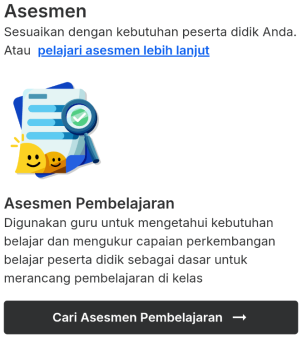
Figure 1. Assessment Features on the Rumah Pendidikan.
The Assessment Feature in the Rumah Pendidikan Platform Application provides Learning Assessments according to the subjects in schools which currently use the Merdeka Curriculum. In it there are assessments or assessments that adjust to school levels. Its use starts from selecting the Student Assessment feature on the Rumah Pendidikan Platform Application, then selecting the phase or level according to the General, Vocational School or SLB criteria. After that, select the class according to the class that will be given the assessment, select the subject that is the target of the assessment. Continue to search and select the results that correspond to each assessment that will be used. The final step is to download the assessment results found and then implement them in the assessments that will be carried out on students at school. This is very good in developing student evaluations for educators in schools so that teaching and impact can achieve maximum results .
3.2. Utilization of Features in the Rumah Pendidikan as a Media for Innovation in the World of Education
Rapid innovation brings rapid progress in the world of technology and has an impact on social life. The boundaries between virtual and physical space will disappear, and people's lifestyles will change dramatically. The role of technology has a significant impact on human life, both in interactions and in carrying out transactions. Society 5.0 or Society 5.0 is a concept for integrating and balancing social challenges with technological advances that connect the virtual and physical worlds.
There are also those who define Society 5.0 as a group of individuals who utilize technology to solve everyday problems in the era of Industrial Evolution 4.0. The Internet of Thought and artificial intelligence play an important role in responding to the Society 5.0 era which aims to provide a high quality of life to individuals or community groups . As a result, the population is decreasing from year to year, this is due to the reduction in the working age population. Other countries, such as Japan, observe that various problems will arise which will result in labor shortages thereby reducing individual productivity. Residents far from cities will face travel and transportation difficulties, as well as development problems, population decline due to a lack of skilled labor, and other impacts. Therefore, Japan is trying to overcome this problem by taking advantage of technological developments which are increasingly having an impact on people's lives. Society 5.0 is also part of the 5th Science and Technology Plan launched by the Japanese government to create a society with a future capable of realizing these ideals. Technological innovations that are developing increasingly rapidly also influence changes in individual social life. There will no longer be any boundaries between the virtual world and the physical world, and the lifestyle and behavior of each group will change significantly. The role of technology has become a real necessity in our personal lives, this is also felt in the aspects of communication and transactions. Therefore, a concept like this means that we are now entering the era of Society 5.0, where both have integrated and independent curriculum policies. Based on this, the Ministry of Education and Culture created a Merdeka Teaching Platform Application (RUMAH PENDIDIKAN) as a forum for innovation in the world of Indonesian education .
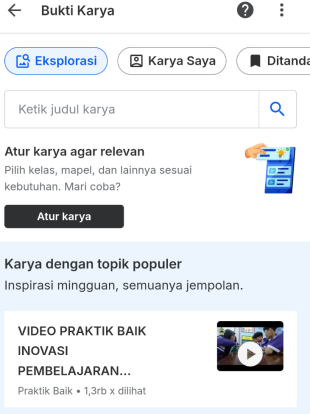
Figure 2. Proof of Work feature on the Rumah Pendidikan.
The Proof of Work feature in the Rumah Pendidikan Platform Application has a very main function, namely as a forum for educators to innovate in education. Apart from that, this feature will also be connected to other features that make it possible for fellow educators to share innovations with each other. This is very good for the development of education today where internet access is very accessible in various regions so that in this case it can be utilized, especially in the field of education. This Proof of Work feature is filled in by educators as a form of dedication and development of education in Indonesia. There are various innovations that will be made that can be used as a trigger for creativity, starting from the Independent Training feature, Community, School Principal Selection, Competency Reflection, Performance Management, Inspirational Videos to Educator Certification. Where these features can be used as a trigger for educators themselves to develop themselves which will later be outlined in Proof of Work so that they can also indirectly have an impact on the world of Indonesian education .
Access to the Proof of Work feature can be accessed on the Rumah Pendidikan Platform Application which is divided into three menus, namely Exploration, My Work and Marked. In the Exploration menu, an educator will find several works created by other educators which can be used as references for works to be created by the educator concerned. Next, in the My Work menu, the educator concerned can add his work in the form of articles, teaching materials and other works such as YouTube videos. The last menu is the Marked menu, where this menu functions to mark the works of other educators which can be used as references or are considered important for the educator concerned. So this Proof of Work feature can be said to be proof that the professionalism of educators can be achieved and determined by the educators themselves, but is still in accordance with the Goals of Education in Indonesia .
3.3. Utilization of Features in the Rumah Pendidikan as a Media for Multicultural Education in the World of Education
Multicultural education is an educational process that develops human potential as fully as possible to recognize the pluralism and homogeneity of cultural, racial, ethnic and religious diversity. According to James. A. Multicultural education is the recognition and appreciation of the importance of cultural and ethnic diversity in shaping the lifestyles, social experiences, personal identities, and educational opportunities of individuals, groups, and countries. According to Andersen and Cusher's article multiculturalism is the education of people of color, and multicultural education views differences as gifts from God and teaches society to be fair and tolerant of differences.
According to based on an analysis of the current situation, there are still weaknesses and shortcomings in the implementation of multicultural education in Indonesia. This is due to a lack of public understanding of the importance of cultural, ethnic, even religious diversity. In the field of education, some schools do not prioritize respect for the diversity of their students. Educators who are one of the agents of change in the education system do not understand the spirit of tolerance towards students and are unable to contribute and respect diversity. There is no need to change the structure of the school curriculum to implement multicultural education. Education in multicultural education can be integrated into other scientific disciplines. To achieve this, educators need guidelines for implementing integrated learning. In particular, students should be taught about tolerance, unity, human rights, democratization, and mutual respect. Students who have a spirit of tolerance, the value of coexistence, love of peace, and respect for differences from an early age are reflected in their character and character .
One effort to implement multicultural education is the Project for Strengthening the Pancasila Student Profile (P5). This project is included as a co-curricular part of the standalone curriculum and is allocated 30% of the total teaching time per year. P5 opens up opportunities for informal and situational learning, efficient curriculum structures, and interactive learning to improve students' skills and abilities . Previous researchers have conducted studies on multicultural education and the use of the Pancasila student profile. One of them is Ibrahim's (2013) research which states that the aim of multicultural education is to build a society where diversity coexists.
The LAGHUNG study (2023) found that character education can be implemented through the Pancasila Student Profile. A study (Susilawati, Sarifudin, Muslim 2021) found that the Pancasila student profile is essentially an effort to instill Pancasila values in the classroom. These values are developed and strengthened in each student through school culture, co-curricular activities and extra-curricular activities. stated that multicultural education is very important and starts from Binneka Tungal Ika which is based on national culture, namely Pancasila.
The overall goal is to build an egalitarian and prosperous Indonesian society. Therefore, students are interested in knowing and understanding local wisdom. Multicultural learning aims to develop students into nationalists who are confident, honest, responsible and disciplined.
Moreover, multicultural learning has the potential to increase multicultural awareness, enhance the curriculum, and strengthen students' self-understanding. This is the background for the Ministry of Education and Culture to design Rumah Pendidikan application which includes a menu of Practical Ideas for Teaching Materials and Learning Practices in the Strengthening Pancasila Student Profile (P5) Project.
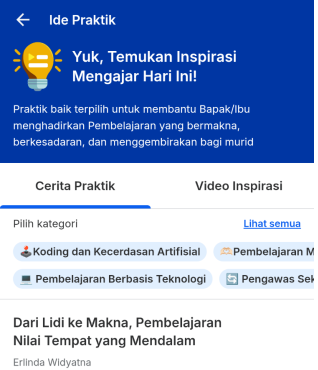
Figure 3. Practice Ideas feature on the Rumah Pendidikan.
This Practice Ideas feature is not actually something that was created for learning from the Pancasila Student Profile Strengthening Project (P5) which is designed for multicultural education in the world of education, but this Practice Ideas feature also contains content such as good practices, proof of work and inspirational videos. However, there is material for the Project for Strengthening the Profile of Pancasila Students (P5) itself, which is an effort to implement Mukticultural Education in Education .
In the Strengthening Pancasila Student Profile (P5) Project menu in the Practice Ideas Feature, there are many references on how educators can implement the Pancasila Student Profile Strengthening Project (P5) well so as to achieve maximum results as expected. References, both in terms of material and practice carried out by other educators, can be used by the educator concerned, developed or modified according to what is desired. So that all the presentations starting from the Student Assessment feature, Evidence of Work and Practical Ideas really make educators and students feel educationally independent, which is implemented but remains within the corridor of educational goals in Indonesia in accordance with the applicable laws .
4. Conclusions
The conclusion section should precisely articulate the main findings of the article, emphasizing its significance and relevance. In the conclusion, it is highly recommended that authors avoid referencing figures or tables. Instead, these should be appropriately referenced within the body of the paper.
The aim of education is to develop attitudes and skills, acquire the knowledge and skills necessary for social life, and prepare students to enter secondary education. The Ministry of Education, Culture, Research and Technology offers new innovations in the form of using digital platforms in the education sector, Rumah Pendidikan. The Rumah Pendidikan Platform aims to facilitate the visibility of Pancasila students who study under the guidance of educators. This also aims to help educators utilize technology in their learning activities. The aim is for educators to be able to know how to utilize the features of the Rumah Pendidikan which can be a medium for Assessment, Innovation and Multicultural Education in the world of education.
The Student Assessment feature on the Rumah Pendidikan provides learning assessments in subjects in schools that currently use the Merdeka curriculum. The Proof of Work feature on the Rumah Pendidikan has a very important function in that it is a forum for educators to encourage innovation in the field of education. Apart from that, this feature will also be connected to other features that allow other teachers to share innovations with each other. The Practice Ideas feature is not actually designed for learning purposes only, but is also designed for multicultural education in education. In fact, this practice ideas feature also includes content such as best practices, proof of work, and inspirational videos. Importantly, there is material regarding the Strengthening the Pancasila Student Profile (P5) Project itself, which is an effort to implement multicultural education in the educational environment. This idea gives educators and students a true sense of freedom to learn but within the scope of educational goals in accordance with applicable laws .
Abbreviations

IKM

Implementasi Kurikulum Merdeka

P5

Pancasila Student Profile Strengthening Project

Acknowledgments
We would like to thank Allah SWT for giving this gift to our country, especially to the Ministry of Education and Culture, which has been able to develop education in Indonesia. We hope that our research will be useful for all people throughout the world and hopefully it can also inspire everyone, Ameen.
Author Contributions
Moch Rifqy Fauzan Rizani: Conceptualization, Formal Analysis, Resources, Writing – original draft
Conflicts of Interest
The author declare no conflicts of interest.
References
[1] Arifudin, Iis. 2019. "The Urgency of Implementing Multicultural Education in Schools." INSANIA: Journal of Alternative Educational Thinking 12(2): 220-33.
[2] Arisanti, D. A. K. (2022). Analysis of the Independent Curriculum and the Independent Learning Platform to Achieve Quality Education. Journal of Quality Assurance, 8(02), 243-250.
[3] Durrotunnisa, & Nur Hanita, R. (2022). Group Counseling Using Positive Reinforcement Techniques to Increase Learning Motivation of Students from Broken Homes. Basicedu Journal, 6(1), 315–323.
[4] Eko, Pramono Suwito, Handoyo Eko, Moh Aris Munandar, and Maman Rachmand. 2020. “Local Wisdom: Pillar Development of Multicultural Nations and National Education Values.” Cypriot Journal of Educational Sciences 15(6): 1587-98.
[5] Houtman. (2020). Freedom to Learn in Society 5.0. Scientific Journal of Education, 39-45.
[6] Indonesia, P. R. (2015). Law of the Republic of Indonesia Number 2 of 1989 concerning the National Education System. National Education System, 1, 1-27.
[7] Ministry of Education, Culture, Research, and Technology. 2026. “Pancasila Student Profile.” Ministry of Education and Culture. 1-108.
[8] Ministry of Elementary and Secondary Education (2026). Home Education Application.
[9] Ministry of Elementary and Secondary Education (2026). Ministry of Education and Culture Teacher Information Center.
[10] Komang Wahyu Wiguna, I., & Adi Nugraha Tristaningrat, M. (2022). Steps to Accelerate the Development of the Independent Learning Curriculum. Education: Journal of Elementary Education, 3(1), 17-26.
[11] LAGHUNG, RITASARIFIANU. 2023. "Character Education as an Effort to Realize the Pancasila Student Profile." CEN-DEKIA: Journal of Science 3(1): 1-9.
[12] Mulyadi, M. (2013). Quantitative and Qualitative Research and the Basic Thinking of Combining Them. Journal of Communication and Media Studies, 15(1), 128.
[13] Mustadi, A. (2020). Foundations of Elementary School Education.
[14] Platform, S., Mengajar, M., Wadah, S., Dan, B., & Guru, B. (2022). Penamas Adi Buana Journal. 6(01), 63-72.
[15] Priatama, Y. (2021). Learning Statistics Using the Traditional Game of Congklak. Tambusai Journal of Education, 5, 10762-10768.
[16] Purwati, I., Murtiyasa, B., Kontesa, D. A., & Hakim, L. (2022). Math Didactic: Journal of Mathematics Education: Analysis of Difficulties in Learning Mathematics and Statistics. © By Author (S). 8(3), 272-280.
[17] Ramdani, M., Yuliyanti, S. Y., & Rahmatulloh, I. T. (2022). Use of the Merdeka Mengajar (Rumah Pendidikan) Platform for Elementary School Teachers. 2(6), 248-254.
[18] Rosmini, Sugit Z. (2017). Diction and Style of Didi Kempot's Song Lyrics. Bahasantodea, 5(2), 92-101.
[19] Saleh, Khairul, Muhsim, and Nurul Hidayati Murtafiah. 2022. "Implementation of Multicultural Education in Indonesia: Between Hope and Reality." Journal of Islamic Education and Learning 2(2): 111-26.
[20] Sili, F. (2021). Freedom to Learn from the Perspective of Carl R. Roger's Humanism. Jurnal Pendidikan Dasar Perkhasa: Jurnal Penelitian Pendidikan Dasar, 7(1), 47-67.
[21] Sulaeman, D. (2022). Implementation of Visual Media in Improving Learning Quality. Edumaspul: Jurnal Pendidikan, 6(1), 71-77.
[22] Susilawati, E., Sarifudin, S., & Muslim, S. (2021). Internalization of Pancasila Values in Learning Through the Implementation of the Pancasila Student Profile with the Assistance of the Merdeka Mengajar Platform. Jurnal Teknodik, 25, 155-167.
[23] Susilawati, Eni, Saleh Sarifudin, and Suyitno Muslim. 2021. “INTERNALIZATION OF PANCASILA VALUES IN LEARNING THROUGH THE IMPLEMENTATION OF PANCASILA STUDENT PROFILES ASSISTED BY THE MERDEKA MENGAJAR PLATFORM.” Jurnal Teknodik 25(2 SE-Articles): 155-67.
[24] Syafi’i, F. F. (2021). Independent learning: driving schools. Proceedings of the National Seminar on Elementary Education “Independent Learning in Welcoming the Era of Society 5.0,” November, 46-47.
[25] Teknologi, K. P. B. R. Dan. (2020). Digital Educational Media. Żammit, Jacqueline. 2021. “Maltese Educators’ Perceptions of Democracy, Equality and Justice in Multicultural Education.” IAFOR Journal of Education 9(1): 153-71.
Cite This Article
  • APA Style

    Rizani, M. R. F. (2026). Cultivating Multicultural Literacy and Pedagogical Innovation Through Rumah Pendidikan’s Evaluative Framework. International Journal of Elementary Education, 15(2), 27-33. https://doi.org/10.11648/j.ijeedu.20261502.11

    Copy | Download

    ACS Style

    Rizani, M. R. F. Cultivating Multicultural Literacy and Pedagogical Innovation Through Rumah Pendidikan’s Evaluative Framework. Int. J. Elem. Educ. 2026, 15(2), 27-33. doi: 10.11648/j.ijeedu.20261502.11

    Copy | Download

    AMA Style

    Rizani MRF. Cultivating Multicultural Literacy and Pedagogical Innovation Through Rumah Pendidikan’s Evaluative Framework. Int J Elem Educ. 2026;15(2):27-33. doi: 10.11648/j.ijeedu.20261502.11

    Copy | Download

  • @article{10.11648/j.ijeedu.20261502.11,
      author = {Moch Rifqy Fauzan Rizani},
      title = {Cultivating Multicultural Literacy and Pedagogical Innovation Through Rumah Pendidikan’s Evaluative Framework},
      journal = {International Journal of Elementary Education},
      volume = {15},
      number = {2},
      pages = {27-33},
      doi = {10.11648/j.ijeedu.20261502.11},
      url = {https://doi.org/10.11648/j.ijeedu.20261502.11},
      eprint = {https://article.sciencepublishinggroup.com/pdf/10.11648.j.ijeedu.20261502.11},
      abstract = {Education stands as the fundamental pillar in shaping the character and values of future generations. In an era defined by rapid technological advancement, the integration of digital platforms into the learning process has become an essential endeavor to improve educational quality. Recognizing this need, the Indonesian Ministry of Education, Culture, Research, and Technology (Kemendikdasmen) introduced "Rumah Pendidikan," a digital platform designed to serve as a strategic ecosystem for contemporary education. This platform is a timely innovation, aiming to create a learning environment that is adaptive, inclusive, and highly relevant to the challenges of the modern age. The purpose of this research is to explore and analyze how the specific features within the Rumah Pendidikan platform can be effectively utilized to facilitate three critical educational pillars: comprehensive assessment, pedagogical innovation, and the advancement of multicultural education. By examining these functionalities, this study seeks to understand how technology can serve as more than just a tool for knowledge transfer, but also as a vital space for nurturing tolerance and appreciation for diversity among students across the Indonesian archipelago. This research employs a qualitative descriptive method, utilizing library research to gather insights. The analysis is built upon an extensive review of policy documents, academic literature, and relevant references concerning the digitization of education to provide a holistic view of the platform’s potential. The findings indicate that Rumah Pendidikan possesses significant capacity to function as a medium for assessment, innovation, and multicultural education. The platform’s features provide educators with the resources to perform more personalized evaluations, foster creative teaching practices, and systematically integrate multicultural values into daily learning. Ultimately, Rumah Pendidikan serves as a catalyst for building an educational ecosystem that is not only academically excellent but also deeply rooted in the spirit of inclusivity and unity in diversity.},
     year = {2026}
    }
    

    Copy | Download

  • TY  - JOUR
    T1  - Cultivating Multicultural Literacy and Pedagogical Innovation Through Rumah Pendidikan’s Evaluative Framework
    AU  - Moch Rifqy Fauzan Rizani
    Y1  - 2026/08/06
    PY  - 2026
    N1  - https://doi.org/10.11648/j.ijeedu.20261502.11
    DO  - 10.11648/j.ijeedu.20261502.11
    T2  - International Journal of Elementary Education
    JF  - International Journal of Elementary Education
    JO  - International Journal of Elementary Education
    SP  - 27
    EP  - 33
    PB  - Science Publishing Group
    SN  - 2328-7640
    UR  - https://doi.org/10.11648/j.ijeedu.20261502.11
    AB  - Education stands as the fundamental pillar in shaping the character and values of future generations. In an era defined by rapid technological advancement, the integration of digital platforms into the learning process has become an essential endeavor to improve educational quality. Recognizing this need, the Indonesian Ministry of Education, Culture, Research, and Technology (Kemendikdasmen) introduced "Rumah Pendidikan," a digital platform designed to serve as a strategic ecosystem for contemporary education. This platform is a timely innovation, aiming to create a learning environment that is adaptive, inclusive, and highly relevant to the challenges of the modern age. The purpose of this research is to explore and analyze how the specific features within the Rumah Pendidikan platform can be effectively utilized to facilitate three critical educational pillars: comprehensive assessment, pedagogical innovation, and the advancement of multicultural education. By examining these functionalities, this study seeks to understand how technology can serve as more than just a tool for knowledge transfer, but also as a vital space for nurturing tolerance and appreciation for diversity among students across the Indonesian archipelago. This research employs a qualitative descriptive method, utilizing library research to gather insights. The analysis is built upon an extensive review of policy documents, academic literature, and relevant references concerning the digitization of education to provide a holistic view of the platform’s potential. The findings indicate that Rumah Pendidikan possesses significant capacity to function as a medium for assessment, innovation, and multicultural education. The platform’s features provide educators with the resources to perform more personalized evaluations, foster creative teaching practices, and systematically integrate multicultural values into daily learning. Ultimately, Rumah Pendidikan serves as a catalyst for building an educational ecosystem that is not only academically excellent but also deeply rooted in the spirit of inclusivity and unity in diversity.
    VL  - 15
    IS  - 2
    ER  - 

    Copy | Download

Author Information
  • Tarbiyah Faculty, Al-Falah As-Sunniyah University, Kencong-Jember, Indonesia

    Biography: Moch Rifqy Fauzan Rizani, born on the island of Java, East Java Province in Jember Regency, 17 September 1998. started his education at the Dewi Masyitoh NU (Nahdlatul Ulama) Wonosari Kindergarten, continued at the Elementary School level at SDN Wonosari 02. Next, he went to Junior High School and High School at the Darus Sholah Islamic Boarding School at the Formal Institution at the Islamic Boarding School, namely SMP “Plus” Darus Sholah Jember and “Superior” High School BPPT Darus Sholah Jember. After basic, junior secondary to senior secondary education has been completed, proceed to undergraduate and postgraduate programs at Al-Falah As-Sunniyyah Kentjong University, Jember. During his journey, he was an administrator at the Darus Sholah Jember Islamic Boarding School, became the Secretary of the PAI Study Program Student Association (HMPS) at Al-Falah As-Sunniyyah Kentjong University, Jember, and is now active as an honorary teacher at SDN Wonosari 02.

    Research Fields: Football, Islamic Education.