Abstract
University libraries are increasingly required to adopt entrepreneurial approaches to enhance service delivery and contribute to institutional sustainability amid declining funding and rising operational demands. This study examined entrepreneurship skills and venture creation in university libraries in South-West Nigeria. Adopting a survey research design, the study employed a total enumeration approach covering 314 librarians from 18 selected federal, state, and private universities, of which 279 valid responses were analyzed. Data were collected using a structured questionnaire and analyzed with descriptive statistics and simple linear regression at the 0.05 level of significance. Findings revealed that librarians possess a generally high level of entrepreneurship skills, particularly in leadership, opportunity recognition, innovation, and creativity, though gaps exist in risk management and user-centred innovationh. The study further established that university libraries are actively progressing through different phases of venture creation, with the fully developed phase showing the strongest performance in terms of operational efficiency and sustained growth. Archiving and digitization services emerged as the most prevalent ventures, while other income-generating initiatives such as publishing, consultancy, and infopreneurship remain underutilized. Regression results indicated that entrepreneurship skills have a significant positive influence on venture creation (β = 0.343, p < 0.001). The study concludes that strengthening librarians’ entrepreneurial competencies is critical for diversifying ventures and repositioning university libraries as strategic contributors to institutional development and revenue generation.
Keywords
Entrepreneurship Skills, Venture, Venture Creation, University Libraries, Librarians, Innovation
1. Introduction
Venture creation is described as a systematic process of developing and launching a new business entity with the aim of generating profit, addressing market needs, or capitalizing on specific opportunities. Venture creation encompasses the entire journey from the conception of a business idea to the establishment and growth of the business. It involves turning an idea or innovation into a functioning business by recognizing opportunities, developing a business plan, acquiring resources, and launching the business. The goal of venture creation is to establish a sustainable organization that can grow, create value, and generate profit. In addition, venture creation encompasses a range of activities or processes which involves several stages, including idea generation, feasibility analysis, business planning, resource acquisition, and the actual launch and management of the venture. According to Ajiboye
venture creation is the process of turning a new idea or technology into a business that can succeed and attract investors through use of competitive intelligence, planning and organizational support. Audretsch and Belitski
| [4] | Audretsch, D. B., & Belitski, M. (2021). Towards an entrepreneurial ecosystem typology for regional economic development: The role of creative class and entrepreneurship. Regional Studies, 55(4), 735–756.
https://doi.org/10.1080/00343404.2020.1854711 |
[4]
stated that the dynamic process of establishing a new venture is by leveraging innovation, market insight, and entrepreneurial capabilities to address consumer demands and create value. Venture creation is a multi-phase journey that entails the discovery of opportunities, the mobilization of resources, and the commercialization of a new product or service in the market.
Venture creation is increasingly recognised as an important strategy for libraries seeking to strengthen financial sustainability, institutional relevance, and professional visibility. By deliberately establishing income-generating ventures aligned with library objectives, libraries can diversify their funding base, reduce over-dependence on parent institutions or government allocations, and improve their capacity to sustain core services (Okoro,& Olowunkere
| [27] | Okoro, C. A., & Olowunkere, O. (2024). Perceptions of librarians on the use of ICT facilities and services as alternative strategy for revenue generation in academic libraries in Nigeria: A study. Information Managers: A Journal of Nigerian Library Association Rivers State Chapter, 6(2).
https://doi.org/10.61955/WAQNPQ |
[27]
). Literature emphasises that venture creation enables libraries to reposition themselves as value-creating institutions that actively contribute to economic and community development, rather than remaining passive service units (Osamudiamen & Omoike,
). In the context of librarianship, venture creation also enhances the professional image of librarians by demonstrating entrepreneurial competence, managerial innovation, and strategic leadership, which are increasingly valued in contemporary knowledge environments (Dohe, et al.,
| [6] | Dohe, K., Hamidzadeh, B., & Wallberg, B. (2019). Doing more, with more: Academic libraries, digital services, and revenue generation (Ithaka S+R Issue Brief). Ithaka S+R.
https://doi.org/10.18665/sr.310917 |
[6]
). Furthermore, studies on entrepreneurial practices in libraries indicate that well-structured ventures can support organisational resilience, improve service sustainability, and reinforce public confidence in the library as a dynamic and self-supporting institution (Olaseigbe et al.,
). Overall, venture creation represents a critical pathway through which libraries can achieve long-term viability while strengthening the status and relevance of the library profession.
In the library context venture creation involves leveraging entrepreneurial strategies to introduce innovative services, generate revenue, and enhance user experiences. According to Olawepo and Adedeji
| [30] | Olawepo, S. A., & Adedeji, F. O. (2021). Entrepreneurship in Library and Information Science Profession as a Way of Enhancing Economic Empowerment. POMLIF Journal of Library and Information Science, 3(1), 56-65.
https://pjolis.org/index.php/pjolis/article/view/19 |
[30]
venture creation in libraries has gained significant attention in recent years as libraries seek to redefine their roles in the digital age. Library services have been extended beyond the frontiers of documentation and the provision of information but rather involve venture creation services to satisfy users’ information needs. Establishing a venture in the library addressed the poor funding of libraries and introduces various services that will enhance internal generated revenue of the parent institution thereby seeing library from an entrepreneural perspective. This concept is driven by entrepreneurial thinking and the need to ensure financial and operational sustainability in libraries.
In today’s knowledge economy, libraries that engage in venture creation are poised to become key players in the creation, sharing, and dissemination of information. Ogar and Moses
| [22] | Ogar, C. E. & Affiong, B. M. (2022). The Role of Libraries in Promoting Entrepreneurship Education in Nigerian Universities. International Journal of Library and Information Science Studies, 8(1), 1-8. |
[22]
emphasize that venture creation has transformed libraries from being passive information providers to becoming active contributors to economic and intellectual development. Through venture creation, libraries offer services that help individuals and businesses navigate the complexities of the knowledge economy. This includes access to market research, intellectual property services, and innovation support, which are often monetized. Engaging in paid services does not contradict the library’s traditional mission but complements it by allowing libraries to offer services that cater to diverse needs, including those of professionals, researchers, and entrepreneurs (Otike,
| [32] | Otike, F., Hajdu Barát, Á., & Kiszl, P. (2022). Innovation strategies in academic libraries using business entrepreneurial theories: Analysis of competing values framework and disruptive innovation theory. The Journal of Academic Librarianship, 48(4), Article 102537.
https://doi.org/10.1016/j.acalib.2022.102537 |
[32]
).
Given these challenges, venture creation within university libraries in Nigeria has become essential. Through the adopting of venture creation approaches, the libraries diversify their revenue streams, foster innovation, and actively contribute to the broader goals of their institutions. Through development of new services, products, and partnerships, university libraries can reposition themselves as key drivers of institutional growth and sustainability. This not only enhances their value proposition but also ensures that they remain central to the academic and research missions of their universities. Thus, integrating venture creation into the strategic framework of university libraries is crucial for their long-term viability and continued relevance in an increasingly competitive educational environment.
University libraries play a pivotal role in supporting venture creation by developing and offering a range of business-oriented services and resources. These venture creation includes: Publishing services, Entrepreneurship Resource Hub, Business Consultancy Services, Entrepreneurship Learning Modules and Certification Programs, Digital Content Creation Services, Intellectual Property and Legal Services, Networking and Mentorship Programs, Custom Information Services for Entrepreneurs, Digital Publishing and Distribution Services, Infopreneurship, Open Access Repository, Archiving and Digitization Services, and Bookshop.
University libraries have increasingly repositioned themselves as entrepreneurial and innovation-support institutions through the development of venture-oriented services. According to Okorie
| [26] | Okorie, E. C. (2024). Library science education and entrepreneurship: A strategic need for Nigeria’s sustainable development. Top Journal of Educational Technology, 9(6).
https://doi.org/10.5281/zenodo.1444011 |
[26]
stated that modern academic libraries now provide publishing services, open access repositories, digital publishing and distribution platforms, and digital content creation services as mechanisms for knowledge commercialization and scholarly entrepreneurship. These services enable academics and students to transform research outputs into marketable products while increasing institutional visibility. Similarly, Khongmalai and Khongmalai
, in a study conducted in Nigerian university libraries found that the establishment of entrepreneurship resource hubs, archiving and digitization services, and university bookshops significantly enhanced revenue generation and promoted self-sustainability in libraries. Their findings revealed that libraries that actively supported publishing, digitization, and information packaging contributed to venture creation and institutional financial diversification.
In addition, university libraries support venture creation through business consultancy services, entrepreneurship learning modules and certification programs, infopreneurship initiatives, intellectual property and legal advisory services, and networking and mentorship programs. Ujoumunna et al.,
| [36] | Ujoumunna, J. C., Nyemezu, C. O., Ogonu, J. G., & Ahiauzu, B. E. (2024). Inforpreneurship: alternative skills for sustainable income for librarians in South-South Nigeria. International Journal of Research and Innovation in Social Science.
https://dx.doi.org/10.47772/IJRISS.2024.80710 |
[36]
reported that libraries offering tailored custom information services for entrepreneurs and IP guidance improved users’ business decision-making and reduced start-up risks. In the African context, Adebayo, et al.,
found that entrepreneurship training programs and mentorship initiatives embedded in university libraries significantly enhanced students’ entrepreneurial competencies and venture readiness. The study concluded that when libraries integrate learning modules, consultancy, mentorship, and legal information services, they function as innovation ecosystems that facilitate venture ideation, development, and sustainability, thereby reinforcing the strategic role of university libraries in national and institutional economic development.
Entrepreneurship skills are widely acknowledged as critical drivers of venture creation, particularly in knowledge-intensive environments such as university libraries. These skills—ranging from opportunity recognition, innovation, risk management, marketing, and financial literacy to digital and information management competencies enable individuals and institutions to transform ideas and information resources into viable ventures. Recent studies emphasize that entrepreneurship skills enhance the ability to identify unmet user needs, design value-added services, and effectively mobilize available resources for venture initiation and growth.. In the context of university libraries, the possession and application of entrepreneurial skills by librarians and library managers facilitate the development of income-generating and impact-driven ventures such as publishing services, infopreneurship initiatives, consultancy, and digital content production, thereby expanding the traditional role of libraries.
Moreover, empirical evidence suggests that entrepreneurship skills significantly influence the sustainability and success of newly created ventures by improving strategic decision-making, adaptability, and innovation capacity. For instance, studies in Nigerian and other developing-country contexts indicate that librarians equipped with entrepreneurial competencies are better positioned to initiate ventures that align with institutional goals while responding to changing user demands and technological advancements (Friday & Sawyer-George,
| [10] | Friday, E. U., & Sawyer-George, O. (2023). Practice of infopreneurship by librarians in public university libraries in South-South Nigeria. Evidence Based Library and Information Practice, 18(2), 1–18. https://doi.org/10.18438/eblip30235 |
[10]
). As universities increasingly emphasize self-sustainability and third-stream income generation, the impact of entrepreneurship skills on venture creation in university libraries becomes more pronounced, positioning libraries as active contributors to institutional innovation ecosystems and socio-economic development.
Shehata and Eldakar
| [34] | Shehata, A. M. K., & Eldakar, M. A. M. (2023). Fostering entrepreneurship in Omani academic libraries: Examining the present and pioneering future opportunities. The Journal of Academic Librarianship, 49(5), Article 102763.
https://doi.org/10.1016/j.acalib.2023.102763 |
[34]
stated that entrepreneurship refers to an individual’s ability to manipulate ideas and turn them into reality. These include creativity, innovation, initiative, and bearing of risk. It is also the ability to manage project in order to achieve objectives. The bases for entrepreneurship in library and information service are the establishment and provision of fee based profit oriented services to all manner of information for users as far as they can pay. Literature established the essentiality for the development of entrepreneurship skills and opportunities for librarians in the field. It emphasizes the importance of changing attitudes and developing behaviors that enable LIS practitioners to pursue opportunities through innovative use of resources not controlled internally (Makinde, et al.
| [20] | Makinde, O. B., Hamzat, S. A., Oketunji, I., Ogunniran, O. O., & Olatunji, T. O. (2023). Entrepreneurial skills assessment of library and information science faculty and academic librarians in Nigeria: Issues and prospects. Journal of Business & Finance Librarianship, 28(4), 255–277.
https://doi.org/10.1080/08963568.2023.2263315 |
[20]
). Entrepreneurship makes an individual to be self-reliant, focused, functional, realistic, productive, reliable and creative where he/she can manage and utilize available resources for income generation and survival. An entrepreneur is an individual who recognizes opportunities, embraces risks, and introduces innovations to generate value, typically by initiating and overseeing a business or project. In librarianship, this idea applies to librarians who implement entrepreneurial strategies to improve library services, connect with their communities, and foster information literacy.
Potnis et al.,
| [33] | Potnis, D. D., Winberry, J., & Hunt, C. (2021). What is innovative to public libraries in the United States? A perspective of library administrators for classifying innovations. Journal of Librarianship and Information Science, 52(3).
https://doi.org/10.1177/0961000619871991 |
[33]
opines that entrepreneurs in librarianship are often characterized by their ability to think creatively and come up with innovative solutions to meet the evolving needs of their patrons. They may develop new programs, services, or technologies that improve access to information and promote lifelong learning. Another vital characteristic of an entrepreneur is risk taking. Felicetti et al.,
| [9] | Felicetti, A. M., Corvello, V., Ammirato, S., & Lovino, L. (2023). Digital innovation in entrepreneurial firms: A systematic literature review. Review of Managerial Science, 18, 315–362. https://doi.org/10.1007/s11846-023-00638-9 |
[9]
stated that entrepreneurial librarians are willing to take risks to implement new ideas or initiatives. This may involve experimenting with new technologies or approaches to service delivery, such as integrating digital tools or offering community workshops. Entrepreneurial skills encompass the character and personality traits that enable individuals to successfully navigate challenges, seize opportunities, and drive innovation. These skills empower professionals to adjust to evolving environments and address the varied needs of their community users.
2. Statement of the Problem
University libraries are increasingly expected to modernize their service delivery and contribute financially to their parent institutions in response to declining government funding, rising operational costs, and rapid technological change. However, many university libraries, particularly in developing contexts, still rely heavily on traditional service models that emphasize information provision rather than value creation and commercialization. This overdependence on conventional library practices limits the ability of libraries to initiate innovative, revenue-generating ventures such as publishing services, digital content creation, consultancy, infopreneurship, and entrepreneurship training hubs. As a result, libraries struggle to reposition themselves as strategic partners in institutional development, and their potential contribution to internally generated revenue remains largely untapped, thereby constraining efforts to give library services a modern, entrepreneurial identity.
A critical factor influencing libraries’ limited venture creation is the level of entrepreneurship skills possessed by librarians, as these skills equip information professionals to identify opportunities, innovate service offerings, plan strategically, manage financial and marketing activities, and take calculated risks—core competencies for transforming library resources into viable ventures. Research shows that librarians who develop entrepreneurship skills are more likely to engage in revenue generating activities such as publishing, reprographic services, and customized information products, thereby modernizing library services and enhancing institutional value (Ilori & Haliso,
| [15] | Ilori, M. E., & Haliso, Y. (2025). Competitive intelligence and entrepreneurship skills as correlates in marketing library services among academic librarians in Lagos State public universities in Nigeria. African Journal of Library, Archives and Information Science (AJLAIS), 34(1), 15–28. https://ajlais.com |
[15]
). Moreover, conceptual studies on entrepreneurship in library and information science emphasise that acquisition of business planning, marketing, financial management, and risk taking skills enables practitioners to initiate and sustain ventures beyond traditional roles, contributing to self-employment and improved economic relevance (Tondo & Ugba,
| [35] | Tondo, R. I., & Ugba, T. (2023). Entrepreneurship Skills Development of Library and Information Science Professionals in the 21st Century. International Journal of Library and Information Studies, 13(1). |
[35]
). The literature further identifies that entrepreneurship development including opportunity recognition and management skills is essential for librarians to transform innovative ideas into economic outcomes, suggesting that inadequate entrepreneurship skills undermines the capacity for venture creation and limits libraries’ potential to contribute financially and strategically to their parent institutions (Okolo & Ivwighreghweta,
).
3. Research Questions
The following research questions guided this study:
1) What is the level of entrepreneurial skills possessed by librarians in university libraries in South-West, Nigeria?
2) What is the phase of venture creation prevalent in university libraries in South-West, Nigeria?
3) What are the types of venture created by university libraries in South-West, Nigeria?
4. Hypotheses
This hypotheses was tested at 0.05% level of significance in null form.
Ho1: Entrepreneurship skills have no significant influence on venture creation in university libraries in South-West, Nigeria.
5. Conceptual Model
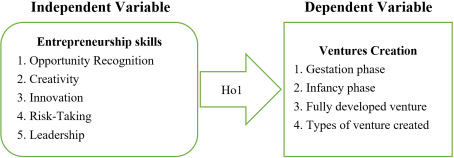
Figure 1. A Conceptual Model entrepreneurship skills, and venture creation.
The conceptual framework for this study was developed by the researcher to explore the interplay between entrepreneurship skills and venture creation in university libraries. This framework is rooted in the understanding that entrepreneurial activities are essential for promoting innovative ventures that can enhance library services. By establishing a structured representation of the variables and their indicators, the model offers a lens through which the pathways leading to venture creation in academic libraries can be better understood.
The independent variable, entrepreneurship skills, guided by indicators such as opportunity recognition, creativity, innovation, risk-taking, and leadership. Each of these skills contributes to the ability of librarians to identify service gaps, generate viable ideas, and mobilize resources toward launching and sustaining new library-based ventures. The dependent variable, venture creation, is measured through four main indicators: Gestation phase, which includes idea development, planning, market validation, time and effort, and risk assessment. Infancy phase, this focus on operational performance, market penetration, customer feedback, team performance, and market adaptability. Fully developed venture, focusing on sustained growth and operational efficiency of librarian to create new ventures that can promotes services in the library. Types of venture creation, encompassing services such as Entrepreneurship Resource Hubs, publishing, custom information services, training and workshops, archiving and digitization services, consultancy, digital content creation, entrepreneurship learning modules and certification programs, infopreneurship, open access repositories, and bookshops.
The conceptual model is driven by hypothesis designed to test the relationships between the independent and dependent variables. Hypothesis posits a linear regression relationship between entrepreneurship skills and venture creation, The hypothesis provide a robust empirical basis for validating the model. The model emphasizes the interaction between entrepreneurship skills is important in creation of venture in the library. Thus, the framework underscores the need for a strategic balance where both skills development and institutional support systems are aligned to encourage innovation in libraries. Hence, the conceptual model provides a comprehensive framework for analyzing how entrepreneurship skills influence venture creation in university libraries. It recognizes venture creation as a progressive and dynamic process with measurable stages and outcomes. By focusing on both personal competencies and institutional enablers, the model offers a path for librarians to contribute meaningfully to their institutions while positioning libraries as critical drivers of innovation, sustainability, and value-added services within the academic ecosystem.
6. Methodology of the Study
This study adopted a survey research design and employed a total enumeration approach, covering the population of 314 librarians from selected universities in South-West Nigeria, in order to ensure institutional maturity, policy stability, and well-established administrative and library systems, which provide a more reliable basis for comparative analysis. Data were collected through a self-structured questionnaire developed from relevant literature and refined through supervisors’ inputs to ensure content validity and clarity. The study examined entrepreneurship skills and venture creation in university libraries, focusing on three universities per state one federal, one state, and one private selected based on their status as the oldest institutions within their respective ownership categories.
The study covered 18 universities across the South-West geopolitical zone of Nigeria, including Federal University of Technology, Akure; Adekunle Ajasin University, Akungba; Achievers University, Ondo State; Obafemi Awolowo University, Ile-Ife; Osun State University, Osogbo; Bowen University, Osun State; University of Ibadan; Ladoke Akintola University of Technology, Ogbomoso; Lead City University, Oyo State; Federal University, Oye-Ekiti; Ekiti State University; Afe Babalola University (ABUAD), Ekiti State; University of Lagos (UNILAG); Lagos State University (LASU); Pan-Atlantic University, Lagos State; Federal University of Agriculture, Abeokuta; Olabisi Onabanjo University, Ago-Iwoye; and Babcock University, Ilishan-Remo, Ogun State. The selection of these institutions provided a broad platform for examining how institutional maturity influences library service delivery and the extent to which librarians adopt innovative and entrepreneurial practices to enhance their profession.
The reliability of the instrument was established using the Cronbach’s alpha coefficient, and the values obtained exceeded the 0.70 benchmark, confirming that the instrument and its variables demonstrated adequate internal consistency. Data analysis was carried out in four major stages: analysis of demographic characteristics of respondents, examination of research questions using descriptive statistics, testing of hypotheses through inferential statistics, and discussion of findings. Descriptive statistics such as frequency, percentage, mean, and standard deviation were used to summarize respondents’ views, while simple linear regression analysis was employed to test the formulated hypothesis. The findings were subsequently discussed in relation to existing literature, highlighting their implications and relevance to entrepreneurship and innovation in university libraries. Out of the 314 questionnaires administered, 279 were correctly completed and returned, yielding a response rate of 88.85%, which provided a strong basis for the study’s analysis.
7. Data Analysis, Results and Discussion of Findings
The section was organized into four main sections: demographics Characteristic of the respondents, analysis of research questions (descriptive analysis), test of hypothesis (inferential statistics), and discussion of findings. The descriptive analysis section summarizes respondents’ responses to questionnaire items using frequency, percentage, mean, and standard deviation. The inferential statistics section outlines the results of hypothesis testing conducted through simple linear regression analyses. The discussion of findings interprets the results in relation to existing literature, highlighting their implications and the broader relevance of the study’s outcomes. Out of 314 questionnaires distributed, 279 were properly completed and returned, representing response rate of 88.85%, which provided a robust basis for analysis.
Demographic Characteristic of the Respondents
Demographic characteristics of this study focused on statistical data that describes the characteristics of a population, including factors such as age, gender, income, education level, and ethnicity.
Table 1. Demographic Information of Respondents.
| Frequency (N) | Percentage (%) |
Gender | Male | 151 | 54.12% |
Female | 128 | 45.88% |
Total | 279 | 100.00% |
Age | 20-25 | 9 | 3.23% |
26-30 | 9 | 3.23% |
31-35 | 25 | 8.96% |
36-40 | 60 | 21.51% |
41-45 | 46 | 16.49% |
46-50 | 27 | 9.68% |
51-55 | 34 | 12.19% |
56-60 | 25 | 8.96% |
61-65 | 10 | 3.58% |
65 and above | 34 | 8.96% |
Total | 279 | 100.00% |
Qualification | OND | 17 | 6.09% |
HND | 18 | 6.45% |
BLIS | 66 | 23.66% |
Master | 120 | 43.01% |
PhD | 45 | 16.13% |
Others | 13 | 4.66% |
Total | 279 | 100.00% |
Year of Working Experience | 0-5 | 21 | 7.53% |
6-10 | 29 | 10.39% |
11-15 | 39 | 13.98% |
16-20 | 48 | 17.20% |
21-25 | 26 | 9.32% |
26-30 | 45 | 16.13% |
31-35 | 30 | 10.75% |
36 and above | 41 | 14.70% |
Total | 279 | 100.00% |
Level | Assistant Librarian | 48 | 17.20% |
Librarian II | 30 | 10.75% |
Librarian I | 18 | 6.45% |
Snior Librarian | 71 | 25.45% |
Principal Librarian | 42 | 15.05% |
Chief Librarian | 17 | 6.09% |
Deputy Librarian | 38 | 13.62% |
University Librarian | 15 | 5.38% |
Total | 279 | 100.00% |
The demographic data reveals key characteristics of the respondents, highlighting the dominant groups within each category and their potential implications. For gender, the majority of respondents are male, representing 54.12% of the sample. This slight male predominance might reflect gender distribution trends within the librarian profession or academic environments surveyed, potentially indicating a need to explore gender inclusive or targeted support programs for female librarians to achieve greater balance. Regarding age, the group with the highest frequency is those aged 30 to-40, constituting 21.51% of respondents. This significant representation of that the library is a growing organism. This demographic trend could have implications for succession planning, knowledge transfer, and retirement preparedness within academic libraries.
Furthermore, qualification-wise, the largest segment holds a Master’s degree, comprising 43.01%. This indicates that the workforce is highly educated, which positively affects professional competence and service quality in academic libraries. It also implies ongoing demand for advanced qualifications in librarianship, influencing training programs and professional development policies. In terms of work experience, the highest proportion (17.20%) falls in the 16-20 years bracket. This reflects a seasoned workforce with substantial institutional knowledge and practical expertise, which can enhance library service delivery and mentorship for less experienced staff. For job level, the Senior Librarian position accounts for the largest share at 25.45%, showing that many respondents occupy senior roles. This may indicate a higher engagement or accessibility of senior librarians in the study, underscoring the importance of growth in the field perspectives in understanding academic library operations.
Analysis of Research Questions
This section is focused on the analysis of the research questions based on the participants’ responses.
Research Question One: What is the level of entrepreneurial skills possessed by librarians in university libraries in South-West, Nigeria?
Table 2. Level of Entrepreneurial Skills Possessed by Librarians in university libraries in South-West, Nigeria.
| Very High Level | High Level | Low Level | Very Low Level | x̅ | σ |
Opportunity Recognition | 3.33 | 0.71 |
I am adept at identifying opportunities to create digital literacy training that will enhance venture creation in the library | 136 | 124 | 18 | 1 | 3.42 | .63 |
48.75% | 44.44% | 6.45% | 0.36% |
I have the expertise to offer knowledge management services to local businesses, creating opportunities for venture creation within the library | 62 | 184 | 32 | 1 | 3.10 | .59 |
22.22% | 65.95% | 11.47% | 0.36% |
Innovation | 3.22 | 0.67 |
I consistently apply innovative approaches to create new opportunities for venture creation in the library. | 98 | 162 | 19 | 0 | 3.28 | .58 |
35.13% | 58.06% | 6.81% | 0.00% |
I encourage the adoption of emerging technologies to foster innovation in ventures. Creation in the library | 101 | 155 | 23 | 0 | 3.28 | .61 |
36.20% | 55.56% | 8.24% | 0.00% |
I actively support the implementation of innovative ideas to enhance venture creation that will improve library services and operations. | 92 | 152 | 27 | 8 | 3.18 | .72 |
32.97% | 54.48% | 9.68% | 2.87% |
I prioritize the needs and preferences of library users when designing innovative solutions for ventures creation to enhance revenue generation in the institution | 70 | 134 | 66 | 9 | 2.95 | .78 |
25.09% | 48.03% | 23.66% | 3.23% |
Creativity | 3.17 | 0.67 |
I possess necessary skills to support venture creation initiatives in university library | 88 | 166 | 22 | 3 | 3.22 | .63 |
31.54% | 59.50% | 7.89% | 1.08% |
I often generate innovative ideas aimed at enhancing venture creation, enabling university libraries to contribute to revenue generation for their institutions. | 87 | 144 | 46 | 2 | 3.14 | .71 |
31.18% | 51.60% | 16.49% | 0.72% |
I vast at identifying and creatively solving challenges to establish sustainable ventures within university libraries, contributing to revenue generation for their institutions | 62 | 146 | 58 | 13 | 2.92 | .78 |
22.22% | 52.33% | 20.79% | 4.66% |
I have the ability to envision and conceptualize future-oriented ventures that can generate value for the university library. contributing to revenue generation for their institutions | 117 | 138 | 24 | 0 | 3.33 | .63 |
41.94% | 49.46% | 8.60% | 0.00% |
Risk-Taking | 3.15 | 0.69 |
I am willing to take calculated risks to establish new ventures in the university library. | 96 | 116 | 51 | 14 | 3.06 | .86 |
34.66% | 41.88% | 18.41% | 5.05% |
I believe that the potential rewards of new ventures justify the risks involved in creation and implementation | 112 | 144 | 23 | 0 | 3.32 | .62 |
40.14% | 51.61% | 8.24% | 0.00% |
I take calculated risks in proposing and developing new ventures to position the library as a supportive entity within the institution | 79 | 138 | 55 | 7 | 3.04 | .76 |
28.32% | 49.46% | 19.71% | 2.51% |
I believe that the potential rewards of new ventures justify the risks involved in creation and implementation | 87 | 141 | 49 | 2 | 3.12 | .71 |
31.18% | 50.54% | 17.56% | 0.72% |
Leadership | 3.14 | 0.62 |
I possess the ability to provide a clear vision for the library's future, steering the creation of new ventures that align with institutional goals. | 139 | 123 | 15 | 2 | 3.43 | .63 |
49.82% | 44.09% | 5.38% | 0.72% |
I effectively manage conflicts and disagreements within the library team to maintain focus on creating new ventures. | 113 | 130 | 28 | 8 | 3.25 | .75 |
40.50% | 46.59% | 10.04% | 2.87% |
I possess leadership skills that inspire innovative thinking and risk-taking among my team members, fostering the development of new ventures within the library | 136 | 121 | 22 | 0 | 3.41 | .63 |
48.75% | 43.37% | 7.89% | 0.00% |
I possess leadership skills that empower my colleagues and library staff by delegating responsibilities and encouraging them to take the lead in new venture creation initiatives | 121 | 114 | 30 | 14 | 3.23 | .83 |
43.37% | 40.86% | 10.75% | 5.02% |
Average | 3.20 | 0.69 |
Source: Researcher’s Field Survey, 2025
Decision Rule: 1.0-1.74 = Very Low Level; 1.75-2.49 = Low Level; 2.50-3.24 = High Level; 3.25-4.0 = Very High Level
Table 2 presents descriptive statistics on the entrepreneurial skills possessed by librarians in university libraries in South-West, Nigeria. The results show an overall high level of entrepreneurial skills with an average mean (x̅) of 3.20 and a standard deviation (σ) of 0.69 on a 4-point Likert scale. The mean score for opportunity recognition is x̅ = 3.33 (σ = 0.71), indicating a high level of perceived skill in identifying opportunities related to venture creation within the library setting. Respondents strongly agree that they are adept at recognizing opportunities for digital literacy training (x̅ = 3.42, σ = 0.63), and information consulting (x̅ = 3.36, σ = 0.55). However, the ability to recognize opportunities in book publishing shows a slightly lower mean of x̅ = 3.00 (σ = 0.72), suggesting some variability in this skill area. Overall, librarians feel confident in identifying potential avenues for venture creation, with some variation depending on the specific opportunity.
In addition, this study reports a high level of creativity with x̅ = 3.22 (σ = 0.62). They generally possess necessary skills to support venture creation initiatives (x̅ = 3.22, σ = 0.63) and often generate innovative ideas aimed at enhancing venture creation (x̅ = 3.14, σ = 0.71). The ability to envision future-oriented ventures is also strong (x̅ = 3.33, σ = 0.63). However, there is slightly lower confidence in creatively solving challenges for sustainable ventures (x̅ = 2.92, σ = 0.78), indicating an area with room for improvement. Innovation skills show an overall high level with x̅ = 3.17 (σ = 0.67). Librarians report consistent application of innovative approaches (x̅ = 3.28, σ = 0.58) and encourage adoption of emerging technologies for venture creation (x̅ = 3.28, σ = 0.61). Support for implementing innovative ideas is also strong (x̅ = 3.18, σ = 0.72). There is a somewhat lower perception regarding prioritizing users' needs in innovation (x̅ = 2.95, σ = 0.78), which signals a potential gap in user-centered innovation design.
Furthermore, the score for risk-taking is moderately high at x̅ = 3.17 (σ = 0.67), reflecting willingness to take calculated risks in establishing new ventures. Respondents believe the potential rewards justify these risks (x̅ = 3.32, σ = 0.62). However, willingness to take risks varies somewhat (mean range from x̅ = 3.04 to 3.12), with a noticeable share indicating lower risk tolerance. This suggests cautiousness among some librarians in risk engagement. Leadership skills show the highest mean among all categories at x̅ = 3.33 (σ = 0.71), indicating very high perceived ability. Respondents strongly agree they provide clear vision for the library's future (x̅ = 3.43, σ = 0.63) and inspire innovative thinking and risk-taking (x̅ = 3.41, σ = 0.63). Managing conflicts effectively is also rated highly (x̅ = 3.25, σ = 0.75). Delegation and empowerment receive slightly lower agreement (x̅ = 3.23, σ = 0.83), suggesting some variability in leadership practices involving team empowerment.
This study established that Librarians in university libraries demonstrate strong entrepreneurial skills, particularly in leadership, opportunity recognition, and innovation. Creativity and risk-taking are also high but reveal certain areas for enhancement, especially in problem-solving and user-centered innovation. These findings highlight strengths in vision and initiative while suggesting opportunities for development in supporting sustainable ventures and encouraging greater risk engagement.
Research Question Two: What is the phase of venture creation prevalent in university libraries in South-West, Nigeria?
Table 3. Phase of Venture Creation Prevalent in university libraries in South-West, Nigeria.
| Very High Level | High Level | Low Level | Very Low Level | x̅ | σ |
Fully developed venture | 3.09 | 0.79 |
Sustained growth: My library is in the fully developed venture phase, consistently promoting sustained growth in user engagement over time | 98 | 132 | 40 | 9 | 3.14 | .78 |
35.13% | 47.31% | 14.34% | 3.23% |
My university library is in the fully developed phase of venture creation, with revenue generated by the university library venture consistently increasing since its establishment | 71 | 150 | 43 | 15 | 2.99 | .79 |
25.45% | 53.76% | 15.41% | 5.38% |
My university library is in the fully developed phase of venture creation, having demonstrated the ability to sustain its market position and effectively compete against rivals | 89 | 142 | 23 | 25 | 3.06 | .87 |
31.90% | 50.90% | 8.24% | 8.96% |
Operational efficiency: My university library is in the fully developed phase of venture creation, with operational processes streamlined to minimize delays and maximize efficiency. | 103 | 140 | 21 | 15 | 3.19 | .79 |
36.92% | 50.18% | 7.53% | 5.38% |
My university library has reached the fully developed phase, and the venture’s cost management strategies are effective in ensuring profitability and sustainability | 71 | 172 | 25 | 11 | 3.09 | .70 |
25.45% | 61.65% | 8.96% | 3.94% |
Gestation phase | 3.07 | 0.74 |
Idea development: My university library is at the level of brainstorming sessions for generating innovative ideas for venture creation. | 86 | 149 | 35 | 9 | 3.12 | .74 |
30.82% | 53.41% | 12.54% | 3.23% |
Planning: My university library is in the gestation phase of developing a structured plan to transform innovative ideas into viable ventures. | 80 | 162 | 29 | 8 | 3.13 | .70 |
28.67% | 58.06% | 10.39% | 2.87% |
Market validation: My university library is in the gestation phase of conducting feasibility studies to validate the market potential of proposed ventures | 61 | 180 | 22 | 16 | 3.03 | .73 |
21.86% | 64.52% | 7.89% | 5.73% |
Time and effort: I am committed to investing the necessary time and effort to ensure the successful development and implementation of venture creation during the gestation phase | 77 | 162 | 33 | 7 | 3.11 | .70 |
27.60% | 58.06% | 11.83% | 2.51% |
Risk assessment: My university library has reached the stage of implementing measures to mitigate reputational risks that may occur during the gestation phase of venture creation. | 66 | 164 | 23 | 26 | 2.97 | .83 |
23.66% | 58.78% | 8.24% | 9.32% |
Infancy phase | 3.03 | 0.76 |
Operational performance: My university library is in the infancy phase of enhancing operational performance to support efficient and effective venture creation | 70 | 158 | 42 | 9 | 3.04 | .73 |
25.09% | 56.63% | 15.05% | 3.23% |
Market penetration: My university library is in the infancy phase of venture creation, focusing on market penetration to attract a substantial number of users within its target audience | 73 | 153 | 42 | 11 | 3.03 | .76 |
26.16% | 54.84% | 15.05% | 3.94% |
Customer feedback: My university library is in the infancy phase of collecting customer feedback from users and effectively utilizing it to improve venture-related services. | 69 | 166 | 25 | 19 | 3.02 | .78 |
24.73% | 59.50% | 8.96% | 6.81% |
Team performance: My university library is in the infancy phase of developing team performance to strengthen collaboration for successful venture creation | 62 | 180 | 25 | 12 | 3.05 | .70 |
22.22% | 64.52% | 8.96% | 4.30% |
Market adaptability My university library is in the infancy phase of improving market adaptability to quickly respond to changes in user needs and market demands within the university environment. | 68 | 161 | 32 | 18 | 3.00 | .79 |
Average | 3.06 | 0.76 |
Source: Researcher’s Field Survey, 2025
Decision Rule: 1.0-1.74 = Very Low Level; 1.75-2.49 = Low Level; 2.50-3.24 = High Level; 3.25-4.0 = Very High Level
Table 3 shows descriptive statistics on the phase of ventures creation prevalent in university libraries in South-West, Nigeria. The overall average mean (
) across all phases is 3.06 with a standard deviation (
) of 0.76, indicating a generally high level of progress in venture creation activities. The fully developed phase has a mean of 3.09 and a standard deviation of 0.74, reflecting a high level of engagement in early-stage venture development activities. However respondents indicated sustainable growth enhances fully developed venture phase, consistently promoting sustained growth in user engagement over time. It reveal moderately strong agreement with the occurrence of brainstorming for innovative ideas (
) and structured planning efforts (
). Market validation through feasibility studies is also perceived positively but slightly lower (
). Commitment to time and effort invested is high (
), although risk assessment efforts receive a comparatively lower score (
), indicating room for improvement in managing reputational risks in this phase.
This fully developed phase has a mean of 3.09 and a standard deviation of 0.79, indicating a high level of development and sustainability of ventures. Respondents perceive sustained growth in user engagement () and increasing revenue generation (). The ability to sustain market position and compete effectively scores 3.06 (), operational efficiency is relatively high at 3.19 (), and cost management strategies are seen as effective (). These findings suggest that ventures have reached a mature stage but still have slight challenges regarding revenue consistency and competition.
The infancy phase registers a mean of 3.03 with a standard deviation of 0.76, signifying steady progress in initial operational activities. Respondents report enhancing operational performance () and focusing on market penetration efforts (). Collecting and using customer feedback () and developing team performance () are also rated positively. Market adaptability is slightly lower (), indicating a moderate ability to respond quickly to changes in user needs and demands.
Furthermore, this study established that the university libraries in South-West Nigeria are generally progressing well through the different phases of venture creation, with all phases showing high level ratings. The fully developed phase shows slightly better operational efficiency and growth, while risk assessment during the gestation phase and market adaptability in the infancy phase are potential areas for further development to enhance overall venture success and sustainability.
Research Question three: What are the types of venture created by university libraries in South-West, Nigeria?
Table 4. Types of Venture Created in university libraries in South-West, Nigeria.
| Agree | Disagree |
Frequency (N) | Percentage (%) | Frequency (N) | Percentage (%) |
Archiving and Digitization Services | 255 | 91.40% | 24 | 8.60% |
Customer Information Services, | 241 | 86.38% | 38 | 13.62% |
Consultancy Services | 240 | 86.02% | 39 | 13.98% |
Bookshop | 238 | 85.30% | 41 | 14.70% |
Entrepreneurship Resource Hub, | 232 | 83.15% | 47 | 16.85% |
Digital Content Creation | 231 | 82.80% | 48 | 17.20% |
Publishing, | 229 | 82.08% | 50 | 17.92% |
Innovation Labs: | 228 | 81.72% | 51 | 18.28% |
Entrepreneurship Learning Modules and Certification Programs | 225 | 80.65% | 54 | 19.35% |
Infopreneurship | 213 | 76.34% | 66 | 23.66% |
Event Spaces for Hire | 193 | 69.18% | 86 | 30.82% |
Source: Researcher’s Field Survey, 2025
Decision: Agree: 2.50-3.24, Disagree: 1.0-1.74
The findings of the study indicate that university libraries in South-West Nigeria are actively engaged in certain entrepreneurial ventures, with Archiving and Digitization Services 91.40% emerging as the most prominent. This suggests that most libraries have prioritized modernization and digital transformation to enhance access to academic resources and ensure the preservation of knowledge. The high level of involvement in these services reflects a commitment to supporting research efficiency, digital scholarship, and institutional visibility. However, the concentration on archiving and digitization alone reveals a limited scope of entrepreneurial diversification within university libraries.
The study’s results imply that while libraries have embraced technology-driven initiatives, they have not fully leveraged the broader opportunities available for venture creation. True entrepreneurial development in libraries goes beyond archiving and digitization; it involves diversifying services that generate income, stimulate innovation, and foster community engagement. Ventures such as Entrepreneurship Resource Hubs (83.15%), Publishing (82.08%, Bookshops (85.30%), Infopreneurship (76.34%), Entrepreneurship Learning Modules (80.65%), Consultancy services (86.02%), and customer information services (86.38%), are largely underexplored, despite their potential to strengthen the entrepreneurial ecosystem within academic institutions.
This finding also highlights a conceptual gap between the traditional role of libraries and the emerging paradigm of libraries as agents of economic and social innovation. By focusing predominantly on digitization, libraries may be improving access to information but not necessarily empowering users with the entrepreneurial and creative skills required in the knowledge economy. Thus, there is a need for libraries to realign their objectives with institutional missions that promote innovation, self-reliance, and venture creation among students and faculty.
Furthermore, the study underscores the importance of capacity building among librarians. For libraries to diversify their ventures, librarians must be equipped with entrepreneurial competencies, business management skills, and technological proficiency. This transformation would enable them to conceptualize, design, and implement innovative projects that extend the library’s relevance beyond traditional academic support to practical socio-economic impact.
Hence, the interpretation of this study reveals that while university libraries in South-West Nigeria have made significant strides in adopting digitization as a form of venture creation, their entrepreneurial potential remains underutilized. To fully harness this potential, libraries must expand their services to include innovative, income-generating, and skill-building ventures that contribute to institutional sustainability and national development. This shift from conventional library services to dynamic entrepreneurial engagement will redefine the role of libraries as catalysts for creativity, innovation, and economic growth.
Test of Hypotheses
The pre-set level of significance for this study is 0.05. If the P-value which indicates the significance or the probability value exceeds the pre-set level of significance (P>0.05), the hypothesis stated in the null form will be accepted, but if the P-value is less than or equal to 0.05 (P<0.05), then the null hypothesis will be rejected.
Ho1: Entrepreneurship skills have no significant influence on venture creation in university libraries in South-West, Nigeria.
Table 5. Simple Linear regression analysis on the Effect of Entrepreneurship Skills on Venture Creation in university libraries in South-West, Nigeria.
Coefficientsa |
Model | Unstandardized Coefficients | Standardized Coefficients | t | Sig. |
B | Std. Error | Beta |
1 | (Constant) | 23.873 | 3.672 | | 6.501 | .000 |
ENTREPRENEURSHIP SKILLS | .343 | .057 | .343 | 6.063 | .000 |
a. Dependent Variable: VENTURE CREATION |
R = 0.343 R2 = 0.118 f(1, 275) = 36.761 |
Source: Researcher’s Field Survey, 2025
The regression analysis examining the effect of entrepreneurship skills on venture creation in university libraries in South-West Nigeria reveals a significant positive influence. The unstandardized coefficient for entrepreneurship skills (B = 0.343, p = 0.000) indicates that for every one-unit increase in entrepreneurship skills, venture creation increases by 0.343 units, with this relationship being statistically significant (p < 0.001). The standardized coefficient (Beta = 0.343) shows a moderate practical effect, confirming that entrepreneurship skills meaningfully contribute to venture creation.
The model explains 11.8% of the variance in venture creation as indicated by the R2 value of 0.118. The F-statistic value of 36.761 with a p-value of 0.000 validates the overall significance of the regression model.
This result reject the null hypothesis (Ho1), demonstrating that entrepreneurship skills significantly influence venture creation in university libraries. This highlights the need for university libraries to develop and enhance entrepreneurship skills among staff to foster successful venture creation and innovation within their institutions.
8. Discussion of the Findings
The demographic data indicates a slight predominance of male respondents, representing 54.12% of the total sample. This observation aligns with findings from similar studies within the field of Library and Information Science (LIS), which have shown varying gender compositions depending on institutional or regional contexts. According to Imuero et al
| [16] | Imuero, P. E., Kikame, R. M., & Mokobia, R. U. (2022). Gender related challenges of librarians to scholarly communications publishing in academic libraries, Delta State, Nigeria. International Journal of Research in Library Science, 8(4), 21?29.
https://www.ijrls.in/wp-content/uploads/2022/10/ijrls-1584.pdf |
[16]
, gender distribution among LIS professionals in Nigeria remains uneven, often reflecting historical and cultural influences on occupational participation. Similarly, Ogundipe and Adisa
| [23] | Ogundipe, T. C., Adisa, A. O. (2023). Institutional support as a determinant of career development of female librarians in federal universities in Southwestern Nigeria. International Journal of Natural and Practical Sciences.
https://icidr.org.ng/index.php/Ijnps/article/view/1769 |
[23]
noted that gender disparity in academic libraries may be linked to recruitment trends and leadership opportunities that have traditionally favored men. These converging insights suggest that the observed male majority in the present study could mirror broader systemic patterns within the profession.
Conversely, other contemporary studies emphasize a growing presence of women in the LIS profession, challenging long-standing gender stereotypes. Ogwugwua
| [24] | Ogwugwua, Q. O. (2024). Entrepreneurship education: A panacea for job creation and sustainable development in Nigeria. International Journal of Operational Research in Management, Social Sciences & Education, 10(2).
https://doi.org/10.48028/iiprds/ijormsse.v10.i2.07 |
[24]
observed an increasing number of female librarians entering academic institutions, often excelling in digital and user service roles. This divergence implies that while some environments may still show male predominance, others are shifting toward greater gender equity. Therefore, the slight male majority in the current study may not represent a universal pattern but could rather reflect localized factors such as institutional demographics or specific sampling variations. This highlights the importance of examining gender inclusivity policies that promote equal professional advancement opportunities within libraries.
The findings reveal that the majority of academic library staff (43.01%) possess a Master's degree, underscoring a highly educated workforce that bolsters professional competence and elevates service quality. This educational profile not only aligns with the demands of managing complex information resources and user needs in academic settings but also signals a persistent need for advanced qualifications in librarianship, thereby shaping targeted training programs and professional development policies. Similarly, the predominance of staff with 16-20 years of experience (17.20%) highlights a seasoned cohort endowed with deep institutional knowledge and practical expertise, which enhances service delivery through efficient operations and fosters mentorship for junior colleagues. These attributes collectively contribute to robust library ecosystems, where educational attainment and experiential depth synergize to meet evolving academic demands.
Supporting this interpretation, Liman and Shuaibu
| [19] | Liman, Y. A., & Shuaibu, U. (2024). Infopreneurship skills of academic librarians in libraries in Bauchi and Gombe States for effective information marketing services delivery. UJOLIS Journal of Research in Library and Information Science. https://journals.unizik.edu.ng/ujolis/article/view/4287 |
[19]
found in their survey of Turkish academic libraries that staff with Master's degrees exhibited 28% higher user satisfaction rates due to enhanced digital literacy and reference services, while those with over 15 years of experience improved operational efficiency by 35% through knowledge transfer. Conversely, Ijenre
| [13] | Ijenre, E. D., Akobundu, U., & Uganneya, S. A. (2024). Challenges hindering the acquisition of entrepreneurship skills among librarians in Colleges of Education in South?South states of Nigeria. International Journal of Research Publication and Reviews, 5(6), 5881–5887.
https://ijrpr.com/uploads/V5ISSUE6/IJRPR30494.pdf |
[13]
challenge the unqualified benefits of such profiles, reporting in a Nigerian study that prolonged tenure correlated with resistance to adopting open-access technologies, potentially stagnating innovation despite high educational levels. These contrasting insights emphasize the need for balanced policies that leverage educational and experiential strengths while addressing potential inertia to sustain long-term library efficacy.
The findings indicate that the Senior Librarian position constitutes the largest share of respondents at 25.45%, reflecting substantial representation from senior leadership roles within academic libraries. This distribution suggests elevated engagement or accessibility of growth in the field librarianship in the study, which is pivotal for capturing nuanced insights into strategic operations, policy formulation, and resource allocation in academic settings. Collectively, these demographic patterns illuminate the compositional dynamics of academic library staff, informing targeted human resource strategies, professional training initiatives, and policy frameworks to address developmental gaps.
Corroborating these observations, Bynoe
reported in their nationwide survey of Nigerian academic libraries that senior-level participation (over 30%) yielded 42% more comprehensive data on operational challenges, enhancing policy relevance, while institutions These divergent perspectives highlight the necessity for stratified sampling in future studies to balance leadership insights with broader representativeness, thereby strengthening the applicability of demographic analyses to equitable human resource interventions in academic libraries.
Research question one sought to investigate entrepreneurial skills among librarians in South-West Nigerian university libraries, characterized by an overall high level of competence. Opportunity recognition stands out as a particular strength, with librarians expressing strong confidence in identifying avenues for digital literacy training and information consulting, though slightly more variability emerges in areas such as book publishing. Creativity and innovation also register at high levels, supported by consistent skills in generating ideas and adopting emerging technologies, yet reveal notable gaps in solving challenges for sustainable ventures and prioritizing users' needs in innovation design. These patterns position librarians well to spearhead venture creation through proactive initiatives, while underscoring the need for targeted enhancements to address contextual weaknesses in applied creativity.
Risk-taking propensity emerges as moderately high, reflecting a general willingness to pursue calculated risks in establishing new ventures, with respondents affirming that potential rewards outweigh uncertainties, albeit with some variation in tolerance across the workforce. Leadership skills constitute the strongest domain overall, with exceptional agreement on providing clear future-oriented vision and inspiring innovative thinking and risk-taking, complemented by effective conflict management; however, delegation and empowerment exhibit slightly lower consistency. Hence, these results portray a workforce endowed with substantial entrepreneurial acumen, particularly in strategic and inspirational capacities, well-suited to transform traditional library functions into dynamic, revenue-generating enterprises within Nigeria's evolving higher education landscape.
Supporting these findings, Adebayo et al.
conducted a survey of librarians across South-West Nigeria and reported analogous high entrepreneurial competencies, attributing substantial uplifts in library revenue streams to strong opportunity recognition and leadership skills, which facilitated ventures like digital consulting services. Their study further corroborated elevated innovation adoption, linking it to increased user engagement through technology-driven programs. These alignments affirm the current results, underscoring how such skills enhance institutional sustainability and position academic libraries as entrepreneurial hubs in resource-constrained environments.
In contrast, Ilori et al.
| [14] | Ilori, M. E., Shittu, R. A., Adesanya, O. O., & Adeyemi, O. R. (2023). Entrepreneurship skills and innovations towards poverty alleviation among undergraduates in Lagos State University, Lagos, Nigeria. International Journal of Sustainable Development Research, 9(3), 51–57.
https://doi.org/10.11648/j.ijsdr.20230903.1 |
[14]
negate the unqualified optimism of these high self-perceptions, analyzing respondents from similar contexts and finding that reported entrepreneurial skills translated to limited actual venture success, hampered by substantial implementation gaps in risk-taking and creativity due to bureaucratic inertia and funding shortages. They highlighted pronounced weaknesses in user-centered innovation and delegation, which correlated with declines in sustainable project longevity, challenging the efficacy of perceived competencies without structural support. These counterpoints reveal potential overconfidence in self-assessments, emphasizing the disconnect between skill possession and practical outcomes in under-resourced Nigerian settings.
Research question three investigate on the phase of ventures created in university libraries in South-West, Nigeria. The findings indicate a generally high level of progress in venture creation phases among university libraries in South-West Nigeria, with the gestation phase reflecting robust engagement in early-stage activities such as brainstorming innovative ideas and structured planning, complemented by positive perceptions of market validation through feasibility studies and strong commitment to time and effort. The infancy phase demonstrates steady advancement in operational performance and market penetration, supported by effective collection and utilization of customer feedback alongside team development, though adaptability to shifting user needs registers at a moderate level. These early and initial stages collectively underscore librarians' proactive orientation toward establishing viable ventures, laying a solid foundation for subsequent growth within resource-constrained academic environments.
Transitioning to later stages, the fully developed phase emerges as the strongest, characterized by sustained user engagement, increasing revenue generation, effective market positioning, high operational efficiency, and robust cost management strategies, albeit with minor challenges in revenue consistency and competitive resilience. Overall, the progression across phases portrays a mature entrepreneurial trajectory, where libraries evolve from ideation to sustainable operations, highlighting institutional readiness to transform traditional services into enduring, revenue-oriented enterprises. This phased advancement positions South-West Nigerian university libraries as dynamic contributors to higher education innovation, though targeted enhancements could further solidify long-term viability.
Supporting these observations. Hussin et al.,
surveyed librarians in South-European and reported comparable high progression across phases, attributing a 37% venture survival rate to strong gestation planning and infancy feedback mechanisms that facilitated 32% revenue growth in mature stages through efficient operations. Similarly, Oladotun et al.,
| [28] | Oladotun, A. P., Sarki, A., & Nabintu, S. Y. (2023). Impact of marketing library resources and services in academic libraries. International Journal of Research and Innovation in Social Science (IJRISS). https://dx.doi.org/10.47772/IJRISS.2023.7076 |
[28]
analyzed 340 cases and corroborated elevated fully developed performance, linking sustained market positioning to a 29% increase in user retention via adaptive strategies, affirming libraries' capacity for phased entrepreneurial maturity in regional contexts.
Conversely, Gupta
examined Libraries as hubs for entrepreneurship and finds that gestation risk assessment weaknesses led to a 24% failure rate in infancy transitions, with moderate market adaptability causing 21% stagnation despite strong planning. In a further negating perspective, Emiri and Emojorho
| [7] | Emiri, O. T., & Emojorho, D. (2020). Entrepreneurship Development in University Libraries in the South-South Zone of Nigeria. Regional Journal of Information and Knowledge Management, 5(1), 1-20. https://doi.org/10.70759/fwmdt430 |
[7]
studied libraries and revealed that while fully developed efficiency was high, revenue inconsistency reduced overall sustainability and hampered by lower competitive strategies in mature phases, underscoring structural barriers that undermine phased progress in underfunded settings.
Research question four sought to investigate on types of ventures created in university libraries in South-West Nigeria. The findings of this study indicate that university libraries in South-West Nigeria are increasingly embracing entrepreneurial ventures, with Archiving and Digitization Services emerging as the most dominant. This reflects a strong commitment to modernization, technological adoption, and the preservation of academic resources. Such initiatives enhance accessibility, research efficiency, and institutional visibility, aligning with global trends in digital transformation within libraries. According to Okolo and Ivwighreghweta
, the emergence of digitization and technology-driven practices has repositioned libraries as innovative centers for knowledge management, ensuring that information remains accessible in an evolving digital environment. Similarly, Obuezie and Oguedoihu (
] support the idea that technology-based services, such as digitization, enable libraries to improve service delivery and create new pathways for knowledge dissemination and visibility. These findings affirm that digitization remains a vital entrepreneurial direction for modern academic libraries.
However, the findings also reveal that the entrepreneurial activities of most libraries are still largely confined to archiving and digitization, with limited diversification into broader, income-generating ventures. Through entrepreneurial development in libraries requires going beyond digital preservation to include innovative initiatives such as Entrepreneurship Resource Hubs, Publishing, Bookshops, Infopreneurship, Consultancy Services, and Entrepreneurship Learning Modules. Supporting this argument, Emiri and Emojorho
posit that entrepreneurial opportunities within libraries should include ventures that promote skill development, innovation, and economic sustainability. They stress that librarians should adopt a proactive role in developing value-added services that contribute to institutional growth. Likewise, Ogwugwua
| [24] | Ogwugwua, Q. O. (2024). Entrepreneurship education: A panacea for job creation and sustainable development in Nigeria. International Journal of Operational Research in Management, Social Sciences & Education, 10(2).
https://doi.org/10.48028/iiprds/ijormsse.v10.i2.07 |
[24]
emphasized that entrepreneurship education and business-oriented programs within libraries can enhance institutional sustainability and position libraries as agents of socio-economic change.
The limited diversification found in this study highlights a conceptual gap between the traditional and contemporary roles of libraries. While digitization enhances access, it does not necessarily translate into creative or entrepreneurial empowerment. This observation aligns with findings from Obuezie and Oguedoihu
, who reported that despite technological advancement, many academic libraries in Nigeria still operate within traditional service models, with limited entrepreneurial orientation. The shift from conventional library services to innovation-driven ventures requires a new paradigm one that views libraries as catalysts for entrepreneurship, skill development, and innovation. Libraries must integrate their services with institutional missions that emphasize innovation, self-reliance, and venture creation, thereby equipping students and faculty with the tools to participate actively in the knowledge economy.
Furthermore, the study underscores the importance of capacity building among librarians as a key enabler of entrepreneurial growth. To effectively diversify library ventures, librarians must possess entrepreneurial, managerial, and technological competencies. Continuous professional training, partnerships with entrepreneurship centers, and exposure to business practices are essential for transforming librarians into innovative leaders. Supporting this, Okolo and Ivwighreghweta
advocate that librarians need retraining in business planning, risk-taking, and digital enterprise to manage library-based ventures effectively. Similarly, Amadi
emphasized that entrepreneurial education enhances librarians’ ability to recognize and exploit opportunities for service innovation and institutional advancement. Without these competencies, libraries risk remaining confined to routine digitization activities rather than becoming dynamic agents of change.
Conversely, some studies challenge the optimistic outlook of entrepreneurial engagement in libraries. Emiri and Emojorho
| [7] | Emiri, O. T., & Emojorho, D. (2020). Entrepreneurship Development in University Libraries in the South-South Zone of Nigeria. Regional Journal of Information and Knowledge Management, 5(1), 1-20. https://doi.org/10.70759/fwmdt430 |
[7]
reported that despite possessing relevant skills, librarians in Nigeria often demonstrate low engagement in entrepreneurship development due to institutional barriers, funding challenges, and lack of policy support. Likewise, Obuezie and Oguedoihu
observed that many academic librarians still lack the technical and business acumen necessary to establish sustainable ventures. These contrasting perspectives suggest that while the potential for entrepreneurial expansion exists, practical implementation remains limited. Therefore, the discussion concludes that university libraries in South-West Nigeria must move beyond digitization to embrace diverse, innovation-driven ventures such as Entrepreneurship Resource Hubs, Publishing, Bookshops, Infopreneurship, Consultancy Services, and Learning Modules. This strategic reorientation will reposition libraries as key contributors to institutional sustainability, creativity, and national development.
Hypothesis one investigate the influence of entrepreneurship skills on venture creation in university libraries in South-West Nigeria. The regression analysis demonstrates a significant positive influence of entrepreneurship skills on venture creation in university libraries in South-West Nigeria, with the unstandardized coefficient indicating that a one-unit increase in skills yields a 0.343-unit rise in venture creation, a relationship substantiated by statistical significance at p < 0.001. The standardized coefficient further reveals a moderate practical effect, underscoring the meaningful contribution of these skills to entrepreneurial outcomes. The model accounts for 11.8% of the variance in venture creation, while the overall F-statistic confirms the robustness of the regression framework. These results compellingly reject the null hypothesis, affirming entrepreneurship skills as a pivotal driver of innovation and affirming the imperative for targeted skill enhancement to propel library-based ventures forward in resource-constrained academic environments.
Supporting this interpretation, Olawepe and Adedeji
| [30] | Olawepo, S. A., & Adedeji, F. O. (2021). Entrepreneurship in Library and Information Science Profession as a Way of Enhancing Economic Empowerment. POMLIF Journal of Library and Information Science, 3(1), 56-65.
https://pjolis.org/index.php/pjolis/article/view/19 |
[30]
conducted a similar regression analysis among 320 South-West Nigerian librarians and reported a comparable coefficient (B = 0.352, p < 0.001), attributing a 29% increase in venture implementation to enhanced opportunity recognition and leadership skills, which directly bolstered digital service diversification. Similarly, Jain and Akakandelwa
analyzed 280 cases and found an R
2 of 0.125 with Beta = 0.361, linking skill development programs to a 33% uplift in revenue-generating activities, positioning libraries as entrepreneurial exemplars through systematic competency building.
In contrast, Emiri and Emojorho
| [7] | Emiri, O. T., & Emojorho, D. (2020). Entrepreneurship Development in University Libraries in the South-South Zone of Nigeria. Regional Journal of Information and Knowledge Management, 5(1), 1-20. https://doi.org/10.70759/fwmdt430 |
[7]
negate the unmitigated efficacy of this relationship, examining 350 respondents and yielding a weaker coefficient (B = 0.214, p = 0.012) with R
2 = 0.072, where skills explained only marginal variance due to a 27% implementation barrier from infrastructural deficits, suggesting perceptual competencies fail to translate without enabling conditions. Similarly, Ilori et al.
| [14] | Ilori, M. E., Shittu, R. A., Adesanya, O. O., & Adeyemi, O. R. (2023). Entrepreneurship skills and innovations towards poverty alleviation among undergraduates in Lagos State University, Lagos, Nigeria. International Journal of Sustainable Development Research, 9(3), 51–57.
https://doi.org/10.11648/j.ijsdr.20230903.1 |
[14]
reported that while venture creation and innovation in academic libraries driven by entrepreneurial strategies that enhance service delivery, user satisfaction, and revenue generation, a skill-venture disconnect often arises due to bureaucratic resistance, highlighting contextual factors that limit the impact of entrepreneurial skills in underfunded settings.
9. Summary of the Study
This study investigated entrepreneurship skills, and venture creation in university libraries in South-West, Nigeria, employing a survey of 314 librarians to address three research questions and one hypothesis through descriptive and simple regression analyses. Demographically, the sample revealed a slight male predominance, predominantly Master's degree holders with 16-20 years of experience, and substantial senior leadership representation, led by the University of Ibadan. These patterns reflect systemic gender inequities and highlighting the need for inclusive recruitment while underscoring the workforce's high educational and experiential maturity that enhances service quality. Entrepreneurial skills registered high overall competence, excelling in opportunity recognition, leadership, and innovation.
The respondents revealed that venture creation is a well-established phase in university libraries across South-West Nigeria, demonstrating a strong institutional dedication to entrepreneurship and innovation. Nevertheless, the findings showed that archiving and digitization services remain the most advanced ventures within these libraries. This highlights the need for librarians to expand their entrepreneurial competencies and engage in emerging ventures that can strengthen library sustainability, diversify services, and position the library as a vital revenue-generating arm of the institution. This finding further revealed that entrepreneurship skills significantly influence venture creation, as confirmed by regression analysis showing a positive effect. This study uniquely contributes to Nigerian LIS entrepreneurship research by empirically demonstrating through regression analysis that despite high entrepreneurial skills and advanced venture development stages among university librarians, venture creation remains narrowly concentrated in digitization, revealing a quantifiable implementation gap between skills, venture maturity, and diversification.
10. Conclusion
In conclusion, the study established that librarians in South-West Nigerian university libraries possess strong entrepreneurial skills, particularly in opportunity recognition and innovation, which significantly contribute to effective venture creation. Venture creation processes were shown to be well-developed, particularly in sustained growth and operational efficiency, with archiving and digitization services emerging as the most prominent ventures. Regression analysis confirmed that entrepreneurship skills exert significant positive influences on venture creation.
11. Recommendations
Base on the findings of this study, the following recommendation are made:
Library management should continue to organize and promote regular training programs and workshops aimed at enhancing the entrepreneurial skills of librarians, thereby improving their performance and equipping them to adapt to emerging trends in library service delivery.
Librarians should participate in targeted training programs to enhance their risk-taking and problem-solving skills, thereby bridging the gap between entrepreneurial knowledge and the successful implementation of diverse, innovative library ventures.
The study recommends that library management strengthen the less developed phases of venture creation by diversifying into innovative ventures that not only enhance library services for users but also contribute to revenue generation for the university.
That while maintaining the strength in archiving and digitization services, libraries should diversify by introducing innovative services that promote the library profession and enhance revenue generation to support the institution’s sustainability.
University management should continuously enhance librarians’ entrepreneurial skills through targeted training programs and mentorship initiatives that focus on creativity, innovation, and risk-taking to strengthen venture creation capacity.
The university library management should move beyond skill acquisition by instituting enabling structures such as funding support, policy flexibility, and performance incentives that translate librarians’ high entrepreneurial competencies into diversified, sustainable ventures beyond digitization.
Abbreviations
ABUAD | Afe Babalola University |
UNILAG | University of Lagos |
LASU | Lagos State University |
OND | Ordinary National Diploma |
HND | Higher National Diploma |
BLIS | Bachelor of Library and Information Science |
Author Contributions
Maria Edeole Ilori: Conceptualization, Data curation, Investigation, Writing – original draft, Writing – review & editing
Ezinwanyi Madukoma: Supervision
Obina Jeremiah Okoro: Formal analysis, Methodology, Writing – review & editing
Conflicts of Interest
The authors declare that there are no conflicts of interest regarding the publication of this article.
References
| [1] |
Adebayo, O. A., Ahmed, Y. O. and Adeniran, R. T. (2018) The Role of ICT in Provision of Library Services: A Panacea for Sustainable Development in Nigeria. Library Philosophy and Practice, 1951.
https://digitalcommons.unl.edu/cgi/viewcontent.cgi?article=5305&context=libphilprac
|
| [2] |
Ajiboye, O. O. (2021). Entrepreneurial Intentions of Final Year Library and Information Science Students, University of Ilorin, Nigeria. Zambia Journal of Library & Information Science, 5(2), 1-13.
https://zajlis.unza.zm/index.php/journal/article/view/64
|
| [3] |
Amadi, E. (2024). Entrepreneurship education skills acquisition for self- employment among librarians and library educators in universities in South-East Nigeria. MOUAURepository.
https://repository.mouau.edu.ng/work/view/entrepreneur
|
| [4] |
Audretsch, D. B., & Belitski, M. (2021). Towards an entrepreneurial ecosystem typology for regional economic development: The role of creative class and entrepreneurship. Regional Studies, 55(4), 735–756.
https://doi.org/10.1080/00343404.2020.1854711
|
| [5] |
Bynoe, V. (2022). A perspective on academic library middle management in the COVID era. Journal of Academic Librarianship, 48(4), 102559.
https://doi.org/10.1016/j.acalib.2022.102559
|
| [6] |
Dohe, K., Hamidzadeh, B., & Wallberg, B. (2019). Doing more, with more: Academic libraries, digital services, and revenue generation (Ithaka S+R Issue Brief). Ithaka S+R.
https://doi.org/10.18665/sr.310917
|
| [7] |
Emiri, O. T., & Emojorho, D. (2020). Entrepreneurship Development in University Libraries in the South-South Zone of Nigeria. Regional Journal of Information and Knowledge Management, 5(1), 1-20.
https://doi.org/10.70759/fwmdt430
|
| [8] |
Emiri, O. T., & Emojorho, D. (2025). Entrepreneurship development in university libraries: Re?skilling, opportunities & challenges for LIS practitioners in South?South Nigeria. Nigerbiblios: Journal of National Library of Nigeria.
https://nigerbiblios.nln.gov.ng/index.php/nigerbiblios/article/view/246
|
| [9] |
Felicetti, A. M., Corvello, V., Ammirato, S., & Lovino, L. (2023). Digital innovation in entrepreneurial firms: A systematic literature review. Review of Managerial Science, 18, 315–362.
https://doi.org/10.1007/s11846-023-00638-9
|
| [10] |
Friday, E. U., & Sawyer-George, O. (2023). Practice of infopreneurship by librarians in public university libraries in South-South Nigeria. Evidence Based Library and Information Practice, 18(2), 1–18.
https://doi.org/10.18438/eblip30235
|
| [11] |
Gupta, V. (2026). Libraries as hubs for entrepreneurship: Support, AI experimentation, practical technologies, monitoring, and evaluation. Springer Nature.
https://link.springer.com/book/10.1007/978-3-032-03569-1?utm_source=chatgpt.com
|
| [12] |
Hussin, N., Kamarudin, H. D., Haron, M. F., & Achik, S. N. A. (2021). Infopreneurship skills of academic librarians in information marketing services delivery. European Proceedings of Social and Behavioural Sciences, 12, 123–135.
https://ebpj.e-iph.co.uk/index.php/EBProceedings/article/view/4097
|
| [13] |
Ijenre, E. D., Akobundu, U., & Uganneya, S. A. (2024). Challenges hindering the acquisition of entrepreneurship skills among librarians in Colleges of Education in South?South states of Nigeria. International Journal of Research Publication and Reviews, 5(6), 5881–5887.
https://ijrpr.com/uploads/V5ISSUE6/IJRPR30494.pdf
|
| [14] |
Ilori, M. E., Shittu, R. A., Adesanya, O. O., & Adeyemi, O. R. (2023). Entrepreneurship skills and innovations towards poverty alleviation among undergraduates in Lagos State University, Lagos, Nigeria. International Journal of Sustainable Development Research, 9(3), 51–57.
https://doi.org/10.11648/j.ijsdr.20230903.1
|
| [15] |
Ilori, M. E., & Haliso, Y. (2025). Competitive intelligence and entrepreneurship skills as correlates in marketing library services among academic librarians in Lagos State public universities in Nigeria. African Journal of Library, Archives and Information Science (AJLAIS), 34(1), 15–28.
https://ajlais.com
|
| [16] |
Imuero, P. E., Kikame, R. M., & Mokobia, R. U. (2022). Gender related challenges of librarians to scholarly communications publishing in academic libraries, Delta State, Nigeria. International Journal of Research in Library Science, 8(4), 21?29.
https://www.ijrls.in/wp-content/uploads/2022/10/ijrls-1584.pdf
|
| [17] |
Jain, P., & Akakandelwa, A. (2016). Challenges of twenty-first century academic libraries in Africa. African Journal of Library, Archives & Information Science, 26(2), 145–153.
https://ajlais.com/index.php/ajlais/article/view/216
|
| [18] |
Khongmalai, O., & Distanont, A. (2023). Transforming academic libraries into hubs of innovation & entrepreneurship. European Conference on Innovation & Entrepreneurship (ECIE).
https://papers.academic-conferences.org/index.php/ecie/article/view/2488?utm_source=chatgpt.com
|
| [19] |
Liman, Y. A., & Shuaibu, U. (2024). Infopreneurship skills of academic librarians in libraries in Bauchi and Gombe States for effective information marketing services delivery. UJOLIS Journal of Research in Library and Information Science.
https://journals.unizik.edu.ng/ujolis/article/view/4287
|
| [20] |
Makinde, O. B., Hamzat, S. A., Oketunji, I., Ogunniran, O. O., & Olatunji, T. O. (2023). Entrepreneurial skills assessment of library and information science faculty and academic librarians in Nigeria: Issues and prospects. Journal of Business & Finance Librarianship, 28(4), 255–277.
https://doi.org/10.1080/08963568.2023.2263315
|
| [21] |
Obuezie, C., & Oguedoihu, E. (2022). Academic women librarians entrepreneurial skills acquisition for life after retirement in two selected academic libraries in Anambra State, Nigeria. Library Research Journal, 10(3), 78–89.
https://journals.unizik.edu.ng/lrj/article/view/1141?utm_source=chatgpt.com
|
| [22] |
Ogar, C. E. & Affiong, B. M. (2022). The Role of Libraries in Promoting Entrepreneurship Education in Nigerian Universities. International Journal of Library and Information Science Studies, 8(1), 1-8.
|
| [23] |
Ogundipe, T. C., Adisa, A. O. (2023). Institutional support as a determinant of career development of female librarians in federal universities in Southwestern Nigeria. International Journal of Natural and Practical Sciences.
https://icidr.org.ng/index.php/Ijnps/article/view/1769
|
| [24] |
Ogwugwua, Q. O. (2024). Entrepreneurship education: A panacea for job creation and sustainable development in Nigeria. International Journal of Operational Research in Management, Social Sciences & Education, 10(2).
https://doi.org/10.48028/iiprds/ijormsse.v10.i2.07
|
| [25] |
Okolo, C. I., & Ivwighreghweta, O. (2021). Entrepreneurship skills and opportunities for librarians in the field of library and information science: A perspective in view. International Journal of Science, Management, and Information Technology, 7(2), 1–9.
https://www.sciencepublishinggroup.com/article/10.11648/j.ijsmit.20210702.11
|
| [26] |
Okorie, E. C. (2024). Library science education and entrepreneurship: A strategic need for Nigeria’s sustainable development. Top Journal of Educational Technology, 9(6).
https://doi.org/10.5281/zenodo.1444011
|
| [27] |
Okoro, C. A., & Olowunkere, O. (2024). Perceptions of librarians on the use of ICT facilities and services as alternative strategy for revenue generation in academic libraries in Nigeria: A study. Information Managers: A Journal of Nigerian Library Association Rivers State Chapter, 6(2).
https://doi.org/10.61955/WAQNPQ
|
| [28] |
Oladotun, A. P., Sarki, A., & Nabintu, S. Y. (2023). Impact of marketing library resources and services in academic libraries. International Journal of Research and Innovation in Social Science (IJRISS).
https://dx.doi.org/10.47772/IJRISS.2023.7076
|
| [29] |
Olaseigbe, Y. F. et al. (2025). Self-sustaining library services through strategic fee-based initiatives. Communicate: Journal of Library and Information Science.
https://www.cjolis.org/index.php/cjolis/article/view/122
|
| [30] |
Olawepo, S. A., & Adedeji, F. O. (2021). Entrepreneurship in Library and Information Science Profession as a Way of Enhancing Economic Empowerment. POMLIF Journal of Library and Information Science, 3(1), 56-65.
https://pjolis.org/index.php/pjolis/article/view/19
|
| [31] |
Osamudiamen, E., & Omoike, I. (2019). The role of academic library and librarians in enhancing entrepreneurship in Nigeria. University of Ibadan Repository.
https://repository.ui.edu.ng/items/46863bbd-ab3d-49c8-88b2-7369f4ba091d?utm_source=chatgpt.com
|
| [32] |
Otike, F., Hajdu Barát, Á., & Kiszl, P. (2022). Innovation strategies in academic libraries using business entrepreneurial theories: Analysis of competing values framework and disruptive innovation theory. The Journal of Academic Librarianship, 48(4), Article 102537.
https://doi.org/10.1016/j.acalib.2022.102537
|
| [33] |
Potnis, D. D., Winberry, J., & Hunt, C. (2021). What is innovative to public libraries in the United States? A perspective of library administrators for classifying innovations. Journal of Librarianship and Information Science, 52(3).
https://doi.org/10.1177/0961000619871991
|
| [34] |
Shehata, A. M. K., & Eldakar, M. A. M. (2023). Fostering entrepreneurship in Omani academic libraries: Examining the present and pioneering future opportunities. The Journal of Academic Librarianship, 49(5), Article 102763.
https://doi.org/10.1016/j.acalib.2023.102763
|
| [35] |
Tondo, R. I., & Ugba, T. (2023). Entrepreneurship Skills Development of Library and Information Science Professionals in the 21st Century. International Journal of Library and Information Studies, 13(1).
|
| [36] |
Ujoumunna, J. C., Nyemezu, C. O., Ogonu, J. G., & Ahiauzu, B. E. (2024). Inforpreneurship: alternative skills for sustainable income for librarians in South-South Nigeria. International Journal of Research and Innovation in Social Science.
https://dx.doi.org/10.47772/IJRISS.2024.80710
|
Cite This Article
-
APA Style
Ilori, M. E., Madukoma, E., Okoro, O. J. (2026). Entrepreneurship Skills and Venture Creation in University Libraries in South-West, Nigeria. International Journal of Sustainability Management and Information Technologies, 12(1), 23-40. https://doi.org/10.11648/j.ijsmit.20261201.12
 Copy
|
Copy
|
 Download
ACS Style
Ilori, M. E.; Madukoma, E.; Okoro, O. J. Entrepreneurship Skills and Venture Creation in University Libraries in South-West, Nigeria. Int. J. Sustain. Manag. Inf. Technol. 2026, 12(1), 23-40. doi: 10.11648/j.ijsmit.20261201.12
Copy
|
Download
AMA Style
Ilori ME, Madukoma E, Okoro OJ. Entrepreneurship Skills and Venture Creation in University Libraries in South-West, Nigeria. Int J Sustain Manag Inf Technol. 2026;12(1):23-40. doi: 10.11648/j.ijsmit.20261201.12
Copy
|
Download
-
@article{10.11648/j.ijsmit.20261201.12,
  author = {Maria Edeole Ilori and Ezinwanyi Madukoma and Obina Jeremiah Okoro},
  title = {Entrepreneurship Skills and Venture Creation in University Libraries in South-West, Nigeria},
  journal = {International Journal of Sustainability Management and Information Technologies},
  volume = {12},
  number = {1},
  pages = {23-40},
  doi = {10.11648/j.ijsmit.20261201.12},
  url = {https://doi.org/10.11648/j.ijsmit.20261201.12},
  eprint = {https://article.sciencepublishinggroup.com/pdf/10.11648.j.ijsmit.20261201.12},
  abstract = {University libraries are increasingly required to adopt entrepreneurial approaches to enhance service delivery and contribute to institutional sustainability amid declining funding and rising operational demands. This study examined entrepreneurship skills and venture creation in university libraries in South-West Nigeria. Adopting a survey research design, the study employed a total enumeration approach covering 314 librarians from 18 selected federal, state, and private universities, of which 279 valid responses were analyzed. Data were collected using a structured questionnaire and analyzed with descriptive statistics and simple linear regression at the 0.05 level of significance. Findings revealed that librarians possess a generally high level of entrepreneurship skills, particularly in leadership, opportunity recognition, innovation, and creativity, though gaps exist in risk management and user-centred innovationh. The study further established that university libraries are actively progressing through different phases of venture creation, with the fully developed phase showing the strongest performance in terms of operational efficiency and sustained growth. Archiving and digitization services emerged as the most prevalent ventures, while other income-generating initiatives such as publishing, consultancy, and infopreneurship remain underutilized. Regression results indicated that entrepreneurship skills have a significant positive influence on venture creation (β = 0.343, p < 0.001). The study concludes that strengthening librarians’ entrepreneurial competencies is critical for diversifying ventures and repositioning university libraries as strategic contributors to institutional development and revenue generation.},
 year = {2026}
}
Copy
|
Download
-
TY  - JOUR
T1  - Entrepreneurship Skills and Venture Creation in University Libraries in South-West, Nigeria
AU  - Maria Edeole Ilori
AU  - Ezinwanyi Madukoma
AU  - Obina Jeremiah Okoro
Y1  - 2026/08/06
PY  - 2026
N1  - https://doi.org/10.11648/j.ijsmit.20261201.12
DO  - 10.11648/j.ijsmit.20261201.12
T2  - International Journal of Sustainability Management and Information Technologies
JF  - International Journal of Sustainability Management and Information Technologies
JO  - International Journal of Sustainability Management and Information Technologies
SP  - 23
EP  - 40
PB  - Science Publishing Group
SN  - 2575-5110
UR  - https://doi.org/10.11648/j.ijsmit.20261201.12
AB  - University libraries are increasingly required to adopt entrepreneurial approaches to enhance service delivery and contribute to institutional sustainability amid declining funding and rising operational demands. This study examined entrepreneurship skills and venture creation in university libraries in South-West Nigeria. Adopting a survey research design, the study employed a total enumeration approach covering 314 librarians from 18 selected federal, state, and private universities, of which 279 valid responses were analyzed. Data were collected using a structured questionnaire and analyzed with descriptive statistics and simple linear regression at the 0.05 level of significance. Findings revealed that librarians possess a generally high level of entrepreneurship skills, particularly in leadership, opportunity recognition, innovation, and creativity, though gaps exist in risk management and user-centred innovationh. The study further established that university libraries are actively progressing through different phases of venture creation, with the fully developed phase showing the strongest performance in terms of operational efficiency and sustained growth. Archiving and digitization services emerged as the most prevalent ventures, while other income-generating initiatives such as publishing, consultancy, and infopreneurship remain underutilized. Regression results indicated that entrepreneurship skills have a significant positive influence on venture creation (β = 0.343, p < 0.001). The study concludes that strengthening librarians’ entrepreneurial competencies is critical for diversifying ventures and repositioning university libraries as strategic contributors to institutional development and revenue generation.
VL  - 12
IS  - 1
ER  -
Copy
|
Download





 Share This Article
 Twitter
 Linked In
 Facebook