Abstract
Private investments are essential for Ethiopian economic success and growth. Despite government reforms aimed at fostering stability and growth, private investment continues to experience a downward trend characterized by volatility and unpredictability. Hence, the Primary objective of this study is to investigate the key determinants influencing the performance of private investment in Dire Dawa, Ethiopia. The study used a quantitative approach with an explanatory research design to analyze secondary time series data from 2012 to 2023 using SPSS. Descriptive and regression analyses were conducted. The main finding of the study indicates that private investment has a significant positive relationship with investment incentives, legal and political, credit facilities, corruption, and infrastructure. However, private investment development has a significant negative relationship with the loan interest rate. Except for the loan interest rate, the selected determinant factors can significantly positively affect the development of private investment in Dire Dawa City, but the loan interest rate has significant negative effects. Moreover, the regression analysis revealed that a combination of investment incentives, infrastructure, corruption, credit facilities, and loan interest rates collectively account for 74.4% of the variance in the outcome variables. Based on the study's findings, appropriate policy measures have been recommended.
Keywords
Private Investment, Determinates, Time Series Analysis, Ethiopia, Dire Dawa City
1. Introduction and Problem Statement
Many African nations' current emphasis is on enhancing economic growth by increasing investment levels, following significant reforms implemented in the 1980s and 1990s. The primary objective of these efforts is to shift their economies from reliance on agricultural and primary production towards high-value industrial manufacturing
. Private investment has a significant role in fostering economic growth and development across African nations. Investment facilitates the adoption of new technologies, generates employment prospects, grows earnings, and enhances individuals' living conditions, ultimately resulting in a reduction in poverty. Poverty, unemployment, and lack of technology are prominent challenges confronting the economies of most African countries
| [36] | Ngoma, G., Bonga, W. G., & Nyoni, T. (2019). Macroeconomic Determinants of private investment in sub-Saharan Africa. DRJ's Journal of Economics & Finance, 4(3), 01-08. https://ssrn.com/abstract=3465707 |
[36]
. Long-term solutions can be achieved via sustained investment.
Investment activity plays a pivotal role in a nation's economic progress. The economic progress and development of a nation depend significantly on its ability to invest and utilize its resources with efficiency and productivity
| [10] | Bayraktar, B. (2003). The role of private sector investments in the economic performance of OIC member countries. Journal of Economic Cooperation, 24(1), 63-110. |
[10]
. With significant and high-quality investment and efficient resource utilization, growth is attainable. Investments serve as both a consequence and a catalyst for economic growth. Private investment, thus, influences not only the rate of capital accumulation but also the expansion of productive capacity in Africa; however, the level of private capital accumulation has persistently experienced a fall, volatility, and unpredictability
| [41] | Shabbir, M. S., Bashir, M., Abbasi, H. M., Yahya, G., & Abbasi, B. A. (2021). Effect of domestic and foreign private investment on economic growth of Pakistan. Transnational Corporations Review, 13(4), 437-449. https://doi.org/10.1080/19186444.2020.1858676 |
[41]
. This situation has sparked renewed interest in understanding private investment behavior and determinants. Despite this growing interest, there remains a paucity of empirical research on private investment in African countries.
A study by Frimpong, et al
| [17] | Frimpong, J. M., & Marbuah, G. (2010). The determinants of private sector investment in Ghana: An ARDL approach. European Journal of Social Sciences, 15(2), 250-261. |
[17]
analyzed the determinants of private sector investment in Ghana and employed modern time series econometric techniques, namely unit root tests, cointegration, and error correction techniques within an ARDL model. The research revealed that private investment is determined in the short run by inflation, real interest rate, public investment, trade openness, real exchange rate, and political system, while Lesotlho, et al
| [32] | Lesotlho, P. (2006). An investigation of the determinants of private investment: The case of Botswana University of the Western Cape]. |
[32]
, investigated the determinants of private investment in Botswana for the period 1976-2003 and employed the regression analysis based on the cointegration and Error Correction Model (ECM). In the long run, he found that trade openness, external debt, the real exchange rate, real output, inflation, and the real interest rate have all had a significant impact on private investment performance.
As recent study Sesele, et al
| [40] | Sesele, M. (2018). Determinants of private investments in South Africa. http://hdl.handle.net/11427/29077 |
[40]
study on the determinants of private investment in South Africa. He discovered that GDP growth, public spending, inflation, and public investments all had a significant positive impact on South Africa's private investment development. Similarly, Kariuki,
| [26] | Kariuki, D. (2003). Determinants of Fixed Capital Formation in Kenya. Unpublished MA Research Paper, Makerere University, Kampala, Uganda. |
[26]
, examining the factors of gross fixed capital formation in Kenya, found that governmental investment has a favorable impact on private investment. In addition, Greene et al
| [23] | Greene, J., & Villanueva, D. (1991). Private investment in developing countries: an empirical analysis. Staff papers, 38(1), 33-58. https://doi.org/10.2307/3867034 |
[23]
found that private investment is directly proportional to real GDP growth, rate of public investment, and the level of per capita incomes in Kenya. Meanwhile, inflation, external debt, the real interest rate, and the ratio of debt to GDP all have a significant negative effect on private investment.
In line with these trends, the level of investment and growth in sub-Saharan African economies have been highly volatile, adversely affecting these economies as a whole. This volatility has underscored the need for policies that not only mitigate these negative influences but also reduce their direct impact on private investment
| [3] | Ambaye, G. G., Berhanu, T., & Abera, G. (2013). Modeling the Determinats of Domestic Private Investments in Ethiopia. AGRIS on-line Papers in Economics and Informatics, 5(4), 13-23. http://dx.doi.org/10.22004/ag.econ.162240 |
[3].
The Ethiopian economy has been the object of reforms since the early 1991s when trade liberalization and fiscal adjustment began to be implemented
. In recent years, the government has adopted comprehensive structural economic reforms such as macroeconomic stabilization, privatization, decentralized governance, and other reform packages that have been implemented in line with the free market ideals
. Despite government reforms, deviations from such ideals have become evident recently due to changes in government policy and strategy in favor of developmental state ideology.
Ethiopia, like many other African nations, could not be exceptional in solving the above deep-rooted problem of the development of private investment. Since 2012, Ethiopia has faced severe economic problems, such as low growth coupled with low investment, low capital stock, and so on. Ethiopia is working hard to fix this
. For instance, the Ethiopian government has designed economic liberalization reforms, which were intensified in 2014 in order to accelerate economic growth and investment performance by giving due attention to the private sector
| [29] | Legass, H. A., Derese, S. A., & Shikur, A. A. (2022). Determinants of private investment in Ethiopia: An ARDL approach. International Journal of Finance and Banking Research, 8(3), 95-104. https://doi.org/10.11648/j.ijfbr.20220803.12 |
[29]
. As a result, the government implemented some of these incentives, including, a lower minimum investment capital requirement; full exemption from customs duty payment upon import of capital goods for investment; various export incentive schemes; reduction of income tax and exemption from the payment of income tax (for one to nine years depending on the nature of investment); and carry forward of losses
. However, private investment performance in Ethiopia in general and Dire Dawa City in particular need to show very low progress, and the achievements of the projects could be improved. The government's economic development strategies regarding private business and investment capital in the region have received less attention in the policy debate regarding the lack of productive sources of growth in this sector, investment climate, and other constraints.
In Ethiopia, there are few studies conducted on the factors that determine the flows of private investment. However, private investment levels in Ethiopia remain low. Studies conducted by Ambaye et al., Sisay, Waktole et al, and Workie
| [3] | Ambaye, G. G., Berhanu, T., & Abera, G. (2013). Modeling the Determinats of Domestic Private Investments in Ethiopia. AGRIS on-line Papers in Economics and Informatics, 5(4), 13-23. http://dx.doi.org/10.22004/ag.econ.162240 |
| [44] | Sisay, A. M. (2010). Determinants of private investment in Ethiopia: A time series study. Ethiopian Journal of Economics, 19(1), 75-124. https://doi.org/10.4314/eje.v19i1.71845 |
| [46] | Waktole, T., & Bogale, M. (2018). Determinants of growth of private investment in Jimma City, Ethiopia. African journal of business management, 12(15), 475-485. https://doi.org/10.5897/AJBM2018.8563 |
| [48] | Workie, M. (1999). Determinants and constraints of private investment in Ethiopia. Ethiopian Journal of Economics, 5(2), 57-80. http://dx.doi.org/10.22004/ag.econ.251804 |
[3, 44, 46, 48]
which found that domestic saving, an efficient and ineffective legal system, domestic credit, and the exchange rate are significant factors that negatively affect domestic private investment. The study reveals that external debt and government expenditure have a substantial and favourable impact on domestic private investment. In addition, AMBE,
| [4] | AMBE, M. E. (2013). An Investigation of Macroeconomic Determinants of Private Investment in Ethiopia: Co-Integrated VAR Approach. Int J African Asian Stud, 35, 49-58. |
[4]
and ETHIOPIA & KIBRET, et al
| [15] | ETHIOPIA, D. O. P. I. I., & KIBRET, B.-W. D. (2018). ADDIS ABABA UNIVERSITY FACULITY OF BUSINESS AND ECONOMICS DEPARTMENT OF ACCOUNTING AND FINANCE. |
[15]
conducted research on the examined determinants of private investment in Ethiopia over the period 1974–2001, using a time series analysis. Their empirical analysis showed that trade openness, public investment levels, external debt, export orientation, and economic growth have a significant positive impact on private investment, while inflation, macroeconomic instability, and a low level of physical infrastructure have a negative impact.
In spite of an increasing curiosity regarding the determinants of private investment in Ethiopia, there exists a pronounced lacuna in the scholarly discourse pertaining to the unique regional dynamics at play. It is particularly noteworthy that previous studies have frequently overlooked the city of Dire Dawa, the most notable administrative hub and economic center in Ethiopia following Addis Ababa. Dire Dawa's economic milieu and socioeconomic characteristics are markedly different from those found in other regional states of Ethiopia. Furthermore, previous studies have looked into what drives investment in different parts of Ethiopia but have yet to focus on Eastern Ethiopia or Dire Dawa City specifically. This gap is critical because Dire Dawa's landscape and investment environment may be unique compared to other regions, potentially impacting private investment outcomes in ways that previous research has yet to cover. On the other hand, most of the papers done in other parts of Ethiopia in the past do not include recent data (2012/2023).
Unlike prior scholarly works, which predominantly relied on traditional research methodologies, this examination adopts a distinctive approach meticulously crafted to elucidate the specific factors influencing private investment performance in Dire Dawa City. Such a pioneering research design not only offers an alternative viewpoint but also significantly augments the comprehension of the efficacy of private investment in a geographic area that has yet to be thoroughly scrutinized in the extant literature. As a result, the researcher aims to fill this gap by examining the key factors influencing private investment performance in Dire Dawa city administration.
Definition and Concepts of Investments
According to the Ethiopia Investment Agency, investment is about allocating resources and money with the aim of generating income or profit in the long run. This could involve buying assets such as stocks, bonds, real estate, or launching a business. The goal of investing is to put money into something that will increase in value or bring in income, helping the investor grow their wealth
| [42] | SHUMET, A. (2018). DETERMINANATS OF PRIVATE INVESTMENT IMPLEMENTATION PERFORMANCE IN SULULTA TOWN, OROMIA REGIONAL STATE St. Mary's University]. |
[42]
. According to Asante,
| [7] | Asante, Y. (2000). Determinants of private investment behaviour. AERC. |
[7]
investment entails setting aside funds for a period in anticipation of receiving payments or benefits as a form of compensation for the investor.
In this study, private investment refers to funds put into assets or projects by individuals, businesses, or non-government organizations. Unlike government-funded investments that target infrastructure and public services, private investment is motivated by profit. Tends to concentrate on areas such as real estate, private equity, and venture capital. Private investments can involve listed companies or private businesses. Are usually not accessible to the general public. They often demand capital. They come with higher levels of risk and potential returns.
2. Theoretical Perspectives of Investment
Currently, there is no widely agreed-upon theory that explains the factors that influence private investment activities, which have an effect on both developed and developing economies
| [3] | Ambaye, G. G., Berhanu, T., & Abera, G. (2013). Modeling the Determinats of Domestic Private Investments in Ethiopia. AGRIS on-line Papers in Economics and Informatics, 5(4), 13-23. http://dx.doi.org/10.22004/ag.econ.162240 |
[3]
. Economists offer various explanations for why firms invest across national boundaries, presenting different perspectives on why private investment firms allocate capital both domestically and internationally. Despite these differing views, a single and unified theory of private investment activity still needs to be discovered. However, in this context, the marginal capital efficiency theories, the accelerator principle, the neoclassical investment theory, the Q theory of investment, and the neoclassical theory are considered relevant.
2.1. Marginal Efficiency of Capital
The theory of marginal efficiency of capital (MEC) suggests that as interest rates increase within a production function that slopes upward, the value of capital assets decreases. This leads to a decrease in demand for investment goods as interest rates rise. To make the theory more applicable in reality, policy tools like taxes and investment tax incentives are important to accurately calculate the cost of capital for users AMBE,
| [4] | AMBE, M. E. (2013). An Investigation of Macroeconomic Determinants of Private Investment in Ethiopia: Co-Integrated VAR Approach. Int J African Asian Stud, 35, 49-58. |
[4]
. The concept of MEC is an idea indicating that the efficiency or rate of return of an investment project decreases as the level of investment grows. This decline in efficiency is driven by the law of diminishing returns, which implies that adding capital to production results in lower additional output per unit of capital. While MEC theory offers an understanding of investment behavior, it is a model that does not encompass all factors influencing investment decisions. Other theories and variables, such as risk, uncertainty, and government policies, also play roles in shaping investment trends
.
2.2. The Accelerator Principle
The accelerator principle suggests that investment is driven more by changes in output than by interest rates. It proposes a link between the rate of output change and investment levels. When output grows, companies need to expand their production capacity, leading to increased investment. Conversely, as companies scale back production, a drop-in output leads to reduced investment
. This process can magnify fluctuations, causing significant shifts in investment due to output changes. However, the accelerator principle is a model with its own constraints. It assumes a fixed capital-to-output ratio. Overlooks factors influencing investment choices. Moreover, its relevance lies mainly in short-term fluctuations rather than long-term patterns. Despite these limitations, the theory offers insights into how output and investment interact dynamically, enriching our comprehension of cycles
| [8] | Baddeley, M. (2003). Accelerator theory. In Investment (pp. 47-56). Springer. |
[8]
.
2.3. Neoclassical Investment Theory
In neoclassical investment theory, it is believed that companies choose their investments with the goal of maximizing profits. A crucial aspect of this theory is the idea of the amount of capital, which signifies the level of capital required to attain the highest profit. Investments are made when the current amount of capital falls below this level. Important factors that impact investment decisions in this context include the interest rate, anticipated returns on investments, and advancements in technology. A diminishment in the real interest rate tends to lead to a reduction in borrowing expenses, which in turn incites a surge in investment activities. An increase in anticipated capital returns can encourage investment because it purports to indicate improved profitability prospects
.
Moreover, technological advancements have the potential to increase capital efficiency, thereby raising the required capital stock and catalyzing investment endeavors. However, while the neoclassical theoretical framework offers a foundational perspective on investment conduct, it is crucial to recognize its inherent constraints. The assumption of an ideal competitive environment, along with complete information, is a key aspect of this theory that the audience should be well-informed about. However, these conditions may not always be applicable to real-world scenarios. Furthermore, this theoretical construct often disregards elements such as unpredictability, risk factors, and governmental policies, all of which significantly influence investment determinations
.
2.4. The Q Theory of Investment
The Q theory of investment posits that enterprises formulate their investment decisions based on an evaluative comparison that compares the market valuation of a firm's assets (which denotes its market value) against the cost of replacing those assets (identified as its book value). This evaluative metric is what is referred to as Tobin's Q. When one observes that the market valuation exceeds the replacement cost (Q > 1), it implies that the enterprise possesses the capacity to engender superior profits through the allocation of resources into new asset acquisitions
. In contrast, when the market valuation falls below the replacement cost (Q < 1), it diminishes the likelihood of new investments being undertaken, as utilizing pre-existing assets presents a more lucrative option. As a result, the Q theory suggests a positive correlation between investment levels and Tobin's Q. Within this theoretical paradigm, additional determinants that influence investment decisions include anticipatory measures regarding future profit potential, accessibility to fiscal resources, and technological advancements
. The Q theory offers a way to grasp how investments are made. It has its challenges. Some critics say it is too basic, as it only looks at asset market values. Moreover, this theory might only partially explain investment choices in some situations during times of substantial uncertainty or financial upheaval.
2.5. Empirical Literature Review
Various studies investigating the factors influencing private investment have used a variety of approaches, each with its advantages and disadvantages
. Nevertheless, it is impractical to establish a definitive approach that is universally applicable to every study undertaken by diverse experts on the subject matter
. In addition to the differences in techniques, the studies differ in how they handle their respective variables. In light of this, the study evaluates the empirical evidence about the factors and patterns influencing private investment in both advanced and emerging economies, including a specific assessment of Ethiopia.
2.5.1. Studies on Developing Countries
Studies by Agu, Lemu and Workie
found that public investment, GDP growth, lending to the private sector, and interest rates were positively correlated with investment in Nigeria. These findings align with earlier research by Busari & Amaghionyeodiwe, et al
| [12] | Busari, O. T., & Amaghionyeodiwe, L. (2007). Private investment and political instability: Evidence from Nigeria. International Journal of Applied Econometrics and Quantitative Studies, 4(2), 46-68. |
[12]
which also emphasized the significance of public investment while additionally highlighting inflation, currency exchange rates, domestic lending to the private sector, and foreign investment as factors affecting private investment in Nigeria.
The study conducted by Ogunbayo et al. et al
| [37] | Ogunbayo, E., Sangodoyin, A., Lawal, J., & Okoruwa, V. (2014). Macroeconomic analysis of the determinants of private investment in Nigeria. International Journal of Agricultural Economics & Rural Development, 6(1), 84-101. |
[37]
utilized an error-correction model of analysis to scrutinize the patterns of private investment in Nigeria and explore the determinants of private investment. The study revealed that macroeconomic stability, public investment, exchange rate, corruption perception index, inflation, saving rate, terms of trade, political instability, and lending to the private sector all had a significant influence on private investment in Nigeria. All of these variables are statistically significant and exhibit a negative correlation with private investment, except for domestic loans to the private sector, which shows a positive correlation. In addition, researchers Kabura, G.
| [25] | Kabura, G. (2014). The relationship between exchange rates and foreign direct investment in Kenya. Unpublished MBA Thesis. |
[25]
and
Mbaye, E.
| [33] | Mbaye, E. Z. (2014). Determinants of domestic private investments in Kenya University of Nairobi. |
[33]
who are from Kenya, analyzed data from distinct time periods (1970–2010 and 1971–2012, respectively). Through an OLS estimate, it was discovered that in Kenya, all variables, except for inflation rate, real deposit rate, trade openness, credit facility, public debt, private debt, and political system dummies, exhibited a positive long-term trend. Short-term fluctuations in the real exchange rate, real deposit rate, real GDP per capita, and wide money have all had a positive and significant impact on private investment.
In a recent study, Frimpong, et al
| [7] | Asante, Y. (2000). Determinants of private investment behaviour. AERC. |
[7]
and Konor,
conducted a study where they utilized the ARDL econometric method to identify comparable short-term and long-term factors that affect private investment in Ghana. Short-term factors that played a crucial role included inflation rate, interest rate, trade openness, exchange rate, government, and political system. In the long term, significant effects were observed in inflation, interest rate, foreign debt, GDP growth, trade openness, and exchange rates. In the same way, Asante,
| [7] | Asante, Y. (2000). Determinants of private investment behaviour. AERC. |
[7]
conducted a study on the determinants of private investment in Ghana. The study utilized both time series and cross-sectional analysis, covering the period from 1970 to 1992. The researchers discovered a favorable correlation between private investment and private loans, public investment, real GDP per capita, and real exchange rate. Conversely, political stability, macroeconomic instability, GDP growth rate, and trade openness rate appear as the more significant determinates of private investment.
2.5.2. Empirical Studies on Ethiopia
The existing literature on the factors that determine privet investment in Ethiopia is limited. As a result, this study aims to examine the effect of some variables such as Geddafa,
and Mbaye,
| [33] | Mbaye, E. Z. (2014). Determinants of domestic private investments in Kenya University of Nairobi. |
[33]
claim that the determinants of domestic private investment in Ethiopia have peculiar features as compared to their counterparts in other parts of the world. This viewpoint is supported by, et al
| [7] | Asante, Y. (2000). Determinants of private investment behaviour. AERC. |
[7]
who argues that it is wrong to draw from East African economies about Ethiopia. Therefore, assessing the effect of domestic private investment on the Ethiopian economy requires robust empirical methods adapted to the country’s particular circumstances. The study conducted by Gebreslassie et al.
titled "Assessment of Domestic Private Investment in Wolaita Zone: Case of Sodo, Areka, and Bodity Cities," found that institutional factors, including insufficient consultation and advisory services, inadequate promotional activities, corruption, and administrative service issues such as a shortage of skilled personnel in offices, have a significant impact on private investment in the town.
In a paper, study by Haile & Assefa, et al, Neger, and Workneh
| [24] | Haile, G. A., & Assefa, H. (2006). Determinants of Foreign Direct Investment in Ethiopia: A time-series analysis. 4th International Conference on the Ethiopian Economy, |
| [35] | Neger, D. B. (2016). EFFECT OF PRIVATE INVESTMENT ON ECONOMIC GROWTH IN ETHIOPIA (AN AUTOREGRESSIVE ANALYSIS). Editorial Board, 5(3), 138. https://doi.org/10.2991/978-94-6463-204-0 |
| [49] | Workneh, A. M. (2014). Factors affecting FDI flow in Ethiopia: An empirical investigation. European Journal of Business and Management, 6(20), 118-126. https://core.ac.uk/download/pdf/234625658.pdf |
[24, 35, 49]
examined the determinants of private industrial investment in Ethiopia using descriptive statistics to analyze micro-level determinants. The study revealed that real GDP growth and trade openness have a positive impact on private investment inflow to Ethiopia. On the other hand, some of the variables, such as inflation, infrastructure, macroeconomic instability, and interest rates, are negatively associated with private investment inflows. Similarly, Bedhiye et al
and Sisay,
study the determinants of domestic private investment in Ethiopia. The empirical investigation employs a multivariate single equation ECM estimation methodology on 29 integrated order one (1) variables using annual time series data sets for 1950–2003. The estimation result indicates the private investment in Ethiopia is influenced positively by the domestic market, return to capital, trade openness and liberalization measures, infrastructural facilities, and FDI; on the contrary, government activities, macroeconomic uncertainties, and political instability have negative and significant results with private investment.
On the other hand, Adugna, Gebrewubet, and Siraj
| [1] | Adugna, H. (2013). Determinants of private investment in Ethiopia. Journal of Economics and Sustainable Development, 4(20), 186-194. https://core.ac.uk/download/pdf/234646198.pdf |
| [19] | Gebrewubet, G. Y. (2017). An Analysis of the Determinants of Private Investment in the Manufacturing Sector: The Case of the State of Tigray, Ethiopia. https://core.ac.uk/download/pdf/83637288.pdf |
| [43] | Siraj, M. (2014). Private investment and economic growth evidence from Ethiopia the Institute of Development Studies and partner organisations]. |
[1, 19, 43]
tried to evaluate the interrelationship between private investment and economic growth both in the long and short run. They argued that there is evidence of unidirectional causality between economic growth and private investment. The findings revealed that both private and public sector investment has a significant positive impact on macroeconomic stability, GDP growth, and real GDP, while in the short run, public investment has a negative impact on macroeconomic instability. Public investment and corruption have a negative impact on private investment.
A study conducted by Adugna,
| [7] | Asante, Y. (2000). Determinants of private investment behaviour. AERC. |
[7]
and Workneh,
empirically investigates the factor that affects private investment in Ethiopia by utilizing time series data spanning more than 20 years by applying OLS regression analysis with ECM and VAR for short-run co-integration tests and long-run connections between variables. They found that in the long run, macroeconomic instability, corruption, exchange rate volatility, political instability, and a lack of clear policies and regulatory impediments were identified as negative signs and were statistically significant. However, it experiences adverse impacts due to government actions, macroeconomic unpredictability, and political instability.
In addition, Sisay,
did a study examining the factors that impacted private investment in Ethiopia between 1950 and 2003. A modified flexible accelerator model initiated the investigation, which employed a multivariate single-equal ECM estimation methodology. The findings suggest that foreign direct investment, infrastructure, trade openness, and the local market have a significant positive impact on private investment in Ethiopia, while the presence of macroeconomic instability and corruption exerts a negative effect on private investment.
2.6. Research Gap and Justification
Generally, many studies have been conducted on determinants of private investment in Ethiopia, such as Adugna, Asante, Haile et al, Mohapatra, and Sisay
| [1] | Adugna, H. (2013). Determinants of private investment in Ethiopia. Journal of Economics and Sustainable Development, 4(20), 186-194. https://core.ac.uk/download/pdf/234646198.pdf |
| [7] | Asante, Y. (2000). Determinants of private investment behaviour. AERC. |
| [24] | Haile, G. A., & Assefa, H. (2006). Determinants of Foreign Direct Investment in Ethiopia: A time-series analysis. 4th International Conference on the Ethiopian Economy, |
| [34] | Mohapatra, D. R. (2014). Foreign Direct Investment Inflows to Ethiopia during 1992 to 2012: An Empirical Analysis. European Academic Research, 2(9), 12085-12106. |
| [44] | Sisay, A. M. (2010). Determinants of private investment in Ethiopia: A time series study. Ethiopian Journal of Economics, 19(1), 75-124. https://doi.org/10.4314/eje.v19i1.71845 |
[1, 7, 24, 34, 44]
. Despite the importance of private investment in driving economic development forward in Dire Dawa in Ethiopia, it has not been thoroughly explored in research studies regarding its determining factors as of late 2012, which has left a considerable time gap in the available literature on the subject matter, causing concern, with the fast-paced economic transformations presumably taking place over the past ten years. Additionally, Dawa, a prominent Ethiopian urban center and crucial economic focal point, has been largely disregarded in previous research endeavors. Many research studies have looked at places or relied on national data that might not capture the distinct characteristics of Dire Dawa accurately. The prevalent use of the autoregressive distributed lag (ARDL) model in studies may have restricted the exploration of other approaches that could provide deeper insights into what affects private investment in this particular urban setting.
This study is timely and necessary because it aims to bridge the current research gap about what determines private investment performance, specifically in Dire Dawa, Ethiopia. Given its role as a principal economic hub, characterized by a mixture of industries and active commercial engagement, it is critical to understand the dynamics that propel private investment in this locality. The results derived from this inquiry promise not only to elucidate the investment scenario within Dire Dawa but also to provide insightful implications that could guide policy initiatives that aim to improve private investment efficacy in comparable urban regions both within Ethiopia and across various developing nations. Furthermore, the application of the Ordinary Least Squares (OLS) methodology marks a significant methodological progression compared to the previously prevalent ARDL technique. The OLS method is particularly useful for elucidating direct associations among variables in a cross-sectional framework, as evidenced in Dire Dawa, which could reveal novel determinants of private investment performance that prior examinations may have bypassed. This methodological selection enhances both the robustness and pertinency of the research, providing a novel lens on the factors affecting private investment in one of Ethiopia's most important economic locales.
2.7. Conceptual Framework of the Study
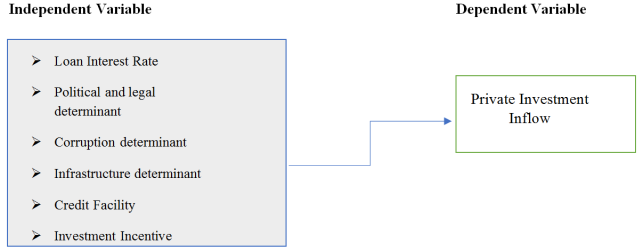
Informed by the foregoing literature and empirical analysis, the study has developed the following schematic representation of the conceptual framework:
Figure 1. Conceptual Framework on the determinants of Private investment.
Source: constructed by the author’s based on the literature reviewed above.
Figure 1 shows the conceptual framework of both dependent and independent variables on the determinants of private investment performance in Dire Dawa City.
3. Materials and Methods
3.1. Data Type and Sources, and Methods of Data Processing & Analysis
The determinants of domestic private investment in Dire Dawa City Administration were systematically studied through a quantitative research methodology, which involved the examination of numerical data. According to Kothari,
| [28] | Kothari, C. (2004). Research Methodology, Methods and Techniques. New Age International (P) Ltd., Publishers. researchmethodol0000koth ark:/13960/s25tg8tss4h1652. |
[28]
and Cooper, et al
quantitative research is particularly appropriate for studying interconnections between variables that can be expressed in terms of numbers because it facilitates understanding, prediction, and manipulation.
Time-series data from 2012-2023 was employed in the description and aggregate econometric analyses as a way of achieving the study’s aims. Secondary data were obtained from various sources, such as the EIA, CSA, MoFED, NBE, WIR, UNCTAD, and ERA, as well as other relevant and reliable sources. This information played a vital role in examining the determinants of private investment performance in Dire Dawa City: graphs, tables, and the econometric method.
3.2. Model Specification and Variable Measurement
The model adopted for this study is a modified version of the flexible accelerator model of investment for a developing economy, which focuses on the hypothesized determinants of private investment performance in Dire Dawa City. The general private investment equation is given as
PI = f (CD, PLD, INF, IFD, CFD, INC)(1)
Where PI = private investment; CD = corruption; PLD = political and legal determinants; INF = infrastructure; IFD = investment incentives; CDF = credit facility. Econometrically, to include the random error term, the explicit econometric model is formulated as
InPIt = β0 + β1CDt + β2PLDt + β3INFt + β4IFDt + β5CFDt + β6NICt + β7COTAXt + β8SIt + εi...(2)
Where, t time, i=1…n, εi=Error term.
4. Result and Discussion
4.1. Descriptive Statistics
Descriptive analysis is conducted in order to comprehend the statistical characteristics of the data prior to proceeding with economic analysis. Thorough data analysis is beneficial for comprehending econometric findings. The minimum, maximum, mean, and standard deviation values of the dependent and independent variables were taken into consideration in the descriptive analysis.
Table 1. Descriptive Statistics of Variables.
No | Variable | Minimum | Maximum | Mean | Std. Dev | Median |
1 | Credit Facility | 10.50 | 20.50 | 14.873 | 2.122 | 14.45 |
2 | Loan Interest Rate | 13.50 | 25.50 | 20.387 | 2.819 | 20.05 |
3 | Investment Incentives | 13.50 | 19.50 | 16.042 | 1.758 | 16.03 |
4 | Political and Legal | 13.50 | 21.50 | 17.082 | 1.607 | 17.02 |
5 | Infrastructure | 10.50 | 19.50 | 15.057 | 1.648 | 15.02 |
6 | Corruption | 20.50 | 31.50 | 26.143 | 2.395 | 26.03 |
Source: SPSS Output (2023)
Table 1 presents descriptive statistics for the key variables used in the study over 13 years. Variations in credit facilities, loan interest rates, investment incentives, political and legal environments, infrastructure, and corruption levels are apparent from the data. Credit facilities ranged between 10.50 and 20.50, with an average of 14.45. Meanwhile, loan interest rates ranged from 13.50 to 25.50, with an average of 20.387. In addition, the investment incentives received scores ranging from fourteen to nineteen, with an average of sixteen points and three zeros. On the other hand, the political and legal environment ratings fell between fourteen and twenty-one, giving a mean score of seventeen point seven (17.082). Infrastructure scores ranged from eleven to nineteen, with a mean value of fifteen point zero seven (15.07). Finally, the perception scores for corruption were observed between twenty and thirty-one, with an average of twenty-six point thirteen (26.13).
4.2. Correlational Analysis
The Relationship between determinants of private investment and the Development of Private Investment.
The available literature on investment shows that the development and expansion of private investment have links to various factors such as public investment, GDP growth, infrastructural availability, and the like. This section presents the relationship between determinants (credit facility, legal and political, loan interest rate, investment incentives, corruption, and infrastructure) and investment development in the study area as analyzed using Pearson correlation. The following table summarizes the findings.
Table 2. Pearson Correlation between determinants of private investment and development of private investment (n=230).
No. | Variables | 1 | 2 | 3 | 4 | 5 |
1 | Credit Facility | 1 | | | | |
2 | loan interest rate | .846** | 1 | | | |
3 | Investment Incentives | .578** | .753** | 1 | | |
4 | Political and legal | .057 | .598** | .170* | 1 | |
5 | Infrastructure | .301** | .405** | .217** | .281** | 1 |
6 | Corruption | .245** | .736** | .886** | .450 | .099 |
7 | Private investment | .238** | .726** | .901** | .456 | .099 |
The result from the above
table 2 shows that the credit facilities, corruption, loan interest rate, infrastructure, and so forth are in the table. It can be seen that these factors have a positive relationship with private investment development (r = 0.232, p < 0.01), (r = 0.731, p < 0.01), (r = 0.880, p < 0.01), and (r =.450, p<.01), respectively, as indicated by the figures in brackets next to each of them. However, there is also a significant negative relationship between private investment development and loan interest rate (-0.439, p<0.01). Curiously enough, while investment incentives are positively related to political and legal factors r (=170, p<5%), they are insignificant for overall private investment development r (=57, p>05%).
4.3. Regression Analysis
The Pearson correlation results show that in the study area, all variables of private investment determinants (credit facility, loan interest rate, political and legal, investment incentives, corruption, and infrastructure) have a significant positive relationship with private investor development. However, based solely on these results, one should avoid deriving implications for the outcome variable. So, multiple linear regression is a better tool in inferential statistics for knowing the impact of independent variables on dependent variables. Before performing the regression analysis, we must conduct a thorough check for regression assumptions. These assumptions, which relate to linearity, normality, multicollinearity, and autocorrelation, are crucial as they determine whether the data is appropriate or not
| [38] | Osborne, J. W., & Waters, E. (2002). Multiple Regression Assumptions. ERIC Digest. ED470205. |
[38]
. The results of these diagnostic tests, which we have meticulously carried out, are presented in the next section.
4.3.1. Normality Test
Figure 2. Show that the variables under study follow a normal distribution within the population of interest. As a result, the data sets for the different variables are expected to cluster around the mean, with values symmetrically tapering off towards both extremes of the range.
Figure 2. Nominal P-P Plot regression standardized residual dependent variables: Private investment development.
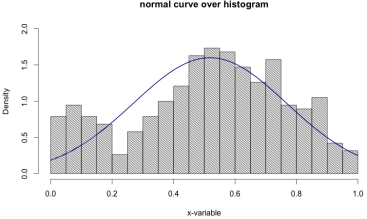
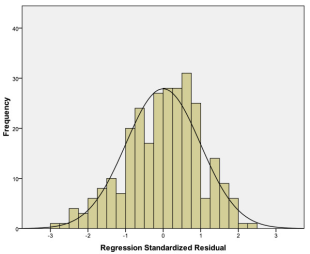
Figure 3. Histogram Nominal Test Histogram.
The histogram (
Figure 3) demonstrates that the curve is represented in an idealized manner as a normal distribution. This indicates that the variables being studied exhibit a normal distribution within the population of interest. Therefore, it was anticipated that the data sets for different variables in the study would group around the midpoint of the range and then gradually decrease symmetrically towards both ends. This is further corroborated by the curve form (
Figure 3), where the residual follows a normal distribution, with points clustering around the diagonal line.
4.3.2. Linearity Test
Table 3. Regression ANOVA.
Model | Sum of Squares | Df | Mean Squares | F | Sig. |
Regression | 1188.711 | 5 | 240.741 | 426.141 | .000b |
Residual | 128.379 | 226 | 0.568 | | |
Total | 1328.089 | 230 | | | |
1. Dependent Variable: Investment Development
2. Predictors: constant, infrastructure, good governance, loan interest rate, credit facility, investment incentives
As indicated in the above
table 3, the value of significance in the ANOVA is used to identify the hypothesis. Normally, it is presumed that if the value of significance is found to be greater than 0.05, H0 is accepted, whereas H1 is rejected. However, in this study, the model's significance value is 0.000, which is less than 0.05, indicating that the regression equation is linear.
4.3.3. Multi Collinearity
Multi-collinearity refers to a statistical phenomenon when the independent variables in a regression model exhibit a high degree of correlation with one another. These issues can arise when attempting to fit and understand the model, as they may result in unreliable estimates and exaggerated standard errors
| [39] | SANI, M. (2018). ROBUST DIAGNOSTIC AND PARAMETER ESTIMATION FOR MULTIPLE LINEAR AND PANEL DATA REGRESSION MODELS. |
[39].
Ho: There is multi-collinearity among the independent variables.
Ha: There is multi-collinearity among the independent variables.
Table 4. Collinearity Statistics.
Model | Collinearity Statistics Tolerance | VIF |
(Constant) | - | - |
Credit Facility | 0.234 | 4.307 |
Loan Interest Rate | 0.176 | 5.677 |
Investment Incentives | 0.198 | 5.086 |
Corruption | 0.407 | 2.467 |
Legal and political | 0.408 | 2.656 |
Infrastructure | 0.809 | 1.237 |
Table 4. indicate that the analysis indicates that there is no multi-collinearity problem.
4.3.4. Autocorrelation Test
Durbin-Watson test was used to validate the assumption of independent error terms. This test measures the presence of correlation between errors and it falls between 0 and 4, having a value of 2 that indicates no autocorrelation. Any value below 2 means positive autocorrelation, while above this number suggests negative autocorrelation
. As outlined in
Table 5, the calculated Durbin-Watson statistic for this study is 0.393. This value is significantly below 2, indicating the presence of positive autocorrelation among the residuals. Consequently, the assumption of independent errors is violated.
Table 5. Autocorrelation test result.
Model | R | R Square | Adjusted R Square | Std. Error of the Estimate | Durbin-Watson |
1 | 0.877 | o.74.4 | 0.722 | 0.772 | 0.393 |
Source: SPSS output (2023)
From
Table 5, shows the results of an autocorrelation test for the specified model. The R value (0.877) represents the correlation coefficient, indicating a strong positive relationship between the dependent and independent variables. The R Square value (0.744) suggests that approximately 74.4% of the variance in the dependent variable is explained by the model. The Adjusted R Square (0.722) accounts for the number of predictors in the model, showing a slightly lower explanatory power after adjustments. The Standard Error of the Estimate (0.772) provides a measure of the accuracy of predictions, with lower values indicating better predictive accuracy. Moreover, the Durbin-Watson statistic (0.393) tests for the presence of autocorrelation in the residuals, where a value close to 2 suggests no autocorrelation. The value of 0.393 indicates potential positive autocorrelation.
4.4. Coefficient of Determination/Model Summary
The model summary table is an evaluation of the entire model in predicting the dependent. It contains the R-squared, which reflects how the variation in in outcome is accounted for the by predictors (xs).
Table 6. Model Summary.
Model | R | R Square | Adjusted R Square | Std. Error of the Estimate | Durbin-Watson |
1 | .864 | .745 | .743 | .73212 | 1.987 |
Predictors: (constant), legal and political, infrastructure, corruption, loan interest rate, credit facility, and investment incentives
Dependent Variable: Investment Development
Sources: SPSS output (2023)
As it can be seen in
table 5. Above, R = 0.864 represents multiple correlation coefficients, indicating that the factors selected have positive effects on private investment development in the study area. Furthermore, the variance that all independent variables (political and legal, credit facility, loan interest rate, corruption, investment incentive, and infrastructure) contribute to the regression model can explain the outcome variable up to 74.4%, as represented by R2.
Table 7. Regression ANOVA.
Model | Sum of Squares | Df | Mean Square | F | Sig. |
Regression | 1198.704 | 5 | 239.743 | 425.141 | .000b |
Residual | 127.386 | 225 | .566 | | |
Total | 1322.088 | 230 | | | |
a. Dependent Variable: Investment Development
b. Predictors: (independent variables), legal and political, Infrastructure, corruption, credit facility, loan interest rate, investment incentive
Source: SPSS output (2023)
As shown in the ANOVA
table 7 provided, the significance value is 0.00, which is smaller than the alpha value of 0.05. Hence, the regression model as a whole exhibits statistical significance. Therefore, the chosen determinant factors can significantly influence the development of private investments in Dire Dawa city administration. Therefore, these characteristics could play a crucial role in promoting employee development and private investments in Dire Dawa City.
4.5. Regression Coefficients
The standardised regression coefficient, often known as beta, is an estimated coefficient that measures the strength of the relationship between the independent and dependent variables. It is expressed using a standardised scale, with larger absolute values indicating stronger correlations. The beta value varies from -1 to 1.
Table 8. Regression Coefficients.
Model | Unstandardized Coefficients | Standardized Coefficients | T | Sig. |
B | Std. Error Beta | Beta |
(Constant) | 1.974 | 0.726 | | 2.720 |
Credit Facility | 0.189 | 0.048 | 0.169 | 3.940 |
Loan Interest Rate | -0.088 | 0.042 | -0.104 | -2.109 |
Investment Incentives | 0.208 | 0.063 | 0.153 | 3.275 |
Corruption | 1.235 | 0.048 | 0.829 | 25.523 |
Infrastructure | 0.323 | 0.033 | 0.222 | 9.667 |
Political and Legal | 0.177 | 0.049 | 0.178 | 3.661 |
Dependent Variable: Investment Development
Source: SPSS output (2023)
Table 8 shows that the regression analysis yields findings that are indicative with respect to investment predictors. The constant term is represented by an unstandardized coefficient standing at 1.974, accompanied by a standard error measuring 0.726, wherein it reflects statistical significance evidenced by a t-value of 2.720 and a significance level quantified at 0.007. Among the designated predictors, the credit facility exhibits a positively correlated and significant association, characterized by an unstandardized coefficient of 0.189 and a corresponding standardized coefficient (Beta) of 0.169. This association is corroborated by a t-value of 3.940 and a significance level recorded at 0.000. Furthermore, the investment incentives have a favorable influence on investment, as evidenced by an unstandardized coefficient of 0.208 and a standardized coefficient (Beta) of 0.153, as well as a t-value of 3.275 and a significance level of 0.001.
Conversely, it can be observed that the interest rate on loans exerts a notably detrimental influence, as evidenced by an unstandardized coefficient quantified at -0.088 in conjunction with a standardized coefficient (beta) calculated at -0.104 and a t-value assessed at -2.109, all positioned within a significance threshold of 0.036. In contrast, both corruption and infrastructure manifest particularly robust positive influences. Specifically, corruption is characterized by the most pronounced standardized coefficient (Beta) of 0.829, followed by an unstandardized coefficient of 1.235, a documented t-value of 25.523, and a significance rating of 0.000. Similarly, infrastructure denotes a considerable positive impact, delineated by a standardized coefficient (Beta) of 0.222, an unstandardized coefficient of 0.323, a t-value of 9.667, and a significance level of 0.000. Political and legal factors also have a positive effect, with a standardized coefficient (Beta) of 0.178, an unstandardized coefficient of 0.177, a t-value of 3.661, and a significance level of 0.000.
4.6. Hypothesis Testing
Table 9. Summary results of statistical Hypothesis.
No | Hypothesis | Accepted/Rejected |
1 | Credit Facility has a significant positive effect on private investments | Accepted |
2 | Loan Interest Rate has a significant negative effect on private investments | Accepted |
3 | Investment Incentives has a significant positive effect on private investments | Accepted |
4 | Corruption has a significant positive effect on private investments | Accepted |
5 | Infrastructure ha a significant positive effect on private investments | Accepted |
6 | Political and Legal factors have a significant positive effect on private investments | Accepted |
5. Conclusion and Recommendations
5.1. Conclusion
This study aimed to analyze the factors that influence private-sector investment in Dire Dawa city administrations, Ethiopia. The data type pertained to certain specific economic indicators. This study used secondary data, specifically time series data, obtained primarily from the Ministry of Finance and Economic Cooperation (MoFEC) and the Ethiopian Investment Commission. This study utilized a quantitative research technique and time series regression analysis. In order to prevent spurious relationships between variables in a regression analysis, many data exploration techniques have been employed, including diagnostic testing and stationarity tests. False correlations may arise when a set of variables includes a time trend component. According to this study, all variables become stationary when their first differences are taken, thus eliminating the issue of non-stationarity. The study conducted tests to assess the assumptions of linear regression. The results indicated the absence of issues such as autocorrelation, heteroscedasticity, normality, and multicollinearity. Consequently, the findings derived from the study's regression analysis indicate that accessibility to credit facilities exerts a favorable effect on private investment, in contrast with elevated loan interest rates, which yield an adverse impact. The presence of investment incentives emerges as essential in fostering investment activities and demonstrates a notably strong positive correlation. Furthermore, it is discerned that corruption bears a consequential association with diminished levels of private investment, thus underscoring its harmful impact. Enhancements in infrastructure are shown to exert a beneficial influence on private investment, thereby underscoring the criticality of advancement in this domain. Lastly, the establishment of a stable political and legal framework is deemed significant in augmenting the performance of private investment.
Whereas the loan interest rate has a negative and significant effect on private sector investment in Dire Dawa city administration under the study. As a result, the Pearson correlation outcomes reveal that access to credit facilities has a positively significant correlation with private investment (r =.238**), whereas loan interest rates (r =.726**) and investment incentives (r =.901**) have even more pronounced positive correlations. Furthermore, the political and legal environment has a significant positive correlation with private investment (r =.456**), highlighting the importance of a stable framework conducive to investment proliferation. Conversely, while infrastructure advancements exhibit a positive correlation with private investment (r =.099), their influence seems less pronounced. Furthermore, corruption has a significant negative correlation with private investment (r =.736**), suggesting that higher levels of corruption correspond to lower levels of investment. Such correlations shed light on the multifactorial nature of determinants that sway private investment, with investment incentives, loan interest rates, and corruption emerging as particularly significant elements within the contextual framework of Dire Dawa City Administration.
5.2. Recommendation
The study's primary goal is to identify major determinants of the private investment sector in Dire Dawa City. Analytical techniques, both quantitative and qualitative, were used in this investigation. Based on the study's findings and conclusions, the researcher came up with some important recommendations that would help the industry, investment bureau, investors, and other stakeholders focus on vital determinants that have a significant impact on private investment growth. The following recommendations are made:
Improve infrastructure facilities: The inadequacy of infrastructure has been one of the major constraints for the development of private investment activities. This study has identified that electricity, water supply, land accessibility, low level of health and educational facilities, availability of a working workforce, and inadequate transportation and communication systems are not well developed and improved to support the development of private investment activities in Dire Dawa city. Infrastructure-related factors should be improved so as to foster the town's investment growth by addressing the problems of insufficient electricity, energy, water, transportation and communication, education facilities, and sewage and drainage.
Based on the findings, implementing robust anti-corruption strategies is essential to mitigate the negative impact of corruption on private investment. This entails the strict enforcement of anti-corruption laws, enhancing transparency in government transactions, and fostering a culture of integrity within both the public and private sectors. By effectively combating corruption, the government can create a more transparent and predictable business environment, thereby enhancing investor confidence and attracting more private investment.
To improve access to credit facilities, financial institutions and the government should collaborate to enhance credit availability for private investors significantly. This can be achieved by offering low-interest loans, simplifying the loan application process, and providing comprehensive financial literacy programmes to educate potential investors about the available credit options. By improving access to credit, businesses will be better equipped to secure the necessary capital for growth and expansion, thereby stimulating private investment.
Additionally, the government should not only continue but also expand the range of investment incentives such as tax breaks, grants, and subsidies. These incentives effectively lower the cost of investment and increase potential returns, making Dire Dawa a more attractive destination for private investors. By bolstering these incentives, the government can significantly boost private sector participation and economic development in the region.
For the Researchers
It is strongly advised that future researchers who are interested in conducting additional research expand the sample size to include more than 250 observations. Instead of using annual data, researchers can use monthly, quarterly, or semi-annual data. This is due to the fact that multicollinearity, heteroscedasticity, and autocorrelation issues are less likely to occur in larger sample sizes. This will eliminate the need to partition the model and run it as a whole. Hypothesis testing will help researchers identify these issues more easily.
Abbreviations
CSA | Central Statistics Authority |
EIC | Ethiopian Investment Commission |
FDI | Foreign Direct Investment |
PI | Private Investment |
MoFED | Ministry of Finance and Economic Development |
NBE | National Bank of Ethiopia |
WB | World Bank |
Author Contributions
Betselot Addisu Ayal: Conceptualization, Data curation, Formal Analysis, Funding acquisition, Investigation, Methodology, Project administration, Resources, Software, Supervision, Validation, Visualization, Writing – original draft, Writing – review & editing
Kassa Yirga Bekalu: Conceptualization, Data curation, Funding acquisition, Investigation, Methodology, Project administration, Supervision, Writing – original draft, Writing – review & editing
Mulugeta Molla Ayenalem: Conceptualization, Data curation, Formal Analysis, Funding acquisition, Investigation, Methodology, Project administration, Resources, Software, Writing – original draft, Writing – review & editing
Conflicts of Interest
The authors declare no conflicts of interest.
References
| [1] |
Adugna, H. (2013). Determinants of private investment in Ethiopia. Journal of Economics and Sustainable Development, 4(20), 186-194.
https://core.ac.uk/download/pdf/234646198.pdf
|
| [2] |
Agu, O. C. (2015). Of Private Investment in Nigeria (An Econometric Analysis).
https://ijecm.co.uk/wp-content/uploads/2015/04/344.pdf
|
| [3] |
Ambaye, G. G., Berhanu, T., & Abera, G. (2013). Modeling the Determinats of Domestic Private Investments in Ethiopia. AGRIS on-line Papers in Economics and Informatics, 5(4), 13-23.
http://dx.doi.org/10.22004/ag.econ.162240
|
| [4] |
AMBE, M. E. (2013). An Investigation of Macroeconomic Determinants of Private Investment in Ethiopia: Co-Integrated VAR Approach. Int J African Asian Stud, 35, 49-58.
|
| [5] |
Andrei, D., Mann, W., & Moyen, N. (2019). Why did the q theory of investment start working? Journal of Financial Economics, 133(2), 251-272.
https://doi.org/10.1016/j.jfineco.2019.03.007
|
| [6] |
Anyanwu, J. C. (2006). Promoting of investment in Africa. African development review, 18(1), 42-71.
https://doi.org/10.1111/j.1467-8268.2006.00132.x
|
| [7] |
Asante, Y. (2000). Determinants of private investment behaviour. AERC.
|
| [8] |
Baddeley, M. (2003). Accelerator theory. In Investment (pp. 47-56). Springer.
|
| [9] |
Batu, M. M. (2016). Determinants of private investment: A systematic review. International Journal of Economics, Finance and Management Sciences, 4(2), 52-56.
https://doi.org/10.11648/j.ijefm.20160402.13
|
| [10] |
Bayraktar, B. (2003). The role of private sector investments in the economic performance of OIC member countries. Journal of Economic Cooperation, 24(1), 63-110.
|
| [11] |
Bedhiye, F. M., & Singh, L. (2022). Fiscal policy and private investment in developing economies: Evidence from Ethiopia. African Journal of Science, Technology, Innovation and Development, 14(7), 1719-1733.
https://journals.co.za/doi/abs/10.1080/20421338.2021.1982664
|
| [12] |
Busari, O. T., & Amaghionyeodiwe, L. (2007). Private investment and political instability: Evidence from Nigeria. International Journal of Applied Econometrics and Quantitative Studies, 4(2), 46-68.
|
| [13] |
Coleman, L., & Coleman, L. (2016). Current Paradigm: Neoclassical Investment Theory. Applied Investment Theory: How Markets and Investors Behave, and Why, 15-28.
https://doi.org/10.1007/978-3-319-43976-1_2
|
| [14] |
Cooper, D. R., & Schindler, P. (2014). Business research methods. Mcgraw-hill.
https://thuvienso.hoasen.edu.vn/handle/123456789/10310
|
| [15] |
ETHIOPIA, D. O. P. I. I., & KIBRET, B.-W. D. (2018). ADDIS ABABA UNIVERSITY FACULITY OF BUSINESS AND ECONOMICS DEPARTMENT OF ACCOUNTING AND FINANCE.
|
| [16] |
Field, A. P. (2000). Discovering statistics using SPSS for Windows: Advanced techniques for beginners. Sage Publications, Inc.
https://dl.acm.org/doi/abs/10.5555/518130#bkseq-00001
|
| [17] |
Frimpong, J. M., & Marbuah, G. (2010). The determinants of private sector investment in Ghana: An ARDL approach. European Journal of Social Sciences, 15(2), 250-261.
|
| [18] |
Gebreslassie, E., Ufo, A., & Tarekegn, G. (2015). Assessment of Domestic Private Investment in Wolaita Zone: Case of Sodo, Areka and Bodity Cities. Assessment, 5(15).
https://core.ac.uk/download/pdf/234682518.pdf
|
| [19] |
Gebrewubet, G. Y. (2017). An Analysis of the Determinants of Private Investment in the Manufacturing Sector: The Case of the State of Tigray, Ethiopia.
https://core.ac.uk/download/pdf/83637288.pdf
|
| [20] |
Geddafa, T. (2023). Trends and determinants of domestic private investment in Ethiopia: Time series analysis. Cogent Engineering, 10(2), 2283293.
https://doi.org/10.1080/23311916.2023.2283293
|
| [21] |
Ghura, D., & Goodwin, B. (2000). Determinants of private investment: a cross-regional empirical investigation. Applied Economics, 32(14), 1819-1829.
https://doi.org/10.1080/000368400425044
|
| [22] |
Gordon, M. (2016). The neoclassical and a post Keynesian theory of investment. In Can the Free Market Pick Winners? (pp. 3-21). Routledge.
https://doi.org/10.4324/9781315484334
|
| [23] |
Greene, J., & Villanueva, D. (1991). Private investment in developing countries: an empirical analysis. Staff papers, 38(1), 33-58.
https://doi.org/10.2307/3867034
|
| [24] |
Haile, G. A., & Assefa, H. (2006). Determinants of Foreign Direct Investment in Ethiopia: A time-series analysis. 4th International Conference on the Ethiopian Economy,
|
| [25] |
Kabura, G. (2014). The relationship between exchange rates and foreign direct investment in Kenya. Unpublished MBA Thesis.
|
| [26] |
Kariuki, D. (2003). Determinants of Fixed Capital Formation in Kenya. Unpublished MA Research Paper, Makerere University, Kampala, Uganda.
|
| [27] |
Konor, A. (2015). Determinants of private sector investment in Ghana, 1970-2011.
https://ir.knust.edu.gh/handle/123456789/6913
|
| [28] |
Kothari, C. (2004). Research Methodology, Methods and Techniques. New Age International (P) Ltd., Publishers. researchmethodol0000koth ark:/13960/s25tg8tss4h1652.
|
| [29] |
Legass, H. A., Derese, S. A., & Shikur, A. A. (2022). Determinants of private investment in Ethiopia: An ARDL approach. International Journal of Finance and Banking Research, 8(3), 95-104.
https://doi.org/10.11648/j.ijfbr.20220803.12
|
| [30] |
Lemu, K. (2019). Challenges and Opportunities of Investment to the People of Sebeta Town, Oromia Regional State, Ethiopia. Journal of Social Economics Research, 6(2), 150-168.
https://doi.org/10.18488/journal.35.2019.62.150.168
|
| [31] |
Lerner, A. P. (1965). On some recent developments in capital theory. The American Economic Review, 55(1/2), 284-295.
https://www.jstor.org/stable/1816269
|
| [32] |
Lesotlho, P. (2006). An investigation of the determinants of private investment: The case of Botswana University of the Western Cape].
|
| [33] |
Mbaye, E. Z. (2014). Determinants of domestic private investments in Kenya University of Nairobi.
|
| [34] |
Mohapatra, D. R. (2014). Foreign Direct Investment Inflows to Ethiopia during 1992 to 2012: An Empirical Analysis. European Academic Research, 2(9), 12085-12106.
|
| [35] |
Neger, D. B. (2016). EFFECT OF PRIVATE INVESTMENT ON ECONOMIC GROWTH IN ETHIOPIA (AN AUTOREGRESSIVE ANALYSIS). Editorial Board, 5(3), 138.
https://doi.org/10.2991/978-94-6463-204-0
|
| [36] |
Ngoma, G., Bonga, W. G., & Nyoni, T. (2019). Macroeconomic Determinants of private investment in sub-Saharan Africa. DRJ's Journal of Economics & Finance, 4(3), 01-08.
https://ssrn.com/abstract=3465707
|
| [37] |
Ogunbayo, E., Sangodoyin, A., Lawal, J., & Okoruwa, V. (2014). Macroeconomic analysis of the determinants of private investment in Nigeria. International Journal of Agricultural Economics & Rural Development, 6(1), 84-101.
|
| [38] |
Osborne, J. W., & Waters, E. (2002). Multiple Regression Assumptions. ERIC Digest. ED470205.
|
| [39] |
SANI, M. (2018). ROBUST DIAGNOSTIC AND PARAMETER ESTIMATION FOR MULTIPLE LINEAR AND PANEL DATA REGRESSION MODELS.
|
| [40] |
Sesele, M. (2018). Determinants of private investments in South Africa. http://hdl.handle.net/11427/29077
|
| [41] |
Shabbir, M. S., Bashir, M., Abbasi, H. M., Yahya, G., & Abbasi, B. A. (2021). Effect of domestic and foreign private investment on economic growth of Pakistan. Transnational Corporations Review, 13(4), 437-449.
https://doi.org/10.1080/19186444.2020.1858676
|
| [42] |
SHUMET, A. (2018). DETERMINANATS OF PRIVATE INVESTMENT IMPLEMENTATION PERFORMANCE IN SULULTA TOWN, OROMIA REGIONAL STATE St. Mary's University].
|
| [43] |
Siraj, M. (2014). Private investment and economic growth evidence from Ethiopia the Institute of Development Studies and partner organisations].
|
| [44] |
Sisay, A. M. (2010). Determinants of private investment in Ethiopia: A time series study. Ethiopian Journal of Economics, 19(1), 75-124.
https://doi.org/10.4314/eje.v19i1.71845
|
| [45] |
Teklay, B. (2017). The financial determinants of private sector investment: The Case of Ethiopia. Int. J. Sci. Technol. Soc, 5(9).
https://doi.org/10.11648/j.ijsts.20170503.14
|
| [46] |
Waktole, T., & Bogale, M. (2018). Determinants of growth of private investment in Jimma City, Ethiopia. African journal of business management, 12(15), 475-485.
https://doi.org/10.5897/AJBM2018.8563
|
| [47] |
Wiley, M., & Wiley, J. F. (2019). Advanced R statistical programming and data models: Analysis, machine learning, and visualization. Apress.
https://doi.org/10.3886/ICPSR04690.v7
|
| [48] |
Workie, M. (1999). Determinants and constraints of private investment in Ethiopia. Ethiopian Journal of Economics, 5(2), 57-80.
http://dx.doi.org/10.22004/ag.econ.251804
|
| [49] |
Workneh, A. M. (2014). Factors affecting FDI flow in Ethiopia: An empirical investigation. European Journal of Business and Management, 6(20), 118-126.
https://core.ac.uk/download/pdf/234625658.pdf
|
| [50] |
Yoshikawa, H. (1980). On the "q" Theory of Investment. The American Economic Review, 70(4), 739-743.
https://www.jstor.org/stable/1803570
|
Cite This Article
-
ACS Style
Ayal, B. A.; Bekalu, K. Y.; Ayenalem, M. M. Key Determinates of Private Investment Performance Dire Dawa, Ethiopia. J. Finance Account. 2024, 12(5), 127-141. doi: 10.11648/j.jfa.20241205.12
 Copy
|
Copy
|
 Download
-
@article{10.11648/j.jfa.20241205.12,
  author = {Betselot Addisu Ayal and Kassa Yirga Bekalu and Mulugeta Molla Ayenalem},
  title = {Key Determinates of Private Investment Performance Dire Dawa, Ethiopia
},
  journal = {Journal of Finance and Accounting},
  volume = {12},
  number = {5},
  pages = {127-141},
  doi = {10.11648/j.jfa.20241205.12},
  url = {https://doi.org/10.11648/j.jfa.20241205.12},
  eprint = {https://article.sciencepublishinggroup.com/pdf/10.11648.j.jfa.20241205.12},
  abstract = {Private investments are essential for Ethiopian economic success and growth. Despite government reforms aimed at fostering stability and growth, private investment continues to experience a downward trend characterized by volatility and unpredictability. Hence, the Primary objective of this study is to investigate the key determinants influencing the performance of private investment in Dire Dawa, Ethiopia. The study used a quantitative approach with an explanatory research design to analyze secondary time series data from 2012 to 2023 using SPSS. Descriptive and regression analyses were conducted. The main finding of the study indicates that private investment has a significant positive relationship with investment incentives, legal and political, credit facilities, corruption, and infrastructure. However, private investment development has a significant negative relationship with the loan interest rate. Except for the loan interest rate, the selected determinant factors can significantly positively affect the development of private investment in Dire Dawa City, but the loan interest rate has significant negative effects. Moreover, the regression analysis revealed that a combination of investment incentives, infrastructure, corruption, credit facilities, and loan interest rates collectively account for 74.4% of the variance in the outcome variables. Based on the study's findings, appropriate policy measures have been recommended.
},
 year = {2024}
}
Copy
|
Download
-
TY  - JOUR
T1  - Key Determinates of Private Investment Performance Dire Dawa, Ethiopia

AU  - Betselot Addisu Ayal
AU  - Kassa Yirga Bekalu
AU  - Mulugeta Molla Ayenalem
Y1  - 2024/10/31
PY  - 2024
N1  - https://doi.org/10.11648/j.jfa.20241205.12
DO  - 10.11648/j.jfa.20241205.12
T2  - Journal of Finance and Accounting
JF  - Journal of Finance and Accounting
JO  - Journal of Finance and Accounting
SP  - 127
EP  - 141
PB  - Science Publishing Group
SN  - 2330-7323
UR  - https://doi.org/10.11648/j.jfa.20241205.12
AB  - Private investments are essential for Ethiopian economic success and growth. Despite government reforms aimed at fostering stability and growth, private investment continues to experience a downward trend characterized by volatility and unpredictability. Hence, the Primary objective of this study is to investigate the key determinants influencing the performance of private investment in Dire Dawa, Ethiopia. The study used a quantitative approach with an explanatory research design to analyze secondary time series data from 2012 to 2023 using SPSS. Descriptive and regression analyses were conducted. The main finding of the study indicates that private investment has a significant positive relationship with investment incentives, legal and political, credit facilities, corruption, and infrastructure. However, private investment development has a significant negative relationship with the loan interest rate. Except for the loan interest rate, the selected determinant factors can significantly positively affect the development of private investment in Dire Dawa City, but the loan interest rate has significant negative effects. Moreover, the regression analysis revealed that a combination of investment incentives, infrastructure, corruption, credit facilities, and loan interest rates collectively account for 74.4% of the variance in the outcome variables. Based on the study's findings, appropriate policy measures have been recommended.

VL  - 12
IS  - 5
ER  -
Copy
|
Download





 Share This Article
 Twitter
 Linked In
 Facebook