Research Article | | Peer-Reviewed

Principals' Leadership Practices and Their Influence on Pupils' Character Development in Public Senior Secondary Schools in Urban Sierra Leone

Received: 29 July 2026     Accepted: 17 August 2026     Published: 8 September 2026
Views:       Downloads:
Abstract

This study investigated principals' ethical leadership practices and their influence on pupils' character development in public senior secondary schools in urban Sierra Leone. The study was motivated by growing concerns over persistent indiscipline and the decline of moral values among secondary school pupils. A mixed-methods research design was employed, combining quantitative data from structured questionnaires administered to 84 teachers and qualitative data from Key Informant Interviews with 12 principals and Focus Group Discussions with 288 pupils, giving a total sample of 384 respondents selected from 12 public senior secondary schools across four major urban centres: Freetown, Bo, Kenema, and Makeni. The Statistical Package for Social Sciences (SPSS) Version 26 was used to analyse quantitative data, yielding descriptive statistics and one-way ANOVA with a Cronbach's alpha reliability coefficient of 0.826 for the teacher questionnaire, while NVivo software was employed for thematic analysis of the qualitative data. The findings reveal that school principals demonstrated ethical leadership through ethical role modelling, upholding ethical standards, enforcing fair and consistent discipline, and maintaining accountability and trustworthiness. Ethical role modelling was the most strongly endorsed dimension (total mean = 4.69), while accountability was the lowest rated (total mean = 4.24), though all dimensions fell within the “Agree” category. ANOVA results showed no significant gender differences in most dimensions (p > 0.05), except in the administration of rewards and punishment (p = 0.022). With respect to character development, teachers perceived pupils as having high moral awareness (mean = 4.69) and reasonable active participation (mean = 3.60) but showing deficiencies in punctuality (mean = 2.79), responsibility (mean = 2.24), empathy (mean = 2.71), and avoidance of examination malpractice (mean = 2.73). Qualitative findings corroborated these quantitative results, affirming that ethical leadership contributes to pupils' character development while acknowledging the persistence of indiscipline. The study recommends that principals consistently model ethical conduct; that the Ministry of Basic and Senior Secondary Education (MBSSE) and the Teaching Service Commission (TSC) integrate ethical leadership into professional development programmes; and that schools implement comprehensive character education curricula emphasizing moral values such as honesty, fairness, responsibility, and empathy.

Published in Science Journal of Education (Volume 14, Issue 5)
DOI 10.11648/j.sjedu.20261405.12
Page(s) 131-146
Creative Commons

This is an Open Access article, distributed under the terms of the Creative Commons Attribution 4.0 International License (http://creativecommons.org/licenses/by/4.0/), which permits unrestricted use, distribution and reproduction in any medium or format, provided the original work is properly cited.

Copyright

Copyright © The Author(s), 2026. Published by Science Publishing Group

Keywords

Ethical Leadership, Principals, Character Development, Pupils, Secondary Schools, Sierra Leone

1. Introduction
The fundamental purpose of schooling extends well beyond the transmission of academic knowledge; it is equally concerned with the moral formation and character development of learners . Senior secondary schools occupy a particularly critical position within this formative process, given that the majority of their students are adolescents between the ages of 15 and 19 who are simultaneously negotiating the psychological, cognitive, and social demands of transitioning into adulthood . During this developmental window, adolescents demonstrate heightened sensitivity to environmental influences, including the attitudes, behaviours, and standards modelled by authority figures within their institutional setting .
Globally, declining moral behaviour among secondary school pupils has become an area of significant educational concern. A range of misconduct including truancy, absenteeism, academic dishonesty, verbal abuse, bullying, substance use, and sexual risk behaviour has been documented across diverse national contexts . In sub-Saharan Africa, such challenges are exacerbated by structural inequalities, limited disciplinary resources, and the absence of systematic moral education programmes, compounding the character development deficit observed in many secondary schools .
In Sierra Leone specifically, survey-based studies using the Global School-based Health Survey have revealed that 48.7% of in-school adolescents reported experiencing bullying at least once within a 30-day period, while approximately 35% of pupils engaged in truancy, with prevalence rising markedly among those in the senior secondary school age bracket . Documented challenges also include examination malpractice, disrespect for school authority, school-based violence, and increasing substance use involving tramadol, kush, and alcohol . These concerns underscore the urgent need for school leadership practices capable of fostering positive character development among pupils.
School principals are widely recognised as the most influential institutional agents for shaping school culture, enforcing disciplinary standards, and modelling the ethical values that pupils may observe and internalise . Ethical leadership, as a clearly defined theoretical construct, was systematically articulated by Brown, Treviño, and Harrison , who proposed social learning theory as the principal mechanism through which ethical leaders influence followers. According to this framework, ethical leaders function both as moral persons individuals who demonstrate personal integrity, honesty, fairness, and accountability and as moral managers who actively communicate ethical standards, reinforce compliance through rewards and sanctions, and hold followers accountable for moral conduct . The educational leadership literature has drawn extensively on this framework to examine how school principals promote character development and school culture . Studies from sub-Saharan Africa, including Tanzania, Kenya, Ghana, and South Africa, have reported that principals who model ethical conduct, enforce school rules consistently, and maintain trust and accountability are associated with more favourable pupil behaviour and stronger school cultures . Nevertheless, the empirical evidence base specific to Sierra Leonean secondary schools remains sparse, particularly regarding how principals' ethical leadership practices relate to the character development outcomes of their pupils.
Sierra Leone's national education policy framework has mandated all school leaders to uphold ethical standards, abolish corporal punishment, and cultivate safe, child-friendly learning environments . The new Basic and Senior Secondary Education Act of 2023 further requires school leaders to promote radical inclusion and civic moral education . Despite these policy imperatives, many public senior secondary schools in urban Sierra Leone continue to report concerning levels of pupil indiscipline, raising fundamental questions about the translation of policy intentions into observable ethical leadership practices and their downstream influence on character formation. This study seeks to address the identified research gap by empirically investigating the ethical leadership practices of school principals in public senior secondary schools across four urban centres of Sierra Leone Freetown, Bo, Kenema, and Makeni and examining how these practices relate to the character development of pupils. The study draws on three complementary theoretical frameworks: Ethical Leadership Theory , Thomas Lickona's Character Development Theory , and Albert Bandura's Social Learning Theory . Together, these frameworks offer a comprehensive lens through which to understand how the moral conduct of school leaders can shape pupil character through modelling, institutional climate, and consistent reinforcement of values.
Conceptual Framework
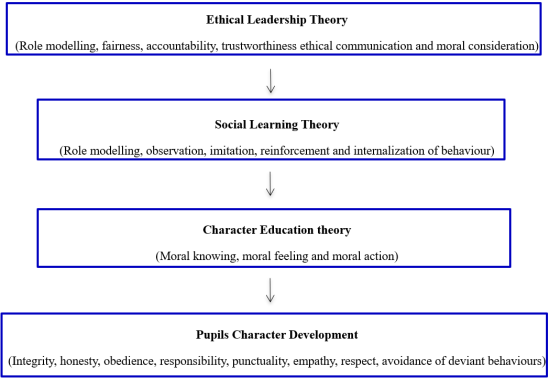
The conceptual framework integrates Ethical Leadership Theory, Social Learning Theory and Character Development Theory to explain how principals’ ethical leadership practices may influence pupils’ character development. Ethical Leadership Theory, proposed by Brown et al. (2005) provides the foundation for understanding principals’ ethical behaviours, including role modelling, fairness, ethical communication, accountability and moral consideration. Social Learning Theory, introduced by Albert Bandura (1977), explains the mechanism through which pupils may observe, imitate and internalize these behaviours through role modelling and reinforcement. Character Development Theory of Thomas Lickona (1991) explain the processes of character education through moral knowing, moral feeling, and moral action. In other words, Ethical leadership theory explains how principals’ behave, Social learning theory explains how pupils may learn from these behaviours, while Character development theory explains how moral knowledge should develop into moral feelings and moral actions.
Figure 1. Conceptual Framework illustrating the relationship between Ethical Leadership Theory, Social Learning Theory, Character Development Theory and Pupils Character Development.
2. Research Methodology
2.1. Research Design
This study adopted a mixed-methods research design, integrating both quantitative and qualitative approaches to generate a comprehensive understanding of the relationship between principals' ethical leadership practices and the character development of pupils in public senior secondary schools . The quantitative strand enabled the measurement and analysis of teachers' perceptions of principals' ethical leadership and the observed character development of pupils through structured questionnaires, which were analysed using descriptive statistics and one-way Analysis of Variance (ANOVA). The qualitative strand facilitated in-depth exploration of the lived experiences and perceptions of principals and pupils through Key Informant Interviews (KIIs) and Focus Group Discussions (FGDs), which were thematically analysed using NVivo software. The mixed-methods design was selected because it strengthened the credibility and validity of the findings through methodological triangulation, allowing qualitative insights to complement and contextualise the patterns identified in the quantitative analysis .
2.2. Study Area
The study was conducted across four major urban centres in Sierra Leone: Freetown Urban (Western Area), Bo (Southern Province), Kenema (Eastern Province), and Makeni (Northern Province). Freetown, the national capital, encompasses approximately 82.48 km² and had an estimated mid-term census population of 609,114 in 2021. Bo, the second largest city and commercial hub of the Southern Province, is situated approximately 250 km south-east of Freetown and had an estimated population of 223,075. Kenema, the administrative centre of the Eastern Province, lies approximately 64 km south of Bo with an estimated population of 255,110. Makeni, the largest city in the Northern Province and capital of Bombali District, is located 110 miles east of Freetown and had an estimated population of 85,116 in 2021.
These urban centres were selected because of their high population density, diverse portfolio of public senior secondary schools with varied institutional profiles, and documented evidence of elevated rates of adolescent indiscipline, peer pressure, and risky behaviour . Urban schools accommodate larger enrolments and greater socioeconomic diversity, making them critical settings for examining the interplay between school leadership and pupil character development. The study population comprised all principals, teachers, and pupils in public senior secondary schools (SSS 1–3) across these four urban areas. Based on the 2022 MBSSE Annual School Census, 212 public senior secondary schools with an estimated population of 205,991 existed across the four areas, comprising 212 principals, 200,357 pupils, and 5,622 teachers .
2.3. Sampling and Sampling Techniques
A total sample of 384 respondents was drawn from the study population, comprising 12 principals, 84 teachers, and 288 pupils. The sample size was determined using the Krejcie and Morgan table for sample size determination at a 95% confidence level and ±5% margin of error, which specifies a recommended sample of 384 for populations exceeding 100,000. The 384 respondents were equally distributed across 12 sampled schools three from each urban centre giving 32 respondents per school. Within each school, the sample comprised 1 principal, 7 teachers, and 24 pupils.
Schools were selected using cluster sampling, in which all public senior secondary schools within each urban centre were first grouped into clusters by type (Boys', Girls', and Mixed schools). One school from each cluster was randomly selected using the fishbowl method, yielding three schools per urban centre and 12 schools in total. Principals were purposively selected as the primary school leaders with direct knowledge of their own practices and pupil character outcomes. Teachers were selected using purposive and simple random sampling purposive to ensure respondents had at least five years of continuous service in the sampled schools and were directly involved in classroom instruction and pupil discipline, and simple random sampling (fishbowl method) to reduce selection bias. Pupil respondents were drawn exclusively from SSS 3 using purposive and simple random sampling, as SSS 3 pupils had the greatest familiarity with the prevailing leadership culture and disciplinary environment, having spent at least two years in their respective schools.
2.4. Data Collection Instruments and Procedure
Three instruments were used to collect primary data. First, a structured teacher questionnaire was developed with two sections: Section A captured demographic characteristics (gender, age, educational qualification, teaching experience, professional position, and school type), while Section B contained Likert-scale items measuring teachers' perceptions of principals' ethical leadership practices and the character development status of pupils. The instrument was reviewed by educational leadership experts and pilot-tested in two schools in Lungi outside the study area to assess content validity and internal consistency, yielding a Cronbach's alpha coefficient of 0.826, indicating good reliability. Second, a semi-structured Key Informant Interview guide was used with principals to obtain in-depth firsthand accounts of their ethical leadership practices and their perceptions of pupils' moral conduct. Third, a Focus Group Discussion guide was used with pupils to explore their experiences and perceptions of their principals' leadership and the character culture within their schools. FGDs were conducted in three groups of eight pupils per school, and sessions were audio-recorded with participants' consent and supplemented by field notes. Before data collection commenced, written permission was sought from the school authorities of all sampled institutions. Respondents were fully informed of the purpose and voluntary nature of participation. The instruments were developed from the theoretical framework, research objectives, and relevant literature on ethical leadership and pupils’ character development. Educational leadership experts reviewed the instruments for relevance, clarity, and appropriateness, after which revisions were made. The revised questionnaire was pilot-tested in two schools in Lungi outside the study area, and feedback was used to improve the instruments. Reliability testing produced a Cronbach’s alpha of 0.826, indicating good internal consistency. Participant confidentiality was maintained through anonymisation and the use of alphanumeric codes. All data were treated with strict confidentiality, and participant identities were anonymised through the use of alphanumeric codes throughout the study.
2.5. Data Analysis
Quantitative data obtained from teacher questionnaires were analysed using Statistical Package for Social Sciences (SPSS) Version 26. Descriptive statistics, including frequencies, percentages, means, and standard deviations, were used to summarise respondents’ demographic characteristics and perceptions of principals’ ethical leadership and pupils’ character development. Cross-tabulation was used to examine gender-disaggregated responses, while one-way Analysis of Variance (ANOVA) was conducted to determine whether statistically significant gender differences existed in teachers’ perceptions of principals’ ethical leadership practices and pupils’ character development, with statistical significance set at p < 0.05.
Qualitative data obtained from Key Informant Interviews (KIIs) and Focus Group Discussions (FGDs) were analysed thematically using NVivo software. Audio recordings were transcribed verbatim and reviewed for accuracy before coding. The transcripts were organised into nodes and subsequently grouped into broader themes aligned with the study objectives. Direct quotations were used to illustrate key themes and support the interpretation of participants’ views.
The quantitative and qualitative findings were subsequently integrated and triangulated to provide a more comprehensive understanding of the relationship between principals’ ethical leadership and pupils’ character development in public senior secondary schools in Sierra Leone. While the quantitative findings indicated a significant positive relationship between principals’ ethical leadership practices and pupils’ character development, the qualitative findings provided deeper insights into the perceptions and experiences of principals and pupils regarding ethical leadership practices and character development. This integration enhanced the interpretive depth and overall validity of the study findings.
Before conducting the one-way ANOVA, the assumptions of normality and homogeneity of variance were assessed. Normality was examined using appropriate descriptive and graphical procedures, while homogeneity of variance was assessed using Levene’s test. The assumptions were considered adequately satisfied where the relevant tests and diagnostic procedures indicated no serious violations. Where homogeneity of variance was violated, an appropriate robust alternative or post-hoc procedure was considered. In addition to statistical significance, effect sizes (η²) were calculated for significant ANOVA results to assess the practical magnitude of gender differences. Statistical significance was evaluated at p < 0.05.
2.6. Ethical Considerations
Rigorous ethical standards were observed at every stage of the study. Written permission was obtained from school authorities prior to data collection. All respondents provided informed consent after receiving a clear explanation of the study's purpose, procedures, and their right to withdraw at any time without consequence. Confidentiality and anonymity were maintained throughout; no personal identifiers appear in the data or the report, and alphanumeric codes were assigned to all respondents. Data were stored securely and accessed exclusively for the purposes of this research.
3. Results and Discussion
3.1. Demographic Characteristics of Teacher Respondents
Table 1 presents the demographic profiles of the 84 teacher respondents drawn from 12 sampled public senior secondary schools representing boys’, girls’, and mixed school types. The gender distribution reveals a clear male majority of 73.8% (n = 62), with female respondents comprising 26.2% (n = 22), a pattern consistent with the broader gender composition of the senior secondary school teaching workforce in Sierra Leone. In terms of age, the majority of respondents were between 40–49 years (42.9%), followed by the 30–39 years bracket (41.7%), with the smallest proportion aged 50–59 years (15.5%). These age profiles suggest a workforce characterized by career maturity, which confers reasonable confidence in the reliability of their assessments of school leadership and pupil conduct.
Regarding educational qualification, 83.3% (n = 70) held bachelor-level degrees (B.Sc./BA/B.Ed.), while 16.7% (n = 14) held Higher Teacher Certificates for secondary schooling, reflecting an adequately qualified respondent pool. The majority (70.2%, n = 59) reported teaching experience exceeding ten years, with 29.8% (n = 25) reporting between five and ten years. The proportional distribution of positions was as follows: Class Masters/Mistresses (39.3%), Subject Teachers (34.5%), and Heads of Department (26.2%). All three school types—Boys’, Girls’, and Mixed—were equally represented at 33.3% each, ensuring balanced institutional representation across the sample.
Table 1. Demographic characteristics of Teacher Respondents.

Demographic Characteristics

Frequency (n)

Percent (%)

Gender

Male

62

73.8

Female

22

26.2

Total

84

100.0

Age (years)

30–39

35

41.7

40–49

36

42.9

50–59

13

15.5

Total

84

100.0

Educational Qualification

Higher Teacher Certificate (HTC Secondary)

14

16.7

Bachelor's Degree (B.Sc./BA/B.Ed.)

70

83.3

Total

84

100.0

Teaching Experience

5–10 years

25

29.8

Above 10 years

59

70.2

Total

84

100.0

Professional Position

Head of Department

22

26.2

Class Master/Mistress

33

39.3

Subject Teacher

29

34.5

Total

84

100.0

School Type

Boys' School

28

33.3

Girls' School

28

33.3

Mixed School

28

33.3

Total

84

100.0

3.2. Teachers' Perceptions of Ethical Leadership Practices of Principals in Public Senior Secondary Schools
Table 2 presents the cross-tabulation of male and female teachers' perceptions of principals' ethical leadership practices across ten identified dimensions, analysed on a five-point Likert scale. The results demonstrate that both male and female teacher respondents predominantly selected 'Agree' or 'Strongly Agree' for all ten dimensions, indicating a generally positive perception of principals' ethical leadership. No respondents selected 'Disagree' or 'Strongly Disagree' on any dimension, underscoring the breadth of consensus regarding principals' ethical conduct. Ethical role modelling attracted the highest combined level of 'Strongly Agree' responses 44 male and 14 female teachers reflecting strong perceptions of principals' capacity to demonstrate exemplary moral conduct. This finding is particularly relevant given that social learning theory identifies observable role modelling as the primary mechanism through which ethical leaders influence follower behaviour . Accountability and trustworthiness received the highest levels of 'Agree' responses (47 male and 17 female, and 39 male and 17 female, respectively), while rewards and punishment was the only dimension on which a noteworthy number of respondents 3 male and 4 female expressed uncertainty, a result that gains statistical significance in the subsequent ANOVA analysis.
The findings indicate that gender differences in teachers’ perceptions of principals’ ethical leadership and pupils’ character development were generally limited, although significant differences emerged for selected dimensions. This pattern suggests that perceptions of ethical leadership may be relatively consistent across male and female teachers, while particular leadership practices may be experienced or interpreted differently according to gender . The inclusion of effect sizes is important because statistical significance alone does not indicate the practical importance of these differences.
These findings broadly correspond with international studies that have reported limited gender differences in perceptions of school leadership and character-related outcomes . However, the Sierra Leonean findings should not be interpreted as simply replicating international evidence. Differences in school culture, gender norms, teacher–principal relationships, disciplinary practices, and expectations concerning authority may influence how ethical leadership is perceived . In the Sierra Leonean context, where schools operate within distinctive cultural and institutional environments, gender may have a more pronounced influence on particular leadership practices such as rewards, punishment, discipline, and obedience than on ethical leadership generally. The relatively small effects observed for several variables are also important. Although some differences may reach statistical significance, their practical magnitude may be limited. This distinction suggests that gender alone may not be a major determinant of teachers’ perceptions of ethical leadership or pupils’ character development . Other factors, including school culture, leadership style, teachers’ professional experience, institutional policies, pupil behaviour, and community expectations, may explain a greater proportion of the observed variation.
Table 2. Cross-tabulation of teachers' perceptions about principals' ethical leadership practices by gender.

Teachers' Perception about Principals' Ethical Leadership Practices

Response

Male (n)

Female (n)

Careful Listening

Agree

28

13

Strongly Agree

34

09

Fair Decisions

Agree

34

12

Strongly Agree

28

10

Ethical Conduct

Agree

31

08

Strongly Agree

31

14

Ethical Communication

Agree

28

15

Strongly Agree

34

07

Consistent Disciplines

Undecided

02

01

Agree

34

10

Strongly Agree

26

11

Moral Consideration

Agree

45

12

Strongly Agree

17

10

Role Modelling

Agree

18

08

Strongly Agree

44

14

Accountability

Agree

47

17

Strongly Agree

15

05

Trustworthiness

Agree

39

17

Strongly Agree

23

05

Rewards and Punishment

Undecided

03

04

Agree

25

11

Strongly Agree

34

07

3.3. Teachers' Perceptions of Principals' Ethical Leadership Practices in Senior Secondary Schools
Table 3 presents the descriptive statistical analysis of teachers' perceptions across ten ethical leadership dimensions, disaggregated by gender. Mean scores ranged from 4.24 to 4.69 on a five-point scale, all within the 'Agree' to 'Strongly Agree' band, confirming the overall perception of principals as ethical leaders. Ethical role modelling achieved the highest total mean (4.69), followed by ethical conduct (4.54), careful listening (4.51), ethical communication (4.49), and fair decision-making (4.45). These high-scoring dimensions reflect the attributes most directly observable by teachers specifically, the principals' day-to-day conduct as moral persons who model the values they espouse. The dimensions with comparatively lower mean scores were accountability (4.24), moral consideration (4.32), and trustworthiness (4.33). Although these remain within the positive agreement range, the slightly lower ratings suggest that transparency and systemic accountability may require greater intentional reinforcement. Subtle gender differences were noted: male teachers rated careful listening (4.55), ethical communication (4.55), and rewards and punishment (4.50) higher than female counterparts, while female teachers rated ethical conduct (4.64), consistent disciplines (4.45), and moral consideration (4.45) more highly than males. These patterns may reflect gendered occupational perspectives on the salience of various leadership dimensions.
Table 3. Teachers' perceptions of principals' ethical leadership practices in Senior Secondary Schools.

Practice

Group

n

Mean

Std. Dev.

95% CI Lower

95% CI Upper

Careful Listening

Male

62

4.55

.502

4.42

4.68

Female

22

4.41

.503

4.19

4.63

Total

84

4.51

.503

4.40

4.62

Fair Decisions

Male

62

4.45

.502

4.32

4.58

Female

22

4.45

.510

4.23

4.68

Total

84

4.45

.501

4.34

4.56

Ethical Conduct

Male

62

4.50

.504

4.37

4.63

Female

22

4.64

.492

4.42

4.85

Total

84

4.54

.502

4.43

4.64

Ethical Communication

Male

62

4.55

.502

4.42

4.68

Female

22

4.32

.477

4.11

4.53

Total

84

4.49

.503

4.38

4.60

Consistent Disciplines

Male

62

4.39

.554

4.25

4.53

Female

22

4.45

.596

4.19

4.72

Total

84

4.40

.562

4.28

4.53

Moral Consideration

Male

62

4.27

.450

4.16

4.39

Female

22

4.45

.510

4.23

4.68

Total

84

4.32

.470

4.22

4.42

Role Modelling

Male

62

4.71

.458

4.59

4.83

Female

22

4.64

.492

4.42

4.85

Total

84

4.69

.465

4.59

4.79

Accountability

Male

62

4.24

.432

4.13

4.35

Female

22

4.23

.429

4.04

4.42

Total

84

4.24

.428

4.15

4.33

Trustworthiness

Male

62

4.37

.487

4.25

4.49

Female

22

4.23

.429

4.04

4.42

Total

84

4.33

.474

4.23

4.44

Rewards & Punishment

Male

62

4.50

.594

4.35

4.65

Female

22

4.14

.710

3.82

4.45

Total

84

4.40

.642

4.27

4.54

3.4. ANOVA Analysis of Differences in Perceptions of Ethical Leadership
Table 4 presents the one-way ANOVA results assessing whether statistically significant gender differences existed in teachers' perceptions of principals' ethical leadership practices across ten dimensions. Results indicate that no statistically significant gender differences were found in nine of the ten dimensions: careful listening (p = 0.267), fair decisions (p = 0.981), ethical conduct (p = 0.276), ethical communication (p = 0.065), consistent disciplines (p = 0.632), moral consideration (p = 0.123), role modelling (p = 0.529), accountability (p = 0.891), and trustworthiness (p = 0.224), all exceeding the p = 0.05 threshold. These results confirm that teachers, regardless of gender, held broadly consistent perceptions of their principals' ethical leadership practices.
The sole exception was the dimension of rewards and punishment, which showed a statistically significant gender difference (F = 5.487, p = 0.022), indicating that male and female teachers diverged meaningfully in their assessments of how principals administer rewards and sanctions . This discrepancy may reflect differential experiences of disciplinary decision-making or gender-sensitive expectations regarding fairness in punitive processes . While the present study does not investigate the specific source of this difference, it raises important implications for further inquiry into whether disciplinary administration in Sierra Leonean secondary schools carries gendered dimensions of perception.
Table 4. ANOVA results: gender differences in teachers' perceptions of principals' ethical leadership practices.

Practice

Source

Sum of Squares

df

F

Sig.

Careful Listening

Between

.315

1

1.250

.267

Within

20.673

82

Fair Decisions

Between

.000

1

.001

.981

Within

20.809

82

Ethical Conduct

Between

.302

1

1.202

.276

Within

20.591

82

Ethical Communication

Between

.861

1

3.506

.065

Within

20.128

82

Consistent Disciplines

Between

.074

1

.232

.632

Within

26.164

82

Moral Consideration

Between

.528

1

2.434

.123

Within

17.793

82

Role Modelling

Between

.087

1

.401

.529

Within

17.865

82

Accountability

Between

.003

1

.019

.891

Within

15.235

82

Trustworthiness

Between

.335

1

1.500

.224

Within

18.331

82

Rewards & Punishment

Between

2.147

1

5.487

.022*

Within

32.091

82

Note: * p < 0.05. Between groups df = 1; Within groups df = 82.
These quantitative findings were strongly corroborated by the KII data. Principals consistently described themselves as ethical leaders who prioritise integrity, punctuality, transparency, fairness, and consistency in their daily administrative conduct. One principal (PrS9G) recounted deliberately modelling punctuality by arriving at school early each day and personally welcoming pupils at the school gate, which progressively improved pupil attendance commitment. This account is a concrete instantiation of the observational learning mechanism described by Bandura , wherein a credible authority figure models the desired behaviour, and, over time, followers internalise and replicate it. FGD data similarly showed that pupils widely perceived their principals as models of honesty, respectful communication, and disciplined conduct qualities they acknowledged as shaping their own behavioural expectations within the school environment.
These findings align with the predictions of Ethical Leadership Theory , which argues that ethical leaders exercise influence through both their personal conduct and their managerial practices. The high mean scores on role modelling, ethical conduct, and careful listening suggest that principals in public senior secondary schools in urban Sierra Leone are functioning effectively as moral persons. However, the slightly weaker scores on accountability and moral consideration signal that the moral manager dimension of ethical leadership actively promoting ethical conduct among followers through reinforcement, transparency, and institutional accountability could be further strengthened to maximise pupils' character development outcomes.
3.5. Teachers' Perceptions About the State of Pupils' Character Development
Table 5 presents a gender-disaggregated cross-tabulation of teachers' perceptions of pupils' character development across twelve behavioural dimensions. The data reveal a nuanced portrait of character development that is simultaneously encouraging in some dimensions and concerning in others. Moral awareness attracted the strongest endorsement, with 51 male and 20 female teachers indicating that pupils always demonstrated awareness of moral values, while only 11 male and 2 female teachers reported this occurring 'sometimes', suggesting that pupils are generally aware of the moral expectations of their institutional environment .
In contrast, more challenging patterns emerge across several dimensions. Regarding truthfulness, most teachers (51 male and 20 female) reported pupils engaging in honest behaviour 'sometimes' only, while 11 male and 2 female teachers noted that truthfulness was 'rarely' demonstrated. On punctuality, a plurality of teachers reported that pupils were 'rarely' punctual (25 male, 10 female), marginally exceeding those who reported 'sometimes' punctual behaviour (24 male, 8 female). With respect to examination malpractice, 26 male and 9 female teachers actively disagreed with the proposition that pupils avoided such conduct, and 25 male and 12 female teachers remained neutral, with only a small minority (11 male, 1 female) agreeing that malpractice avoidance was evident. These patterns indicate that the gap between moral awareness and moral action remains substantial .
Table 5. Cross-tabulation of Teachers' perceptions about the state of pupils' character development by gender.

Character Dimension

Response

Male (n)

Female (n)

Pupils' Moral Awareness

Sometimes

11

02

Always

51

20

Pupils' Truthfulness

Rarely

11

02

Sometimes

51

20

Pupils' Honesty

Rarely

22

08

Sometimes

27

09

Often

13

05

Pupils' Responsibility

Rarely

20

09

Sometimes

42

13

Pupils' Respect

Sometimes

54

22

Often

08

00

Pupils' Active Participation

Sometimes

24

10

Often

38

12

Pupils' Empathy

Rarely

23

09

Sometimes

33

11

Often

06

02

Pupils' Punctuality

Rarely

25

10

Sometimes

24

08

Often

13

04

Pupils' Obedience

Never

05

03

Rarely

10

08

Sometimes

31

10

Often

16

01

Avoidance of Deviant Behaviour

Rarely

23

12

Sometimes

32

09

Often

07

01

Avoidance of Malpractice

Disagree

26

09

Neutral

25

12

Agree

11

01

3.6. Regression Analysis on the Relationship Between Principals’ Ethical Leadership and of Pupils’ Character Development
The regression results show substantial differences in the influence of pupils’ character-development dimensions. Truthfulness was the strongest positive predictor (β = 0.757, p < 0.001), followed by responsibility (β = 0.429, p < 0.001) (Table 6), indicating that both made significant contributions to the outcome. In contrast, obedience (β = 0.037, p = 0.563) and nondeviant behaviour (β = −0.025, p = 0.716) had weak and statistically non-significant effects. Participation showed the strongest negative relationship (β = −0.617, p < 0.001), suggesting a significant inverse association with the outcome after controlling for other predictors. Overall, truthfulness and responsibility emerged as the most influential positive factors, while obedience and nondeviant behaviour contributed little independently . The negative effect of participation should be interpreted cautiously, as it may reflect measurement issues, overlap among predictors, or contextual factors rather than a harmful effect of participation itself.
Table 6. Regression Analysis on the relationship between principals’ ethical leadership and of pupils’ character development.

Relationship

Unstandardized Coefficients

Standardized Coefficients

t

Sig.

95% Confidence Interval for B

B

Std. Error

Beta

Lower

Upper

(Moral Behaviour)

0.956

0.407

2.348

0.022

0.145

1.768

Pupils truthfulness

0.968

0.112

0.757

8.669

<.001

0.745

1.19

Pupils honesty

-0.056

0.041

-0.09

-1.366

0.176

-0.138

0.026

Pupils responsibility

0.164

0.08

0.169

2.046

0.044

0.004

0.324

Pupils show respect

0.588

0.14

0.373

4.2

<.001

0.309

0.866

Pupils participation

-0.582

0.096

-0.617

-6.067

<.001

-0.773

-0.39

Pupils empathy

-0.059

0.06

-0.08

-0.976

0.332

-0.179

0.061

Pupils punctual

0.085

0.056

0.139

1.502

0.137

-0.028

0.197

Pupils obedience

0.02

0.034

0.037

0.581

0.563

-0.048

0.087

Pupils nondeviant

-0.018

0.05

-0.025

-0.366

0.716

-0.118

0.082

Pupils responsibility

0.466

0.141

0.429

3.31

<.001

0.185

0.746

Pupils none malpractice

-0.054

0.046

-0.082

-1.173

0.245

-0.146

0.038

3.7. Descriptive Statistical Analysis of Teachers' Perceptions of Pupils' Character Development
Table 7 presents the descriptive statistics for twelve-character development dimensions. Moral awareness recorded the highest total mean score (4.69), confirming that pupils are broadly cognisant of the moral norms and values expected of them in the school setting. Active participation in school activities also recorded a positive mean (3.60), and respect for authority was at 3.10. However, several dimensions registered considerably lower means that signal significant character development deficiencies. Responsibility recorded a mean of 2.24, empathy 2.71, punctuality 2.79, and avoidance of examination malpractice 2.73. Obedience to school rules was also low at 2.80, while integrity (2.85) and avoidance of dishonesty (2.86) likewise fell within the moderate-to-low range. These findings reveal a disconcerting gap between pupils' moral knowledge and their moral action—a gap that Lickona's Character Development Theory specifically addresses through its tripartite model of moral knowing, moral feeling, and moral action. While moral knowing (awareness) appears well-developed, the consistently lower scores on honesty, responsibility, empathy, punctuality, and integrity indicate that moral feeling and moral action remain insufficiently cultivated. This interpretation aligns with Aristotle's virtue ethics, which underpins Lickona's framework: virtues are not acquired through instruction alone but through habitual practice and environmental reinforcement .
Table 7. Descriptive statistical analysis of teachers' perceptions of the state of pupils' character development by gender.

Character Dimension

Group

n

Mean

Std. Dev.

95% CI Lower

95% CI Upper

Moral Awareness

Male

62

4.65

.770

4.45

4.84

Female

22

4.82

.588

4.56

5.08

Total

84

4.69

.728

4.53

4.85

Integrity

Male

62

2.82

.385

2.72

2.92

Female

22

2.91

.294

2.78

3.04

Total

84

2.85

.364

2.77

2.92

Avoidance of Dishonesty

Male

62

2.85

.743

2.67

3.04

Female

22

2.86

.774

2.52

3.21

Total

84

2.86

.747

2.70

3.02

Responsibility

Male

62

2.68

.471

2.56

2.80

Female

22

2.59

.503

2.37

2.81

Total

84

2.65

.478

2.55

2.76

Respect for Authority

Male

62

3.13

.338

3.04

3.21

Female

22

3.00

.000

3.00

3.00

Total

84

3.10

.295

3.03

3.16

Active Participation

Male

62

3.61

.491

3.49

3.74

Female

22

3.55

.510

3.32

3.77

Total

84

3.60

.494

3.49

3.70

Empathy

Male

62

2.73

.632

2.57

2.89

Female

22

2.68

.646

2.40

2.97

Total

84

2.71

.632

2.58

2.85

Punctuality

Male

62

2.81

.765

2.61

3.00

Female

22

2.73

.767

2.39

3.07

Total

84

2.79

.762

2.62

2.95

Obedience

Male

62

2.94

.866

2.72

3.16

Female

22

2.41

.796

2.06

2.76

Total

84

2.80

.875

2.61

2.99

Avoidance of Deviance

Male

62

2.74

.651

2.58

2.91

Female

22

2.50

.598

2.24

2.76

Total

84

2.68

.643

2.54

2.82

Avoidance of Malpractice

Male

62

2.76

.740

2.57

2.95

Female

22

2.64

.581

2.38

2.89

Total

84

2.73

.700

2.57

2.88

3.8. ANOVA Analysis: Gender Differences in Teachers' Perceptions of Pupils' Character Development
Table 8 presents the ANOVA results for gender differences in teachers' perceptions of pupils' character development. The analysis demonstrates that no statistically significant gender differences were found for eleven of the twelve dimensions examined: moral awareness (p = 0.341), integrity (p = 0.341), avoidance of dishonesty (p = 0.962), responsibility (p = 0.469), respect for authority (p = 0.078), active participation (p = 0.585), empathy (p = 0.781), punctuality (p = 0.678), avoidance of deviant behaviour (p = 0.130), responsible care for school property (p = 0.891), and avoidance of malpractice (p = 0.487). This broad pattern of agreement across gender confirms that both male and female teachers share a substantially similar assessment of the current state of pupils' character development, strengthening the reliability of the overall findings.
The sole dimension exhibiting a statistically significant gender difference was obedience (F = 6.247, p = 0.014), indicating that male and female teachers differed meaningfully in their perceptions of pupils' willingness to comply with school authority. This may reflect differential interaction patterns between male and female teachers and pupils, or gendered expectations regarding authority compliance within the school culture. This finding warrants further investigation to understand whether specific teacher-pupil dynamics or classroom management approaches contribute to divergent perceptions of obedience across teacher gender groups.
Table 8. ANOVA results: gender differences in teachers' perceptions of the state of pupils' character development.

Character Dimension

Source

Sum of Squares

df

Mean Square

F

Sig.

Moral Awareness

Between

.486

1

.486

.917

.341

Within

43.466

82

.530

Integrity

Between

.122

1

.122

.917

.341

Within

10.867

82

.133

Avoidance of Dishonesty

Between

.001

1

.001

.002

.962

Within

46.284

82

.564

Responsibility

Between

.122

1

.122

.528

.469

Within

18.867

82

.230

Respect for Authority

Between

.270

1

.270

3.182

.078

Within

6.968

82

.085

Active Participation

Between

.074

1

.074

.300

.585

Within

20.164

82

.246

Empathy

Between

.031

1

.031

.078

.781

Within

33.111

82

.404

Punctuality

Between

.102

1

.102

.174

.678

Within

48.041

82

.586

Obedience

Between

4.499

1

4.499

6.247

.014*

Within

59.060

82

.720

Avoidance of Deviance

Between

.950

1

.950

2.335

.130

Within

33.371

82

.407

Avoidance of Malpractice

Between

.241

1

.241

.487

.487

Within

40.462

82

.493

Note: * p < 0.05. Between groups df = 1; Within groups df = 82.
The qualitative findings from KIIs and FGDs corroborated and enriched the quantitative results. Principals acknowledged that many pupils demonstrated positive character traits such as honesty, respectfulness, punctuality, and responsibility but simultaneously noted persistent behavioural challenges including lateness, truancy, absenteeism, noise-making, use of abusive language, quarrelling, petty theft, bullying, and occasional drug abuse. The observation of one principal (PrS8M) that the school frequently contends with lateness, absenteeism, truancy, noise-making in classrooms, quarrelling, petty theft, bullying, fighting, and occasional drug abuse captures the dual reality facing many institutions. Pupil respondents similarly acknowledged that while many of their peers displayed positive behaviours, certain students, particularly boys, regularly engaged in fighting, bullying, disrespect of teachers, use of abusive language, truancy, and drug use.
These findings are consistent with the character development literature from comparable sub-Saharan African educational contexts. Studies from Zambia , Tanzania , and Nigeria have documented a persistent gap between pupils' moral awareness and their demonstrated moral behaviour in secondary schools, suggesting that this is a systemic challenge across the region rather than an isolated phenomenon. The present findings therefore contribute new evidence specific to the Sierra Leonean context, reinforcing the argument that ethical leadership alone, while necessary, is insufficient to fully bridge this gap without additional structural and programmatic interventions in moral education, family support, and peer culture management.
4. Conclusion and Recommendations
The study found that principals in public senior secondary schools in urban Sierra Leone were generally perceived as ethical leaders, with role modelling identified as the strongest leadership attribute. Other highly rated practices included careful listening, ethical communication, fair decision-making, and consistent discipline. Pupils showed strong awareness of moral values but faced challenges in applying them consistently in areas such as punctuality, responsibility, empathy, academic integrity, and honesty. Teachers’ perceptions were largely similar across gender, except for pupils’ obedience and rewards and punishment practices. The study recommends strengthening ethical leadership training for school leaders, promoting practical character education programmes, and enhancing collaboration among schools, families, communities, and stakeholders to support pupils’ moral development.
5. Limitations of the Study
This study acknowledges three principal limitations. First, the cross-sectional design captured teachers' perceptions, principals' self-reports, and pupils' views at a single point in time, precluding causal inference regarding the temporal relationship between principals' ethical leadership and pupils' character development. Longitudinal designs in future studies could address this limitation. Second, the use of a purposive cluster sample drawn from selected urban senior secondary schools limits the extent to which findings can be generalised to rural or semi-urban secondary schools in Sierra Leone, which may present different institutional dynamics and resource contexts. Third, social desirability bias represents an inherent risk in self-reported data regarding ethical leadership and character conduct; principals and pupils may have provided responses that reflect ideal rather than actual behaviour. The methodological triangulation employed integrating questionnaire data with KII and FGD responses—partially mitigates this limitation but cannot entirely eliminate it.
Abbreviations

KII

Key Informant Interviews

FDG

Focus Group Discussions

MBSSE

Ministry of Basic and Senior Secondary Education

SPSS

Statistical Package for Social Sciences

Author Contributions
Augustine Fomba Koroma: Conceptualization, Data curation, Formal Analysis, Funding acquisition, Investigation, Methodology, Project administration, Resources, Software, Validation, Visualization, Writing – original draft, Writing – review & editing
Samuel Joseph Bebeley: Conceptualization, Data curation, Formal Analysis, Methodology, Resources, Software, Supervision, Validation, Visualization
Prince Tongor Mabey: Conceptualization, Data curation, Formal Analysis, Methodology, Resources, Software, Supervision, Validation, Visualization, Writing – review & editing
Joseph James: Conceptualization, Data curation, Formal Analysis, Methodology, Resources, Software, Supervision, Validation, Visualization
Conflicts of Interest
The authors declare no conflicts of interest.
References
[1] Brown, M. E., Treviño, L. K., & Harrison, D. A. (2005). Ethical leadership: A social learning perspective for construct development and testing. Organizational Behavior and Human Decision Processes, 97(2), 117-134.
[2] Lickona, T. (1991). Educating for character: How our schools can teach respect and responsibility. Bantam Books.
[3] Bandura, A. (1977). Social learning theory. Prentice Hall.
[4] Brown, M. E., & Treviño, L. K. (2006). Ethical leadership: A review and future directions. The Leadership Quarterly, 17(6), 595-616.
[5] Berges-Puyó, J. G. (2022). Ethical leadership in education: A uniting view through ethics of care, justice, critique, and heartful education. Journal of Culture and Values in Education, 5(2), 140-151.
[6] Creswell, J. W., & Creswell, J. D. (2018). Research design: Qualitative, quantitative, and mixed methods approaches (5th ed.). SAGE Publications.
[7] Krejcie, R. V., & Morgan, D. W. (1970). Determining sample size for research activities. Educational and Psychological Measurement, 30(3), 607-610.
[8] Shapiro, J. P., & Stefkovich, J. A. (2016). Ethical leadership and decision making in education: Applying theoretical perspectives to complex dilemmas. Routledge.
[9] Chik, W. M. H. P. W. (2020). Ethical leadership in educational administration: A review. International Journal of Academic Research in Business and Social Sciences, 10(9), 1139-1151.
[10] Lowery, C. (2019). Moral literacy and school leadership: Perceptions of principals in southeast Ohio on the ethics of decision-making. Journal of Educational Administration, 58(1), 112-127.
[11] Oduol, T., & Cornforth, S. (2019). Ethical dilemmas in education: A case study of challenges faced by secondary school leaders in Kenya. Journal of Educational Administration, 57(6), 601-614.
[12] Lawton, A., & Páez, I. (2015). Developing a framework for ethical leadership. Journal of Business Ethics, 130(3), 639-649.
[13] Kaduma, K. D. (2024). Compliance toward ethical leadership among school principals: A synthesis of qualitative research-based evidences. International Journal of Educational Administration and Policy Studies, 16(1), 6-15.
[14] Da'as, R. (2023). Role of ethical school leadership in shaping adolescents' aggressive attitudes: A doubly latent multilevel SEM analysis. Educational Management Administration & Leadership.
[15] Osborne, A., James, P. B., Bangura, C., Williams, S. M. T., Kangbai, J. B., & Lebbie, A. (2023). Bullying victimization among in-school adolescents in Sierra Leone: A cross-sectional analysis of the 2017 Sierra Leone Global School-Based Health Survey. PLOS Global Public Health, 3(12), e0002498.
[16] Osborne, A., Labor, C., Bangura, C., & Kangbai, J. B. (2024). Prevalence and predictors of school truancy among adolescents in Sierra Leone: Evidence from the 2017 Global School-based Health Survey. BMC Psychiatry, 24(1), 453.
[17] James, P. B., Osborne, A., Bah, A. J., Margao, E. K., & Conteh-Barrat, M. (2022). Sexual risk behaviour among school-going adolescents in Sierra Leone and Liberia: A secondary analysis of the 2017 Global School-based Student Health Surveys. Contraception and Reproductive Medicine, 7(1), 27.
[18] Barasa, T. K., Nabiswa, F., & Pepela, M. (2023). Nature and extent of deviant behaviour among secondary students in public schools within Bungoma County, Kenya. African Journal of Empirical Research, 4(2), 861-877.
[19] Asiyai, R. I. (2019). Deviant behaviour in secondary school and its impact on students' learning. Journal of Educational and Social Research, 9(3), 170-177.
[20] Muritala, R. A. (2025). Perceived consequences and control measures of deviant behaviour among the public senior secondary students in Ilorin Nigeria. KWASU International Journal of Education, 7(1), 336-345.
[21] Okaforcha, C. C., & Ilochi, C. P. (2025). Disciplinary measures as correlates of pupils' misbehaviour in public secondary schools in Anambra State. Unizik Journal of Educational Research and Policy Studies, 19(1).
[22] Okpechi, P. A., & Ogar, A. A. (2022). Tone of school discipline and level of morality among secondary school students in Calabar Education Zone of Cross River State, Nigeria. British Journal of Education, 10(1), 64-72.
[23] Man, X., Liu, J., & Xue, Z. (2022). Effects of bullying forms on adolescent mental health and protective factors: A global cross-regional research based on 65 countries. International Journal of Environmental Research and Public Health, 19(4), 2374.
[24] Villafuerte-Díaz, A., Abate, M., Moreno, C., & Ramos, P. (2024). Antisocial behaviours at school: Analysis of normative and at-risk groups. Children and Youth Services Review, 166, 107918.
[25] Chaku, N., & Davis-Kean, P. E. (2024). Positioning adolescence in the developmental timeline. Journal of Research on Adolescence, 34(4), 1191-1200.
[26] Lorijn, S. J., Laninga-Wijnen, L., & Ryan, A. M. (2024). How peer status and ability track shape behavioural disengagement over the transition from primary to secondary school. Journal of Research on Adolescence, 34(4), 1403-1419.
[27] Koivusilta, L. K., Acacio-Claro, P. J., Mattila, V. M., & Rimpelä, A. H. (2024). Health and health behaviours in adolescence as predictors of education and socioeconomic status in adulthood. BMC Public Health, 24, 1178.
[28] Biniaminov, Y., & Moshel, S. (2025). Teachers’ perceptions of ethical leadership–systematic review. International Journal of Educational Management, 39(7), 1662-1686.
[29] Almarshd, M. (2021). A dialectical exploration of ethical leadership and counterproductive work behaviour in the Saudi higher education sector: Gendered constraints and reactions (Doctoral dissertation, University of Glasgow).
[30] Kristinsson, K., Štangej, O., Sund, B., & Minelgaitė, I. (2024). Does gender matter in ethical leadership perceptions? Cross-national evidence. Economics & Sociology., 236-255.
[31] Keser Ozmantar, Z., & Gök, F. (2024). Gender differences in school principals’ ethical decision-making processes. International Journal of Educational Management, 38(6), 1667-1684.
[32] Gladstone, D. R. (2016). Perceptions of Gendered Practices Among Teachers and Leaders in Relation to School Morale (Doctoral dissertation, Appalachian State University).
[33] Doughty, M. (2024). Making sense of teacher turnover: A mixed-methods exploration of why teachers leave. Teachers College Record, 126(8), 32-62.
[34] Akram, S., Sohail, F., Chaudhary, D., Shafqat, A., Hameed, U. R., & Saeed, M. K. (2025). The role of school leadership in teacher motivation in public secondary schools of Lahore District, Pakistan. Discover Psychology, 6(1), 4.
[35] Turner, A. L. (2026). Discipline, Disparity, and Bias: School-Based Professionals’ Views on the Effects of Zero-Tolerance on Black Girls (Doctoral dissertation, The Chicago School of Professional Psychology).
[36] Wei, Y., Chen, Z., Cao, T., & Zhu, L. (2025). Balancing Discipline and Well-Being: Educational Punishment and Restorative Practices in Rural Chinese Primary Schools.
[37] Yildirim, I., Albez, C., & Akan, D. (2020). Unethical Behaviors of Teachers in Their Relationships with the School Stakeholders. International Journal of Education and Literacy Studies, 8(1), 152-166.
[38] Chua, C., Devine, C., Urio, P. J., Moses, I., & Murphy, S. P. (2024). To What Degree Do Students' Perceptions of Gender Norms Influence Their Participation in Higher Learning?: Case Study of Trainee-Teachers in Tanzania. In Gender-Inclusive Higher Education in Tanzania (pp. 129-145). Routledge.
[39] Jalal, S., Imran, M., Mashood, A., & Younis, M. (2018). Awareness about knowledge, attitude and practice of medical ethics pertaining to patient care, among male and female physicians working in a public sector Hospital of Karachi, Pakistan-A cross-sectional survey. European Journal of Environment and Public Health, 2(1), 04.
[40] Amemiya, J., Mortenson, E., & Wang, M. T. (2020). Minor infractions are not minor: School infractions for minor misconduct may increase adolescents’ defiant behavior and contribute to racial disparities in school discipline. American Psychologist, 75(1), 23.
[41] Moreno-Gata, S., Rodríguez-Torres, R., Rodríguez-Pérez, A., & Betancor, V. (2025). ‘It’s not just immoral!’: The role of moral disengagement and incivility in dehumanising the transgressor of immoral behaviour. Plos one, 20(5), e0322212
[42] Okere, R. O. (2025). Deviant behaviours among students: The role of the teacher and implications for counselling. International Journal of Innovative Social Sciences & Humanities Research, 13(1), 281-294.
[43] Van Fleet, S. (2025). Cardinal Virtues in Practice: A Mixed-Method Study Grounded in Virtue Ethics and Montessori’s Theory of Normalization.
[44] Sim, J. B. Y., & Tham, P. H. H. (2025). Demystifying character education for the Singapore context. Journal of Moral Education, 54(2), 203-219.
Cite This Article
  • APA Style

    Koroma, A. F., Bebeley, S. J., Mabay, P. T., Mbavai, J. J. (2026). Principals' Leadership Practices and Their Influence on Pupils' Character Development in Public Senior Secondary Schools in Urban Sierra Leone. Science Journal of Education, 14(5), 131-146. https://doi.org/10.11648/j.sjedu.20261405.12

    Copy | Download

    ACS Style

    Koroma, A. F.; Bebeley, S. J.; Mabay, P. T.; Mbavai, J. J. Principals' Leadership Practices and Their Influence on Pupils' Character Development in Public Senior Secondary Schools in Urban Sierra Leone. Sci. J. Educ. 2026, 14(5), 131-146. doi: 10.11648/j.sjedu.20261405.12

    Copy | Download

    AMA Style

    Koroma AF, Bebeley SJ, Mabay PT, Mbavai JJ. Principals' Leadership Practices and Their Influence on Pupils' Character Development in Public Senior Secondary Schools in Urban Sierra Leone. Sci J Educ. 2026;14(5):131-146. doi: 10.11648/j.sjedu.20261405.12

    Copy | Download

  • @article{10.11648/j.sjedu.20261405.12,
      author = {Augustine Fomba Koroma and Samuel Joseph Bebeley and Prince Tongor Mabay and Joseph James Mbavai},
      title = {Principals' Leadership Practices and Their Influence on Pupils' Character Development in Public Senior Secondary Schools in Urban Sierra Leone},
      journal = {Science Journal of Education},
      volume = {14},
      number = {5},
      pages = {131-146},
      doi = {10.11648/j.sjedu.20261405.12},
      url = {https://doi.org/10.11648/j.sjedu.20261405.12},
      eprint = {https://article.sciencepublishinggroup.com/pdf/10.11648.j.sjedu.20261405.12},
      abstract = {This study investigated principals' ethical leadership practices and their influence on pupils' character development in public senior secondary schools in urban Sierra Leone. The study was motivated by growing concerns over persistent indiscipline and the decline of moral values among secondary school pupils. A mixed-methods research design was employed, combining quantitative data from structured questionnaires administered to 84 teachers and qualitative data from Key Informant Interviews with 12 principals and Focus Group Discussions with 288 pupils, giving a total sample of 384 respondents selected from 12 public senior secondary schools across four major urban centres: Freetown, Bo, Kenema, and Makeni. The Statistical Package for Social Sciences (SPSS) Version 26 was used to analyse quantitative data, yielding descriptive statistics and one-way ANOVA with a Cronbach's alpha reliability coefficient of 0.826 for the teacher questionnaire, while NVivo software was employed for thematic analysis of the qualitative data. The findings reveal that school principals demonstrated ethical leadership through ethical role modelling, upholding ethical standards, enforcing fair and consistent discipline, and maintaining accountability and trustworthiness. Ethical role modelling was the most strongly endorsed dimension (total mean = 4.69), while accountability was the lowest rated (total mean = 4.24), though all dimensions fell within the “Agree” category. ANOVA results showed no significant gender differences in most dimensions (p > 0.05), except in the administration of rewards and punishment (p = 0.022). With respect to character development, teachers perceived pupils as having high moral awareness (mean = 4.69) and reasonable active participation (mean = 3.60) but showing deficiencies in punctuality (mean = 2.79), responsibility (mean = 2.24), empathy (mean = 2.71), and avoidance of examination malpractice (mean = 2.73). Qualitative findings corroborated these quantitative results, affirming that ethical leadership contributes to pupils' character development while acknowledging the persistence of indiscipline. The study recommends that principals consistently model ethical conduct; that the Ministry of Basic and Senior Secondary Education (MBSSE) and the Teaching Service Commission (TSC) integrate ethical leadership into professional development programmes; and that schools implement comprehensive character education curricula emphasizing moral values such as honesty, fairness, responsibility, and empathy.},
     year = {2026}
    }
    

    Copy | Download

  • TY  - JOUR
    T1  - Principals' Leadership Practices and Their Influence on Pupils' Character Development in Public Senior Secondary Schools in Urban Sierra Leone
    AU  - Augustine Fomba Koroma
    AU  - Samuel Joseph Bebeley
    AU  - Prince Tongor Mabay
    AU  - Joseph James Mbavai
    Y1  - 2026/09/08
    PY  - 2026
    N1  - https://doi.org/10.11648/j.sjedu.20261405.12
    DO  - 10.11648/j.sjedu.20261405.12
    T2  - Science Journal of Education
    JF  - Science Journal of Education
    JO  - Science Journal of Education
    SP  - 131
    EP  - 146
    PB  - Science Publishing Group
    SN  - 2329-0897
    UR  - https://doi.org/10.11648/j.sjedu.20261405.12
    AB  - This study investigated principals' ethical leadership practices and their influence on pupils' character development in public senior secondary schools in urban Sierra Leone. The study was motivated by growing concerns over persistent indiscipline and the decline of moral values among secondary school pupils. A mixed-methods research design was employed, combining quantitative data from structured questionnaires administered to 84 teachers and qualitative data from Key Informant Interviews with 12 principals and Focus Group Discussions with 288 pupils, giving a total sample of 384 respondents selected from 12 public senior secondary schools across four major urban centres: Freetown, Bo, Kenema, and Makeni. The Statistical Package for Social Sciences (SPSS) Version 26 was used to analyse quantitative data, yielding descriptive statistics and one-way ANOVA with a Cronbach's alpha reliability coefficient of 0.826 for the teacher questionnaire, while NVivo software was employed for thematic analysis of the qualitative data. The findings reveal that school principals demonstrated ethical leadership through ethical role modelling, upholding ethical standards, enforcing fair and consistent discipline, and maintaining accountability and trustworthiness. Ethical role modelling was the most strongly endorsed dimension (total mean = 4.69), while accountability was the lowest rated (total mean = 4.24), though all dimensions fell within the “Agree” category. ANOVA results showed no significant gender differences in most dimensions (p > 0.05), except in the administration of rewards and punishment (p = 0.022). With respect to character development, teachers perceived pupils as having high moral awareness (mean = 4.69) and reasonable active participation (mean = 3.60) but showing deficiencies in punctuality (mean = 2.79), responsibility (mean = 2.24), empathy (mean = 2.71), and avoidance of examination malpractice (mean = 2.73). Qualitative findings corroborated these quantitative results, affirming that ethical leadership contributes to pupils' character development while acknowledging the persistence of indiscipline. The study recommends that principals consistently model ethical conduct; that the Ministry of Basic and Senior Secondary Education (MBSSE) and the Teaching Service Commission (TSC) integrate ethical leadership into professional development programmes; and that schools implement comprehensive character education curricula emphasizing moral values such as honesty, fairness, responsibility, and empathy.
    VL  - 14
    IS  - 5
    ER  - 

    Copy | Download

Author Information
  • Abstract
  • Keywords
  • Document Sections

    1. 1. Introduction
    2. 2. Research Methodology
    3. 3. Results and Discussion
    4. 4. Conclusion and Recommendations
    5. 5. Limitations of the Study
    Show Full Outline
  • Abbreviations
  • Author Contributions
  • Conflicts of Interest
  • References
  • Cite This Article
  • Author Information