Research Article | | Peer-Reviewed

Orange Fleshed Sweet Potato Potential in Combating VAD Among Under Five Children in Mbeya, Tanzania: Community’s Knowledge, Attitude and Practice

Received: 5 November 2025     Accepted: 21 November 2025     Published: 27 July 2026
Views:       Downloads:
Abstract

Vitamin A deficiency (VAD) among children under five years of age remains a significant public health concern in Tanzania. Orange-fleshed sweet potatoes (OFSP), rich in provitamin A, offer a sustainable dietary solution to address this challenge. This study aimed to assess the community’s knowledge, attitudes, and practices (KAP) regarding OFSP in Mbeya Municipality—an area identified with notable cases of VAD despite the availability of diverse nutrient-rich foods. A descriptive cross-sectional study design was employed, involving 90 caregivers from three wards and 15 healthcare workers from the corresponding health facilities. Data were collected through structured questionnaires and interviews, and analyzed using descriptive statistics for quantitative data and thematic analysis for qualitative insights. Results revealed that although general awareness of OFSP was relatively high across the municipality (80% and above), specific knowledge about its vitamin A content and associated health benefits was considerably low, averaging only 8.9%. Positive attitudes toward OFSP were also limited, particularly in Iyunga Ward (56.7%). Only 14.4% of caregivers reported regularly feeding OFSP to their children. Among healthcare workers, moderate levels of knowledge (53.3%), attitude (86.7%), and practice (73.3%) were observed in promoting the consumption of OFSP, despite the presence of OFSP programs at the health centers. This may be attributed to insufficient training materials, limited professional capacity, and minimal policy support to reinforce positive attitudes and practices. These findings highlight the importance of reinforcing and motivating nutrition education for both caregivers and healthcare workers. Strengthening such initiatives is vital for improving child nutrition, which continues to demand considerable attention. The study concludes that enhancing knowledge to close the gap between awareness and practice, promoting positive attitudes, and building workforce capacity at the ward level are essential strategies for increasing OFSP utilization and reducing the prevalence of vitamin A deficiency.

Published in Science Journal of Public Health (Volume 14, Issue 4)
DOI 10.11648/j.sjph.20261404.13
Page(s) 171-177
Creative Commons

This is an Open Access article, distributed under the terms of the Creative Commons Attribution 4.0 International License (http://creativecommons.org/licenses/by/4.0/), which permits unrestricted use, distribution and reproduction in any medium or format, provided the original work is properly cited.

Copyright

Copyright © The Author(s), 2026. Published by Science Publishing Group

Keywords

Knowledge, Attitude, Practices, Orange Flesh, Sweet Potatoes, Vitamin A, Malnutrition

1. Introduction
1.1. Background
Vitamin A deficiency (VAD) remains a significant public health problem in many parts of sub-Saharan Africa, including Tanzania. According to the World Health Organization (WHO) , VAD is a leading cause of preventable blindness in children and is linked to increased susceptibility to infections such as measles and respiratory illnesses. The prevalence of VAD in Tanzania is particularly concerning, with an estimated 53.18% of under five years children (U5 children) affected by this deficiency . The deficiency is also associated with stunted growth, delayed cognitive development, and weakened immune responses, which hinder children's overall health and development
Mbeya region has been identified as one of the areas with notable cases of VAD, despite having a relatively high availability of diverse and nutrient-rich foods compared to many other regions . The persistence of VAD is often linked to low dietary awareness, poor feeding practices, and limited consumption of vitamin A-rich foods . U5 children remain the most vulnerable group affected by malnutrition . In response, various agricultural and health interventions have been introduced to combat VAD, including the promotion of biofortified crops such as orange-fleshed sweet potatoes (OFSP), which are rich in provitamin A . OFSP is a drought-tolerant and nutritious crop, rich in provitamin A carotenoids, particularly beta-carotene, which are converted into vitamin A in the body in the presence of a fat food source, because beta-carotene is a fat-soluble compound , 9].
Research has shown that increasing community knowledge and creating demand for OFSP in cooperation with diets can lead to significant improvements in nutritional outcomes . However, the level of awareness and its impact on dietary habits in the Mbeya region are not yet well-documented. Understanding the barriers and opportunities for promoting OFSP consumption is essential for designing effective interventions that can address the VAD crisis among children in this region.
Source: Mohammed .

Download: Download full-size image

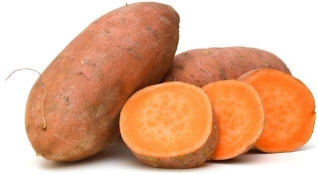
Figure 1. Orange Fleshed Sweet Potato.
1.2. Statement of the Problem
Globally, about 30% of U5 children suffer from Vitamin A Deficiency (VAD), with prevalence in Sub-Saharan Africa reaching as high as 40% in certain regions . Orange-fleshed sweet potato, a variety of sweet potato rich in plant-based β-carotene, has been widely promoted in Africa for vitamin A fortification. However, the popularity and quality of orange-fleshed sweet potato remain issues that urgently need to be addressed.
In Mbeya Municipality, the situation remains concerning, with VAD affecting approximately 31.9% of U5 children despite ongoing nutritional interventions . VAD continues to be a significant public health challenge in Tanzania, particularly among young children, as it compromises immunity, increases vulnerability to infections, and remains a leading cause of preventable blindness . Contributing factors include limited dietary diversity, low access to Vitamin A-rich foods, and inadequate community awareness .
The Orange-Fleshed Sweet Potato (OFSP) has been recognized as a cost-effective and sustainable source of Vitamin A owing to its rich beta-carotene content . However, despite its proven potential in addressing VAD, the level of awareness and adoption of OFSP within Mbeya Municipality remains low . Many caregivers and households lack sufficient knowledge regarding its nutritional importance, methods of preparation, and accessibility, resulting in limited utilization of this valuable crop, whereas currently, the cheapest and cost-effective method for combating VAD is through food-based strategies by promoting consumption of locally available vitamin A-rich foods that can be grown in home gardens. Orange-fleshed sweet potatoes (OFSP) can be a very suitable crop for food-based strategy .
1.3. Justification
This study aims to assess the community’s knowledge, attitudes, and practices regarding OFSP, identify barriers to its adoption, and explore strategies to promote its consumption within Mbeya Municipality. Gaining insights into community perceptions and behaviors will guide the development of targeted interventions to improve dietary habits and contribute to sustainable efforts in reducing VAD among U5 children. There is a pressing need to encourage the use of diverse, locally available, and easily cultivable food sources that can be prepared and consumed in various forms. Promoting dietary diversity offers a practical approach to addressing persistent malnutrition, including VAD, particularly in regions like Mbeya that have significant agricultural potential yet continue to face nutritional challenges.
1.4. Objective
To assess the community’s knowledge, attitudes, and practices regarding Orange-Fleshed Sweet Potato as a food source for reducing Vitamin A Deficiency among U5 children in Iwambi, Isanga, and Iyunga wards of Mbeya Municipality.
2. Methodology
This study was conducted in Mbeya Municipality, an urban area located in Tanzania’s Southern Highlands region. A descriptive cross-sectional research design was adopted. The target population comprised caregivers of U5 children and healthcare workers from three selected wards. Both simple random sampling and purposive sampling techniques were used. A total of 90 caregivers were randomly selected from household lists in Iwambi, Isanga, and Iyunga wards, while 15 healthcare workers were purposively chosen from local health centers based on their direct involvement in child health services.
Quantitative data were analyzed using descriptive statistics, including frequencies and percentages, to summarize community knowledge, attitudes, and practices. Qualitative data obtained from interviews with healthcare workers were analyzed thematically, focusing on key insights related to nutrition knowledge, VAD prevention, and the promotion of OFSP.
3. Ethical Considerations
Authorization to conduct data collection within the community was obtained from the relevant local authorities following a formal written request from the University. Prior to data collection, all participants provided informed consent. The study’s purpose, participants’ rights, and the confidentiality of their information were clearly explained, and all data were treated with the highest level of confidentiality.
4. Results and Discussion
Data were collected using a semi-structured questionnaire, administered face-to-face in the respondents’ local language to improve comprehension and ensure accuracy. Enumerators received training to maintain consistency in interviewing techniques and to handle responses ethically. The questionnaire gathered information on various aspects, including general awareness of Orange-Fleshed Sweet Potato (OFSP), specific knowledge about its nutritional benefits—especially its Vitamin A content—and the caregivers’ practices regarding feeding OFSP to their young children. A total of 90 caregivers and 15 healthcare workers participated in the study.
4.1. Knowledge, Attitude and Practice of Caregivers Towards OFSP
4.1.1. Awareness on OFSP
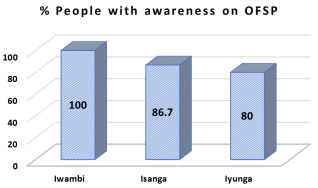
The findings indicate that overall awareness of Orange-Fleshed Sweet Potato (OFSP) was relatively high across all wards. In Iwambi, all 30 caregivers (100%) reported having heard of OFSP. In Isanga, 26 caregivers (86.7%) were aware of OFSP, while 4 (13.3%) had not. In Iyunga, 24 caregivers (80%) had knowledge of OFSP, whereas 6 (20%) had never heard of it. These results suggest that although general awareness is present, a notable proportion of caregivers, particularly in Iyunga and Isanga, still lack basic exposure to OFSP.
Figure 2. Level of People With Awareness Regarding OFSP in Percentages Across the Three Wards.
4.1.2. Knowledge on OFSP
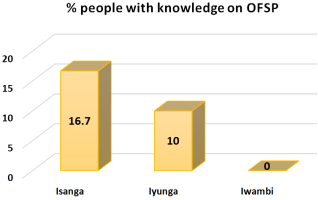
Despite the relatively high awareness of OFSP, knowledge about its nutritional value, particularly its Vitamin A content, was strikingly low. In Iwambi, none of the 30 caregivers knew that OFSP contains Vitamin A or that it can help prevent Vitamin A Deficiency (VAD). In Iyunga, only 3 out of 30 caregivers (10%) were aware of this, while Isanga had a slightly higher proportion, with 5 caregivers (16.7%) recognizing the Vitamin A content of OFSP. These findings highlight a significant knowledge gap in nutritional education among caregivers, which may hinder the effective utilization of OFSP and limit the diversification of nutrient sources in children’s diets.
Figure 3. Level of People with Knowledge Regarding OFSP in Percentages Across the Three Wards.
These findings that children caregivers have the awareness on OFSP but lack detailed knowledge about its benefits and preparation methods, aligns with the systematic review study conducted by Talsma on acceptance and adoption of biofortified crops in low- and middle-income countries and reported that who found that, while awareness of biofortified crops like OFSP is present, actual knowledge about their nutritional benefits, particularly Vitamin A content, is almost nonexistence in southwestern region of Nigeria .
4.1.3. Attitude on OFSP
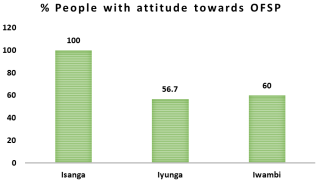
The results indicate that all caregivers in Isanga ward exhibited a positive attitude toward receiving additional training and participating in programs promoting OFSP for child nutrition. In Iwambi ward, 60% of caregivers demonstrated a positive attitude toward OFSP, while in Iyunga ward, 56.7% of caregivers expressed a similarly positive outlook.
Figure 4. Level of People with Positive Attitude Regarding OFSP in Percentages Across the Three Wards.
4.1.4. Practice on OFSP
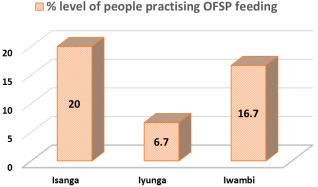
The consumption of Orange-Fleshed Sweet Potato (OFSP) among caregivers of U5 children in Mbeya Municipality remains very low, despite relatively high levels of awareness. Among the 90 caregivers surveyed across Iwambi, Iyunga, and Isanga wards, only 13 (14.4%) reported actively feeding OFSP to their children, with 6 caregivers in Isanga (20%), 2 in Iyunga (6.7%), and 5 in Iwambi (16.7%) practicing its use. These findings underscore that awareness alone does not necessarily lead to practical dietary changes.
Several factors contribute to the low level of practice, including limited knowledge of OFSP’s nutritional benefits, particularly its Vitamin A content, negative attitudes or misconceptions, and barriers such as unavailability, cost, and children’s food preferences. Even in wards like Isanga, where caregivers demonstrated relatively higher knowledge and positive attitudes, the practice rate remained only 20%. This highlights the urgent need for targeted behavior change interventions, hands-on nutrition education, and improved access to OFSP to promote its regular inclusion in children’s diets. The improved access through the availability of OFSP can be supported by the government through subsidies and agricultural extension officers, as suggested by Temu, who discussed the outcomes of interventions in Tanzania that promoted the production and consumption of OFSP in Tanzania . The results also suggest that combining knowledge and positive attitudes has a stronger influence on practice than awareness alone.
Figure 5. Level of People in Percentages Practicing the Feeding of OFSP to Their Children Across the Three Wards.
Awareness indicates that people have heard about OFSP, but knowledge reveals its nutritional significance, while attitude reflects the willingness or motivation to act. Effective nutrition interventions, therefore, must go beyond simply providing information and also address emotional, cultural, and perceptual factors influencing OFSP use.
Knowledge plays a crucial role in shaping attitudes and encouraging practical use of OFSP. These findings underscore the importance of knowledge in influencing caregivers’ attitudes and feeding practices . In communities with low awareness, caregivers may underestimate the nutritional value of OFSP and continue to rely on traditional staples and monotonous diets. The relatively higher practice of OFSP in Isanga appears to result from its combination of higher awareness and better knowledge compared to other wards.
4.2. Knowledge, Attitude and Practice of Health Care Workers Towards OFSP
A total of 15 healthcare workers were interviewed, with five (5) selected from each of the three wards: Iwambi, Iyunga, and Isanga. The targeted participants included nurses, nutrition officers, and clinical officers employed at the health centers within their respective wards. The purpose of these interviews was to assess their knowledge and awareness, attitudes, and involvement in promoting the use of Orange-Fleshed Sweet Potatoes (OFSP) as a strategy to combat Vitamin A Deficiency (VAD) among U5 children.
4.2.1. Knowledge and Awareness Regarding OFSP
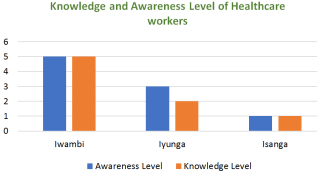
The findings indicate that all healthcare workers in Iwambi Ward demonstrated both awareness and knowledge of OFSP. In Iyunga Ward, awareness and knowledge were moderate; among the five healthcare workers interviewed, three knew that OFSP can help prevent Vitamin A Deficiency (VAD), and two correctly identified that it contains Vitamin A. In Isanga Ward, healthcare workers exhibited the lowest levels of awareness and knowledge compared to the other wards whereas, of the five workers interviewed, only one knew both that OFSP helps prevent VAD and that it contains Vitamin A.
The limited knowledge observed in Isanga may result from factors such as restricted access to professional development opportunities and a lower emphasis on nutrition education in daily practice. One healthcare worker noted that “while they occasionally discuss healthy foods, they rarely provide specific information unless directly asked”, which is a missed opportunity to educate caregivers about OFSP. This gap highlights the potential for improvement through continuous training and the provision of practical educational tools, such as posters, leaflets, or demonstration plots. Addressing these gaps can empower healthcare workers and strengthen community nutrition education efforts.
Figure 6. Number of Healthcare Workers with Knowledge and Awareness Regarding OFSP Across the Health Centres of the Three Wards.
Across the three wards, most of the healthcare workers interviewed were nurses and doctors, with nutritionists being minimally represented. This reflects the limited availability of nutrition professionals at the ward level, as they are typically concentrated in municipal, district, and referral hospitals. Consequently, nutrition officers—who hold specialized expertise on the nutritional benefits of locally grown, easily cultivated foods such as OFSP—are underrepresented in community health centers. Their presence is crucial for promoting awareness, enhancing knowledge, and fostering behavior changes that encourage the consumption of OFSP among U5 children, thereby helping to reduce undernutrition, including Vitamin A Deficiency (VAD) and other malnutrition-related issues, which are vital for the health, growth, and development of the community.
4.2.2. Attitude Regarding OFSP
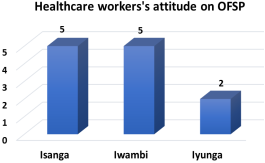
Healthcare workers from Isanga and Iwambi wards all demonstrated a positive attitude toward receiving additional training on OFSP and participating in programs that promote its use for child nutrition, recognizing the benefits for the community. In contrast, in Iyunga Ward, two healthcare workers expressed no interest in OFSP training, suggesting a possible reluctance to engage in food and nutrition-related activities, as their primary focus remains on medical practice.
Figure 7. Number of Healthcare Workers with Positive Attitude Regarding OFSP Across the Health Centers in Three Wards.
4.2.3. Practicing OFSP
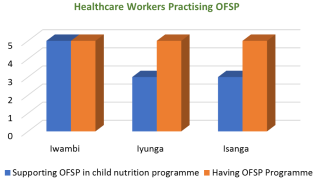
The findings indicate that all wards have OFSP programs established at their local health centers. In Iwambi Ward, all healthcare workers expressed support for encouraging the community to feed children with OFSP through existing programs and showed a strong willingness to expand their knowledge. In Iyunga and Isanga wards, three healthcare workers from each ward expressed willingness to assist the community in promoting OFSP feeding practices by raising awareness and sharing knowledge.
Figure 8. Number of Healthcare Workers Practicing Feeding OFSP to Children And Supporting the Community Across the Health Centers in Three Wards.
This study reveals that; the caregivers from Iwambi ward possess the lowest level of knowledge compared to healthcare workers, which explains the generally low awareness and poor practices among caregivers in the community. This suggests that the knowledge available at the health center is not being effectively transferred to the caregivers responsible for feeding children to combat Vitamin A deficiency.
In Isanga Ward, caregivers of children exhibit high levels of awareness, knowledge, and practice. However, healthcare workers display relatively low levels of knowledge and awareness despite the presence of the OFSP programme at the health centre. This suggests that the community may be accessing information about OFSP from sources outside the ward’s health centre, indicating positive knowledge dissemination and community development.
In Iyunga Ward, both healthcare workers and caregivers of children demonstrate low levels of knowledge and poor practices regarding OFSP, although healthcare workers possess a moderate understanding and engagement with the OFSP programme available at the health centre. This indicates a need to strengthen the role of healthcare workers in disseminating knowledge to caregivers during clinic visits to address ignorance and reduce the prevalence of Vitamin A deficiency.
These findings highlight the need to strengthen and motivate nutrition education for both caregivers and healthcare workers to enhance knowledge and practices. This is crucial for improving child nutrition status, which still requires significant attention.
These findings are supported by a study conducted by Low and Thiele in sub-Saharan Africa, which showed that when healthcare workers are well-informed and actively engage with communities, the adoption of OFSP increases. This underscores the critical role of healthcare workers in promoting OFSP consumption .
5. Conclusion
Although OFSP is well recognized in the literature for its potential to combat Vitamin A Deficiency, the study findings indicate a significant gap between awareness and practical use. While general awareness of OFSP is high among caregivers of U5 children, actual knowledge and application remain very low. Only a small proportion of caregivers actively feed OFSP to their children, and a moderate number possess accurate knowledge about it.
Caregivers frequently reported having heard of OFSP, yet many lacked an understanding of its nutritional benefits, particularly its role in providing Vitamin A and supporting child development. Even fewer knew how to prepare OFSP in ways that are both nutritious and appealing to young children. The practice of feeding OFSP to U5 children was alarmingly low, especially in Iyunga Ward, where only 6.7% of caregivers reported doing so. Even in Isanga, the ward with the highest uptake, the rate was just 20%. These findings highlight a clear message: awareness without knowledge, and knowledge without access, does not lead to behavior change.
Among healthcare workers, knowledge levels were generally higher, particularly in Iwambi, but not all professionals felt confident or adequately equipped to provide in-depth education to caregivers about OFSP. This suggests that clinic-based nutrition education often does not reach the level of detail necessary to influence behaviour. While awareness is a valuable starting point, meaningful public health impact will only be achieved when it is translated into informed action. This effort requires consistent messaging from trained health professionals, reliable access to OFSP in local markets, and supportive policies that promote the adoption of biofortified crops such as OFSP.
6. Recommendation
A key and consistent recommendation from healthcare workers was the need for government support in the production, promotion, and distribution of OFSP. They highlighted that “limited availability and high costs are major barriers”, particularly in wards like Iyunga and Isanga, where OFSP is rarely found in local markets. Several healthcare workers suggested that “including OFSP in government-subsidized agricultural input programs could encourage more farmers to cultivate the crop, increasing supply and reducing prices”.
They also emphasized the role of district-level agricultural extension officers in promoting OFSP farming at the village level, particularly among women and caregivers who are most influential in child feeding practices. Supporting smallholder farmers with training, seeds, and access to markets would not only boost supply but also create income-generating opportunities. Additional strategies recommended included integrating OFSP into school and hospital nutrition programs, strengthening the capacity of healthcare providers, and enhancing community nutrition education. Importantly, healthcare workers urged the government to strengthen workforce capacity in community health centers to better address immediate community nutrition needs and combat malnutrition at the local level.
Abbreviations

OFSP

Orange Fleshed Sweet Potato

VAD

Vitamin A Deficiency

KAP

Knowledge, Attitudes, and Practices

U5 Children

Under Five Years Children

Conflicts of Interest
The authors declare no conflicts of interest.
References
[1] World Health Organization. Micronutrient deficiencies: Vitamin A deficiency. 2020.
[2] Tanzania Demographic and Health Survey. Ministry of Health, Dodoma, Ministry of Health, Zanzibar, National Bureau of Statistics, Dodoma, Office of Chief Government Statistician, Zanzibar, The DHS Program, ICF, Rockville, Maryland, USA. 2022.
[3] Grant, F. K. E, Ackatia-Armah R, Okuku HS and Kakuhenzire R. Association Between Nutrition Social Behavior Change Communication and Improved Caregiver Health and Nutrition Knowledge and Practices in Rural Tanzania. Front. Public Health. 2022, 10: 736666.
[4] Amanda C. Palmer, Jacquelyn R. Bedsaul-Fryer and Charles B. Stephensen. Interactions of Nutrition and Infection: The Role of Micronutrient Deficiencies in the Immune Response to Pathogens and Implications for Child Health. Annual Review of Nutrition. 2024, 44: 99-124,
[5] Peter, D. K., Xu, S., Yu, W.., Sary, S., & Muyobozi, S.. Reliability of the Agricultural Extension and Technological Services among Rice Farmers in the Rural Areas of Tanzania. Journal of Agricultural Extension, 2021, 25(2), 18-31.
[6] Bao, B., & Fweja, L. Evaluation of the Potential of Freshly Bred Orange-Fleshed Sweet Potato Varieties in Combating Vitamin A Deficiency. Tanzania Journal of Science, 2020, 46(1), 1-8.
[7] Low, J. W., Mwanga, R. O., & CIP. Biofortified crops for combating vitamin A deficiency: The case of orange-fleshed sweet potato. International Potato Center, 5th Edition. 2020.
[8] CIP (International Potato Center), (2023). Promoting biofortified crops in Sub-Saharan Africa: Successes and challenges. CIP Annual Report.
[9] Damtew Abewoy, Habtamu Gudisa Megersa, Dejene Tadesse Banjaw, Dadi Tolessa Lemma. Major Nutritional Content of Orange Fleshed Sweet Potato (OFSP) and Its Importance: Review. Glob Acad J Agri Biosci. 2024, 6(1) 1-7.
[10] Mohammed A. A. Awareness, Attitude and Utilization of Orange-Fleshed Sweet Potato (OFSP). Critical Literature Review. European Scientific Journal, ESJ. 2023, 19 (18), 36.
[11] National Bureau of Statistics (NBS) [Tanzania] and ICF Macro. Micronutrients: Results of the 2010 Tanzania Demographic and Health Survey. Dar es Salaam, Tanzania: NBS and ICF Macro. 2011.
[12] Zhao, T., Liu, S., Zhang, R., Zhao, Z., Yu, H., Pu, L., Wang, L., & Han, L. Global Burden of Vitamin A Deficiency in 204 Countries and Territories from 1990-2019. Nutrients. 2022, 14(5), 950.
[13] Jan W. Low, Mary Arimond, Nadia Osman, Benedito Cunguara, Filipe Zano, David Tschirley. A Food-Based Approach Introducing Orange-Fleshed Sweet Potatoes Increased Vitamin A Intake and Serum Retinol Concentrations in Young Children in Rural Mozambique. The Journal of Nutrition. 2007, 137(5), 1320-1327.
[14] Low Jan, W. and Graham Thiele. Understanding innovation: The development and scaling of orange-fleshed sweet potato in major African food systems. Agricultural Systems. 2017, 179 (2020) 102770.
[15] Talsma EF, Melse-Boonstra A, Brouwer ID. Acceptance and adoption of biofortified crops in low- and middle-income countries: a systematic review. Nutr Rev. 2017, 1; 75(10): 798-829.
[16] Waized, B., Ndyetabula, D. Temu, A. Robinson, E. and Henson, S. Promoting Biofortified Crops for Nutrition: Lessons from Orange-fleshed Sweet Potato (OFSP) in Tanzania. Institute of Development Studies. 2015.
Cite This Article
  • APA Style

    Nicodemas, D., Mlwilo, S. V., Komba, D. D. (2026). Orange Fleshed Sweet Potato Potential in Combating VAD Among Under Five Children in Mbeya, Tanzania: Community’s Knowledge, Attitude and Practice. Science Journal of Public Health, 14(4), 171-177. https://doi.org/10.11648/j.sjph.20261404.13

    Copy | Download

    ACS Style

    Nicodemas, D.; Mlwilo, S. V.; Komba, D. D. Orange Fleshed Sweet Potato Potential in Combating VAD Among Under Five Children in Mbeya, Tanzania: Community’s Knowledge, Attitude and Practice. Sci. J. Public Health 2026, 14(4), 171-177. doi: 10.11648/j.sjph.20261404.13

    Copy | Download

    AMA Style

    Nicodemas D, Mlwilo SV, Komba DD. Orange Fleshed Sweet Potato Potential in Combating VAD Among Under Five Children in Mbeya, Tanzania: Community’s Knowledge, Attitude and Practice. Sci J Public Health. 2026;14(4):171-177. doi: 10.11648/j.sjph.20261404.13

    Copy | Download

  • @article{10.11648/j.sjph.20261404.13,
      author = {Diana Nicodemas and Stewart Venance Mlwilo and Diana Deogratias Komba},
      title = {Orange Fleshed Sweet Potato Potential in Combating VAD Among Under Five Children in Mbeya, Tanzania: Community’s Knowledge, Attitude and Practice},
      journal = {Science Journal of Public Health},
      volume = {14},
      number = {4},
      pages = {171-177},
      doi = {10.11648/j.sjph.20261404.13},
      url = {https://doi.org/10.11648/j.sjph.20261404.13},
      eprint = {https://article.sciencepublishinggroup.com/pdf/10.11648.j.sjph.20261404.13},
      abstract = {Vitamin A deficiency (VAD) among children under five years of age remains a significant public health concern in Tanzania. Orange-fleshed sweet potatoes (OFSP), rich in provitamin A, offer a sustainable dietary solution to address this challenge. This study aimed to assess the community’s knowledge, attitudes, and practices (KAP) regarding OFSP in Mbeya Municipality—an area identified with notable cases of VAD despite the availability of diverse nutrient-rich foods. A descriptive cross-sectional study design was employed, involving 90 caregivers from three wards and 15 healthcare workers from the corresponding health facilities. Data were collected through structured questionnaires and interviews, and analyzed using descriptive statistics for quantitative data and thematic analysis for qualitative insights. Results revealed that although general awareness of OFSP was relatively high across the municipality (80% and above), specific knowledge about its vitamin A content and associated health benefits was considerably low, averaging only 8.9%. Positive attitudes toward OFSP were also limited, particularly in Iyunga Ward (56.7%). Only 14.4% of caregivers reported regularly feeding OFSP to their children. Among healthcare workers, moderate levels of knowledge (53.3%), attitude (86.7%), and practice (73.3%) were observed in promoting the consumption of OFSP, despite the presence of OFSP programs at the health centers. This may be attributed to insufficient training materials, limited professional capacity, and minimal policy support to reinforce positive attitudes and practices. These findings highlight the importance of reinforcing and motivating nutrition education for both caregivers and healthcare workers. Strengthening such initiatives is vital for improving child nutrition, which continues to demand considerable attention. The study concludes that enhancing knowledge to close the gap between awareness and practice, promoting positive attitudes, and building workforce capacity at the ward level are essential strategies for increasing OFSP utilization and reducing the prevalence of vitamin A deficiency.},
     year = {2026}
    }
    

    Copy | Download

  • TY  - JOUR
    T1  - Orange Fleshed Sweet Potato Potential in Combating VAD Among Under Five Children in Mbeya, Tanzania: Community’s Knowledge, Attitude and Practice
    AU  - Diana Nicodemas
    AU  - Stewart Venance Mlwilo
    AU  - Diana Deogratias Komba
    Y1  - 2026/07/27
    PY  - 2026
    N1  - https://doi.org/10.11648/j.sjph.20261404.13
    DO  - 10.11648/j.sjph.20261404.13
    T2  - Science Journal of Public Health
    JF  - Science Journal of Public Health
    JO  - Science Journal of Public Health
    SP  - 171
    EP  - 177
    PB  - Science Publishing Group
    SN  - 2328-7950
    UR  - https://doi.org/10.11648/j.sjph.20261404.13
    AB  - Vitamin A deficiency (VAD) among children under five years of age remains a significant public health concern in Tanzania. Orange-fleshed sweet potatoes (OFSP), rich in provitamin A, offer a sustainable dietary solution to address this challenge. This study aimed to assess the community’s knowledge, attitudes, and practices (KAP) regarding OFSP in Mbeya Municipality—an area identified with notable cases of VAD despite the availability of diverse nutrient-rich foods. A descriptive cross-sectional study design was employed, involving 90 caregivers from three wards and 15 healthcare workers from the corresponding health facilities. Data were collected through structured questionnaires and interviews, and analyzed using descriptive statistics for quantitative data and thematic analysis for qualitative insights. Results revealed that although general awareness of OFSP was relatively high across the municipality (80% and above), specific knowledge about its vitamin A content and associated health benefits was considerably low, averaging only 8.9%. Positive attitudes toward OFSP were also limited, particularly in Iyunga Ward (56.7%). Only 14.4% of caregivers reported regularly feeding OFSP to their children. Among healthcare workers, moderate levels of knowledge (53.3%), attitude (86.7%), and practice (73.3%) were observed in promoting the consumption of OFSP, despite the presence of OFSP programs at the health centers. This may be attributed to insufficient training materials, limited professional capacity, and minimal policy support to reinforce positive attitudes and practices. These findings highlight the importance of reinforcing and motivating nutrition education for both caregivers and healthcare workers. Strengthening such initiatives is vital for improving child nutrition, which continues to demand considerable attention. The study concludes that enhancing knowledge to close the gap between awareness and practice, promoting positive attitudes, and building workforce capacity at the ward level are essential strategies for increasing OFSP utilization and reducing the prevalence of vitamin A deficiency.
    VL  - 14
    IS  - 4
    ER  - 

    Copy | Download

Author Information
  • Department of Food Science and Technology, Mbeya University of Science and Technology, Mbeya, Tanzania
  • Department of Food Science and Technology, Mbeya University of Science and Technology, Mbeya, Tanzania

  • Department of Food Science and Technology, Mbeya University of Science and Technology, Mbeya, Tanzania