1. Introduction
The rapid development of digital technologies has fundamentally transformed the global business environment, changing how firms create value, compete, and expand internationally. The convergence of the Internet, cloud computing, artificial intelligence (AI), big data analytics, mobile technologies, and platform-based business models has accelerated digital transformation and enabled firms to develop new strategies for achieving competitive advantage. Digital platforms have increasingly evolved from technological infrastructures into strategic ecosystems that connect businesses, customers, suppliers, and other market participants, thereby facilitating new forms of value creation and exchange
| [31] | Sharabati, A. A. A., Ali, A. A. A., Allahham, M. I., Hussein, A. A., Alheet, A. F., & Mohammad, A. S. (2024). The impact of digital marketing on the performance of SMEs: An analytical study in light of modern digital transformations. Sustainability, 16(19), 8667. |
| [34] | Sembiring, B. K. F., Rini, E. S., & Yuliaty, T. (2022). Content marketing strategies to maximize product sales SMEs in North Sumatra. Modeling economic growth in contemporary Indonesia (pp. 55–65). Emerald Publishing Limited. https://doi.org/10.1108/978-1-80262-431-120221005 |
| [35] | Mustafa Ayobami Raji, Hameedat Bukola Olodo, Timothy Tolulope Oke, Wilhelmina Afua Addy, Onyeka Chrisanctus Ofodile, & Adedoyin Tolulope Oyewole. (2025). digital marketing in tourism: a review of practices in the usa and africa. International Journal of Applied Research in Social Sciences, 6(3). https://doi.org/10.51594/ijarss.v6i3.896 |
[31, 34, 35]
. As a result, digital platforms have become increasingly important in strategic management and international business.
Digital platforms enable firms to expand market reach, coordinate business activities, reduce transaction costs, and access international markets more rapidly digitalization has also transformed organizational processes and enabled firms to respond more rapidly to changing customer needs and market conditions
| [18] | Lu, H., & Shaharudin, M. S. (2024). Role of digital transformation for sustainable competitive advantage of SMEs: a systematic literature review. Cogent Business and Management, 11(1) https://doi.org/10.1080/23311975.2024.2419489 |
| [19] | Zadoia, O. A., & Mahdich, A. S. (2024). Leadership without borders: shaping enterprise competitiveness in the global economy. European Vector of Economic Development,
https://doi.org/10.32342/3041-2153-2025-2-39-7 |
| [27] | Khoerunnisa, N. K. (2020). Digital Marketing: Marketing Strategic In Digital Era. Program Studi Vokasi Humas UI, Jakarta. |
[18, 19, 27]
. Thus, the strategic use of digital platforms is increasingly associated with innovation, internationalization, customer engagement, operational efficiency, and competitive positioning
| [37] | Pagare, S. R. (2024). The impact of e-commerce on traditional retail and wholesale businesses. Unified visions, 81(10.25215), 8198189815-10. |
[37]
.
Although the role of digital platforms is becoming increasingly significant, there is still fragmentation within the literature due to its distribution across various research fields and theoretical frameworks. Research on digital transformation, platform-based internationalization, platform ecosystems, business model innovation, and competitive advantage has already been conducted in previous studies, yet most of this literature has studied individual aspects of these concepts rather than the integration of these literatures in relation to global competitive strategies
| [13] | Daniels, N., & Jokonya, O. (2021). Factors affecting digital transformation in the retail supply chain. International Conference on Multidisciplinary Research, 2020, 1–10.
https://doi.org/10.26803/myres.2020.09 |
| [18] | Lu, H., & Shaharudin, M. S. (2024). Role of digital transformation for sustainable competitive advantage of SMEs: a systematic literature review. Cogent Business and Management, 11(1) https://doi.org/10.1080/23311975.2024.2419489 |
| [19] | Zadoia, O. A., & Mahdich, A. S. (2024). Leadership without borders: shaping enterprise competitiveness in the global economy. European Vector of Economic Development,
https://doi.org/10.32342/3041-2153-2025-2-39-7 |
| [22] | Cha, H., Kotabe, M., & Wu, J. (2023). Reshaping Internationalization Strategy and Control for Global E-Commerce and Digital Transactions: A Hayekian Perspective. Management International Review, 63(1).
https://doi.org/10.1007/s11575-022-00494-x |
[13, 18, 19, 22]
. Some recent systematic reviews have emphasized the fragmented state of research concerning digital platform internationalization and the need for more integrated research in terms of both theoretical and empirical perspectives
| [13] | Daniels, N., & Jokonya, O. (2021). Factors affecting digital transformation in the retail supply chain. International Conference on Multidisciplinary Research, 2020, 1–10.
https://doi.org/10.26803/myres.2020.09 |
| [35] | Mustafa Ayobami Raji, Hameedat Bukola Olodo, Timothy Tolulope Oke, Wilhelmina Afua Addy, Onyeka Chrisanctus Ofodile, & Adedoyin Tolulope Oyewole. (2025). digital marketing in tourism: a review of practices in the usa and africa. International Journal of Applied Research in Social Sciences, 6(3). https://doi.org/10.51594/ijarss.v6i3.896 |
[13, 35]
.
However, existing reviews have given comparatively limited attention to how platform characteristics, including network effects, ecosystem orchestration, and digital capabilities, collectively shape firms’ global competitive strategy. The literature is also theoretically fragmented. Perspectives such as Resource-Based View, Dynamic Capabilities Theory, Platform Ecosystem Theory, Network Theory, and Internationalization Theory, have been applied to explain different aspects of digital platforms and competitive advantage. However, these perspectives are frequently examined independently, making it difficult to establish an integrated explanation of how digital platform capabilities, ecosystem participation, network effects, and internationalization jointly influence global competitive strategy. Furthermore, existing studies report both opportunities and challenges associated with digital platforms, including innovation and market expansion on the one hand and governance, data privacy, cybersecurity, regulatory, and ecosystem-related challenges on the other. These variations indicate the importance of synthesizing the available evidence across different contexts.
Another limitation is associated with the geographical scope of research carried out so far. Most of the existing studies concentrate on developed countries and tech-savvy industries, and there seems to be a relative lack of attention towards developing countries and the Global South. Differences in digital infrastructure, institutional context, regulation, and technological capabilities may affect the strategic implications of the use of digital platforms across countries. Therefore, literature that is confined to developed countries may not present a full picture of the role of digital platforms in the process of implementing competitive strategy under various economic and institutional conditions. As one can see from the above-mentioned theoretical, empirical, methodological, and contextual limitations, there is a necessity to conduct a systematic review of existing literature. The main advantage of the systematic literature review is that it can integrate scattered evidence, identify dominating theoretical perspectives and research topics, analyze methodological patterns, and identify areas of agreement, contradiction, and knowledge gap.
Therefore, this study systematically reviews the existing literature on digital platforms and global competitive strategy to synthesize theoretical and empirical evidence, identify major research themes and theoretical perspectives, examine methodological patterns, and establish key research gaps and directions for future research. The review contributes by integrating fragmented evidence on the mechanisms through which digital platforms shape global competitive strategy and by providing a basis for future theoretical development and empirical investigation.
2. Review Methodology
The current investigation adopted a systematic literature review (SLR) method to analyze the theoretical and empirical research concerning the relationship between digital platforms and global competitive strategy. The SLR was conducted following the PRISMA 2020 guidelines to provide transparency and reproducibility in the identification, screening, eligibility evaluation, and selection of articles
| [27] | Khoerunnisa, N. K. (2020). Digital Marketing: Marketing Strategic In Digital Era. Program Studi Vokasi Humas UI, Jakarta. |
[27]
. This literature review explored studies that have been written from 2015 till 2026 concerning the influence of digital platforms in the context of competitive advantage, internationalization, innovation, ecosystem development, and global competitive strategy. The relevant studies were found through database searches in Scopus, Web of Science, and Google Scholar, using specific keywords and Boolean operators.
To identify the key suggestions for their adoption, a significant body of research on digitalization and Industry 4.0 (I4.0) has been produced
| [1] | Rasul, T., Nair, S., Palamidovska-Sterjadovska, N., Ladeira, W. J., Santini, F. D. O., & Elgammal, I. (2024). The evolution of customer engagement in the digital era for business: A review and future research agenda. Journal of Global Scholars of Marketing Science, 34(3), 325-348. |
| [5] | Gong, C., He, X., & Lengler, J. (2024). Internationalization through digital platforms: a systematic review and future research agenda. International Marketing Review, 41(5), 938-980.3-0213 |
| [9] | Aghamiri, S., Karima, J., & Cavus, N. (2022). Advantages of Digital Transformation Models and Frameworks for Business: A Systematic Literature Review. International Journal of Advanced Computer Science and Applications,
https://doi.org/10.14569/IJACSA.2022.0131206 |
[1, 5, 9]
. Using the Technology Organization Environment (TOE) paradigm, they came to the conclusion that SMEs should prioritize integrating IT systems throughout the whole value chain and human resources, with an emphasis on expertise in data analysis and knowledge research. According to
| [10] | He, Y. (2025). The impact of digital transformation on firm performance and sustainable competitive advantage. Journal of Economics and Management Sciences, 8(5), p173-p173. |
| [14] | Arenal, A., Ardiansyah, R., Suparno, S., & Saparuddin, S. (2025). Business-Level Strategy Transformation, Competitive Rivalry, and Competitive Dynamics: A Bibliometric Study of Digitalization Trends and Global Competition. Journal of Social Research, 4(6). |
[10, 14]
, examined the digital transformation for transportation in relation to the product-service system life-cycle in a comparative literature assessment. Another study
| [22] | Cha, H., Kotabe, M., & Wu, J. (2023). Reshaping Internationalization Strategy and Control for Global E-Commerce and Digital Transactions: A Hayekian Perspective. Management International Review, 63(1).
https://doi.org/10.1007/s11575-022-00494-x |
[22]
, exclusively examined the connections between global competition, corporate culture, and digitization. In the process of identifying ten such interdependence, researchers created a new analytical framework. In order to support firms in their pursuit of sustainable digital development through corporate culture development, the researchers came up with six main recommendations.
These include: practicing leadership, culture, and digitalization for sustainability; prioritizing the integration of digital platforms into the requirements required to implement digital platforms in the smart manufacturing assessment models; and having managers raise awareness and positively shape employee perceptions of the prospect of digital transformation. The benefits of the most recent and revised digital transformation models and frameworks for businesses, however, are not considered in these research studies. Additionally, the existence of the many digital platform models and frameworks that are currently in use and wait testing and improvement by practitioners and enthusiastic researchers in this field is not highlighted
| [8] | Page, M. J., McKenzie, J. E., Bossuyt, P. M., Boutron, I., Hoffmann, T. C., Mulrow, C. D., & Moher, D. (2021). Updating guidance for reporting systematic reviews: development of the PRISMA 2020 statement. Journal of clinical epidemiology, 134, 103-112. |
| [20] | Pusriadi, T. (2021). Sudarmiatin," Inbound marketing strategy: Marketing concept to increase sales of small and medium enterprises (SMEs) products in Indonesia,” International Journal of Academic Research in Business and Social Sciences, 11(5), 730-736. |
[8, 20]
. This gap is intended to be filled by this systematic review of the literature.
According to
| [3] | Leão, P., & da Silva, M. M. (2021). Impacts of digital transformation on firms’ competitive advantages a systematic literature review. Journal of Business and Innovation, Strategic Change, 30(5).
https://doi.org/10.1002/jsc.2459 |
[3]
the application of digital technologies and infrastructures in business, economy, and society is what is meant by "digitalization for global competitive advantages in international markets". In order to create value, businesses use a variety of digital technologies, including e-commerce, big data analytic, and the internet of things, machine learning, additive manufacturing, and others,
| [3] | Leão, P., & da Silva, M. M. (2021). Impacts of digital transformation on firms’ competitive advantages a systematic literature review. Journal of Business and Innovation, Strategic Change, 30(5).
https://doi.org/10.1002/jsc.2459 |
| [7] | Yang, B., Bai, W., Chen, Y., & Rong, K. (2025). Internationalization of digital firms: A systematic review and research agenda. Journal of Business Research, 189, 115124. |
| [11] | Mkwizu, K. H. (2022). Digital marketing and tourism: opportunities for Africa. International Hospitality Review, 34(1) https://doi.org/10.1108/ihr-09-2019-0015 |
| [19] | Zadoia, O. A., & Mahdich, A. S. (2024). Leadership without borders: shaping enterprise competitiveness in the global economy. European Vector of Economic Development,
https://doi.org/10.32342/3041-2153-2025-2-39-7 |
[3, 7, 11, 19]
. However, little is still known about their internal mechanisms. More significantly, though, a lot of newly formed smaller businesses in today's markets are curious about how businesses other than these behemoths might experiment with the ecosystem paradigm. The goal of the study and development of the framework described here is to advance knowledge of the idea of digital ecosystems
| [15] | Cozzolino, A., Corbo, L., & Aversa, P. (2021). Digital platform-based ecosystems: The evolution of collaboration and competition between incumbent producers and entrant platforms. Journal of Business Research, 126,
https://doi.org/10.1016/j.jbusres.2020 |
| [20] | Pusriadi, T. (2021). Sudarmiatin," Inbound marketing strategy: Marketing concept to increase sales of small and medium enterprises (SMEs) products in Indonesia,” International Journal of Academic Research in Business and Social Sciences, 11(5), 730-736. |
[15, 20]
.
2.1. Review Design and Literature Analysis
This paper uses systematic literature review as a methodology to explore the existing studies in terms of corporate strategy and organizational growth. In the descriptive part, we show the journal publication outlets used and the country of their focus, authors’ affiliations, and years of publication of the articles. Selected papers are critically analyzed and synthesized based on the empirical evidence of Digital platform and global competitive strategy. As is the nature of a systematic review, the process was comprehensive, transparent, and reproducible, with a structured approach being undertaken to identify all the literature related to the research questions, followed by a systematic synthesis and presentation of the findings. As such, it was a process that ensured subjectivity and bias were minimized in the research process.
The literature framework has been selected with the help of a structured literature review since the application of this literature review technique facilitates the literature mapping process to recognize the theories and knowledge gaps. The entire literature review process includes planning, conducting the literature review, and reporting the literature review findings. Eligible studies are retrieved from major academic databases and scholarly platforms, including Scopus, Web of Science, and Google Scholar, selected for their relevance to the subject matter and based on their ease of access.
2.2. Review Design and PRISMA 2020
A systematic literature review (SLR) was adopted in this research for the synthesis of theoretical and empirical literature that links digital platforms and global competitive strategy. The SLR adhered to the Preferred Reporting Items for Systematic Reviews and Meta-Analyses (PRISMA) 2020 guidelines during the processes of identification, screening, eligibility, and inclusion of studies in this research
| [8] | Page, M. J., McKenzie, J. E., Bossuyt, P. M., Boutron, I., Hoffmann, T. C., Mulrow, C. D., & Moher, D. (2021). Updating guidance for reporting systematic reviews: development of the PRISMA 2020 statement. Journal of clinical epidemiology, 134, 103-112. |
| [27] | Khoerunnisa, N. K. (2020). Digital Marketing: Marketing Strategic In Digital Era. Program Studi Vokasi Humas UI, Jakarta. |
| [31] | Sharabati, A. A. A., Ali, A. A. A., Allahham, M. I., Hussein, A. A., Alheet, A. F., & Mohammad, A. S. (2024). The impact of digital marketing on the performance of SMEs: An analytical study in light of modern digital transformations. Sustainability, 16(19), 8667. |
[8, 27, 31]
. The application of the PRISMA 2020 guidelines helped to develop an approach through which relevant literature could be identified, duplicates would be removed, and studies would be screened based on certain criteria, and the final selection of studies would be made.
Scholarly studies published between 2015 and 2026 that focused on digital platforms, their linkages with global competitive strategy, competitive advantages, internationalization, innovation, ecosystem development, and other strategic outcomes were reviewed. In addition, this SLR also analyzed theoretical approaches, methodologies used in selected studies, geographical settings, and key findings reported in those studies. The entire SLR process is illustrated in
Figure 1.
Records were screened for the primary study selection procedure using the PRISMA statement. "Preferred Reporting Items for Systematic Review and Meta-Analyses" is what the acronym PRISMA stands for
| [8] | Page, M. J., McKenzie, J. E., Bossuyt, P. M., Boutron, I., Hoffmann, T. C., Mulrow, C. D., & Moher, D. (2021). Updating guidance for reporting systematic reviews: development of the PRISMA 2020 statement. Journal of clinical epidemiology, 134, 103-112. |
[8]
. The study selection procedure followed the PRISMA 2020 protocol
| [8] | Page, M. J., McKenzie, J. E., Bossuyt, P. M., Boutron, I., Hoffmann, T. C., Mulrow, C. D., & Moher, D. (2021). Updating guidance for reporting systematic reviews: development of the PRISMA 2020 statement. Journal of clinical epidemiology, 134, 103-112. |
| [27] | Khoerunnisa, N. K. (2020). Digital Marketing: Marketing Strategic In Digital Era. Program Studi Vokasi Humas UI, Jakarta. |
[8, 27]
. According to
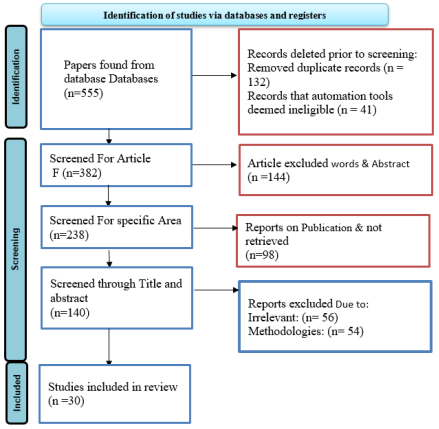
Figure 1, a search of the database revealed 555 articles at the first stage. In total, 132 duplicated articles and 41 irrelevant ones (based on automated analysis) were removed before conducting screening, and, therefore, 382 articles were eligible for screening. During title and abstract screening, 144 articles were eliminated due to their irrelevance, and 238 articles passed the screening phase. After that, 98 articles could not be obtained, and only 140 articles passed the eligibility phase. Of the latter, 110 articles were rejected based on two categories 56 articles that were not relevant enough and 54 articles that did not satisfy the set methodology criteria. Ultimately, 30 articles that corresponded to all eligibility criteria were retained for the systematic literature review.
Figure 1. PRISMA 2020 Flow Diagram of the Systematic Literature Review Chart PRISMA 2020.
2.3. Information Sources and Search Strategy
A structured search was conducted using the selected academic databases, namely Scopus, Web of Science, and Google Scholar. These sources were selected because of their broad coverage of scholarly publications in strategic management, international business, digital transformation, information systems, and related fields. The search was conducted using predefined keywords and Boolean operators (AND and OR) to identify studies relevant to digital platforms and global competitive strategy.
The search terms were developed interactively through preliminary searches and examination of relevant literature. Keywords related to digital platforms included terms such as “digital platform,” “digital platforms,” “digital technology,” “digital ecosystem,” and related expressions. Keywords associated with competitive strategy included “global competitive strategy,” “competitive advantage,” “global competitiveness,” “international competitiveness,” and related terms. Synonyms and alternative expressions were combined using the Boolean operator “OR,” while the major conceptual groups were connected using “AND.” The search strategy was refined to maximize relevance while avoiding overly restrictive terms that substantially reduced the retrieval of relevant studies. The complete search strings and database-specific search procedures should be reported in
Table 1 to facilitate reproducibility.
2.4. Eligibility Criteria
The inclusion and exclusion criteria were determined prior to the final selection of the obtained literature. The following were considered eligible studies: (i) those published between 2015 and 2026; (ii) those written in the English language; (iii) those concerned with digital platforms or digital technologies on platforms; (iv) those involving competitive strategies, competitive advantages, global competitiveness, internationalization, or other strategic aspects similar to them; and (v) those containing enough information to be analyzed and synthesized.
The following were considered ineligible studies: (i) those published outside the specified time span; (ii) those written in other languages except English; (iii) those being duplicates; (iv) those being inaccessible in full text; and (v) those being irrelevant to the study purpose. The non-academic literature including editorial articles, news articles, opinion pieces, practitioner blogs and other material lacking sufficient academic evidence was excluded as well.
Table 1. Studies inclusion and exclusion criteria.
Criterion | Inclusion | Exclusion |
Topic | Studies directly addressing digital platforms and global competitive strategy or related strategic outcomes | Studies unrelated to digital platforms or competitive strategy |
Publication period | 2015–2026 | Before 2015 or after 2026 |
Language | English | Languages other than English |
Publication type | Scholarly/peer-reviewed studies | Editorials, news reports, blogs, opinion papers, and other non-scholarly materials |
Relevance | Studies addressing competitive advantage, competitiveness, internationalization, innovation, or related strategic outcomes | Studies without a meaningful connection to the research objectives |
Availability | Full-text studies available for assessment | Studies for which full text was unavailable |
Source: Authors' compilation 2026.
2.5. Study Selection Process
The process of selecting studies was performed by following four main steps from the PRISMA 2020 flowchart: identification, screening, eligibility, and inclusion. The identification step involved the searching of five selected databases, which resulted in finding 555 records. Duplicates were detected and deleted. The rest of the records were screened on the basis of reading titles and abstracts to delete studies unrelated to the theme of digital platforms and global competitive strategy.
Potential relevant studies were examined in more detail to assess their eligibility according to the previously established criteria. Studies were rejected during this step if they failed to address the research question well enough, were not published within the set time frame, did not conform to language requirements, and lacked the necessary information. After the completion of the identification and eligibility steps, 30 articles met all the inclusion criteria and were included in the systematic literature review while a broader set of 150 relevant records was used for supplementary bibliometric keyword analysis. The whole identification, screening, eligibility, and inclusion process is shown in
Figure 1. Numbers indicated in the PRISMA diagram and in the text should coincide in all steps of the process. Structured data extraction procedure was employed to structure the data gathered from the 30 studies used in this paper. This data included the following: publication year, geographical context, industry or organization context, research objectives, theoretical approach, research methodology, type of digital platform, competitive strategy dimension, findings, limitations, and research gaps identified.
3. Results of the Literature Analysis
3.1. A Descriptive Analysis of the Reviewed Literature
The extracted evidence was synthesized using descriptive and thematic approaches. Descriptive analysis was used to identify publication trends, geographical distribution, methodological patterns, and theoretical perspectives, while thematic synthesis was used to identify recurring mechanisms through which digital platforms influence global competitive strategy. The findings were subsequently compared across studies to identify areas of convergence, divergence, emerging themes, and gaps requiring further investigation.
3.1.1. Distribution of Applied Methods with Reviewed Articles
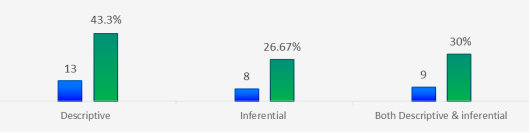
The reviewed articles employed various research analysis models, including descriptive analysis, regression analysis, and a combination of both. Descriptive statistics were used in 13.43% of the articles the most prevalent methods. Followed by Both descriptive and inferential statistics were, accounting for 9,30% of the analyses, followed by inferential statistics at 8,27%. This distribution is likely due to the qualitative and quantitative nature of digital platforms and global competitive strategy and the methodologies that support them
Figure 2. Distributions of Applied Methods.
3.1.2. Distribution of Research Approach, Design and Data Analysis
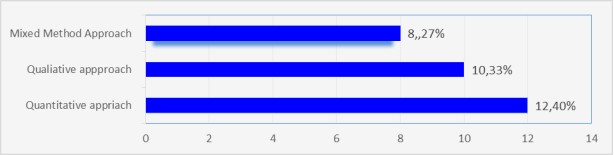
The research in this investigation utilized qualitative, quantitative, and mixed methods. This systematic review of articles Quantitative method revealed that 12.40%, whereas Qualitative method were used a 10,33% and 8,27% a mixed method approach was included to review. This shows that a mixed-methods approach was the most used and recommended regularly used, likely due to the nature of the subject matter.
Figure 3. Distribution of Research Approach.
3.1.3. Distribution of Journals Types
Table 2. List journals used across articles.
Journal Title | Frequency | Percentage (%) |
International Journal of Emerging Markets | 2 | 6.67% |
Journal of Marketing Theory and Practice | 1 | 3.33% |
The Bottom Line | 1 | 3.33% |
Journal of Marketing Communications | 1 | 3.33% |
Communication and Information Technology Journal | 1 | 3.33% |
Marketing Intelligence & Planning | 1 | 3.33% |
International Journal of Business and Management | 1 | 3.33% |
Journal of Enterprise Information Management | 1 | 3.33% |
Business: Theory and Practice | 1 | 3.33% |
Management Decision | 1 | 3.33% |
Humanities and Social Sciences Communications | 1 | 3.33% |
International Marketing Review | 1 | 3.33% |
International Journal of Hospitality & Tourism Administration | 1 | 3.33% |
Industrial Marketing Management | 1 | 3.33% |
KnE Social Sciences | 1 | 3.33% |
Journal of the Academy of Marketing Science | 2 | 6.67% |
Journal of Research in Marketing and Entrepreneurship | 1 | 3.33% |
Revista de Cercetare si Interventie Sociala | 1 | 3.33% |
Journal of Theoretical and Applied Electronic Commerce Research | 1 | 3.33% |
Frontiers in Psychology | 1 | 3.33% |
International Journal of Data and Network Science | 1 | 3.33% |
Journal of Enterprising Culture | 1 | 3.33% |
Journal of Marketing Advances and Practices | 1 | 3.33% |
Journal Management Teori dan Terapan | 1 | 3.33% |
Industrial Management & Data Systems | 1 | 3.33% |
Sustainability | 1 | 3.33% |
Sri Lanka Journal of Management Studies | 1 | 3.33% |
International Business Review | 1 | 3.33% |
Total | 30 | 100% |
Source: Own data, 2026.
As
Table 2 reveals, the 30 articles selected for the review appeared in 27 different journals, which reflects the multidisciplinary approach to the study of digital platforms and global competitive strategy. Two articles have been published in the International Journal of Emerging Markets and Journal of the Academy of Marketing Science (6.67% each), and the other articles have been published in all the rest of the journals (3.33% each).
3.1.4. Geographical Distribution of Reviewed
From the selected review most article were selected from the developed country because the concept of the review title was focus on the digital platform and global Competitive strategy which has significant impact among the firm in this place like USA, China, France and Japan. In comparison to the developed, currently developing, showing robust change country like Kenya, Ethiopia, Morocco and Nigeria were incorporated.
Table 3. Geographical Distribution of Reviewed.
S/N | Country | Frequency | Percentage (%) |
1 | USA | 4 | 13.3% |
2 | China | 4 | 13.3% |
3 | Thailand | 2 | 6.7% |
4 | India | 2 | 7% |
5 | France | 3 | 10% |
6 | Nigeria | 2 | 7% |
7 | Morocco | 1 | 3% |
8 | Kenya | 1 | 3% |
9 | Japan | 3 | 17% |
10 | South Africa | 2 | 7% |
11 | Ethiopia | 2 | 7% |
12 | Sweden | 1 | 3% |
13 | Multiple | 3 | 10% |
14 | Total | 30 | 100% |
Source: Own data, 2026.
Table 3 presents the geographic spread of the 30 reviewed studies. There is a clear geographic diversity in the data with the USA and China making the largest contribution to the studies (4 each; 13.3%), then France and Japan. Also, the studies were done in Thailand, India, Nigeria, South Africa, Ethiopia, Kenya, Morocco, and Sweden. In addition, there were three multinational studies (10%). It can be observed that there is an increasing international interest in digital platforms and competitive strategies on a global level, although the large number of studies done in selected countries suggests that further studies are required in other geographic areas.
3.1.5. Keyword Co-occurrence Analysis
In order to understand the knowledge structure of literature on digital transformation and global competitive advantage, a keyword co-citation analysis was done with the help of the software tool known as VOS viewer. From the total number of 555 papers identified through the systematic search process, a total of 150 papers which directly dealt with the interaction between digital transformation and global competitive advantage were taken into consideration for bibliometric analysis.
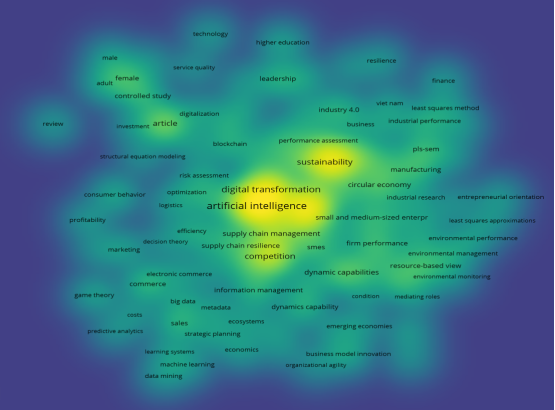
Figure 6 is the Keyword Co-occurrence Density Map of Studies on Digital Transformation and Global Competitive Advantage. The results of the analysis prove that the digital transformation, artificial intelligence, and sustainability occupy the leading positions in the network, which is shown by their yellow coloration. These keywords' centrality allows us to assume that these topics form the main focus of the researches and are the core of the literature. Such high frequency of occurrence shows that current researches increasingly concentrates not only on the digital transformation as an element of technology but also on its use as a strategic ability for sustainable competitive advantage.
There are several groups of themes that can be identified in the network. The first group deals with sustainability, industrial performance, and corporate environmental responsibility, which reflects the increasing importance of sustainable competitive advantage. The second theme is related to data analytics, digital marketing, and customer technology issues. The third group encompasses dynamic capabilities, the resource-based view, agility, and business model innovations. There are also thematic clusters concerning technological drivers such as machine learning, block chain, Industry 4.0, and big data analytics that form the technological basis of digital transformation research.
Despite having several identifiable thematic clusters, there are no dominant nodes apart from the two primary themes, namely digital transformation and artificial intelligence. It is obvious that fragmentation exists in the literature since knowledge is divided among multiple disciplines such as strategic management, information systems, innovation management, operations management, and sustainability. Fragmentation also suggests the absence of a theory that explains the way digital transformation leads to competitive advantage on a global scale.
Thus, the keyword analysis confirms the necessity of systematic literature review. Through integration of evidence from different, but fragmented research strands, the review offers a coherent picture of how digital transformation allows organizations to secure global competitive advantage via technological innovation, organizational capabilities, ecosystem collaboration, and strategic adjustment. Besides, bibliometric results identify research avenues that need further investigation by scholars, namely the interconnection of artificial intelligence, sustainability, digital ecosystems, and dynamic capabilities in global competitive strategy.
3.1.6. Key Words Analysis
In the context of the limited research on the digital transformation on the global competitive Advantage, Out of the 555 papers on digital transformations, we have identified only 150 studies that are specifically focused on competitive advantage. VOS viewer analyses on these studies and the results are shown in
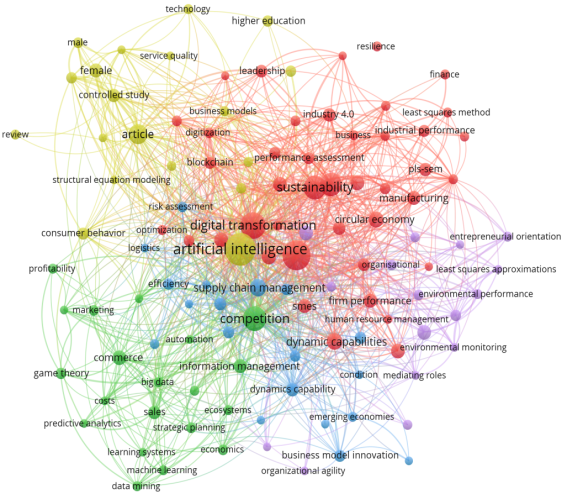
Figure 4. As shown in the figure, except for the digital transformations and competitive advantage nodes, there are no significantly larger nodes, indicating that research in this field is relatively fragmented. However, the bibliometric visualization generated by VOS viewer makes transparent the intellectual landscape around digital transformation and competitive advantage.
From the map below, it is evident that artificial intelligence, digital transformation, and sustainable competition are at the core, thereby reinforcing their importance as areas for research in this age. The different colored clusters represent the various distinct but related fields of sustainability and industrial performance, data-based marketing and analytics, strategic flexibility and innovation, and behavior/methodological approach. “The strong thematic links among the clusters suggest that there is significant integration, particularly in relation to the two themes of digital transformation and sustainability.
Figure 4. Key words analysis.
The co-occurrence analysis of the keywords reveals the key themes and relationships behind the research on digital platforms and global competitive strategies. As can be seen in Figure above, the key themes identified through literature review include digital platforms and emerging technologies, organizational and dynamic capabilities, competition and strategic management, sustainability and ecosystem development, and innovation and internationalization. The importance of such topics as digital transformation, artificial intelligence, sustainability, competition, and dynamic capabilities reveals that more and more attention is being paid to the role of digital technologies as strategic resources for building organizational capabilities and competitive advantages. The relationships between the concepts of network effects, digital ecosystems, information management, supply chain management, innovation, and emerging economies imply that the competitive results of technological implementation depend not only on technology adoption but also on companies’ capabilities development and ecosystem orchestration amid the context. Nonetheless, the scattering of topics across several clusters suggests that there is fragmentation in the literature under consideration where the issues of technologies, capabilities, ecosystems, sustainability, and competitive results have been analyzed separately.
The picture shows a bibliometric density map created with VOS viewer to illustrate the intellectual framework of research on global competitive advantage and digital transformation. Artificial intelligence, digital transformation, and sustainability are some of the most pertinent and frequently associated keywords, and the vivid yellow coloring in the middle highlights their importance in the present scholarly conversation.
Figure 5. key words analysis.
This picture illustrates a bibliometric density map by VOS Viewer representing the structure of research concerning digital transformation and global competitive advantage. Bright yellow core reveals the key keywords artificial intelligence, digital transformation, and sustainability. They are the main ideas that shape modern academic discourse since they are the key concepts of technological innovations and strategic management and represent the processes of organization adaptability provided by the application of digital technologies. Green and blue clusters are related to the secondary but interconnected themes such as supply chain management, dynamic capabilities, resource based view, and entrepreneurial orientation that explain the way in which companies use digital technologies in order to be competitive. Machine learning, data mining, block chain, and industry 4.0 illustrate the technological aspects of the transformation process. Leadership, organizational agility and business model innovation represent the managerial and strategic aspects of digital transformation. This visualization illustrates the multidisciplinary convergence of technology, sustainability, and strategic management, which means that the digital transformation is not only the technical change but the whole process of reshaping global competitiveness.
3.2. Results of the Literature Synthesis
3.2.1. Digital Platforms and Global Competitive Strategy Overview of Review Findings
According to
| [21] | Eferin, Y., Hohlov, Y., & Rossotto, C. (2019). Digital platforms in Russia: competition between national and foreign multi-sided platforms stimulates growth and innovation. Digital Policy, Regulation and Governance, 21(2)
https://doi.org/10.1108/DPRG-11 |
[21]
results of this systematic literature review, digital platforms have significantly changed the nature of competitive strategies in the changing how businesses generate global ground, distribute, and capitalize on value creation processes. The reviewed literature suggests that there has been an increasing trend toward studies involving digital platforms since 2018 due to their rising prevalence within the global economic landscape and their position as key players in modern strategic management
| [34] | Sembiring, B. K. F., Rini, E. S., & Yuliaty, T. (2022). Content marketing strategies to maximize product sales SMEs in North Sumatra. Modeling economic growth in contemporary Indonesia (pp. 55–65). Emerald Publishing Limited. https://doi.org/10.1108/978-1-80262-431-120221005 |
| [35] | Mustafa Ayobami Raji, Hameedat Bukola Olodo, Timothy Tolulope Oke, Wilhelmina Afua Addy, Onyeka Chrisanctus Ofodile, & Adedoyin Tolulope Oyewole. (2025). digital marketing in tourism: a review of practices in the usa and africa. International Journal of Applied Research in Social Sciences, 6(3). https://doi.org/10.51594/ijarss.v6i3.896 |
[34, 35]
. This trend is consistent with the exponential growth of platform companies like Amazon and Alibaba.
According to
analyzed the reviewed literature makes it clear that digital platforms enable quick worldwide expansion because of their low transaction costs, lack of traditional middlemen, and ability to connect different stakeholders via digital infrastructures. Platform companies function in multi-sided markets that link consumers, producers, complements, and service providers in an integrated ecosystem, as opposed to linear enterprises
| [29] | Kahveci, E., Gürgür, T., & Avunduk, Z. B. (2026). From Digital Transformation to Sustained Competitive Advantage: How Strategic Orientation, Technology Sophistication, and Adaptive Capability Drive Operational Efficiency. Administrative Sciences, 16(8), 401. |
[29]
, As a result, digital platforms enable businesses to grow rapidly and globally without having to make significant investments in physical assets, hence reducing the difficulties associated with global expansion. Moreover, real-time coordination and information sharing characterize operations through digital platforms, making such businesses more efficient and responsive to the demands of the international business environment. The strategic implications of such a scenario imply the transition from asset competition to access and ecosystem-based competition in the context of global competitive advantage
| [10] | He, Y. (2025). The impact of digital transformation on firm performance and sustainable competitive advantage. Journal of Economics and Management Sciences, 8(5), p173-p173. |
[10]
.
3.2.2. Digital Platforms and Competitive Advantage
Some of the study's main conclusions are that network effects, data power, and ecosystems are the three interconnected ways that digital platforms generate competitive advantages. Because the platform's value increases in proportion to its user base, creating a positive feedback loop that promotes market dominance, the first source can be seen as the hallmark of platform competition
| [4] | Zimonjić, M. (2024). Impact of digital transformation on the competitive advantage of companies. Megatrend Revija, 21(1) https://doi.org/10.5937/megrev2401013z |
| [24] | Shaymaa, J. K., & Amal, J. F. (2026). Digital transformation of human resource management and its impact on employee efficiency: A systematic literature review. American Journal of Management Practice, 3(1), 703577. |
| [32] | Dwita, V., Megawati, & Masdupi, E. (2020). The use of social media for Rendang product marketing by SMEs in West Sumatera. In Proceedings of the 5th Padang International Conference On Economics Education, Economics, Business and Management, Accounting and Entrepreneurship (PICEEBA-5 2020) (pp. 574–581). Atlantis Press.
https://doi.org/10.2991/aebmr.k.201126.082 |
[4, 24, 32]
. It led to significant market concentration and entry hurdles by enabling major competitors like Amazon and Alibaba to emerge as clear victors and acquire huge market shares in many regions of the world.
Aside from effects from networks, another important aspect that offers a significant source of competitive advantage is the proper use of data. By collecting, analyzing, and interpreting vast volumes of data produced by their customers, digital platforms help businesses enhance their processes, customize their products and services, and increase customer engagement
. As a result, the platform's competitive advantage is strengthened through a learning effect. Furthermore, digital platforms can collaboratively create value with their external partners thanks to ecosystem orchestration, which is the capacity of these platforms to organize interactions between numerous parties
| [17] | Zreik, M. (2024). Digital transformation and business evolution in China: Opportunities and challenges. In Digital Business and Optimizing Operating Strategies,
https://doi.org/10.4018/979-8-3693-0428-0.ch005 |
| [28] | Purwanto, M. R., Mukharrom, T., Zhilyakov, D. I., Pamuji, E., & Shankar, K. (2019). Study the importance of business ethics and ethical marketing in digital Era. Journal of Critical Reviews, 6(5), https://doi.org/10.22159/jcr.06.05.26 |
[17, 28]
. This review approach emphasizes the need of cooperation and interdependence in gaining long-term competitive advantage while extending traditional company borders. When taken as a whole, these mechanisms show how digital platforms restructure the sources of competitive advantage in the global economy by giving relational and network-based capabilities precedence over internal resources.
3.2.3. Digital Platforms and Global Strategy
According to the
| [28] | Purwanto, M. R., Mukharrom, T., Zhilyakov, D. I., Pamuji, E., & Shankar, K. (2019). Study the importance of business ethics and ethical marketing in digital Era. Journal of Critical Reviews, 6(5), https://doi.org/10.22159/jcr.06.05.26 |
[28]
, emphasizes that on facilitate internationalization digital platforms and Internationalization theories, such as the Uppsala model, learning-by-doing, gradual resource commitment, and modest market penetration. The idea of digital platforms, however, contradicts traditional strategies since it allows businesses to simultaneously enter multiple markets without having a significant physical presence
| [23] | Movahed, A. B., Movahed, A. B., & Nozari, H. (2024). Opportunities and challenges of marketing 5.0. Smart and sustainable interactive marketing, 1-21. |
| [33] | Antoniuk, K., Chorna, N., & Kiziun, A. (2024). THE ROLE OF DIGITAL TECHNOLOGIES IN THE TRANSFORMATION OF THE TOURISM BUSINESS: PROSPECTS FOR DEVELOPMENT ANDIMPACT ON THE COUNTRY'S ECONOMY. Available at SSRN 4914279. |
[23, 33]
.
To begin with, platform scalability makes it possible for businesses to scale up and duplicate their models on a global scale with minimal costs, thanks to common digital infrastructure. Such a change has resulted in the development of new strategies based on flexibility, scalability, and ecosystem integration through digital localization, such as language customization and adjustments to algorithms, among others. Thirdly, strategic alliances within global ecosystems provide companies with access to local know-how, local regulatory environment, and increased market penetration. For example, firms like Uber represent a successful example of platform models that have been quickly scaled globally, accommodating various institutional and cultural differences
| [6] | Li, J., Surana, A., Chavan, M., Kano, L., Schotter, A., & Chirico, F. (2025). The internationalization of digital platform-based firms: A systematic literature review and directions for future research. Journal of World Business, 60(4), 101629. |
[6]
. From a theoretical standpoint, these findings may suggest the creation of a completely new paradigm of "digital internationalization," in which traditional internationalization determinants are replaced by speed, connectivity, and digital infrastructure. Because businesses must take into account both local responsiveness and global integration in the digitally connected world, this has important ramifications for strategic management
| [30] | Chintalapati, S., & Pandey, S. K. (2022). Artificial intelligence in marketing: A systematic literature review. International Journal of Market Research, 64(1,
https://doi.org/10.1177/14707853211018428 |
| [31] | Sharabati, A. A. A., Ali, A. A. A., Allahham, M. I., Hussein, A. A., Alheet, A. F., & Mohammad, A. S. (2024). The impact of digital marketing on the performance of SMEs: An analytical study in light of modern digital transformations. Sustainability, 16(19), 8667. |
[30, 31]
.
3.2.4. Challenges and Strategic Implications
According to
| [9] | Aghamiri, S., Karima, J., & Cavus, N. (2022). Advantages of Digital Transformation Models and Frameworks for Business: A Systematic Literature Review. International Journal of Advanced Computer Science and Applications,
https://doi.org/10.14569/IJACSA.2022.0131206 |
[9]
studies road mapping platforms have many benefits, the assessment points out a number of obstacles that BRICS's global competitive strategies must overcome. The growing regulatory scrutiny that platform companies experience in various jurisdictions is one of the most important problems. Platforms' operational flexibility and scalability may be hampered by governments enacting more stringent laws pertaining to data protection, antitrust issues, and digital taxation In China and the European Union, where authorities are actively working to limit the market dominance of major platforms, regulatory pressures are especially noticeable.
Authors
| [2] | Syakur, A., Zuhroh, D., Harmono, H., & Ayu, R. B. (2025). Digital Transformation and Innovative Business Models for Attaining Sustainable Competitive Advantage: Systematic Literature Review. Moneter: Jurnal Keuangan dan Perbankan, 13(2), 339-354. |
[2]
result shows that emphasizes how crucial organizational competencies are to the successful implementation of platform strategy and complex technical architecture, digital skills, strategic thinking, and efficient management are all necessary for digital transformation. Organizations lacking these qualities may find it challenging to compete successfully in the platform economy, particularly in developing nations.
From a strategic standpoint, the aforementioned problems amply demonstrate the importance of striking a balance between innovation and risk management, which will enable them to adhere to all regulations. It should be emphasized that businesses must have certain skills that will enable them to maintain their competitive edge, credibility, and dependability in any situation and adjust to a constantly shifting environment. Lastly, it should be mentioned that while digital platforms offer particular chances for growth and financial gain in the global community, these endeavors necessitate achievement in a variety of settings
5. Conclusion, Contributions and Future Research Directions
This systematic literature review concludes that digital platforms have become important strategic mechanisms for global competitiveness by enabling firms to create value, stimulate innovation, expand internationally, engage customers, and coordinate interconnected ecosystems. The reviewed evidence indicates that their strategic success depends not simply on technology adoption, but on organizational digital capabilities, leadership, innovation orientation, strategic agility, ecosystem coordination, technological infrastructure, and supportive institutional and regulatory environments. Theoretically, the review demonstrates that no single perspective sufficiently explains how digital platforms generate global competitive advantage. Platform Ecosystem Theory, Resource-Based View, Dynamic Capabilities Theory, Network Effects Theory, and Internationalization Theory provide complementary explanations of the interaction between digital resources, organizational capabilities, network relationships, and international market expansion. Integrating these perspectives can therefore provide a stronger foundation for explaining platform-enabled competitive strategy. The review also identifies important gaps, particularly the limited empirical and mixed-method evidence, insufficient research from emerging and African economies, and fragmented attention to platform governance, cybersecurity, data privacy, sustainability, digital inclusion, and regulation. Future research should therefore employ empirical, cross-national, and multidisciplinary approaches to examine these issues across diverse institutional and industry contexts.
Practically, managers should treat digital platforms as strategic capabilities rather than merely technological tools by developing digital competencies, leveraging data and network effects, strengthening ecosystem partnerships, and continuously adapting to market changes. Policymakers should support appropriate digital infrastructure, skills development, fair competition, inclusive digital access, and effective regulatory frameworks. Overall, this review contributes by consolidating fragmented knowledge and clarifying the mechanisms and contextual conditions through which digital platforms can support sustainable global competitive advantage, while providing a foundation for future theoretical development and empirical investigation.
5.1. Contribution of the Review
The current systematic literature review makes a contribution to the literature on digital platforms and global competitive strategy both theoretically, empirically, methodologically, and in practice. Theory-wise, the integration of perspectives that emerge from Resource-Based View, Dynamic Capabilities theory, Platform Ecosystem theory, and Network Effects theory allows explaining how platform capabilities, data-related resources, network effects, and ecosystem orchestration help achieve competitive advantage. Digital internationalization is identified as one of the emerging mechanisms through which digital platforms help firms expand their global presence faster. Empirically, the analysis of the literature across industries and geographical settings highlights both commonalities and divergences, especially between developed and emerging countries. Methodologically, the research uses a systematic and clear review framework based on the principles of PRISMA 2020, making it possible to identify the patterns in methodologies and their gaps, especially the lack of longitudinal, comparative, and mixed-method studies. Practical implications include the necessity for sustainable competitive advantage to not only be driven by the digital platforms' use but also by the alignment of platform strategies with capabilities, innovation, ecosystems, and institutions.
5.2. Future Research Directions
Based on the finding of the systematic Review some recommendation will be provided for the future researcher including more focus on mixed research approach which measures and evaluate the significant impact of digital platforms that affect the strategy of international competition among the firm. Similarly, the researcher focuses on undetermined literature and dynamic Platform in current situation that need more comprehensive research for these emerging market values. Since, companies function in these circumstances and modifying strategy gained deep understanding at global business game. The research gaps and key findings can serve as a basis for suggesting several directions for future research.
The first direction is to conduct an empirical research based on quantitative, qualitative, and mixed-methods approaches to verify the relationships between digital platforms and global competitive strategy.
The second direction is to carry out comparative studies in developed, emerging, and developing countries in order to reveal the impact of institutional context, technological maturity and regulatory frameworks on adoption of digital platforms and competitiveness.
The third direction is to carry out longitudinal studies in order to analyze evolution of digital platform capabilities and continuous development of competitive strategy in digital environment.
The fourth direction is to analyze emerging issues such as artificial intelligence, block chain technology, big data analytics, digital sustainability, platform governance, cybersecurity, digital ethics, and digital inclusion to reveal their strategic implications for international competitiveness. Finally, it is necessary to develop interdisciplinary theoretical frameworks combining knowledge from strategic management, international business; information systems, innovation management, and digital transformation that contribute to a detail understanding on the way of digital transformation significantly affect the global competitive dynamic environment





 Share This Article
 Twitter
 Linked In
 Facebook

 Copy
 Download